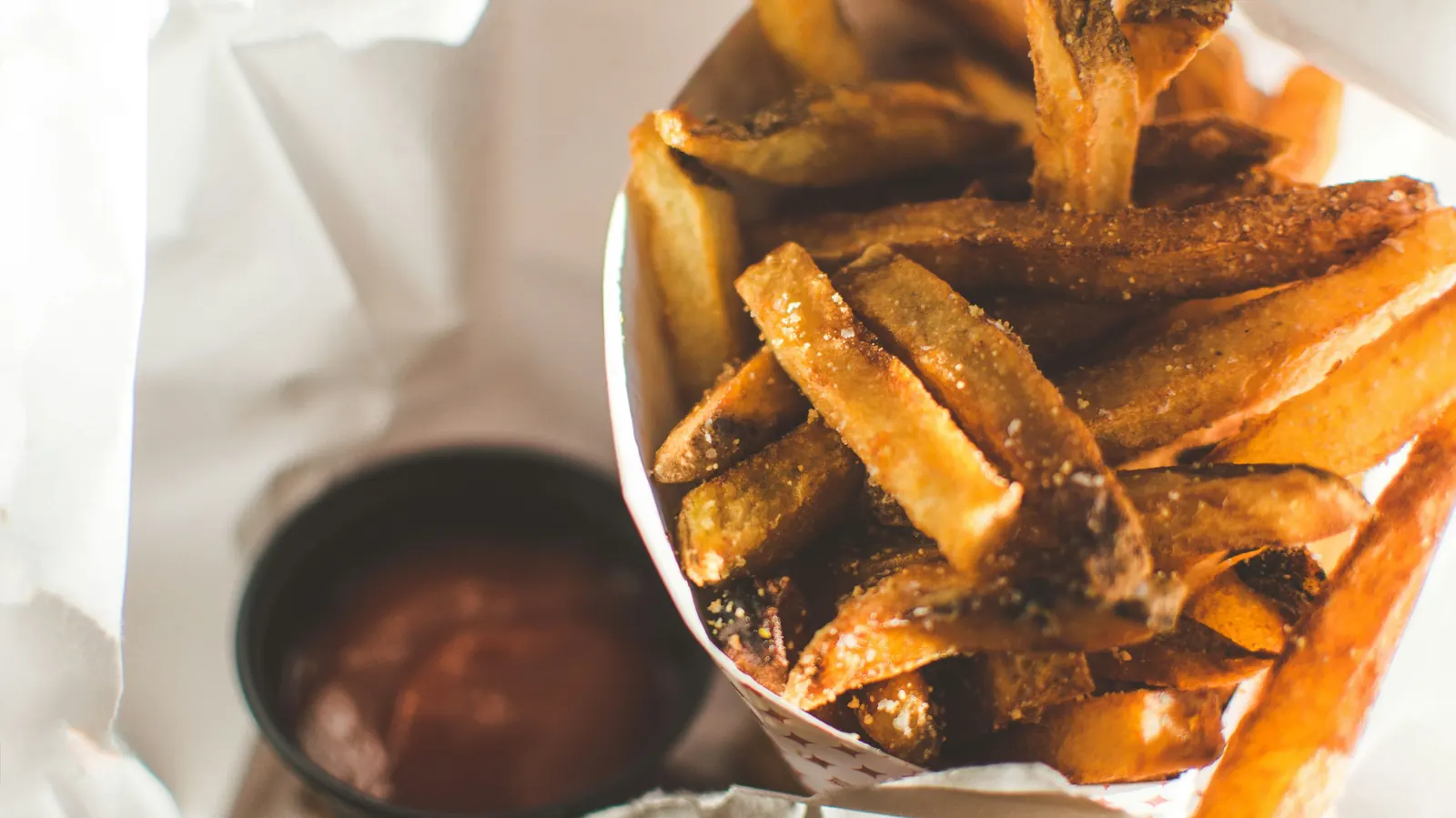
An air fryer and a microwave both sit on the counter and both reheat last night’s dinner, but they heat food in opposite ways. A microwave sends energy into the food itself, so it warms a bowl of rice or a cup of soup in a couple of minutes but leaves anything breaded soft. An air fryer is a small convection oven: a heating element and a fan blow hot air over the outside of the food, which browns and crisps it but takes longer and holds less.
In a restaurant kitchen, leftovers come in two kinds: the wet ones (rice, beans, guisados, soups) and the crisp ones (flautas, taquitos, chiles rellenos, fried chicken). This guide compares the air fryer and the microwave on speed, crisping, capacity, safety when reheating, energy and cleanup, then names one pick for each side.
Julia’s earns a commission on purchases made through links on this page, at no cost to you. Recommendations are based on what a restaurant kitchen looks for, product specifications and verified buyer reports.
Quick verdict: air fryer or microwave?
If you can only have one, most households should keep the microwave. It reheats soups, rice, beans and plates of food far faster, it thaws frozen food, and it holds a dinner plate that won’t fit in most air fryer baskets. Add an air fryer if you eat a lot of fried, breaded or crusted food and hate how soggy it comes out of the microwave: for leftover pizza, flautas, fries and wings it is clearly better. They do different jobs, so many kitchens end up with both.
The table sums up the differences; the sections after it explain each one and where each claim comes from.
Air fryer vs microwave, side by side
| Air fryer | Microwave | |
|---|---|---|
| How it heats | Heating element and fan blow hot air around food | Microwaves make water molecules in the food vibrate |
| Crisping and browning | Yes, the reason to buy one | No; breaded food and crusts go soft |
| Reheating time (BestReviews) | 10 minutes for chicken and rice | 2 minutes 30 seconds for leftovers |
| Capacity (BestReviews) | Usually 3 to 6 quarts | Usually 1 to 2.2 cubic feet |
| Best for | Pizza, fries, wings, anything fried or breaded | Soup, rice, beans, sauces, thawing, plated meals |
| Liquids | No soups or saucy dishes in a basket | Yes, in microwave-safe containers |
| Cleanup | Basket and crisper plate | Turntable and interior wipe-down |
How each one heats
BestReviews’ comparison of the two, by Jennifer Blair, explains it simply. A microwave uses a magnetron to produce microwaves, which make the water molecules in food vibrate and generate heat. The food heats from its own moisture, which is why a microwave is quick with wet food and why it cannot brown anything: the surface never gets hotter than the water inside it.
An air fryer works like a traditional oven, BestReviews says: heating elements heat the air, and a convection fan circulates it around the food. Because the hot, dry air hits the surface, the outside dries and browns while the inside heats through. That is the same reason a toaster oven crisps better than a microwave; an air fryer simply does it in a smaller box with a stronger fan.
Crisping: where the air fryer wins
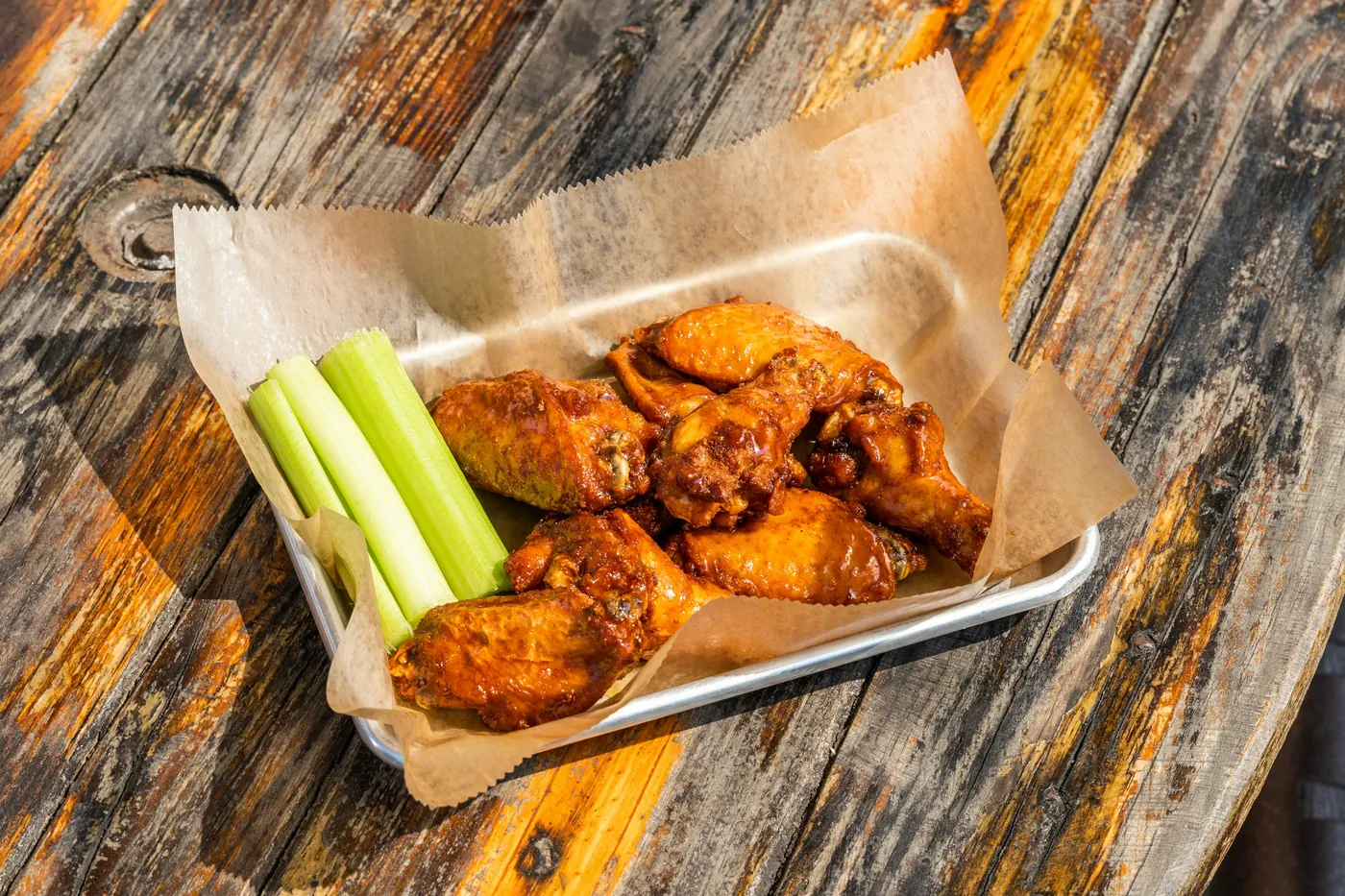
This is the whole case for the air fryer. BestReviews found its air fryer reheated day-old pizza to crispy perfection, while its microwave heated pizza well but left the crust soggy and chewy. Its conclusion is that air fryers are ideal for cooking and reheating foods with a crispy or crunchy exterior.
For Mexican leftovers, that list is long: flautas, taquitos, chimichangas, tostadas, chiles rellenos, empanadas, churros and the last of the tortilla chips. A microwave turns all of these limp. As general kitchen sense, a few minutes in a preheated air fryer brings back most of the crunch without more oil, and our air fryer alternative guide covers other ways to get there if you don’t want another appliance.
Speed: where the microwave wins
The microwave is much faster. In the same BestReviews comparison, the microwave reheated leftovers of meat and roasted vegetables in 2 minutes 30 seconds, while the air fryer needed 10 minutes to reheat chicken and rice. That gap matters at lunch on a workday, and it grows when you add preheating.
The microwave also does things an air fryer can’t. It thaws frozen food on a low power level, it heats a mug of coffee or a bowl of caldo, and it warms tortillas wrapped in a damp towel in under a minute. BestReviews puts it this way: a microwave is best when you’re in a hurry or cooking moist foods, like steaming vegetables or reheating soup.
Capacity and what fits
BestReviews gives typical microwave capacity as 1 to 2.2 cubic feet and typical air fryer capacity as 3 to 6 quarts, and notes that air fryers generally offer more limited capacity. In practice, a 1.1 cubic foot microwave with a 12.4-inch turntable takes a full dinner plate or a casserole dish. A 6-quart basket takes a few servings of fries or a batch of wings in one layer, but not a plate, and crowding the basket stops the air from crisping the food.
Shape matters too. Soups, saucy enchiladas, refried beans and rice all belong in a bowl, and a bowl of liquid doesn’t go in an air fryer basket. If most of your leftovers are wet, the microwave handles more of them.
Reheating leftovers safely
Whichever you use, leftovers should come back to a safe temperature. Clemson Cooperative Extension’s Home and Garden Information Center fact sheet on microwave food safety (HGIC 3586) gives 165°F for leftovers and casseroles and says to always use a food thermometer to check internal temperatures.
The microwave needs a little more care, because it heats unevenly. The same fact sheet warns that uneven heating can create cold spots where harmful bacteria may survive. Its advice is to cover food when reheating to hold moisture and promote even heating, to stir or rotate food midway, to turn large items over, and to allow standing time so heat distributes and finishes the job. It also says to use containers labeled microwave-safe, not margarine tubs, yogurt containers or whipped-topping bowls that aren’t labeled for the microwave.
An air fryer heats from the outside in, so as general kitchen sense, a thick piece of meat or a dense chile relleno can look done outside before the center is hot. Check the center with a thermometer either way, and cut large pieces down so they heat through.
Energy and the counter
Both use less energy than heating a full oven. BestReviews says microwaves can use up to 80% less energy than a standard oven and air fryers up to 50% less. For a small portion, the microwave’s short run time usually makes it the cheaper of the two to run; that part is general kitchen sense, not a measured figure. On power draw, the two picks below list 1,600 watts of input power for the microwave and 1,700 watts for the air fryer, so avoid running both on one circuit with a kettle.
Space is closer than you might think. The BLACK+DECKER microwave below measures about 20.6 by 14.8 by 11.8 inches, according to its listing. A 6-quart basket air fryer takes a smaller footprint but stands taller and needs clearance for hot air from its vent.
Cleaning and upkeep
A microwave needs its glass turntable washed and the interior wiped when food spatters; covering food, as Clemson advises, also keeps the cavity cleaner. An air fryer has a basket and a crisper plate that collect grease every time you use it. The Instant pick’s listing describes a nonstick basket and calls cleanup quick; plan to wash it after any fatty food, since old grease can smoke on the next use.
Choose an air fryer if… / Choose a microwave if…
Choose an air fryer if…
- Most of your leftovers are fried, breaded or have a crust.
- You make fries, wings or frozen snacks from scratch often.
- You already have a microwave and want crisp food without heating the big oven.
- You don’t mind waiting several extra minutes for better texture.
Choose a microwave if…
- You can only have one countertop appliance.
- You reheat soups, rice, beans, sauces and plated meals.
- You thaw frozen food or heat drinks.
- Speed matters more than texture.
Our pick on each side of the air fryer vs microwave question
One pick per side from makers with long countertop ranges. Both were in stock and sold by Amazon when we checked, and neither appears on any other page of ours. For more choice on each side, our best air fryer guide compares Ninja, Cosori, Typhur and others, including Instant’s ClearCook model with a window, and our best countertop microwave oven guide covers Panasonic, GE, Sharp and more.
1. Instant Vortex Plus 6-Quart Air Fryer – Crisp Reheating for a Family

This is Instant’s 6-quart basket air fryer in stainless steel. The listing gives six functions (air fry, bake, roast, broil, dehydrate and reheat), a temperature range of 95 to 400°F and a capacity of up to six portions. It runs at 1,700 watts, has overheat protection and auto shut-off, and the listing says it is ETL certified. The basket is nonstick, and a touchscreen shows each cooking stage.
The dedicated reheat function is the reason it suits this comparison: it is the air fryer you would reach for when the microwave leaves leftover flautas or pizza soft. Six quarts is a family size in basket terms, enough for wings or fries for several people in one or two batches, while the footprint stays smaller than a toaster oven’s.
Why we like it
- Reheat setting alongside air fry, bake, roast, broil and dehydrate
- 95 to 400°F range
- Up to six portions (listing)
- ETL certified, with overheat protection and auto shut-off (listing)
Key specifications
| Model | Instant Vortex Plus 6 Qt |
|---|---|
| Type | Basket air fryer |
| Capacity | 6 quarts |
| Power | 1,700 W, 120 V |
| Temperature | 95 to 400°F |
| Functions | Air fry, bake, roast, broil, dehydrate, reheat |
| Safety (as stated) | ETL certified; overheat protection; auto shut-off |
| Warranty | 1 year (listing) |
Why we recommend it
It suits a household that already has a microwave and wants crisp reheating and fried-food texture for three to six people.
Skip it if you need to reheat soups or plated meals; the basket can’t do either, and the microwave below can.
Pros and cons
Pros
- Crisps leftovers a microwave turns soft
- Family-size basket
- Stated safety certification
Cons
- Slower than a microwave for most reheating
- No liquids or plates
- Basket needs washing after fatty food
2. BLACK+DECKER 1.1 Cu. Ft. 1000W Microwave – Fast Everyday Reheating

This is a plain mid-size countertop microwave, model EM031MB11, with a stainless door frame and black body. The listing gives 1,000 watts of cooking power from 1,600 watts of input, ten power levels, a 30-second express button, a child safety lock, an interior light and a removable 12.4-inch glass turntable. Presets cover popcorn, potato, pizza, frozen vegetables, a beverage and a dinner plate, and a push button opens the door.
It is the kind of microwave the comparison above describes: fast with wet food, big enough for a dinner plate or a covered casserole, and simple to run. The ten power levels let you reheat at lower power with standing time, which helps with the cold spots Clemson warns about, and the dinner-plate preset covers the most common leftover job.
Why we like it
- 1,000 W cooking power and ten power levels
- 12.4-inch turntable takes a dinner plate
- Dinner plate, pizza and frozen vegetable presets
- Child safety lock
Key specifications
| Model | EM031MB11 |
|---|---|
| Type | Countertop microwave |
| Capacity | 1.1 cubic feet |
| Power | 1,000 W output; 1,600 W input |
| Turntable | 12.4-inch glass, removable |
| Presets | Popcorn, potato, pizza, frozen vegetable, beverage, dinner plate |
| Size | 20.6 x 14.8 x 11.8 inches (listing) |
| Warranty | 1 year (listing) |
Why we recommend it
It suits anyone who reheats soups, rice, beans and plates of food most days and wants a simple, mid-size microwave.
Skip it if crisp texture is what you are after; no microwave browns, and the air fryer above does.
Pros and cons
Pros
- Minutes, not ten, for most leftovers
- Takes a dinner plate or casserole dish
- Thaws frozen food
Cons
- Leaves fried and breaded food soft
- No sensor reheating or inverter
- Larger footprint than a basket air fryer
Air fryer and microwave questions, answered
Can an air fryer replace a microwave?
Only partly. It reheats crisp foods better, but it is slower, holds less and can’t take soups, sauces or a dinner plate. If you drop the microwave, you lose quick thawing and quick liquids. Most households keep the microwave and add an air fryer.
Is it better to reheat food in an air fryer or a microwave?
It depends on the food. Use the air fryer for pizza, fries, wings and anything fried or breaded, and the microwave for rice, beans, soups, stews and saucy dishes. BestReviews reached the same split.
Which is faster?
The microwave, by a wide margin. BestReviews timed 2 minutes 30 seconds for microwave leftovers against 10 minutes for chicken and rice in its air fryer.
How hot should reheated leftovers get?
Clemson Cooperative Extension gives 165°F for leftovers and casseroles, checked with a food thermometer. In a microwave, cover the food, stir or rotate it midway and let it stand before you check.
Can you put a tortilla in an air fryer?
Yes, to crisp it into a tostada or a taco shell, as general kitchen sense. To soften tortillas for tacos, the microwave with a damp towel or a hot comal does a better job.
Our pick for leftovers in a working kitchen
Keep the microwave for speed and for everything wet, and add the air fryer if crisp food is a big part of what you eat. If you are choosing a second appliance and want to bake as well as crisp, read our air fryer vs toaster oven comparison, and if you want one box that does both jobs, our best convection microwave oven guide covers combination models.
And when you’d rather skip the reheating, see the menu or call to order.