
When the stove is full on a holiday, or the kitchen is a dorm room, an RV or a studio with no range, a plug-in burner fills the gap. The two kinds on the shelf look alike, and both plug into a standard outlet. Underneath, they heat in completely different ways. A hot plate heats a metal element that passes the heat to your pan. A portable induction cooktop uses a magnetic field to make the pan itself the heat source.
That one difference drives everything else: efficiency, speed, which pots work, how hot the surface gets and what each costs. This guide compares the induction cooktop vs hot plate on each point, using the U.S. Environmental Protection Agency’s ENERGY STAR program, America’s Test Kitchen and the makers, then names one of each.
Julia’s earns a commission on purchases made through links on this page, at no cost to you. Recommendations are based on what a restaurant kitchen looks for, product specifications and verified buyer reports.
Quick verdict: which portable burner to buy
If your pots and pans are cast iron or magnetic stainless steel, a portable induction cooktop is the better buy for most people. EPA’s ENERGY STAR program puts induction at about 85 percent efficient against 75 to 80 percent for electric resistance, and says it heats faster and leaves a cooler surface. Choose a hot plate if you cook in aluminum, copper, glass or clay, such as a clay olla for beans, and don’t want to buy new cookware, or if you want the simplest, lowest-cost burner.
The table sums up the differences. The sections after it explain where each point comes from.
Induction cooktop vs hot plate, side by side
| Portable induction cooktop | Electric hot plate | |
|---|---|---|
| How it heats | Magnetic field heats the pan directly | Element heats up and passes heat to the pan |
| Efficiency (EPA) | About 85% | 75 to 80% (electric resistance) |
| Response | Changes almost instantly (America’s Test Kitchen) | Slower; the element has to heat and cool |
| Cookware | Magnetic only: cast iron, many stainless pans | Any flat-bottomed pan |
| Surface | Stays cooler; heat comes from the pan (EPA) | Element gets red hot and stays hot after use |
| Low heat | Can stall at the lowest settings (America’s Test Kitchen) | Depends on the thermostat |
| Controls | Digital, often with temperature settings and timers | Usually a simple dial |
| Cost class | Higher | Lower |
How each one heats
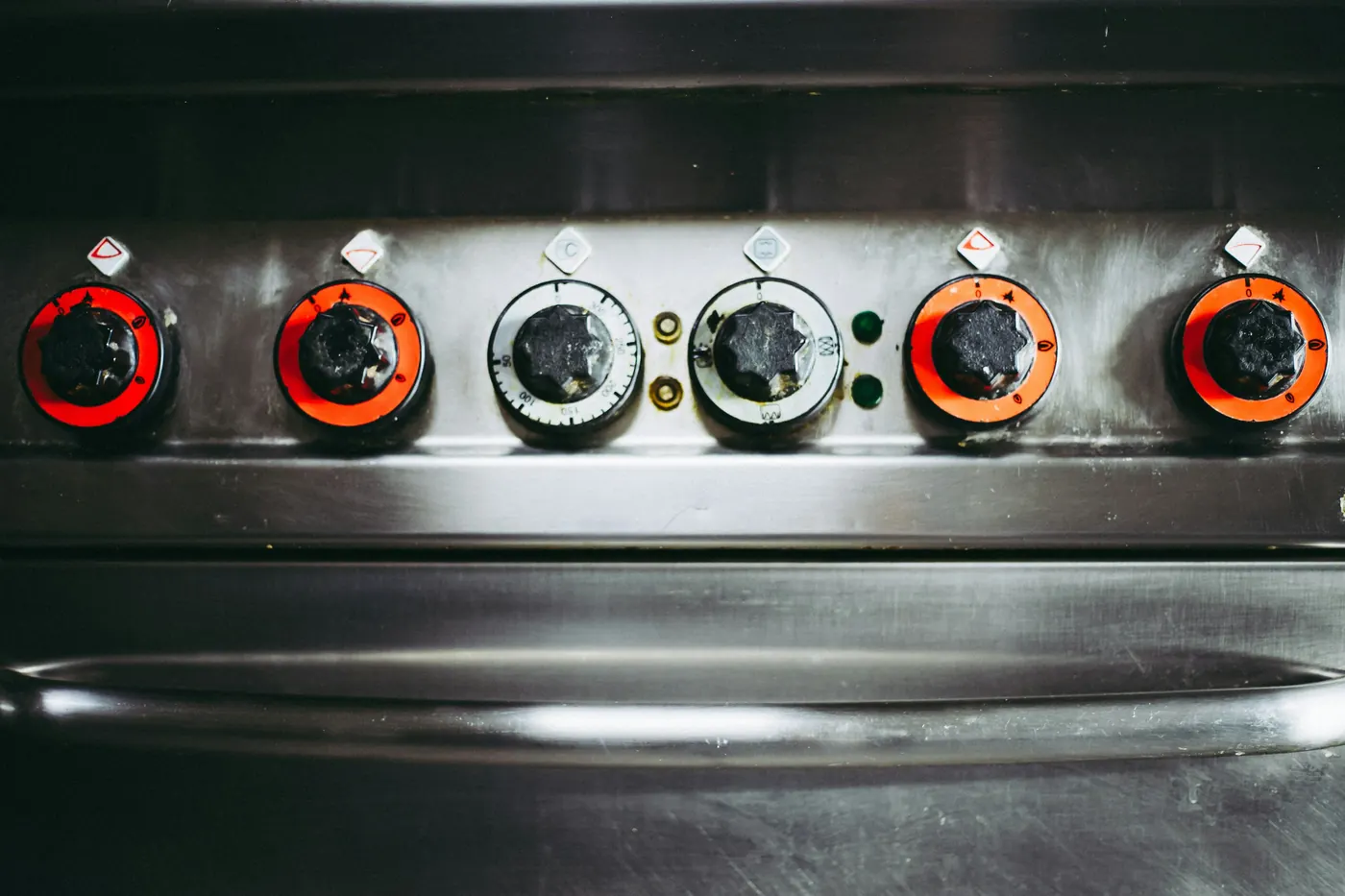
A hot plate is a small electric stove. Current runs through a resistance element, a coil, a cast iron disc or a tube under glass, until it glows hot, and the heat passes into the pan by contact. EPA’s ENERGY STAR program describes conventional cooktops this way: a gas flame or resistive electric element generates heat, which then reaches the cookware by conduction.
An induction cooktop has a copper coil under a glass top. America’s Test Kitchen, in its review of induction burners by Lisa McManus and Valerie Sizhe Li, explains that the coil produces a magnetic field when turned on, and that it won’t work unless you use a compatible pan. EPA puts it the same way: compatible cookware placed in the field is warmed internally. Nothing glows. The pan heats, and the food cooks from the pan.
Efficiency: where induction clearly wins
This is the best-documented difference. In a January 2021 memo announcing residential induction cooktops as an ENERGY STAR Emerging Technology Award category, EPA said gas cooktops transfer energy with efficiencies of about 32 percent and electric cooktops 75 to 80 percent, while induction reaches about 85 percent. That makes induction 5 to 10 percent more efficient than electric resistance and nearly three times as efficient as gas.
EPA adds that because the pan itself is the heat source, less heat escapes into the room, which takes a little load off the air conditioning. America’s Test Kitchen makes the same point: electric and gas stovetops lose more energy to the surrounding air, so induction can keep your kitchen cooler. In a Houston summer, that is not a small thing.
Nuwave says its PIC Gold transfers 85 to 90 percent of its electromagnetic energy to heat. That is the maker’s claim, but it sits close to EPA’s figure.
Speed and control
EPA says induction reaches temperature more quickly and gives faster cook times. America’s Test Kitchen adds two useful details. First, the portable induction burners it reviewed boiled water within a minute or two of one another, in about the same time as a gas stovetop; full-size induction ranges are faster than portable units. Second, heat changes almost instantly, which gave its testers excellent control.
A hot plate’s element needs time to heat up and time to cool down, so turning the dial down doesn’t stop a boil-over right away. That is ordinary electric-stove behavior, and anyone who has cooked on an old coil range knows it.
Induction has one weak spot worth knowing. America’s Test Kitchen found that at low settings, cooking progress came to a standstill when it made caramel and fondue, and it advises keeping the heat a little higher and watching with a thermometer. For a long, gentle simmer of beans or a pot of mole, set it a notch above where you’d expect.
Cookware: the deciding question for many kitchens
Induction only works with magnetic cookware. America’s Test Kitchen’s test is simple: if a magnet sticks firmly and completely to the base of a pot or pan, it is compatible. Cast iron and many stainless steel pans work; glass, copper and aluminum do not. America’s Test Kitchen notes that an induction interface disk lets you use incompatible pans, though the disk then heats the pan by contact, much as a hot plate does.
A hot plate heats whatever sits flat on it: an aluminum pot, a copper saucepan, a cast iron comal or a stainless skillet. That is its biggest advantage, and it is why a hot plate can still be the right answer in a kitchen full of aluminum stockpots.
Pan size matters on both. America’s Test Kitchen notes that heat comes mainly from over the coil, and that with smaller coils you get a central hot spot slightly smaller than the coil itself. Coils in its lineup ranged from 4.5 to 8.5 inches, so if you cook in a wide skillet or a comal, look for an 8-inch coil or element.

Safety
EPA says the induction surface stays cool to the touch because the pan is the heat source, which makes induction safer to work with than other cooktops. In practice the glass does get warm under a hot pan, so treat it with care, but there is no glowing element to brush against and the heat drops quickly once the pan comes off. Many induction units also refuse to start without a pan on top; Nuwave says its Gold won’t start with no cookware in place and shuts off when the set cooking time ends.
A hot plate’s element is hot to the touch during use and for a while after, and a power light is often the only warning. Whatever you choose, the U.S. Fire Administration’s advice applies: stand by your pan, and if you leave the kitchen, turn the burner off. It says cooking is by far the leading cause of home fires and home fire injuries. Keep anything that can catch fire away from the burner.
On certification, check the listing or the label for a UL or ETL mark. Neither of our picks’ Amazon listings states one, so look on the unit itself when it arrives.
Cost class
A basic coil or cast iron hot plate is one of the cheapest appliances you can buy. Portable induction cooktops cost more, and if your pots aren’t magnetic, you may need a new pan or two. Running costs tilt the other way, slightly, given induction’s efficiency edge. Check current prices on Amazon, since they change often.
Choose an induction cooktop if… / Choose a hot plate if…
Choose an induction cooktop if…
- A magnet sticks to the bottom of the pans you use most.
- You want fast, responsive heat and precise temperature settings.
- You want a cooler surface, around children or in a small space.
- You care about energy use or a hot kitchen in summer.
Choose a hot plate if…
- You cook in aluminum, copper, glass or clay and don’t want to replace it.
- You want the simplest controls and the lowest cost.
- You need a burner for occasional use, such as keeping a pot warm at a party.
- You want a burner with no electronics to fail.
Our pick on each side of the induction cooktop vs hot plate question
One pick per side, both sold by Amazon.com and both in stock when we checked. Neither model appears on our other pages. For more choices, see our guides to the best induction cooktop and the best electric hot plate.
1. Nuwave Gold Precision Induction Cooktop – Wide Coil and Fine Temperature Steps
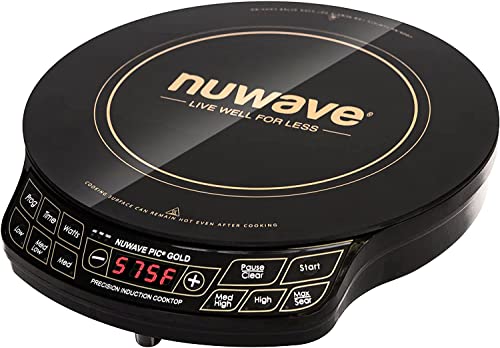
The Nuwave PIC Gold is a single portable induction burner with an 8-inch heating coil under a 12-inch ceramic glass surface, according to its listing. That large coil matters: per America’s Test Kitchen, the hot spot follows the coil, and an 8-inch coil is near the top of the range it saw, which helps with a wide skillet or a comal.
Control is fine-grained. Nuwave lists six presets and temperatures from 100 to 575°F in 5-degree steps, and you can change the temperature or the cooking time without starting over. It offers three wattage settings, given as 700, 900 and 1,500 watts on Nuwave’s listing for the same model, so you can use it on a weaker circuit in an RV or dorm.
It shuts off when the set time ends and won’t start without cookware on it, Nuwave says. Use it with magnetic pans only, and keep the heat a step higher than you think for very gentle simmers.
Why we like it
- 8-inch coil under a 12-inch surface, per the listing.
- 100 to 575°F in 5°F steps.
- Three wattage settings for limited power.
- Auto shutoff and no-pan detection, according to Nuwave.
Key specifications
| Model | PIC Gold |
|---|---|
| Heat source | Induction, 8 in coil |
| Power | 3 settings (700/900/1,500 W per Nuwave) |
| Settings | 100–575°F in 5°F steps; 6 presets |
| Surface | 12 in ceramic glass |
| Cookware | Magnetic only |
| Certification | Not stated in the listing |
| Warranty | 1 year |
Why we recommend it
It suits cooks with cast iron or magnetic stainless pans who want an extra burner with fast, precise heat, or a main burner in a small space.
Skip it if your favorite pots are aluminum, copper or clay; it won’t heat them.
Pros and cons
Pros
- Large coil for wider pans.
- Fine temperature steps and a timer.
- Low-wattage modes for weak circuits.
Cons
- Magnetic cookware only.
- Top power is 1,500 W, per Nuwave, below some 1,800 W units.
- No UL or ETL mark stated in the listing.
2. Cadco CSR-3T Portable Electric Hot Plate, 1500W – Sturdy Steel Body, Any Pan

Cadco makes countertop equipment for food service, and the CSR-3T is its single-burner hot plate. According to its listing, it has an 8-inch high-speed tubular heating element, wide enough for most pots and pans, and a 1,500-watt rating on standard 120-volt power. The body is stainless steel and measures 14 by 12.25 by 4.125 inches.
Heat is set with a Robertshaw thermostat that gives continuous control rather than a few fixed steps, and an on-off rocker switch on the front has a power light so you can see when the burner is live. Cadco warrants it against defects in materials and workmanship for one year in the U.S.
Because it is a resistance burner, it heats any flat-bottomed pan: an aluminum stockpot for tamales, a clay olla for beans or a copper saucepan. Expect it to take longer than induction to respond when you turn it down, and keep it clear of anything flammable while the element cools.
Why we like it
- 8-inch tubular element, per the listing.
- Robertshaw thermostat for continuous control.
- Stainless steel body that wipes clean.
- Works with any flat-bottomed cookware.
Key specifications
| Model | CSR-3T |
|---|---|
| Heat source | Tubular resistance element, 8 in |
| Power | 1,500 W, 120 V |
| Settings | Continuous thermostat dial |
| Surface | Stainless body, 14 x 12.25 x 4.125 in |
| Cookware | Any flat-bottomed pan |
| Certification | Not stated in the listing |
| Warranty | 1 year (U.S.) |
Why we recommend it
It suits kitchens full of aluminum, copper or clay cookware, and anyone who wants a sturdy, simple extra burner with no electronics.
Skip it if you want precise temperatures or fast response; a dial thermostat and a tubular element can’t match induction there.
Pros and cons
Pros
- Any flat-bottomed cookware works.
- Food-service maker, steel construction.
- Simple switch and dial.
Cons
- Exposed element stays hot after use.
- Slower to respond than induction.
- No UL or ETL mark stated in the listing.
Portable burner questions, answered
Is an induction cooktop better than a hot plate?
For most people with magnetic cookware, yes. EPA rates induction more efficient and faster, with a cooler surface. A hot plate is better if your cookware isn’t magnetic or you want the lowest cost.
Is an induction cooktop the same as an induction hot plate?
Yes. Many listings call portable induction cooktops “induction hot plates.” The difference that matters is induction versus a resistance element, not the name.
Does induction use less electricity than a hot plate?
Somewhat. EPA puts induction at about 85 percent efficient and electric resistance at 75 to 80 percent, so induction wastes less of the power it draws.
How do I know if my pan works on induction?
Hold a magnet to the base. America’s Test Kitchen says if it sticks firmly and completely, the pan is compatible. Glass, copper and aluminum won’t work.
Can I use a clay pot or a comal on either one?
A cast iron comal works on both. A clay pot or an aluminum comal needs a hot plate, since neither is magnetic.
The burner that fits your kitchen
Do the magnet test first. If your main pans pass, buy induction and enjoy faster, cooler cooking. If they don’t, a well-built hot plate will serve you for years without a new set of pots. For the cookware side, see the best induction cookware set. And when the extra burner can rest for a night, the menu at Julia’s is a call away at (346) 546-8283. Call to order.