Lighter fluid does one job: it gets the first coals burning when a match alone will not. It also asks you to squirt a flammable liquid onto a pile of fuel, wait for it to burn off, and hope none of the smell ends up in the food. Most grill cooks who give it up never go back.
This guide covers the lighter fluid alternatives worth buying, grouped by method: a chimney starter, an electric coil starter, a hot-air lighter in the style of the Looftlighter, and solid fire starters made of wax, wood or both. For each, we explain how well it does the job, what it needs from you (an outlet, a match, a little patience) and which product from an identifiable maker to buy.
Julia’s earns a commission on purchases made through links on this page, at no cost to you. Recommendations are based on what a restaurant kitchen looks for, product specifications and verified buyer reports.
Why grill cooks look for a lighter fluid alternative
The reasons come down to taste, safety and convenience, and the right alternative depends on which of them matters most to you.
- Taste and smell. FOGO, a lump charcoal maker, says on its own site that lighter fluid’s smell and fumes can get into food and give it an off flavor, and that in a ceramic kamado the smell can soak into the ceramic. Cooks quoted by Chowhound make the same complaint about chemical residue.
- Safety rules that are easy to break. The National Fire Protection Association (NFPA) says that if you use a starter fluid, use only charcoal starter fluid, and never add charcoal fluid or any other flammable liquid to a fire that is already lit. It also says to keep the fluid out of the reach of children and away from heat sources (NFPA grilling safety tip sheet). Every method on this page removes that bottle from the patio.
- Running out. A half-empty bottle has a way of being empty on the evening you need it. An electric or hot-air starter never runs out, and a chimney needs only paper or a single starter.
The NFPA names two of the alternatives directly: chimney starters, which let you start the charcoal using newspaper as the fuel, and electric charcoal starters, which do not use fire at all.
Quick verdict: the best lighter fluid alternative
For most people, the best lighter fluid alternative is a chimney starter: it needs no power, works on any charcoal grill and lights a full load evenly from the bottom up. The Char-Griller 12-inch Chimney Starter, with a trigger that drops the coals into the grill, is our pick. If your grill sits near an outdoor outlet and you never want to buy starters again, choose the Wagner Electro-Torch, a hot-air lighter that also fans the fire, or the simpler Charbroil Electric Charcoal Starter coil. If you just want to swap the bottle for something solid, a box of Masterbuilt paraffin fire starters or Kingsford Quick Light rolls does the job with a single match.
Five ways to skip the lighter fluid, side by side
Our five standout picks, one per method, with the details each maker or listing states. All seven alternatives are reviewed in full below.
| Alternative | Method | Needs | Best for | Buy on Amazon |
|---|---|---|---|---|
| Chimney starter | A fire starter and a match | Kettles and full loads | View on Amazon | |

Wagner Electro-Torch Hot Air Fire StarterBest hot-air lighter
|
Super-heated air, then a blower | An outdoor outlet | Fast starts, kamados, fire pits | View on Amazon |

Charbroil 550-Watt Electric Charcoal StarterBest electric coil
|
Heating element in the coals | An outdoor outlet | Hands-off starts at home | View on Amazon |
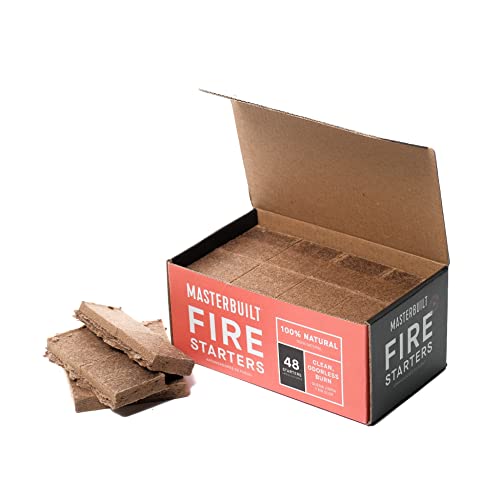
Masterbuilt Pure-Paraffin Fire Starters, 48-CountBest wax cubes
|
Paraffin cube under the coals | A match | Gravity Series grills, wet days | View on Amazon |
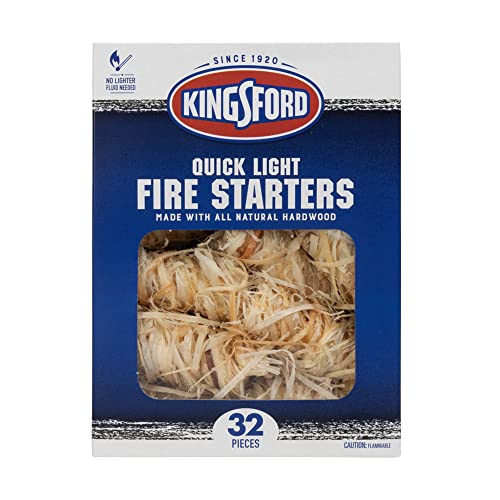
Kingsford Quick Light Fire Starter Rolls, 32-CountBest wood-and-wax starter
|
Hardwood shavings with paraffin | A match | Humid weather, camping | View on Amazon |
Product images from Amazon. Methods and requirements are as stated by each maker or listing; check the listing before you buy.
How this page differs from our starter guides
Our best chimney starter guide compares chimneys in depth, our best charcoal fire starter guide compares cubes, nuggets and fatwood, and our best grill lighter guide covers long lighters and torches. This page answers a different question: you have decided to stop using lighter fluid, so which method should replace it? It compares the methods against each other, with one or two products for each, and none of the products repeat those guides’ picks.
Seven ways to light charcoal without fluid
Two chimneys, two plug-in starters and three solid starters, in order of how many grill cooks each will suit. Each was in stock on Amazon US, sold new, when we checked.
1. Char-Griller 12-inch Chimney Starter with Quick Release Trigger – Pour Coals Without Tipping

A chimney is the method most grill cooks settle on, and it is the one the NFPA names first. Charcoal sits in a metal tube; a fire starter or crumpled paper burns underneath; the open tube draws air up through the coals so they light from the bottom up. FOGO says on its site that the coals in a chimney light all the way to the top in about ten minutes. Then you pour them into the grill.
Char-Griller’s version stands 12 inches tall and 7.75 inches across, according to the listing, and the listing says it holds the right amount of fuel for cooking. What sets it apart is the release: instead of tipping the whole tube over the grate, you squeeze a trigger and the coals drop out of the bottom. The listing describes the handle as ABS with a heat shield.
A chimney does not do away with a flame entirely. You still need a fire starter or paper underneath and a match or long lighter to light it. In return it needs no power, works at a park or campsite, and lights a full load evenly, which is why it is our first recommendation for most people.
Why we like it
- Trigger release drops the coals, per the listing
- Heat-shielded handle
- 12-inch height suits standard kettles
- One-year warranty, per the listing
Key specifications
| Model | CG30183225 |
|---|---|
| Method | Chimney starter |
| How it lights | Starter or paper burns under the coals; air draws up the tube |
| Needs | A fire starter or paper, and a match |
| Size or count | 12 in tall, 7.75 in across (listing) |
| Works without power | Yes |
| Reusable | Yes |
| Warranty | 1 year (listing) |
Why we recommend it
It suits anyone with a kettle or barrel grill who wants the most dependable way to light charcoal without fluid, at home or away from an outlet.
Skip it if you have a very small grill. A 12-inch chimney holds more charcoal than a tabletop grill needs; the Kingsford compact below fits better.
Pros and cons
Pros
- No power or fluid needed
- Lights a full load evenly
- Trigger release instead of tipping
Cons
- Still needs a starter and a match
- Capacity in briquettes not stated
- Material of the tube not stated
2. Wagner Electro-Torch Hot Air Fire Starter – Lights and Fans the Fire
Hot-air lighters, the type the Looftlighter made popular, blow air heated by an electric element straight at the charcoal until it catches. Wagner’s Electro-Torch is one of them. Wagner’s product page says it heats up to 1500°F, starts a fire in 2 to 3 minutes and has a built-in blower, and that it comes with a 6-foot heavy-gauge grounded power cord.
The listing describes two switch positions: the first makes super-heated air to ignite the charcoal, and the second fans the flames once they start. Wagner says it ignites a charcoal grill in less than a minute and gives a roaring fire in as little as 2 to 3 minutes. It works in a grill, a kamado, a fire pit or a fireplace, and because it lights the coals directly, you need no chimney, starter or match.
The trade-off is the cord. Six feet is short, so most patios will need an extension cord, and the NFPA says to use one rated for outdoor use with electric charcoal starters. The tip gets very hot; let it cool on a surface that will not burn before you put it away.
Why we like it
- Up to 1500°F hot air, per Wagner
- Built-in blower fans the fire once lit
- No starter, match or chimney needed
- Two-year warranty, per the listing
Key specifications
| Model | C900085 |
|---|---|
| Method | Hot-air lighter |
| How it lights | Super-heated air aimed at the coals, then a blower setting |
| Needs | An outlet; outdoor-rated extension cord (NFPA) |
| Size or count | 1, reusable; 6-ft cord (Wagner) |
| Works without power | No |
| Reusable | Yes |
| Warranty | 2 years (listing) |
Why we recommend it
Choose it if you grill at home near an outlet, want the fastest start here, and like the idea of fanning a slow fire back to life with the same tool.
Skip it if you grill away from power. It is useless without an outlet, and the six-foot cord means an extension cord at most grills.
Pros and cons
Pros
- Fast, by Wagner’s figures
- Nothing to buy for each fire
- Doubles as a blower
Cons
- Needs an outlet
- Short six-foot cord
- You hold it while it works
3. Charbroil 550-Watt Electric Charcoal Starter – Bury It, Plug It In, Walk Away
The electric coil is the oldest flameless method: a loop-shaped heating element on a handle, much like a stove burner. You pile the charcoal over the loop, plug it in, and the coals touching the element catch. The NFPA notes that electric charcoal starters do not use fire. FOGO’s guide gives about five to ten minutes before you pull the element out, and warns that it stays hot for a long time.
Charbroil’s starter generates 550 watts at 120 volts, according to the listing, which says it gets hot coals in minutes without lighter fluid. The element is heavy-duty stainless steel with a heat-resistant, anti-slip handle, and the listing confirms it can be used with an extension cord. It measures about 17.8 inches long.
The appeal is that you do not have to hold it. Set it in the pile, go and prep the food, and come back to lit coals. The cost is care afterward: the bare element is hot when you lift it out, so have a heat-safe place ready to set it down, away from children and pets.
Why we like it
- 550 W at 120 V, per the listing
- Stainless steel element
- Hands-free once in the coals
- Works with an extension cord, per the listing
Key specifications
| Model | CB1250127R6 |
|---|---|
| Method | Electric coil starter |
| How it lights | Heating element buried in the charcoal |
| Needs | An outlet; outdoor-rated extension cord (NFPA) |
| Size or count | 1, reusable; about 17.8 in long (listing) |
| Works without power | No |
| Reusable | Yes |
| Warranty | Not stated |
Why we recommend it
Buy it if your grill is near an outlet and you want the simplest flameless start, one you can leave alone while it works.
Skip it if you have nowhere safe to set a very hot element down afterward. That step is the one real hazard of the method.
Pros and cons
Pros
- No flame, fluid or starters
- Hands-free
- Simple, with nothing to wear out but the element
Cons
- Needs an outlet
- Hot element must cool safely
- Warranty and cord length not stated
4. Masterbuilt Pure-Paraffin Fire Starters, 48-Count – One Cube Instead of a Squirt
If you want the simplest swap, put a solid starter where the fluid used to go. Masterbuilt’s are cubes of pure paraffin wax, 48 to a box. The listing says they burn at up to 1300°F, are designed to light even when wet, and are odorless and flavorless. You place a cube, light it, and its steady flame lights the charcoal around it.
Masterbuilt designed them to pair with its Gravity Series grills, but the listing says they work with all charcoal grills, smokers, fire pits, fireplaces and campfires. They pair well with a chimney: one or two under the tube in place of newspaper is the cleanest way to use either.
Masterbuilt does not state a burn time or how many cubes to use per fire. Paraffin is a wax rather than a liquid, so there is nothing to spill or splash, but keep the box dry and away from the grill.
Why we like it
- Pure paraffin wax, per the listing
- Designed to light when wet
- Burns up to 1300°F, per the listing
- 48 cubes per box
Key specifications
| Model | MB20091521 |
|---|---|
| Method | Solid wax starter |
| How it lights | Burning cube set among or under the coals |
| Needs | A match or lighter |
| Size or count | 48 cubes |
| Works without power | Yes |
| Reusable | No, one use per cube |
| Warranty | Not stated |
Why we recommend it
Choose it if you own a Masterbuilt Gravity Series grill, or want a starter that behaves the same way on a damp Houston evening as on a dry one.
Skip it if you would rather use a mostly wood starter. These are all wax; the Char-Griller wood starters below are the opposite.
Pros and cons
Pros
- Lights when wet, per the listing
- Works with any charcoal grill
- Nothing to spill
Cons
- Burn time not stated
- One-use; you keep buying them
5. Kingsford Quick Light Fire Starter Rolls, 32-Count – Made for Damp Weather
Kingsford, the charcoal brand, sells lighter fluid too; its Quick Light rolls are the company’s fluid-free option. The listing describes them as natural hardwood shavings with paraffin, rolled into compact starters, 32 to a box.
The listing says the rolls are water-resistant and designed to perform in damp conditions, and that they burn steadily long enough to catch coals or kindling. It names charcoal grills, pellet grills and smokers among the uses, plus fire pits and campsites. Like any solid starter, use one or two under a chimney or tucked into a pile of briquettes, light the end, and leave the coals to catch.
Kingsford does not give a burn time or the number of rolls per fire. Thirty-two rolls is a modest box, so it suits occasional grilling or a camping bin better than every-weekend cooking.
Why we like it
- Hardwood shavings with paraffin, per the listing
- Water-resistant, per the listing
- Compact rolls store and pack easily
Key specifications
| Model | BB12068 |
|---|---|
| Method | Solid wood-and-wax starter |
| How it lights | Burning roll set among or under the coals |
| Needs | A match or lighter |
| Size or count | 32 rolls |
| Works without power | Yes |
| Reusable | No, one use per roll |
| Warranty | Not stated |
Why we recommend it
Buy it if you grill in humid weather or camp, and want a starter from the brand whose charcoal you probably already use.
Skip it if you grill several times a week. Thirty-two rolls will not last long, and a bigger box elsewhere costs less per fire.
Pros and cons
Pros
- Mostly wood with wax
- Made for damp conditions
- Works for grills, smokers and fire pits
Cons
- Small count
- Burn time not stated
6. Kingsford Compact Charcoal Chimney Starter – Sized for Small Grills

A full-size chimney holds more charcoal than a tabletop or portable grill can use. Kingsford’s compact chimney measures 8.1 by 5.7 by 10 inches, according to the listing, which says plainly that it is built for small to medium grills, not full-sized ones, and suggests checking the dimensions against your grill.
The method is the same as any chimney: newspaper or a fire starter in the bottom, briquettes on top, light the paper, and pour when the coals are ashy white. The listing describes rust-resistant zinc steel, ventilation holes around the bottom, a metal heat shield and a ribbed handle. It needs no assembly.
It is a sensible match for anyone with a small kettle, a hibachi or a camp grill, and it packs into a car more easily than a 12-inch tube. Set it on the cold, clean charcoal grate to light, as the listing says.
Why we like it
- Compact 10-inch height, per the listing
- Heat shield and ribbed handle
- Rust-resistant zinc steel
- No assembly
Key specifications
| Model | BB38155 |
|---|---|
| Method | Chimney starter |
| How it lights | Paper or starter burns under the coals; air draws up the tube |
| Needs | Newspaper or a fire starter, and a match |
| Size or count | 8.1 x 5.7 x 10 in (listing) |
| Works without power | Yes |
| Reusable | Yes |
| Warranty | Not stated |
Why we recommend it
Choose it if you cook on a small or portable grill and want the chimney method without a tube that is bigger than the grill needs.
Skip it if you have a full-size kettle or smoker. Kingsford itself says this one is not meant for full-sized grills.
Pros and cons
Pros
- Right-sized for small grills
- No power or fluid
- Easy to pack
Cons
- Too small for full-size grills
- Warranty not stated
7. Char-Griller All-Natural Wood Fire Starters, 24-Count – Wood, Not Wax

Some cooks who drop lighter fluid would rather not swap it for paraffin either. Char-Griller’s starters are, according to the listing, made from all-natural wood and light charcoal and wood without lighter fluid or harsh chemicals. The listing describes an odorless burn that keeps the charcoal flavor of the food.
The listing names kettle, kamado and barrel grills, offset smokers, charcoal chimneys, fire pits and campfires among the uses, so they work as the starter under the Char-Griller chimney above or tucked straight into a pile of coals. A box holds 24.
Char-Griller does not state a burn time, what binds the wood, or whether the starters light when wet. Keep the box dry, and treat them as a fair-weather starter until you know how they behave on your patio.
Why we like it
- All-natural wood, per the listing
- Odorless burn, per the listing
- Works in chimneys, kamados and fire pits
Key specifications
| Model | CG30210926 |
|---|---|
| Method | Solid wood starter |
| How it lights | Burning starter set among or under the coals |
| Needs | A match or lighter |
| Size or count | 24 starters |
| Works without power | Yes |
| Reusable | No, one use per starter |
| Warranty | Not stated |
Why we recommend it
Buy it if you want a starter that is wood rather than wax, from a grill maker, to go with a chimney or a kamado.
Skip it if you need to light in the rain. Char-Griller does not say these light when wet; the Masterbuilt or Kingsford starters do.
Pros and cons
Pros
- Wood, not paraffin, per the listing
- Pairs with any chimney
- From an established grill maker
Cons
- Wet-weather use not stated
- Burn time not stated
- Small box
How to choose a way to light charcoal
A kitchen judges a fire-lighting method the way it judges any routine: does it work the same way every time, and does it leave anything in the food? Four questions decide which alternative suits you.
1. Do you have an outlet near the grill?
Electric coil and hot-air starters need power. The NFPA says to use an extension cord rated for outdoor use. If you grill at a park, a campsite or a tailgate, a chimney and solid starters are the only options here that work.
2. How much charcoal do you light?
A chimney sized to your grill lights the whole load evenly. A full-size tube like Char-Griller’s suits kettles and barrels; Kingsford’s compact one suits small grills. Solid starters and electric starters light a pile in the grill, which works for any size.
3. How much do you want to buy each time?
Electric and hot-air starters are a one-time purchase. A chimney is a one-time purchase that still uses paper or a starter each fire. Cubes and rolls are used up, so count on buying them for as long as you grill.
4. What about wet weather?
Masterbuilt and Kingsford say their starters are designed for wet or damp conditions; Char-Griller does not say. Electric starters need no starter at all, but they are plugged-in tools, so follow the maker’s instructions about where and when to use them. Houston’s humidity makes this point worth weighing.
How we picked these seven starters
We started from the methods the NFPA names in its grilling safety tip sheet, chimney starters and electric starters, and added the solid fire starters and hot-air lighters that grill makers and charcoal makers recommend in place of fluid. We chose products from identifiable grill and charcoal makers (Char-Griller, Kingsford, Charbroil, Masterbuilt) and from Wagner Spraytech, the paint-sprayer and tool maker. Each was in stock on Amazon US, sold new, when we checked, and none repeats a pick from our chimney, fire starter or grill lighter guides.
Details come from each maker’s site where we could read it (Wagner’s product page) and otherwise from the Amazon listing, which we say in each section. Method timings come from FOGO, a charcoal maker, and we read Chowhound’s round-up of cooks’ views on lighter fluid. We checked the U.S. Consumer Product Safety Commission’s recall list for each brand and found no recall of these products. We did not test these products ourselves.
Lighter fluid alternative questions, answered
What can I use instead of lighter fluid?
A chimney starter with newspaper or a solid fire starter underneath is the most common answer, and the NFPA names it. Electric coil starters and hot-air lighters work without any flame if you have an outlet. Solid starters made of wax, wood or both can also be tucked straight into a pile of coals.
How do I light charcoal without lighter fluid or a chimney?
Build a small pile of briquettes around one or two solid starters, light the starters, and leave the pile alone until the coals ash over. An electric coil buried in the pile or a hot-air lighter aimed at it does the same without a match.
Is a chimney starter safer than lighter fluid?
The NFPA’s rules for fluid are to use only charcoal starter fluid, never add it or any other flammable liquid to a lit fire, and keep it away from children and heat. A chimney removes the liquid altogether, though the tube itself gets very hot, so use the handle, set it on a heat-safe surface, and keep children and pets at least three feet from the grill, as the NFPA advises.
Does lighter fluid change the taste of food?
FOGO, a charcoal maker, says the smell and fumes of lighter fluid can get into food and give it an off flavor, and cooks quoted by Chowhound say the same.
How long does it take to light charcoal without fluid?
FOGO gives about ten minutes for a chimney to light all its coals, and about five to ten minutes for an electric coil. Wagner says its Electro-Torch ignites a grill in less than a minute and gives a roaring fire in 2 to 3 minutes. Coals are ready to cook over when they are covered in gray ash.
Our final word on giving up lighter fluid
Start with a chimney: the Char-Griller 12-inch for a kettle or the Kingsford compact for a small grill, with a few Masterbuilt cubes or Kingsford rolls underneath. If your grill is next to an outlet and you would rather never buy starters, the Wagner Electro-Torch or the Charbroil coil does the job with no flame at all. When you are done, the NFPA says to let the coals cool completely before you put them in a metal container.
For more on chimneys, see our guide to the best chimney starter, and if you are still choosing a grill, our guide to the best charcoal grill for beginners starts there.
And if you would rather someone else did the grilling tonight, see the menu or call to order.