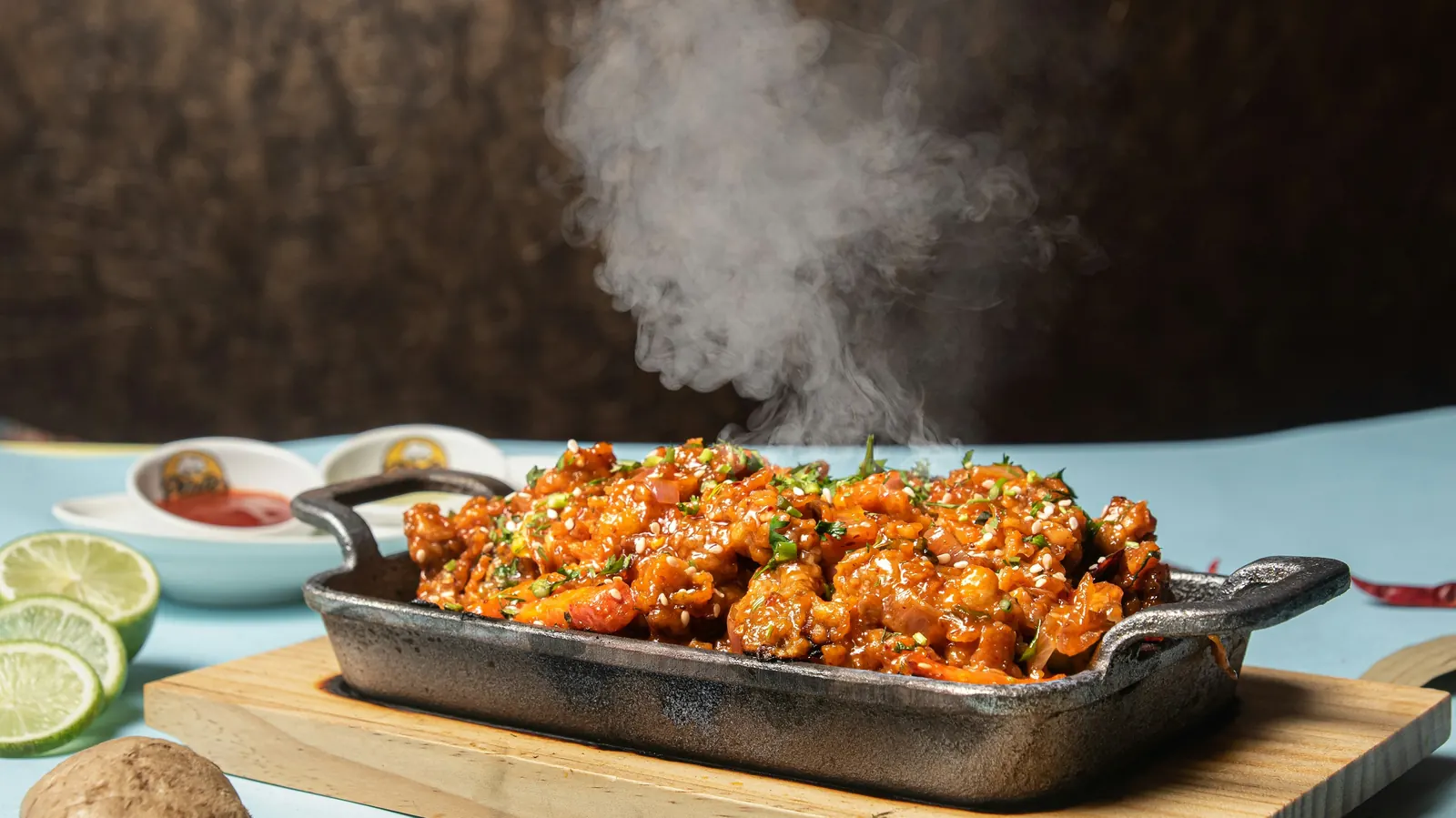
Grease splatters when water in the food hits hot fat and turns to steam, throwing small drops of oil out of the pan. A splatter screen catches those drops while letting the steam out. It is a useful tool, but it is not the only way to keep oil off the stove, the wall and your arms.
This guide covers the splatter screen alternative that suits each kind of frying: a deeper pot, a lid set ajar, a wall guard around the pan, or a closed electric fryer. For each one we say how well it works and where it falls short, with safety points from the makers and the U.S. Fire Administration.
Julia’s earns a commission on purchases made through links on this page, at no cost to you. Recommendations are based on what a restaurant kitchen looks for, product specifications and verified buyer reports.
Why look past a splatter screen
A good mesh screen is still the simplest answer for a skillet of bacon or chorizo, and our best splatter screen guide covers the ones worth buying. People look for something else for a few reasons:
- You do not own one, or it does not fit the pan you are using.
- A screen gets in the way. You have to lift it every time you turn or stir the food.
- It does not cover the wall. A flat screen guards the top of the pan, not the backsplash beside it.
- Deep frying. A screen over a pot of oil for churros or chiles rellenos is awkward; a deep pot or a fryer does more of the work.
The catch is steam. America’s Test Kitchen notes that splatter screens release steam that would otherwise be trapped, which helps avoid soggy chicken skin. Any alternative that covers the pan more tightly will keep in more moisture, so the choice depends on what you are cooking.
Quick verdict: the best splatter screen alternative
For most kitchens, the best splatter screen alternative is a deep pot: fry in something with tall sides, such as the Lodge Essential Enamel 7.5-quart Dutch oven, and most drops fall back inside. For everyday sautéing, a deep chef’s pan with a vented glass lid, such as the Cooks Standard 12-inch, lets you choose between open, ajar and closed. A Lodge 12-inch glass lid set slightly ajar works on a skillet you already own, and an HIC 3-sided splatter guard protects the wall and counter. If you deep fry often, a closed All-Clad electric deep fryer keeps the oil under a locking lid. If you fry bacon in a skillet every week, a mesh screen is still the better buy.
Five ways to stop grease splatter, side by side
Our five main picks, one per approach, with the details each maker or listing states. A sixth, a ceramic nonstick deep pan, is reviewed below the table.
| Pick | How it stops splatter | Best for | Heat limit | Buy on Amazon |
|---|---|---|---|---|

Lodge Essential Enamel Dutch Oven, 7.5 QuartBest overall
|
Tall sides catch the drops | Shallow and deep frying | 500°F | View on Amazon |

Cooks Standard 12-Inch Nonstick Chef’s Pan with Glass LidBest deep pan with lid
|
Deep walls plus a vented lid | Sautéing, pan frying, stir-fries | Pan 500°F, lid 350°F | View on Amazon |
Lodge 12-Inch Round Tempered Glass LidBest lid to set ajar
|
Covers most of the pan | 12-inch skillets you already own | Oven safe to 400°F | View on Amazon |

HIC Kitchen 3-Sided Splatter GuardBest wall guard
|
Three panels around the pan | Backsplash and counter | 450°F | View on Amazon |

All-Clad Electric Deep Fryer with Basket and LidBest for deep frying
|
Locking lid over the oil | Churros, fries, wings | Set 300°F to 375°F | View on Amazon |
Product images from Amazon. Details are as stated by each maker or listing. Check the listing before you buy.

How each alternative works, and its limits
Every approach does one of three things: keeps the drops inside taller walls, covers the pan, or blocks what escapes. Each has a trade-off.
- A deep pan or pot. Drops that fly up fall back inside if the sides are tall enough. America’s Test Kitchen describes the Frywall guard as working the same way, as “an extension of the cookware’s walls” whose tall walls stop popping grease from reaching the stove. Nothing traps steam, so food still browns. The limit, as general kitchen sense: a little splatter still clears the rim when the oil is very hot or the food is wet.
- A lid, ajar. A lid stops nearly all splatter, but closed it traps the steam that a screen lets out, and that is what turns a crisp crust soft. Setting it ajar, with a gap on the side away from you, lets steam escape while blocking most drops; that is general kitchen sense. It works best for the first minutes after food goes into the oil, when splatter is worst.
- A wall guard. Panels around the pan do not cover the food at all, so they do not trap steam. They protect the backsplash, the counter and the next burner, not the cook standing in front.
- A closed fryer. For deep frying, an electric fryer keeps the oil under a lid at a set temperature. It is the most contained option, and the bulkiest.
The cheapest fix comes first, and it is general kitchen sense: pat food dry before it goes into the oil, lower it in gently, and do not crowd the pan. Wet food and cold, crowded pans make the most splatter.
Our picks for the best splatter screen alternative
We chose one product per approach from makers that state what their cookware is made of and how hot it can go: Lodge, Cooks Standard, HIC Kitchen, Tramontina and All-Clad. Each was in stock on Amazon US, sold new, when we checked. Specifications come from the listings and makers; safety guidance comes from the makers and the U.S. Fire Administration, or is labeled general kitchen sense. We have not cooked with every product here.
1. Lodge Essential Enamel Dutch Oven, 7.5 Quart – Tall Sides That Keep Oil In
The surest way to keep oil off the stove is to fry in something deeper than a skillet. A 7.5-quart Dutch oven has walls several inches above the oil, so drops that jump fall back into the pot. It also holds heat, so the oil temperature drops less when cold food goes in.
Lodge’s Essential Enamel Dutch oven (model EC7D13) is enameled cast iron with dual assist handles and a lid. Lodge rates it oven safe to 500°F and describes the enamel as PFAS-free, with a smooth surface for hand washing. Lodge’s enamel care page sets out the rules for heating it: do not heat it empty on the stovetop, preheat gradually with oil on a burner close to the pot’s size, and start on low heat while it warms. It also warns against adding cold ingredients to a hot, empty pan.
On lead, Lodge says it relies on vetted third-party testing to verify that its cookware is free of dangerous levels of lead and cadmium; it does not word that as lead-free. The pot is heavy, which is the cost of the heat it holds.
Why we like it
- Tall walls catch most splatter
- Oven safe to 500°F, per Lodge
- Lodge publishes clear heating rules
- Works for frying, braising and bread
Key specifications
| Model | EC7D13 |
|---|---|
| Type | Dutch oven |
| Material | Enameled cast iron |
| Size | 7.5 qt |
| Heat limit | 500°F |
| Lid | Included |
| Care | Hand wash |
| Lead statement | Lodge: third-party tested, not worded lead-free |
Why we recommend it
It suits a cook who fries chicken, chiles rellenos or churros at home and wants one heavy pot that also braises and bakes.
Skip it if you mostly fry eggs and bacon; a deep pot is more than a quick breakfast needs.
Pros and cons
Pros
- Most splatter stays inside
- Steady oil temperature
- Many uses beyond frying
Cons
- Heavy
- Must not be heated empty
- No explicit lead-free wording
2. Cooks Standard 12-Inch Nonstick Chef’s Pan with Glass Lid – Deep Walls and a Vented Lid
A chef’s pan sits between a skillet and a wok: a flat base with tall, flared sides. That depth keeps most sauté and pan-fry splatter inside, and you can still turn food easily. This one comes with a lid, so you have three settings: open for browning, ajar for the first spitting minutes, closed for simmering.
Cooks Standard’s pan (model 02486) is 12 inches across with a 5-quart capacity, per the listing, made of hard-anodized aluminum with a nonstick interior. It works on induction, gas, electric, glass and ceramic cooktops. The pan is oven safe to 500°F, but the tempered glass lid only to 350°F, and the lid has a steam vent. It is dishwasher safe, with riveted stainless handles the maker says stay cool, and a one-year warranty.
As general kitchen sense, nonstick coatings prefer medium heat, so this is a pan for sautéing and shallow frying rather than a long, very hot deep fry. Follow the maker’s instructions on heat for the coating.
Why we like it
- 5-quart depth in a 12-inch pan
- Glass lid with a steam vent
- Works on induction and gas
- Dishwasher safe
Key specifications
| Model | 02486 |
|---|---|
| Type | Chef’s pan with lid |
| Material | Hard-anodized aluminum, nonstick |
| Size | 12 in, 5 qt |
| Heat limit | Pan 500°F; lid 350°F |
| Lid | Tempered glass, steam vent |
| Care | Dishwasher safe |
| Lead statement | Not applicable (metal, glass) |
Why we recommend it
It suits a cook who wants one everyday pan for fajita vegetables, stir-fries and pan-fried cutlets with less mess.
Skip it if you want a pan for very high heat; the nonstick coating and 350°F lid set the limits.
Pros and cons
Pros
- Open, ajar or closed as needed
- Deep enough to toss food
- Easy cleanup
Cons
- Lid rated lower than the pan
- One-year warranty
- Sold by a third-party seller
3. Lodge 12-Inch Round Tempered Glass Lid – A Lid for the Skillet You Own
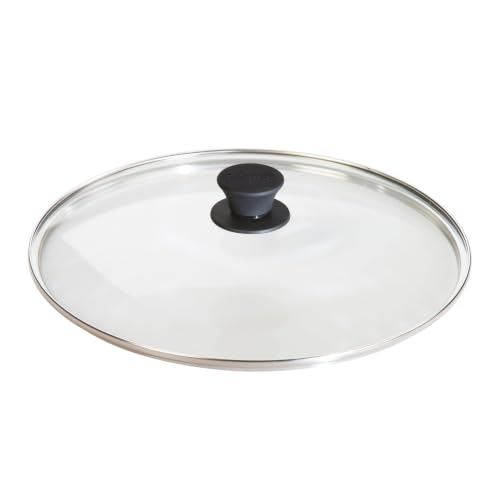
Many 12-inch skillets are sold without a lid. Lodge’s round glass lid (GL12) fits 12-inch Lodge skillets and pans, per the listing, and the clear glass lets you watch the food without lifting it. It is tempered glass with a silicone knob, oven safe to 400°F.
Used as a splatter screen alternative, set it ajar on the side away from you so steam escapes and most drops stay in. Close it fully and the food will steam, which is fine for cooking chorizo through or wilting greens, but softens anything you want crisp, as America’s Test Kitchen’s point about trapped steam suggests.
A lid also has a fire-safety job. The U.S. Fire Administration says to keep a pan lid or baking sheet nearby and use it to cover the pan if it catches fire, and to turn the burner off if you see smoke or the grease starts to boil. A lid that fits your skillet is a lid you can reach for.
Why we like it
- Fits 12-inch Lodge skillets, per the listing
- Clear tempered glass
- Oven safe to 400°F
- Doubles as the lid USFA says to keep nearby
Key specifications
| Model | GL12 |
|---|---|
| Type | Replacement skillet lid |
| Material | Tempered glass, silicone knob |
| Size | 12 in |
| Heat limit | 400°F (oven) |
| Lid | This is the lid |
| Care | Not stated on this listing |
| Lead statement | Not applicable (clear glass) |
Why we recommend it
It suits anyone with a lidless 12-inch cast iron skillet who wants to cut splatter and keep a fire-safety lid at hand.
Skip it if your skillet is not a 12-inch Lodge or a close match; measure the rim before you buy.
Pros and cons
Pros
- Stops nearly all splatter when on
- See-through
- Useful for steaming and melting cheese
Cons
- Traps steam if closed
- Fits one pan size
4. HIC Kitchen 3-Sided Splatter Guard – A Wall Around the Pan
A wall guard stands on the stovetop around the pan rather than on top of it. HIC’s guard (model 43848) has three hinged panels that surround the cookware, which HIC says helps reduce splatter on countertops, backsplashes, cabinets and nearby surfaces while leaving the food open for stirring and turning.
It is nonstick carbon steel, heat safe to 450°F, and measures 9 by 30 inches open, folding flat to 9 by 10.25 inches for a drawer. HIC says it fits pans and bowls up to 10.5 inches and is hand wash only, with rolled edges.
The limit is the open top and the open front. It keeps grease off the wall and the counter, not off you or the stovetop directly in front of the pan. As general kitchen sense, keep the panels clear of open flame on a gas burner and check that a larger pan fits inside before you heat it; a 12-inch skillet is beyond HIC’s stated size.
Why we like it
- Protects the backsplash and counter
- Food stays open to stir and flip
- Heat safe to 450°F
- Folds flat for storage
Key specifications
| Model | 43848 |
|---|---|
| Type | 3-sided stovetop guard |
| Material | Nonstick carbon steel |
| Size | 9 x 30 in open; fits pans up to 10.5 in |
| Heat limit | 450°F |
| Lid | None |
| Care | Hand wash only |
| Lead statement | Not applicable (metal) |
Why we recommend it
It suits a kitchen where the stove sits against a wall or next to a counter that gets spotted every time you fry.
Skip it if you fry in a 12-inch skillet; HIC sizes it for pans up to 10.5 inches.
Pros and cons
Pros
- No steam trapped
- Hands free while cooking
- Stores flat
Cons
- Open top and front
- Hand wash only
- Sold by a third-party seller
5. All-Clad Electric Deep Fryer with Basket and Lid – Oil Under a Locking Lid
For real deep frying, the most contained answer is to take the oil off the stove. All-Clad’s electric fryer (model EJ814051) holds 3.5 liters of oil and fries up to 2.65 pounds of food at a time, per the listing, with a temperature dial from 300°F to 375°F.
All-Clad lists a locking lid, cool-touch handles and automatic shut-off among its safety features. Its oil filtration system drains and stores the oil for reuse, which All-Clad says also helps keep frying smells down. The basket, bowl, lid and oil box are dishwasher safe, and it carries a two-year warranty. The listing does not state a safety certification mark.
It is the bulkiest option here and only does one job. Our best deep fryer guide compares more models if frying is a regular thing in your kitchen.
Why we like it
- Locking lid over the hot oil
- Set temperature, 300°F to 375°F
- Built-in oil filtration and storage
- Dishwasher-safe parts
Key specifications
| Model | EJ814051 |
|---|---|
| Type | Electric deep fryer |
| Material | Stainless steel |
| Size | 3.5 L oil; 2.65 lb food |
| Heat limit | Adjustable, 300°F to 375°F |
| Lid | Locking lid |
| Care | Basket, bowl, lid and oil box dishwasher safe |
| Lead statement | Not applicable (metal) |
Why we recommend it
It suits a household that deep fries churros, wings or fries often enough to give a fryer counter or cabinet space.
Skip it if you deep fry a few times a year; a deep pot does the job and stores with everything else.
Pros and cons
Pros
- Most contained frying
- Thermostat holds the oil
- Oil stored for reuse
Cons
- Bulky, single use
- No certification mark on the listing
6. Tramontina All-in-One Plus 5-Quart Pan – A Deep Nonstick Pan With a Lid

Tramontina’s All-in-One Plus pan is a 5-quart deep pan that Tramontina pitches for sautéing, frying and braising. Like the chef’s pan above, the tall sides keep much of the splatter in, and the lid lets you cover it partway. The set also includes a stainless steamer insert, a bamboo utensil and a bamboo trivet.
Per the listing, it has a heavy-gauge cold-forged body, an ILAG Swiss Crystals ceramic nonstick interior and a high-temperature silicone exterior. It works on induction, gas, electric and ceramic stoves and is oven safe to 400°F. The lid is aluminum, not glass, so you cannot see through it, and its stainless handle doubles as a spoon rest. The listing does not state care instructions or a warranty.
As general kitchen sense, a ceramic nonstick surface is best kept to medium heat, so this suits sautéing and shallow frying more than a hot deep fry.
Why we like it
- 5-quart depth
- Ceramic nonstick interior
- Works on induction, oven safe to 400°F
- Steamer insert included
Key specifications
| Model | 80110/087DS |
|---|---|
| Type | Deep pan set with lid |
| Material | Cold-forged body, ceramic nonstick |
| Size | 5 qt |
| Heat limit | 400°F |
| Lid | Aluminum, spoon-rest handle |
| Care | Not stated on this listing |
| Lead statement | Not applicable (ceramic nonstick coating, not glaze) |
Why we recommend it
It suits a cook who wants one deep, lidded pan for sautéing, steaming and braising, with a nonstick surface.
Skip it if you want to watch the food through a glass lid.
Pros and cons
Pros
- Deep sides cut splatter
- Useful extras in the box
- Works on all stoves
Cons
- Solid lid, no view
- Care and warranty not stated

What about a microwave splatter cover?
A microwave splatter cover is made for the microwave, not the stove. It is the right tool for reheating chili or cooking bacon between paper towels in the microwave, and our best microwave splatter cover guide covers those. As general kitchen sense, do not set a plastic microwave cover over a pan on a burner; use a lid or a metal screen made for the stovetop.
Frying safely without a screen
The U.S. Fire Administration’s cooking advice applies whatever you use:
- Stand by your pan. If you leave the kitchen, turn the burner off.
- Watch the heat. USFA notes that fires start when the heat is too high; if you see smoke or the grease starts to boil, turn the burner off.
- Keep a lid or baking sheet nearby. If the pan catches fire, cover it to put the fire out.
- Clear the stovetop. Keep anything that can catch fire away from it.
Afterward, a wall guard or deep pan still leaves some grease on the stove. Our best kitchen degreaser guide covers what removes it.

Splatter screen alternative questions, answered
How do I stop grease splatter without a splatter screen?
Fry in a deeper pan or pot, set a lid ajar for the first few minutes, or stand a 3-sided guard around the pan. Pat food dry first and do not crowd the pan; both are general kitchen sense.
Can I use a lid instead of a splatter screen?
Yes, but a closed lid traps steam, which America’s Test Kitchen links to soggy results such as chicken skin. Set it ajar so steam can escape, or use it only for the first minutes of frying.
Does a deeper pan really reduce splatter?
Yes, for most drops. Tall walls catch what flies up, the same idea America’s Test Kitchen describes in the Frywall guard, which acts as an extension of the pan’s walls. Very hot oil and wet food can still throw some over the rim.
Is a 3-sided splatter guard worth it?
If your problem is a spotted backsplash or counter, yes. It does not cover the pan, so it will not stop splatter reaching you.
What should I do if the oil catches fire?
The U.S. Fire Administration says to cover the pan with a lid or baking sheet to put the fire out, and to turn the burner off. Keep that lid within reach whenever you fry.
Our last word on frying without a screen
You can keep most oil in the pan without a splatter screen. Fry in something deeper, use a lid ajar in the spitting first minutes, and stand a guard around the pan if the wall is the problem. For regular deep frying, a closed fryer is the cleanest choice. If you fry bacon in a skillet most mornings, though, the simplest fix is still a good mesh screen from our best splatter screen guide, and for deeper pans see the best deep frying pan guide.
And if you would rather let someone else do the frying, see the menu or call to order.