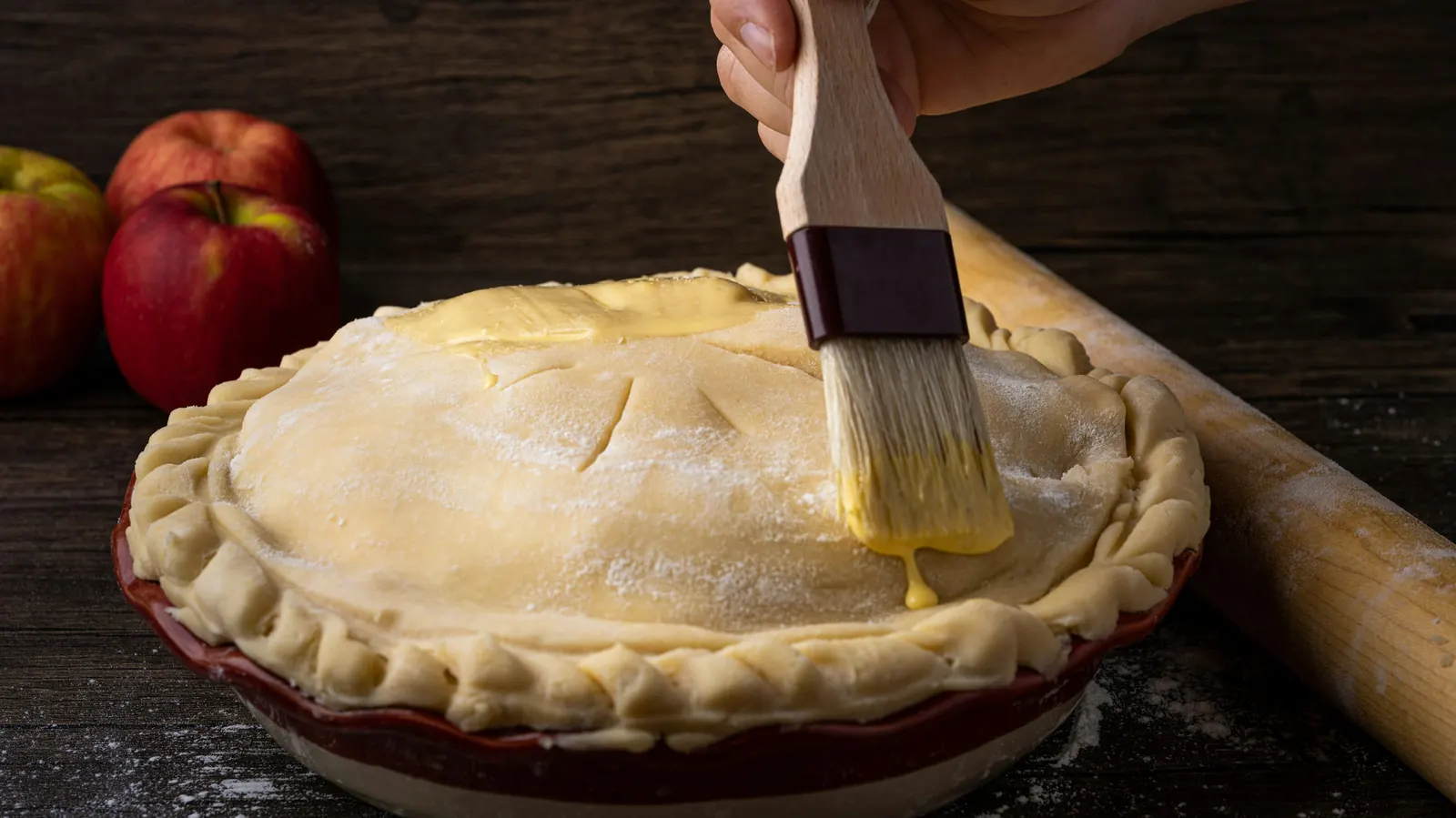
Pastry brushes and basting brushes look alike: a handle with something soft on the end. Plenty of home cooks own one and use it for everything, from egg wash on empanadas to barbecue sauce on ribs. In a restaurant kitchen they usually live in different places. The pastry brush sits by the bench with the egg wash; the basting brush hangs by the grill or the oven with the marinades.
The differences come down to three things: what the bristles are made of, how long the brush is, and how much heat it has to survive. This guide explains each one, when a single brush can cover both jobs, and which brush to buy for each side.
Julia’s earns a commission on purchases made through links on this page, at no cost to you. Recommendations are based on what a restaurant kitchen looks for, product specifications and verified buyer reports.
Quick verdict: basting brush or pastry brush?
If you bake, buy a pastry brush with soft natural boar bristles: it carries more egg wash or butter and lays it down gently on raw dough. If you grill or roast, buy a basting brush with silicone bristles and a longer handle: it survives the heat, keeps your hand back and goes in the dishwasher after raw meat. If you do both, keep one of each. A short silicone brush can cover both jobs in a pinch, but it is the weaker pastry brush.
Basting brush vs pastry brush, side by side
| Feature | Pastry brush | Basting brush |
|---|---|---|
| Main jobs | Egg wash, melted butter, glazes, syrups on dough and pastry | Marinades, sauces, oil and butter on meat, vegetables and hot pans |
| Typical bristles | Natural boar hair, sometimes nylon or goose feather | Silicone, sometimes thick natural bristles or a cotton mop |
| Bristle feel | Fine, soft, flexible | Thicker, firmer silicone fins or coarse bristles |
| Length | Short, often about 7 to 9 inches overall | Longer, often about 10 to 12 inches; grill brushes longer still |
| Heat | Natural bristles rarely carry a heat rating | Silicone often rated to about 450–600°F |
| Liquid carried | More per dip | Less per dip with silicone |
| Cleaning | Hand wash; natural bristles can hold odors | Silicone usually dishwasher safe |
| Sheds? | Natural bristles can | Silicone does not |
The lengths and heat ratings above are typical of the brushes we looked at, not fixed rules; check each listing. The picks at the end of this page give the exact figures for three brushes.
Bristles: soft hair versus silicone fins
This is the difference that matters most. A pastry brush is built to move a thin liquid onto something delicate without damaging it. Natural boar bristles are fine and absorbent, so they soak up egg wash and release it in a smooth, even layer. America’s Test Kitchen found that natural-fiber brushes “pick up more than double the volume of liquid that silicone brushes can,” and that their fine bristles let you apply liquid more precisely. On proofed bread or a soft empanada dough, that gentleness is the point: a stiff brush can drag, tear or deflate the surface.
A basting brush is built for the opposite conditions. Most modern basting brushes have silicone bristles: thick, flexible fins that hold a sauce on their surface rather than soaking it in. America’s Test Kitchen recommends silicone brushes for basting meat or poultry with a glaze or marinade and for greasing hot pans, and notes they never shed bristles and are easier to sanitize after raw meat or egg. The trade-off is that they carry less and are “a little rougher on delicate foods.”
Some basting brushes still use natural bristles, usually thicker and coarser than a pastry brush, and some grill sets include a cotton mop head for thin barbecue mops on big cuts. Those hold a lot of liquid but are harder to clean.

Length and reach
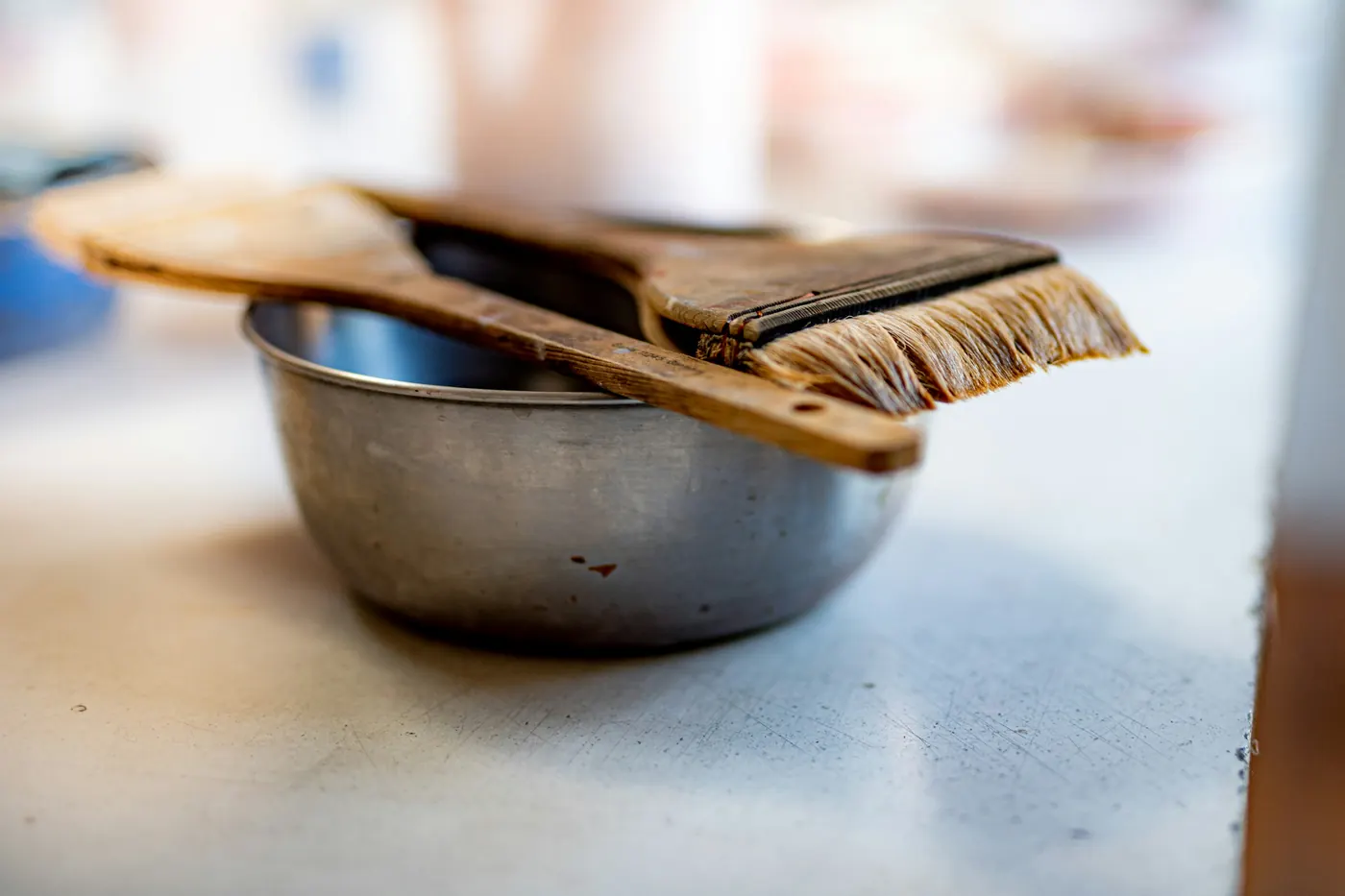
Pastry work happens on a counter, so a pastry brush is short. A short handle gives you control over the edge of a pie or the crimp of an empanada. Where makers give a length, the pastry brushes we looked at for our best pastry brush guide run about 7.5 to 9 inches overall.
Basting happens over heat. Brushing adobo onto chicken thighs in a 425°F oven, or chile-lime butter onto corn over charcoal, puts your hand close to the heat source, so basting brushes are longer. A kitchen basting brush of 11 inches or so is enough for an oven; grill basting brushes are longer again. Our guide to the best grill tools covers long-handled grill brushes and sets that include one.
Heat: where natural bristles lose
Most natural-bristle pastry brushes give no heat rating at all, and their handles are often lacquered wood or plastic. They are meant for room-temperature dough and warm butter, not a hot grate. Touch one to a hot pan and the bristles can singe and the glue that holds them can soften.
Silicone basting brushes usually state a limit. Among the brushes we looked at, silicone ratings ran from 446°F to 600°F, while a nylon pastry brush from Winco was rated to 300°F. Even a silicone head does not make the whole brush heat-proof: America’s Test Kitchen reported that the handle of its winning silicone brush melted on contact with a hot pan. Rest any brush on a spoon rest or a plate, not on the edge of the grill.
Cleaning and cross-contamination
A pastry brush mostly meets egg, butter and sugar. A basting brush meets raw chicken, pork and marinades. That alone is a good reason to keep two brushes. Silicone can go in the dishwasher and does not hold odors the way hair does, which makes it the safer choice for raw meat. Natural brushes need a hand wash in hot, soapy water, a thorough rinse and full drying, bristles down or hanging, before storage.
If you use one brush for everything, the egg wash on your next batch of pan dulce can pick up last night’s garlic marinade. Restaurants avoid that by keeping separate brushes, often in different colors, for pastry and for meat.
When one brush can do both
A short silicone brush, about 8 to 10 inches long, is the best compromise. It handles butter on bread, glaze on rolls, oil on a comal and sauce on chicken, and it goes in the dishwasher. It will not give you the finish a boar brush does on delicate dough, and it is short for a grill.
A natural pastry brush can baste in a pinch, with cool or warm liquids and away from direct heat. Use it for brushing melted butter on a pan of enchiladas before they go in the oven, not for sauce over a live fire. Then wash it well before it goes near dough again.
For thin oil on a pan, a brush is not your only choice: a refillable sprayer mists a sheet pan faster. See our guide to the best oil sprayer.
Choose a pastry brush if… / Choose a basting brush if…
Choose a pastry brush if…
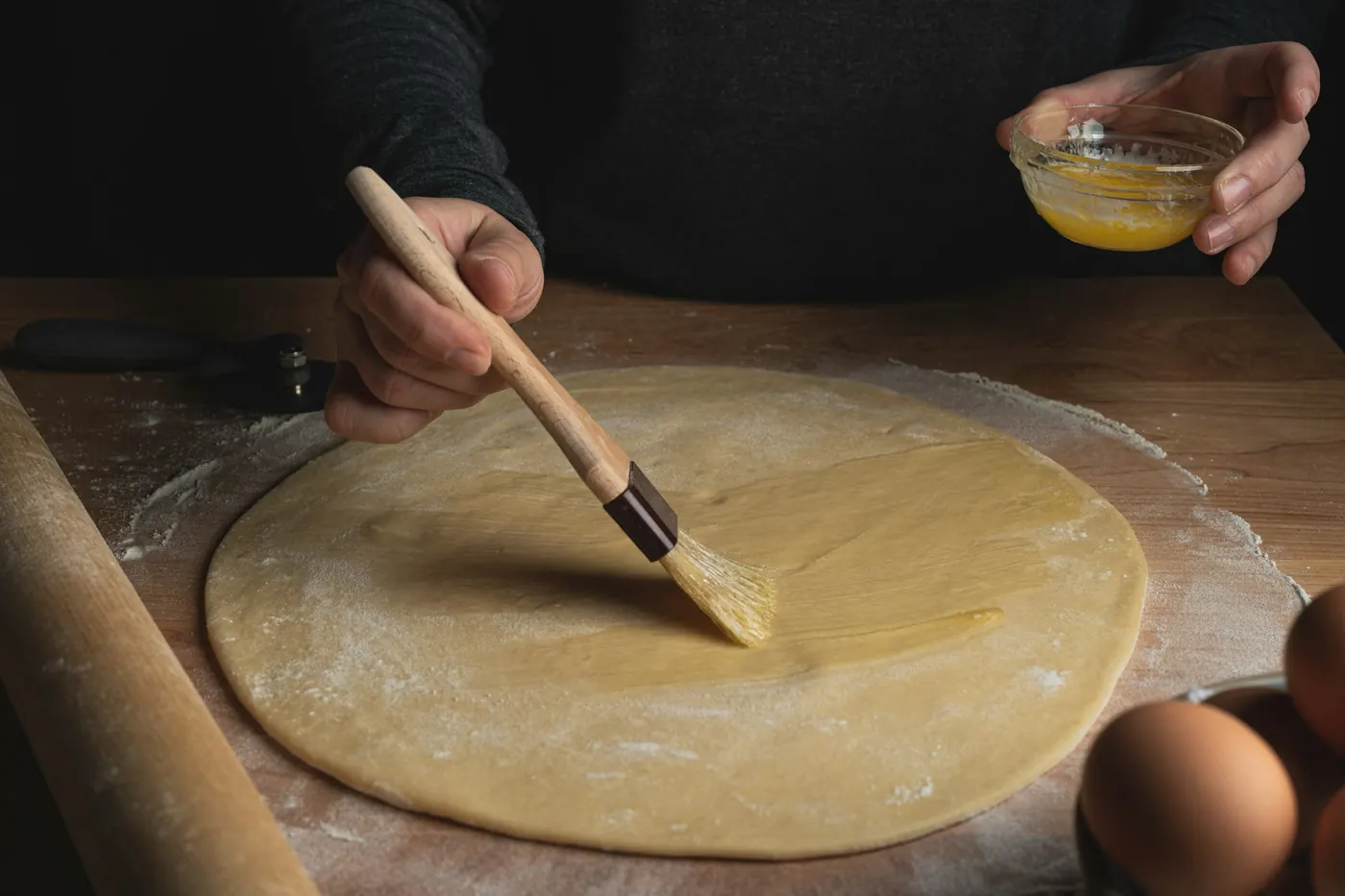
- You egg-wash empanadas, roscas, pies or bread.
- You brush butter onto raw or proofed dough.
- You want the most even, glossy finish with the fewest dips.
- You mostly work at the counter, not over heat.
Choose a basting brush if…
- You glaze or marinate meat on the grill or in the oven.
- You oil hot pans, comals or grill grates.
- You want a brush that goes in the dishwasher after raw meat.
- You need a longer handle to keep your hand away from heat.
Our picks for basting brush vs pastry brush
One brush for each side and one that comes closest to doing both. For more choices, including nylon, wider boar brushes and two-brush silicone sets, see our full pastry brush guide.
1. Winco 1½-Inch Flat Boar Bristle Pastry Brush – The Pastry Side

For the pastry side of the kitchen, this is the brush to buy. It is a restaurant-supply brush with a 1½-inch flat head of boar bristles in a metal ferrule on a 4.75-inch wooden handle, according to the listing, and it won America’s Test Kitchen’s pastry brush review. The reviewers found it “picked up and deposited the greatest volume of egg wash, oil, butter, or glaze in a single pass,” while still feeling precise.
That capacity is what gives a tray of empanadas or a braided loaf an even shine without streaks. Winco recommends hand washing, and America’s Test Kitchen notes it is not dishwasher-safe. Keep it for egg, butter and sugar, and it will not pick up savory odors.
Why we like it
- America’s Test Kitchen’s winning pastry brush
- Carries plenty of liquid per pass
- Soft boar bristles for raw dough
Key specifications
| Model | WBR-15 |
|---|---|
| Bristle material | Natural boar |
| Head width | 1½ in flat |
| Handle | 4.75 in wood, metal ferrule |
| Heat limit (stated) | Not stated |
| Dishwasher-safe | No; hand wash recommended |
Why we recommend it
It suits anyone who bakes and wants the best finish on egg-washed and buttered dough.
Skip it if you want to use it near a grill or put it in the dishwasher.
Pros and cons
Pros
- High liquid capacity
- Gentle on dough
- Reviewer-backed
Cons
- Hand wash only
- No heat rating
2. Tovolo Flex-Core Silicone Basting Brush – The Basting Side

Tovolo’s basting brush is built around the problems basting creates. The silicone is rated heat-safe to 600°F, the highest figure among the brushes we looked at, and the one-piece build has a reinforced nylon core. Zigzag bristles are designed to hold liquid, and built-in feet lift the head off the counter so sauce does not puddle when you set it down.
The listing gives its size as 7.6 inches tall, 2.5 inches wide and 0.75 inches thick, so it has a broad head for covering ribs, a pork shoulder or a sheet pan of vegetables quickly, and it is dishwasher safe. Tovolo also suggests it for egg wash and pastry, but its length is modest, so use tongs to turn food and keep the brush for the quick pass of sauce.
Why we like it
- Silicone heat-safe to 600°F
- Feet keep the head off the counter
- Wide 2.5-inch head
- Dishwasher safe, one piece
Key specifications
| Model | 1001435 |
|---|---|
| Bristle material | BPA-free silicone, zigzag |
| Head width | 2.5 in; 7.6 in long |
| Handle | One-piece, reinforced nylon core |
| Heat limit (stated) | 600°F |
| Dishwasher-safe | Yes |
Why we recommend it
It suits cooks who glaze and marinate meat in the oven or on the grill and want an easy-clean brush that will not shed into the food.
Skip it if you need long reach over a hot grill; a long-handled grill brush keeps your hand farther back.
Pros and cons
Pros
- Highest stated heat limit here
- Tidy resting feet
- Covers big cuts quickly
Cons
- Short for grill work
- Less liquid per dip than bristles
3. Le Creuset Silicone Signature Basting Brush – One Brush for Both

If you want one brush on the counter for both sides, Le Creuset’s is a sensible compromise. The silicone head is heat-resistant to 482°F, flexible, and resistant to stains, odors and flavor absorption, according to Le Creuset, so last night’s adobo is less likely to follow you into today’s pan dulce. The head is removable and safe in the microwave and dishwasher.
The handle is FSC-certified beech wood with flat edges designed to rest on a spoon rest or a Dutch oven handle, and a cutout lets it hang. The wood handle is hand-wash only, so pull the head off before it goes in the machine. Like any silicone brush, it will not match a boar brush for a fine finish on delicate dough.
Why we like it
- Silicone head heat-resistant to 482°F
- Resists stains and odors, per Le Creuset
- Removable, dishwasher-safe head
- Flat-edged handle rests on a pot
Key specifications
| Model | 42071000010005 |
|---|---|
| Bristle material | Silicone |
| Head width | Not stated |
| Handle | FSC-certified beech, hanging cutout |
| Heat limit (stated) | 482°F |
| Dishwasher-safe | Head yes; handle hand wash |
Why we recommend it
It suits a small kitchen that wants one good-looking, heat-safe brush for butter, glazes, oil and marinades.
Skip it if you bake often; a boar brush gives a better finish on egg-washed dough.
Pros and cons
Pros
- Odor-resistant silicone
- Head comes off for washing
- Stable resting handle
Cons
- Wood handle needs hand washing
- Head size not stated
Pastry brush vs basting brush questions, answered
Can I use a pastry brush as a basting brush?
Yes, for cool or warm liquids away from direct heat. Natural bristles can singe on a hot grate or pan, and they hold onto raw-meat juices and odors, so wash it thoroughly or keep a separate brush for meat.
Can I use a basting brush for egg wash?
A silicone basting brush works on sturdy crusts and bread, but it carries less liquid and can drag on soft, proofed dough. For the most even glaze, use a natural pastry brush.
Is silicone or natural bristle better for basting?
Silicone, for most cooks. America’s Test Kitchen recommends silicone for basting meat and greasing hot pans because it tolerates heat, never sheds and is easier to sanitize. A mop or thick natural brush still suits thin barbecue mops on large cuts.
Why do natural pastry brushes shed?
Loose hairs work free from the ferrule over time, especially on cheaper brushes. Epoxy-set bristles help. Before first use, wash the brush and gently tug out any loose bristles.
How long should a basting brush be?
About 11 to 12 inches is comfortable for an oven. For a grill, choose a longer brush so your hand stays back from the fire, and turn food with long kitchen tongs rather than the brush.
Which brush to keep by the oven
Most kitchens are best served by two brushes: a soft boar pastry brush for egg wash and butter, and a silicone basting brush for marinades, glazes and hot pans. If you only have room for one, make it a short silicone brush and accept a slightly less even finish on your bakes. Our best pastry brush guide compares nine brushes of every type, and the best grill tools guide covers basting brushes for the grill.
And if you would rather leave the basting to someone else tonight, see the menu or call to order.