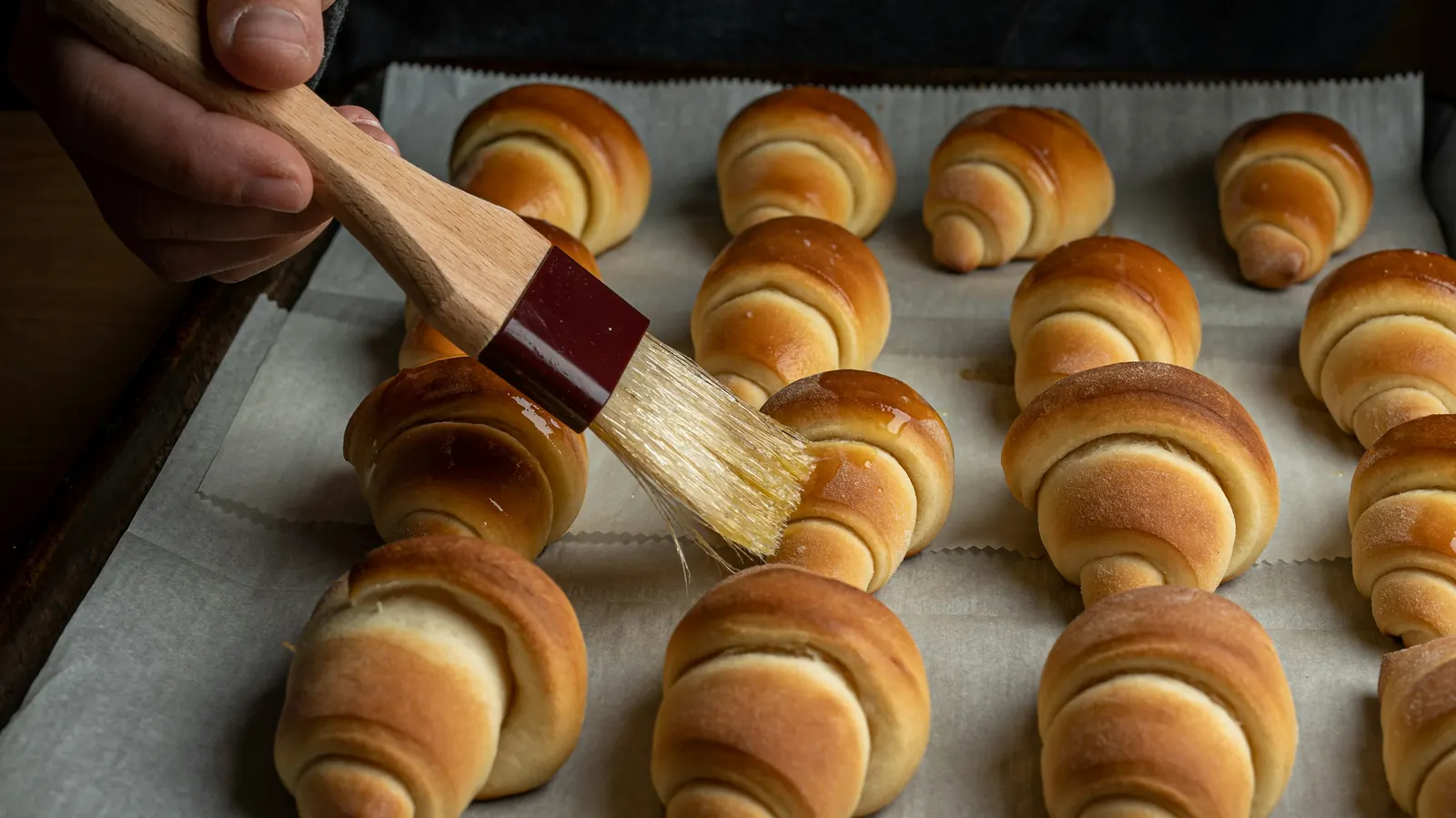
A pastry brush does small jobs that decide how a bake looks. It lays egg wash over empanadas so they come out of the oven glossy and brown, paints melted butter on pan de muerto so the sugar sticks, glazes a rosca de reyes, and wipes a thin film of oil across a hot comal or a sheet pan. In a restaurant kitchen the same brush, or its silicone cousin, also bastes chicken with adobo and brushes chile butter on corn.
The bristles are what separate a good brush from a frustrating one. Natural boar bristles hold a lot of liquid and lay it down gently, but they can shed and need care. Silicone never sheds and goes in the dishwasher, but carries less liquid. Nylon sits in between. This guide compares nine brushes across all three, from a restaurant-supply boar brush that America’s Test Kitchen named its winner to an all-silicone brush rated to 500°F and a long-handled brush for the oven.
Julia’s earns a commission on purchases made through links on this page, at no cost to you. Recommendations are based on what a restaurant kitchen looks for, product specifications and verified buyer reports.
Quick verdict: which pastry brush to buy
For most kitchens, the best pastry brush is the Winco 1½-Inch Flat Boar Bristle Pastry Brush: America’s Test Kitchen’s winning pastry brush, which in its review picked up and laid down more egg wash, oil, butter or glaze per pass than any other model. Pair it with a silicone brush such as the Kitchen Mama WaltzGrip Platinum Silicone Brush Set for basting meat and oiling hot pans, jobs that are harder on natural bristles.
The table below shows our five standout brushes, one for each kind of cook. All nine are reviewed in full after it, followed by how to choose a brush, how to care for one, and answers to common questions.
Five pastry brushes compared
One pick for each kind of cook, with the bristle and heat limit each maker or listing states.
| Brush | Bristle | Head width | Heat limit | Buy on Amazon |
|---|---|---|---|---|

Winco 1½-Inch Flat Boar Bristle Pastry BrushBest overall
|
Natural boar | 1½ in flat | Not stated | View on Amazon |

Kitchen Mama WaltzGrip Platinum Silicone Brush SetBest silicone
|
Silicone, 2 brushes | Not stated; 8 and 11.5 in long | 446°F | View on Amazon |

Ateco 2-Inch Flat White Boar Bristle Pastry BrushBest wide boar brush
|
White natural boar | 2 in flat | Not stated; steel ferrule | View on Amazon |

Carlisle Sparta Meteor 2-Inch Boar Bristle BrushBest for an egg-wash cup
|
Natural boar | 2 in | Not stated | View on Amazon |
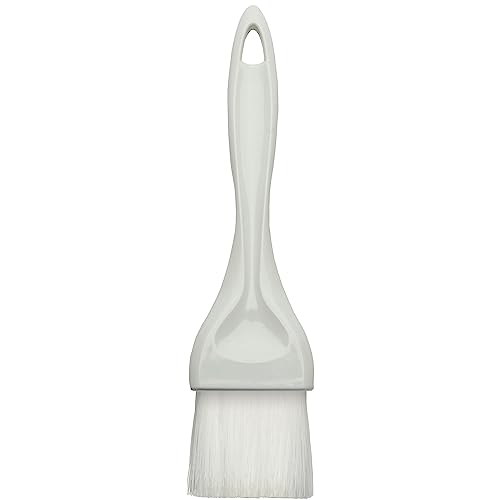
Winco 2-Inch Nylon Pastry BrushBest nylon bristle
|
Nylon | 2 in | 300°F | View on Amazon |
Product images from Amazon. Bristle type, widths and heat limits are as stated by each maker or listing; “not stated” means neither gives the figure.
Our picks for the best pastry brush
The nine brushes below cover three bristle types. Natural boar brushes (picks 1, 2, 4, 7 and 9) are the pastry kitchen’s classic for egg wash and butter on raw dough. Silicone brushes (picks 3, 5 and 6) are the safer choice near heat and the easiest to clean after raw meat. One nylon brush (pick 8) splits the difference. Each pick says who it suits and one honest reason to skip it.
1. Winco 1½-Inch Flat Boar Bristle Pastry Brush – Holds the Most Egg Wash
Winco is a restaurant-supply brand, and this is a plain restaurant-supply brush: a 1½-inch flat head of boar bristles set in a metal ferrule on a 4.75-inch wooden handle, according to the listing. It is the kind of brush you find in a cup next to a bakery’s egg wash, and the width is right for most home jobs, from the edges of a batch of empanadas to the top of a loaf.
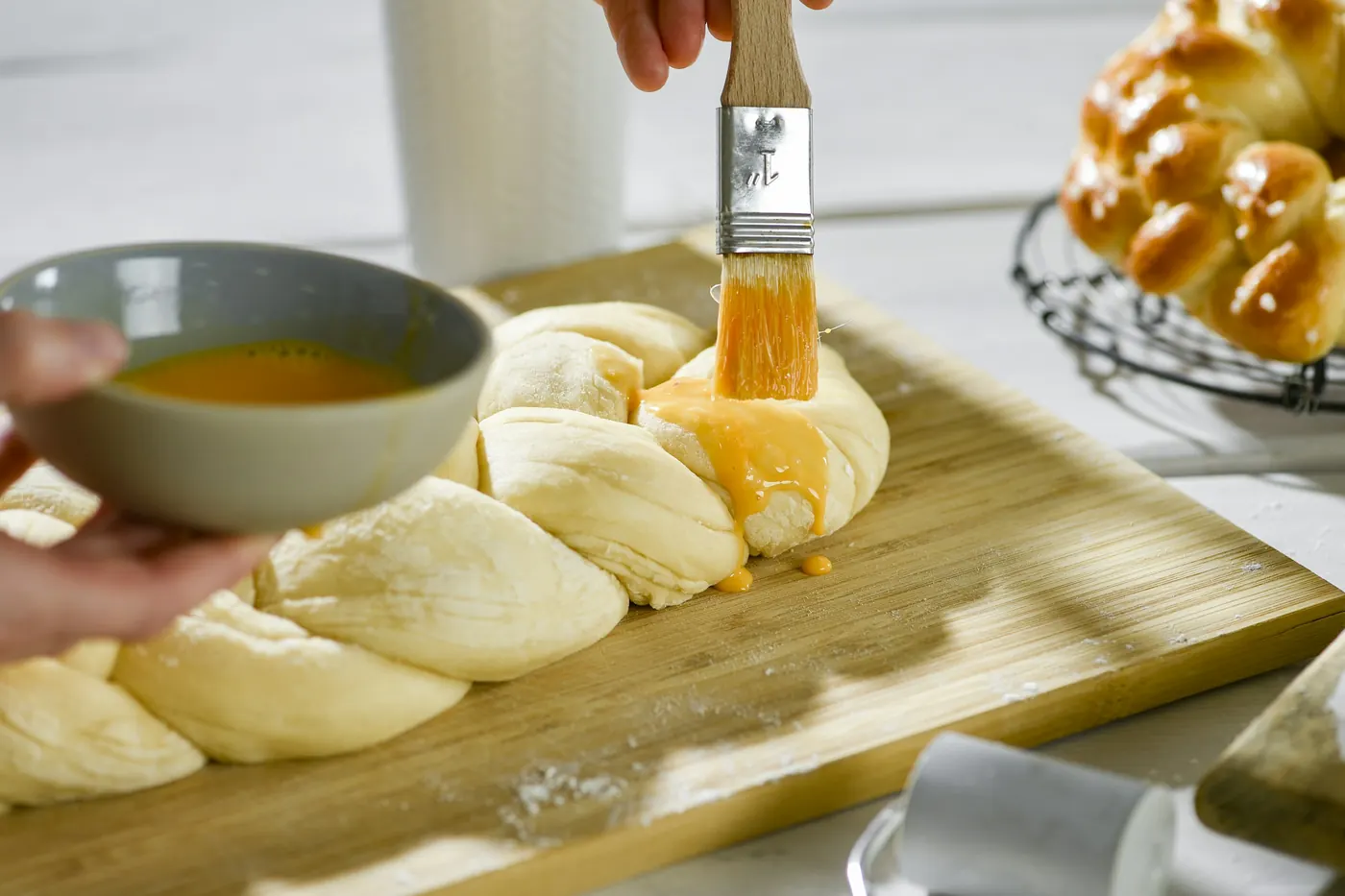
America’s Test Kitchen made it the winner of its pastry brush review. Its reviewers found that the Winco “picked up and deposited the greatest volume of egg wash, oil, butter, or glaze in a single pass,” and that even though the bristles held so much, they “weren’t too densely packed” and still felt agile and precise. More liquid per dip means fewer trips back to the bowl and a more even coat, which is what gives an empanada or a braided bread an even shine.
The trade-offs are the usual ones for natural bristles. Winco recommends hand washing, and America’s Test Kitchen notes the brush is not dishwasher-safe. Boar bristles can also hold odors, so keep it for sweet and egg jobs and use a silicone brush for raw meat.
Why we like it
- America’s Test Kitchen’s winning pastry brush
- Carried the most liquid per pass in that review
- 1½-inch flat head suits most home baking
- Simple wood handle with metal ferrule
Key specifications
| Model | WBR-15 |
|---|---|
| Bristle material | Natural boar |
| Head width | 1½ in flat |
| Handle | 4.75 in wood, metal ferrule |
| Heat limit (stated) | Not stated |
| Dishwasher-safe | No; hand wash recommended |
Why we recommend it
It suits anyone who bakes: egg wash on empanadas and pies, butter on pan de muerto, glaze on sweet bread. It is the one natural brush we would buy first.
Skip it if you want one brush for raw meat and the dishwasher; a silicone brush is easier to keep clean.
Pros and cons
Pros
- Holds and releases plenty of liquid
- Precise for its capacity
- Reviewer-backed choice
Cons
- Hand wash only
- Natural bristles can hold odors
2. Ateco 2-Inch Flat White Boar Bristle Pastry Brush – Steel Ferrule, Wider Stroke
Ateco makes decorating and pastry tools for bakeries, and its flat pastry brushes come in several widths. This 2-inch version has white natural boar bristles epoxy-set in a stainless steel ferrule on a lacquered wood handle. Ateco says a stainless ferrule withstands heat better than plastic or composite ones, which matters if the brush ever touches a hot pan or tray.
The extra half inch over the Winco helps on bigger surfaces: a sheet of puff pastry, a tray of rolls or a large rosca. America’s Test Kitchen recommended the 1½-inch model from the same line (model 60015), and its reviewers liked its thick, uniform bristles. They also reported that it “lost quite a few bristles over the course of testing,” so check the first few bakes for stray hairs.
The listing does not give a heat limit, length or care instructions for this 2-inch size. Treat it like any natural brush: wash it by hand in warm, soapy water and let it dry bristles down or hanging.
Why we like it
- 2-inch head covers big trays quickly
- Bristles epoxy-set in a stainless ferrule
- Sister model recommended by America’s Test Kitchen
- Bakery-supply maker
Key specifications
| Model | 60020 |
|---|---|
| Bristle material | White natural boar |
| Head width | 2 in flat |
| Handle | Lacquered wood, stainless ferrule |
| Heat limit (stated) | Not stated |
| Dishwasher-safe | Not stated |
Why we recommend it
It suits bakers who glaze whole trays at once and want a sturdier ferrule than most home brushes.
Skip it if shedding bothers you; reviewers saw this line lose bristles.
Pros and cons
Pros
- Wide, even strokes
- Stainless ferrule
- Soft natural bristles for dough
Cons
- Shedding reported on a sister model
- Few care details on the listing
3. Kitchen Mama WaltzGrip Platinum Silicone Brush Set – Two Sizes, No Shedding
This set gives you two silicone brushes: an 11.5-inch brush the listing suggests for grilling and an 8-inch brush for pastry. Kitchen Mama says both are made of LFGB-certified silicone over stainless steel, are heat-resistant to 446°F, are one-piece so the bristles stay put, and are dishwasher safe, with a hanging loop for storage.
America’s Test Kitchen rated the WaltzGrip Platinum brush highly recommended in its silicone brush review. Its reviewers noted it was durable, “withstanding melting when its handle came into contact with a hot skillet,” and that it was easy to clean in the dishwasher and kept only the faintest of odors. That is the profile you want for basting chicken with adobo, painting oil on a hot comal or brushing glaze on a ham.
The catch is the material itself. America’s Test Kitchen found that silicone brushes do not pick up as much liquid as natural ones and are “a little rougher on delicate foods.” Use the small one for butter on bread or a sturdy empanada crust, and keep a natural brush for egg wash on soft, raw dough.
Why we like it
- Highly recommended by America’s Test Kitchen
- Two lengths: 8 and 11.5 inches
- Heat-resistant to 446°F
- Dishwasher safe, one-piece build
Key specifications
| Model | SP3120-M |
|---|---|
| Bristle material | LFGB-certified silicone |
| Head width | Not stated |
| Handle | Silicone over stainless steel, hanging loop |
| Heat limit (stated) | 446°F |
| Dishwasher-safe | Yes |
Why we recommend it
It suits cooks who baste meat, oil hot pans and want brushes that go straight into the dishwasher after raw chicken.
Skip it if you mostly egg-wash delicate dough; natural bristles lay liquid down more gently.
Pros and cons
Pros
- Never sheds bristles
- Handle survived hot-pan contact for reviewers
- Two sizes in the box
Cons
- Holds less liquid than boar
- Rougher on soft dough
4. King Arthur Baking Company Professional Pastry Brush, 2-Inch Boar Bristle – Sealed Handle, Shed-Free Claim

King Arthur Baking Company is the flour miller and baking-education name many home bakers already trust, and this is its own natural pastry brush. The listing describes natural boar bristles set firmly into a fully sealed handle, which it says keeps moisture out and prevents shedding. That sealed build is the same idea as a ferrule-free professional brush: nothing for egg wash and water to creep into.
The head is 2 inches wide, and the listing gives the brush as 8.54 by 1.97 inches. The handle is BPA-free, PFAS-free plastic with a hanging hole. King Arthur names butter, egg wash, water and glaze on crusts, pastries and breads as its jobs, which makes it a good fit for an egg-washed pan of conchas or buttering the top of a loaf as it comes out of the oven.
The brush is hand wash only, in warm soapy water, and the listing does not give a heat limit. Like any boar brush, it is for coating dough rather than basting over a hot grill.
Why we like it
- Bristles set into a fully sealed handle
- Shed-free claim from the maker
- 2-inch head covers a tray quickly
- Natural boar bristles for gentle coating
Key specifications
| Model | 50647K |
|---|---|
| Bristle material | Natural boar |
| Head width | 2 in |
| Handle | Sealed BPA-free, PFAS-free plastic |
| Heat limit (stated) | Not stated |
| Dishwasher-safe | No, hand wash |
Why we recommend it
It suits bakers who want a natural brush with no metal ferrule and a handle that will not soak up water.
Skip it if you want a brush that can go in the dishwasher; this one is hand wash only.
Pros and cons
Pros
- No ferrule to trap residue
- Maker states it is shed-free
- Hanging hole for storage
Cons
- Hand wash only
- No heat limit listed
5. Mrs. Anderson’s Baking Silicone Basting Brush, 1.75-Inch – Shed-Proof, 500°F

Mrs. Anderson’s Baking makes baking tools for home kitchens, and this brush is silicone from bristles to handle. The listing says both are heat safe to 500°F, the food-grade silicone bristles are non-stick and shed-proof, and the whole brush is dishwasher safe. Silicone does not absorb, so it resists picking up odors from garlic butter or a chile marinade.
It measures 1.75 by 10.75 by 0.75 inches, so the head is close to the width of a boar brush and the handle keeps your hand back from a hot pan. The maker lists butter, egg wash, water, glaze, sauces and marinades for baking, roasting and grilling. In a home kitchen that makes it the brush for the hard jobs: brushing adobo onto chicken thighs before they go under the broiler, oiling a sheet pan, or glazing sweet rolls straight from the oven.
This listing is the turquoise color. As with every silicone brush, expect it to carry less liquid per dip than a boar brush.
Why we like it
- Bristles and handle heat safe to 500°F
- Shed-proof silicone bristles
- Dishwasher safe
- Hanging handle for storage
Key specifications
| Model | 43640TRQ |
|---|---|
| Bristle material | Food-grade silicone |
| Head width | 1.75 in |
| Handle | Silicone, 10.75 in overall |
| Heat limit (stated) | 500°F |
| Dishwasher-safe | Yes |
Why we recommend it
It suits cooks who want one easy-clean brush for hot pans, glazes and raw meat.
Skip it if egg wash on delicate pastry is your main job; a boar brush holds more and lays it down more gently.
Pros and cons
Pros
- High stated heat limit
- Will not shed
- Dishwasher safe
Cons
- Less liquid per dip than boar
- Single color per listing
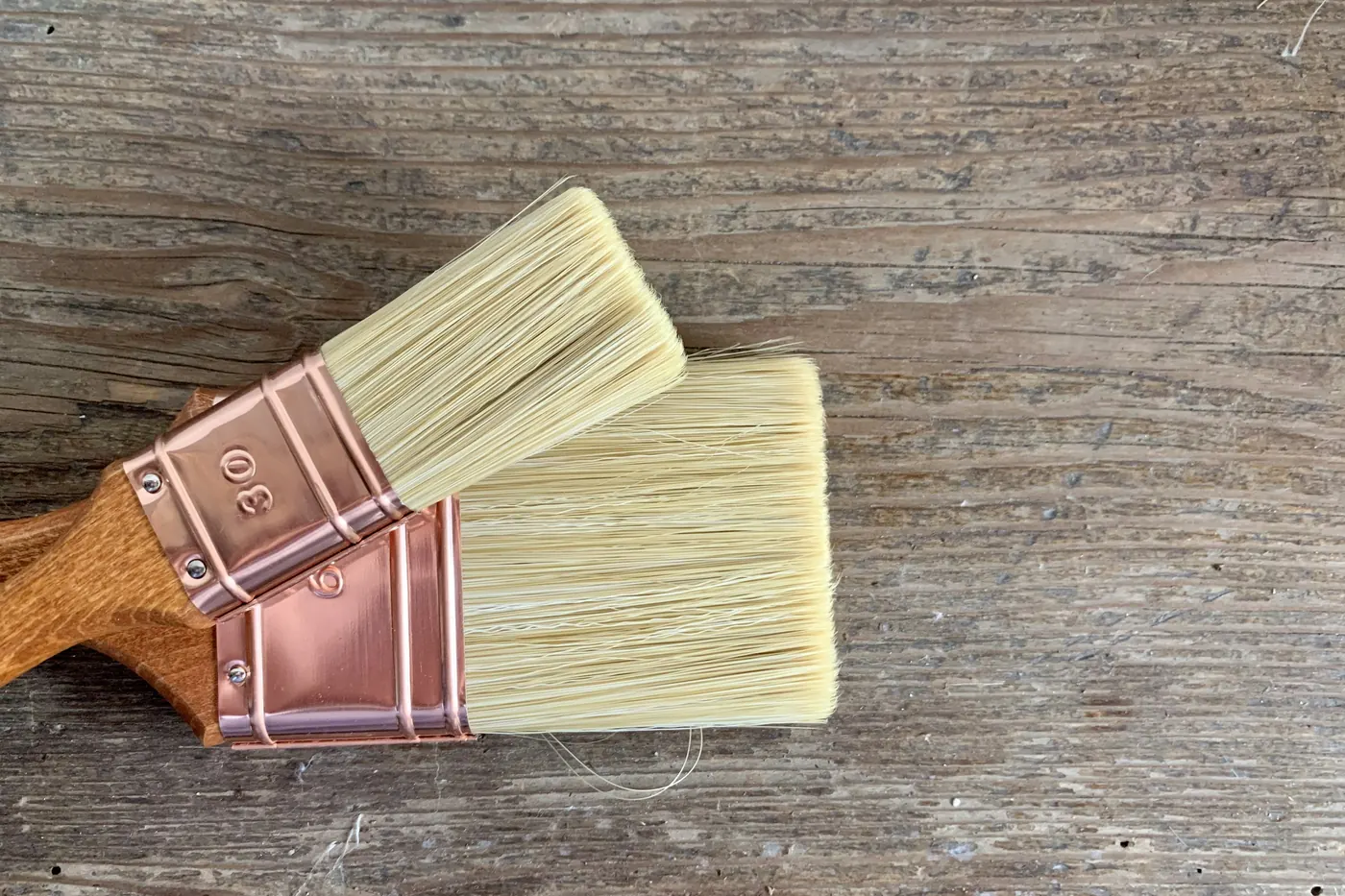
6. KitchenAid Silicone Basting Brush – Long Reach, 500°F

KitchenAid’s brush is 11.6 inches long, which keeps your hand farther from a hot oven rack or a roasting pan than a short pastry brush does. The listing says the silicone head is heat-resistant to 500°F and safe on all cookware and bakeware, including nonstick, and that the bristles stay securely attached to the head and do not clump together while you brush.
KitchenAid names glazes, sauces, melted butter and marinades on meat, vegetables and pastry dough as its jobs, and describes the handle as weighted for balance and control. It is dishwasher safe. In practice, the length makes it a good choice for basting a pork shoulder for carnitas in the oven or brushing butter over a tray of bolillos, where a short brush puts your knuckles close to the heat.
The listing does not give the head width or the handle material. It is sold in several colors under different listings.
Why we like it
- 11.6-inch length keeps hands from heat
- Silicone head rated to 500°F
- Bristles attached securely, per KitchenAid
- Dishwasher safe
Key specifications
| Model | KHA052OHMIA |
|---|---|
| Bristle material | Silicone |
| Head width | Not stated; 11.6 in overall |
| Handle | Weighted ergonomic handle (material not stated) |
| Heat limit (stated) | 500°F |
| Dishwasher-safe | Yes |
Why we recommend it
It suits cooks who baste roasts and glaze trays in a hot oven and want extra reach.
Skip it if you want an independent review behind your choice; we did not find one we could cite.
Pros and cons
Pros
- Long reach
- High stated heat limit
- Easy cleanup
Cons
- Head size not stated
- Long for delicate pastry work
7. Carlisle Sparta Meteor 2-Inch Boar Bristle Brush – Hook Rests on the Cup
Carlisle is one of the big names in restaurant smallwares, and this brush has a detail that line cooks appreciate: a hook molded into the handle that rests on the rim of a container, so the bristles stay in the egg wash or butter instead of rolling onto the counter. A hanging notch in the handle helps with storage.
The bristles are natural boar, epoxy-set and permanently bonded into a one-piece plastic handle, which Carlisle says avoids gaps where moisture collects. The listing describes high fluid retention for sauces and oils, and the 2-inch head covers a tray of empanadas or a sheet of laminated dough quickly. Carlisle states a one-year warranty against manufacturing defects.
The listing gives no heat limit and no dishwasher guidance. A plastic handle is easy to wipe down but should stay away from hot pans and grates.
Why we like it
- Molded hook rests on container rims
- Natural boar, epoxy-set bristles
- One-piece handle with no gaps
- One-year defect warranty
Key specifications
| Model | 4037800 |
|---|---|
| Bristle material | Natural boar |
| Head width | 2 in |
| Handle | One-piece plastic with hook and hanging notch |
| Heat limit (stated) | Not stated |
| Dishwasher-safe | Not stated |
Why we recommend it
It suits bakers who keep a cup of egg wash or melted butter on the bench and want the brush to stay put between strokes.
Skip it if you want to baste near heat; the plastic handle is not rated for it.
Pros and cons
Pros
- Hook keeps the counter clean
- Hygienic one-piece build
- Restaurant-supply maker
Cons
- No stated heat limit
- Care guidance not listed
8. Winco 2-Inch Nylon Pastry Brush – Synthetic Bristles, 300°F
Nylon bristles are the middle ground between boar and silicone. They are finer than silicone fins, so they spread liquid more like a natural brush, and they do not absorb odors the way hair can. Winco’s 2-inch nylon brush has epoxy-set bristles that the listing says are heat resistant up to 300°F, on a smooth, one-piece contoured wooden handle.
Winco lists basting meats and glazing pastries among its jobs, and the listing title calls it dishwasher safe. That makes it a practical choice for a busy kitchen that wants a bristle brush it can run through the machine. A 300°F limit is fine for egg wash, butter and room-temperature glazes, but it is lower than silicone, so keep it off hot pans and grill grates.
No independent review we read covered this brush, so its strengths here come from the listing alone.
Why we like it
- Nylon bristles, heat resistant to 300°F
- Listed as dishwasher safe
- Epoxy-set bristles
- Wide 2-inch head
Key specifications
| Model | NB-20 |
|---|---|
| Bristle material | Nylon |
| Head width | 2 in |
| Handle | One-piece contoured wood |
| Heat limit (stated) | 300°F |
| Dishwasher-safe | Yes, per listing |
Why we recommend it
It suits kitchens that want bristle-style coverage with easier cleanup than boar hair.
Skip it if you baste over a fire; 300°F is the lowest stated limit on this list.
Pros and cons
Pros
- Stated heat limit
- Dishwasher-friendly bristles
- Does not hold odors like hair
Cons
- Lower heat limit than silicone
- No independent review found
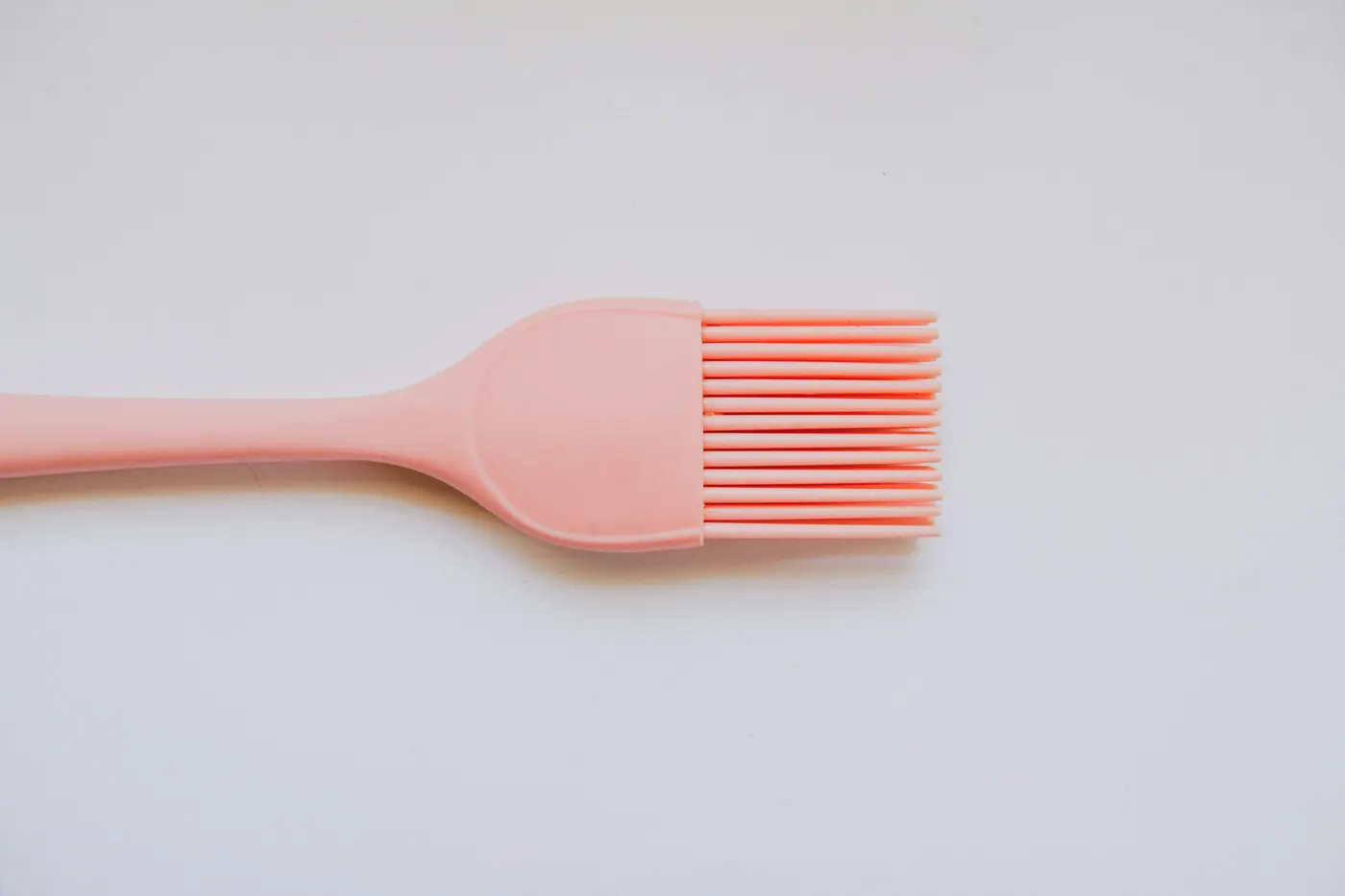
9. GoodCook Touch Natural Bristle Pastry Brush – Soft Grip, Angled Head

GoodCook’s brush pairs a 1½-inch head of natural boar bristles with a soft-touch, BPA-free silicone handle, which the listing says gives a non-slip grip. The head is angled, so the bristles stay off the counter when you set the brush down, and the brush measures 8.25 by 1.5 by 1 inches, small enough for a utensil crock or a drawer.
GoodCook says its pliable boar bristles hold more liquid and coat more evenly than nylon or silicone, and lists glazing pastries, egg wash, marinades, oil and butter as uses. A grippy handle is welcome when your fingers are coated in butter halfway through a tray of pan dulce.
The listing gives no heat limit and no dishwasher guidance; treat it as a hand-wash natural brush.
Why we like it
- Soft-touch silicone handle
- Angled head stays off the counter
- 1½-inch natural boar bristles
- Compact 8.25-inch length
Key specifications
| Model | 20466 |
|---|---|
| Bristle material | Natural boar |
| Head width | 1½ in, angled |
| Handle | Soft-touch BPA-free silicone |
| Heat limit (stated) | Not stated |
| Dishwasher-safe | Not stated |
Why we recommend it
It suits home bakers who want a natural brush that is comfortable to hold and easy to find in a grocery-store brand.
Skip it if you want a reviewer-backed natural brush; the Winco has that support.
Pros and cons
Pros
- Comfortable, non-slip grip
- Angled head is tidy on the bench
- Natural bristles for dough
Cons
- No heat or care details
- No independent review found
Boar, silicone, nylon or feather: the best type of pastry brush
The best kind of pastry brush depends on what you brush most. Natural boar bristles are fine and absorbent. America’s Test Kitchen found natural-fiber brushes “pick up more than double the volume of liquid that silicone brushes can” and let you apply liquid more precisely, which is why they are the pastry kitchen’s choice for egg wash on raw dough. Their drawbacks: they can shed, they are harder to clean, and they hold odors.
Silicone never sheds, tolerates high heat and goes in the dishwasher. America’s Test Kitchen recommends silicone for basting meat or poultry and greasing hot pans, and notes it is easier to sanitize after raw meat or egg. It carries less liquid and is a little rougher on delicate dough. Nylon sits between the two, with finer bristles than silicone but lower heat limits.
Goose-feather brushes are the traditional choice in some European bakeries for the softest possible touch on proofed dough. We looked for one to include, but the only listing we found in stock came from a small seller without a real model number or maker details, so we left it out rather than recommend something we could not verify.
How to choose a pastry brush
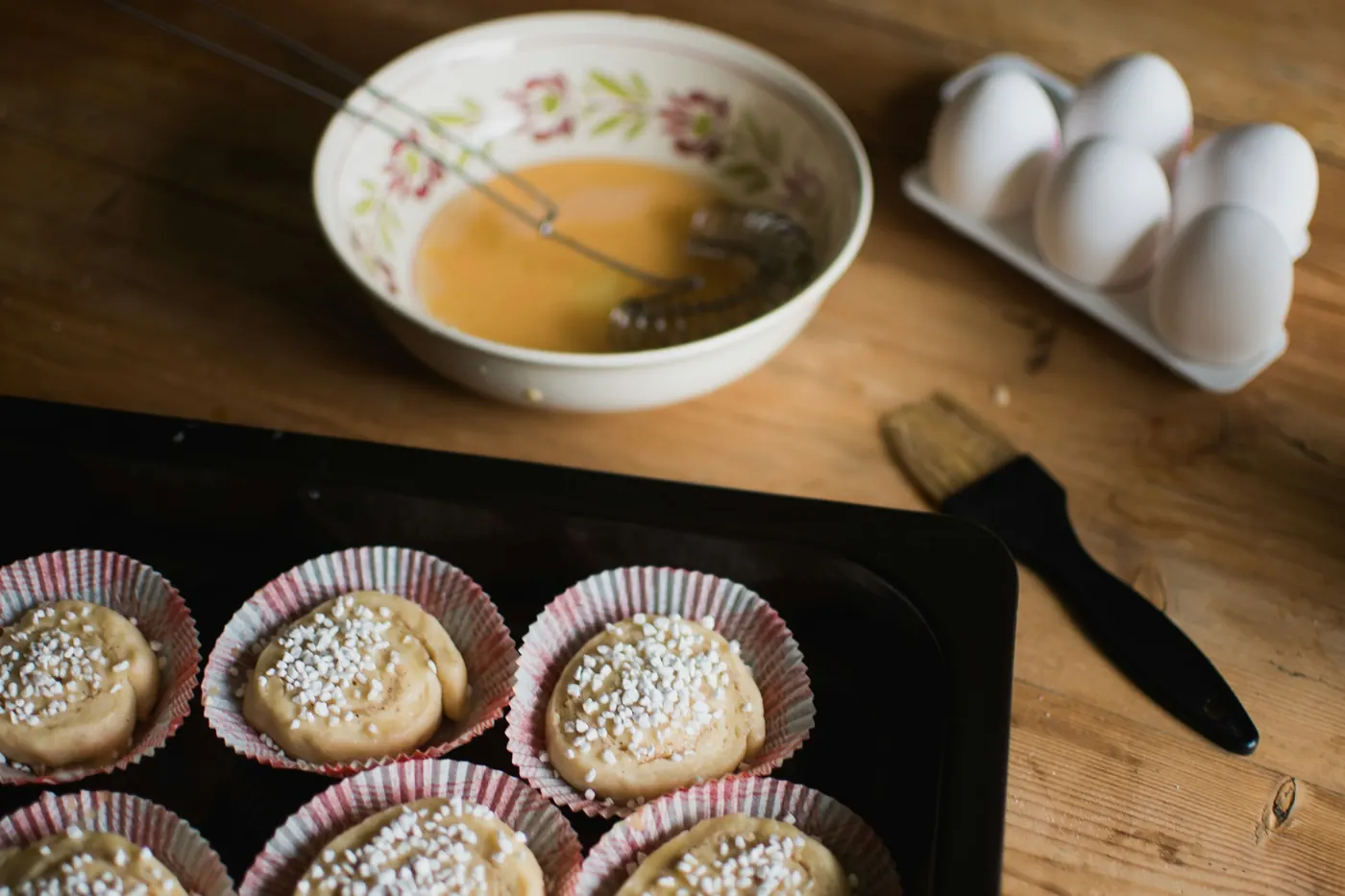
Bristle. Boar for egg wash and butter on raw dough; silicone for hot pans, glazes in the oven and raw meat; nylon if you want bristle coverage and easier cleaning. Many kitchens keep one natural and one silicone.
Width. A 1½-inch head is the all-rounder. Go to 2 inches or wider for sheet pans and big trays, and narrower for the crimped edges of small empanadas.
Ferrule and build. The ferrule is the collar that holds the bristles. Epoxy-set bristles in a stainless or bonded ferrule shed less and do not trap residue the way a loose crimp does. King Arthur and Carlisle avoid an exposed ferrule by setting the bristles straight into the handle.
Heat limit. Only some makers state one. If you baste over a fire or brush a hot comal, choose silicone with a stated limit (446°F to 500°F on this list). For a long reach over the grill, see our guide to the best grill tools, which covers long-handled basting brushes.
Care. Silicone usually goes in the dishwasher. Natural brushes should be washed by hand in warm, soapy water, rinsed well and dried completely, bristles down or hanging, before they go back in a drawer.
How we chose these nine brushes
We started from the brushing jobs in a Mexican kitchen: egg wash on empanadas and sweet breads, butter on pan de muerto and bolillos, glazes on roscas and pan dulce, oil on comals and sheet pans, and adobo or chile butter on meat and corn. We then looked for brushes from identifiable makers sold on Amazon in the United States and checked that each was in stock with Amazon’s product data before writing. Bristle type, widths, handles, heat limits and care come from the makers’ listings; where a listing does not state something, we say so.
We read America’s Test Kitchen’s reviews of natural pastry brushes and of silicone brushes and cite them where they apply. Several brushes that fared well there were not available in stock when we checked, including OXO’s silicone and natural brushes, King Arthur’s professional brush, Nordic Ware’s natural brush and Norpro’s brushes, and we skipped them. We did not find a Wilton or Fat Daddio’s basting or pastry brush on Amazon, only decorating brushes. We did not use these brushes for this guide, and we did not read Serious Eats or Wirecutter coverage, so we do not cite them.
Pastry brush questions, answered
Which pastry brush does America’s Test Kitchen recommend?
In its natural pastry brush review, America’s Test Kitchen named the Winco 1½-inch flat pastry brush (WBR-15) the winner. In its separate silicone brush review, the OXO Good Grips Silicone Pastry Brush won and the Kitchen Mama WaltzGrip Platinum brush was highly recommended; the OXO was out of stock when we checked.
What about Serious Eats and Wirecutter?
We did not read Serious Eats or Wirecutter pastry brush reviews for this guide, so we cannot tell you what they recommend. Our picks rely on maker specifications, listing details and America’s Test Kitchen’s reviews.
What is the best type of pastry brush for egg wash?
A natural boar brush. It holds more liquid and lays it down gently enough not to deflate proofed dough or leave streaks. Silicone works, but carries less and can drag on soft dough.
How do I stop a pastry brush from shedding?
Choose epoxy-set bristles in a sound ferrule, or silicone, which does not shed. Before first use, wash a natural brush and tug gently at the bristles to remove any loose ones, and never soak it for long or put it in the dishwasher unless the maker says you can.
Can I use a pastry brush for basting meat?
Yes, but use a separate brush from the one you use for pastry, and prefer silicone near heat or raw meat. Our basting brush vs pastry brush guide explains when one tool can do both jobs.
Is an oil sprayer better than a brush for greasing pans?
For an even mist over a large pan, a sprayer is faster; a brush is better for getting into corners and for thicker fats like butter or lard. Our guide to the best oil sprayer covers refillable sprayers.
Our final pick for egg wash and butter
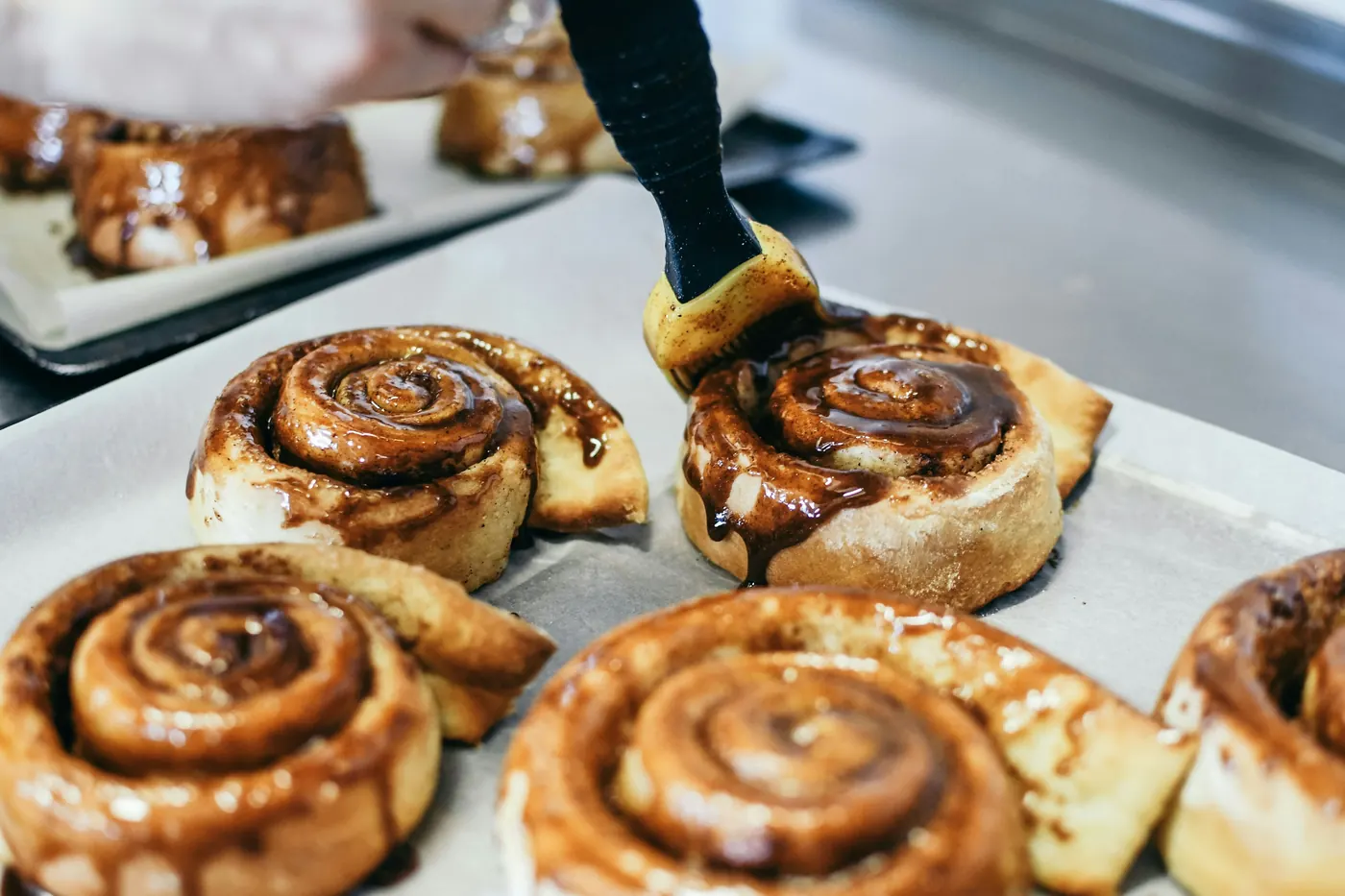
Buy the Winco 1½-inch boar brush if you want one brush for baking, and add the Kitchen Mama silicone set for basting and hot pans. Choose the Ateco for wider trays, the Carlisle Meteor if you work from a cup of egg wash, and the Mrs. Anderson’s silicone or KitchenAid brush if heat matters more than capacity.
A brush is only one part of a baking kit. For the pans the egg wash goes on, see our guide to the best baking pan sets, and for folding fillings and scraping bowls, the best silicone spatula.
Basting over a fire? See our guide to the best basting brushes for grilling.
Related guide: Pastry brush alternative.
And if you would rather someone else did the baking tonight, see the menu or call to order.