
A cold beer belongs with tacos, and most of us never think about it further than that. But beer is one of the broader subjects you can read about, with hundreds of years of history, a real science of flavor and a home brewing hobby that keeps people busy for life.
That is why choosing a book about it is harder than it looks. Some teach you to taste, some teach you to brew and some are simply good stories. This guide picks seven from named authors and publishers, for readers of legal drinking age, and says what stands behind each.
Julia’s earns a commission on purchases made through links on this page, at no cost to you. Recommendations are based on what a restaurant kitchen looks for in a reference, the Amazon listing, publisher and author information and published reviews, which we name where we use them. These books are for adults of legal drinking age; please drink responsibly.
Quick verdict: the best beer book to read first
For most readers, start with Tasting Beer by Randy Mosher, which teaches how to taste and talk about what is in your glass. If you want a big style-by-style reference, choose The Beer Bible by Jeff Alworth. If you want to brew at home, choose The Complete Joy of Homebrewing to start and How To Brew to go deeper.
The other three cover pairing beer with food, the fall of Anheuser-Busch and the rise of craft brewing in St. Louis.

Five beer books side by side
Five of the seven, one for each kind of reader, with what each listing or publisher gives. All seven are described in full below.
| Book | Best for | Covers | Length | Buy on Amazon |
|---|---|---|---|---|

Tasting Beer, Randy MosherBest overall
|
Learning to taste | Styles, sensory, pairing | 376 pages, paperback | View on Amazon |

The Beer Bible, Jeff AlworthBest reference
|
Looking up any style | Dozens of styles | 656 pages, paperback | View on Amazon |
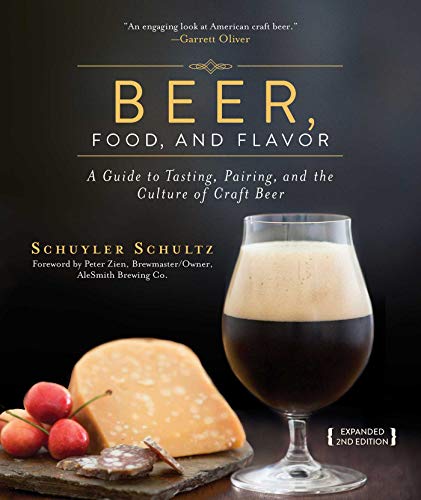
Beer, Food, and Flavor, Schuyler SchultzBest for food pairing
|
Beer with dinner | Pairing, menus, recipes | 320 pages, hardcover | View on Amazon |
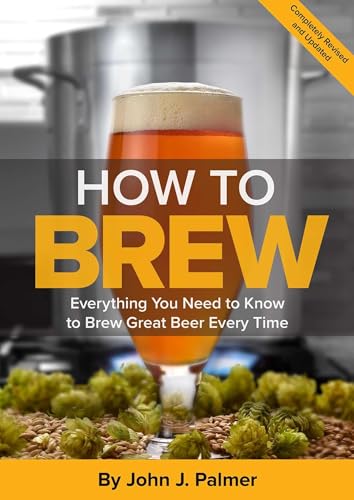
How To Brew, John J. PalmerBest for brewing technique
|
Serious home brewers | Technique and recipes | 582 pages, paperback | View on Amazon |

Bitter Brew, William KnoedelsederBest beer history
|
Reading, not drinking | Five generations of Busch | 416 pages, paperback | View on Amazon |
Cover images from Amazon. Page counts and formats are from the Amazon listings for the editions linked. Coverage is from each publisher’s description.
Our picks for the best beer book, one by one
All seven were in stock, new and sold by Amazon when we checked. We have not brewed or tasted from these books; where we describe a strength, we say whose view it is.
1. Tasting Beer, Randy Mosher – How to Taste, Clearly Explained
If you read one book about beer, read this one. Storey’s description of the second edition covers beer styles, flavor profiles, sensory evaluation, craft beer trends, food pairings and draft systems, and it adds a section on beer cocktails and new material on the science of taste.
Randy Mosher is a writer and consultant on beer and brewing, the author of Radical Brewing and Mastering Homebrew among others, and a partner in and creative director of 5 Rabbit Cerveceria in Illinois, according to his publisher. What this book offers is a way to think about what is in your glass.
Storey quotes the Cicerone Certification Program calling it “An excellent way to get a professional grounding in beer,” and the Chicago Tribune saying that having Mosher explain the intricacies of beermaking “is a revelation.” We read those on the publisher’s page, and Publishers Weekly’s page shows no review.
Why we like it
- Covers styles, sensory evaluation and pairing
- Praised by the Cicerone program, via the publisher
- Draft systems included
- Updated second edition
Key specifications
| Author | Randy Mosher |
|---|---|
| Publisher | Storey |
| Year | 2017 |
| Pages | 376 |
| Format | Paperback, second edition |
| Coverage | Styles, tasting, pairing, draft |
| Focus | Learning to taste beer |
| Best for | Anyone who wants to understand beer |
Why we recommend it
If you want to know why one beer tastes different from another and how to talk about it, this is the book that teaches it.
Skip it if you want a beer-by-beer buying list. The Beer Bible does more of that.
Pros and cons
Pros
- Clear focus on flavor
- Respected in the trade, per the publisher
- Reasonable length
Cons
- Updated in 2017, so trends have moved on
- Praise read only via the publisher
2. The Beer Bible, Jeff Alworth – The Big Style-by-Style Reference
This is the large one. Workman describes a revised guide to what to drink, where, when and why, with beer’s history from early malting to modern hazy IPAs, dozens of styles with recommended “Beers to Know,” hops, beer tourism and brewery profiles from around the world.
Jeff Alworth is a Portland, Oregon, writer on beer and cider who also co-hosts the Beervana Podcast. The publisher says The Beer Bible was named best wine, spirits or beer book by the International Association of Culinary Professionals in 2016, which would have been for the earlier edition.
Workman quotes Food and Wine on “A tome worthy of its name” and Imbibe on “Easily digestible for drinkers of all levels.” We read those on the publisher’s page, and Publishers Weekly’s page for this edition shows no review. At 656 pages, it is one to keep on a shelf more than one to carry around.
Why we like it
- Dozens of styles, with Beers to Know
- Revised second edition
- IACP honor reported by the publisher
- History as well as buying advice
Key specifications
| Author | Jeff Alworth |
|---|---|
| Publisher | Workman |
| Year | 2021 |
| Pages | 656 |
| Format | Paperback, second edition |
| Coverage | Dozens of styles, per the publisher |
| Focus | Beer styles and world brewing |
| Best for | Readers who want the whole subject |
Why we recommend it
If you like to read about the beer in front of you and want one book that covers almost every style, this is it.
Skip it if you want a short introduction. Tasting Beer is the better teacher, and this is the bigger book.
Pros and cons
Pros
- Very broad coverage
- Style-by-style layout
- More recent than Mosher’s edition
Cons
- Long, at 656 pages
- Praise read only via the publisher

3. Beer, Food, and Flavor, Schuyler Schultz – A Chef’s Guide to Pairing
Beer works very well with food like ours, so we like seeing a pairing book by someone who has worked in a kitchen. Schuyler Schultz is a chef and sommelier who has cooked from small-town bistros to Las Vegas resort hotels, according to Skyhorse. The foreword comes from Peter Zien, owner and brewmaster of AleSmith Brewing Company.
This second edition covers tasting techniques, pairing strategies and menu building, profiles breweries and includes recipes and ideas for beer dinners. It also ties craft beer to the American food movement, with attention to local and sustainable production.
Skyhorse quotes Garrett Oliver of The Brooklyn Brewery calling it “An engaging look at American craft beer through the eyes of a working chef.” We read that on the publisher’s page, and Publishers Weekly’s page shows no review. For the right pour, our guide to the best beer glasses covers the glass.
Why we like it
- Written by a working chef and sommelier
- Covers building a whole menu
- Recipes and beer dinner ideas
- Praise from Garrett Oliver, via the publisher
Key specifications
| Author | Schuyler Schultz, foreword by Peter Zien |
|---|---|
| Publisher | Skyhorse |
| Year | 2015 |
| Pages | 320 |
| Format | Hardcover, second edition |
| Coverage | Tasting, pairing, menus, recipes |
| Focus | Pairing craft beer with food |
| Best for | Home cooks who host |
Why we recommend it
If you enjoy cooking for people and want beer on the table with the same thought you would give wine, start here.
Skip it if you are not interested in cooking. The food is the point of this book.
Pros and cons
Pros
- Kitchen point of view
- Practical menu advice
- Includes recipes
Cons
- Published in 2015
- Praise read only via the publisher
4. How To Brew, John J. Palmer – The Detailed Home Brewing Manual
This is the technical one. Brewers Publications describes a guide for both first-time brewers and experienced homebrewers working with all-grain batches, covering ingredients, methods, recipes and equipment. The revised edition centers on six priorities: sanitation, fermentation temperature control, yeast management, the boil, good recipes and water.
It adds five chapters, on malting and brewing, strong beers, fruit beers, sour beers and adjusting water for style. If those subjects sound like fun, this is your book. If they sound like homework, the Papazian book below is the broader starting point.
The publisher’s listing quotes Jim Koch of Samuel Adams: “Owning How to Brew is like having a brewmaster as your best friend.” We read that on the listing, and Publishers Weekly’s page shows no review. Our guide to the best home brewing kit covers the gear.
Why we like it
- Six clear brewing priorities, per the publisher
- Works for all-grain brewers
- Five added chapters
- Published by Brewers Publications
Key specifications
| Author | John J. Palmer |
|---|---|
| Publisher | Brewers Publications |
| Year | 2017 |
| Pages | 582 |
| Format | Paperback, fourth edition |
| Coverage | Ingredients, methods, recipes, equipment |
| Focus | Home brewing technique |
| Best for | Brewers who want the why |
Why we recommend it
If you have brewed a kit or two and want to understand water, yeast and temperature, this is the next step.
Skip it if you only want to try brewing once. It is more detail than a casual first batch needs.
Pros and cons
Pros
- Deep technical coverage
- Clear priorities
- Useful at many levels, per praise on the listing
Cons
- Long and technical
- Praise read only via the listing
5. The Complete Joy of Homebrewing, Charlie Papazian – The Long-Running Guide for Starting Out

Charlie Papazian founded the American Homebrewers Association and created the Great American Beer Festival, according to the bio carried by a bookseller, so this book has a real place in the story of American craft beer. The publisher’s copy describes a complete guide covering stouts, ales, lagers, bitters, specialty beers and meads.
It covers building a home brewery, proven recipes, and instructions for both malt extract and all-grain brewing, along with the history, science and technique behind them. There are updated hop charts, fermentation tips and beer kit advice.
The same copy quotes Men’s Journal calling it “The absolute bible of the genre,” and Food & Wine saying that Papazian “helped pave the way for that seismic shift in beer culture.” We read those secondhand, and Publishers Weekly’s page shows no review.
Why we like it
- Covers extract and all-grain brewing
- Includes meads and specialty beers
- Written by a founder of the American homebrew movement
- Updated hop charts and fermentation tips
Key specifications
| Author | Charlie Papazian |
|---|---|
| Publisher | William Morrow Paperbacks |
| Year | 2014 |
| Pages | 496 |
| Format | Paperback, updated |
| Coverage | Extract and all-grain methods, recipes |
| Focus | Starting to brew at home |
| Best for | New home brewers |
Why we recommend it
If you want to start brewing and would like one complete guide from a founder of the hobby, this fits.
Skip it if you are already deep into all-grain brewing and want current water chemistry. Palmer’s book is more technical.
Pros and cons
Pros
- Covers a first batch onward, per the copy
- Wide recipe range
- Historic author
Cons
- Updated in 2014
- Praise read only via bookseller copy
6. Bitter Brew, William Knoedelseder – The Fall of the Busch Dynasty
This is business history that reads like a family saga. Publishers Weekly’s review of the hardcover traces the Busch family across five generations, from Adolphus Busch’s 1859 purchase of a failing brewery, and calls it a “thoroughly researched and thoughtfully written book.”
Donna Korando, reviewing for St. Louis Public Radio, said it moves quickly and that a reader who picks only one book on the family will come away with a good sense of the history. She also had complaints. William Knoedelseder did not interview August Busch III or IV, so the book relies on family members and former employees, and she pointed readers elsewhere for the early years. She also noted a proofreading slip.
It says little about what to drink. We include it because it is the story of how the Busch family built a giant of American beer and how that ended.
Why we like it
- Publishers Weekly review, read directly
- St. Louis Public Radio review, read directly
- Covers five generations, per PW
- Strong narrative
Key specifications
| Author | William Knoedelseder |
|---|---|
| Publisher | Harper Business |
| Year | 2014 (paperback) |
| Pages | 416 |
| Format | Paperback |
| Coverage | History, no tasting guidance |
| Focus | Anheuser-Busch and the Busch family |
| Best for | Readers who enjoy business history |
Why we recommend it
If you like a family feud with a corporate takeover at the end, this is the most story-driven book here, and two named reviewers back it up.
Skip it if you want to learn about beer itself. There is no tasting advice here.
Pros and cons
Pros
- Two independent reviews
- Reads like a saga
- Real historical sweep
Cons
- No interviews with the last two Busch leaders, says the reviewer
- Thin on the early years, says the reviewer
7. Gateway Beer, Joel Bittle – Craft Brewing in Anheuser-Busch’s Town

This makes a good companion to Bitter Brew, told from the other side of town. The University of Illinois Press page describes how St. Louis built a major craft brewing scene, from the microbreweries of the 1990s through the difficulties of the COVID era, drawing on interviews with founders and brewers at names such as Schlafly and 2nd Shift.
Joel Bittle is an independent writer based in St. Louis who has been part of the city’s craft beer community for many years. The publisher quotes Thomas F. Schlafly, cofounder of Schlafly Beer, calling it “both well written and as easy to enjoy as a good craft beer.” He appears in this story, so read that as friendly, not independent.
It is brand new and local by design, and Publishers Weekly’s page shows no review. The Amazon listing gives 320 pages and the publisher’s page gives 304, so we note both.
Why we like it
- Built on interviews with founders and brewers
- A focused story of one city’s craft scene
- Published in 2026
- Pairs well with Bitter Brew
Key specifications
| Author | Joel Bittle |
|---|---|
| Publisher | 3 Fields Books (University of Illinois Press) |
| Year | 2026 |
| Pages | 320 per listing, 304 per publisher |
| Format | Paperback |
| Coverage | St. Louis craft brewing history |
| Focus | Regional craft beer history |
| Best for | Readers interested in how craft beer grew |
Why we recommend it
If you want to read how craft brewers built something in the shadow of a giant, this tells that story through one city.
Skip it if you have no interest in St. Louis. Its scope is deliberately local.
Pros and cons
Pros
- Fresh subject
- Interview-based
- Recent
Cons
- Regional focus
- Praise comes from people in the story
How to choose a guide to craft beer
Beer books are easier to choose once you decide what you want from yours.
- Drinking, brewing or reading. Mosher and Alworth help you drink better. Palmer and Papazian help you brew. Knoedelseder and Bittle are simply history.
- How technical you like it. Papazian’s copy pitches a complete start, and Palmer’s pitches detail. If water chemistry sounds interesting, go with Palmer.
- Food. If you cook for guests, a pairing book earns its place. That is Schultz’s book, and chile heat and rich sauces make pairing worth some thought.
- Edition. Beer styles and brands change quickly. Buy the newest edition you can, and treat brand recommendations in any book as a snapshot. The Beer Bible second edition is from 2021, and Tasting Beer from 2017.
- The gear that goes with it. Reading tends to lead to buying. See our guides to the best beer glasses, the best beer growler and the best kegerator.
How we chose these seven books
We searched Amazon’s book listings and kept print editions from named authors at established publishers, in stock, new and sold by Amazon when we checked, and not on another of our pages. Author, year, format and page count come from the Amazon listing, and coverage comes from the publisher’s copy, in two cases as carried by a bookseller or listing page.
Here is the evidence behind each pick. Bitter Brew has a Publishers Weekly review and a St. Louis Public Radio review, both of which we read ourselves. Tasting Beer, The Beer Bible, Beer, Food, and Flavor, How To Brew, The Complete Joy of Homebrewing and Gateway Beer have praise we read only through the publisher or a listing, so we name the source but cannot vouch for the full piece. Publishers Weekly’s pages for those six editions show no review.
Stock ruled out some classics. Garrett Oliver’s The Brewmaster’s Table, Mark Dredge’s Beer: A Tasting Course, Joshua Bernstein’s The Complete Beer Course and Stephen Beaumont and Tim Webb’s World Atlas of Beer all showed limited stock, and the copy of Michael Jackson’s Beer Companion we found had a used lead offer. They may be back by the time you read this.
Beer book questions, answered
What is the best book to learn about craft beer?
Tasting Beer for how to taste it, and The Beer Bible for the styles and the world of brewing behind it.
Which book should a new home brewer buy?
The Complete Joy of Homebrewing is the broad start. How To Brew is better once you want to understand why a batch turned out as it did. Our guide to the best home brewing kit covers equipment.
Is there a good book on pairing beer with food?
Yes. Beer, Food, and Flavor is built around it, and Tasting Beer also covers pairing as part of a wider course.
What is a good history of American beer?
Bitter Brew tells the big-company story, and Gateway Beer tells the craft story for one city. Together they cover both sides of St. Louis.
Is there a similar guide for wine?
Not on this page, but we have one. See the best wine book.
Which beer book should you buy first?
Buy Tasting Beer if you want to understand what you are drinking. Choose The Beer Bible for the widest reference, Beer, Food, and Flavor for the table and Papazian or Palmer for brewing. Knoedelseder and Bittle are for evening reading, and each entry says who they suit.
And if you would rather have a cold one with your tacos than read about it, see the drinks menu or call to order.