Cheese is a daily ingredient in a Mexican kitchen, from crumbled cotija to melted Oaxaca, and it is also a subject people can spend a lifetime on. A good book helps at both ends: it tells you what to buy tomorrow, and why one wheel tastes nothing like the next.
Cheese books split into two camps, though. Most are about eating and buying cheese, and a smaller group teach you to make it. This guide covers seven from named authors and publishers, five for the eater and two for the maker, and says what stands behind each one.
Julia’s earns a commission on purchases made through links on this page, at no cost to you. Recommendations are based on what a restaurant kitchen looks for in a reference, the Amazon listing, publisher and author information and published reviews, which we name where we use them.
Quick verdict: the best cheese book to buy
For most readers, start with The Cheese Lover’s Guide by Jenny Linford, a recent illustrated guide to history, makers and tasting. If you want a serious course, choose Mastering Cheese, which Publishers Weekly said “should be required reading.” If you want to make your own, choose Home Cheese Making by Ricki Carroll.
The other four cover a short guide from a cheesemonger, 100 prize winners, a playful science book and a first cheesemaking course.
Five cheese books side by side
Five of the seven, one for each kind of reader, with what each listing or publisher gives. All seven are described in full below.
| Book | Best for | Covers | Length | Buy on Amazon |
|---|---|---|---|---|

The Cheese Lover’s Guide, Jenny LinfordBest overall
|
Learning what to buy and why | 100 tastings | 208 pages, hardcover | View on Amazon |

Mastering Cheese, Max McCalman and David GibbonsBest in-depth course
|
Working through a real course | 22 lessons | 384 pages, hardcover | View on Amazon |

The New Rules of Cheese, Anne SaxelbyBest short guide
|
A quick, friendly start | Buying, serving, history | 160 pages, hardcover | View on Amazon |

One Cheese to Rule Them All, Patrick McGuigan and Carlos YescasBest for exploring
|
Finding great cheeses to try | 100 cheeses | 240 pages, hardcover | View on Amazon |
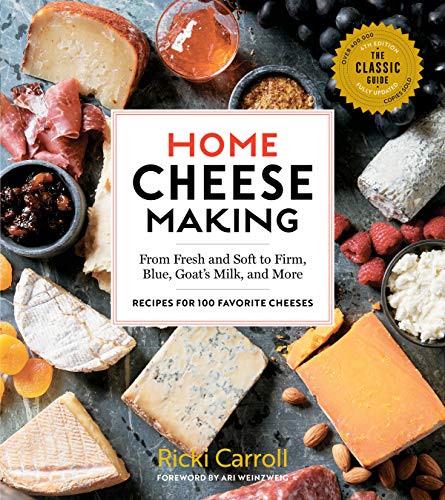
Home Cheese Making, Ricki CarrollBest for making cheese
|
Making many kinds at home | 100 cheeses, per publisher | 384 pages, paperback | View on Amazon |
Cover images from Amazon. Page counts and formats are from the Amazon listings for the editions linked. Coverage figures are from each publisher’s description.
Our picks for the best cheese book, one by one
All seven were in stock, new and sold by Amazon when we checked. We have not tasted through or made cheese from these books; where we describe a strength, we say whose view it is.
1. The Cheese Lover’s Guide, Jenny Linford – History, Makers and 100 Tastings
This is the book we would hand to someone who likes cheese and wants to know more. Jenny Linford is a food writer with more than fifteen books behind her, and the publisher describes an illustrated guide to the history of cheese, how it is made, producer profiles and tasting notes, following it from dairy farm to cheeseboard.
It also offers advice on pairings, 100 tastings and cheeseboard ideas, and it explains the key features of both popular and lesser-known cheeses and where they come from. That is the mix most readers want: enough background to understand what you are eating, and enough practical help to shop with.
The publisher quotes Rachel Roddy in The Guardian calling it “an approachable book with a large scope,” and Rachel Holding of the Academy of Cheese calling it “an obvious addition to the bookshelf.” We read those on the publisher’s page for the UK edition, with the same title and page count, not in the originals. Publishers Weekly’s page for the US edition shows no review.
Why we like it
- 100 tastings, per the publisher
- Covers history, making, producers and pairings
- Named praise on the publisher’s page
- New in 2026
Key specifications
| Author | Jenny Linford |
|---|---|
| Publisher | DK |
| Year | 2026 |
| Pages | 208 |
| Format | Hardcover |
| Coverage | 100 tastings |
| Focus | Understanding and tasting cheese |
| Best for | Curious cheese lovers |
Why we recommend it
If you want one book that explains cheese and helps you buy it, this is the place to start. It is recent and written for the reader, not the professional.
Skip it if you want a full course with deep detail. McCalman’s book below goes much further.
Pros and cons
Pros
- Wide but readable scope
- Tasting guidance
- Recent
Cons
- Praise read only via the publisher
- Not as deep as a full course
2. Mastering Cheese, Max McCalman and David Gibbons – A Full Course in 22 Lessons
This is the only book here with an independent trade review we read in full, and it is a strong one. Publishers Weekly called it an “outstanding examination” that “should be required reading for any cheese-lover,” and said the authors are approachable, not snobbish, and encourage readers to enjoy what they like.
Bookseller copy from the publisher describes a cheese course in 22 lessons, with tasting plates, a chapter called “Stunning Stinkers” and an index of more than 300 cheeses. Max McCalman is described as America’s first restaurant-based Maître Fromager, and he created the cheese programs at Picholine and Artisanal in New York City.
It came out in 2009, so anything about current producers is dated. The copy notes that it discusses raw-milk cheeses and suggests tasting them against pasteurized versions. We repeat that as a topic only and make no claims about either.
Why we like it
- Publishers Weekly review, read directly
- 22 lessons with tasting plates
- Index of more than 300 cheeses
- Covers American artisan cheese with Europe
Key specifications
| Author | Max McCalman and David Gibbons |
|---|---|
| Publisher | Clarkson Potter |
| Year | 2009 |
| Pages | 384 |
| Format | Hardcover |
| Coverage | 22 lessons, 300+ cheeses indexed |
| Focus | Connoisseurship through tasting |
| Best for | Serious students of cheese |
Why we recommend it
If you want to work through cheese seriously, plate by plate, this is the deepest book on the page and has the strongest review we read.
Skip it if you want a quick read or current producer news. It is long and from 2009.
Pros and cons
Pros
- Strong independent review
- Structured like a class
- Deep coverage
Cons
- Published in 2009
- Requires buying cheese to follow along
3. The New Rules of Cheese, Anne Saxelby – A Short, Lively First Read
Anne Saxelby founded Saxelby Cheesemongers, which her publisher describes as Manhattan’s first cheese shop focused on American artisanal cheese, after starting out at Murray’s and apprenticing in France and the US. That shop-counter background shows in the subject list.
Ten Speed Press calls it a fun, quirky guide for everyone from beginners to experts. It covers building a platter, using up leftover scraps, developing your palate, the history and basics of cheesemaking and a cheese vocabulary chart. The publisher says it was named one of the best cookbooks of the year by The New York Times Book Review and The Atlanta Journal-Constitution.
We read that on the publisher’s page, along with praise from chef Dan Barber, who wrote that it “will empower you to choose a more flavorful future.” Publishers Weekly’s page shows no review.
Why we like it
- Short, at 160 pages
- Practical on platters and leftovers
- Written by a cheesemonger
- Vocabulary chart for the counter
Key specifications
| Author | Anne Saxelby |
|---|---|
| Publisher | Ten Speed Press |
| Year | 2020 |
| Pages | 160 |
| Format | Hardcover |
| Coverage | Rules, chart and platter advice |
| Focus | Enjoying and buying cheese |
| Best for | Readers who want a quick, fun start |
Why we recommend it
If you want to walk up to a cheese counter with more confidence by next weekend, this is the fastest way to get there.
Skip it if you want a reference to look up individual cheeses. McGuigan and Yescas or Linford suit that better.
Pros and cons
Pros
- Fun and quick
- Retail know-how
- Honors reported by the publisher
Cons
- Not an encyclopedia
- Praise read only via the publisher
4. One Cheese to Rule Them All, Patrick McGuigan and Carlos Yescas – 100 Prize Winners to Hunt Down
This one works like a wish list. Two World Cheese Awards judges profile 100 award-winning cheeses, and the publisher says each comes with facts and stats along with the people, places and history behind it. The book then invites you to decide which cheese deserves to be the one.
Carlos Yescas caught our eye. The publisher’s biography says he was born in Mexico, wrote Quesos Mexicanos and founded the Mexican Institute of Cheese, and he distributes Mexican cheeses. Patrick McGuigan is a freelance food journalist and senior World Cheese Awards judge. If you want to start with what is close to home, our guide to Mexican cheeses pairs well with it.
Publisher Murdoch Books carries no outside praise on its page, and Publishers Weekly’s page shows no review, so this pick rests on the publisher’s and authors’ details. Many of these cheeses will be hard to find, so treat it as much as a good read as a shopping guide.
Why we like it
- 100 cheeses, per the publisher
- Written by two World Cheese Awards judges
- Co-author with a background in Mexican cheese
- Stories as well as stats
Key specifications
| Author | Patrick McGuigan and Carlos Yescas |
|---|---|
| Publisher | Murdoch Books |
| Year | 2025 |
| Pages | 240 |
| Format | Hardcover |
| Coverage | 100 cheeses |
| Focus | Award-winning cheeses of the world |
| Best for | Cheese travelers and gift buyers |
Why we recommend it
If you already like cheese and want something to chase, this gives you 100 names and the stories behind them.
Skip it if you only shop at a supermarket and want to use the book this week. The focus is on award winners, and some will take effort to find.
Pros and cons
Pros
- Expert authors
- Good browsing book
- Mexican cheese expertise on the byline
Cons
- Some cheeses will be hard to find
- No named review in our sources
5. The Curious Cheese Eater, Hero Hirsh – Nerdy, Witty Cheese Science

The publisher calls this a witty, nerdy guide to the science, stories and stinky secrets of cheese. It covers how to taste like a professional, pairing cheese with foods including chocolate, tracking down rare and pungent cheeses, and cheesemaking traditions going back 7,000 years.
The subtitle also promises recipes and the secrets of a good cheeseboard. The publisher’s page we read describes Hero Hirsh only as a cheese connoisseur and gives no fuller biography, so we cannot tell you more about the author from that page.
The page quotes Jenny Linford, whose own book leads this list, calling it “a great introduction to a wonderful food,” and cheese historian Ned Palmer calling it “Curious, compelling and deliciously moreish.” We read those on the publisher’s page. It is new enough that Publishers Weekly’s page shows no review, so this rests on that copy.
Why we like it
- Science and stories in one short book
- Pairing advice, including chocolate
- Tasting technique
- Praise from two named cheese writers, via the publisher
Key specifications
| Author | Hero Hirsh |
|---|---|
| Publisher | Welbeck |
| Year | 2026 |
| Pages | 160 |
| Format | Hardcover |
| Coverage | Not stated |
| Focus | Cheese science, stories and tasting |
| Best for | Readers who want to be entertained |
Why we recommend it
If you like your food facts with a sense of humor, or need a gift for a cheese fan, this fits.
Skip it if you want a serious reference. It is short and playful, and the publisher sells it that way.
Pros and cons
Pros
- Lively tone
- Short and giftable
- New
Cons
- Author details thin on the publisher’s page
- No independent review in our sources
6. Home Cheese Making, Ricki Carroll – The Long-Running Reference for Making It
If you would like to make cheese and not just eat it, this is a long-running place to begin. Ricki Carroll first published Home Cheese Making in 1982, has taught the subject since 1980 and runs New England Cheesemaking Supply Company, according to her publisher, Storey. She is also a founding member of the American Cheese Society.
The fourth edition adds 35 new cheese recipes, recipes for cooking with cheese and profiles of contemporary cheesemongers, and the publisher’s page refers to recipes for 100 favorite cheeses. Storey quotes Mateo Kehler of Jasper Hill Farm calling it “a timeless classic,” and Barbara Kingsolver, from Animal, Vegetable, Miracle, on how Carroll has inspired artisans.
Publishers Weekly’s page shows no review, and those quotes come through the publisher, so weigh them accordingly. For equipment, our guide to the best cheese making kit is the natural companion. Follow the book’s instructions on milk and sanitation carefully.
Why we like it
- First published in 1982, per Storey
- 35 new cheese recipes in this edition
- Author has taught the craft since 1980
- Includes recipes for cooking with cheese
Key specifications
| Author | Ricki Carroll, foreword by Ari Weinzweig |
|---|---|
| Publisher | Storey |
| Year | 2018 |
| Pages | 384 |
| Format | Paperback, fourth edition |
| Coverage | 100 favorite cheeses, per the publisher |
| Focus | Making cheese at home |
| Best for | Home cheesemakers at any stage |
Why we recommend it
If you plan to make cheese more than once, this is the book that will stay useful as you move from soft cheeses to aged ones.
Skip it if you want a gentle lesson-by-lesson start. Caldwell’s book below is built for that.
Pros and cons
Pros
- Very wide recipe range
- Experienced teacher
- Long track record
Cons
- The author also sells cheesemaking supplies
- Praise read only via the publisher
7. Mastering Basic Cheesemaking, Gianaclis Caldwell – Lessons With Troubleshooting

Gianaclis Caldwell is head cheesemaker and owner of Pholia Farm, a licensed dairy, according to her publisher, New Society, and she teaches courses from beginner to advanced. This shorter book is built as a set of lessons.
The best evidence we found is a review on Mother Earth News by Kirsten K. Shockey, contributed as a community post. She writes, “I see this book as becoming the new classic in beginning cheesemaking.” She says it moves from simple vinegar-set cheeses to cultured soft, fresh, semi-firm and aged hard cheeses, and that each lesson lists supplies, walks through the steps and ends with a recap and troubleshooting section.
The review also says it explains what happens to the milk at each stage and how to make do with less expensive equipment. One reviewer on a community blog is modest evidence, and Publishers Weekly’s page shows no review, so we offer it as that.
Why we like it
- Lesson format, per Mother Earth News
- Troubleshooting at the end of each lesson
- Starts with simple cheeses
- Written by a working dairy owner
Key specifications
| Author | Gianaclis Caldwell |
|---|---|
| Publisher | New Society Publishers |
| Year | 2016 |
| Pages | 192 |
| Format | Paperback |
| Coverage | Lessons from fresh to aged cheeses |
| Focus | Learning cheesemaking step by step |
| Best for | First-time cheesemakers |
Why we recommend it
If you have never made cheese, and want to understand why each step matters, this is the friendliest first book here.
Skip it if you already make cheese regularly. It is written for the beginner, and Carroll’s book has more range.
Pros and cons
Pros
- Clear lesson structure
- Troubleshooting help
- Explains the why
Cons
- Only one review in our sources
- Less range than Carroll’s book
How to choose a guide to cheese
A few plain questions will narrow this down quickly.
- Eating or making. Linford, McCalman, Saxelby, McGuigan and Hirsh are about enjoying cheese. Carroll and Caldwell are about making it. These are different hobbies with different shopping lists.
- Depth. A 160-page book gives you confidence at the counter. A 384-page course asks you to buy cheese and work through it.
- Where you shop. A book full of rare cheeses is a pleasure to read but less useful if your store has only a small case. Check that the book suits what you can actually buy, or that you are happy to order in.
- How old it is. Producers come and go. Mastering Cheese dates from 2009, while Linford’s and Hirsh’s books are from 2026.
- What you will do with it. If you are building boards for friends, pair your book with the right tools. See our guides to the best cheese knives and the best charcuterie board.
How we chose these seven books
We searched Amazon’s book listings and kept print editions from named authors at established publishers, in stock and new when we checked, and not on another of our pages. Author, year, format and page count come from the Amazon listing, and coverage figures come from the publisher’s copy, in one case as carried by a bookseller.
Here is the evidence behind each pick. Mastering Cheese has a Publishers Weekly review we read ourselves. Mastering Basic Cheesemaking has one review we read on Mother Earth News, posted as a community contribution. The Cheese Lover’s Guide, The New Rules of Cheese, The Curious Cheese Eater and Home Cheese Making have praise we read only through the publisher, so we name the source but cannot vouch for the full piece. One Cheese to Rule Them All rests on the publisher’s and authors’ details. Publishers Weekly’s pages for the other six editions show no review.
Stock ruled out some famous books. Liz Thorpe’s The Book of Cheese, Steven Jenkins’s Cheese Primer, DK’s World Cheese Book and The Murray’s Cheese Handbook showed limited stock when we checked, and Tristan Sicard’s A Field Guide to Cheese was not available for immediate shipping. We kept to titles with ordinary stock, so check those again if you have your heart set on one.
Cheese book questions, answered
What is the best guide to cheese for a beginner?
The New Rules of Cheese if you want something short and fun, and The Cheese Lover’s Guide if you want more detail with pictures and tastings.
What is the best book for learning to make cheese?
Mastering Basic Cheesemaking for a lesson-by-lesson start, and Home Cheese Making for the wider range of recipes. You may well end up wanting both.
Do any of these cover Mexican cheese?
Not as a main subject, as far as the publishers’ descriptions show, though Carlos Yescas, co-author of One Cheese to Rule Them All, is a Mexican cheese specialist. For an introduction, see Mexican cheeses explained.
Which book is best for building a cheese board?
Linford’s guide includes cheeseboard ideas, and Saxelby’s covers how to build a platter. Either will do, and both are shorter than a full course.
Which of these would make the best gift?
The Curious Cheese Eater and One Cheese to Rule Them All are the easiest to dip into. If the person is serious about cheese, go for Mastering Cheese.
Which cheese book should you buy first?
Buy The Cheese Lover’s Guide if you want one book that does most things well. Choose Mastering Cheese for a real course, The New Rules of Cheese for a quick start and Home Cheese Making or Mastering Basic Cheesemaking if you want to make your own. The rest suit narrower readers, and each entry says who they are.
And if all this reading has you craving melted cheese right now, see the menu or call to order.