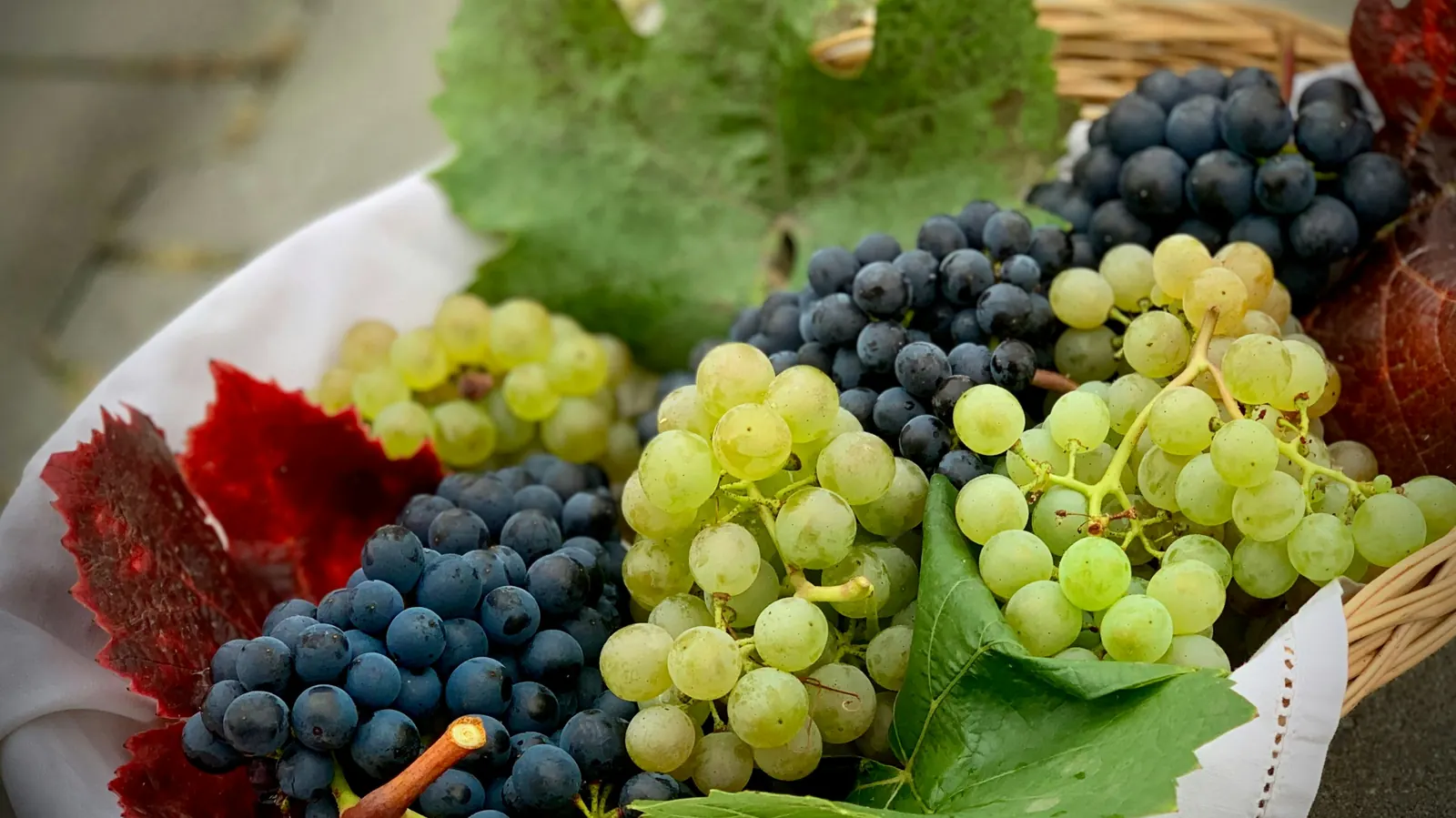
Grapes off the vine, a bucket of apples, a flat of berries about to turn: a steam juicer turns all of them into clear juice without pressing, straining or a jelly bag. It is an old idea, a stack of three pots on the stove, and it asks mostly for time and a watchful eye. A kitchen that makes jelly, syrup or agua fresca from whole fruit can get a lot out of one.
This is not an electric machine, and it is not a canner. Below are seven stovetop steam juicers from identifiable makers, what each listing states about size, steel and drain, what food-safety sources say about using one, and where the listings go further than the evidence.
Julia’s earns a commission on purchases made through links on this page, at no cost to you. Recommendations are based on what a restaurant kitchen looks for, product specifications and verified buyer reports.
Quick verdict: which steam juicer to buy
For most kitchens, buy the Norpro Stainless Steel Steamer and Juicer: it has the largest stated water pot here, a 4 quart collector and a detailed independent account from a home canner. Choose the Mehu-Liisa for its 10-year warranty on the steel parts, and the Euro Cuisine if you want a spigot instead of a hose.
Five of them side by side, then all seven in full.
Five steam juicers side by side
One pick for each kind of buyer, with the capacity and drain each listing states. All seven are reviewed below.
| Steam juicer | Best for | Capacity | Drain | Buy on Amazon |
|---|---|---|---|---|
Norpro Stainless Steel Steamer and JuicerBest overall
|
Most home batches | 11.75 qt insert, 4 qt juice container | Tube and clamp | View on Amazon |

Mehu-Liisa Stainless Steel Steam JuicerLongest warranty
|
Buyers keeping it for many seasons | 10.5 qt insert (title says 11 liter) | Silicone tube and clamp | View on Amazon |

Lehman’s Mehu-Maija Steam Juicer, 11 QuartBest for induction
|
Induction kitchens, low hoods | 11 qt | 17 in hose and clamp | View on Amazon |

Cook N Home Steam Juice Extractor, 11 QuartBest first juicer
|
Trying steam juicing for the first time | 11 qt | Tube and clamp | View on Amazon |
| Filling jars without a hose | 8 qt basket, 8 qt container | Built-in spigot | View on Amazon |

How a steam juicer works, and what it does not do
The University of California Master Food Preservers of El Dorado County describe it as a three-level pot with a lid. Fruit goes in the perforated top level, juice drips into the collection pan in the middle, and water boiling in the bottom pot makes the steam. UC says the result is clear juice with no sediment, generally after 60 to 90 minutes, though it can run from 30 minutes to a couple of hours depending on the fruit, the load, your burner and your altitude.
Do not press the fruit. UC warns that pressing or stirring pushes sediment through and clouds the juice. Do not let the water pot boil dry, and do not leave the juicer alone while it runs. Use mitts, because the steam, the hose and the juice are all hot.
Our picks for the best steam juicer
1. Norpro Stainless Steel Steamer and Juicer – Big Water Pot, Independent Praise
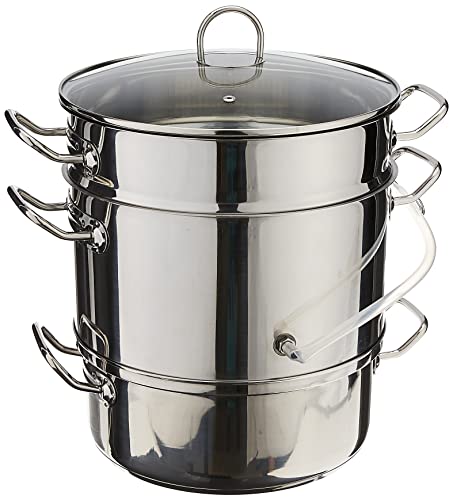
This is the plain, three-level pot most people picture when they hear the words steam juicer. Water goes in the bottom pot, fruit in the perforated insert on top, and the juice drips into the middle container, where a rubber tube and clamp let you drain it. The listing gives an 11.75 quart steamer insert, a 4 quart juice container and a 7.25 quart water pot, a generous reservoir that means fewer refills during a long run.
It is also the one pick here with a detailed account from an independent home canner. Simply Canning’s author bought the Norpro on a reader’s suggestion and writes that it worked well, particularly for grapes, and that the 4 quart collector is a useful size. Her one design complaint is the drain spout, which she would like lower on the pot. She also warns against letting the water boil away, because that can warp the bottom pot.
The base pot has an encapsulated bottom that Norpro says works on induction, and the set is oven safe to 400°F. When juice season ends, the pieces can serve as a roaster and a steamer for vegetables and seafood, so it does not have to sit idle for most of the year.
Why we like it
- 7.25 quart water pot, the largest we saw stated
- 4 quart collector, confirmed by an independent canner
- Encapsulated base that Norpro says suits induction
- Recipes and an instruction booklet included
Key specifications
| Model | 619 |
|---|---|
| Stated capacity | 11.75 qt steamer insert; 4 qt juice container |
| Water pot | 7.25 qt |
| Juice drain | Rubber tube and clamp |
| Material | Stainless steel, professional gauge per listing |
| Stoves | Stovetop including induction; oven safe to 400°F |
| Warranty | Not stated |
| Care | Not stated |
Why we recommend it
Buy this if you want one steam juicer for grapes, apples and berries and you would like some independent evidence behind the choice. The big water pot and the working account from Simply Canning put it ahead of similar pots.
Skip it if you dislike a hose and clamp; the Euro Cuisine below drains from a spigot.
Pros and cons
Pros
- Largest stated water pot here
- Doubles as a roaster and steamer
- Independent owner account
Cons
- The reviewer wanted the drain spout lower
- Warranty and care are not stated in the listing
2. Mehu-Liisa Stainless Steel Steam Juicer – 18/10 Steel, Ten-Year Warranty
The Mehu-Liisa’s listing calls it designed in Finland. It is 18/10 stainless steel, sold with a 10.5 quart steamer insert, a 4.23 quart water pot, a silicone tube, a stainless clamp, a lid and a recipe book. The manufacturer’s warranty of 10 years on the steel parts is the longest we saw stated on this page.
Read the capacity with care. The listing title says 11 liters, the size field says 10 liters and the feature list gives a 10.5 quart insert. Those are not the same figure, so plan on the insert number and judge your fruit by the batch. The 4.23 quart water pot is also the smallest here, which means checking and topping it up more often during a long steam.
The University of California’s Master Food Preservers say not to let a water pan boil dry and not to leave a juicer unattended, and a small pot makes that advice more pressing. If you do a few big grape days a year and want a pot to keep, that is a fair trade for the steel and the warranty.
Why we like it
- 18/10 stainless steel, per the listing
- 10-year warranty on all steel parts
- Silicone tube and stainless clamp
- Recipe book in the box
Key specifications
| Model | ML11 |
|---|---|
| Stated capacity | 10.5 qt steamer insert (title says 11 liter; size field says 10 liter) |
| Water pot | 4.23 qt |
| Juice drain | Silicone tube and stainless clamp |
| Material | 18/10 stainless steel |
| Stoves | Not stated |
| Warranty | 10 years on steel parts |
| Care | Not stated |
Why we recommend it
Choose this if the warranty and the steel grade matter more to you than a large water pot, and you expect to keep the juicer for many seasons.
Skip it if you want to leave more time between water checks; the smaller pot needs closer watching.
Pros and cons
Pros
- Longest stated warranty here
- 18/10 steel
- Recipe book included
Cons
- Smallest stated water pot
- Conflicting capacity figures in the listing
- Stove compatibility is not stated
3. Lehman’s Mehu-Maija Steam Juicer, 11 Quart – Glass Lid, Any Stove
This is Lehman’s 11 quart steam juicer, and its listing gives unusually complete sizes: a fruit basket 5-1/2 inches high and 11-5/8 inches across, a juice kettle and water kettle each 5-5/8 inches high, a 17 inch drain hose and a drain clamp. The whole stack stands 14 inches tall and 11-5/8 inches across, so you can check it against your range hood before you buy.
The steel is 18/8, the lid is glass so you can see the fruit collapse without lifting it, and Lehman’s says it works on any stove including induction. Its directions are simple: drop in fruit such as grapes on the stem, apple quarters or whole berries, fill the bottom with water and boil.
The UC Master Food Preservers add that it is generally not necessary to peel or remove stems and seeds, though your manual may ask you to take out hard pits, stones or heavy cores, and that large fruit such as apples gives up its juice faster when chopped. The listing also mentions wine; this guide covers juice only.
Why we like it
- Every part’s size is stated
- Glass lid
- Works on any stove, including induction, per the maker
- Sold by Lehman’s in the offer we saw
Key specifications
| Model | LBN-450-28 |
|---|---|
| Stated capacity | 11 qt |
| Water pot | 5-5/8 in high x 11-5/8 in across; volume not stated |
| Juice drain | 17 in hose and clamp |
| Material | 18/8 stainless steel |
| Stoves | Any stove, including induction |
| Warranty | Not stated |
| Care | Not stated |
Why we recommend it
This suits cooks on an induction range or under a low hood who want to know the exact size before it arrives, and who like watching the fruit through the lid.
Skip it if warranty length decides it for you; the Lehman’s listing does not state one.
Pros and cons
Pros
- Clear dimensions for every part
- Glass lid
- Named any-stove use
Cons
- No warranty stated
- Care instructions are not stated
4. Cook N Home Steam Juice Extractor, 11 Quart – Simple Starter With Aluminum Base
If you have a neighbor’s grapevine and want to find out whether steam juicing fits your kitchen, this is the plainest place to begin. The set has a water pan, a juice pan, a strainer pan, a lid and a hose with a clamp. It measures 12.5 by 12.5 by 14.5 inches and weighs 8.5 pounds, per the listing, with an aluminum disc in the base to spread the heat and loop handles on each level.
Cook N Home says it works on gas, electric, glass, halogen, ceramic and induction stoves. It calls the set dishwasher safe but recommends washing by hand, which is what we would follow on a pot with a hose fitting. The warranty is stated as one year, shorter than the Euro Cuisine and much shorter than the Mehu-Liisa.
Take the center level out and you have a stockpot and steamer, which softens the storage problem. One listing heading reads as aluminum construction, but the text below it says stainless steel with an aluminum layer in the base, so we go with the text.
Why we like it
- Stated weight and dimensions
- Aluminum disc in the base
- Named on six stove types, including induction
- Works as a regular steamer with the center level removed
Key specifications
| Model | NC-00256 |
|---|---|
| Stated capacity | 11 qt |
| Water pot | Not stated |
| Juice drain | Hose and clamp |
| Material | Stainless steel, aluminum disc in base |
| Stoves | Gas, electric, glass, halogen, ceramic, induction |
| Warranty | 1 year |
| Care | Dishwasher safe; hand wash recommended |
Why we recommend it
This is the sensible first steam juicer: a complete set with the basics clearly stated, for someone who has not yet decided how often they will use it.
Skip it if you plan to run it most weekends through the harvest; a longer warranty is worth having then.
Pros and cons
Pros
- Complete starter set
- Works on every common stove type
- Doubles as stockpot and steamer
Cons
- One-year warranty
- Water pot size is not stated
- Muddled material heading in the listing
5. Euro Cuisine Steam Juicer With Spigot, 8 Quart – Spigot Instead of a Hose

Most of these pots drain through a hose held shut with a spring clamp. Euro Cuisine replaces that with a spigot on the 8 quart juice container, so draining is a matter of one valve. The UC Master Food Preservers note that some models come this way, and they warn that the juice is hot, so keep a mitt on.
The set has a 5 quart water reservoir, an 8 quart steamer basket and a glass lid. It measures 14.5 inches each way and weighs 8 pounds, according to the listing, and the warranty is stated as 3 years. It is named for induction, electric and gas cooktops.
It holds less fruit than the 11 quart pots, so large harvests take more batches. The listing’s claims about nutrient retention are the seller’s and we do not repeat them as fact; what a steam juicer gives you, according to UC, is clear juice with no sediment.
Why we like it
- Built-in spigot rather than a hose
- Glass lid
- 3-year warranty stated
- Induction, electric and gas named
Key specifications
| Model | EC9500 |
|---|---|
| Stated capacity | 8 qt basket; 8 qt juice container |
| Water pot | 5 qt |
| Juice drain | Spigot |
| Material | Stainless steel, professional gauge per listing |
| Stoves | Induction, electric, gas |
| Warranty | 3 years |
| Care | Not stated |
Why we recommend it
Pick this if the hose and clamp is the part that puts you off, or if you fill many small jars and want a simple valve on the side of the pot.
Skip it if you process bushels at a time; an 11 quart pot means fewer batches.
Pros and cons
Pros
- Spigot drain
- Mid-length stated warranty
- Glass lid
Cons
- Smaller basket than the 11 quart pots
- Care instructions are not stated
6. Cooks Standard Steam Juicer Pot, 11 Quart – Two Hoses and a High Oven Limit

Cooks Standard packs this set with a cooking pot, juice container, strainer basket, tempered glass lid, stainless clamp and two hoses, so you have a spare. The base is encapsulated aluminum and the listing names induction, gas, electric, glass, ceramic and halogen stoves. It gives the highest oven limit we saw, 500°F, with the glass lid limited to 350°F, and calls the set dishwasher safe.
One caution. This listing also sells the pot as a steam canner for home canning. The UC Master Food Preservers say steam juicers are not to be confused with atmospheric steam canners, and the National Center for Home Food Preservation sets strict conditions for steam canning, including venting and limits on processing time. Simply Canning, writing about the Norpro, puts it plainly: a steam juicer does not process your jars.
So treat this as a juicer and a set of pots. Make the juice in it, then process any jars in a canner following a tested recipe. Nothing in the listing shows it meets those steam canner conditions, and we did not read a source that says so.
Why we like it
- Two hoses included
- Oven safe to 500°F, lid to 350°F
- Encapsulated aluminum base
- Dishwasher safe per the listing
Key specifications
| Model | 02731 |
|---|---|
| Stated capacity | 11 qt |
| Water pot | Not stated |
| Juice drain | 2 hoses and stainless clamp |
| Material | Polished stainless steel |
| Stoves | Induction, gas, electric, glass, ceramic, halogen; oven to 500°F |
| Warranty | Not stated |
| Care | Dishwasher safe |
Why we recommend it
Choose this if you want the pieces to work hard as oven-safe cookware outside juice season, and you are happy to ignore the canning claim and use a real canner for your jars.
Skip it if you are buying it because the listing suggests it can replace a canner; on the sources we read, it should not.
Pros and cons
Pros
- Spare hose in the box
- Highest stated oven limit here
- Named on all common stoves
Cons
- Canner claim in the listing is not backed by the sources we read
- No warranty stated
7. VIVOHOME Steam Juicer, 9.3 Quart – Smaller Pot for Smaller Batches

Not everyone has a vineyard. VIVOHOME’s smaller pot holds 9.3 quarts in the steamer and 9.3 in the middle layer, with a 6.5 quart water pot underneath, a healthy amount of water for a pot this size. The listing title includes a tempered glass lid, two hoses, a clamp and loop handles, and the base is a three-layer sandwich of stainless and aluminum. It says every part can go in the dishwasher.
VIVOHOME is an online-first brand rather than a long-standing cookware maker, and this pick rests entirely on its own listing; we did not read an independent report on this model. The listing does carry a useful warning, to monitor the heat and avoid heating it dry because that can damage the base, which matches the UC advice.
It is the one to consider for a backyard fig or a few flats of berries from the farmers market, where an 11 quart pot would be half empty and harder to store.
Why we like it
- 6.5 quart water pot for its size
- Glass lid, two hoses and clamp, per the title
- Dishwasher-safe parts
- Listing warns against dry heating
Key specifications
| Model | VH754 |
|---|---|
| Stated capacity | 9.3 qt steamer; 9.3 qt middle layer |
| Water pot | 6.5 qt |
| Juice drain | 2 hoses and clamp |
| Material | Food-grade stainless steel per listing; aluminum in base |
| Stoves | Named for all kinds of stove, including induction |
| Warranty | Not stated |
| Care | Dishwasher safe |
Why we recommend it
This fits a small kitchen and small batches of fruit, for a buyer who cares about size first and is comfortable buying from an online-first brand.
Skip it if you want a stated warranty; look at the Mehu-Liisa or Euro Cuisine.
Pros and cons
Pros
- Good water capacity for its size
- Easy-care parts
- Easier to store
Cons
- No warranty stated
- Listing details only
- Online-first brand
How to choose a steam juicer for your kitchen
Start with how much fruit you really have
Most of these pots are sold as 11 quart, and the fruit basket is where that number matters. UC advises running one full colander at a time and removing the spent fruit before adding the next batch, so a larger basket means fewer rounds on a big day. For a few pounds at a time, the 8 quart Euro Cuisine or 9.3 quart VIVOHOME is easier to store.
Check the water pot, not just the headline size
The water pot sets how often you top up. Among those that state it, the range here runs from 4.23 quarts on the Mehu-Liisa to 7.25 on the Norpro. A dry pot can damage the juicer, so a small reservoir simply asks you to watch it more closely.
Decide between hose and spigot
A hose and clamp is the common design, and you can direct the end of it into a pot or jar. A spigot is one valve on the side. UC notes that with a hose, keeping the clamp right up against the pan holds the juice in the pan, where it stays hot, until you are ready to drain.
Match the base to your stove
If you cook on induction, buy a pot whose listing names induction. Lehman’s, Cook N Home, Norpro, Euro Cuisine, Cooks Standard and VIVOHOME all do; the Mehu-Liisa listing does not state stove types. Measure the height too: at around 14 inches, a full stack may crowd a low hood or a microwave above the range.
Read the warranty and the steel grade
The stated warranties run from 1 year to 10 years, and four listings state none. The stated steel grades are 18/10 on the Mehu-Liisa and 18/8 on the Lehman’s; others say only stainless steel or food grade.

Canning the juice safely
This is where the marketing and the science part ways. UC says juice from a steam juicer can be used right away, refrigerated for up to a week or frozen for longer storage, and that some high-acid fruit juices can be canned. It also says plainly that not all juices are appropriate for home canning, and that you need a current, research-based recipe and a boiling water or atmospheric steam canner.
The National Center for Home Food Preservation’s grape juice directions call for a boiling-water canner and 1/4-inch headspace, though its method makes the juice by simmering and straining rather than by steam. UC’s handout gives a version for steamed apple or grape juice. Take your process times from one of them, not from a listing.
Atmospheric steam canners are a separate appliance. The National Center’s page on them limits them to foods with a pH of 4.6 or below, requires venting and preheated jars, and caps the process at 45 minutes, altitude adjustment included. That page does not mention steam juicers, so do not assume a juicer qualifies because a listing uses the word canner.

How we picked these seven steam juicers
We started with what matters on a stove: how much fruit and water the pot holds, how the juice comes out, and which burners it works on. We then looked for stovetop steam juicers sold on Amazon in the United States by identifiable makers, confirmed stock and a new offer with Amazon’s product data, and read each listing. Sizes, materials and warranties come from those listings, and where one says nothing we write “not stated”.
For independent evidence we read the UC Master Food Preservers’ handout, the National Center for Home Food Preservation’s pages and Simply Canning’s account of the Norpro. Our search turned up mostly thin roundup sites that we did not use, so apart from the Norpro these picks rest on listing details. We left out near-identical unbranded pots, and we held back the similar Giantex and Costway 11 quart pots so that only one online-first brand made the list. We did not use these juicers for this guide.
Steam juicer questions, answered
Is a steam juicer the same as a steam canner?
No. UC says they should not be confused. A juicer extracts juice; a canner processes sealed jars under specific conditions. Simply Canning makes the same point about the Norpro: it does not process your jars.
Can I bottle juice straight from the hose and store it on a shelf?
Not on the strength of a listing. For shelf storage, UC directs you to a research-based recipe and a boiling water or atmospheric steam canner. Otherwise refrigerate the juice for up to a week or freeze it.
Which fruit works best in a steam juicer?
The listings name grapes, apples and berries most often. UC says to choose fruit that is ripe but not overripe and to discard anything damaged or moldy. It recommends against using windfall fruit that has been on the ground.
Does steam-juiced fruit need pasteurizing?
UC says most juice should reach 160°F before you drink it and that steam juicing heats juice to at least that, so no further heat is needed. Juice sitting in the hose cools quickly, so if you check it, test it in the pan or just as it comes out.
How long does steam juicing take?
UC gives 60 to 90 minutes as typical, with a range from about 30 minutes to a couple of hours. Juicing is done when the fruit has collapsed and nothing more drips into the collector.
Will it work on a glass or induction cooktop?
Most of these listings say so, but check yours: Cook N Home and Cooks Standard name both, Lehman’s says any stove including induction, and the Mehu-Liisa listing does not state stove types.
Our final pick for a stovetop juice day
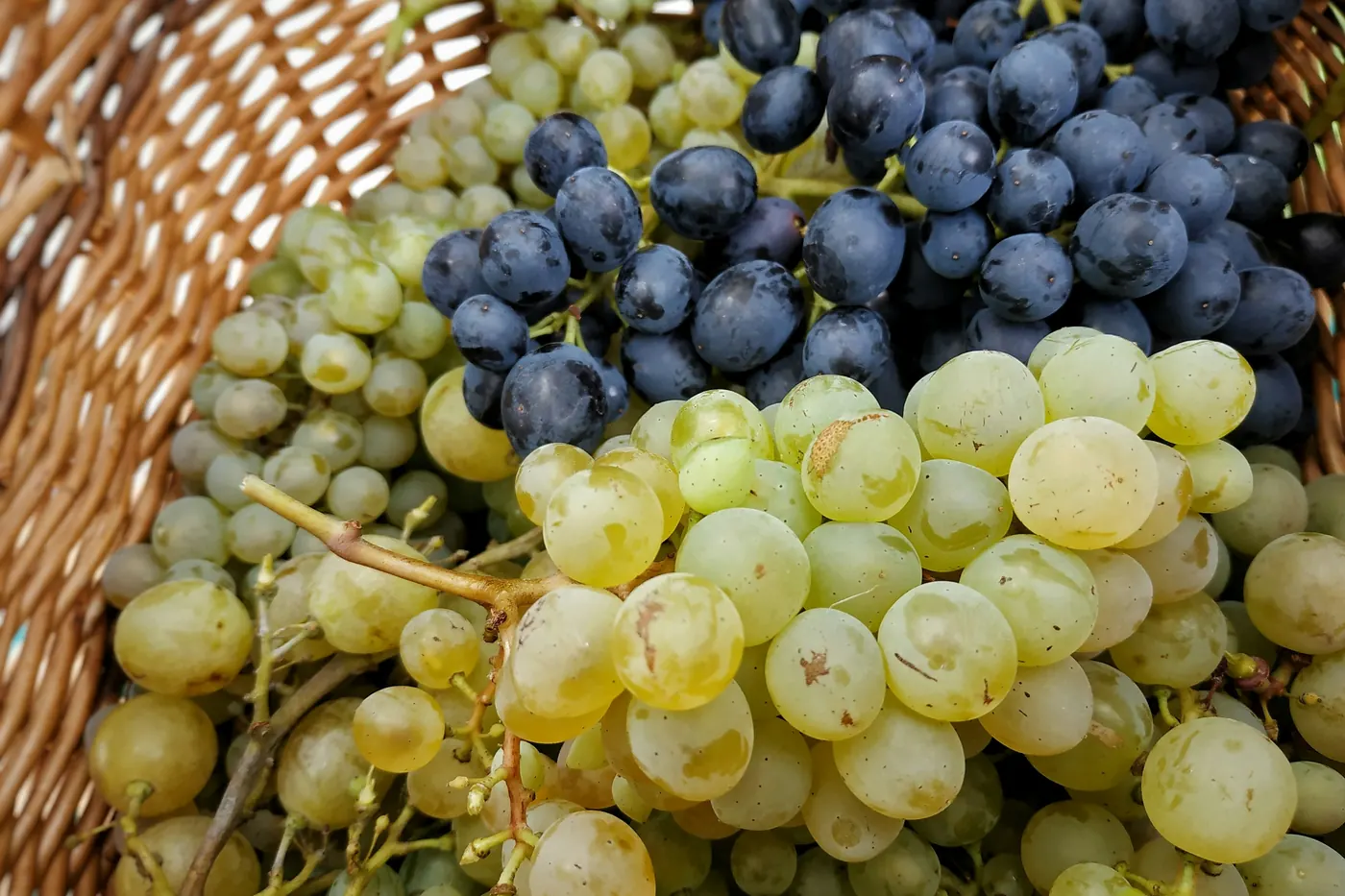
Buy the Norpro for the best mix of capacity and independent evidence, the Mehu-Liisa for the longest warranty, the Lehman’s for clear sizes and induction, the Cook N Home as a first pot, the Euro Cuisine for its spigot, the Cooks Standard for oven use and the VIVOHOME for small batches. Whichever you choose, keep it topped up with water and use a real canner for your jars.
For fresh juice with the fruit raw, see our guide to the best juicer or the best cold press juicer. A good canning funnel makes filling jars far less messy. And if you would rather let someone else make the drinks, see our drinks or call to order.