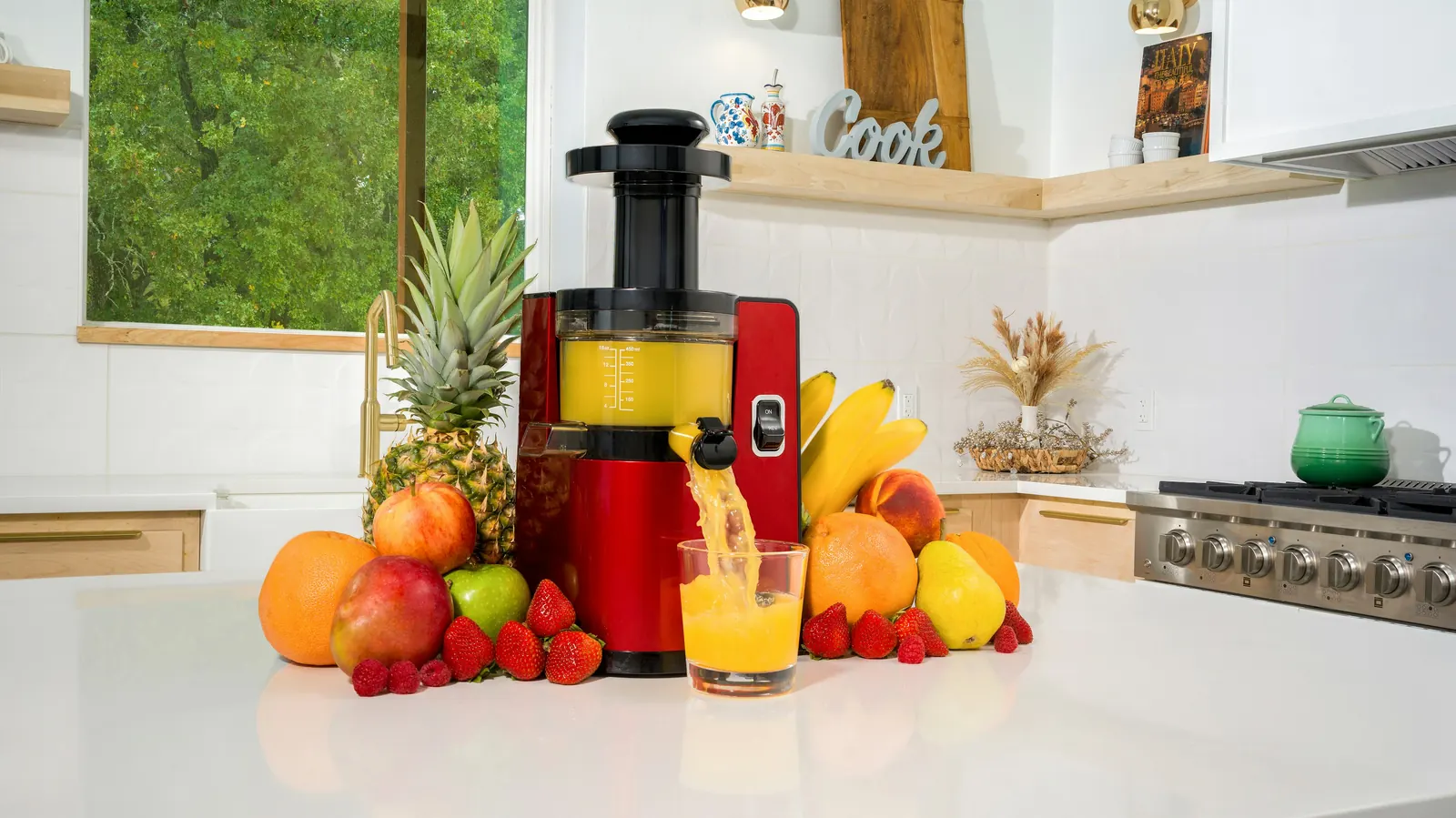
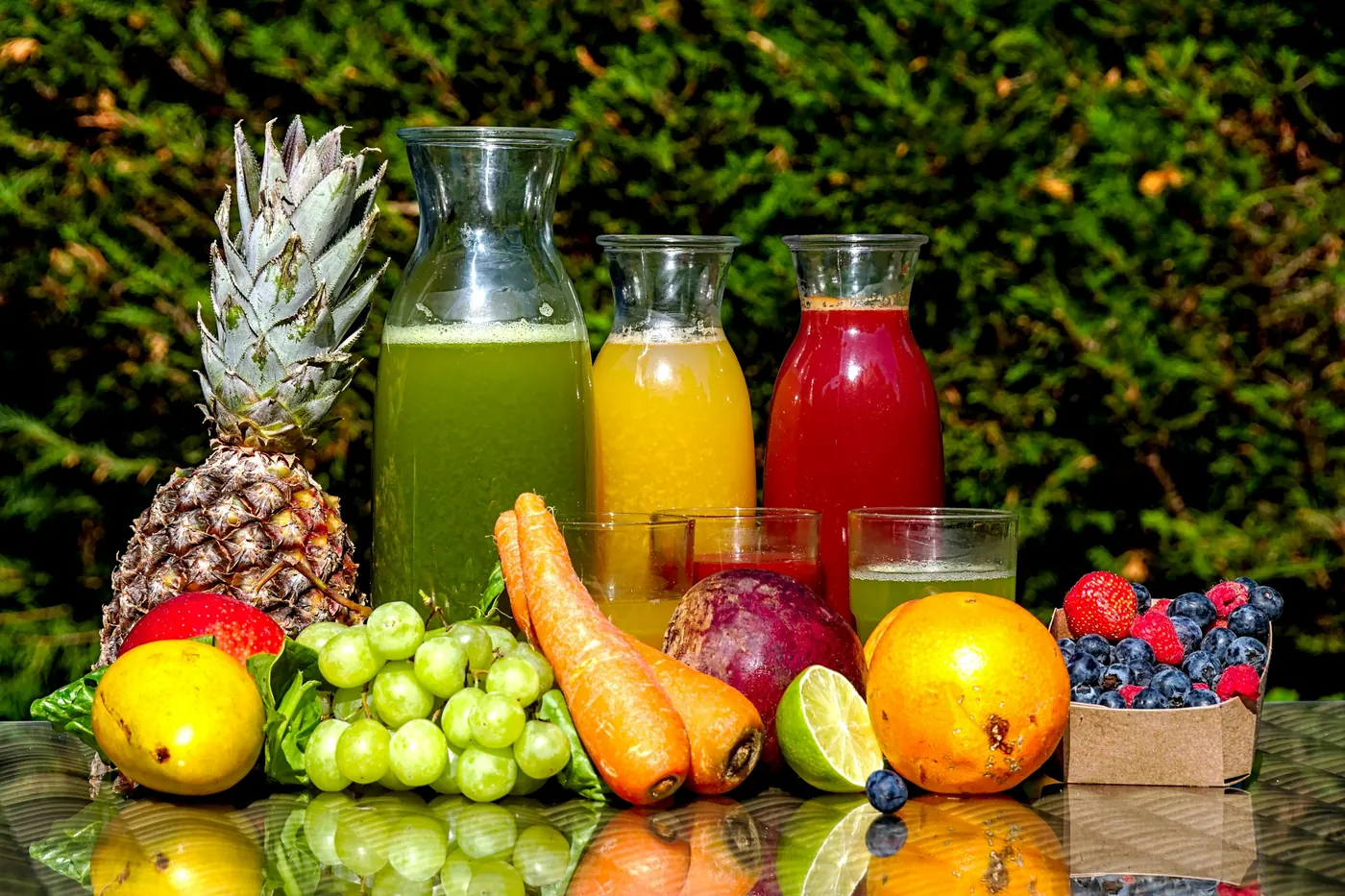
Walk past a Mexican juguería and you see the whole range of what a juicer can do: carrot and orange, beet with pineapple, a jugo verde that mixes cucumber, celery, pineapple and sometimes nopal. At home, a juicer gives you the same thing, a glass of juice pressed from whole fruit and vegetables a minute before you drink it, plus fresh pineapple or watermelon juice to stretch into an agua fresca.
The choice comes down to two kinds of machine. Centrifugal juicers spin fast, take whole apples and carrots, and fill a jug in under a minute. Masticating, or cold-press, juicers turn slowly, squeeze rather than shred, and handle leafy greens far better. This guide explains which kind suits the way you juice and names eight worth buying. For limes and oranges alone, you want a citrus press instead; we cover those separately.
Julia’s earns a commission on purchases made through links on this page, at no cost to you. Recommendations are based on what a restaurant kitchen looks for, product specifications and verified buyer reports.
Quick verdict: which juicer to buy
For fast juice from carrots, apples, pineapple and beets, the best juicer is the Breville Juice Fountain Cold, America’s Test Kitchen’s top centrifugal pick: a 3-inch chute for whole produce and two speeds. If you juice leafy greens or want a quieter, steadier machine, choose the Omega VSJ843QS, ATK’s top masticating juicer. If you would rather load a whole recipe and walk away, the Nama J2 feeds itself. For lime and orange juice only, a citrus juicer is the better tool.
If citrus is what you squeeze most, see the best citrus juicer and the best citrus juicer for orange juice. The machines on this page are for everything else.
Five juicers side by side
Our five standout picks, one for each kind of juicer, with the type, chute and motor each maker or listing states. All eight juicers are reviewed in full below.
| Juicer | Best for | Type | Motor/speed | Buy on Amazon |
|---|---|---|---|---|

Breville Juice Fountain ColdBest centrifugal
|
Fast juice from whole carrots, apples and beets | Centrifugal, 3 in chute | 850 W, 2 speeds | View on Amazon |

Omega VSJ843QS Vertical Slow JuicerBest masticating
|
Greens, quiet mornings, steady juicing | Vertical masticating | 150 W, 43 RPM | View on Amazon |

Nama J2 Cold Press JuicerBest hands-free
|
Loading a whole recipe and walking away | Self-feeding masticating | 200 W, 50 RPM | View on Amazon |

Omega J8006HDS Horizontal JuicerBest for pulp control
|
Greens and adjustable pressure | Horizontal masticating | 200 W, 80 RPM | View on Amazon |

Hamilton Beach Big Mouth Centrifugal JuicerBudget pick
|
Trying juicing without a big outlay | Centrifugal, 3 in chute | 800 W | View on Amazon |
Product images from Amazon. Types, chutes and motor figures are as stated by each maker or listing; check the listing before you buy.
Centrifugal or masticating: what actually differs
America’s Test Kitchen put four centrifugal and five masticating juicers side by side, and its findings make the choice clearer than any marketing does. Centrifugal machines were much faster, averaging about 39 seconds for a pound of carrots against about 1 minute 47 seconds for masticating ones, and they squeezed slightly more juice from carrots. Masticating machines got about twice as much juice from kale and a little more from grapes, and they were quieter, steadier and less messy.
On taste, ATK found “no differences in juice flavor or freshness between juicer styles.” Both types are work to clean; ATK says every juicer it reviewed “takes some elbow grease to clean thoroughly.” And whatever you buy, ATK found juice dulled and darkened over a few days, and does not recommend storing it for longer than two days.
So the short version: if you juice hard produce such as carrots, beets, apples and pineapple, and want it fast, buy centrifugal. If you juice greens, celery or nopal, or juice early while others sleep, buy masticating.
Our picks for the best juicer
Eight juicers, three centrifugal and five masticating, from established juicer makers. All were in stock on Amazon when we checked.
1. Breville Juice Fountain Cold – Whole Produce in Seconds
The Juice Fountain Cold is America’s Test Kitchen’s top centrifugal juicer. In ATK’s review it powered through a pound of carrots in 34 seconds, the fastest in the lineup. That speed is the reason to buy a centrifugal machine: you can make a pitcher of carrot-orange juice for a family breakfast before the coffee is done.
The listing gives an 850-watt motor with two speeds, low for soft fruit and leafy vegetables and high for dense fruit and hard vegetables, and a 3-inch chute that takes whole apples, carrots and oranges without pre-cutting, per the listing. Juice runs into a 70-ounce sealable jug with a froth separator, and pulp collects in a 3.6-quart container. An LED lights if the motor stops because it is overloaded, and an included brush cleans the mesh filter.
For a Mexican kitchen it handles the juguería classics well: carrot, beet, pineapple, cucumber and apple. Like every centrifugal juicer it is loud and gets less from leafy greens than a slow juicer, and the warranty is 1 year, per the listing.
Why we like it
- ATK’s top centrifugal juicer, fastest in its lineup
- 3-inch chute for whole produce
- Two speeds for soft and hard produce
- 70 oz sealable jug with froth separator
Key specifications
| Model | Breville Juice Fountain Cold (BJE430SIL) |
|---|---|
| Type | Centrifugal |
| Feed chute | 3 in |
| Motor/speed (stated) | 850 W; 2 speeds |
| Pulp control | No adjustment; 3.6 qt pulp container |
| Cleaning | Cleaning brush included; dishwasher use not stated in the listing |
| Warranty | 1-year limited |
Why we recommend it
Choose it if you juice carrots, beets, apples and pineapple and want a big jug of juice fast, with little prep.
Skip it if greens are your main ingredient; ATK found centrifugal machines got about half the juice from kale that slow juicers did.
Pros and cons
Pros
- Very fast, per ATK
- Whole-fruit chute
- Large jug
Cons
- Loud, like all centrifugal juicers
- Weak on leafy greens
- 1-year warranty
2. Omega VSJ843QS Vertical Slow Juicer – Quiet, Steady and Easy to Use
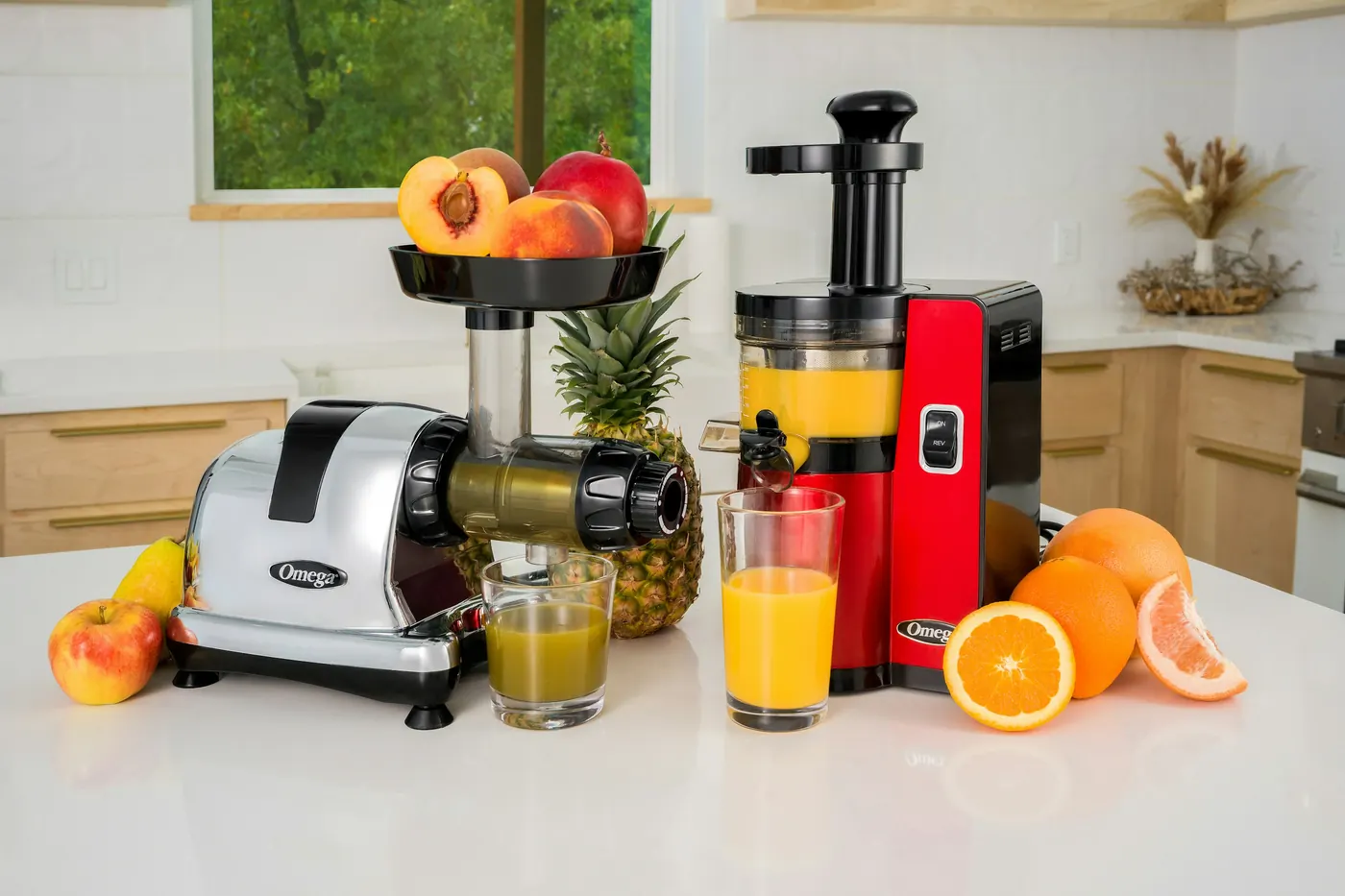
Omega is one of the familiar names in slow juicers, and America’s Test Kitchen named the VSJ843QS its best masticating juicer, calling it “the most straightforward and enjoyable to use of the masticating juicers.” It is a vertical design, so it stands upright and takes up little counter space for a slow juicer.
The listing gives a 150-watt motor turning at 43 RPM, a dual-edge auger and automatic pulp ejection, so you can juice continuously without stopping to empty a basket. A no-drip tap on the spout closes so you can swap cups or mix juice in the chamber. A built-in cleaning system wipes the screen as it turns, which the listing says keeps it clear while you juice. Note that the juicer will not run unless its interlock is engaged.
The trade-off is speed and prep. Slow juicers have narrower openings than centrifugal machines, so carrots, apples and pineapple need cutting to fit; the listing does not give the chute size. In return you get more juice from kale, spinach and celery, and much less noise. The listing gives a 15-year warranty on the motor and 1 year on parts.
Why we like it
- ATK’s best masticating juicer
- Upright design saves counter space
- Automatic pulp ejection for continuous juicing
- No-drip tap; 15-year motor warranty
Key specifications
| Model | Omega VSJ843QS |
|---|---|
| Type | Vertical masticating (slow) |
| Feed chute | Not stated; produce needs cutting |
| Motor/speed (stated) | 150 W; 43 RPM |
| Pulp control | Automatic pulp ejection; no adjustment stated |
| Cleaning | Built-in screen-cleaning system |
| Warranty | 15 years motor, 1 year parts |
Why we recommend it
Choose it if you juice greens, celery or nopal often, juice early in the morning, or want a slow juicer that is easy to live with.
Skip it if you want to drop in whole apples and carrots; prep takes longer with a narrow chute.
Pros and cons
Pros
- Easy to use, per ATK
- Quiet and steady
- Better yield from greens
- Long motor warranty
Cons
- Produce needs cutting
- Slower than centrifugal
- Parts warranty only 1 year
3. Nama J2 Cold Press Juicer – Load It and Walk Away
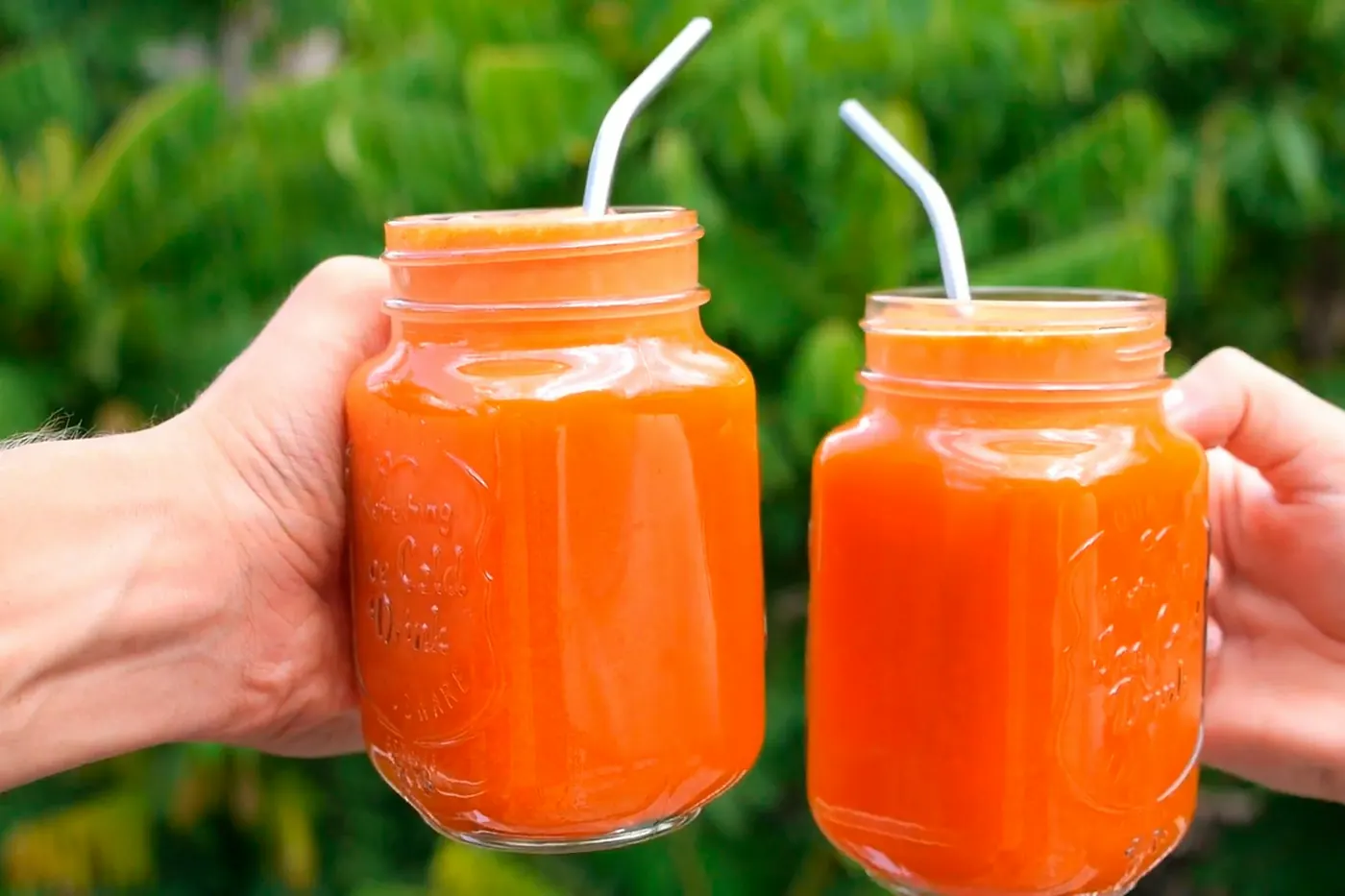
Most slow juicers need you to stand over them and feed pieces in one by one. The Nama J2 is built around a wide self-feeding hopper that, according to the listing, takes your whole recipe at once; the machine cuts and juices the produce as it feeds, so you can load it, switch it on and get on with breakfast.
The listing gives a 200-watt motor turning at 50 RPM. Nama’s own site gives the model as SJ200, lists a SAN plastic hopper, a Tritan chamber and an Ultem auger, all described as BPA-free, and states a 15-year warranty on all parts, which is among the longest here. Quick-release parts and a cleaning brush are meant to make cleanup simpler, the listing says.
The J2 is a newer design and is not in ATK’s review, which predates it, so we cannot point to an independent performance verdict. Nama does not state a pulp adjustment, and hands-free hoppers work best with produce cut to the maker’s guidance, so read the manual on how to load hard items such as carrots and beets.
Why we like it
- Self-feeding hopper takes a whole recipe
- 200 W, 50 RPM, per the listing
- Quick-release parts and cleaning brush
- 15-year warranty on all parts, per Nama
Key specifications
| Model | Nama J2 (SJ200) |
|---|---|
| Type | Vertical masticating, self-feeding |
| Feed chute | Wide-mouth self-feeding hopper; size not stated |
| Motor/speed (stated) | 200 W; 50 RPM |
| Pulp control | Not stated |
| Cleaning | Quick-release parts; cleaning brush included |
| Warranty | 15 years, all parts |
Why we recommend it
Choose it if feeding a slow juicer piece by piece would put you off using it, and you want a long warranty.
Skip it if you want a machine with an independent review behind it; ATK’s comparison predates the J2.
Pros and cons
Pros
- Hands-free loading
- Long warranty
- Quiet slow press
Cons
- Not independently reviewed by ATK
- No stated pulp setting
- Tall machine
4. Omega J8006HDS Horizontal Juicer – Three Pressure Settings
Horizontal slow juicers push produce along a long auger lying on its side, and Omega’s listing names leafy greens and wheatgrass among its jobs. Omega’s J8006HDS is a long-running model in this style, and its standout feature is control: an adjustable end cap with three pressure settings, according to the listing, so you can tune how hard it squeezes for soft fruit or tough greens.
The listing gives a 200-watt motor turning at 80 RPM, with a gear reduction it describes as equivalent to a 2 HP motor, a triple-stage auger, automatic pulp ejection and an extra-large feed tray. It also does more than juice: Omega sells it as a nutrition system that makes nut butters, extrudes pasta, minces herbs and garlic and makes frozen desserts.
Horizontal juicers are long and the chute is small, so produce needs cutting, and slow juicing takes time. ATK did not review this model; it found another Omega horizontal juicer, the NC800HDS, “among the slowest models in our lineup.” The listing gives a 15-year warranty on the motor and 1 year on parts.
Why we like it
- Adjustable end cap with three pressure settings
- Automatic pulp ejection
- Also makes nut butters and minces garlic, per Omega
- 15-year motor warranty
Key specifications
| Model | Omega J8006HDS |
|---|---|
| Type | Horizontal masticating (slow) |
| Feed chute | Size not stated; extra-large feed tray |
| Motor/speed (stated) | 200 W; 80 RPM |
| Pulp control | Adjustable end cap, 3 pressure settings |
| Cleaning | Hand wash only, per the listing |
| Warranty | 15 years motor, 1 year parts |
Why we recommend it
Choose it if you juice greens often and like to fine-tune the result, or want one machine that also grinds nuts and minces garlic.
Skip it if counter space is tight or speed matters; horizontal juicers are long and slow.
Pros and cons
Pros
- Pressure adjustment
- Versatile attachments
- Long motor warranty
Cons
- Small chute; lots of prep
- Long footprint
- Slow, like other horizontal models
- Parts hand wash only
5. Breville Juice Fountain Cold XL – Bigger Chute, Quieter Setting
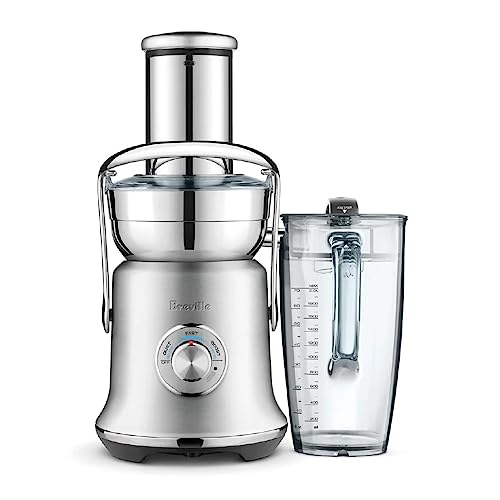
The Cold XL is the bigger sibling of our top centrifugal pick. The listing gives a 1200-watt motor, a 3.5-inch chute, fast and variable speed settings, and a Quiet setting that Breville says reduces mechanical noise by 40 percent. Juice runs into a 70-ounce sealable jug and pulp goes into a 3.9-quart bin.
The design is clever for a small kitchen: the pulp bin sits behind the base rather than beside it, per the listing, so the footprint is narrower than older centrifugal juicers. The extra half-inch of chute means more produce goes in whole, and the larger pulp bin means fewer stops to empty it when you are juicing a crate of oranges or a whole pineapple for a party pitcher.
ATK has not reviewed the XL. It shares the centrifugal trade-offs of the Juice Fountain Cold: noise, weaker results with leafy greens, and a 1-year warranty, per the listing. An included brush helps with the mesh filter.
Why we like it
- 3.5-inch chute for whole produce
- 1200 W with variable speeds, per the listing
- Quiet setting
- Pulp bin behind the base saves counter width
Key specifications
| Model | Breville Juice Fountain Cold XL (BJE830BSS) |
|---|---|
| Type | Centrifugal |
| Feed chute | 3.5 in |
| Motor/speed (stated) | 1200 W; fast and variable speeds plus Quiet setting |
| Pulp control | No adjustment; 3.9 qt pulp container |
| Cleaning | Cleaning brush included; dishwasher use not stated in the listing |
| Warranty | 1-year limited |
Why we recommend it
Choose it if you juice in quantity, for a family or a party, and want the widest chute and biggest pulp bin here.
Skip it if you mainly juice greens; a slow juicer will get more from them.
Pros and cons
Pros
- Widest chute here
- Large jug and pulp bin
- Quiet setting
Cons
- Not reviewed by ATK
- Still loud at full speed
- 1-year warranty
6. Kuvings AUTO10 Cold Press Juicer – A 100-Ounce Self-Feeding Hopper

Kuvings, a long-running juicer maker by its own account, is one of the big names in slow juicers. The AUTO10 is its hands-free model: a 100-ounce hopper, according to the listing, with an auto-cut double-crushing blade that cuts whole fruit and vegetables and feeds them into the press.
The listing gives a 240-watt motor turning at 50 RPM and rated to run for up to 30 minutes continuously, enough for a big batch. Kuvings says the parts are simplified for cleaning and includes cleaning tools, and it backs the machine with what it calls a 15-year assurance, valid in the US and Canada.
A note from the reviews: ATK tested an older Kuvings model, the C7000, and recommended it with reservations because it was hard to clean even with its cleaning tool. The AUTO10 is a different, newer design that ATK has not reviewed. Hopper-fed slow juicers have more parts than a centrifugal machine, so plan a few minutes for washing up.
Why we like it
- 100 oz self-feeding hopper
- Auto-cut blade feeds whole produce
- 240 W, 50 RPM, up to 30 minutes continuous
- 15-year assurance, per Kuvings
Key specifications
| Model | Kuvings AUTO10 |
|---|---|
| Type | Masticating, self-feeding |
| Feed chute | 100 oz hopper with auto-cut blade |
| Motor/speed (stated) | 240 W; 50 RPM |
| Pulp control | Not stated |
| Cleaning | Simplified parts; cleaning tools included |
| Warranty | 15-year assurance (US and Canada) |
Why we recommend it
Choose it if you want hands-free slow juicing in bigger batches than most hopper models allow.
Skip it if cleanup time worries you; ATK found an earlier Kuvings hard to clean, and this model has not been independently reviewed.
Pros and cons
Pros
- Large hopper
- Long continuous run time
- Long warranty
Cons
- Not reviewed by ATK
- Several parts to wash
- No stated pulp setting
7. Hurom H400 Easy Clean Slow Juicer – No Mesh Strainer to Scrub

The worst job with a slow juicer is scrubbing pulp out of a fine mesh strainer. Hurom’s H400 is designed around that problem. The listing describes a strainer-free chamber set in which a two-part auger meshes together to separate juice from pulp, so there is no mesh basket to clog.
It is also self-feeding: a large hopper takes produce with less chopping, according to the listing, and the motor is quiet. The listing says the parts are BPA-free and that there are no blades or sharp parts. Hurom’s Amazon listing does not give the motor rating; retailer listings give 150 watts, but they disagree on speed and on warranty length, so we have left those as not stated.
ATK has not reviewed the H400. It is a good fit for someone who has owned a slow juicer and stopped using it because of the cleanup, and who juices soft fruit, greens and cucumbers more than very hard roots.
Why we like it
- Strainer-free chamber, nothing to scrub
- Self-feeding hopper
- No blades or sharp parts, per the listing
- Quiet motor
Key specifications
| Model | Hurom H400 |
|---|---|
| Type | Vertical masticating, self-feeding |
| Feed chute | Wide-mouth hopper; size not stated on the listing |
| Motor/speed (stated) | Not stated on the listing (retailers give 150 W) |
| Pulp control | Two-part auger; no adjustment stated |
| Cleaning | Strainer-free chamber; BPA-free parts |
| Warranty | Not stated on the listing |
Why we recommend it
Choose it if strainer cleanup is what stops you juicing, and you want a quiet self-feeding slow juicer.
Skip it if you want firm specs before you buy; the motor rating and warranty are not on the Amazon listing.
Pros and cons
Pros
- No mesh strainer
- Self-feeding
- Quiet
Cons
- Motor and warranty not on the listing
- Not reviewed by ATK
- Slower than centrifugal
8. Hamilton Beach Big Mouth Centrifugal Juicer – Dishwasher-Safe Parts on a Budget
If you want to find out whether you will actually juice before spending on a Breville or a slow juicer, Hamilton Beach’s Big Mouth is a sensible start. The listing gives an 800-watt motor, a 3-inch chute that fits a whole apple or a handful of carrots, and an 80-ounce pulp bin.
Its best feature is cleanup. The pulp bin, juice bowl, lid and pusher are all dishwasher safe, and a brush comes with it for the strainer, per the listing. It is backed by a 3-year limited warranty, which is longer than Breville’s on its centrifugal models.
Be realistic about a budget centrifugal juicer: it will be loud, and leafy greens will give little juice. ATK reviewed a different Hamilton Beach model, the Big Mouth Premium 67850, and recommended it with reservations because it was “extremely noisy while in use.” This 67601A has not been reviewed by ATK. The listing does not state the number of speeds.
Why we like it
- 3-inch chute for whole produce
- Dishwasher-safe removable parts
- 80 oz pulp bin
- 3-year limited warranty
Key specifications
| Model | Hamilton Beach Big Mouth (67601A) |
|---|---|
| Type | Centrifugal |
| Feed chute | 3 in |
| Motor/speed (stated) | 800 W; speeds not stated |
| Pulp control | No adjustment; 80 oz pulp bin |
| Cleaning | Dishwasher-safe pulp bin, bowl, lid and pusher; strainer brush |
| Warranty | 3-year limited |
Why we recommend it
Choose it to try juicing carrots, apples, pineapple and beets without a big outlay, with easy dishwasher cleanup.
Skip it if noise bothers you or you juice greens; ATK found a sibling model extremely noisy.
Pros and cons
Pros
- Dishwasher-safe parts
- Whole-fruit chute
- 3-year warranty
Cons
- Likely loud
- Weak on greens
- Speeds not stated
How to choose a juicer
Start with what you juice, then think about how much time you will give it each morning. These are the factors we would weigh.
1. What goes in the glass
Carrots, beets, apples, pineapple and cucumber suit a centrifugal juicer. Kale, spinach, celery, herbs and nopal suit a masticating one; ATK found slow juicers got about twice the juice from kale. Limes, lemons and oranges on their own are a job for a citrus press, which is faster and easier to clean than any extractor.
2. Prep time and the chute
A 3-inch or wider chute takes whole apples and carrots. Classic slow juicers have small chutes and need produce cut into pieces; self-feeding hopper models like the Nama, Kuvings and Hurom take larger loads but still have guidance on how to cut hard produce.
3. Cleanup
Every juicer needs washing straight after use, before pulp dries on the screen; ATK says all of them take some elbow grease. Look for dishwasher-safe parts, a cleaning brush, and fewer parts overall. Strainer-free designs like the Hurom H400 are built to make this easier.
4. Noise, space and speed
Centrifugal juicers are fast and loud; slow juicers are quiet and take a few minutes per glass. Vertical models stand upright and save counter space, while horizontal slow juicers are long.
5. Warranty and safety
Slow-juicer makers often give long warranties, 15 years on several picks here, while centrifugal models usually carry 1 to 3 years. Juicers have fast blades or strong augers and interlocks for a reason: always use the pusher, never your fingers, and check the U.S. Consumer Product Safety Commission’s recall list before buying a used machine.
How we chose these eight juicers
We started with what a Mexican kitchen juices: carrot, beet, pineapple, orange and the green blends of a juguería, plus fruit juice for aguas frescas and drinks. We then looked at centrifugal and masticating juicers from established makers sold on Amazon in the United States and in stock when we checked, and took type, chute, motor, speed, pulp and cleaning features and warranty from the makers’ Amazon listings and websites, saying so where a figure is missing.
For performance we relied on America’s Test Kitchen’s electric juicer review, which named the Breville Juice Fountain Cold and the Omega VSJ843QS its winners. We left out models it did not recommend, including a Mueller centrifugal juicer it called dangerously unstable. We also checked the U.S. Consumer Product Safety Commission’s recall notices for each brand; the juicer recalls we found were old, such as a Hamilton Beach recall of earlier models, and none covered the models listed here. We do not make health claims for juice, and we have not repeated makers’ claims about nutrients. We have not used these products ourselves; where we describe performance, we say whose findings those are.
Juicer questions, answered
What is the best juicer for home use?
For fast juice from hard produce, the Breville Juice Fountain Cold, ATK’s top centrifugal pick. For greens and quiet, steady juicing, the Omega VSJ843QS, ATK’s top masticating pick. If you want to load a whole recipe and walk away, look at the Nama J2.
Which juicer brands are best?
Breville makes ATK’s top centrifugal pick. Omega, Hurom, Kuvings, Nama and Tribest are the established slow-juicer makers, and Hamilton Beach and Cuisinart make budget centrifugal models. In ATK’s review, a Mueller centrifugal juicer and two Tribest slow juicers were not recommended.
Is a masticating juicer better than a centrifugal one?
It depends on what you juice. ATK found no difference in flavor or freshness between the two types. Masticating juicers got far more from kale and were quieter and less messy; centrifugal juicers were much faster and slightly better with carrots.
What does America’s Test Kitchen recommend?
ATK’s electric juicer review names the Breville Juice Fountain Cold best centrifugal and the Omega VSJ843QS best masticating, and recommends several others with reservations. We have not quoted Consumer Reports, Serious Eats or Wirecutter because we did not read their current juicer reviews for this guide.
Can I use a juicer for aguas frescas?
Yes for watermelon, pineapple, cucumber or melon juice that you then lengthen with water and lime. Most traditional aguas frescas are blended and strained instead, which keeps more body; see what aguas frescas are and the best fine-mesh strainer for that method.
How long does fresh juice keep?
ATK found carrot juice dulled and darkened over four days whichever juicer made it, and does not recommend storing juice for longer than two days. Keep it covered and cold, and drink it soon.
Our final pick for fresh juice
Buy the Breville Juice Fountain Cold for fast juice from carrots, beets, apples and pineapple, or the Omega VSJ843QS if greens are your main ingredient and you value quiet. Choose the Nama J2 or Kuvings AUTO10 for hands-free slow juicing, and the Hamilton Beach Big Mouth to try juicing on a budget.
For lime juice for margaritas and orange juice for breakfast, a citrus press is still the best tool; see the best citrus juicer. For a pitcher of horchata instead, see the best horchata mix, and for blended drinks and salsas, our separate best blender guide.
For full-size blending jobs, from salsas to horchata, see the best blender.
Juicing ginger shots? See our guide to the best juicers for ginger.
On a budget? See our guide to the best affordable juicers.
Want a slow, cold-press machine? See our guide to the best cold press juicers.
Related guide: Best steam juicer.
Related guide: Blender vs juicer.
And if you would rather someone else did the squeezing tonight, see our drinks and the menu, or call to order.