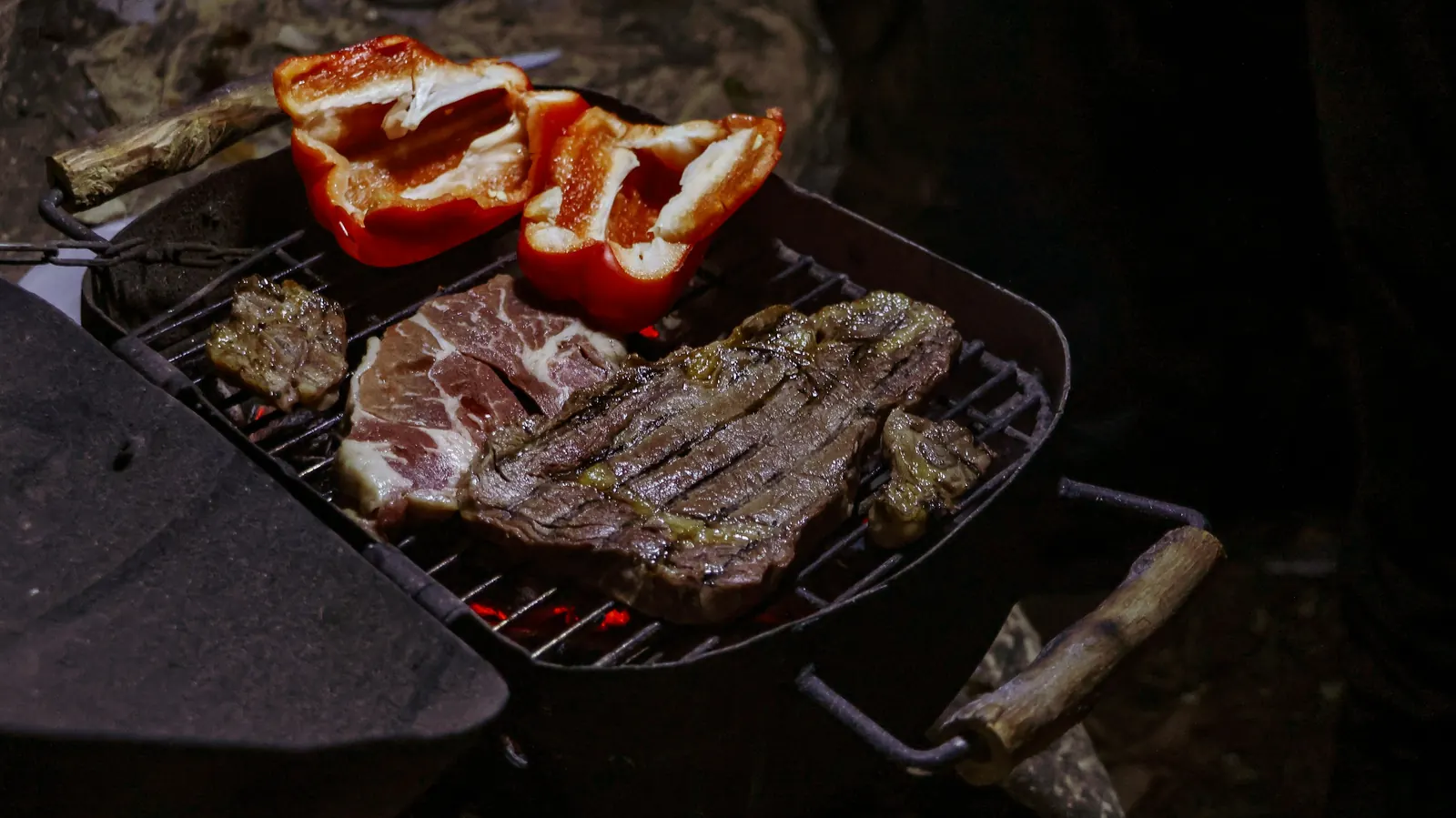
When the cooking grate on a charcoal kettle rusts through or loses its plating, most owners face the same choice: replace it with heavy cast iron or with stainless steel rods. Both will carry a steak over the coals. They differ in how much heat they hold, how they mark the meat, and above all in how much looking after they need between cooks.
In any working kitchen, the grate you will actually keep clean beats the one that performs best on paper. This guide compares cast iron and stainless steel on heat, sear marks, care, rust, weight and fit, says which to buy for a typical 22-inch kettle, and names one replacement grate of each kind.
Julia’s earns a commission on purchases made through links on this page, at no cost to you. Recommendations are based on what a restaurant kitchen looks for, product specifications and verified buyer reports.
Quick verdict: cast iron or stainless grates?
For most charcoal grill owners, stainless steel is the better replacement grate. It needs no seasoning, shrugs off the damp of a grill left outdoors, and Weber says stainless grates can last a very long time if they are properly maintained. Choose cast iron if bold sear marks and stored heat matter most to you, and you are willing to dry and oil the grate after cooking the way you would a cast iron skillet. Bare cast iron left wet will rust.
The table sets out the main differences; the sections that follow explain each one.
Cast iron vs stainless steel grill grates, side by side
| Cast iron grate | Stainless steel grate | |
|---|---|---|
| Heat retention | Higher; Weber says its enameled cast iron holds heat best | Lower; heats and cools faster |
| Sear marks | Wide, bold marks (Weber) | Thinner lines from rods |
| Seasoning | Bare cast iron needs it; enameled does not | None |
| Rust | Rusts if left wet or unoiled (Lodge) | Rust-resistant 304 grade on our pick |
| Weight | Heavy; about 19.7 lb on our pick’s listing | Much lighter |
| After cooking | Brush, dry, thin coat of oil | Brush; occasional deep clean |
| Lifespan | Long if kept seasoned; enamel can chip | “A very long time” if maintained (Weber) |
| Best for | Steaks, burgers, carne asada with marks | All-round grilling with little upkeep |
Heat and sear marks: where cast iron leads
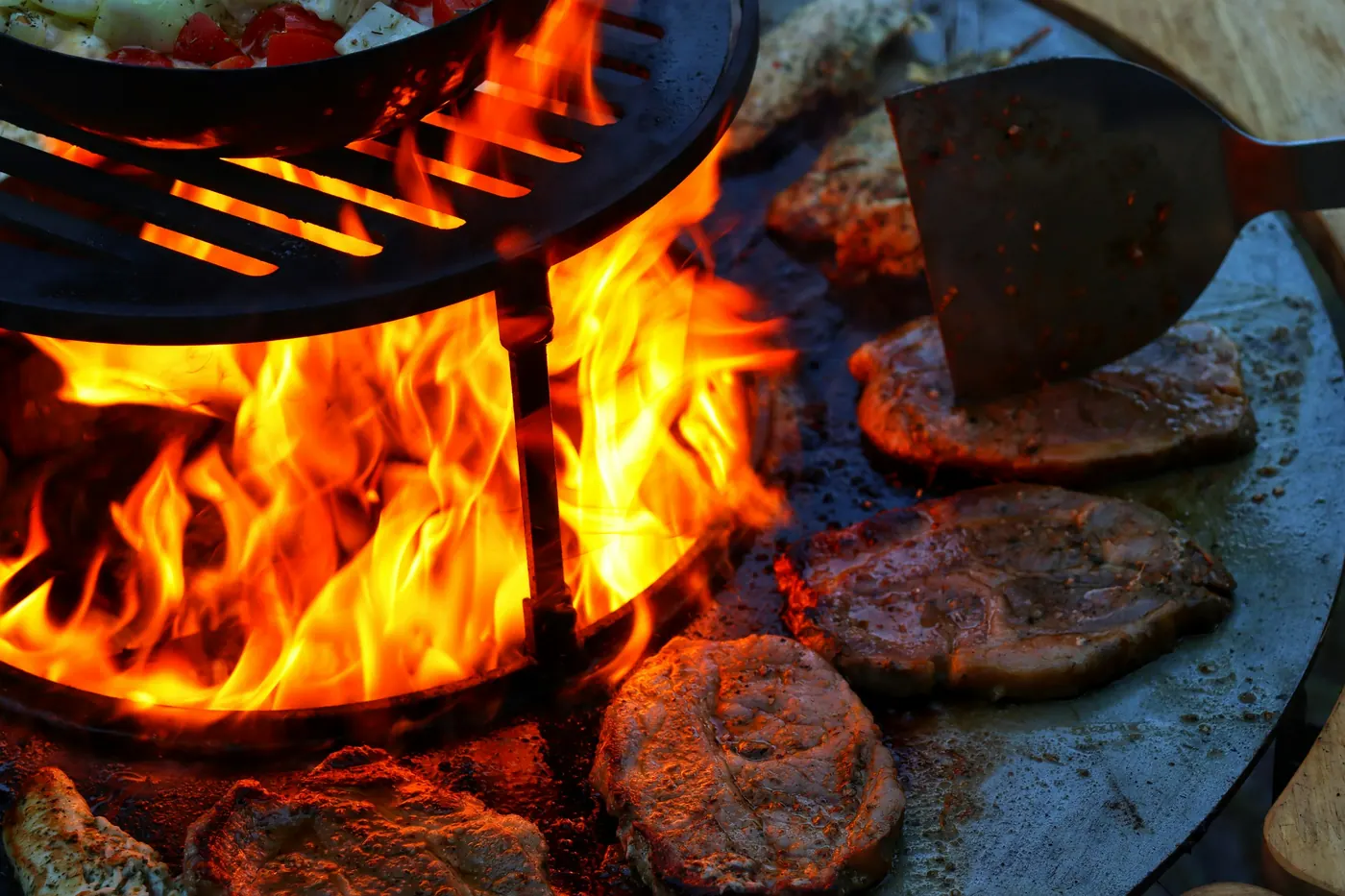
Cast iron is dense and thick, so it soaks up heat over the coals and gives it back hard where it touches the meat. Weber’s own guide to grate types says porcelain-enameled cast iron grates typically retain heat better and longer than the other types, and it recommends them for cooks for whom bold sear marks are a must. Bare cast iron, which is what most aftermarket kettle grates are, has the same mass behind it.
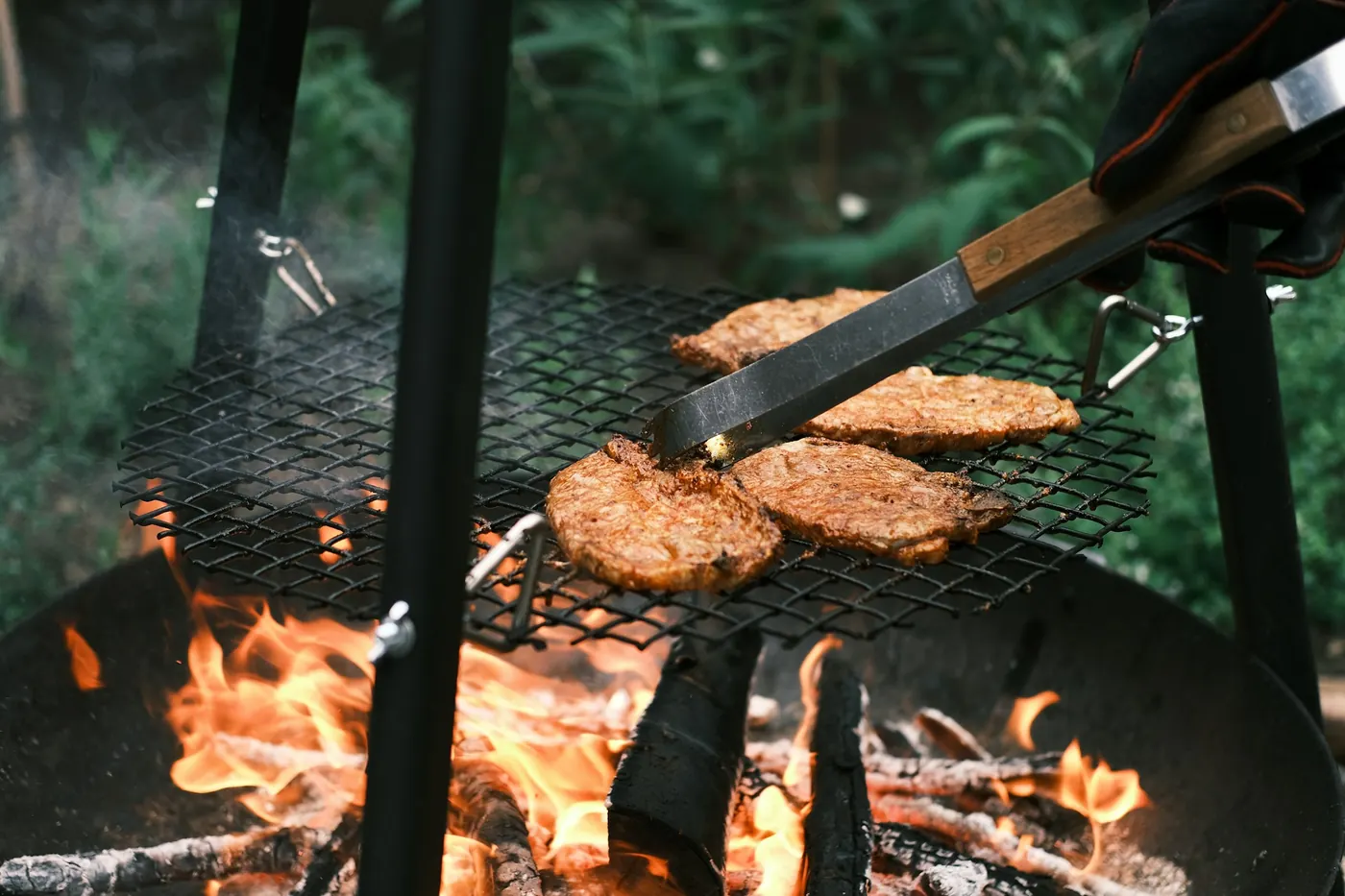
Stainless rods are thinner, so they carry less heat and leave narrower lines. That does not mean they won’t sear. Weber says all three of its grate types are easy to clean, durable and produce great sear marks. Over a full chimney of hot charcoal, most of the browning comes from the fire itself, and the grate mostly adds the stripes. The difference is clearest when you lay down cold steaks over a fire that has started to fade: the heavy grate keeps hitting hard, while light rods cool down more.

Care and rust: where stainless leads
This is the difference that decides it for most people. Bare cast iron has no protection except its seasoning, the baked-on layer of oil. Lodge, the cast iron cookware maker, says even a well-seasoned pan can rust if it is left to soak, and that air drying and damp storage cause rust too. A grill grate lives outdoors, gets rained on and sits through humid nights, which is harder on iron than any kitchen sink.
The routine that keeps cast iron going is the one Lodge gives for its pans: dry it completely, then coat it with a very thin layer of cooking oil, thin enough that it does not drip. On a grill, the easy way is to brush the grate clean while it is still warm from the fire, then wipe on a little oil. If rust does appear, Lodge’s fix is to scour it with steel wool, wash, dry, oil and bake to re-season; on a grate, you would do the last step over a hot fire.
Stainless steel needs none of that. Our stainless pick is 304 stainless, a grade its maker calls rust-resistant, and it carries a 10-year warranty. You brush it after cooking and give it a deeper clean now and then. Stainless discolors with heat and can look dirty even when it is clean; that is cosmetic. Our best grill cleaner guide covers what to use on each kind of grate.
Enameled cast iron: the middle ground
Many grates sold as cast iron are coated in porcelain enamel, which seals the iron so it does not need seasoning. That is the type Weber means when it praises cast iron’s heat retention. The trade-off is the coating: if the enamel chips, the bare iron at the chip is exposed to the weather, so enameled grates need gentler tools than bare ones. Our best gas grill grates guide covers enameled cast iron and stainless for gas grills, where those materials are more common.
Weight and handling
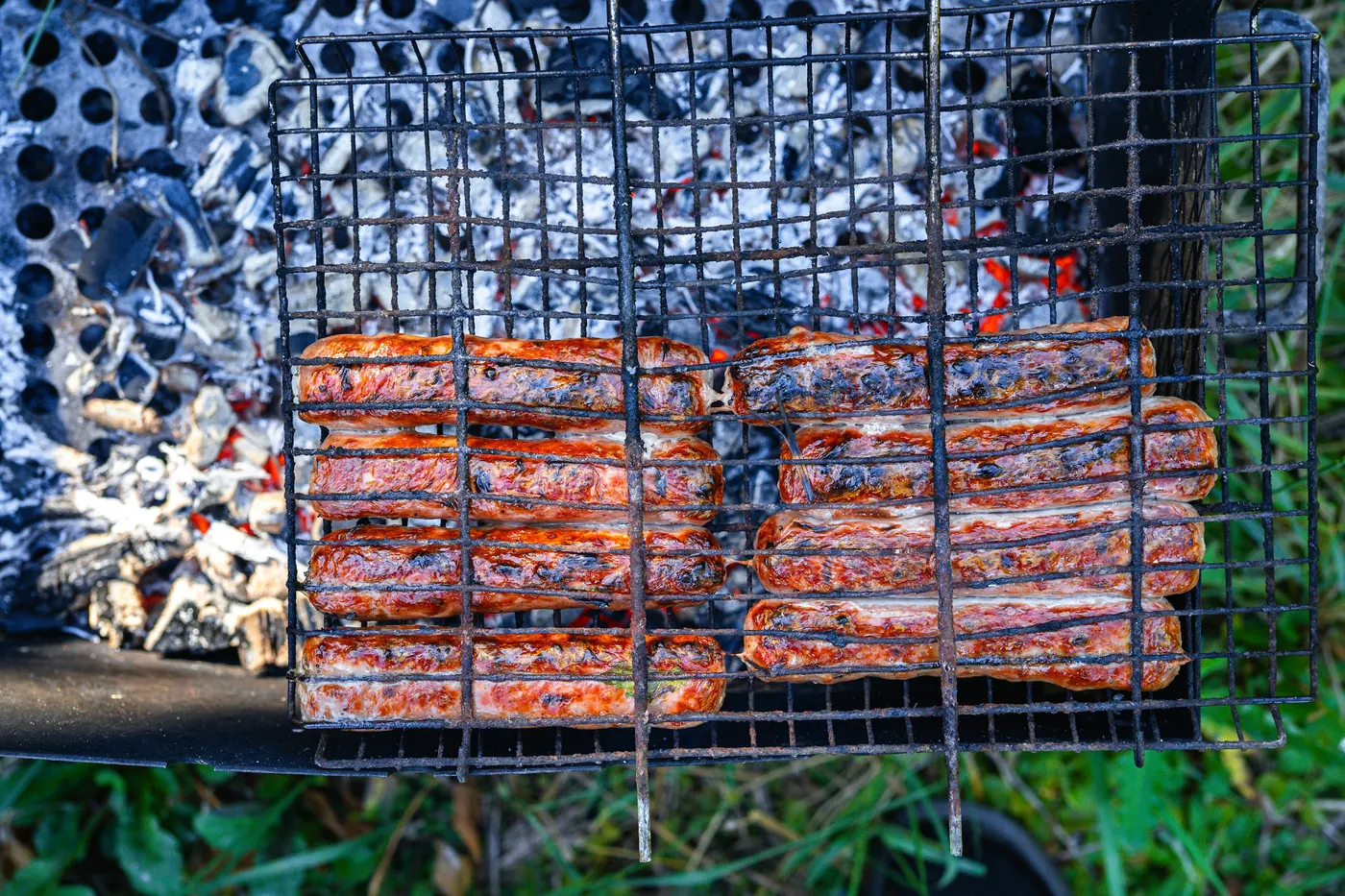
Cast iron is heavy. Our cast iron pick’s listing gives about 19.7 pounds for a 21.5-inch round grate. That weight is part of why it holds heat, but it also means lifting it off a hot kettle to add charcoal is awkward. Both of our picks get around this: the cast iron grate has a 12-inch center insert that lifts out on its own, and the stainless grate has a large hinged section and spins on the kettle so you can turn food toward or away from the fire.
Weight also matters if you take the grate off to clean it. A stainless grate is easier to carry to a hose or a sink, and it won’t rust from the soaking.
Fit: measure before you buy either one
Replacement grates are not universal. Kettle grates are sold by the grill’s diameter, and the common 22-inch Weber kettle takes a cooking grate about 21.5 inches across. Both of our picks are made for 22 and 22.5-inch kettles, including Weber’s Original Kettle, Master-Touch and Performer, according to their listings. If your grill is a different make or size, measure the inside of the bowl where the grate rests and check the listing’s diameter against it. The cast iron pick’s own listing asks buyers to compare dimensions with the original part before ordering.
If you are not sure which grill you have, our best kettle grill guide covers the common 22-inch models, and our best charcoal grill guide covers other shapes.
Choose cast iron if… / Choose stainless steel if…
Choose a cast iron grate if…
- You grill mostly steaks, burgers and carne asada, and you want bold sear marks.
- You often cook over a fire that has burned down a little.
- You will brush, dry and oil the grate after every cook.
- Your grill is covered or stored out of the rain.
Choose a stainless steel grate if…
- You want a grate that needs no seasoning.
- Your grill sits outdoors in damp weather.
- You want a lighter grate that is easier to lift and clean.
- You grill a mix of vegetables, fish and meat and care less about wide marks.
Our picks for the cast iron vs stainless steel grill grates question
One grate for each side, both made for 22 and 22.5-inch charcoal kettles so they compare directly. Both were in stock and sold new by the maker’s own store when we checked, and neither appears on our other pages. The cast iron grate comes from an aftermarket parts brand, so the listing is the main source for it; the stainless grate comes from SnS Grills, the maker of the Slow ‘N Sear.
1. SnS Grills EasySpin 22-Inch Stainless Steel Cooking Grate – Low Upkeep, Spins for Two Zones

SnS Grills makes this 304 stainless steel grate for any 22-inch kettle, naming Weber’s Original Kettle, Performer and Master-Touch. It is built around two-zone cooking, with charcoal banked to one side: a large hinged opening lets you add coals mid-cook without moving the food, and the whole grate can be spun by hand on the kettle to move food closer to or farther from the fire.
The maker adds extra rails near the handles for more usable space and welded handles for lifting. It calls the 304 stainless rust-resistant and backs the grate with a 10-year warranty, which is the strongest statement of either pick and the main reason to choose stainless in the first place.
Care is simple: brush it while warm, and give it a deeper clean when the buildup gets heavy. There is nothing to season. Expect thinner grill marks than a cast iron grate gives, especially on a fading fire.
Why we like it
- 304 stainless steel, no seasoning (listing)
- Large hinged opening for adding charcoal (listing)
- Spins by hand for two-zone cooking (listing)
- 10-year warranty (listing)
Key specifications
| Model | 22ESG-SS |
|---|---|
| Material | 304 stainless steel |
| Fits | 22-inch kettles: Weber Original Kettle, Performer, Master-Touch |
| Diameter | About 21.5 in (listing dimensions) |
| Access | Large hinged opening; spins on the kettle |
| Seasoning | Not needed |
| Care | Brush after cooking |
| Warranty | 10 years |
Why we recommend it
It suits a 22-inch kettle owner who grills often, leaves the grill outdoors and wants a grate that needs no more than a brush.
Skip it if wide, dark sear marks are the point of grilling for you; the cast iron pick does that better.
Pros and cons
Pros
- No seasoning or oiling
- Long stated warranty
- Built for two-zone fires
Cons
- Thinner marks than cast iron
- Holds less heat on a fading fire
- Fits 22-inch kettles only
2. QuliMetal 21.5-Inch Cast Iron Cooking Grate for 22-Inch Kettles – Heavy Grate for Bold Marks

This is a full cast iron cooking grate for 22 and 22.5-inch charcoal kettles, made as a replacement for Weber’s part 8835. QuliMetal lists fits for the Original Kettle, Master-Touch, Performer, One-Touch and Bar-B-Kettle, and says the grate is 21.5 inches across with a 12-inch center insert that lifts out so you can add charcoal without removing the whole grate. The insert opening also takes Weber’s Gourmet BBQ System accessories, such as the griddle, wok and sear grate.
QuliMetal describes it as heavy-duty cast iron and says it heats evenly, retains heat well and gives prominent sear marks; treat those as the maker’s words, though they match what Weber says about cast iron in general. The listing gives the weight as about 19.7 pounds, so the lift-out center is useful.
The listing does not say whether the grate comes pre-seasoned or enameled, so plan to care for it as bare cast iron: brush it warm, keep it dry and wipe on a thin coat of oil after cooking, as Lodge advises for its cast iron. A covered grill helps. QuliMetal is an aftermarket parts brand, and its listing asks you to compare dimensions with your original grate before ordering.
Why we like it
- Full cast iron grate for 22 and 22.5-inch kettles (listing)
- 12-inch lift-out center for adding charcoal (listing)
- Takes Weber Gourmet BBQ System inserts (listing)
- Heavy grate that holds heat for searing
Key specifications
| Model | QuliMetal 8835 |
|---|---|
| Material | Cast iron |
| Fits | 22 and 22.5-inch Weber kettles: Original Kettle, Master-Touch, Performer, One-Touch, Bar-B-Kettle |
| Diameter | 21.5 in; 12 in center insert |
| Access | Lift-out center insert |
| Seasoning | Not stated; treat as bare cast iron |
| Care | Brush warm, dry, oil lightly |
| Warranty | Not stated |
Why we recommend it
It suits a kettle owner who grills a lot of steak and carne asada, keeps the grill covered and doesn’t mind oiling the grate after each cook.
Skip it if your grill lives uncovered in the rain or you want a grate you can forget about; the stainless pick needs far less care.
Pros and cons
Pros
- Holds heat for bold marks
- Lift-out center
- Works with Gourmet BBQ System inserts
Cons
- Heavy
- Rusts if not kept dry and oiled
- Aftermarket brand; no warranty stated
Grill grate questions, answered
Is cast iron or stainless steel better for grill grates?
Cast iron holds more heat and leaves bolder marks; Weber says its enameled cast iron grates retain heat better and longer than other types. Stainless needs less care and, according to Weber, can last a very long time if maintained. For most outdoor charcoal grills, stainless is the easier choice.
Do cast iron grill grates rust?
Bare cast iron does if it is left wet or unoiled. Lodge says even well-seasoned cast iron can rust from soaking, air drying or damp storage. Dry the grate with the heat of the fire, then oil it lightly.
Do you need to season stainless steel grill grates?
No. Stainless does not need seasoning. A light wipe of oil on the food or the grate before cooking can still help with sticking.
Do stainless steel grates give sear marks?
Yes. Weber says all its grate types produce great sear marks. Stainless rods leave thinner lines than wide cast iron bars, and the difference is most obvious when the fire is past its peak.
How do I know which replacement grate fits my grill?
Go by your grill’s model and size, and measure where the grate sits. A 22-inch kettle takes a grate about 21.5 inches across, as both of our picks are.
Our final word on grill grates
If your grill lives outside and you want to cook rather than maintain, buy stainless steel. If sear marks are what you are after and you will oil the grate after every cook, cast iron gives you more heat to work with. Either way, a fresh grate can bring a tired kettle back into regular use. For more add-ons, see our best charcoal grill accessories and best Weber grill accessories guides. And when you would rather let us work the grill, see the menu or call to order.