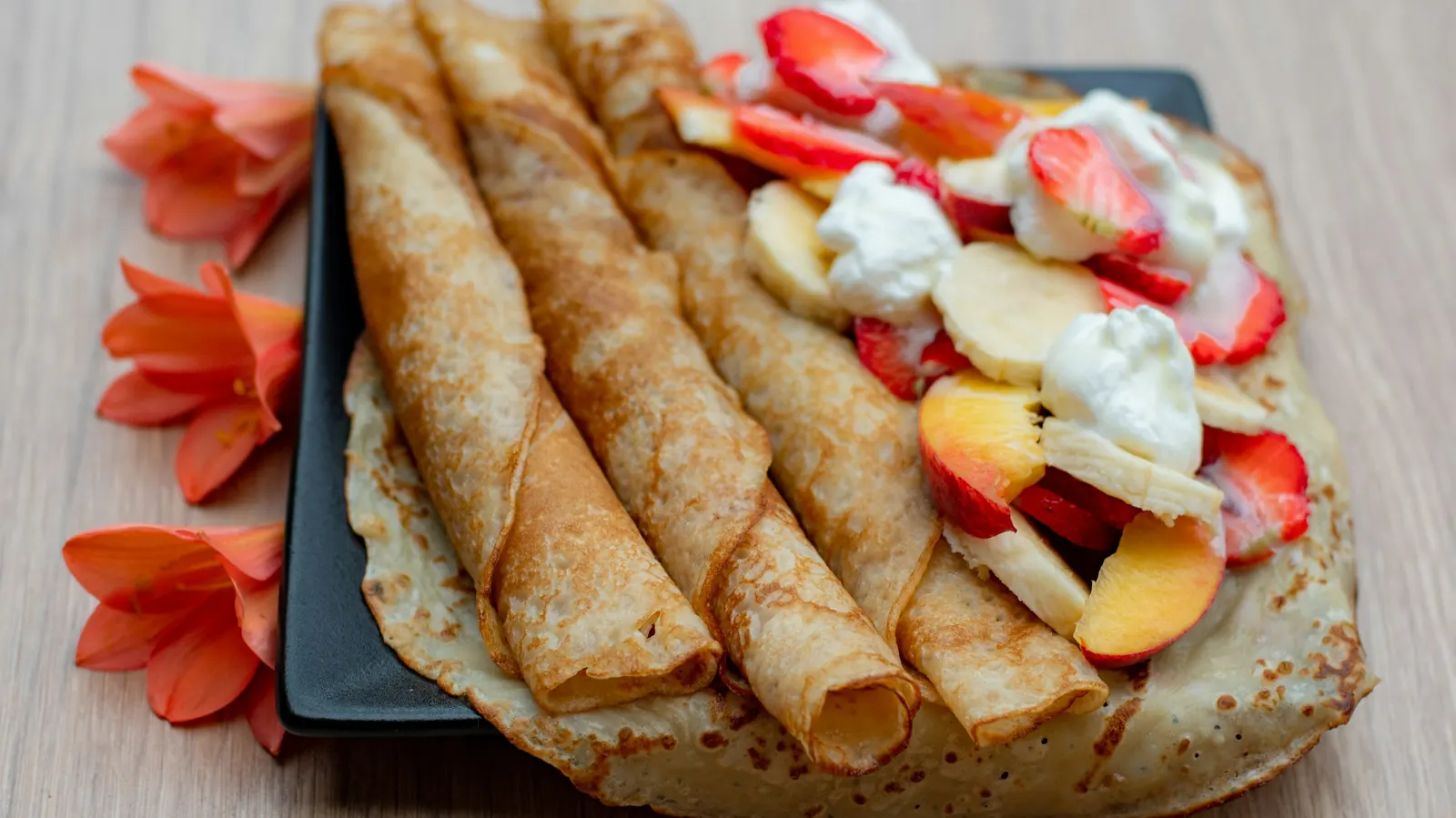
A crepe pan does one thing very well: its low, flared rim lets you slide a spatula under a paper-thin pancake and flip it without tearing. But it is a single-job pan, and many cooks only make crepes a few times a year. The question most people ask before buying one is whether something already in the cupboard, or something more useful, can do the job.
It usually can. This guide covers six crepe pan alternatives, from a plain nonstick skillet to a cast-iron griddle that doubles as a comal for tortillas, and says honestly where each one falls short of a real crepe pan.
Julia’s earns a commission on purchases made through links on this page, at no cost to you. Recommendations are based on what a restaurant kitchen looks for, product specifications and verified buyer reports.
Why people skip the crepe pan
A crepe pan is shallow and flat. De Buyer, which makes them, describes the design as a “shallow rim and wide, flat base” that makes it easier to get a spatula under the crepe, and Zwilling notes that most crepe pans have a rim of only about 2 cm. That shape is the whole advantage. The reasons to look elsewhere are just as plain:
- It is a one-job pan. A low rim is useless for frying, sauteing or anything with liquid.
- A good skillet gets you most of the way. Chowhound’s Megan Shoop-Volz calls the crepe pan “one specialty kitchen tool you can almost certainly live without”, and writes that “a sturdy nonstick skillet is just as capable of turning out thin, crisp crêpes.”
- Storage. In a small kitchen, every pan has to earn its place.
- You may want a bigger batch. A griddle or an electric surface can cook more than one at a time or keep going for a crowd.
The catch, in Chowhound’s words, is that skillet crepes may come out “a touch smaller and less uniform”, because the skillet’s sloped sides take up some of the base. That is the trade-off with every pan below.
Quick verdict: the best crepe pan alternative
For most kitchens the best crepe pan alternative is a nonstick skillet you already trust, such as the Tramontina Professional 8-inch: de Buyer itself calls nonstick pans “ideal for beginners”, and the 8-inch size suits small crepes. If you want one pan that lasts for decades and also cooks eggs and tortillas, choose a carbon steel skillet such as Merten & Storck’s, or a round cast-iron griddle that works as a comal. For a batch on the stove, the Nordic Ware Backsplash Griddle fits two crepes side by side. If you would rather not swirl batter at all, a dip-style electric crepe maker such as Gourmia’s is the easiest learning curve.
Five ways to cook crepes, side by side
Our five standout picks, one per kind of cook, with what each maker or listing states. All six alternatives are reviewed in full below.
| Alternative | Best for | Surface | Heat source | Buy on Amazon |
|---|---|---|---|---|
| First-time crepe makers | Ceramic nonstick | Gas, electric, ceramic glass | View on Amazon | |

Merten & Storck 8-Inch Carbon Steel Frying PanBest long-life pan
|
Cooks who season their pans | Pre-seasoned carbon steel | All stovetops incl. induction | View on Amazon |

Commercial Chef 10.5-Inch Cast Iron Round GriddleBest comal-style pick
|
Crepes and tortillas | Seasoned cast iron, low rim | All cooktops, oven, campfire | View on Amazon |

Nordic Ware Stovetop Backsplash GriddleBest for batches
|
Two crepes at once | Nonstick cast aluminum | Gas, electric, ceramic | View on Amazon |

Gourmia 8-Inch Dip Crepe MakerEasiest to learn
|
Cooks who hate swirling batter | Nonstick dip plate | Electric, 800 watts | View on Amazon |
What a crepe pan does that a skillet has to make up for
Three things make a crepe pan good at its job, and each alternative handles them differently.
Release. Thin batter sticks easily. De Buyer advises greasing the pan lightly with butter or oil and “wiping away any excess”, because too much fat changes the crepe’s texture. Nonstick surfaces release from the first crepe; carbon steel and cast iron release well once the seasoning has built up, and less well when new.
Even heat. A crepe cooks in about a minute, so hot spots show up as pale or scorched patches. De Buyer says cookware with good heat distribution helps avoid them, and recommends preheating the pan “on medium heat”. Cast iron and heavy cast aluminum hold heat well; thin pans react faster when you turn the burner down.
Access. The low rim matters most when you flip. A skillet’s curved sides narrow the flat base, so an 8-inch skillet cooks a smaller crepe than an 8-inch crepe pan. A flat griddle with a low rim, or an electric plate with no rim at all, gives you the most room.
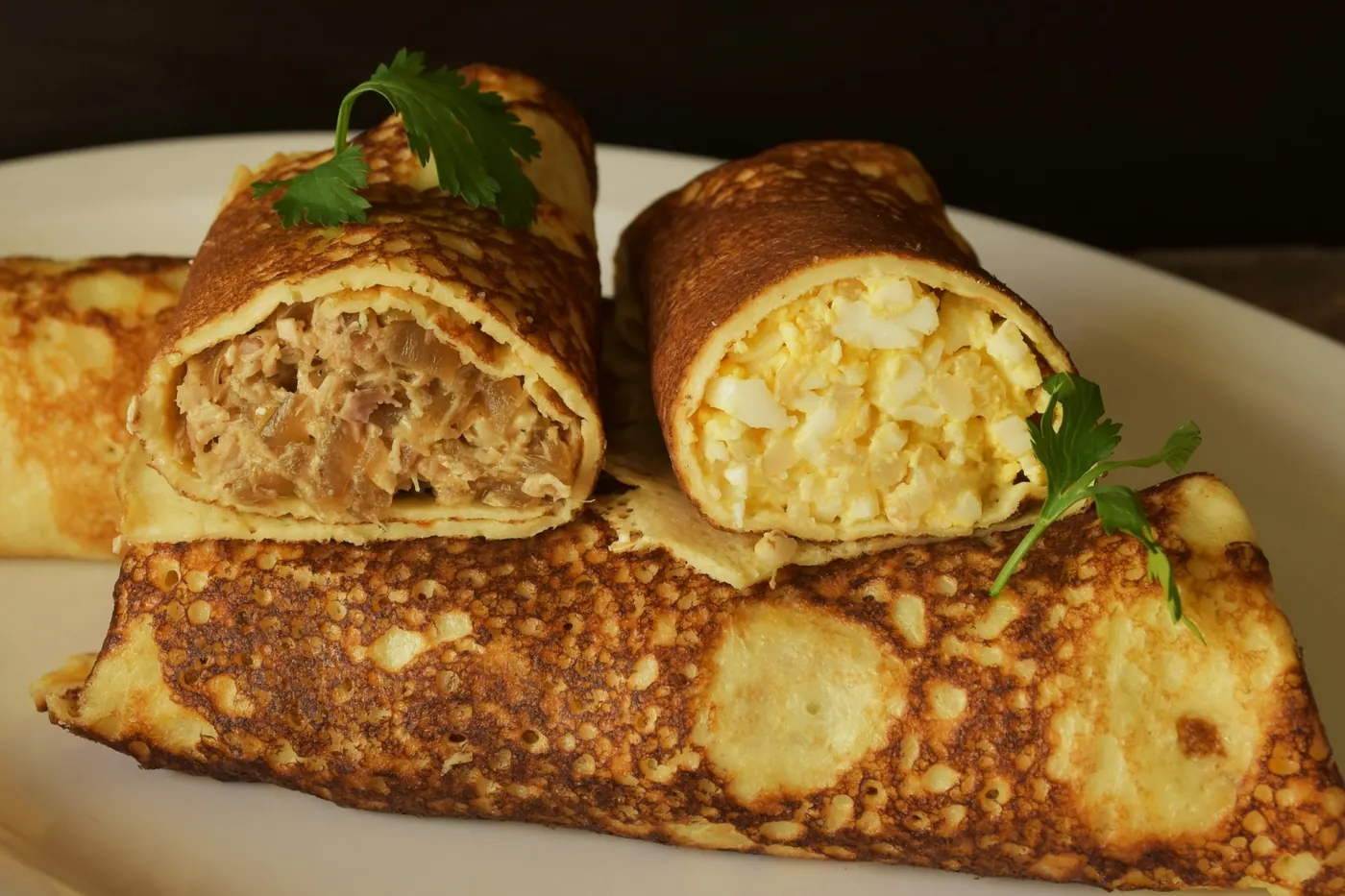
A practical point that applies to every pick: the first crepe is usually a test. It tells you whether the heat is right and how much batter fills the pan. Adjust, then carry on.
Our picks for the best crepe pan alternative
1. Tramontina Professional 8-Inch Ceramic Nonstick Frying Pan – Easy Release for Beginners

A nonstick skillet is the alternative most people already own, and it is the one de Buyer, a carbon-steel crepe pan maker, calls “ideal for beginners.” Tramontina’s Professional 8-inch pan is a sensible one to buy for the job: the listing describes a heavy-gauge aluminum body for even heating with a reinforced ceramic nonstick coating, and a removable silicone sleeve on the handle.
The 8-inch size gives you small dessert crepes rather than the large, thin sheets of a 12-inch crepe pan; that is the honest limit of a skillet. For a quick batch of crepes with lemon and sugar or a stack for enchilada-style savory crepes, it is enough, and the pan goes straight back to eggs and quesadillas the next morning.
Tramontina lists it for gas, electric and ceramic glass cooktops, but not induction. It is oven-safe to 500°F, dishwasher safe and made in Brazil, per the listing. Keep metal utensils off it; Chowhound’s crepe piece gives the same advice for any nonstick pan.
Why we like it
- Reinforced ceramic nonstick coating for easy release, per the listing.
- Heavy-gauge aluminum for even heating, per Tramontina.
- Dishwasher safe and oven safe to 500°F.
- Lifetime warranty stated on the listing.
Key specifications
| Model | 80114/059DS |
|---|---|
| Type | Nonstick frying pan |
| Cooking size | 8-inch pan |
| Material | Heavy-gauge aluminum, ceramic nonstick coating |
| Heat sources | Gas, electric, ceramic glass; not induction |
| Oven safe | Up to 500°F |
| Care | Dishwasher safe |
| Made in | Brazil |
Why we recommend it
It suits anyone making crepes for the first time, or a few times a year, who wants a pan that earns its place the rest of the week.
Skip it if you cook on induction, which the listing excludes, or want crepes wider than about seven inches.
Pros and cons
Pros
- Easy release from the first crepe
- Useful every day, not only for crepes
- Light enough to swirl one-handed
Cons
- Not for induction
- Curved sides make smaller crepes than a crepe pan
- Ceramic coating needs gentle utensils
2. Merten & Storck 8-Inch Carbon Steel Frying Pan – The Traditional Material
Classic French crepe pans are made of carbon steel, so a carbon steel skillet is the closest material match. De Buyer writes that “cast iron or carbon steel skillets are a quality alternative” to a crepe pan, and that carbon steel develops a natural nonstick surface with use.
Merten & Storck’s 8-inch pan arrives pre-seasoned, which shortens the awkward break-in period when a new steel pan tends to grab. The listing calls it lightweight with good heat control, and lists it for induction, gas, electric and ceramic cooktops plus the oven, grill and campfire. It also says it is safe for metal utensils, which a nonstick pan is not.
The trade-off is care. Zwilling’s advice for carbon steel and cast iron is to clean the pan “with hot water and a brush or sponge without soap” and to re-season it with a thin layer of oil. Expect a few sticky crepes until the seasoning builds. We list the 8-inch size here; the same line’s 10-inch pan appears on two other guides on this site, and the smaller size is the better fit for crepes swirled in a skillet.
Why we like it
- Pre-seasoned and ready to cook, per the listing.
- Works on induction as well as gas and electric.
- Carbon steel builds a natural nonstick surface over time, per de Buyer.
- Safe with metal utensils, per the listing.
Key specifications
| Model | CC003335-001 |
|---|---|
| Type | Carbon steel frying pan |
| Cooking size | 8-inch pan |
| Material | Pre-seasoned carbon steel |
| Heat sources | Induction, gas, electric, ceramic, grill, campfire |
| Oven safe | Yes; temperature not stated |
| Care | Not stated on the listing; general carbon steel care applies |
| Made in | Not stated |
Why we recommend it
It suits cooks who already look after cast iron and want a crepe pan alternative that will also sear, fry eggs and warm tortillas for years.
Skip it if you want crepes to release perfectly from the first use; new steel needs a few rounds of seasoning first.
Pros and cons
Pros
- The traditional crepe pan material
- Induction compatible
- No coating to wear out
Cons
- Needs seasoning and dry storage
- No soap in the usual care routine
- Small 8-inch size
3. Commercial Chef 10.5-Inch Cast Iron Round Griddle – A Comal That Makes Crepes
In a Mexican kitchen, the flat round pan for tortillas is the comal, and a low-rimmed cast-iron griddle does the same work. It is also one of the better crepe pan alternatives, because its shape is close to a crepe pan’s: flat across the whole base with only a short raised rim, so you get more usable surface than a skillet of the same size.
Commercial Chef’s 10.5-inch round griddle is pre-seasoned with vegetable oil and no synthetic coating, per the listing, and works on every cooktop including induction, plus the oven, broiler, grill and campfire. Cast iron holds heat, which helps keep crepe after crepe the same color once the pan is up to temperature. De Buyer names cast iron, with carbon steel, as a quality crepe pan alternative.
The trade-offs are weight and response. Cast iron is slow to cool if the pan gets too hot, so turn the burner down early. The maker says to hand wash with gentle detergent and dry thoroughly. It handles tortillas, quesadillas and pancakes as well as crepes, which makes it the most useful pan on this list for our kind of cooking.
Why we like it
- Flat base with a short raised rim, per the listing.
- Seasoned with vegetable oil, no synthetic coating.
- Works on induction, gas, electric and glass cooktops.
- Doubles as a comal for tortillas.
Key specifications
| Model | CHFL911 |
|---|---|
| Type | Round griddle (comal style) |
| Cooking size | 10.5-inch |
| Material | Cast iron, pre-seasoned with vegetable oil |
| Heat sources | All cooktops incl. induction; grill, campfire |
| Oven safe | Oven and broiler safe |
| Care | Hand wash with gentle detergent, dry thoroughly |
| Made in | Not stated |
Why we recommend it
It suits anyone who wants one flat pan for crepes, tortillas and quesadillas, and does not mind cast iron’s weight.
Skip it if lifting and tilting a heavy pan to swirl batter is hard for you; spread the batter with a crepe spreader instead, or pick the nonstick skillet.
Pros and cons
Pros
- More flat surface than a skillet
- Steady heat once preheated
- Works on any heat source
Cons
- Heavy to swirl
- Slow to cool down
- Seasoning needs upkeep
4. Nordic Ware Stovetop Backsplash Griddle – Two Crepes at a Time
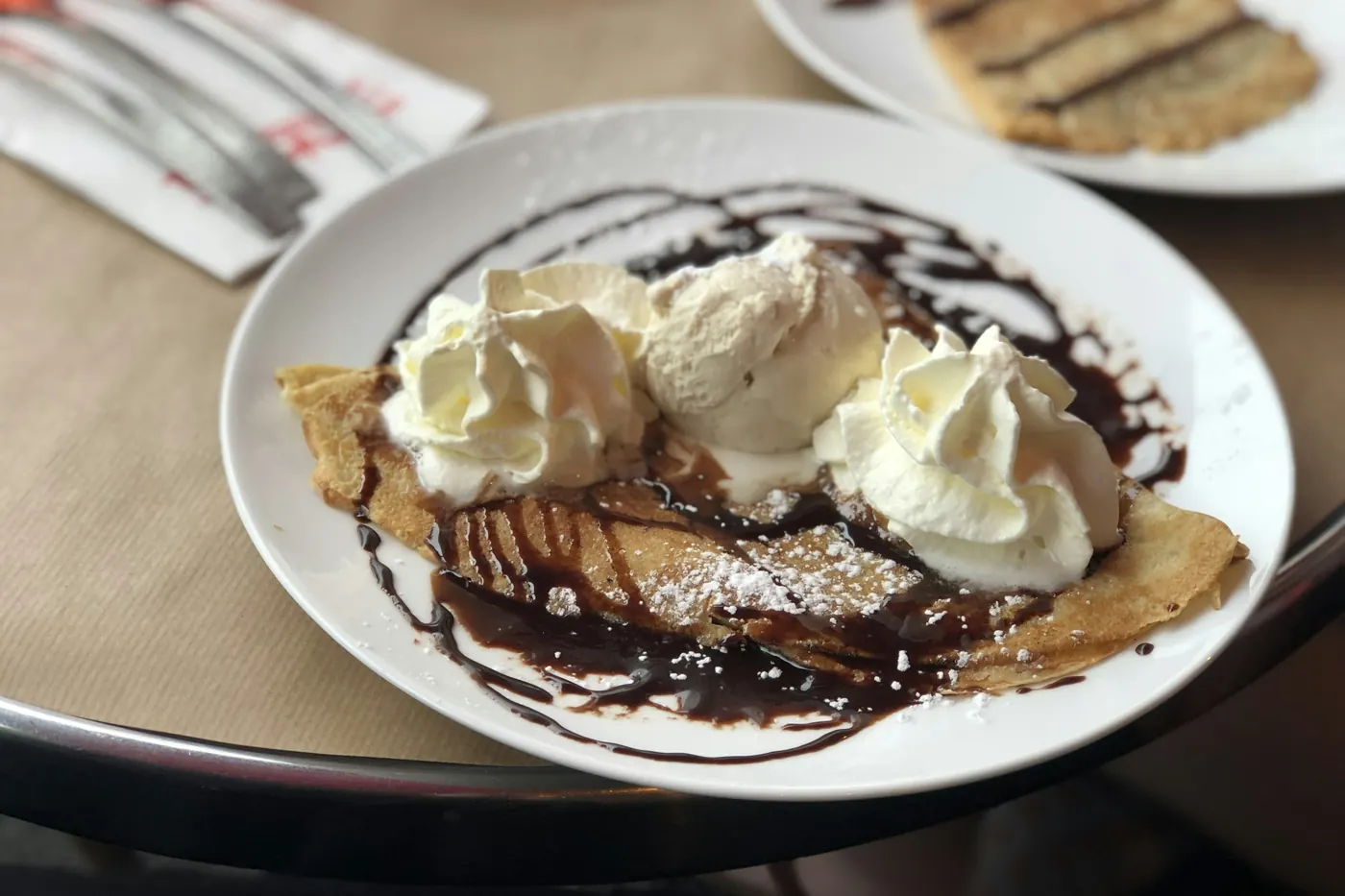
A crepe pan cooks one crepe at a time. Nordic Ware’s backsplash griddle sits across a burner and gives you a nonstick cooking surface of 11.5 by 12.7 inches, according to the listing, which is room for two small crepes side by side or one large one. The raised back edge stops splatter, and a front grease well catches any excess butter.
It is made of cast aluminum, which Nordic Ware says has good heat retention, and it is heat safe to 400°F, which is well above what crepes need. The listing names gas, electric and ceramic stovetops; induction is not listed, so assume it will not work there. Nordic Ware states it is made in the USA.
The limit is that you cannot tilt a griddle to spread batter, so you pour and spread with the back of a ladle or a wooden crepe spreader instead. That takes a little practice. On a burner smaller than the griddle, the edges will run cooler than the center, so cook in the middle until you know where the heat is.
Why we like it
- 11.5 x 12.7-inch nonstick cooking surface, per the listing.
- Backsplash and front grease well, per the maker.
- Heat safe to 400°F.
- Made in the USA, per Nordic Ware.
Key specifications
| Model | 19660 |
|---|---|
| Type | Stovetop griddle with backsplash |
| Cooking size | 11.5 x 12.7 in interior surface |
| Material | Cast aluminum, nonstick |
| Heat sources | Gas, electric, ceramic stovetops |
| Oven safe | Not stated; heat safe to 400°F |
| Care | Nonstick, easy cleaning; method not stated |
| Made in | USA |
Why we recommend it
It suits families who make crepes for a crowd and want pancakes and bacon on the same surface at the weekend.
Skip it if you cook on induction or have a very small burner.
Pros and cons
Pros
- Big nonstick surface on one burner
- Splatter guard and grease well
- Made in the USA
Cons
- Cannot be tilted to spread batter
- Induction not listed
5. Dash Deluxe Everyday Electric Griddle – Crepes Off the Stove

An electric griddle frees the stove and gives you a dial instead of guessing at a burner. Dash’s Deluxe Everyday griddle has a 20 by 10.5-inch nonstick cooking surface and a temperature dial from 200°F to 400°F plus a warm setting, according to the listing. That range covers the medium heat crepes want, and the warm setting holds a stack while you finish.
The cooking plate and drip tray come off and can be washed by hand or in the dishwasher, per Dash, which is the main reason to choose this model over a fixed-plate griddle. It is a 1500-watt unit. Like any griddle, it has no rim to tilt against, so you spread the batter with a ladle or spreader, and the long surface lets you cook two or three small crepes at once.
We list the red version; the same model in another color appears on our electric griddle guide. It is here because it is the electric griddle with a removable, dishwasher-safe plate, which matters when crepe batter drips over the edge. Dash has its own crepe maker too, but a griddle is the more useful buy for most households.
Why we like it
- Temperature dial from 200°F to 400°F with a warm setting.
- Removable plate and drip tray, dishwasher safe, per Dash.
- Large 20-inch surface fits several crepes.
Key specifications
| Model | DEG255GBRD01 |
|---|---|
| Type | Electric griddle |
| Cooking size | 20 x 10.5 in |
| Material | Nonstick cooking plate |
| Heat sources | Electric, 1500 watts |
| Oven safe | No (countertop appliance) |
| Care | Plate and drip tray: hand wash or dishwasher |
| Made in | Not stated |
Why we recommend it
It suits cooks who want to make crepes at the table or keep the stove free for fillings, and who will use a griddle for breakfast too.
Skip it if counter space is tight; a 20-inch griddle needs room to use and store.
Pros and cons
Pros
- Set temperature with a dial
- Dishwasher-safe plate
- Room for several crepes
Cons
- Batter must be spread, not swirled
- Large to store
6. Gourmia 8-Inch Dip Crepe Maker – No Swirling Needed
The hardest part of crepes for most people is pouring and swirling the batter thin before it sets. A dip-style crepe maker removes that step: you turn the heated plate upside down, dip it into a tray of batter, and turn it back over. Gourmia’s model includes the batter tray and has an 8-inch nonstick cooking surface, one-touch operation and automatic temperature control, per the listing.
It is an 800-watt, compact unit that Gourmia pitches at small kitchens, dorms and RVs. Besides crepes, the listing names blintzes, tortillas and thin pancakes. Cleanup is a wipe of the cooled plate and base with a damp cloth.
The limits are clear. It cooks one 8-inch crepe at a time, the batter has to be thin enough to coat the plate evenly, and it does nothing else in the kitchen. If you want a bigger dedicated machine, our guide to electric crepe makers covers larger models.
Why we like it
- Dip-and-cook design with included batter tray.
- Automatic temperature control, per the listing.
- Compact 800-watt base.
- Wipes clean with a damp cloth.
Key specifications
| Model | GCM1440 |
|---|---|
| Type | Electric dip crepe maker |
| Cooking size | 8-inch |
| Material | Nonstick cooking surface |
| Heat sources | Electric, 800 watts |
| Oven safe | No (countertop appliance) |
| Care | Wipe with a damp cloth once cool |
| Made in | Not stated |
Why we recommend it
It suits beginners and kids’ crepe nights, where an even, thin crepe every time matters more than size.
Skip it if you want one tool for many jobs; a skillet or griddle is far more useful.
Pros and cons
Pros
- No swirling technique to learn
- Compact
- Includes the batter tray
Cons
- One small crepe at a time
- A single-purpose appliance
How to choose a pan for crepes
- Start with what you own. If you have a good nonstick skillet, try it before buying anything. Chowhound’s view is that it will make crepes nearly as well, only a little smaller.
- Size. Measure the flat base, not the rim. A skillet’s curved sides reduce the usable surface, so an 8-inch skillet makes a crepe of roughly seven inches.
- Material and care. Nonstick releases from the start but needs gentle utensils. Carbon steel and cast iron need seasoning and, per Zwilling, a soap-free wash, but last for decades.
- Your cooktop. Induction rules out the Tramontina and Nordic Ware picks here; the carbon steel and cast-iron pans both list induction.
- Batch size. For a crowd, a griddle that fits two or more crepes saves time.
- Other uses. A round griddle doubles as a comal for tortillas and quesadillas; a dip crepe maker does one job.
How we chose these six alternatives
We looked for tools that actually cook a thin crepe, from different kinds of pans and appliances, not six versions of the same skillet. Each pick is from an identifiable maker, and each was in stock on Amazon with a new lead offer when we checked. Specifications come from the makers’ listings. The cooking guidance comes from de Buyer’s crepe guide, Zwilling’s crepe pan page and Megan Shoop-Volz’s Chowhound article on whether crepe pans are necessary. We did not cook with these pans; this is a research-based guide.
Crepe pan alternative questions, answered
Can you make crepes in a regular frying pan?
Yes. A nonstick frying pan is the usual substitute, and Chowhound calls a sturdy nonstick skillet “just as capable” of making thin crepes. Expect slightly smaller crepes, because the sloped sides take up part of the base.
Can you make crepes in cast iron?
Yes, if the pan is well seasoned and fully preheated. De Buyer names cast iron and carbon steel skillets as “a quality alternative” to a crepe pan. A flat round griddle is easier than a deep skillet because the low rim leaves room for a spatula.
What size pan is best for making crepes without a crepe pan?
An 8- to 10-inch pan is easiest to swirl. Bigger crepes are possible on a griddle, but you spread the batter with a tool rather than tilting the pan.
Do I need butter in a nonstick pan?
A little helps with flavor and browning. De Buyer suggests a light coat of butter or oil with the excess wiped away, since too much fat changes the crepe’s texture.
Is an electric crepe maker worth it instead of a pan?
Only if you make crepes often or struggle with swirling. A dip-style maker is easy to learn but does one job; an electric griddle does crepes and much more.
Our final word on making crepes without a crepe pan
Most kitchens do not need a crepe pan. A nonstick skillet makes good crepes from the first try, and a carbon steel pan or a round cast-iron griddle gets better with age and handles tortillas just as well; our comal guide for tortillas covers more of those flat pans. If you decide you do want the real thing, our best crepe pan guide lists the specialty pans, and our guides to nonstick pans, carbon steel pans, electric griddles and electric crepe makers go deeper on each alternative. When you would rather someone else does the cooking, call Julia’s to order at (346) 546-8283.