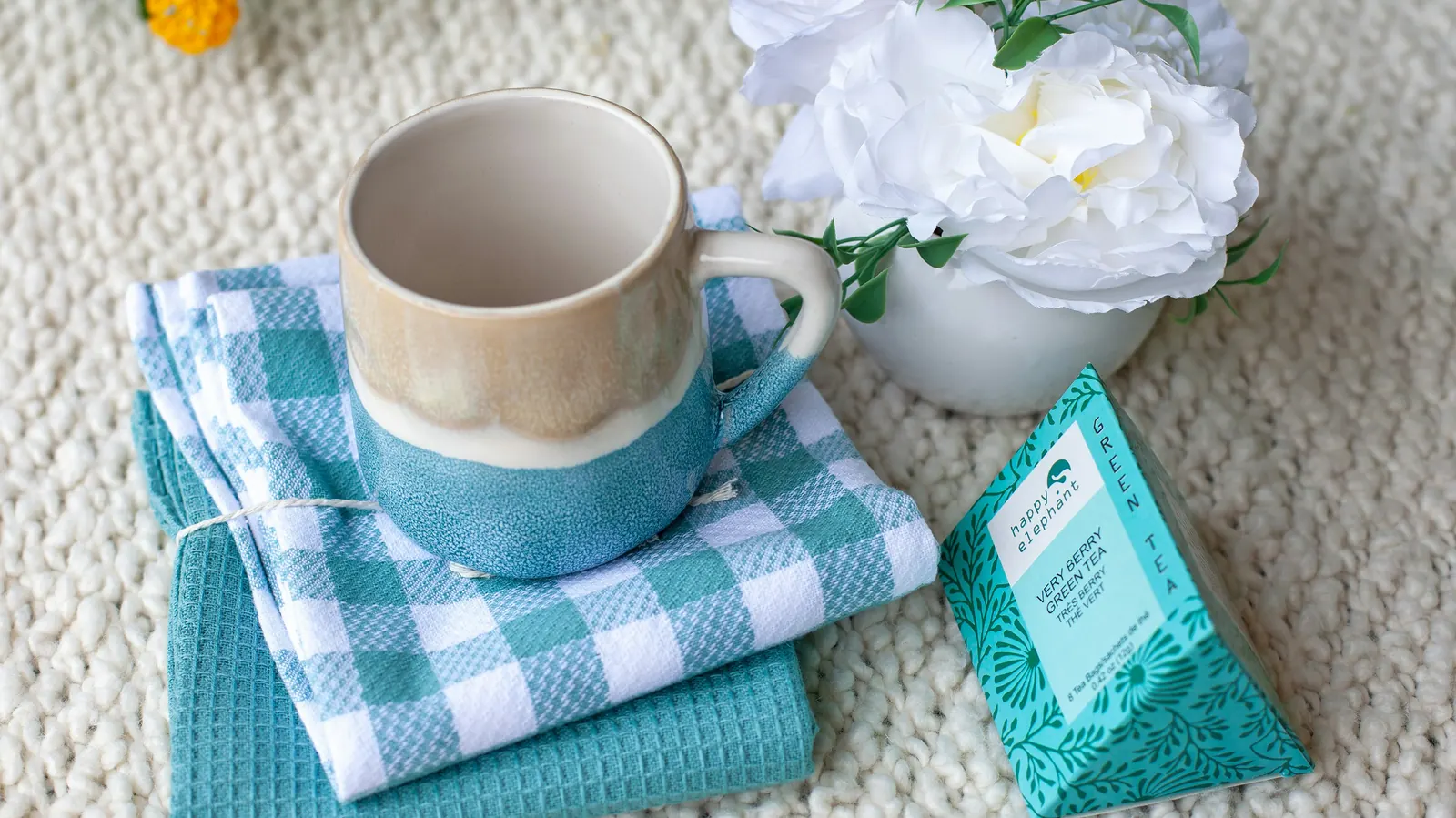
Most sinks have one or the other sitting on the edge: a cotton dish cloth hung over the faucet, or a sponge in a caddy. Both wash plates, both wipe counters and both get damp and stay that way. They differ in what they do best, how long they last and, most of all, in how you get them clean again, because a wet cloth or sponge left by the sink is a place where bacteria can grow.
This guide compares a dish cloth and a sponge by scrubbing power, absorbency, hygiene and care, lifespan and the jobs each one suits. The hygiene advice comes from the USDA’s Agricultural Research Service, university extension services and the Academy of Nutrition and Dietetics, not from us. It ends with one plain pick for each side.
Julia’s earns a commission on purchases made through links on this page, at no cost to you. Recommendations are based on what a restaurant kitchen looks for, product specifications and verified buyer reports.
Quick verdict: dish cloth or sponge at your sink?
Use a dish cloth as your everyday washer and wiper if you have a washing machine and enough cloths to swap in a clean one often: a cotton cloth goes through the hot cycle with the towels and comes out clean, which extension services recommend. Keep a sponge for stuck-on food and nonstick pans, where a scrub side does work a flat cloth can’t, and plan to sanitize it often and replace it every week or two, as the Academy of Nutrition and Dietetics advises. Many kitchens are best served by both.
The table sums up the differences; the sections after it explain each one.
Dish cloth vs sponge, side by side
| Dish cloth (cotton) | Sponge (with scrub side) | |
|---|---|---|
| Best at | Washing plates and glasses, wiping counters, drying hands | Scrubbing stuck-on food, pans, baking dishes |
| Scrubbing power | Light; textured weaves help a little | Strong on the scrub face |
| Shape | Flat and thin, reaches into glasses and jar corners | Thick block, easy to grip |
| How to clean it | Hot cycle in the washer, dry on high (extension advice) | Microwave damp or dishwasher with a drying cycle (USDA ARS) |
| How often to change | Often; daily is a common recommendation (UNL Extension) | Replace every one to two weeks (Academy of Nutrition and Dietetics) |
| Lifespan | Many washes until it frays or thins | Weeks, then the bin |
| Drying between uses | Hang it open; a thin cloth dries faster | Thick foam stays damp longer |
| Waste | Reusable for a long time | Disposable |
Scrubbing and wiping: what each one is good at
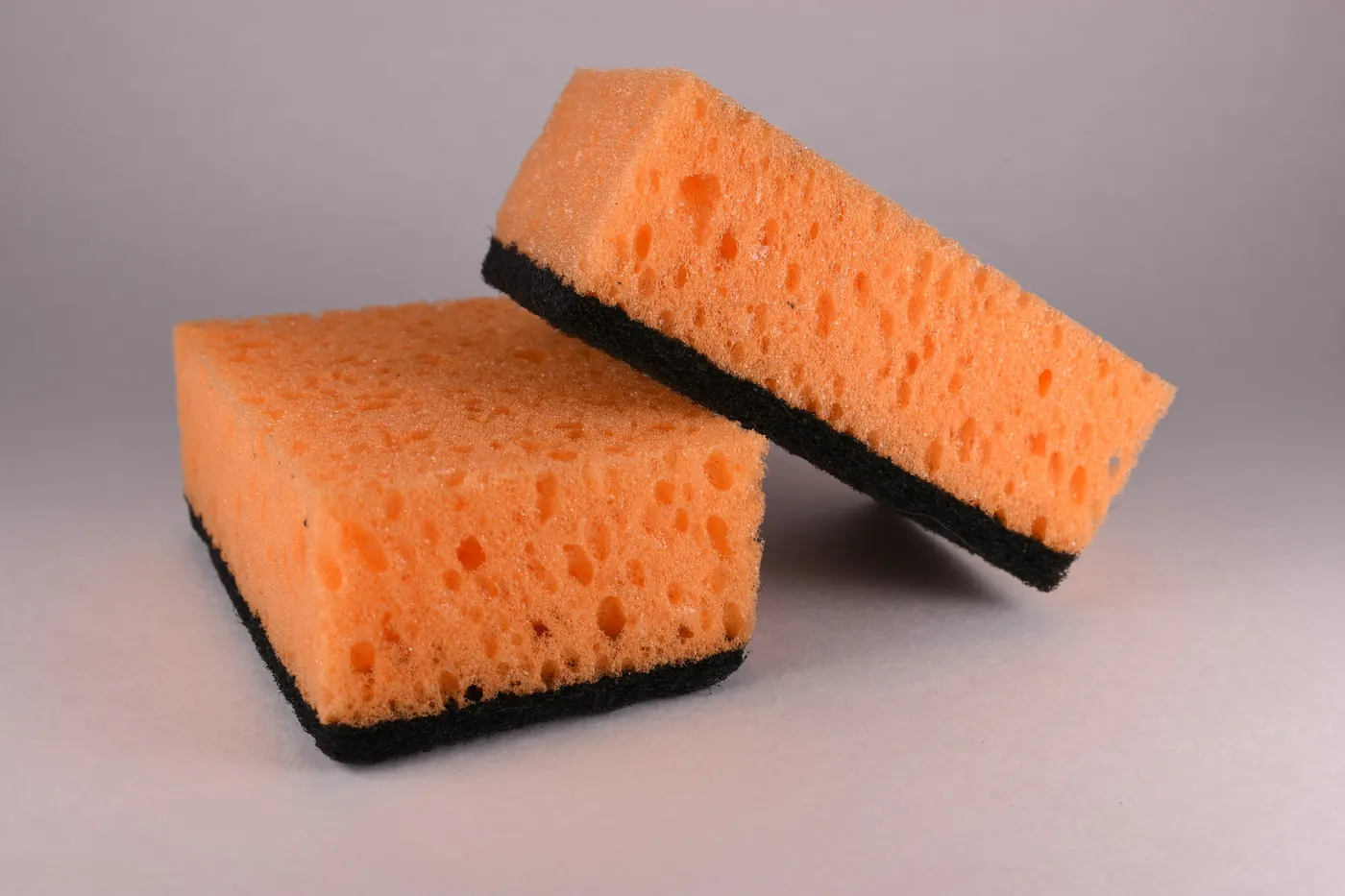
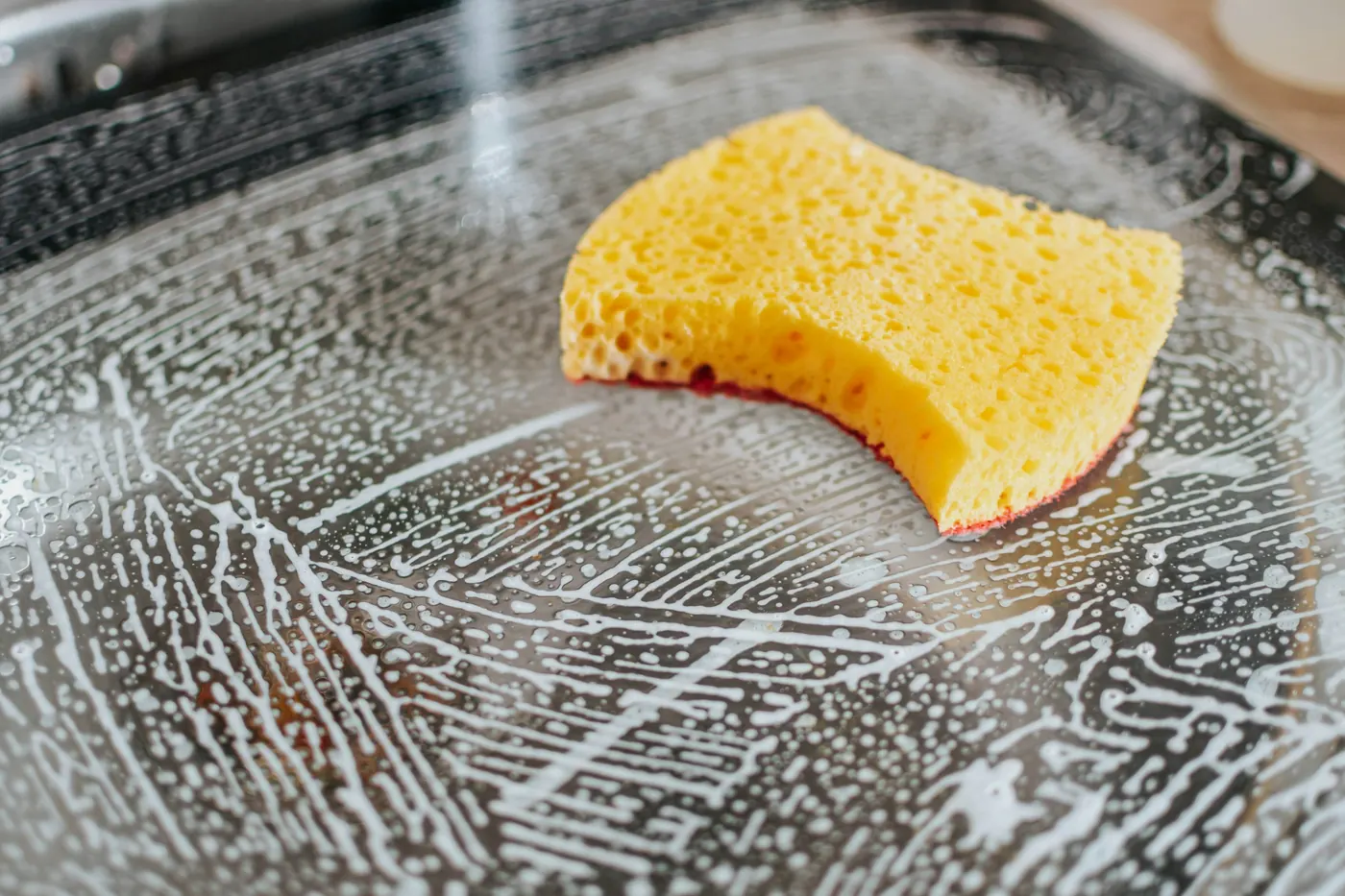
A sponge with a scrub side is a two-tool item: soft foam to hold suds and a rougher face for dried rice, cheese baked onto a casserole dish or the brown ring in a bean pot. That rough face is the reason sponges are hard to give up. A flat cotton cloth can wash a plate or wipe a counter well, but it has no grit, so stuck-on food needs soaking first or a separate brush or scraper.
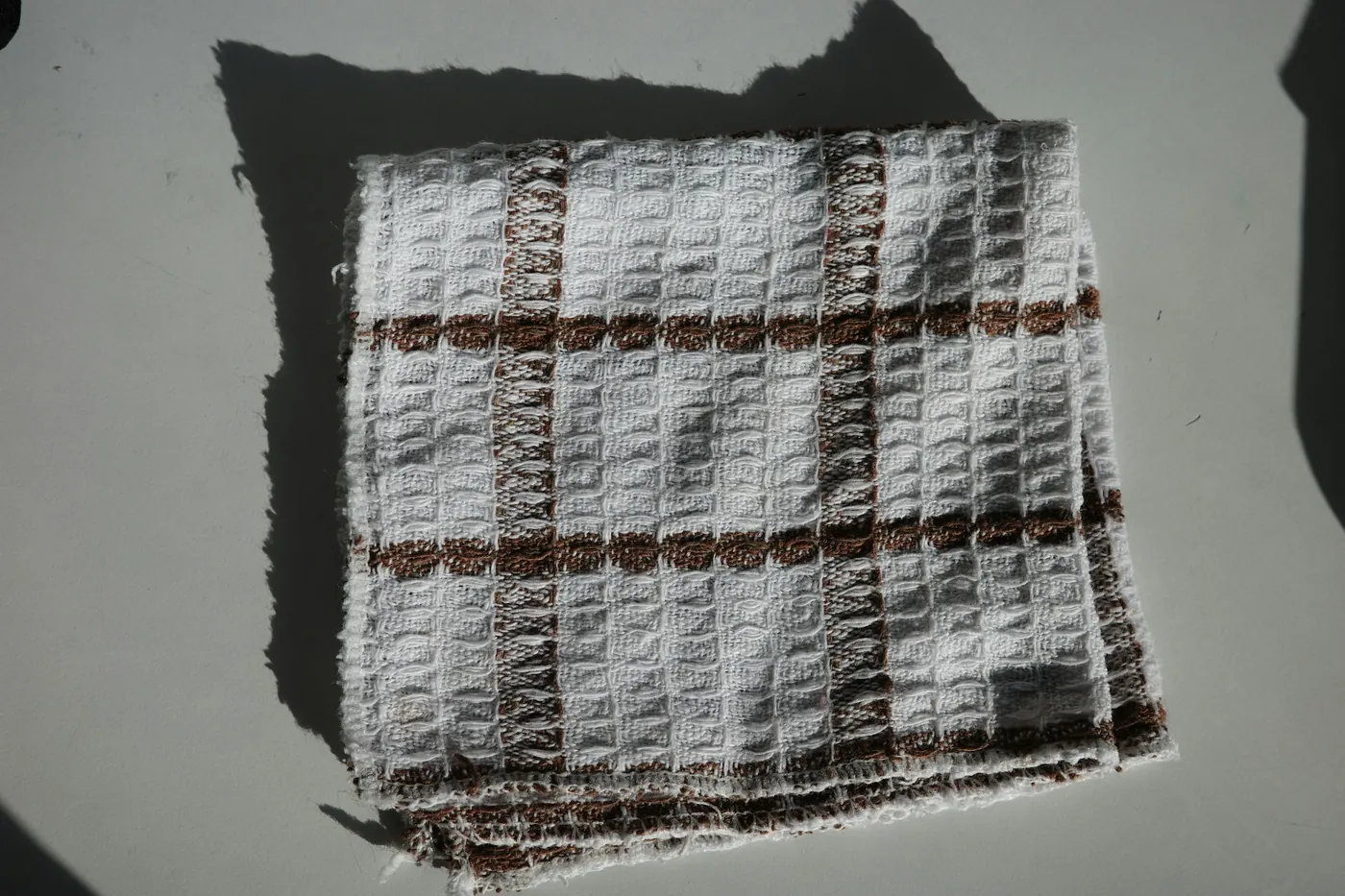
The cloth wins on reach and wiping. It folds into a glass or the corner of a jar, wraps around a knife blade (spine side toward your hand) and wipes a counter in long passes without leaving the streaky water a full sponge does. A textured or waffle weave gives a little more grab than a smooth one, which is enough for everyday plates and mugs.
Not every scrub side suits every pan. Scotch-Brite, for example, says its Zero Scratch sponge is safe for nonstick pans but should not be used on stainless steel appliances, so check the maker’s surface list before you scrub something you care about.
Hygiene: what the food-safety sources say
Here is the part people actually search for. A damp sponge or cloth picks up food residue, stays wet and sits at room temperature, and that is the kind of place bacteria can grow. The question is less which one is cleaner on day one and more which one you can get clean again, and how easily.
Sponges: heat works, soaking mostly doesn’t
The best-known study is from the USDA’s Agricultural Research Service, published in 2007. ARS microbiologists in Beltsville, Maryland, soaked sponges in a ground beef and growth-medium mixture for 48 hours, then tried five treatments. A one-minute spin in the microwave killed 99.99999 percent of the bacteria on them and a dishwasher run with a drying cycle killed 99.9998 percent. A three-minute soak in a 10 percent bleach solution, a one-minute soak in lemon juice or water, or no treatment killed between 37 and 87 percent, which ARS said “still left enough bacteria to potentially cause disease.” Its conclusion: microwave heating and dishwashing with a drying cycle were the most effective methods.
The Academy of Nutrition and Dietetics turns that into home advice: microwave damp sponges for one minute or run them through the dishwasher with a drying cycle, replace sponges every one to two weeks, and if a sponge starts to smell, throw it out right away. Note that the advice is for damp sponges, and a sponge with metal fibers does not belong in a microwave.
Dish cloths: the washing machine does the work
Cloths have an easier route back to clean: the laundry. Nebraska Extension’s guidance on kitchen towels is to wash them on the hot cycle and make sure they dry completely on a high setting, and it says a towel used on raw meat, poultry or seafood juices should go straight into the laundry and be replaced with a clean one. It also notes that changing kitchen towels daily is a common recommendation, though the right frequency depends on how hard you use them. The Academy of Nutrition and Dietetics gives the same advice for dishcloths: wash in hot water and dry on high heat in the dryer.
That is why a dish cloth system is mostly about numbers. If you own eight or ten cloths, a clean one every day costs you nothing but a bit of laundry. If you own two, you will be tempted to reuse a damp one longer than you should.
Paper towels for the raw-meat jobs
Both the Academy of Nutrition and Dietetics and Nebraska Extension suggest paper towels or disinfectant wipes for some cleanup, especially spills from raw ground beef or poultry and countertop wipe-downs. Whichever you choose for dishes, keeping a roll of paper towels near the cutting board for raw-meat juices keeps those spills off your cloth or sponge entirely.
What restaurant kitchens are told
Commercial kitchens follow the FDA Food Code as adopted by their state, and it treats the two differently. Section 4-101.16 says sponges may not be used in contact with cleaned and sanitized or in-use food-contact surfaces. Wiping cloths used on counters and equipment are allowed, but under section 3-304.14 they are held between uses in a chemical sanitizer solution. A home kitchen doesn’t need a sanitizer bucket, but the logic carries over: a cloth is easy to keep clean in rotation; a sponge is a scrubbing tool that needs regular heat and regular replacement.
Drying, smell and lifespan
The faster something dries, the less time it spends damp. A thin cotton cloth hung open over the faucet or an oven handle dries much faster than a thick foam sponge sitting in a puddle at the bottom of a caddy. If you keep a sponge, store it somewhere it can drain and get air, not flat in a wet dish. Our guide to the best sink caddy covers caddies that lift a sponge off the counter.
Lifespan runs the other way from cost per item. A good cotton dish cloth survives many hot washes before it frays or thins out, so a pack lasts a long time. A sponge is disposable by design: the scrub face wears down and the foam breaks up, and the one-to-two-week replacement advice means you buy them all year. If you want something between the two, cellulose and cotton Swedish dishcloths are thin like a cloth and can go through the dishwasher or washer; see our guide to the best Swedish dish cloths.
Dish cloths vs sponges in a Mexican home kitchen
The everyday dishes after a taco night are mostly cloth work: plates, glasses, salsa bowls and a cutting board. The cloth also wipes the comal once it cools and catches the flour on the counter after rolling tortillas. The sponge’s scrub side earns its spot for the jobs that stick: refried beans dried onto the pot, rice crusted to the bottom of the pan, cheese baked onto an enchilada dish, or the fond in a skillet after fajitas. A bare cast iron comal or skillet needs neither soap-soaked foam nor a harsh scrub; a cloth, hot water and a scraper do most of it.
Choose a dish cloth if… / Choose a sponge if…
Choose a dish cloth if…
- You have a washing machine and can keep a stack of cloths in rotation.
- Most of what you wash is plates, glasses and bowls, not baked-on pans.
- You want something you can launder hot and reuse for a long time.
- You also use it to wipe counters and the stovetop.
Choose a sponge if…
- You scrub stuck-on food or nonstick pans most days.
- You will microwave it damp or run it through the dishwasher often.
- You are fine replacing it every week or two.
- You want a thick, easy grip and a lot of suds.
Our pick on each side of the dish cloth vs sponge question
One plain, widely sold option for each side. Both were in stock when we checked.
1. T-fal Signature Cotton Waffle Dish Cloths, 4 Pack – Textured Cotton for Daily Washing

T-fal’s waffle dish cloths are a simple version of what a dish cloth should be: 100 percent cotton, a textured waffle weave, and a size that fits the hand. The listing gives each cloth as 12 by 13 inches (30 by 33 cm) and says the waffle-knit texture wicks along the surface for absorbency and quick drying, which matters for a cloth that should dry between uses.
The pack holds four cloths in coordinating colors: two checked, one striped and one solid cloth the listing describes as a scrubbing dish cloth. The listing says they are machine washable, so they go through the hot cycle with the kitchen towels, as extension services recommend. A larger 8-pack of the same cloths is sold too, which makes a daily swap easier.
A cotton cloth won’t lift baked-on food on its own, so pair it with a brush or scraper, or with a sponge for the hard jobs.
Why we like it
- 100 percent cotton, per the listing
- Waffle texture for grip and drying
- Machine washable
- Also sold in an 8-pack
Key specifications
| Model | 24397A |
|---|---|
| Type | Waffle-weave dish cloth |
| Material | 100% cotton |
| Size | 12 x 13 in (30 x 33 cm) |
| Count | 4 cloths |
| Scrubbing surface | Waffle texture; one cloth described as a scrubbing cloth |
| Cleaning | Machine washable |
| Surface limits | Not stated |
Why we recommend it
It suits a cook who washes mostly plates, glasses and bowls and wants a cloth that goes in the laundry and comes back clean.
Skip it if four cloths won’t cover a clean one each day; the 8-pack, or two sets, makes the rotation easier.
Pros and cons
Pros
- Launders hot with towels
- Textured weave grips
- Thin enough to dry fast
Cons
- No real scrub side
- Four cloths is a short rotation
- Needs a brush for baked-on food
2. Scotch-Brite Zero Scratch Scrub Sponge, 6 Pack – Scrubs Without Scratching Nonstick

Scotch-Brite’s Zero Scratch sponge is the familiar blue-faced scrub sponge. The listing describes it as a non-scratch sponge that cleans grease, grime and dirt and is safe on dishes, nonstick pots and pans, countertops, glass, tubs and showers; it also says not to use it on stainless steel appliances. Its S-shaped body is meant for a comfortable grip and for getting into corners.
Six sponges in the pack is the right count for this side of the comparison. With the Academy of Nutrition and Dietetics advising replacement every one to two weeks, a six-pack covers about six to twelve weeks of sponges. Between replacements, follow the USDA ARS findings: microwave it damp for a minute or put it in the dishwasher with a drying cycle, and let it dry where air can reach it.
The listing does not state the sponge’s material or dimensions, so we leave those as not stated.
Why we like it
- Non-scratch, safe on nonstick, per the listing
- S-shape for grip and corners
- Six sponges for regular replacement
- Clear surface warning on the listing
Key specifications
| Model | 526-6 |
|---|---|
| Type | Scrub sponge |
| Material | Not stated |
| Size | Not stated |
| Count | 6 sponges |
| Scrubbing surface | Non-scratch scrub face |
| Cleaning | Not stated by the maker; see USDA ARS methods above |
| Surface limits | Not for stainless steel appliances |
Why we recommend it
It suits a cook who scrubs nonstick pans and baking dishes often and is ready to sanitize and replace sponges on a schedule.
Skip it if you want one tool that lasts for months; a cloth in the laundry rotation outlives any sponge.
Pros and cons
Pros
- Scrubs without scratching nonstick
- Easy grip
- Six in a pack
Cons
- Disposable; replace every week or two
- Thick foam dries slowly
- Not for stainless appliances
Dish cloths and sponges, your questions answered
Which is more hygienic, a dish cloth or a sponge?
Neither is clean if you leave it damp and reuse it for weeks. A cotton cloth is easier to get clean again: wash it on the hot cycle and dry it on high, as Nebraska Extension and the Academy of Nutrition and Dietetics advise. A sponge can be sanitized in the microwave (damp, one minute) or the dishwasher with a drying cycle, which USDA research found far more effective than soaking it in bleach, but it still needs replacing every one to two weeks.
How often should you change a dish cloth?
Often. Nebraska Extension says changing kitchen towels daily is a common recommendation, depending on use, and that any cloth used on raw meat, poultry or seafood juices should go straight into the laundry.
How often should you replace a kitchen sponge?
Every one to two weeks, according to the Academy of Nutrition and Dietetics, and right away if it starts to smell.
Does soaking a sponge in bleach clean it?
Not as well as heat. In the USDA ARS study, a three-minute soak in 10 percent bleach solution killed far less of the bacteria than a minute in the microwave or a dishwasher cycle with drying, and ARS said it still left enough bacteria to potentially cause disease.
Can I put a dish cloth in the dishwasher?
Some Swedish-style cellulose cloths are sold as dishwasher safe, but for a cotton dish cloth the advice from extension services is the washing machine on hot, then a hot dryer. Check the care label on your cloth.
Our take: a cloth to wash, a sponge to scrub
For most home kitchens, the cotton dish cloth is the better everyday tool because it’s the easier one to keep clean: a stack of cloths, one a day, into the hot wash. A sponge earns its place for scrubbing, as long as it gets a minute in the microwave or a trip through the dishwasher and gets replaced every week or two. Keep paper towels for raw-meat spills and you have covered the sink.
For drying dishes and hands, see our guide to the best dish towels, and if you keep a sponge by the sink, the best kitchen soap dispenser with sponge holder gives it somewhere to drain. And when you would rather skip the dishes altogether, see the menu or call to order.