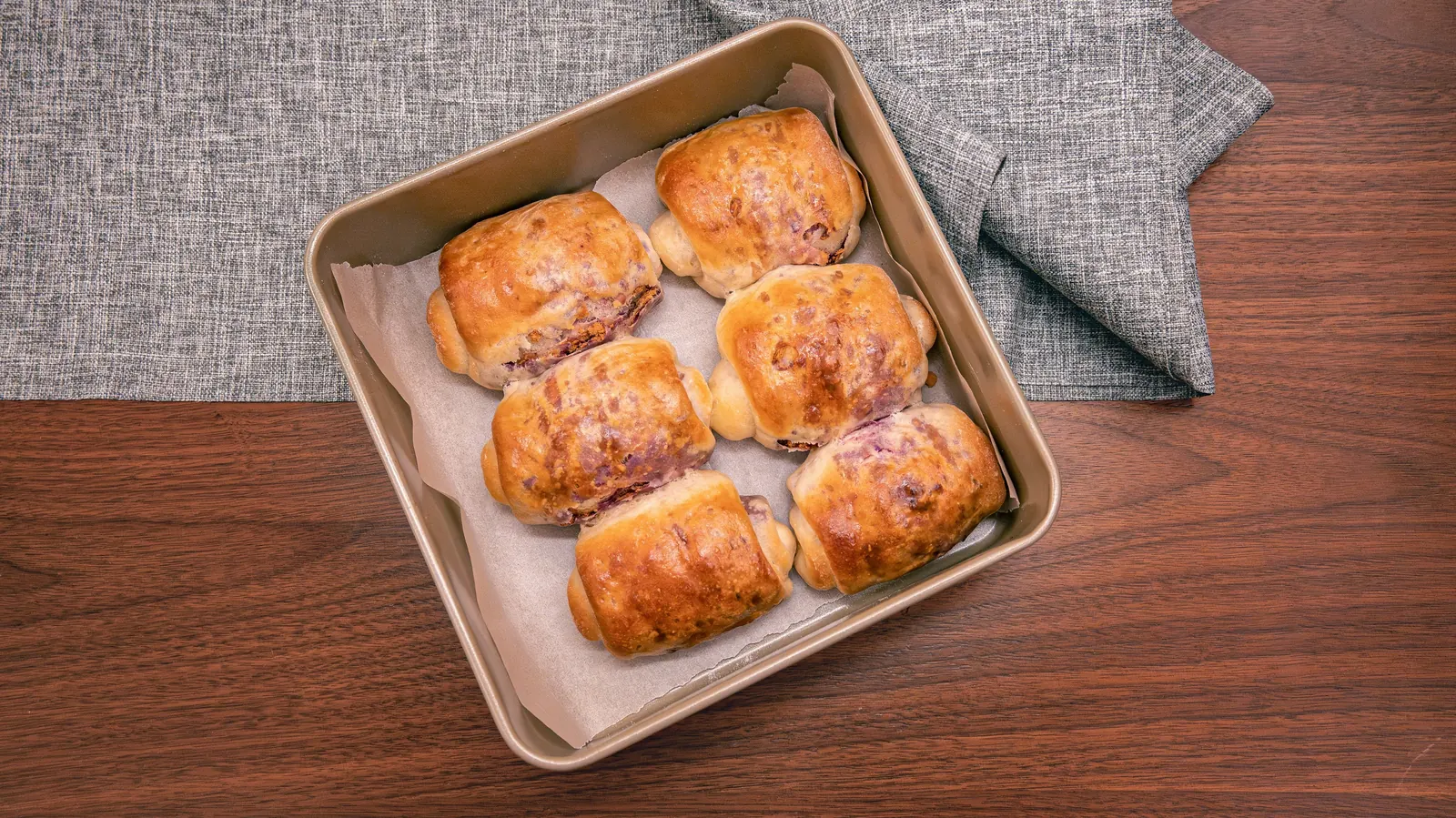
A glass baking dish and a metal pan can hold the same batter, but they do not bake it the same way. Metal heats up quickly and passes that heat straight to the batter. Glass is slow to warm and then holds its heat for a long time. That one difference changes how tall a cake rises, how dark and hard the edges of a brownie get, how long things take to bake, and whether a recipe needs a lower oven temperature.
Which pan bakes better depends on what you are making. This guide compares glass and metal on heat, browning, temperature and timing, safety, cleaning and everyday use, using what King Arthur Baking’s own side-by-side bakes found and what the glass makers say about safe use. Then it names one pan for each side.
Julia’s earns a commission on purchases made through links on this page, at no cost to you. Recommendations are based on what a restaurant kitchen looks for, product specifications and verified buyer reports.
Quick verdict: glass or metal for your baking?
For cakes, brownies, bars and anything where rise and even edges matter, a light-colored metal pan, ideally aluminum, is the better choice for most people. King Arthur Baking calls it the ideal baking vessel in most cases and develops its recipes in metal pans. Choose glass for casseroles, enchiladas, bread pudding, pies and quick breads, where exact timing matters less and you want to see the bottom brown or store leftovers in the same dish. If you bake a cake in glass, lower the oven by 25°F and expect it to take longer.
The table sums up the differences; the sections after it explain each one.
Glass vs metal baking pan, side by side
| Glass baking dish | Metal baking pan | |
|---|---|---|
| Common material | Tempered soda-lime or borosilicate glass | Aluminum, or aluminized or carbon steel, often with nonstick |
| Heat | Slow to transfer, holds heat longer | Transfers heat quickly |
| Cakes | Lower dome, lighter edges | Taller rise, darker edges |
| Brownies and bars | Harder, crunchier edges; center slower to set | More even from edge to center |
| Oven temperature | Lower by 25°F; bake up to 10 minutes longer (King Arthur) | As the recipe says |
| Broiler and stovetop | No, per Pyrex and Anchor Hocking | Check the maker; coatings have limits |
| Main risk | Breaks with sudden temperature change | Scratched coating or warping |
| Extras | See-through, non-reactive, doubles as storage | Lighter, cools faster |
How each one heats
The whole comparison comes down to how heat moves. In a 2023 guide to baking pans, King Arthur Baking’s PJ Hamel writes that glass pans are slower to transfer heat but retain it longer than metal, which can leave edges and bottoms hard and overdone by the time the center cooks through. Metal does the opposite: it takes on the oven’s heat quickly and passes it to the batter quickly, then gives it up quickly once it comes out.
Color matters within metal too. King Arthur’s 2018 test by Susan Reid calls a light-colored metal pan the ideal baking vessel in most cases, and notes that aluminum is the material most professionals reach for. Hamel also notes that dark metal pie pans get hotter and transfer heat better than glass or ceramic. If your metal pan is dark or nonstick, watch the edges and check the cake a few minutes early.
Rise, edges and browning
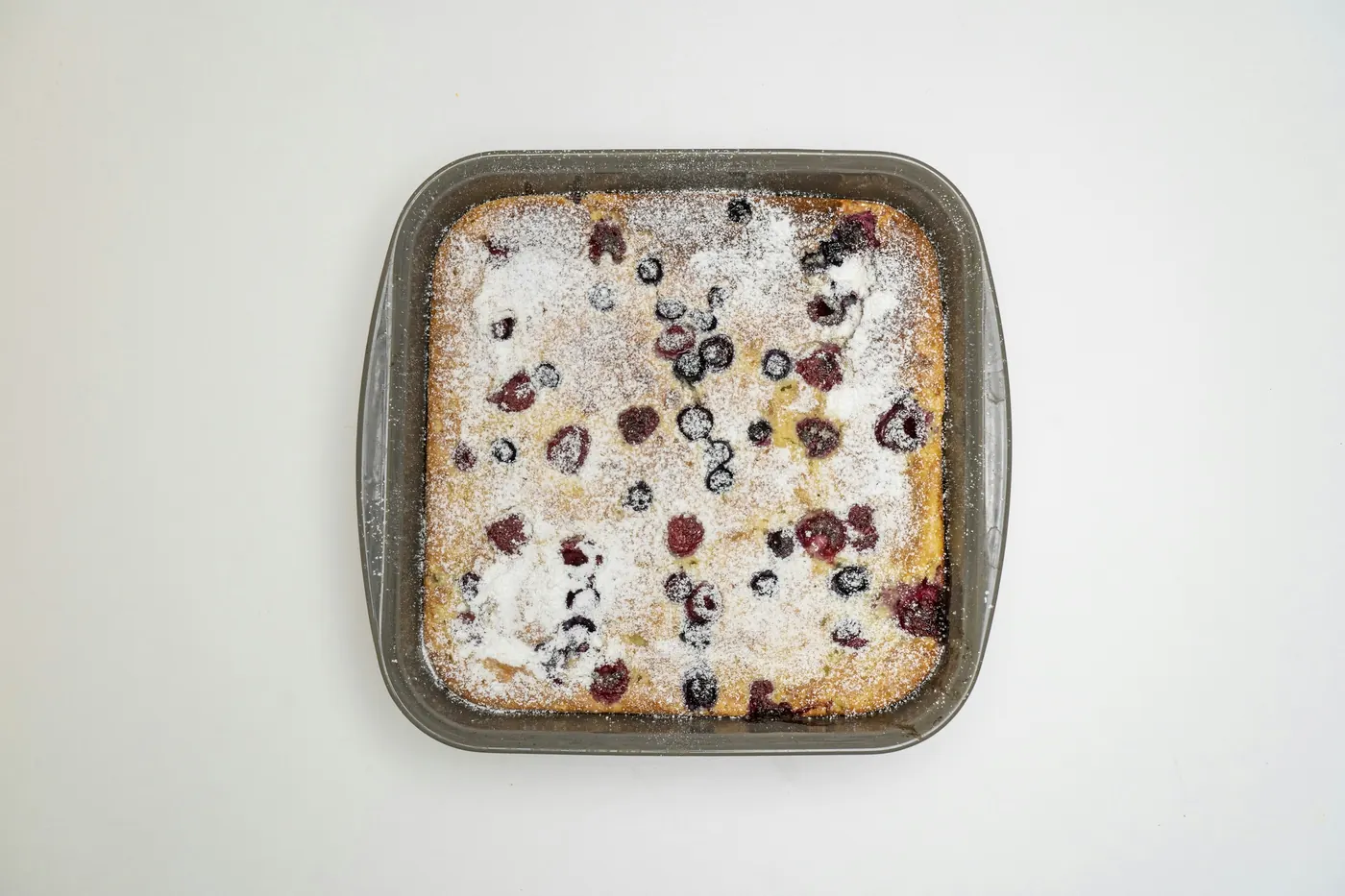
King Arthur baked the same recipes in glass, metal and stoneware pans and compared the results. The cake from the glass pan had the lowest dome, which Reid puts down to slower heat transfer; the metal and stoneware cakes rose taller because heat reached the center faster. The metal cakes also had darker edges, while the glass protected the bottom edge to a degree and gave lighter edges.
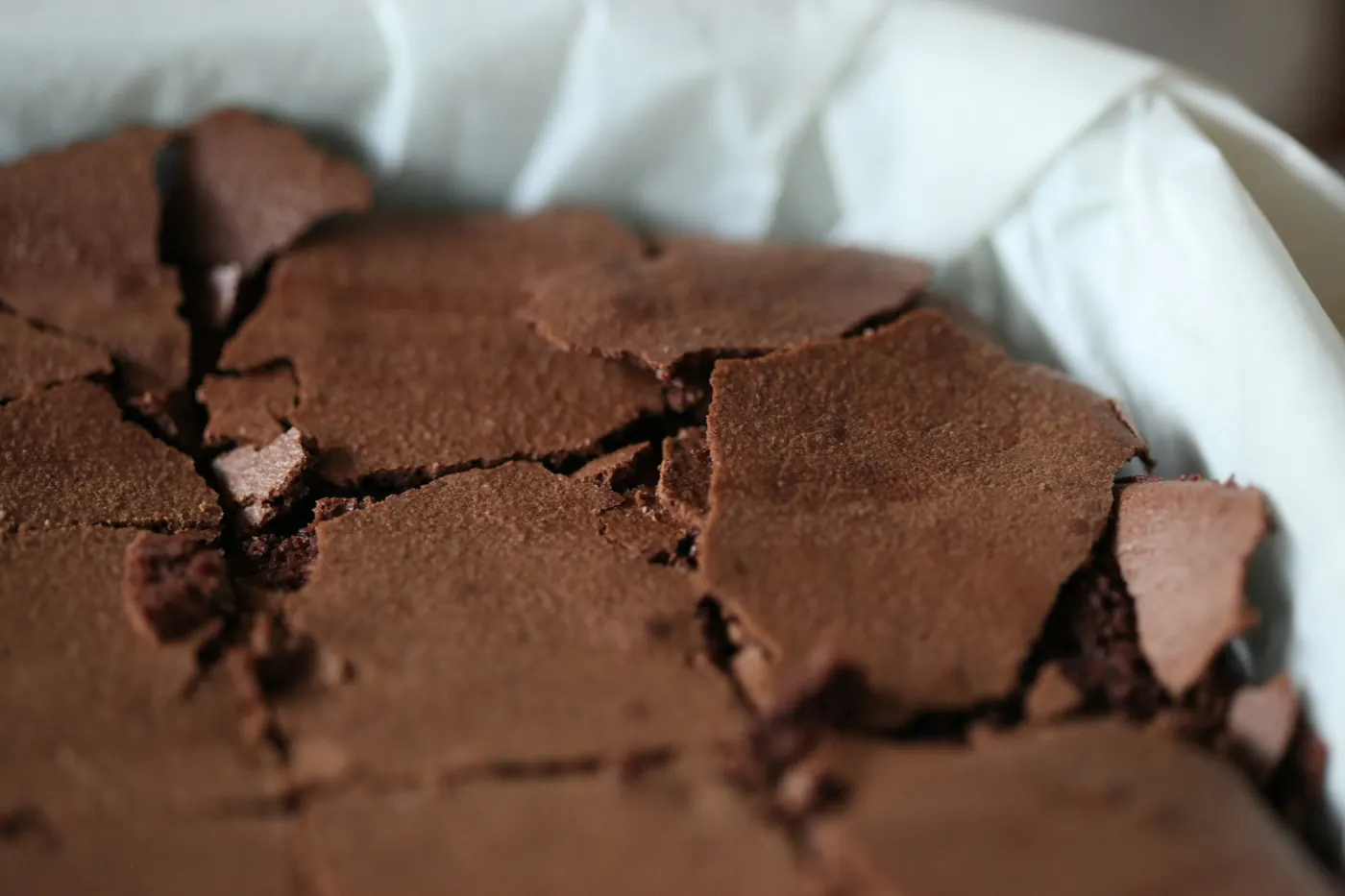
Brownies went the other way. The glass-baked brownie had a much crunchier, harder outside edge than the ones from metal or stoneware, and Reid notes that brownies in glass are easier to overbake, because the center takes longer to cook while the edges keep going. That effect is strongest in high-sugar, high-fat recipes such as brownies and blondies. Casseroles and bread pudding, she writes, are less likely to suffer.
Glass has one real advantage for browning: once it heats up, Reid says it does a good job of making bottom crusts crisp and golden, and you can see through it, which is useful for pie crusts. That is why many bakers reach for a glass pie plate even when they bake cakes in metal.
Temperature and timing: the 25-degree rule
This is the adjustment people ask about most. King Arthur says the standard advice for baking in glass is to lower the oven temperature by 25°F and to allow up to 10 minutes longer. Hamel’s 2023 guide gives the same 25-degree figure. The lower temperature keeps the edges from overcooking while the slower center catches up.
The adjustment matters most when a recipe was written for metal, as most cake and brownie recipes are. King Arthur says it develops its recipes in metal pans for their baking efficiency and accuracy of size. Metal pan makers also suggest care the first few times you bake. USA Pan, for example, advises paying close attention to oven temperatures and baking times at first, and reducing time and temperature if necessary.
Size matters too. Reid points out that glass pans’ dimensions can be all over the place, so a “9 by 13” glass dish may hold a different volume from a 9 by 13-inch metal pan. If the batter sits deeper, it needs longer.
Safety: glass and sudden temperature changes
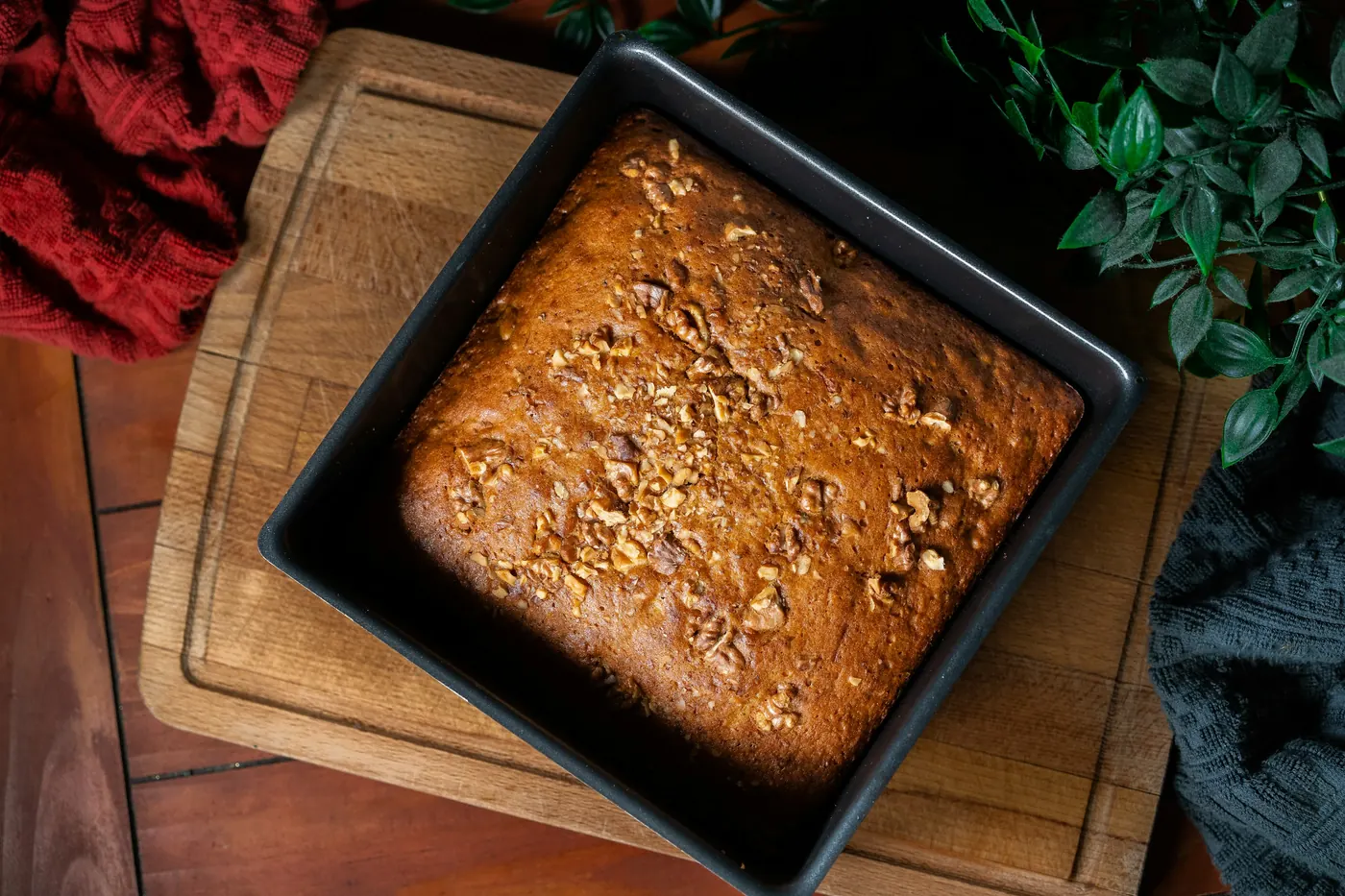
Metal pans do not shatter. Glass can. Iowa State University Extension’s AnswerLine explains that glass bakeware can crack, split or even shatter when exposed to thermal shock, an abrupt and drastic temperature change. It also notes that since 1998 Pyrex kitchenware sold in the US has been made of tempered soda-lime glass, which handles heat less well than the borosilicate glass the original Pyrex used, though it holds up better when dropped.
The glass makers’ own instructions are clear. Pyrex says to avoid sudden temperature changes, to preheat the oven before putting the dish in, not to use it on a stovetop or under a broiler, not to add liquid to a hot dish, not to set a hot dish directly on a countertop, a metal surface or in the sink, and not to move it straight from the freezer to a hot oven. Anchor Hocking’s care instructions say the same: avoid sudden or severe temperature changes, never place a hot dish on a wet or cold surface, no stovetop or broiler, and thaw food before baking rather than going from freezer to a preheated oven. Iowa State adds that you should set hot glass on a dry cloth potholder or towel and discard dishes that are chipped, cracked or scratched.
None of this makes glass dangerous to use, but it does make it the less forgiving pan. If you like to finish a casserole under the broiler or deglaze a pan on the stove, glass is the wrong choice.
Cleaning, reactivity and everyday use
Glass is non-reactive, King Arthur notes, so tomato sauces, citrus and vinegar do not affect it, and it is generally easy to clean. Anchor Hocking lists its bakeware as dishwasher safe. A glass dish with a lid also goes straight from oven to table to fridge, which is a large part of its appeal for casseroles and enchiladas.
Metal care depends on the finish. Plain aluminum pans are often hand wash only; Nordic Ware recommends hand washing for the pan below. Nonstick pans need gentle tools: USA Pan says not to scrape with sharp metal utensils because they will chip the coating, to wash with a sponge or nylon pad and mild soap, and not to exceed 450°F because higher heat can compromise its silicone coating. In return, a metal pan is lighter, cools faster so you can unmold a cake sooner, and will not break if it slips.
Choose a glass dish if… / Choose a metal pan if…
Choose a glass baking dish if…
- You mostly bake casseroles, enchiladas, lasagna, bread pudding or cobblers.
- You want to watch a pie or crust brown on the bottom.
- You cook with tomatoes, citrus or vinegar and want a non-reactive dish.
- You like to store leftovers in the same dish with a lid.
Choose a metal baking pan if…
- You bake cakes, sheet cakes, brownies or bars from standard recipes.
- You want a taller rise and even edges without adjusting the oven.
- You want something light that will not break.
- You sometimes use the broiler or move a pan straight from oven to counter.
One pan on each side of the glass vs metal baking pan question
One pick per side, both in the common 9 by 13-inch size, both made in the USA according to their listings, and both in stock when we checked. The glass pick includes a 3-quart dish of the same size as Anchor Hocking 3-quart dishes on our other pages; we chose this value pack because it adds a glass cake dish, so you can try both shapes. The metal pick appears to be the same Nordic Ware Naturals 9 by 13 pan that our other pages list with a lid; here it is sold on its own, for bakers who don’t need the cover.
1. Anchor Hocking Oven Basics Cake Dish and 3-Quart Baking Dish – Two Glass Bakers, Made in USA
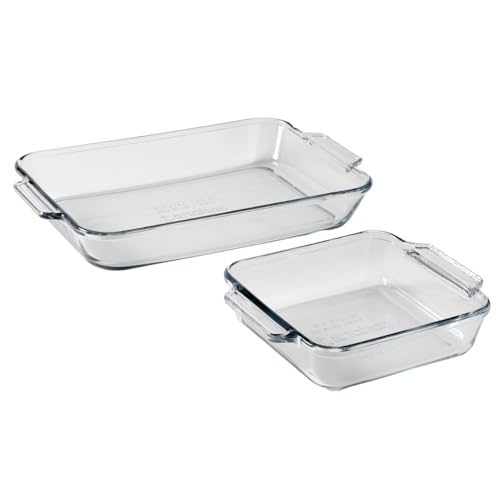
Anchor Hocking says it has made glassware since 1905, and this value pack pairs two of its Oven Basics pieces: a glass cake dish and a 3-quart baking dish, the size most 9 by 13 recipes call for. The listing describes both as tempered glass that is oven, microwave, freezer and dishwasher safe, and says they are made in the USA.
The 3-quart dish is the workhorse for enchiladas, lasagna, baked pasta and bread pudding, the kind of dishes where glass does well. The cake dish suits cobblers, snack cakes and cornbread; remember the King Arthur advice to lower the oven by 25°F when a cake recipe was written for metal. The listing does not give the cake dish’s dimensions, so check the size before you plan a layer cake around it.
Anchor Hocking’s care instructions apply: use the dishes in a preheated oven up to 425°F, avoid sudden or severe temperature changes, never set a hot dish on a wet or cold surface, keep it off the stovetop and away from the broiler, and thaw frozen food before it goes in the oven.
Why we like it
- Two useful glass shapes in one pack (listing)
- Made in the USA (listing)
- Dishwasher and freezer safe (listing)
- Clear maker care instructions (Anchor Hocking)
Key specifications
| Model | 15196ECOM |
|---|---|
| Material | Tempered glass |
| Size | 3-quart dish plus cake dish (size not stated) |
| Pieces | 2 |
| Max oven temp | 425°F, preheated (Anchor Hocking) |
| Broiler/stovetop | No |
| Dishwasher safe | Yes |
| Made in | USA |
Why we recommend it
It suits a home cook who bakes casseroles, enchiladas and simple desserts and wants dishes that go from oven to table to fridge.
Skip it if you need lids for storage; our best baking dish with lid guide covers sets that include them.
Pros and cons
Pros
- Non-reactive, see-through glass
- Two shapes for different recipes
- Dishwasher safe
Cons
- No lids included
- Cake dish size not stated
- No broiler or stovetop use
2. Nordic Ware Naturals Commercial 9 x 13 Cake Pan – Plain Aluminum With a Steel Rim

This is the kind of pan King Arthur describes as ideal: light-colored, uncoated aluminum. Nordic Ware’s listing says it is made of pure aluminum that will never rust, that aluminum’s heat conductivity helps foods bake and brown evenly, and that a reinforced, encapsulated steel rim prevents warping.
The listing gives the exterior as 12.9 by 9.5 by 2.5 inches and the interior as 12.1 by 8.8 inches, 2.5 inches deep, so it is a true deep 9 by 13 cake pan with room for a sheet cake, tres leches or a tray of bars. With straight sides and no coating, cakes bake up with even edges and recipes written for metal work as written.
Nordic Ware recommends hand washing and says the pan works with parchment paper or a silicone baking mat if you want easier release; there is no nonstick coating, so grease and flour it or line it. The listing says it is made in the USA and records a lifetime warranty.
Why we like it
- Light aluminum, the surface King Arthur prefers
- Steel rim to resist warping (listing)
- Interior dimensions stated
- Made in the USA, lifetime warranty (listing)
Key specifications
| Model | 46600 |
|---|---|
| Material | Aluminum, steel rim |
| Size | Interior 12.1 x 8.8 x 2.5 inches |
| Pieces | 1 |
| Max oven temp | Not stated |
| Broiler/stovetop | Not stated |
| Dishwasher safe | Hand wash recommended |
| Made in | USA |
Why we recommend it
It suits a home baker who makes sheet cakes, tres leches, brownies and bars from standard recipes and wants them to bake as written.
Skip it if you want a nonstick surface or a lid; our best cake pans 9×13 guide covers both.
Pros and cons
Pros
- Even baking on light aluminum
- Deep enough for tall sheet cakes
- Will not rust (listing)
Cons
- Hand wash only
- No nonstick; grease or line it
- No lid
Glass and metal pan questions, answered
Which pan bakes better, glass or metal?
For cakes, brownies and bars, metal, especially light aluminum: it heats faster, gives a taller rise and more even edges, and most recipes are written for it. Glass is better for casseroles, pies and bread pudding, where its slower heat and see-through sides are an advantage.
Do you lower the temperature when baking in a glass pan?
Yes, for cakes and brownies written for metal. King Arthur Baking’s standard advice is to lower the oven by 25°F and allow up to 10 minutes longer.
Can a glass baking dish go under the broiler?
No. Pyrex and Anchor Hocking both say not to use their glass bakeware under a broiler or on a stovetop. Use a metal pan if a recipe finishes under the broiler.
Why are my brownies hard around the edges in a glass pan?
Glass holds heat for a long time, so the edges keep cooking while the center sets. King Arthur found glass-baked brownies had much harder, crunchier edges. Lower the oven by 25°F, or switch to a light metal pan.
Is a 9 x 13 glass dish the same size as a 9 x 13 metal pan?
Not always. King Arthur notes that glass pans’ dimensions can be all over the place, and glass dishes often have rounded corners. Check the volume or measure the inside before you swap one for the other.
Our take: a metal pan first, a glass dish second
If you have room for only one 9 by 13, buy light-colored metal for baking and use it for the occasional casserole too. Add a glass dish when enchiladas, lasagna and bread pudding become regulars, and remember the 25-degree rule when you bake a cake in it. For more choices, our best baking pan cake guide covers rounds, squares and sheet pans, our best baking dish glass guide explains soda-lime and borosilicate, and our best cake pans 9×13 guide compares metal pans in that size. And when you would rather someone else made the enchiladas, see the menu or call to order.