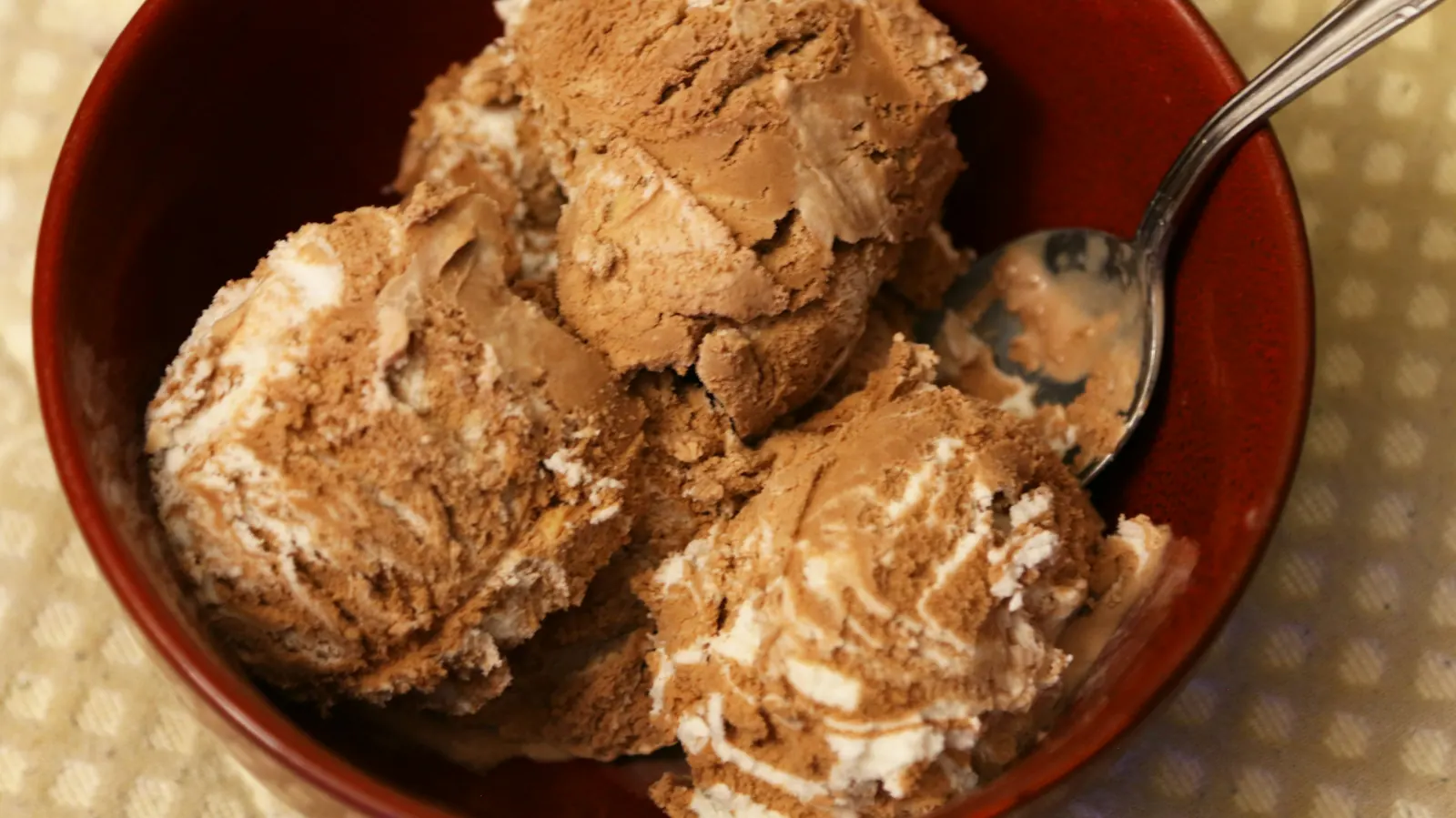
The scoop is missing, the drawer has only teaspoons, and the pint is fresh from the freezer. Or you own a scoop and still fight it every time the ice cream is rock hard. Either way, a round scoop is not the only tool that serves ice cream, and for some jobs it is not even the best one.
This guide covers the ice cream scoop alternative that suits each kind of server: a flat spade for hard pints, a big spoon for nights when you just want a bowlful, a portion disher for even servings at a party, and a melon baller for small scoops on top of a dessert. For each one we say what it does well, what it gives up compared with a round scoop and how to get the most out of it.
Julia’s earns a commission on purchases made through links on this page, at no cost to you. Recommendations are based on what a restaurant kitchen looks for, product specifications and verified buyer reports.
Why people serve ice cream without a scoop
- There isn’t one. A scoop is a single-use tool, and plenty of kitchens get by without it until someone brings home a pint.
- Hard ice cream beats the scoop. A rounded bowl has to bite into the surface with a narrow edge. Wayne Ruffner, writing for Cool Tools in 2022, found that a flat spade “much more easily gets into concrete-like frozen goodness” and that his scoop “seriously doesn’t get the penetration the spade gets.”
- Different shapes for different desserts. A spade slices and packs; it does not make balls. A disher makes even, rounded portions. A melon baller makes small balls for a sundae or a plate of fruit.
- A crowd to serve. At a party, even portions keep the last guest from getting the scrapings. A spring-release disher drops the same amount every time.
A good round scoop still does one thing better than any of these: a neat, round ball from a firm pint with little effort. If that is what you want, our guide to the best ice cream scoop covers the heat-conductive and dishwasher-safe scoops worth owning. This page is for everything else.
Quick verdict: the best ice cream scoop alternative
For most people, the best ice cream scoop alternative is a flat ice cream spade such as the RSVP International Vintage Ice Cream Spade: its thin, wide edge cuts into hard ice cream where a spoon skids, and it goes in the dishwasher. If you only need a bowl tonight, a large solid serving spoon like Cuisinart’s does the job once the pint has softened for a few minutes. For parties, a Vollrath size 8 disher gives even half-cup portions. For tiny scoops on a sundae or a plate of fruit, a Cat Cora melon baller works, and the heavier Tovolo Tilt Up spade suits dense gelato and ice cream cakes.
Five ways to serve ice cream without a scoop
Our five picks, one per kind of server, with what each maker or listing states. All five are reviewed in full below.
| Tool | What you get | Best for | Cleaning | Buy on Amazon |
|---|---|---|---|---|

RSVP International Vintage Ice Cream SpadeBest overall
|
Flat slabs and curls, not balls | Hard pints straight from the freezer | Dishwasher safe | View on Amazon |

Cuisinart Stainless Steel Solid SpoonBest spoon
|
Rough spoonfuls | Softened ice cream, everyday serving | Dishwasher safe | View on Amazon |

Vollrath Size 8 Stainless Steel Disher, 4 ozBest for parties
|
Even, rounded 4-ounce portions | Serving a crowd from soft tubs | One-piece handle; dishwasher not stated | View on Amazon |

Cat Cora 22/25 mm Melon BallerBest for mini scoops
|
Small round balls | Sundae toppers, sorbet with fruit | Dishwasher safe | View on Amazon |

Tovolo Tilt Up Ice Cream SpadeBest for gelato and cakes
|
Cut slices and packed portions | Dense gelato, ice cream cake | Dishwasher safe | View on Amazon |
Which tool gets closest to a scooped ball
None of these makes the same shape a round scoop does, and that is fine. This is how they line up, from closest to a parlor scoop to furthest.
- A disher. It is a scoop with a spring and a sweeping blade, built for portioning. On soft or slightly softened ice cream it gives neat, even rounds. On very hard ice cream the thin bowl and the mechanism struggle; that is the job it was not made for.
- A melon baller. Same round shape, much smaller. Cat Cora’s listing names ice cream and sherbet among the foods it scoops.
- A large spoon. It gives rough, generous spoonfuls. Sunset’s Sarah DiGregorio, in her 2017 scoop review, points out that plenty of people simply scoop with a regular spoon. It works best once the ice cream has softened a little.
- A spade. Furthest from a ball, and the best at getting into hard ice cream. You cut, curl and pack rather than scoop, which is why ice cream shops use spades to work tubs and pack containers.
Five tools to use instead of an ice cream scoop
1. RSVP International Vintage Ice Cream Spade – Cuts Into Hard Ice Cream
If the reason you are looking for a scoop alternative is that your ice cream is too hard to scoop, a spade is the tool to try. Instead of a cup-shaped bowl it has a wide, flat head with a thin front edge. You push the edge across the surface and the ice cream curls up or breaks off in slabs, which you can serve as they are or press into a rough round against the side of the pint. Ruffner’s Cool Tools review puts it simply: the flat blade gets into hard ice cream where a scoop doesn’t.
RSVP International says this spade is “designed to cut through hard ice cream for easier serving,” with a wide head and a narrow edge that “helps slice through tough, still-frozen ice cream.” The listing gives the spade head as 2.5 by 1.25 inches and the handle as 8.75 inches long, a size that fits inside a pint. It is dishwasher safe, so there is no heat-conductive fluid to protect and nothing to hand wash.
The honest limits: you will not get round balls, and the small head means several passes for a big bowl. The listing does not state the metal it is made from or offer a warranty. A spade also takes a little practice to get tidy portions; scrape in long strokes across the surface rather than digging straight down.
Why we like it
- Flat edge made for hard ice cream, per RSVP
- Head sized to work inside a pint
- Long 8.75-inch handle
- Dishwasher safe
Key specifications
| Model | 8026 (I-SPD) |
|---|---|
| Type | Flat ice cream spade |
| What you get | Slabs and curls |
| Best on | Hard, freezer-cold ice cream |
| Material | Not stated |
| Size | Head 2.5 x 1.25 in; handle 8.75 in |
| Cleaning | Dishwasher safe |
| Warranty | Not stated |
Why we recommend it
It suits anyone whose freezer turns every pint to stone and who cares more about getting ice cream out than about perfect balls.
Skip it if round scoops for cones matter to you; a heat-conductive scoop from our scoop guide does that better.
Pros and cons
Pros
- Gets into hard ice cream
- Simple, one piece
- Dishwasher safe
Cons
- No round balls
- Small head for big bowls
- Material not stated
2. Cuisinart Stainless Steel Solid Spoon – The Tool You May Already Need
The plainest scoop alternative is a big, sturdy spoon. A teaspoon bends and a soup spoon is too small, but a long solid serving spoon has the reach to get into a tub and the stiffness to lever out a decent portion. This Cuisinart is a stainless steel solid spoon from the brand’s kitchen tool line; the listing says it is dishwasher safe, easy to handle and styled for serving at the table, and it carries a limited lifetime warranty.
A spoon does best when it has a little help. Avery Tomaso, writing for Food Republic in 2024, suggests letting a pint sit on the counter for a few minutes first, since the center stays colder and harder, and running the scooping tool briefly under hot water before you dig in. Our scoop guide notes Sunset’s advice to use a dry tool, so give the spoon a quick wipe after rinsing so water doesn’t freeze onto the ice cream. Work from the softer edges toward the middle, in long strokes rather than straight down.
What you give up is shape and speed. A spoon makes rough heaps rather than rounds, and on a truly hard pint it skids or bends your wrist before it bends itself. But it costs you no drawer space: it stirs beans and serves rice the rest of the week.
Why we like it
- Earns its place every day, not just dessert
- Stainless steel, dishwasher safe
- Limited lifetime warranty, per the listing
- Styled for serving at the table
Key specifications
| Model | CTG-08-SSS |
|---|---|
| Type | Solid serving spoon |
| What you get | Rough spoonfuls |
| Best on | Softened ice cream |
| Material | Stainless steel |
| Size | Not stated |
| Cleaning | Dishwasher safe |
| Warranty | Limited lifetime |
Why we recommend it
It suits kitchens that serve ice cream now and then and would rather own one more useful spoon than a dessert-only tool.
Skip it if your freezer runs very cold; a spoon struggles with hard ice cream where a spade does not.
Pros and cons
Pros
- Useful for every meal
- Dishwasher safe
- Lifetime warranty
Cons
- Needs softened ice cream
- No neat portions
- Length not stated

3. Vollrath Size 8 Stainless Steel Disher, 4 oz – Even Portions for a Crowd
A disher is the portion scoop restaurant kitchens use for everything from mashed potatoes to cookie dough: a round stainless bowl with a thumb-operated blade that sweeps the food out in one even mound. For a birthday party or a taco night with a dessert table, that evenness is the point. Every guest gets the same amount, and the ice cream drops cleanly into the bowl or onto a slice of cake.
Vollrath sizes its dishers by the old food-service number system, and this size 8 holds 4 ounces, about half a cup, which makes a generous single serving. The listing says the bowl and working parts are stainless steel, the blade extends beyond the bowl to prevent sticking, and the one-piece molded handle is color-coded gray for size, NSF certified and built not to come apart. Vollrath gives it a lifetime limited warranty. It is a commercial tool sold one at a time, so it fits a home drawer like any other utensil.
The limit is hard ice cream. A disher’s thin bowl and squeeze mechanism are made for soft foods, and forcing one into a freezer-hard pint strains your hand and the spring. Let tubs soften for several minutes first, or use a spade to loosen the top. If you mostly want a disher for baking, our best cookie scoop guide covers smaller sizes.
Why we like it
- Same 4-ounce portion every time
- Blade extends past the bowl to prevent sticking
- NSF certified, one-piece handle
- Lifetime limited warranty
Key specifications
| Model | 47140 (size 8) |
|---|---|
| Type | Squeeze-release disher |
| What you get | Even, rounded 4-ounce portions |
| Best on | Soft or softened ice cream |
| Material | Stainless steel bowl and parts; coated handle |
| Size | 4 oz bowl |
| Cleaning | Not stated; one-piece handle |
| Warranty | Lifetime limited |
Why we recommend it
It suits hosts who serve ice cream to a group and want tidy, equal portions without fuss.
Skip it if you mostly face rock-hard pints; the mechanism is not made for that.
Pros and cons
Pros
- Equal portions
- Clean release
- Also portions dough and sides
Cons
- Struggles with hard ice cream
- Dishwasher use not stated
- Sold by a third-party seller
4. Cat Cora 22/25 mm Melon Baller – Small Scoops for Sundaes and Fruit
A melon baller is a tiny scoop, and it does to ice cream what it does to cantaloupe: small, round balls. That makes it a real alternative for a few specific jobs, such as topping a slice of pie, building a sundae with three flavors in one glass, or serving sorbet balls next to fresh mango and pineapple. Cat Cora’s listing names ice cream and sherbet among the foods this baller scoops, along with melon, papaya and butter.
This is the larger of Cat Cora’s two double-ended ballers, with 22 mm and 25 mm cups on the ends. The listing gives the tool as about 6.5 inches long, made of 18/8 stainless steel with a Santoprene grip that stays non-slip when wet, and dishwasher safe. Cat Cora is a chef-branded line, and this pick rests on the listing details rather than an independent review.
The obvious limit is size. Even the 25 mm end makes a ball about an inch across, so a whole bowl takes many passes, and hard ice cream will tire your wrist on such a short handle. It is a finishing tool, not an everyday server. For more ballers, including the OXO, see our best melon baller guide.
Why we like it
- Two ball sizes in one tool
- Ice cream and sherbet named in the listing
- 18/8 stainless steel cups
- Dishwasher safe
Key specifications
| Model | 38020 |
|---|---|
| Type | Double-ended melon baller |
| What you get | Small round balls |
| Best on | Slightly softened ice cream, sorbet |
| Material | 18/8 stainless steel; Santoprene handle |
| Size | 22 mm and 25 mm cups; 6.5 in long |
| Cleaning | Dishwasher safe |
| Warranty | Not stated |
Why we recommend it
It suits cooks who like to plate desserts: sundaes, pie a la mode, sorbet with fruit.
Skip it if you need to fill bowls quickly; it is far too small for everyday serving.
Pros and cons
Pros
- Neat mini balls
- Doubles as a melon baller
- Grippy handle
Cons
- Slow for full bowls
- Hard on the wrist with frozen pints
- Rests on listing details only

5. Tovolo Tilt Up Ice Cream Spade – A Heavier Spade for Gelato and Cakes
Tovolo’s spade is the heavier, fuller-featured take on the flat paddle. The listing describes a zinc alloy head with a tapered edge for cutting firm desserts, a textured non-slip grip and a built-in foot under the handle that tilts the head up off the counter between servings. Tovolo pitches it for dense gelato, packed sorbet and ice cream cakes, and the wider head is a better shape than a small spade for cutting and lifting a wedge of frozen cake. It is dishwasher safe and about 10.25 inches long.
Tovolo also says the zinc alloy carries warmth from your hand to the edge, so the ice cream softens slightly where it cuts. That is the maker’s claim; we found no independent test of this spade. Treat the cutting edge as the part that does the work, and the warmth as a possible bonus.
There is one caution worth passing on. When Sunset reviewed Tovolo’s earlier Tilt Up ice cream scoop, a different product with the same feet, DiGregorio found that the ice cream “just drips down the feet instead” of staying off the counter, and that the scoop felt top-heavy. We cannot say whether the spade behaves the same way, which is why it sits behind the simpler RSVP here.
Why we like it
- Tapered edge for firm desserts, per Tovolo
- Wide head suits ice cream cake
- Built-in foot to rest it on the counter
- Dishwasher safe
Key specifications
| Model | 1001025 |
|---|---|
| Type | Flat ice cream spade with foot |
| What you get | Cut slices and packed portions |
| Best on | Dense gelato, sorbet, ice cream cake |
| Material | Zinc alloy |
| Size | 10.25 in long |
| Cleaning | Dishwasher safe |
| Warranty | Not stated |
Why we recommend it
It suits anyone who makes or buys ice cream cakes and dense gelato and wants a sturdier spade with a wider head.
Skip it if you want a proven design; the evidence here is the listing, plus a mixed review of the related scoop.
Pros and cons
Pros
- Wide head for cutting
- Rests off the counter
- Dishwasher safe
Cons
- No independent test found
- Related scoop’s feet dripped
- Heavier than a simple spade
Getting hard ice cream out without a scoop
Whatever tool you use, a few habits make the job easier. These come from the sources named, or are labeled as general kitchen sense.
- Give it a few minutes. Tomaso’s Food Republic piece suggests letting the pint sit on the counter for a few minutes, because the center is colder and firmer than the edges.
- Start at the edges. The ice cream along the sides softens first. Work around the rim and toward the middle.
- Warm the tool, then dry it. A quick run under hot water helps any tool cut in, per Food Republic. Our scoop guide passes on Sunset’s advice that a dry tool releases better, so wipe it before you dig.
- Score the top with a knife. Allen Foster, writing for Mashed in 2023, suggests warming a sharp knife under hot water and cutting a grid about an inch deep and an inch wide across the surface, so a spoon or scoop then lifts out the squares.
- Long strokes, not stabs. Drag a spade or spoon across the surface so the ice cream curls up; digging straight down is where spoons bend and wrists hurt. That is general kitchen sense.

How we chose these five scoop alternatives
We started from the reasons people want something other than a round scoop, hard ice cream, no scoop at hand, parties and plated desserts, and looked for one tool from an identifiable maker for each: a spade, a spoon, a disher and a melon baller, plus a heavier spade for gelato and cakes. We left out every scoop on our ice cream scoop guide, the cookie scoops already on our cookie scoop guide and the ballers on our melon baller guide. We skipped rechargeable heated scoops for the reason our scoop guide gives: the ones available came from makers we could not identify and stated no US safety certification. Every pick was listed in stock and sold new when we checked.
Specifications come from each maker’s Amazon listing. For how these tools compare we read Wayne Ruffner’s ice cream spade review for Cool Tools (2022), Sarah DiGregorio’s ice cream scoop review for Sunset (2017), Avery Tomaso’s scooping tips for Food Republic (2024) and Allen Foster’s knife method for Mashed (2023). Where a statement is general kitchen sense rather than a sourced fact, we say so. We have not used these products ourselves. We also searched the U.S. Consumer Product Safety Commission’s recall database for each brand and found no recall covering any of these five products.
Ice cream scoop alternative questions, answered
What can I use instead of an ice cream scoop?
A large solid spoon works for softened ice cream. A flat ice cream spade handles hard ice cream best. A portion disher gives even rounds for a crowd, and a melon baller makes small balls for sundaes and fruit plates.
How do you serve ice cream without a scoop?
Let the pint soften on the counter for a few minutes, warm a large spoon under hot water and wipe it dry, then drag it across the surface from the edges toward the center. If it is still too hard, score the top with a warm knife first.
Is an ice cream spade better than a scoop?
For very hard ice cream, gelato and packing containers, often yes: Cool Tools’ Ruffner found the flat blade gets in where his scoop did not. For round balls on a cone, a good scoop is still better.
Can I use a cookie scoop for ice cream?
Yes, on soft or softened ice cream. Cookie scoops and dishers are the same squeeze-release design. Their thin bowls and springs are made for dough and soft foods, so don’t force them into a rock-hard pint.
Can a melon baller scoop ice cream?
Yes, in small amounts. Cat Cora’s listing names ice cream and sherbet among the foods its baller handles. It is best for garnishing, not for filling a bowl.
Our pick for ice cream without a scoop
If hard pints are the problem, a flat spade like the RSVP fixes it better than any spoon. If you just need a bowl tonight, a sturdy serving spoon and a few minutes on the counter will do. Hosts should look at a disher, and dessert platers at a melon baller. If you still want proper round balls, our guide to the best ice cream scoop has the ones that cope with a hard freezer, and our best ice cream maker guide covers making your own.
And if you’d rather leave dessert to someone else, see the menu or call to order.