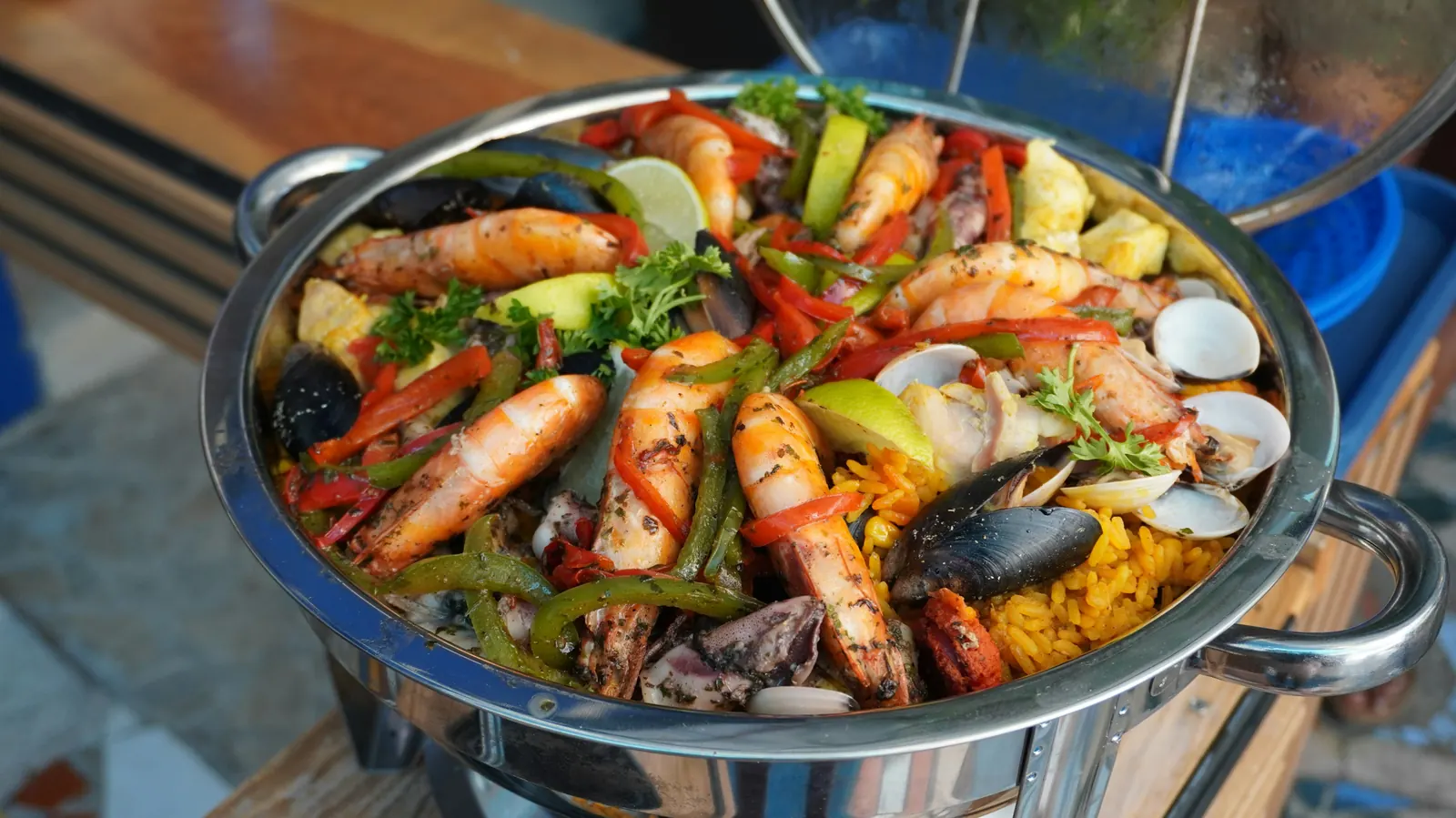
Most people who want a paella pan alternative have one of three problems. They make paella twice a year and don’t want another wide pan to store. Their stove is induction or glass, and they aren’t sure a traditional pan will work on it. Or they already own a big skillet and want to know whether it will do.
It usually will, within limits. America’s Test Kitchen explains that a paella pan’s shallow, wide shape maximizes surface area so the cooking liquid evaporates quickly, and that quick evaporation is what lets the golden crust on the bottom, the socarrat, form. Any pan that keeps the rice in a thin, wide layer gets you most of the way. This guide covers five pans that do, says how each one differs from the real thing, and when you should just buy the paella pan.
Julia’s earns a commission on purchases made through links on this page, at no cost to you. Recommendations are based on what a restaurant kitchen looks for, product specifications and verified buyer reports.
Quick verdict: the best paella pan alternative
For most kitchens, the best paella pan alternative is a wide carbon steel frying pan such as the Mauviel M’Steel 14.2-inch: it is the same metal as a traditional paella pan, heats quickly and goes in the oven, so it behaves most like the real thing. For a bigger batch, the 16-inch Bayou Classic cast iron skillet has two loop handles like a paella pan but is far heavier and slower to respond. A wide stainless sauté pan works on any stove with no seasoning, an enameled braiser makes a small, gentle paella for two or three, and an enameled steel roasting pan handles a crowd in the oven or on a grill. If you make paella for six or more every month, buy a paella pan instead; our guide to the best paella pan is below.
What makes a pan good for paella
Three things matter, and none of them is the name on the box. The first is width. America’s Test Kitchen settled on 15 to 16 inches for a pan that feeds six to eight; a narrower pan holding the same rice makes a deeper layer that cooks unevenly and steams instead of crisping. Albert Bevia of Spain on a Fork makes paella in a 10-inch nonstick frying pan and says any standard fry pan works, with one rule: don’t overcrowd it, or the rice won’t have the right texture.
The second is how the metal handles heat. America’s Test Kitchen found that thin pans heat and cool quickly and need watching to avoid scorching, while its thick winning pan took longest to heat but then stayed evenly hot. It also found a shiny stainless pan absorbed less heat on the grill than dark, matte carbon steel, which made socarrat slower to form. The third is shallow sides, which let steam escape. A deep pot does the opposite.
Technique closes much of the gap. Bevia stirs the rice once to spread it, then only shakes the pan, simmers over low-medium heat once most of the liquid is absorbed, and turns the heat back up to medium-high for four to five minutes at the end to build the socarrat. That method works in every pan on this page.
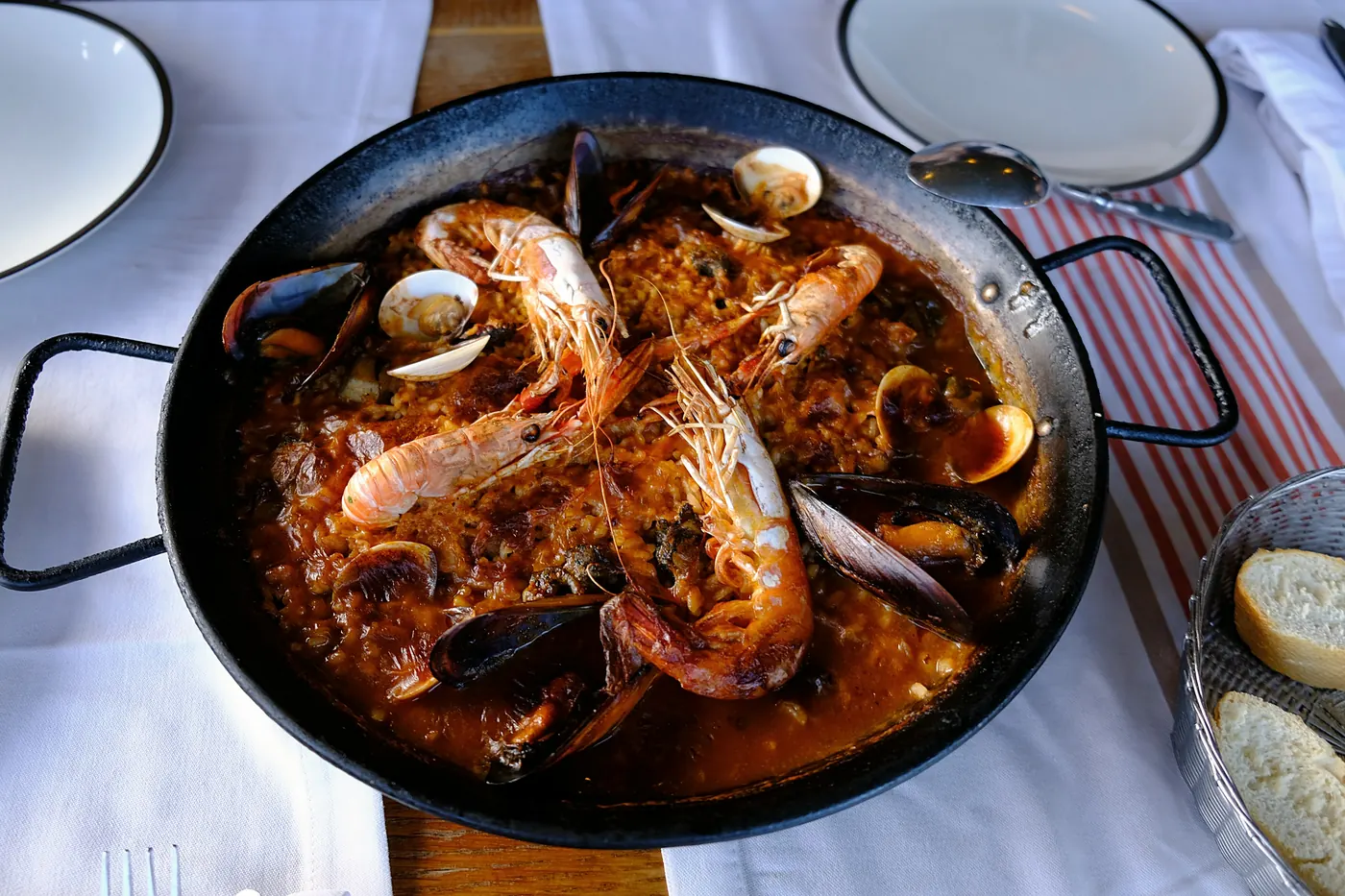
Five stand-in pans side by side
Five pans that can stand in for a paella pan, each a different material, with the size and limits their makers state. All five are reviewed in full below.
| Pan | Material | How it differs from a paella pan | Stated size | Buy on Amazon |
|---|---|---|---|---|
| Carbon steel | Same metal; one long handle, slightly taller sides | 14.2 in across, 2 in high | View on Amazon | |
| Cast iron | Paella-style loop handles; much heavier, slower to respond | 16 in, 2.625 in deep | View on Amazon | |
| Tri-ply stainless | Narrower and deeper; slower socarrat; no seasoning | 6 quarts; diameter not stated | View on Amazon | |

Lodge Essential 3.6-Quart Enameled Cast Iron BraiserSmall batch with a lid
|
Enameled cast iron | Smaller; medium heat at most, so little socarrat | 11.37 in across (Lodge) | View on Amazon |

Granite Ware 19 x 12-inch Open Roasting PanOven or grill for a crowd
|
Enameled steel | Rectangular; oven or grill, not a stovetop pan | 19 x 12 x 2.7 in | View on Amazon |
Our picks for a paella pan alternative
Two of these are other versions of pans we cover elsewhere, each chosen for a stated reason. The Mauviel is the 14.2-inch size of the M’Steel frying pan that appears in smaller sizes on our carbon steel and egg pan guides; we chose the largest size because width is what paella needs. The Lodge braiser is the Oyster White color of the Lodge Essential braiser in our cast iron skillet with lid guide; we chose it because its lid and shallow, wide shape suit a small paella.
1. Mauviel M’Steel 14.2-inch Carbon Steel Frying Pan – Paella-Pan Metal in a Skillet

Most traditional paella pans are carbon steel, and so was America’s Test Kitchen’s winning pan. Mauviel’s M’Steel is the same metal in frying-pan form: 14.2 inches across and 2 inches high, made in France, with a riveted iron handle. Mauviel describes it as extra-thick black steel that heats very quickly, and says it is oven safe to 680°F.
How close does it get? Very close. The width keeps a four-serving batch of rice in a thin layer, and carbon steel responds quickly when you turn the heat up at the end for the socarrat. The differences are a single long handle instead of two loops, which makes a full pan awkward to carry to the table, and slightly taller, sloped sides. A 14-inch pan is also wider than most home burners, so turn it now and then, as you would a paella pan.
It needs care. The pan ships with a beeswax coating against rust: wash it off with very hot water, then season it twice with oil as Mauviel describes. Hand wash only, wipe dry at once and store it lightly oiled. Mauviel also says not to run its pans at full burner power; about 6 on a 10 setting is its guidance.
Why we like it
- Carbon steel, like a traditional paella pan
- 14.2-inch width for a thin rice layer
- Oven safe to 680°F (maker)
- Made in France
Key specifications
| Model | 3651.36 |
|---|---|
| Material | Black carbon steel |
| Size | 14.2 in diameter, 2 in high |
| Handles | One long riveted iron handle |
| Stovetops | All cooking surfaces (listing) |
| Oven | To 680°F |
| Care | Season before use; hand wash, dry, oil lightly |
| Made in | France |
Why we recommend it
It suits a cook who wants a pan that makes real socarrat and also sears, fries and roasts the rest of the year.
Skip it if you won’t season and oil a pan; the Tramontina below needs no upkeep.
Pros and cons
Pros
- Closest material to a paella pan
- Very high oven rating
- Useful for everyday searing
Cons
- Needs seasoning; rusts if left wet
- Single handle on a wide, heavy-when-full pan
2. Bayou Classic 16-inch Double-Handled Cast Iron Skillet – Paella Width and Loop Handles

This is the pan on this page that looks most like a paella pan: 16 inches across, 2.625 inches deep, with two large loop handles instead of a long one, and pour spouts. That width sits right in the 15 to 16-inch range America’s Test Kitchen picked for six to eight servings. Bayou Classic says it is seasoned, transfers and retains heat evenly, and is oven and broiler safe.
How close does it get? Close in shape, different in behavior. Cast iron holds heat; Lodge describes it as retaining heat “like no other cookware” and advises starting at medium-low and working up. That means a cast iron paella is slower to come up to heat, slower to back off when the bottom starts to catch, and needs a little more time, so listen for the crackle and lower the heat sooner than you would with steel. And a 16-inch pan is far wider than a home burner, so you’ll need to move it around, or finish it in the oven.
It is heavy. The listing gives no weight, but it is a lot of iron, and filled with rice and broth it is a two-handed lift with good mitts. Hand wash, dry and oil it after use.
This is a different model from the Bayou Classic long-handled skillets on our other pages: a double-handled 16-inch pan.
Why we like it
- 16-inch width, paella-pan size
- Two loop handles
- Oven and broiler safe (listing)
- Seasoned out of the box
Key specifications
| Model | 7439 |
|---|---|
| Material | Cast iron, seasoned |
| Size | 16 in, 2.625 in deep |
| Handles | Two loop handles |
| Stovetops | Not stated |
| Oven | Oven and broiler safe |
| Care | Hand wash, dry, oil |
| Made in | Not stated |
Why we recommend it
It suits a cook who makes paella for a group and wants a pan that also roasts and bakes, and who can lift a heavy pan.
Skip it if you cook on a glass top or have trouble lifting heavy pans; the listing doesn’t state stovetop compatibility, and a full 16-inch cast iron pan is a serious weight.
Pros and cons
Pros
- True paella width
- Loop handles for carrying to the table
- Oven and broiler safe
Cons
- Very heavy; weight not stated
- Slow to respond to heat changes
- One-year limited warranty
3. Tramontina Signature 6-Quart Tri-Ply Sauté Pan – No Seasoning, Any Stove

A big sauté pan is what many home cooks already own, and Tramontina’s Signature 6-quart is a good one: tri-ply clad stainless with an aluminum core, works on induction, gas, electric and ceramic glass, oven safe to 500°F, dishwasher safe, NSF certified, made in Brazil and backed by a lifetime warranty, according to the listing.
How close does it get? Fair to good for four. A sauté pan’s straight, taller sides hold in more steam than a paella pan’s low rim, so the rice cooks a little more gently and the top can stay softer. America’s Test Kitchen also found shiny stainless absorbs heat less readily than dark carbon steel, so the crust forms more slowly. Spread the rice no deeper than a paella pan would, and give the final high-heat step a little longer. On the plus side, there is nothing to season or rust, and its flat base sits flush on glass and induction tops.
The listing gives capacity, not diameter, so check the width before you buy. It is the width, not the quarts, that decides how many servings you can cook in a thin layer.
Why we like it
- Works on induction and glass (listing)
- No seasoning, no rust worries
- Oven safe to 500°F
- Lifetime warranty
Key specifications
| Model | 80116/073DS |
|---|---|
| Material | Tri-ply clad stainless, aluminum core |
| Size | 6 quarts; diameter not stated |
| Handles | Riveted stainless handle |
| Stovetops | Induction, gas, electric, ceramic glass |
| Oven | To 500°F |
| Care | Dishwasher safe |
| Made in | Brazil |
Why we recommend it
It suits a cook on induction or glass who wants a pan for paella, braises and big batches with no upkeep.
Skip it if a deep socarrat is the whole point; carbon steel builds it faster.
Pros and cons
Pros
- Works on every stovetop
- Low maintenance
- Long warranty
Cons
- Taller sides trap more steam
- Diameter not stated in the listing
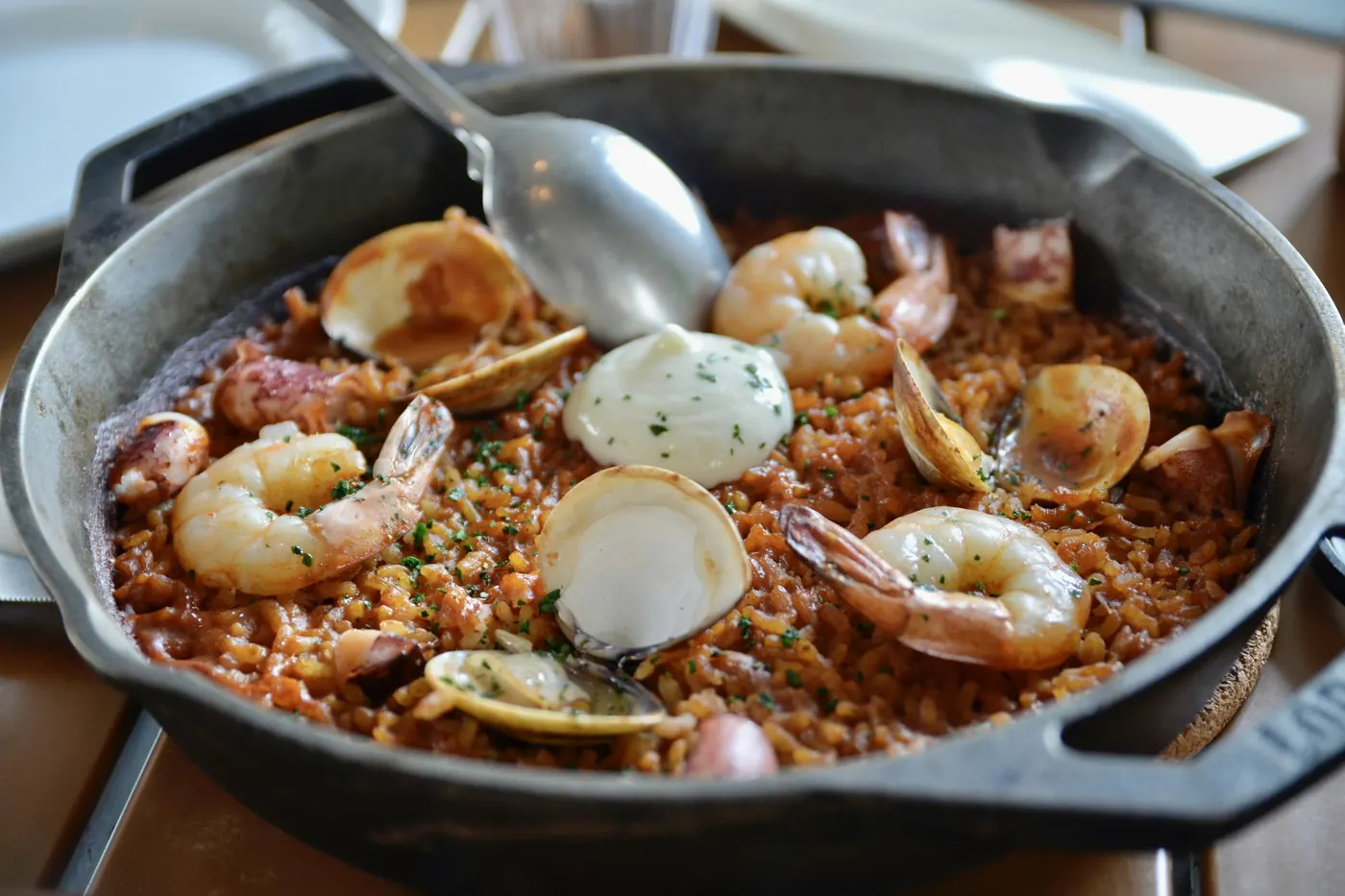
4. Lodge Essential 3.6-Quart Enameled Cast Iron Braiser – A Small Paella With a Lid
A braiser is a wide, shallow pot, which is why it often stands in for a paella pan. Lodge gives this 3.6-quart Essential Enamel braiser an 11.37-inch diameter and a cooking-area height of about 2.4 inches, with two assist handles and a lid. Lodge says it works on any stovetop, including induction, and in the oven up to 500°F.
How close does it get? Good for two or three servings, limited on the crust. Lodge says not to cook above medium on the range, because prolonged high heat can damage the porcelain enamel, and the final blast of heat that builds socarrat is exactly that. Expect tender, evenly cooked rice with a light crust at best. The lid is a bonus here: it lets the rice rest off the heat, and the pan doubles as a braiser for tinga or chile verde. Lodge also says it is not made for use on a grill or over a fire.
On the enamel, Lodge says it relies on vetted third-party labs to verify that its cookware is free of PFAS and of “dangerous levels of Lead and Cadmium.” Lodge recommends hand washing and no metal utensils. It is made by Lodge’s partners in China or Vietnam, according to Lodge.
Why we like it
- Wide, shallow shape (11.37 inches)
- Lid and two assist handles
- Any stovetop, including induction
- Lodge publishes a lead and cadmium testing statement
Key specifications
| Model | EC3CC13 |
|---|---|
| Material | Enameled cast iron |
| Size | 3.6 qt; 11.37 in diameter (Lodge) |
| Handles | Two assist handles; lid |
| Stovetops | Any, including induction; medium heat max |
| Oven | To 500°F |
| Care | Hand wash; no metal utensils |
| Made in | China or Vietnam |
Why we recommend it
It suits a couple who want paella now and then and a braiser the rest of the time, on any stove.
Skip it if you want a crisp socarrat; the medium-heat limit works against it.
Pros and cons
Pros
- No seasoning
- Lid included
- Doubles as a braiser
Cons
- Medium heat at most, so little crust
- Only two to three servings of paella
- Not for the grill
5. Granite Ware 19 x 12-inch Open Roasting Pan – Oven or Grill Paella for a Crowd
Enameled steel is a traditional paella pan material in its own right, and America’s Test Kitchen noted that an enameled pan needed no seasoning or maintenance. Granite Ware’s open roaster brings the same material to a different shape: a 19 by 12-inch rectangle, 2.7 inches deep, with a flat rack you leave out for paella. The listing says it handles baking, broiling and grilling and resists temperatures up to 935°F, and that it is dishwasher safe.
How close does it get? Fair, and only in the oven or on a grill. The listing does not mention stovetop use, so build the sofrito in a skillet, then pour everything into the roaster in the oven, or set it over a hot grill as America’s Test Kitchen’s testers did with paella pans. The large, shallow floor keeps the rice thin for a crowd. America’s Test Kitchen warned that thin, dark enameled pans need watching to avoid burning, so check the bottom and rotate the pan on a grill.
On the enamel, Granite Ware’s maker, Cinsa, states that its products “are free from heavy metals such as cadmium, selenium, lead.”
Why we like it
- Large, shallow cooking area
- Enameled steel; no seasoning
- Grill and broiler use stated
- Maker lead-free statement
Key specifications
| Model | 322496 |
|---|---|
| Material | Enamel on steel |
| Size | 19 x 12 x 2.7 in |
| Handles | End handles; flat rack included |
| Stovetops | Not stated |
| Oven | Baking, broiling, grilling; up to 935°F (listing) |
| Care | Dishwasher safe |
| Made in | Not stated |
Why we recommend it
It suits a host making paella for eight or more in the oven or on a backyard grill who also needs a roasting pan for the holidays.
Skip it if you want to cook start to finish on the stovetop; the listing doesn’t cover burner use.
Pros and cons
Pros
- Feeds a crowd in one layer
- No seasoning; dishwasher safe
- Doubles as a roasting pan
Cons
- Not a stovetop pan per the listing
- Thin enamel can scorch; corners cook fast
How to cook paella in a pan that isn’t a paella pan
- Size the batch to the pan. Keep the rice to a thin layer; Spain on a Fork’s rule is simply not to overcrowd. If your pan is 12 inches, cook for two to four, not eight.
- Stir once, then leave it. Spread the rice evenly, then only shake the pan now and then, as Bevia does.
- Move a wide pan around. A 14 to 16-inch pan is wider than a home burner. Turn it every few minutes, or finish it in a hot oven.
- Build the socarrat at the end. Once most of the liquid is absorbed, turn the heat to medium-high for a few minutes and listen for a gentle crackle. Skip this step in enameled cast iron, which Lodge limits to medium heat.
- Match the heat to the metal. Carbon steel and stainless respond quickly; cast iron holds heat, so lower it sooner.
Paella and Mexican red rice start in the same place, with rice toasted in fat before the liquid goes in, but Mexican rice is stirred and covered while paella is left open and still. Our best paella pan guide explains the difference.
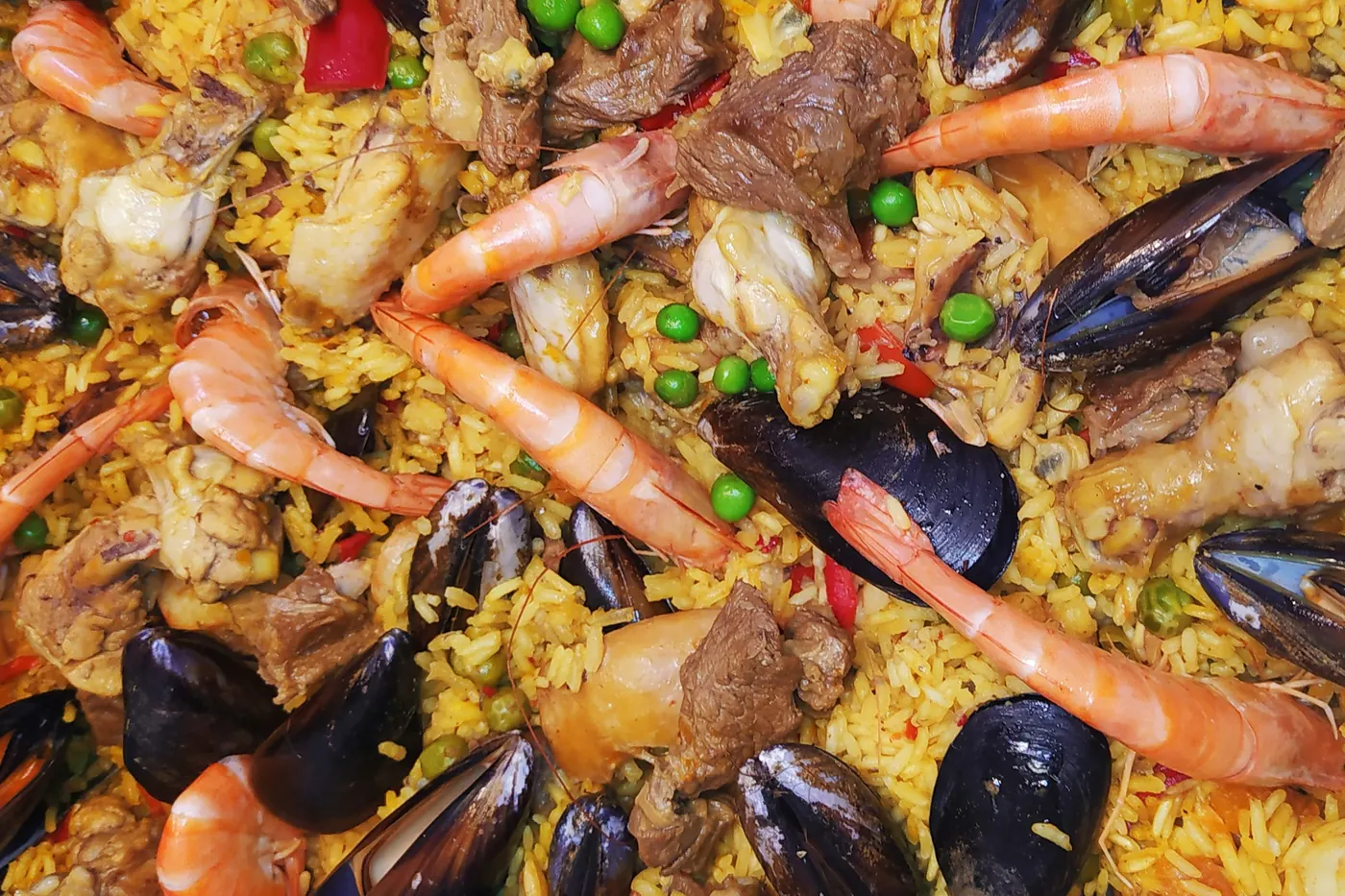
When to buy the paella pan instead
If you make paella for six or more more than a few times a year, a real paella pan is the better tool. It is wide and shallow, with low sides and two handles for carrying it to the table, and nothing on this page matches all of that at once. Our best paella pan guide covers carbon steel, stainless and induction-ready pans, and our best affordable paella pan guide starts with the plain Valencian carbon steel pan.
If you would rather have one pan that does paella and everything else, start with the carbon steel skillet above, and see our best carbon steel pan and best braiser guides for more choices.
Questions about cooking paella without a paella pan
What pan can I use for paella?
Any wide, shallow pan that keeps the rice in a thin layer: a large carbon steel or cast iron skillet, a wide sauté pan or a braiser. Carbon steel behaves most like a paella pan.
Can I make paella in a cast iron skillet?
Yes. A 12-inch skillet suits two to four servings, and a 16-inch pan suits more. Cast iron holds heat, so lower the heat sooner than you would with steel to avoid scorching the bottom.
Can I make paella in a nonstick pan?
Yes; Albert Bevia of Spain on a Fork uses a 10-inch nonstick fry pan for a small paella. Keep the heat moderate, as nonstick makers advise, so expect a lighter crust.
Do I need a paella pan for induction?
No. Any wide pan the maker rates for induction will work, such as the Tramontina sauté pan or the Lodge braiser above. If you do want a paella pan, our best paella pan guide notes which ones their makers rate for induction.
What size pan do I need for paella for four?
There is no fixed rule. As a rough kitchen guide, a 12 to 14-inch pan suits two to four servings if you keep the rice thin. America’s Test Kitchen chose 15 to 16 inches for six to eight.
Our last word on paella without the paella pan
You can make a good paella in a pan you already own if it is wide and shallow and you keep the rice in a thin layer. A wide carbon steel skillet gets closest and earns its place the rest of the year. If paella becomes a habit, the real pan is worth the cupboard space. And when you would rather someone else did the cooking, see the menu or call to order.