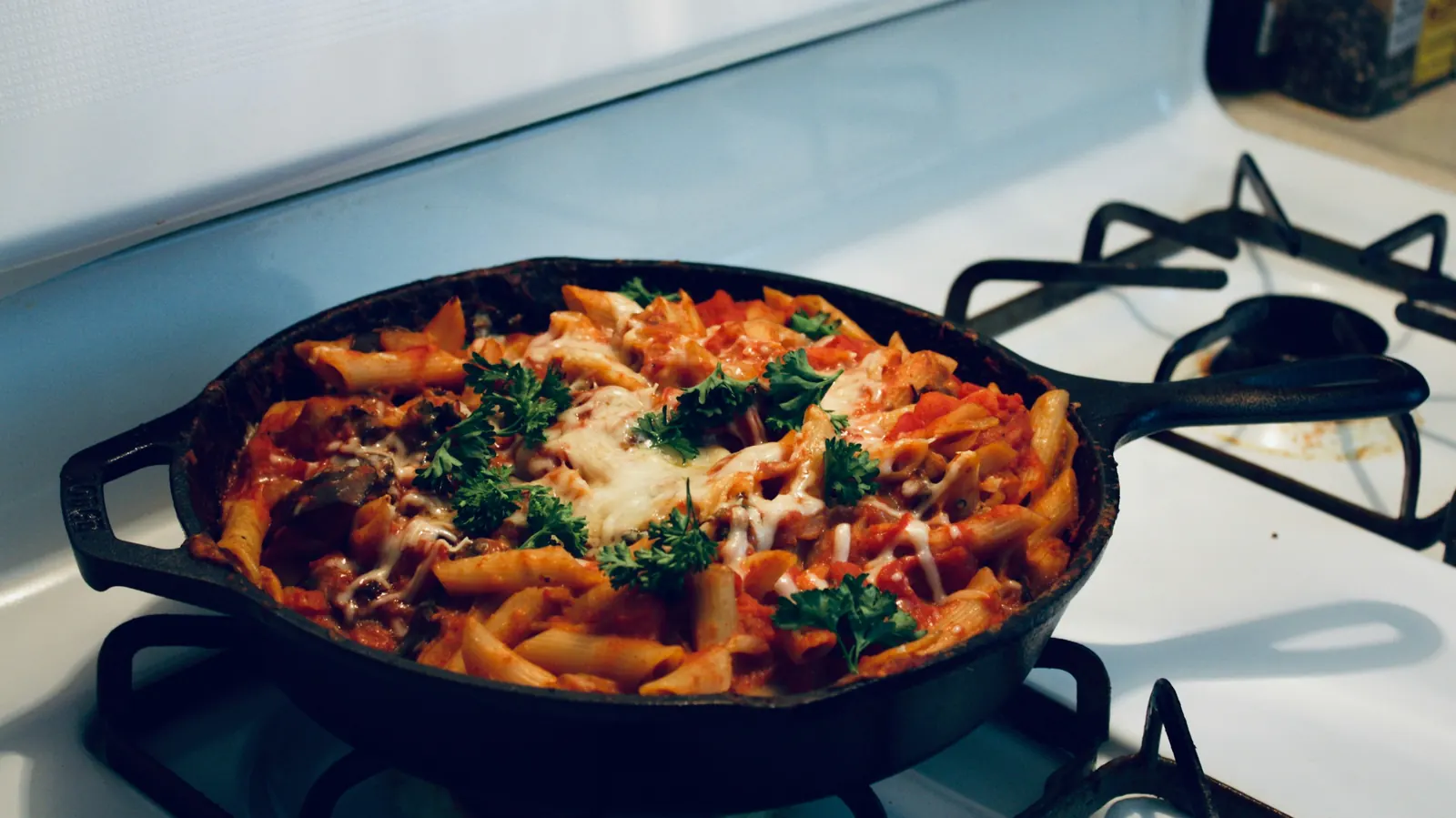
People shopping for a pan “without Teflon” usually want one of two things: a pan with no PTFE coating at all, or a pan that will last longer than the coated skillet they keep replacing. Both are reasonable goals, and both have good answers. The catch is that only some of those answers are truly nonstick. A ceramic-coated pan releases eggs the day you buy it; a carbon steel or cast iron pan gets slick only as its seasoning builds; a stainless or enameled pan never becomes nonstick and relies on heat and fat instead.
Bare carbon steel, cast iron and stainless steel are old, ordinary kitchen metals, so none of these alternatives is exotic. This guide explains what “without Teflon” really means on a label, what each PTFE-free material can and cannot do, and which pans in each family are worth buying.
Julia’s earns a commission on purchases made through links on this page, at no cost to you. Recommendations are based on what a restaurant kitchen looks for, product specifications and verified buyer reports.
Quick verdict: which PTFE-free pan to buy
If you want true nonstick release with no PTFE, the best nonstick pan without teflon for most cooks is the Made In CeramiClad 2.0 12-inch: a ceramic coating Made In says is free of PFAS and PTFE, on a 5-ply clad body that works on induction and goes in the oven to 550°F. If you would rather have no coating to wear out, buy the Lodge 12-inch cast iron skillet or the lighter Mauviel M’Steel carbon steel pan, and season it. For acidic sauces with no seasoning to manage, choose Staub’s enameled cast iron or All-Clad D3 stainless.
The table compares the five picks we would steer most cooks toward first, one per material. Eight pans are reviewed in full after it.
Five PTFE-free pans side by side
One pick for each kind of PTFE-free cooking surface, with what each maker or listing says about it.
| Pan | Best for | Surface | How it releases food | Buy on Amazon |
|---|---|---|---|---|

Made In CeramiClad 2.0 12-inch Frying PanBest overall
|
Real nonstick release, no PTFE | Ceramic coating on clad stainless | Slick from day one; wears over time | View on Amazon |
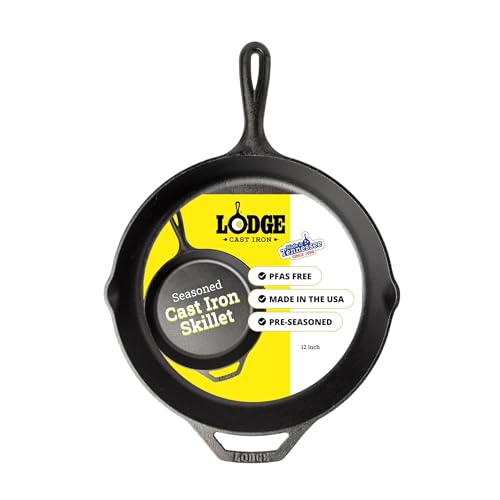
Lodge 12-inch Cast Iron SkilletBest cast iron
|
A pan for decades, on a budget | Seasoned bare cast iron | Seasoning improves with use | View on Amazon |

Mauviel M’Steel 11-inch Carbon Steel Frying PanBest carbon steel
|
High heat, lighter than cast iron | Uncoated carbon steel (season it) | Nonstick after seasoning, per Mauviel | View on Amazon |
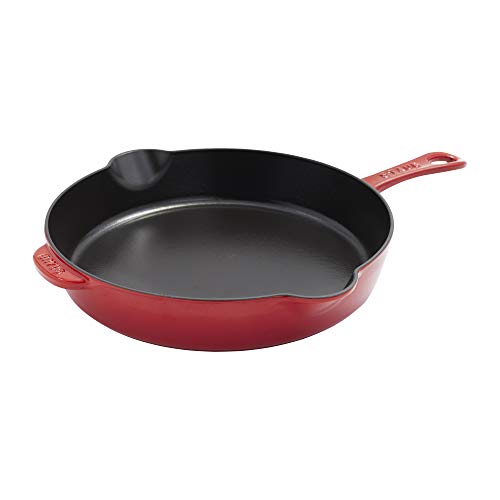
Staub 11-inch Enameled Cast Iron SkilletBest enameled cast iron
|
Browning without seasoning chores | Textured black matte enamel | Not nonstick; use fat and heat | View on Amazon |

All-Clad D3 10-inch Stainless Fry Pan with LidBest stainless steel
|
Searing and pan sauces | Bare stainless, tri-ply bonded | Not nonstick; preheat, then oil | View on Amazon |
Product images from Amazon. Coating and care details are as stated by each maker or its Amazon listing; check the listing before you buy.
What “without Teflon” actually means
Teflon is a brand, not a material. It belongs to Chemours, which sells coatings based on PTFE (polytetrafluoroethylene), a fluoropolymer that cookware makers spray on and bake. Plenty of conventional nonstick pans use PTFE without carrying the Teflon name, so the word to look for on a label is PTFE-free, not “Teflon-free”.
Watch out for “PFOA-free”, too. PFOA is a different chemical: eight major manufacturers phased it out of their emissions and product content under EPA’s PFOA Stewardship Program, and all report meeting its goals. A pan can be PFOA-free and still have a PTFE coating, so that label alone does not answer the question.
On safety, we report what the authorities say and go no further. The FDA lists nonstick coatings on pots and pans among the authorized food-contact uses of PFAS, the family of fluorinated chemicals that includes PTFE, and says studies show negligible amounts of PFAS in this coating can migrate to food. Chemours says its coatings can be used up to about 500°F without damage and does not recommend coated cookware for broiling. Whether you avoid PTFE is your own choice; this guide simply shows what works if you do. When makers below call their pans “non-toxic”, those are their words, not ours.
The PTFE-free options, honestly compared
- Ceramic coating. A thin, glass-like layer applied by a sol-gel process, sold as free of PTFE and PFAS. It is the only option here that is slick from the first egg. America’s Test Kitchen says ceramic is not quite as nonstick or as durable as traditional nonstick and becomes less so over time, because ceramic surfaces are brittle and develop microscopic cracks. Our guide to the best non stick pan ceramic covers that category in depth.
- Carbon steel. Bare steel that becomes easy-release once seasoned with oil. Lighter and quicker to heat than cast iron. Needs drying and oiling, and dislikes long, acidic simmers.
- Cast iron. Heavy, slow to heat, holds heat superbly. Lodge describes its seasoning as soy-based vegetable oil baked on at high temperature, and says it builds as you cook.
- Enameled cast iron. Cast iron sealed in glassy enamel. No seasoning and fine with tomatoes and lime, but not nonstick.
- Stainless steel. No coating and nothing to season. Food sticks unless the pan is preheated and oiled properly, and then it releases on its own once browned.
Our picks for the best nonstick pan without teflon
These eight cover every PTFE-free route: two coated pans for true nonstick, two cast iron skillets, two carbon steel pans, one enameled skillet and one stainless fry pan. Each lists the same eight specifications, taken from the maker or the Amazon listing.
1. Made In CeramiClad 2.0 12-inch Frying Pan – PTFE-Free Ceramic on a 5-Ply Clad Body
For cooks who want eggs to slide and a pan they can wipe clean, a ceramic coating is the only PTFE-free answer, and Made In’s CeramiClad puts it on a sturdier body than most. The pan is built from five layers of clad metal, which Made In says gives heat control, responsiveness and even cooking, and the listing rates it for all stovetops including induction.
Made In describes the coating as free of PFAS, PTFE, PFOA, lead and cadmium, and calls it super-durable; that is the maker’s own description. The listing rates the pan oven safe to 550°F, which is high for a coated pan, and says it is crafted in Italy. It gives the dimensions too: 12.5 inches across the top, a 9.5-inch cooking surface, 1.75 inches deep and 21 inches long with the stay-cool stainless handle. The listing does not state the weight or whether the pan is dishwasher safe.
At 12 inches it has room for a family batch of scrambled eggs with chorizo or a skillet of fajita vegetables. As with any ceramic, the coating will last longer with moderate heat and gentle cleaning.
Why we like it
- Free of PFAS, PTFE and PFOA, per Made In
- 5-ply clad body
- Works on induction
- Oven safe to 550°F
Key specifications
| Model | COOK-12-FRY-ICC-R2 |
|---|---|
| Coating | Ceramic, free of PFAS, PTFE, PFOA, lead and cadmium per Made In |
| Base material | 5-ply stainless clad |
| Size | 12.5 in overall; 9.5 in cooking surface; 1.75 in deep |
| Weight | Not stated |
| Oven-safe to | 550°F |
| Induction | Yes |
| Dishwasher safe | Not stated on the listing |
Why we recommend it
Choose it if you want the convenience of nonstick, cook on any stove including induction, and would rather have a clad stainless pan than thin aluminum under the coating.
Skip it if you want a pan that lasts for decades; any ceramic coating wears, and the bare iron and steel pans below do not have one to lose.
Pros and cons
Pros
- Nonstick from the first use
- Clad body, works on induction
- High oven rating for a coated pan
Cons
- Cooking surface is 9.5 inches of the 12
- Coating will wear over time
- Weight and dishwasher care not stated
2. GreenPan Hybrid 10-inch Stainless Frying Pan – Steel Pattern Over Ceramic

A hybrid pan tries to split the difference between stainless and nonstick. GreenPan’s version etches a raised stainless steel pattern into a tri-ply stainless pan and fills the low spaces with its diamond-infused ceramic, plus what it calls a nonstick boost layer. The raised steel does the searing; the ceramic helps food release.
GreenPan describes the ceramic as free of PFAS and says the surface is ten times more metal-utensil safe than its previous coatings. The listing rates the pan for all cooktops including induction, the dishwasher and, remarkably, the oven to 850°F, far above any conventional nonstick pan.
A hybrid surface mixes raised steel with coating, so it is less smooth than a plain ceramic pan, and a little oil or butter for eggs is sensible. In return, GreenPan says, you get stronger searing and a surface that stands up to metal tools.
Why we like it
- Raised stainless pattern for searing
- PFAS-free ceramic in the valleys, per GreenPan
- Induction ready; oven to 850°F, per the listing
- Dishwasher safe
Key specifications
| Model | CC009970-001 |
|---|---|
| Coating | Hybrid: etched stainless pattern with PFAS-free ceramic |
| Base material | Tri-ply stainless steel |
| Size | 10-inch frying pan |
| Weight | Not stated |
| Oven-safe to | 850°F, per the listing |
| Induction | Yes |
| Dishwasher safe | Yes |
Why we recommend it
Choose it if you want better browning than a smooth ceramic pan, easier cleanup than bare stainless, and no PTFE.
Skip it if you want the slickest release for delicate eggs; a smooth ceramic surface like the Made In’s lets go more easily.
Pros and cons
Pros
- Browns like stainless
- Very high oven rating
- Works on induction
Cons
- Less slippery than plain ceramic
- Weight not published
3. Lodge 12-inch Cast Iron Skillet – No Coating to Wear Out
The plain black Lodge skillet is the default answer to “a pan without a coating”, and for good reason. It is a single casting of iron, made in the United States, that arrives pre-seasoned. Lodge describes that seasoning as a layer of soy-based vegetable oil baked onto the iron at high temperature, and says it builds further every time you cook with fat.
Cast iron’s strengths are heat retention and toughness. It holds heat when cold food hits it, which is why it is the classic pan for searing steak for tacos, blistering chiles and frying chicken, and it goes from stovetop to oven, grill or campfire. A new skillet is not as slick as a coated pan, but Lodge’s listing says the finish improves with every use, and eggs become easy once the seasoning is established.
The trade-offs are weight and care. A retailer’s spec sheet puts this 12-inch skillet at about 7.9 pounds. Lodge asks you to hand wash it with warm, soapy water, dry it and wipe on a light layer of oil, and to hold off on tomato or lemon dishes until the seasoning is built up.
Why we like it
- No synthetic coating; seasoned with vegetable oil, per Lodge
- Seasoning improves with use
- Stovetop, oven, grill and campfire
- Made in the USA; lifetime warranty field on the listing
Key specifications
| Model | L10SK3 |
|---|---|
| Coating | None; seasoned with soy-based vegetable oil |
| Base material | Cast iron |
| Size | 12-inch skillet |
| Weight | About 7.9 lb (retailer spec sheet) |
| Oven-safe to | Oven safe; maximum not stated |
| Induction | Yes, per Lodge |
| Dishwasher safe | No; hand wash, dry and oil |
Why we recommend it
It suits a cook who wants one pan that will outlast every coated skillet in the house, and who does not mind a heavy pan and a minute of drying and oiling after washing.
Skip it if lifting nearly eight pounds one-handed is a problem; the Blacklock below is lighter.
Pros and cons
Pros
- Nothing to wear off
- Excellent heat retention
- Works on any heat source
Cons
- Heavy
- Not slick until seasoned up
- Hand wash and oil only
4. Lodge Blacklock 12-inch Cast Iron Skillet – Cast Iron, Lighter in the Hand

Blacklock is Lodge’s thinner-walled cast iron line, and the 12-inch skillet answers the most common complaint about cast iron. Lodge says it weighs 25 percent less than traditional cast iron, and Lodge’s own store lists it at 6.14 pounds.
It is triple seasoned for what Lodge calls an easy-release finish, cast in the USA, and the listing describes it as PFOA- and PTFE-free. The handle is raised and extended, which Lodge says stays cool longer, and the pan otherwise works just like the classic skillet: stovetop, oven, grill.
Care is the same as any seasoned cast iron: hand wash, dry and wipe with a little oil, per Lodge. For daily eggs, quesadillas and pan-roasted vegetables, the lower weight is the reason to choose it.
Why we like it
- 6.14 lb, per Lodge, 25 percent lighter than its standard line
- Triple seasoned out of the box
- Raised handle that stays cool longer, per Lodge
- PFOA- and PTFE-free, per the listing
Key specifications
| Model | BL39SK |
|---|---|
| Coating | None; triple seasoned |
| Base material | Cast iron, thin-walled |
| Size | 12-inch skillet |
| Weight | 6.14 lb (Lodge) |
| Oven-safe to | Oven safe; maximum not stated |
| Induction | Not stated in the listing |
| Dishwasher safe | No; hand wash, dry and oil |
Why we recommend it
Choose it if you want cast iron’s durability and no coating, but find a standard 12-inch skillet too heavy to lift and pour from.
Skip it if you want the most heat-holding mass; the classic Lodge is the heavier, thicker pan.
Pros and cons
Pros
- Lighter than standard cast iron
- Well seasoned from new
- Cast in the USA
Cons
- Induction not stated in the listing
- Still hand wash only
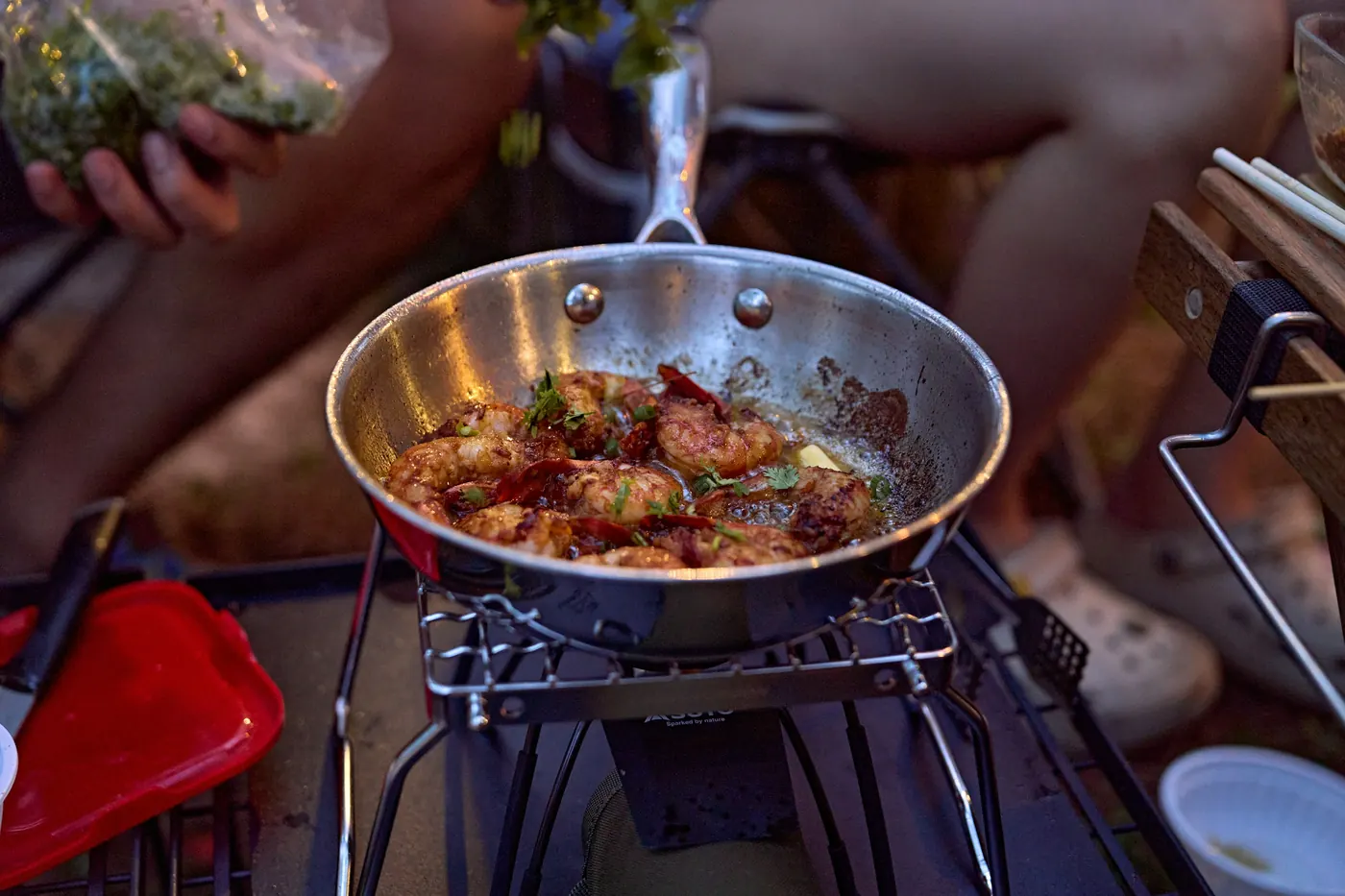
5. Mauviel M’Steel 11-inch Carbon Steel Frying Pan – Thick Steel, High Heat
Carbon steel is bare black steel that turns easy-release as seasoning builds, and Mauviel’s M’Steel pan is a French example made for professional and home kitchens. The listing describes extra-thick black carbon steel that rises in temperature very quickly, which makes it suited to searing, browning and grilling, with an iron handle fixed by 18/10 stainless steel rivets. America’s Test Kitchen names the M’Steel frying pan as its top carbon steel pick.
It does not arrive nonstick. The pan ships with a beeswax coating to keep it from rusting; Mauviel says to wash that off with very hot water, then season by covering the bottom with flavorless oil, heating it for five minutes, cooling and wiping, and repeating once. After that, Mauviel says, the pan builds a natural nonstick property and darkens over time, and the dark layer that forms should be left in place.
The listing rates it for all cooking surfaces and the oven to 680°F. It also asks for restraint on the stove: heat the pan slowly, use burners at about 60 percent of full power, and do not leave it empty on a hot burner. Care is hand washing only, wiping dry and a thin coat of oil before storing. At 11 inches, with an 8.4-inch inside base, it has room for fajita strips or two eggs and a tortilla.
Why we like it
- Extra-thick carbon steel, no synthetic coating
- America’s Test Kitchen’s top carbon steel pick
- Oven safe to 680°F, per the listing
- Clear seasoning and care steps from Mauviel
- Made in France
Key specifications
| Model | 3651.28 |
|---|---|
| Coating | None; beeswax for shipping, season before use |
| Base material | Black carbon steel, iron handle, stainless rivets |
| Size | 11-inch; 8.4-inch inside base |
| Weight | Not stated |
| Oven-safe to | 680°F |
| Induction | Yes; all cooking surfaces, per the listing |
| Dishwasher safe | No; hand wash only |
Why we recommend it
Choose it for high-heat searing and sautéing in a pan that becomes naturally slick and never needs replacing for a worn coating.
Skip it if you are not willing to season a pan before first use, or to hand wash, dry and oil it every time.
Pros and cons
Pros
- Takes very high heat
- Oven safe to 680°F
- Works on any cooktop
Cons
- Must be seasoned first
- Hand wash and oil only
- Weight not published
6. Lodge 10-inch Carbon Steel Skillet – Pre-Seasoned and Ready to Cook

If seasoning a bare steel pan from scratch sounds like a chore, Lodge’s carbon steel skillet skips that step. It arrives seasoned for what Lodge calls a natural, easy-release finish that improves with use, so it is ready for eggs and quesadillas after a rinse.
It is made from heavy-duty 12-gauge carbon steel with riveted steel handles, and comes with a silicone handle holder that Lodge says protects hands from heat up to 500°F. Lodge describes it as the right tool for searing, sautéing, grilling, roasting and frying, and says it is great on induction. Lodge’s store lists the 10-inch at 3.49 pounds, about half the weight of a 12-inch cast iron skillet.
One listing detail is unclear: it calls the product dishwasher safe, which may refer to the silicone holder. Lodge’s general care guidance for its seasoned cookware is to hand wash, dry and oil, and that is the safe way to treat the pan itself.
Why we like it
- Pre-seasoned, ready to use
- 12-gauge carbon steel, riveted handles
- Works on induction, per Lodge
- 3.49 lb, per Lodge
Key specifications
| Model | CRS10HH61 |
|---|---|
| Coating | None; factory seasoned |
| Base material | 12-gauge carbon steel |
| Size | 10-inch skillet, with silicone handle holder |
| Weight | 3.49 lb (Lodge) |
| Oven-safe to | Oven use stated; maximum not stated |
| Induction | Yes |
| Dishwasher safe | Listing says yes; likely the holder. Hand wash the pan |
Why we recommend it
Choose it as an inexpensive, light first carbon steel pan that is seasoned and ready the day it arrives.
Skip it if you want a larger cooking surface; at 10 inches it suits one or two people.
Pros and cons
Pros
- No seasoning needed to start
- Light for its size
- Handle holder included
Cons
- Confusing dishwasher wording
- Riveted handles to clean around
- No published oven limit
7. Staub 11-inch Enameled Cast Iron Skillet – Iron Without the Seasoning
Enameled cast iron keeps cast iron’s heat retention and seals it in glassy enamel, so there is no seasoning to build and no worry about rust or acidic food. Staub’s skillet has a textured black matte enamel interior, which Staub says ensures exceptional browning, and the listing says it does not require seasoning and is easy to clean.
To be clear, this is not a nonstick pan. Enamel is glass fused to iron, and food will stick if the pan is cold or dry; preheat it and use fat, the same way you would with stainless steel. What you get in return is a skillet you can simmer a tomato-based salsa ranchera in, then scrub without fear of stripping seasoning.
The listing rates it for the oven to 500°F, adds pouring spouts for removing fat and raised sides to reduce splatter, and says it is built for generations of use. A retailer lists it as induction compatible.
Why we like it
- No seasoning required, per Staub
- Textured matte enamel for browning
- Oven safe to 500°F
- Pouring spouts and raised sides
Key specifications
| Model | 12322806 |
|---|---|
| Coating | Black matte enamel (not nonstick) |
| Base material | Cast iron |
| Size | 11-inch skillet |
| Weight | Not stated |
| Oven-safe to | 500°F |
| Induction | Yes, per a retailer |
| Dishwasher safe | Not stated |
Why we recommend it
Choose it if you want cast iron’s searing and heat retention without seasoning, and a pan that handles tomatoes, tomatillos and lime without complaint.
Skip it if you want eggs to slide; enamel needs fat and preheating, and the ceramic picks above release far more easily.
Pros and cons
Pros
- No seasoning or rust worries
- Fine with acidic food
- Oven to 500°F
Cons
- Not nonstick
- Heavy, weight not published
- Premium cost
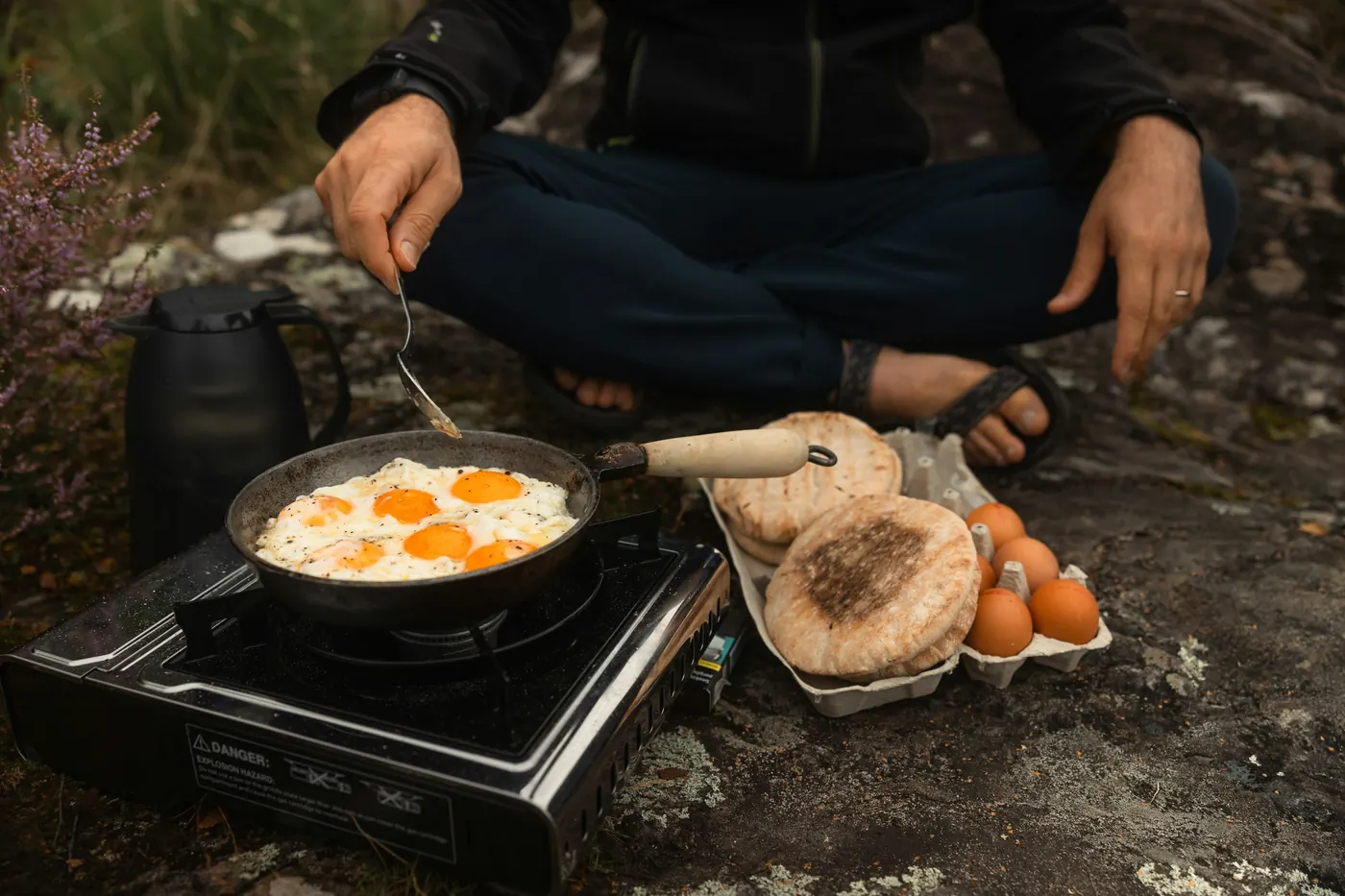
8. All-Clad D3 10-inch Stainless Fry Pan with Lid – No Coating, Just Technique
Stainless steel is the opposite of nonstick, and that is the point. Its bare surface builds the browned bits, the fond, that turn into a pan sauce, and there is nothing to wear off, season or protect. All-Clad’s D3 is the original fully bonded tri-ply line: an aluminum core between layers of stainless steel, made in Pennsylvania with global components, according to the listing.
The 10-inch fry pan comes with a lid, works on every stovetop including induction, and is oven and broiler safe to 600°F. All-Clad says hand wash only and backs it with a limited lifetime warranty.
Food sticks to stainless when the pan is too cold or the heat too high. All-Clad’s customer guidance, as published, is to preheat on low or medium for a minute or two, add oil once the pan is hot, and let food release on its own when it has browned, and never to use aerosol cooking sprays. Follow that and eggs and fish come away cleanly; skip it and they will tear.
Why we like it
- No coating; nothing to wear out
- Tri-ply bonded with an aluminum core
- Oven and broiler safe to 600°F; induction
- Lid included; limited lifetime warranty
Key specifications
| Model | 41106SC |
|---|---|
| Coating | None; bare stainless steel |
| Base material | Tri-ply: stainless steel, aluminum core |
| Size | 10-inch fry pan with lid |
| Weight | Not stated |
| Oven-safe to | 600°F, including broiler |
| Induction | Yes |
| Dishwasher safe | No; hand wash only, per the listing |
Why we recommend it
Choose it if you sear meat, make pan sauces and want a pan that will last a lifetime with no coating at all, and you are willing to learn the preheat-then-oil habit.
Skip it if you want eggs to slide without thinking about it; stainless will never be nonstick.
Pros and cons
Pros
- Lasts indefinitely
- Builds fond for sauces
- Lid included
Cons
- Not nonstick
- Hand wash only
- Premium cost
How to choose a pan without PTFE
Start with what you cook most, then decide how much care you are willing to give the pan.
1. Do you need true nonstick?
For delicate eggs, crepes and fish with no fuss, only a coated pan delivers, and without PTFE that means ceramic (Made In) or a hybrid (GreenPan). Everything else becomes easy-release with seasoning (carbon steel, cast iron) or technique (stainless, enamel).
2. How long should it last?
Coatings wear; bare metal does not. America’s Test Kitchen’s verdict on ceramic is that it loses its release over time. Cast iron, carbon steel and stainless have nothing to lose, which is why we compare them directly in our guide to the best non stick pan long lasting.
3. Weight
The classic 12-inch Lodge is about 7.9 pounds by a retailer’s figure; the Blacklock 6.14 pounds; the Lodge carbon steel 10-inch 3.49 pounds. If you toss food or have weak wrists, carbon steel or a coated pan is easier to live with.
4. Acidic food
Seasoned iron and steel do not love long tomato or lime simmers: Lodge says to hold off on tomato or lemon dishes until the seasoning is established, and the same caution suits a seasoned carbon steel pan. Enamel, stainless and coated pans handle salsas and tomato rice without trouble.
5. Your stove and oven
Every pick here works on induction except where noted; Lodge’s Blacklock listing does not say. Oven limits range from 550°F (Made In) through 600°F (All-Clad) and 680°F (Mauviel) to 850°F (GreenPan Hybrid); the Lodge iron and steel pans can go in the oven or on a grill, though Lodge gives no maximum.
6. Care you are willing to do
Seasoned pans want washing, drying and a wipe of oil after every use, per Lodge. Coated pans want moderate heat and no sprays. Stainless and enamel want preheating before oil goes in. Pick the routine you will actually follow.
How we chose these eight PTFE-free pans
We started from what a working kitchen expects from a skillet: easy release or a surface that earns it, even heat, a handle you can trust and a body that will last. We searched for frying pans and skillets sold on Amazon in the United States in five PTFE-free categories, checked each listing’s availability, and kept only in-stock pans from makers we could identify, choosing different products from those in our ceramic guide. For each pan we took the surface, body, size, stovetop and oven ratings and care from the maker’s website or the brand’s Amazon listing, and wrote “Not stated” where neither gave a figure. For how coatings and seasoning behave we relied on America’s Test Kitchen’s ceramic skillet review, Lodge’s care guidance and the makers’ own instructions; facts on PTFE, PFAS and PFOA come from the FDA, the EPA and Chemours. We have not cooked on these pans for this guide.
PTFE-free pan questions, answered
What is the best non stick frying pan without teflon?
For true nonstick release with no PTFE, a ceramic-coated pan such as the Made In CeramiClad 2.0 12-inch. For a pan with no coating that becomes easy-release over time, the Lodge cast iron skillet or the Mauviel M’Steel carbon steel pan.
Is a “PFOA-free” pan also Teflon-free?
Not necessarily. PFOA was phased out by the major manufacturers under an EPA program, so many PTFE-coated pans are labeled PFOA-free. Look for “PTFE-free” if that is what you want.
Is cast iron really nonstick?
Lodge calls its seasoned finish naturally non-stick and says it improves with use. In practice a well-seasoned pan releases eggs and pancakes easily, but a new one is not as slick as a coated pan and needs fat.
Are ceramic pans PTFE-free?
The ceramic pans in our guides are all sold by their makers as made without PTFE. Read the listing, though: names like “granite” or “stone” describe the look, not the chemistry, so check that the maker states PTFE-free.
Why does food stick to my stainless steel pan?
Usually because the pan was not preheated, the oil went in too early, or the food was moved before it browned. All-Clad’s guidance is to preheat on low or medium, then add oil, then let the food release on its own.
Our final word on cooking without PTFE
Buy the Made In CeramiClad 2.0 12-inch if you want nonstick convenience without PTFE, or the GreenPan Hybrid if you want more browning. For a pan that will never need replacing, choose the Lodge cast iron skillet, the lighter Blacklock, or carbon steel from Mauviel or Lodge. For acidic cooking with no seasoning, the Staub enameled skillet; for searing and pan sauces, the All-Clad D3. Many cooks end up with two: one coated pan for eggs, one bare pan for everything hot.
For the full picture across PTFE, ceramic and hybrid pans, start with our guide to the best nonstick pans.
For more ways to cook without a coated pan, see our guide to nonstick pan alternatives. A flat cast iron comal is the bare-iron tool for tortillas, as our comal vs cast iron skillet comparison explains, and our best fajita skillet guide covers the sizzling cast iron platters. Or let someone else do the cooking: see the menu or call to order.