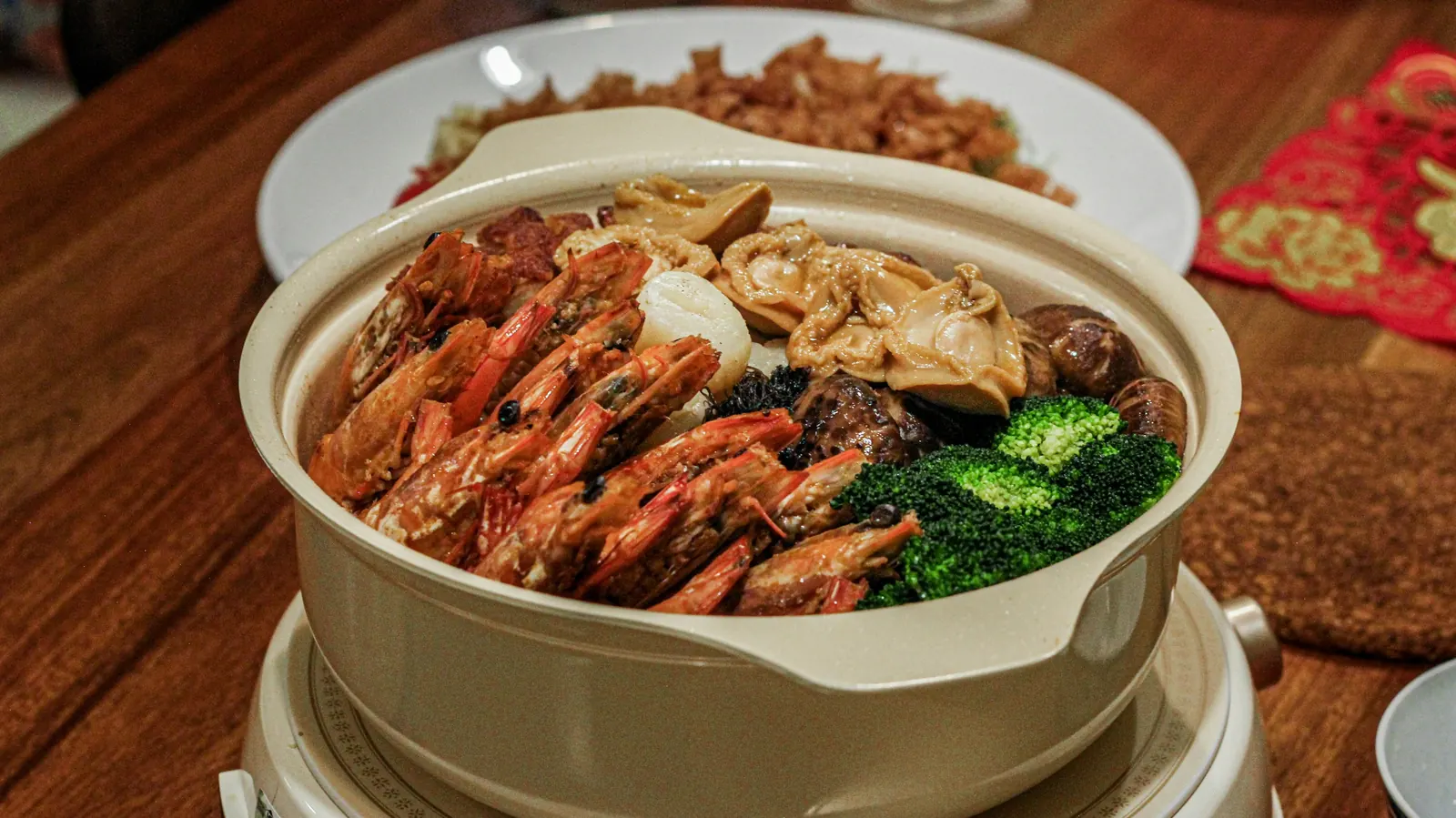
A slow cooker is a pot with a heater in its base and a lid that stays put for hours. It is handy for barbacoa, frijoles de la olla or a pot of chile colorado, but it is not the only way to get there. Long, low, covered cooking is older than electricity, and most of it happened in heavy pots in low ovens or at the back of the stove.
If yours has broken, you don’t want another appliance on the counter, or you want something that also sears and bakes, there are good answers. This guide covers what to use instead of a slow cooker: a Dutch oven in a low oven, a multicooker and a thermal cooker. It says how close each one gets and names an example of each.
Julia’s earns a commission on purchases made through links on this page, at no cost to you. Recommendations are based on what a restaurant kitchen looks for, product specifications and verified buyer reports.
Why cooks look for a slow cooker alternative
A slow cooker does one thing: it heats food gently from the base for hours while you are away. Sur La Table’s conversion guide sums it up as a “set it and forget it” tool. That’s its strength and its limit. It can’t brown meat unless it has a browning insert, it can’t bake, and it takes up a lot of cupboard space for one job.
The alternatives trade some of that hands-off ease for speed, flavor or space. A Dutch oven browns meat and then braises it in the same pot. A multicooker can slow cook too, but it can also do the same stew under pressure in a fraction of the time. A thermal cooker uses no power once the food is hot. None is a perfect match, so the right choice depends on what you want to keep.
Quick verdict: the best slow cooker alternative
For most cooks, the best slow cooker alternative is a heavy lidded Dutch oven in a 325°F oven. Sur La Table puts 325°F level with a slow cooker’s low setting and says 6 to 8 hours on low may need only 2 to 3 hours at that heat. If you need to leave the house while it cooks, buy a multicooker with a slow-cook setting instead. A thermal cooker suits cooks who want to save power or cook away from an outlet.
Five swaps for the crock, side by side
Our five picks across three methods, with what each maker or listing states. Each is reviewed in full below.
| Alternative | Method | Hands-off? | Stated capacity & heat | Buy on Amazon |
|---|---|---|---|---|

Lodge Elements 5-Quart Enamel Dutch OvenBest overall
|
Sear on the stove, braise in a low oven | Partly; check now and then | 5 quarts; stovetop to oven | View on Amazon |

Tramontina Signature Tri-Ply 5-Quart Stainless Dutch OvenBest stainless option
|
Sear on the stove, braise in a low oven | Partly; check now and then | 5 quarts; oven safe to 500°F | View on Amazon |

Chefman 13-in-1 6-Quart MulticookerBest for leaving it alone
|
Slow cook or pressure cook | Yes; delay start and keep warm | 6 quarts; 1000 W; cETL | View on Amazon |

Ninja HyperHeat 6.5-Quart Pressure CookerBest for searing in the pot
|
Sear, then slow or pressure cook | Yes | 6.5 quarts; 1200 W | View on Amazon |

SPT 6-Liter Stainless Thermal CookerBest no-power option
|
Boil on the stove, finish in an insulated pot | Yes, after the stovetop start | 6 liters; non-electric | View on Amazon |
How each method compares with a slow cooker
Dutch oven in a low oven
This is the classic substitute and, for flavor, often the better one. Sur La Table’s guide recommends an oven between 325°F, similar to a slow cooker’s low setting, and 375°F, similar to high. Its rule of thumb: a recipe that takes 6 to 8 hours on low may need only 2 to 3 hours in the oven at 325°F. Going the other way, 1 to 2 hours in a Dutch oven usually equals 4 to 6 hours on low or 2 to 3 on high.
The gain is browning. You can sear the meat and toast the chiles in the same pot on the stove, then cover it and slide it into the oven. The cost is attention. The oven dries food more than a sealed slow cooker does, so Sur La Table suggests checking now and then and adding a little liquid if it looks dry. And an oven left on all day is not the same as a countertop appliance you can walk away from.
Multicooker
A multicooker is the most direct swap, because most have a slow-cook setting. The bonus is pressure cooking, which can cut a long braise to a fraction of the time. Ninja describes its HyperHeat as up to twice as fast as traditional slow cooking. Many also sear in the insert, so the browning step happens in one pot.
The trade-off is that pressure cooking skips the slow reduction that thickens a braise. If the sauce is thin at the end, a few minutes on the sauté setting with the lid off will reduce it.
Thermal cooker
A thermal cooker is the oldest idea here: bring food to a boil in a pot on the stove, then set that pot inside an insulated outer pot and let the stored heat finish the cooking. SPT says its cooker is non-electric, keeps food warm for up to 8 hours and continues cooking for 10 to 30 minutes after heating. It suits beans, soups and stews that start with plenty of liquid. It is less suited to dry rubs and roasts, and you should follow the maker’s manual closely on heating times.
Roaster ovens
Electric roaster ovens can also slow cook, and some go as low as 150°F. We didn’t pick one for this page because the models we checked have enamel-coated steel pans, and their makers give no lead-free statement for them. Our best electric oven roaster guide covers the category if you need one for a holiday turkey.
Our picks for a slow cooker alternative
Five picks, all in stock when we checked. Two are different listings of models we cover elsewhere, and we say why: the Lodge Elements is the Snow color of a Dutch oven in our affordable Dutch oven for bread guide, chosen because Lodge has a statement on lead; the Ninja is the purple version of a pressure cooker in our best 6-quart pressure cooker guide, chosen because it slow cooks and sears in one pot.
1. Lodge Elements 5-Quart Enamel Dutch Oven – Sear and Braise in One Pot
An enameled cast iron Dutch oven is the most versatile replacement for a slow cooker, and this is Lodge’s newer Elements line. The listing gives a 5-quart capacity and describes cast iron that distributes and holds heat for steady simmering and braising, from stovetop to oven. That is exactly the routine that replaces a slow cooker: brown on the burner, cover, then move it to a 325°F oven.
The interior is smooth porcelain enamel, which Lodge says helps food release and wipes clean, so there is no seasoning to keep up and tomato or chile sauces won’t react with bare iron. Five quarts is a good size for a family pot of birria, chile verde or beans.
Lodge is one of the enamel makers we accept under our lead rule: it says it uses vetted third-party labs to verify that its cookware is free of PFAS and of dangerous levels of lead and cadmium. The listing for this model does not state a maximum oven temperature, but a 325 to 375°F braise is well within what enameled cast iron is made for; check the manual in the box. It is heavy, like any cast iron pot.
Why we like it
- Stovetop to oven, so one pot sears and braises (listing)
- Even heat retention for long simmering (listing)
- Enamel interior, no seasoning (listing)
- Maker statement on lead (Lodge)
Key specifications
| Model | EE5D15 (Snow) |
|---|---|
| Type | Enameled cast iron Dutch oven |
| Capacity | 5 quarts |
| Power | Stovetop and oven |
| Max oven temperature | Not stated in listing |
| Programs | None |
| Cleaning | Wipes clean (listing) |
| Warranty | Not stated |
Why we recommend it
It suits a cook who is home while dinner cooks and wants deeper browning than a slow cooker gives.
Skip it if you need dinner to cook while you are at work; an oven left on all day is not a good plan, and a multicooker is.
Pros and cons
Pros
- Browns and braises in one pot
- Faster than a slow cooker on low
- Also bakes bread and fries
Cons
- Heavy
- Needs checking during cooking
- Oven temperature limit not in the listing
2. Tramontina Signature Tri-Ply 5-Quart Stainless Dutch Oven – Lighter, With No Coating
If cast iron is too heavy or you would rather avoid enamel altogether, a clad stainless Dutch oven does the same oven braise. Tramontina’s listing describes tri-ply clad construction with an aluminum core for even heat, a 5-quart capacity it names for stews, soups and slow-cooked dishes, and oven safety up to 500°F.
It works on every stovetop, including induction, so you can brown the meat over high heat first, then add liquid, cover and move it to a 325°F oven. The stainless lid seals in moisture, according to the maker. It won’t hold heat as long as cast iron once out of the oven, but it heats up faster and is easier to lift.
The listing says it is NSF certified, dishwasher safe, made in Brazil and backed by a lifetime warranty. Stainless steel has no glaze or enamel, so it needs no lead statement.
Why we like it
- Oven safe to 500°F (listing)
- Works on induction, gas, electric and glass (listing)
- NSF certified, lifetime warranty (listing)
- No coating or enamel
Key specifications
| Model | 80116/025DS |
|---|---|
| Type | Tri-ply clad stainless Dutch oven |
| Capacity | 5 quarts |
| Power | All stovetops including induction; oven |
| Max oven temperature | 500°F |
| Programs | None |
| Cleaning | Dishwasher safe |
| Warranty | Lifetime |
Why we recommend it
It suits a cook who wants an oven-braising pot that is lighter than cast iron and goes in the dishwasher.
Skip it if you want food to stay hot at the table for a long time; cast iron holds heat longer.
Pros and cons
Pros
- Lighter than cast iron
- Induction ready
- Dishwasher safe
Cons
- Holds less heat than cast iron
- Food can stick when searing
- Still needs watching in the oven
3. Chefman 13-in-1 6-Quart Multicooker – Slow Cook While You’re Out
If the reason you own a slow cooker is that dinner cooks while you are out, this is the alternative that keeps that. Chefman lists 13 functions, including slow cook, pressure cook, sauté, steam, simmer and warm, with presets for soup, stew, chili, poultry, rice and beans. A 24-hour delay start and automatic keep warm, both from the listing, cover the day you are away.
The pot holds 6 quarts, which Chefman says is enough for family meals and batch cooking. When you are home, the pressure setting makes the same chili or shredded chicken in much less time, with quick or natural release.
The listing gives 1,000 watts at 120 volts, says the machine is cETL approved and mentions a one-year assurance from Chefman. The locking lid has a holder on the side and a removable condensation cup.
Why we like it
- Slow cook and pressure cook in one (listing)
- 24-hour delay start and keep warm (listing)
- 6-quart family size (listing)
- cETL approved (listing)
Key specifications
| Model | RJ40-6-V3-AM |
|---|---|
| Type | Electric pressure multicooker |
| Capacity | 6 quarts |
| Power | 1000 W, 120 V |
| Max oven temperature | Not applicable |
| Programs | 13, including slow cook and pressure cook |
| Cleaning | Not stated |
| Warranty | 1-year assurance |
Why we recommend it
It suits a working household that wants slow-cooked meals ready at dinnertime, plus fast pressure cooking on busy nights.
Skip it if you want deep browning; a Dutch oven sears better than a multicooker insert.
Pros and cons
Pros
- Truly hands-off
- Delay start for busy days
- Replaces several appliances
Cons
- Inner pot material not stated in the listing
- Bulky to store
- Only a one-year assurance
4. Ninja HyperHeat 6.5-Quart Pressure Cooker – Sear and Slow Cook in One Pot
This multicooker leans toward searing. Ninja lists nine functions, including pressure cook, slow cook, sear and sauté, steam, sous vide and yogurt, with a 1,200-watt base and a wide cooking surface for browning meat before the long cook. It describes the cooker as up to twice as fast as traditional slow cooking when you use pressure.
The 6.5-quart pot fits a 4-pound chicken or a 5-pound roast, according to Ninja, which puts a whole pork shoulder for carnitas within reach. The removable SimpliServe pot goes straight to the table, and the maker says its ceramic nonstick coating is free of PFAS.
The nonstick pot wipes clean but needs wooden or silicone tools. The listing doesn’t mention a keep-warm setting or a delay start, so for all-day cooking while you are out, the Chefman above is the better match.
Why we like it
- Sears in the pot before slow or pressure cooking (listing)
- 6.5 quarts, fits a 5-pound roast (listing)
- 1200 W base (listing)
- Serving pot goes to the table (listing)
Key specifications
| Model | PC201SP |
|---|---|
| Type | Electric pressure multicooker |
| Capacity | 6.5 quarts |
| Power | 1200 W |
| Max oven temperature | Not applicable |
| Programs | 9, including slow cook and sear |
| Cleaning | Nonstick pot wipes clean |
| Warranty | Not stated |
Why we recommend it
It suits a cook who wants browned, braised dishes in one pot and often uses pressure to save time.
Skip it if you want an uncoated cooking pot; the Tramontina stainless Dutch oven has none.
Pros and cons
Pros
- Strong searing for a multicooker
- Large capacity
- Fast under pressure
Cons
- No delay start in the listing
- Coated pot needs gentle tools
- Bulky
5. SPT 6-Liter Stainless Thermal Cooker – Slow Cooking With No Power
A thermal cooker is the most unusual choice here and the closest in spirit to a slow cooker: food cooks gently for hours while you do something else. You heat the inner pot on the stove, then lift it into the insulated outer pot, close the lid and let the stored heat finish the job. SPT says the cooker is non-electric, keeps food warm or cold for up to 8 hours and continues cooking for 10 to 30 minutes after heating.
The set includes a stainless outer pot, an inner pot and a short inner pot that nests above it, so you can cook beans below and rice or a side above. The listing gives the capacity as 6 liters (about 6.3 quarts) and a one-year limited warranty, and SPT claims it is 30 percent more energy efficient than a pressure cooker.
It works best for liquid dishes such as frijoles, pozole and caldo that start with plenty of hot broth. Follow SPT’s manual for how long to boil before you transfer the pot, and treat it as a way to keep cooking, not a way to reheat.
Why we like it
- Non-electric; no outlet needed once hot (listing)
- Keeps food warm up to 8 hours (listing)
- Two nesting inner pots (listing)
- Stainless steel pots (listing)
Key specifications
| Model | ST-60B |
|---|---|
| Type | Thermal (vacuum-insulated) cooker |
| Capacity | 6 liters (about 6.3 quarts) |
| Power | None; inner pot heats on the stove |
| Max oven temperature | Not applicable |
| Programs | None |
| Cleaning | Not stated |
| Warranty | 1-year limited |
Why we recommend it
It suits a cook who makes beans and soups often and wants to save power, or to cook on the road or at a campsite with a single burner.
Skip it if you cook roasts or dry braises; a thermal cooker needs plenty of hot liquid to work.
Pros and cons
Pros
- Uses no power after the boil
- Two pots for a main and a side
- Food stays warm for hours
Cons
- Liquid dishes only
- Needs a stovetop start
- Specialist brand with a thin listing
Cooking without a slow cooker: questions, answered
What can I use instead of a slow cooker?
A lidded Dutch oven in a low oven is the classic substitute. A multicooker with a slow-cook setting is the closest match if you need to leave it alone, and a thermal cooker works for beans and soups without power.
What oven temperature replaces a slow cooker?
Sur La Table’s guide suggests 325°F for a slow cooker’s low setting and up to 375°F for high. At 325°F, a 6- to 8-hour low recipe may take only 2 to 3 hours.
How do I convert a slow cooker recipe for a Dutch oven?
Brown the meat in the pot, add the liquid, cover and bake. Start checking well before the converted time, and add a little liquid if it looks dry, since an oven dries food more than a sealed slow cooker.
Can an Instant Pot or other multicooker replace a slow cooker?
Yes, most have a slow-cook setting. They can also pressure cook the same dish much faster, and many sear in the pot.
Is a thermal cooker safe to leave all day?
Follow the maker’s instructions. SPT says its cooker keeps food warm for up to 8 hours; bring the food to a boil on the stove as the manual directs before you seal it in.
Our final word on cooking low and slow without one
If you are home while dinner cooks, use a Dutch oven: it browns better and finishes sooner. If you are not, a multicooker keeps the set-and-forget convenience and adds speed. The thermal cooker is a clever extra for bean pots and soups. If you decide you want the real thing after all, start with our best slow cooker guide, and see our best Dutch oven and best multi-cooker guides for more choices. Or let us do the slow cooking: see the menu and call to order.