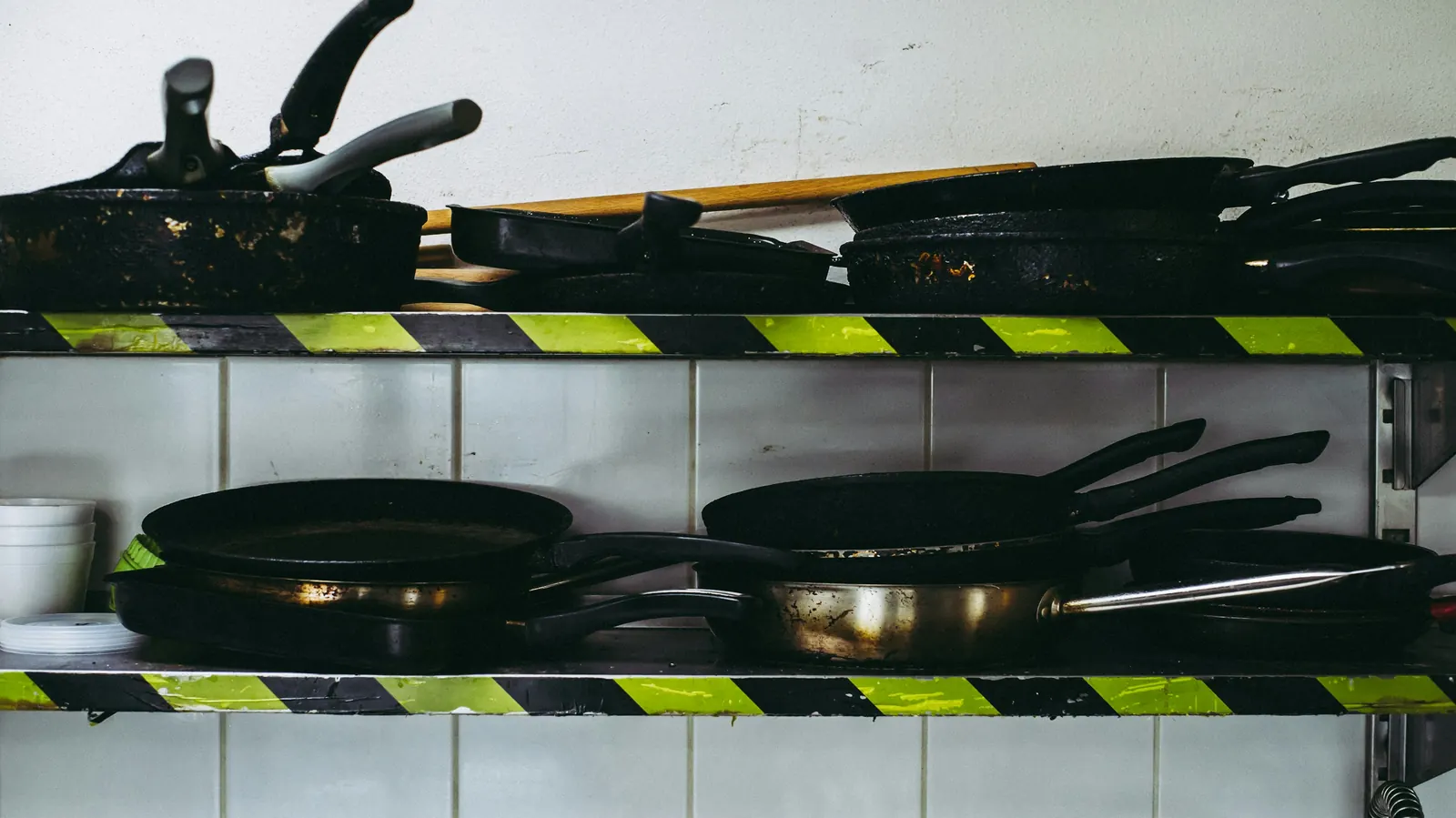
Stainless steel and nonstick pans can share a size and a shape, and some even share the same metal body underneath. The real difference is the cooking surface. Bare stainless steel is a surface you learn to work with: heat it properly and food releases, push it hard and it browns, scrape it with anything and it shrugs. Nonstick is a coating that does the releasing for you, on the condition that you keep the heat moderate, the tools soft and accept that it will wear out.
Line cooks live with both. The stainless pans get the searing and the pan sauces, and the coated pans get the eggs and the fish, and they get replaced on a schedule. This guide compares the two on heat limits, sticking, metal utensils, cleanup and lifespan, then explains what the PFAS labels on today’s nonstick pans actually say. It ends with two picks for each side.
Julia’s earns a commission on purchases made through links on this page, at no cost to you. Recommendations are based on what a restaurant kitchen looks for, product specifications and verified buyer reports.
Quick verdict: which frying pan to buy for your stove
For most home cooks the first pan should be clad stainless steel. It takes high heat, metal spatulas, the oven and the dishwasher, it builds the browned bits that make a pan sauce, and nothing on it wears off. The price of all that is technique: preheat it until a drop of water skates, then add the fat. Buy a nonstick pan as well, or first, if eggs, pancakes and delicate fish make up most of what you cook, and treat it as a pan you will replace. In practice, a stainless skillet for the main work plus one modest nonstick pan for eggs covers almost everything.
The table sets out the differences. The sections after it explain each one.
Stainless steel vs nonstick pan, side by side
| Stainless steel pan | Nonstick pan | |
|---|---|---|
| Cooking surface | Bare stainless steel, usually over an aluminum core | Factory coating: PTFE-type fluoropolymer or sol-gel ceramic |
| Heat ceiling | High; makers rate many clad pans to 500°F in the oven | Moderate; ATK advises no oven above 450°F and no broiling for PTFE |
| Release | Good once properly preheated; poor if rushed | Easy from the first day, fading as the coating ages |
| Browning and pan sauces | Builds fond for deglazing | Little fond; not meant for hard searing |
| Metal utensils | Fine; may leave cosmetic marks | Avoid; silicone or wood (ATK, Made In) |
| Dishwasher | Usually allowed; hand washing often recommended | Many makers advise against it; some ceramic pans allow it |
| Lifespan | Decades; nothing to wear off | A few years; ATK says all PTFE coatings eventually wear out |
| PFAS labeling | None on the surface | Some makers disclose PFAS in traditional coatings; ceramic pans are sold as PFAS-free |
Heat limits: the line nonstick should not cross
This is the difference that decides the most. A clad stainless pan is metal all the way through, and the limit on it is usually the handle or the lid rather than the pan. Made In lists its stainless clad pans as heat safe to 500°F in its care notes, and the Le Creuset Essential stainless listing gives the same oven figure. You can preheat stainless empty, sear in it at full flame and finish a dish under the broiler.
Traditional nonstick cannot do that. America’s Test Kitchen says PTFE “can emit toxic fumes when heated above 500 degrees,” and its advice follows from that: never broil a nonstick skillet, never put one in an oven above 450°F, and if the maker gives a lower limit, follow it. Made In tells owners of its own nonstick pans to use medium-low heat on the stove. The numbers on the box tell you what the pan survives. They are not an invitation to cook at that heat.
The practical result is that nonstick is a medium-heat pan. It is excellent for eggs, crêpes, fish and reheating tortillas or rice, and it is the wrong pan for fajitas, a hard sear on a steak or anything you want blackened. That is general kitchen sense, but it is backed by the makers’ own medium-low advice.
Sticking: technique against chemistry
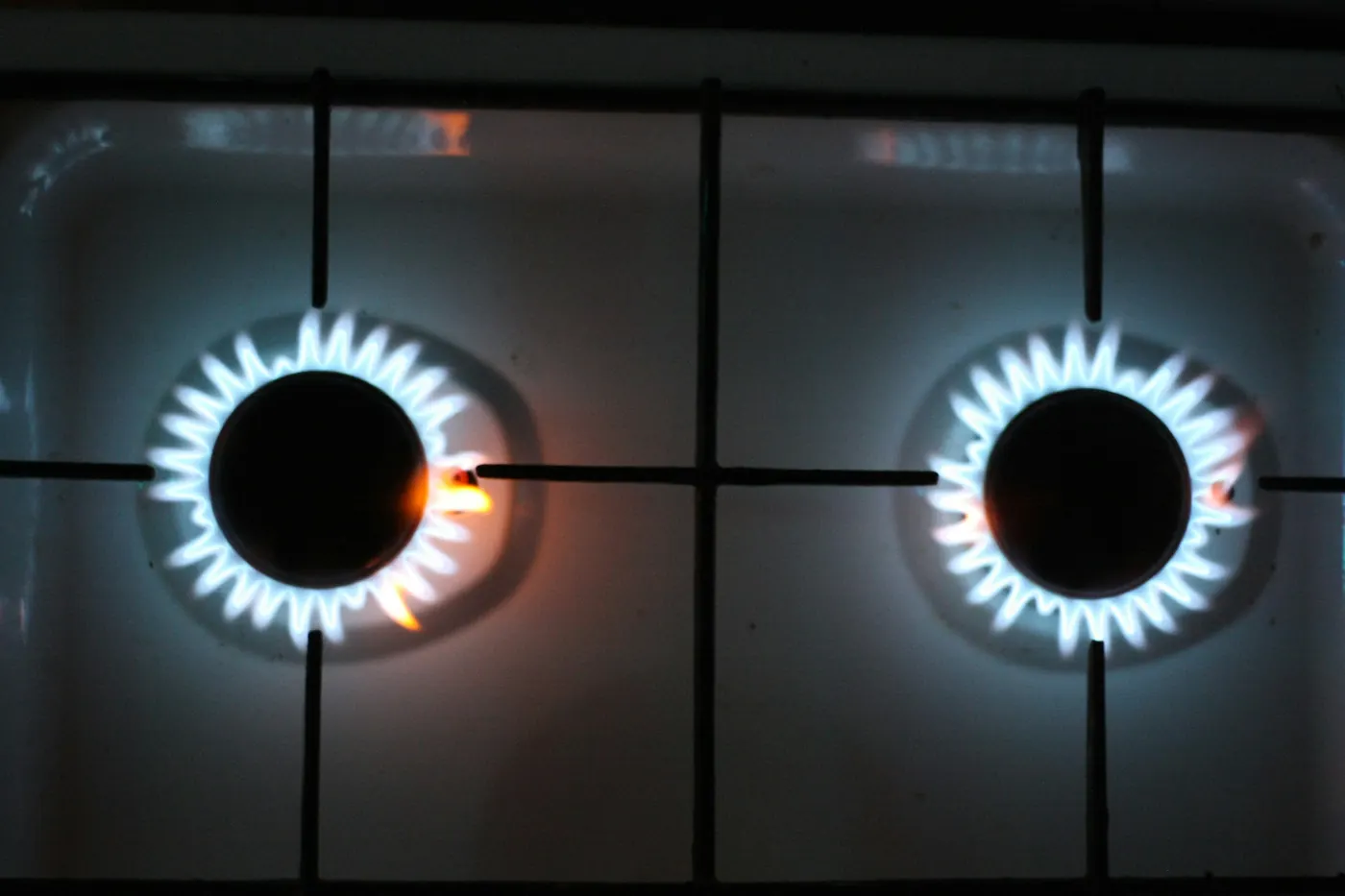
Food sticks to stainless steel when the pan is not hot enough. America’s Test Kitchen’s Lisa McManus gives the method: preheat the pan on medium for two to four minutes, then flick in a few drops of water. If the drops just sit there, the pan is too cold; if they vanish at once, it is too hot. When they roll around like little balls, add the fat and then the food. The reason is steam. The article quotes MIT’s Michael Tarkanian, who explains that at around 365 to 379°F, moisture from the food turns to steam and lifts it off the steel.
That test takes a minute and becomes habit quickly, but it is a habit you need. Rush the preheat, crowd the pan or move the food before it has seared and it will stick. With a nonstick pan, the coating does that work for you. A cold pan, a nervous cook and an egg still part company cleanly. If your household includes cooks who won’t wait for the water to dance, that is a real argument for a nonstick pan.
Ceramic nonstick is a partial exception. America’s Test Kitchen found ceramic coatings run hotter than PTFE, that food cooked faster and was more prone to sticking, and that ceramic “isn’t quite as nonstick or as durable as traditional nonstick.” Its release is easier than bare steel, but it isn’t as easy as a good PTFE coating.
Browning and pan sauces
The thing stainless does that nonstick can’t is leave something behind. When chicken thighs, chorizo or a skirt steak brown in a stainless pan, some of that browning stays stuck to the surface as fond. Pour in stock, beer or lime juice and scrape, and it becomes the base of a sauce. A coated pan releases food so well that there is little fond to collect, and its heat limit keeps the browning milder in the first place. This is general kitchen sense rather than a sourced claim, but it is the reason stainless sits on every sauté station.
Clad construction matters here. America’s Test Kitchen explains that stainless steel on its own is “sluggish to heat up or cool down,” while aluminum is very responsive. In a fully clad pan the aluminum core runs up the sides and spreads heat evenly. A pan with only a thick disc on the base tends to heat slowly and then hold too much heat. Both of our stainless picks are fully clad.
Metal utensils, scrubbing and the dishwasher
A stainless pan accepts a metal fish spatula, a whisk and a steel scrubber. The Le Creuset Essential listing says outright that the pans are safe for metal utensils and the dishwasher. Made In says its stainless clad pans can go in the dishwasher but recommends hand washing, and its warranty excludes scratches and marks from metal utensils. In other words, metal tools mark stainless without harming the way it cooks.
Nonstick asks for gentler handling. Made In says never to use metal tools on its nonstick pans because they can scratch or chip the coating, and America’s Test Kitchen recommends silicone or wooden tools. Made In also notes that most nonstick cookware is not dishwasher-friendly, because heat and harsh detergents wear the coating. Some ceramic pans are listed as dishwasher safe, including our ceramic pick, but hand washing still takes less out of any coating. If you need a thin spatula that won’t scratch, our guide to the best fish spatula for nonstick pans covers that.
Lifespan: one pan for decades, or one every few years
A well-made stainless pan has nothing on its surface to wear out. Discoloration and stuck-on spots clean off; our best stainless steel cleaner guide covers the cleansers for that. Made In backs its stainless clad pans with a lifetime warranty against defects.
Nonstick is a consumable. America’s Test Kitchen says “all PTFE coatings will eventually wear out with use” and that you will need to replace the pan periodically. In a separate article, ATK’s Hannah Crowley says the timing depends mostly on how you treat the pan, and quotes Fran Groesbeck of the Cookware and Bakeware Alliance, who suggests a quality coating can last five to seven years. ATK’s signs that it is time for a new pan: the coating flakes, it looks deeply scratched and dry, or everything starts to stick. Ceramic coatings tend to go sooner. ATK found them more likely to develop microscopic cracks than PTFE.
Count that in when you compare costs. A modest nonstick pan replaced a few times may cost more over the years than one good stainless skillet, and the stainless pan will still be in the cupboard.
PFAS: what the labels mean, in the FDA’s words
Nonstick shoppers now see two kinds of label: pans that say they are PFAS-free, and pans that disclose that they contain PFAS. Both can be accurate, because they describe different coatings. Vollrath’s product page for our restaurant-style pick carries a badge reading “Contains PFAS.” Ceramic (sol-gel) coatings are sold as PFAS-free; OXO’s listing for our ceramic pick says the coating is free of PFAS, PFOA, lead and cadmium.
The U.S. Food and Drug Administration lists nonstick cookware coatings among the food-contact uses of PFAS it has authorized, and says manufacturers must show a reasonable certainty of no harm from the intended use. The FDA explains that these coatings are polymerized and baked on at very high temperatures, a process that “vaporizes off virtually all the smaller (i.e., migratable) PFAS molecules,” and that “studies show negligible amounts of PFAS in this coating can migrate to food.” Of the uses it lists, the FDA says only grease-proofing agents in paper and paperboard could lead to dietary exposure that may be a potential safety concern.
We don’t add anything to that. If you would rather avoid PFAS in your kitchen altogether, stainless steel sidesteps the question, and ceramic nonstick is the coated option sold without it. Our live guide to nonstick pan alternatives covers bare-metal and ceramic pans in more depth.
Stoves, size and weight
Both kinds work on induction if they have a magnetic layer. Clad stainless usually does: Made In says the 430 stainless outer layer of its stainless clad pans makes them induction compatible. Many nonstick pans are plain aluminum and do not. Vollrath lists its Wear-Ever pan as not induction ready, while OXO’s Professional ceramic pan has an induction base. Check the listing if you cook on induction.
Compare cooking surfaces rather than rim sizes. Made In gives its 10-inch frying pan a 7.5-inch cooking surface, much smaller than the name suggests, and flared sides shrink every pan the same way. For a family-size batch of fajita vegetables or eggs for four, a 12-inch pan is the safer buy, which is why our nonstick picks are 12-inch pans and our stainless picks include an 8- and 10-inch pair.
Choose a stainless steel pan if… / Choose a nonstick pan if…
Choose a stainless steel pan if…
- You sear meat, brown chorizo or make pan sauces often.
- You want a pan that goes under the broiler and into a hot oven.
- You use metal spatulas and want to put the pan in the dishwasher.
- You will take a minute to preheat it properly every time.
- You would rather buy one pan than replace a coating every few years.
Choose a nonstick pan if…
- Eggs, omelets, pancakes and fish are most of what you cook.
- You cook at medium heat and want release without technique.
- You are happy to use silicone or wooden tools and wash by hand.
- You accept replacing the pan when the coating wears out.
Our picks for the stainless steel vs nonstick pan question
Two picks a side, all in stock when we checked. On the stainless side, a five-ply pan with a lid and a tri-ply pair in two sizes. On the nonstick side, one traditional fluoropolymer coating and one ceramic coating, so you can choose by coating as well as by price. Two picks are other versions of pans we cover elsewhere: the Made In pan is the lidded listing of the 10-inch pan in our stainless steel egg pan guide, chosen here because the lid is included, and the Vollrath is the 12-inch size of the 10-inch Wear-Ever on our commercial frying pan page, chosen because a 12-inch pan suits family cooking.
1. Made In 10-inch Stainless Clad Frying Pan with Lid – Five-Ply Pan That Takes Real Heat

Made In’s stainless clad frying pan is five layers of metal, made in Italy, with a stay-cool handle fastened by stainless rivets. The listing gives the 10-inch pan a total diameter of 10.5 inches, a 7.5-inch cooking surface, a 1.75-inch depth and an 18-inch length with the handle. This listing adds a lid, which the bare pan does not include.
It is the kind of pan that shows what stainless is for. Preheat it, sear chicken or shrimp, then deglaze for a sauce, and finish the dish in the oven if you like. Made In’s care notes give a heat-safe rating of 500°F. Its outer layer of 430 stainless steel makes it induction compatible. Made In says it can go in the dishwasher but recommends washing by hand.
Mind the size. A 7.5-inch cooking surface suits eggs for two, a pair of chicken thighs or a small pan sauce. For larger batches, look at 12-inch pans in our best stainless steel pans guide.
Why we like it
- Five-ply clad body (Made In)
- Heat safe to 500°F per Made In’s care notes
- Induction compatible through a 430 stainless outer layer
- Lid included with this listing
- Lifetime warranty against defects (Made In)
Key specifications
| Model | KIT-10L-FRY-ISS-AP |
|---|---|
| Cooking surface | Stainless steel |
| Body | 5-ply stainless clad |
| Size | 10.5 in overall; 7.5 in cooking surface |
| Oven safe (stated) | 500°F (Made In care notes) |
| Induction | Yes |
| Dishwasher | Allowed; hand washing recommended |
| Made in | Italy |
Why we recommend it
It suits a cook who wants one serious stainless pan for searing, sauces and oven finishes, with a lid for steaming and simmering.
Skip it if you mostly cook for four or more; the cooking surface is small, and a 12-inch pan will serve you better.
Pros and cons
Pros
- Clad build for even heat
- High heat and oven use
- Works on induction
Cons
- 7.5-inch cooking surface
- Weight of the 10-inch not stated
- Made In’s page lists two different heat ratings; we use the lower
2. Le Creuset Essential Stainless 8- and 10-inch Fry Pan Set – Two Sizes, Metal Tools Welcome

Le Creuset’s Essential stainless line is tri-ply, with an aluminum core that the listing says runs from base to rim, under a brushed stainless finish. This set pairs an 8-inch and a 10-inch fry pan, each with a stay-cool handle and a rolled, sealed rim for pouring.
The listing is plain about what stainless can take: compatible with all cooktops, oven safe to 500°F, and safe for the dishwasher and metal utensils. Those are the points where stainless beats nonstick. The 8-inch pan handles an egg or two and toasting chiles or seeds, and the 10-inch handles a sear and a quick pan sauce.
Two pans also make the stainless habit easier to learn. Preheat whichever one fits the job, do the water test, and you won’t be tempted to crowd a small pan. Le Creuset’s own enameled cast iron is a different product; this set has no enamel or glaze.
Why we like it
- Tri-ply with an aluminum core base to rim (listing)
- Oven safe to 500°F (listing)
- Dishwasher and metal-utensil safe (listing)
- All cooktops, including induction (listing)
Key specifications
| Model | ST00393000001001 |
|---|---|
| Cooking surface | Stainless steel |
| Body | Tri-ply, aluminum core |
| Size | 8 in and 10 in |
| Oven safe (stated) | 500°F |
| Induction | Yes (all cooktops) |
| Dishwasher | Yes |
| Made in | Not stated |
Why we recommend it
It suits a cook moving from nonstick to stainless who wants a small and a medium pan and no restrictions on tools or dishwasher.
Skip it if you need one large pan for family meals; neither size has room for a big batch.
Pros and cons
Pros
- Two useful sizes
- Metal tools and dishwasher allowed
- Sealed rim for pouring
Cons
- No 12-inch pan in the set
- Cooking surface and weight not stated
- Country of manufacture not stated
3. Vollrath Wear-Ever 12-inch PowerCoat2 Nonstick Fry Pan – Restaurant Nonstick for Home Eggs
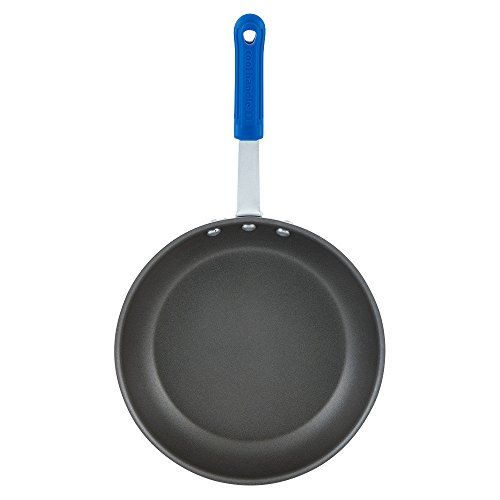
This is a restaurant-supply pan sold one at a time: an 8-gauge pan of 3004-series aluminum with Vollrath’s PowerCoat2 interior and a removable silicone Cool Handle sleeve. Vollrath describes PowerCoat2 as a dual-layer, ceramic-reinforced coating, and its product page discloses that the pan contains PFAS. It is NSF certified and made in the USA, according to Vollrath.
Vollrath lists a usable diameter of just under 11.9 inches and a usable height of 2.25 inches, so it has room for eggs for a family, a big batch of migas or several fish fillets. Thin aluminum heats quickly, which suits the medium heat a nonstick pan wants anyway.
Know its limits before you buy. Vollrath says the silicone handle sleeve is best kept to 450°F in continuous use. It is not induction ready, and Vollrath doesn’t state an oven rating or dishwasher guidance for the pan. Treat it as a stovetop egg and fish pan, keep metal tools out of it, and replace it when the coating wears, as restaurants do.
Why we like it
- Usable diameter close to 12 inches (Vollrath)
- Heavy 8-gauge aluminum (Vollrath)
- NSF certified, made in the USA (Vollrath)
- Coating content disclosed plainly on the maker’s page
Key specifications
| Model | S4012 |
|---|---|
| Cooking surface | PowerCoat2 nonstick (contains PFAS) |
| Body | 8-gauge 3004-series aluminum |
| Size | 12 in; 11.9 in usable diameter |
| Oven safe (stated) | Not stated; handle sleeve to 450°F continuous |
| Induction | No |
| Dishwasher | Not stated |
| Made in | USA |
Why we recommend it
It suits a cook on gas or electric who wants a big, plain nonstick pan for eggs and fish, built like the ones on restaurant lines.
Skip it if you cook on induction or want a PFAS-free coating; the OXO below covers both.
Pros and cons
Pros
- Large usable surface
- Commercial build
- Removable handle sleeve
Cons
- Not induction ready
- No oven or dishwasher guidance stated
- Contains PFAS, per Vollrath
4. OXO Professional 12-inch Ceramic Nonstick Frying Pan – PFAS-Free Coating, Induction Base

OXO’s Professional frying pan pairs a hard-anodized aluminum body with a diamond-reinforced ceramic nonstick coating. The listing says the coating is free of PFAS, PFOA, lead and cadmium. A heavy induction base makes it work on every stovetop, and OXO says the pan’s shape gives up to 35 percent more room to cook. The rivets are streamlined to avoid food traps.
It also has independent support. America’s Test Kitchen rated the OXO Ceramic Professional Non-Stick 12-inch Frypan “Recommended” in its 2026 ceramic skillet review and called it one of the few pans that stayed nonstick through its evaluation. That matters, because ATK’s general finding is that ceramic coatings lose their release faster than PTFE.
The listing rates it oven safe to 600°F and dishwasher safe, unusually generous for a coated pan. Even so, ceramic runs hot, so cook at medium, use silicone or wood, and expect to replace it in time.
Why we like it
- Recommended by America’s Test Kitchen (2026 ceramic review)
- Coating sold as free of PFAS, PFOA, lead and cadmium (listing)
- Induction base for every stovetop (listing)
- Oven safe to 600°F and dishwasher safe (listing)
Key specifications
| Model | CC004742-001 |
|---|---|
| Cooking surface | Diamond-reinforced ceramic nonstick |
| Body | Hard-anodized aluminum, induction base |
| Size | 12 in |
| Oven safe (stated) | 600°F |
| Induction | Yes |
| Dishwasher | Yes |
| Made in | Not stated |
Why we recommend it
It suits a cook who wants easy release for eggs and fish without a PTFE-type coating, including on induction.
Skip it if you want the slickest, longest-lasting release; ATK found PTFE pans generally stay nonstick longer than ceramic.
Pros and cons
Pros
- Independent recommendation
- Works on induction
- Generous stated oven limit
Cons
- Ceramic wears faster than PTFE, per ATK
- Weight not stated
- Country of manufacture not stated
Stainless and nonstick questions, answered
Is stainless steel better than nonstick?
For all-round cooking, usually yes: it takes higher heat, metal tools and the dishwasher, it browns better and it lasts for decades. Nonstick is better at one job, easy release at medium heat, which is why many kitchens keep one alongside a stainless pan.
Why does everything stick to my stainless steel pan?
Almost always because it went in before the pan was hot enough. Preheat on medium for two to four minutes, test with a few drops of water, and add fat and food once the drops roll around, as America’s Test Kitchen describes. Let food sear before you try to move it.
Can you use a nonstick pan on high heat?
No. America’s Test Kitchen warns that PTFE can give off toxic fumes above 500°F, and Made In recommends medium-low heat for nonstick. Use stainless, cast iron or carbon steel for high-heat searing.
Is ceramic nonstick the same as Teflon-type nonstick?
No. Ceramic coatings are sold as PFAS-free, while traditional nonstick uses a fluoropolymer. America’s Test Kitchen found ceramic less slick and less durable than traditional nonstick, though some ceramic pans, including the OXO above, held up well.
Do I need both a stainless and a nonstick pan?
Not strictly, but the pair covers almost everything. If you buy one, buy stainless and learn the preheat; add a modest nonstick pan for eggs when you can, and replace it when the coating gives out.
Which pan earns the front burner
Give the front burner to stainless. It sears, deglazes, goes into the oven, takes a metal spatula and outlasts any coating, and the one skill it asks for takes a week to learn. Keep a nonstick pan for the jobs it does best, eggs and fish at medium heat, and replace it without regret when it stops releasing. Our best frying pan guide compares every material side by side, and our best nonstick pans guide goes deeper on coatings. If you would rather leave the cooking to us, see the menu or call to order.