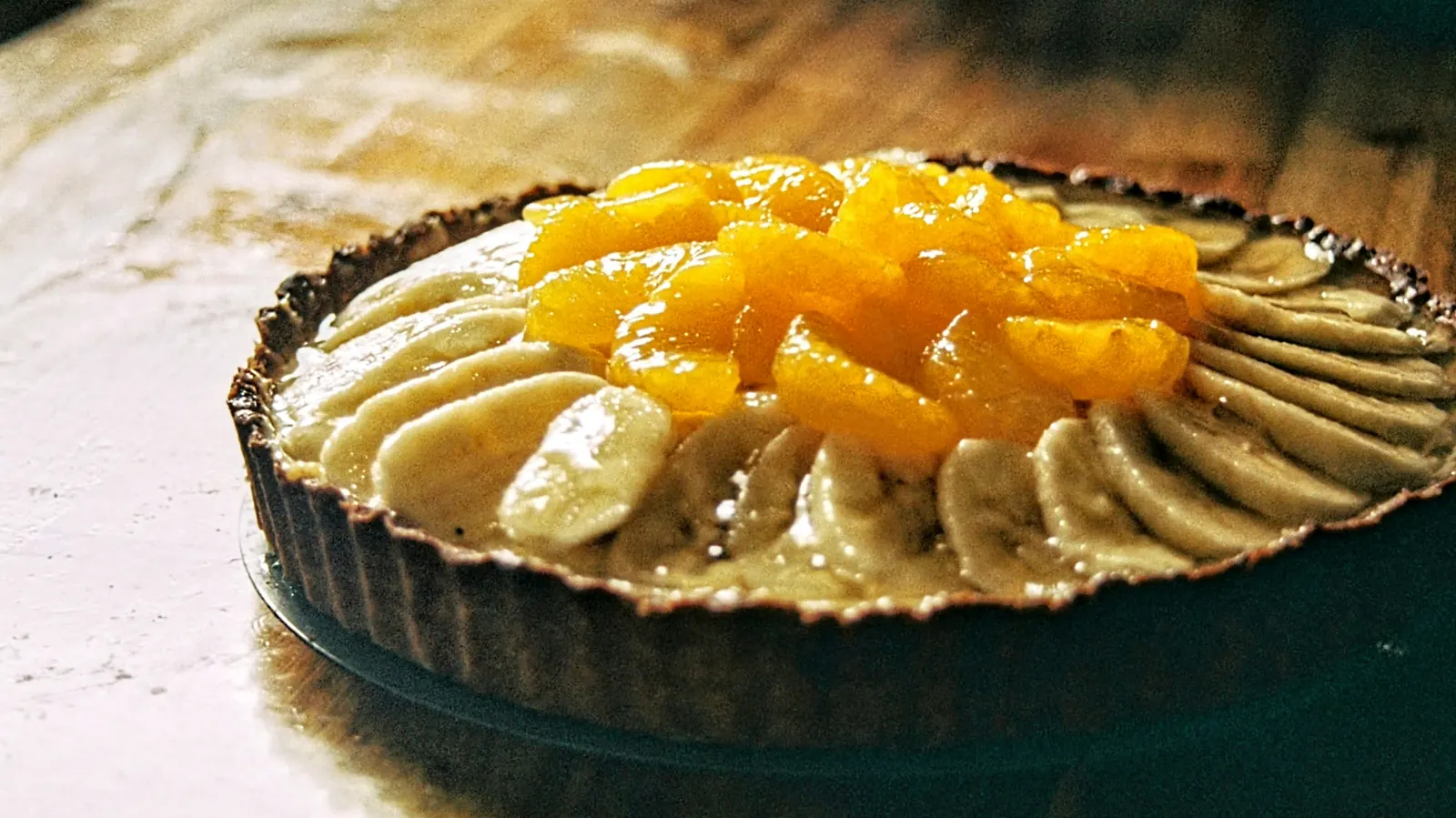
A tart pan does two things a pie dish does not. Its low, straight, fluted wall shapes a crisp shell, and its loose bottom lets you lift the finished tart out and serve it bare on a plate. If you do not own one, you can still bake a good tart. You just need to decide which of those two jobs matters for the recipe in front of you.
This guide covers the tart pan alternative that suits each kind of tart, what each one gives up, and where the advice comes from: The Bake School, America’s Test Kitchen and King Arthur Baking, read directly. Where something is our own kitchen sense rather than a source’s, we say so.
Julia’s earns a commission on purchases made through links on this page, at no cost to you. Recommendations are based on what a restaurant kitchen looks for, product specifications and verified buyer reports.
Why bake a tart without a tart pan
If you bake tarts often, a real two-piece pan is still the easiest tool, and our best tart pan guide covers the ones worth buying. America’s Test Kitchen’s tart pan review explains why: the two-part design, a flat base and a fluted ring, “makes it easier to create neat, tidy slices.” People look for something else anyway, for plain reasons:
- The recipe calls for one and you do not have one. Most tart recipes can move to another pan if you accept a different look or a different way of serving.
- Storage. A tart pan does one job. A pie plate, a springform, a sheet pan or a skillet does many.
- Leaks and lost bottoms. Loose-bottom pans can let butter run out, and the base is easy to misplace.
- The tart is a different shape. A deep tart, a free-form galette or an upside-down tarte Tatin never needed a tart pan in the first place.
Quick verdict: the best tart pan alternative
For most bakers, the best tart pan alternative is a bottomless tart ring set on a lined sheet pan, such as the de Buyer 8-inch perforated tart ring. The Bake School calls a tart ring “the best replacement for a tart pan” and says it is what pastry professionals use. For a deep tart, use a 9-inch springform pan. If you will serve from the dish, a glass pie plate works, though you will not unmold the tart. For a free-form galette, all you need is a sheet pan and parchment. For tarte Tatin, use a cast iron skillet. If you bake classic fluted tarts every month, buy a tart pan instead.
Five tart pan stand-ins at a glance
One pick per approach, with the details each maker or listing states.
| Pan | Tart style | How it comes out | Main limit | Buy on Amazon |
|---|---|---|---|---|

de Buyer 8-Inch Perforated Tart RingBest overall
|
Classic straight-sided tart | Ring lifts off the shell | Smooth sides, no flutes; 8 in only | View on Amazon |

Cuisinart 9-Inch Chef’s Classic Springform PanBest for deep tarts
|
Deep-dish tarts | Side unlatches, base stays | Tall wall; press crust partway up | View on Amazon |

Anchor Hocking 9.5-Inch Glass Pie Plates, Set of 2Best serve-in dish
|
Custard, quiche, cream tarts | Does not; serve from the dish | Sloped sides, no clean unmolding | View on Amazon |

USA Pan Nonstick Half Sheet Pans, Set of 2Best for galettes
|
Free-form galette | Slides off on parchment | Rustic shape, no walls | View on Amazon |

Lodge 9-Inch Cast Iron SkilletBest for tarte Tatin
|
Upside-down caramel tarts | Flipped onto a plate | Heavy; only for flip-out tarts | View on Amazon |
Product images from Amazon. Details are as stated by each maker or listing. Check the listing before you buy.
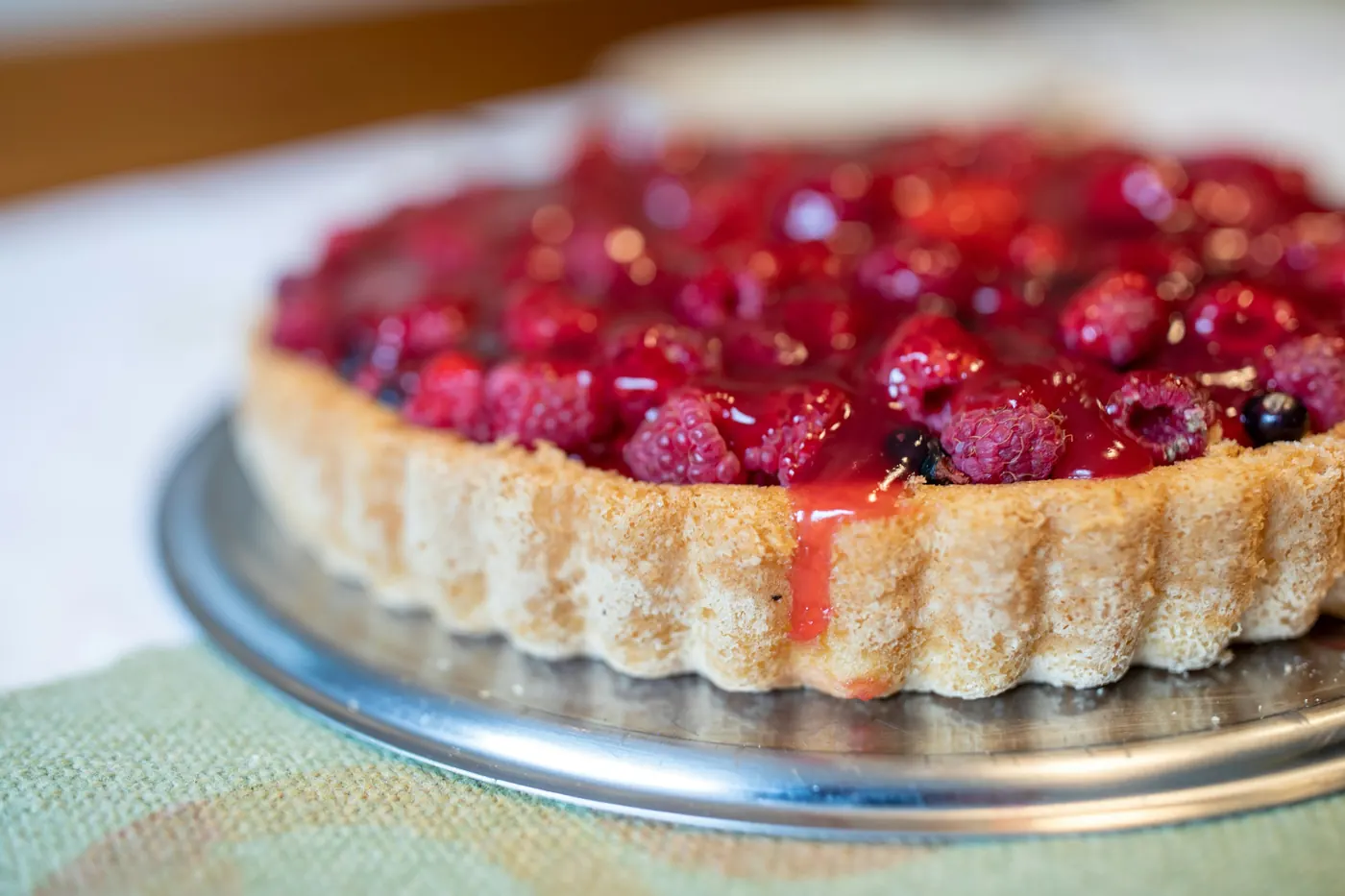
What changes when you leave the tart pan out
Three things change, and each alternative trades them differently.
- Getting the tart out. A tart pan’s whole point is the loose base. The Bake School’s Janice Lawandi notes that with a pie plate you usually cannot unmold the tart and must serve it in the dish. A tart ring and a springform both release; a galette never needed releasing; a tarte Tatin is turned out upside down.
- The wall. Tart pans have short, straight, fluted sides. A pie plate’s sides slope, a springform’s are tall and straight, and a ring’s are short and smooth. As general kitchen sense, a shell pressed partway up a tall wall still looks like a tart once the side comes off; a shell in a sloped dish looks like a pie.
- Heat. America’s Test Kitchen preferred steel tart pans because steel conducts heat more slowly than aluminum; in its review, a lemon tart filling in an aluminum pan bubbled at the edge before the center set. Glass and cast iron each behave differently again. Watch the first bake in any new pan and judge doneness by the filling, not the clock.
Size matters less than people fear. America’s Test Kitchen says standard tart pans run from 8 to 10 inches, and that 8- and 10-inch models work fine with a 9-inch recipe; the tart is just thicker or thinner.
Our picks for the best tart pan alternative
We chose one pan per approach from makers that state what their pans are made of: de Buyer, Cuisinart, Anchor Hocking, USA Pan and Lodge. Each was in stock on Amazon US, sold new, when we checked. Specifications come from the listings; technique comes from the named sources or is labeled as general kitchen sense. We have not baked in every pan here.
1. de Buyer 8-Inch Perforated Tart Ring – What Pastry Chefs Use Instead
A tart ring is a tart pan without the bottom. The Bake School calls it “the best replacement for a tart pan” and says pastry chefs set the ring on a parchment-lined baking sheet, bake the tart in it, let it cool there, and then lift the ring away. You get the same straight wall and a shell that comes free, with nothing to push up from underneath.
De Buyer’s ring (model 3099.08) is 8 inches across and 0.8 inch high, made in France, and was designed with l’Ecole du Grand Chocolat Valrhona, according to the listing. The wall is perforated; de Buyer says the holes let steam escape for a crisp crust and that tarts slip right off after baking. The listing does not state the metal or an oven limit.
Two practical notes. The ring is smooth, so the edge will not have flutes. And at 8 inches it suits recipes written for 8- to 9-inch pans; America’s Test Kitchen says an 8-inch pan works fine for a 9-inch recipe, with a slightly thicker tart. Set it on a flat sheet pan, such as the one in pick 4.
Why we like it
- The Bake School names the tart ring as the best tart pan substitute
- Perforations let steam escape, per de Buyer
- Made in France
- No loose base to lose or leak
Key specifications
| Model | 3099.08 |
|---|---|
| Type | Bottomless perforated tart ring |
| Material | Metal (grade not stated in listing) |
| Size | 8 in diameter, 0.8 in high |
| Release | Ring lifts off |
| Oven limit | Not stated |
| Made in | France |
| Warranty | Not stated |
Why we recommend it
It suits a baker who wants a real tart shell, straight sides and clean slices, and who already owns a flat baking sheet.
Skip it if you want fluted edges or a 10- to 11-inch tart; this ring is smooth and 8 inches.
Pros and cons
Pros
- Closest result to a tart pan
- Steam vents for a crisper shell
- Small and easy to store
Cons
- No flutes; one size
- Metal and oven limit not stated
- Sold by a third-party seller when we checked
2. Cuisinart 9-Inch Chef’s Classic Springform Pan – Deep Tarts That Still Release
A springform is the other pan with a removable side, and The Bake School recommends it for deep-dish tarts. Press the dough across the base and partway up the wall, fill and bake, then unlatch the side once the tart has cooled. The tart stays on the flat base, which you can set on a plate.
Cuisinart’s pan (model AMB-9SPCH) is heavy-gauge 1 mm aluminized steel with a Whitford Xylan nonstick coating inside and out, and thick rolled edges that Cuisinart says prevent warping. The listing says it is dishwasher safe and carries a lifetime warranty. It does not state an oven limit or the wall height.
As general kitchen sense, a springform’s wall is much taller than a tart’s, so the pastry edge will be as high as you press it, not as high as the pan. Keep the shell even and stop at the height you want. A springform does not give fluted sides either. This is the champagne-finish listing of the Chef’s Classic 9-inch springform that our best springform pan guide reviews in its standard finish; we include it because a springform is the deep-tart answer and this one was sold by Amazon when we checked. That guide compares more models.
Why we like it
- The Bake School recommends a springform for deep tarts
- Aluminized steel with a named nonstick coating
- Dishwasher safe
- Lifetime warranty, per the listing
Key specifications
| Model | AMB-9SPCH |
|---|---|
| Type | Springform pan |
| Material | 1 mm aluminized steel, Xylan nonstick |
| Size | 9 in |
| Release | Side unlatches, base stays |
| Oven limit | Not stated |
| Made in | Not stated |
| Warranty | Lifetime |
Why we recommend it
It suits a cook who bakes deep tarts, quiches and cheesecakes and wants one pan that does all three.
Skip it if you want a thin, classic fruit tart; the tall wall makes a shallow shell fiddly.
Pros and cons
Pros
- Removable side, like a tart pan
- Also bakes cheesecake
- Sold by Amazon when we checked
Cons
- Wall far taller than a tart’s
- Oven limit not stated
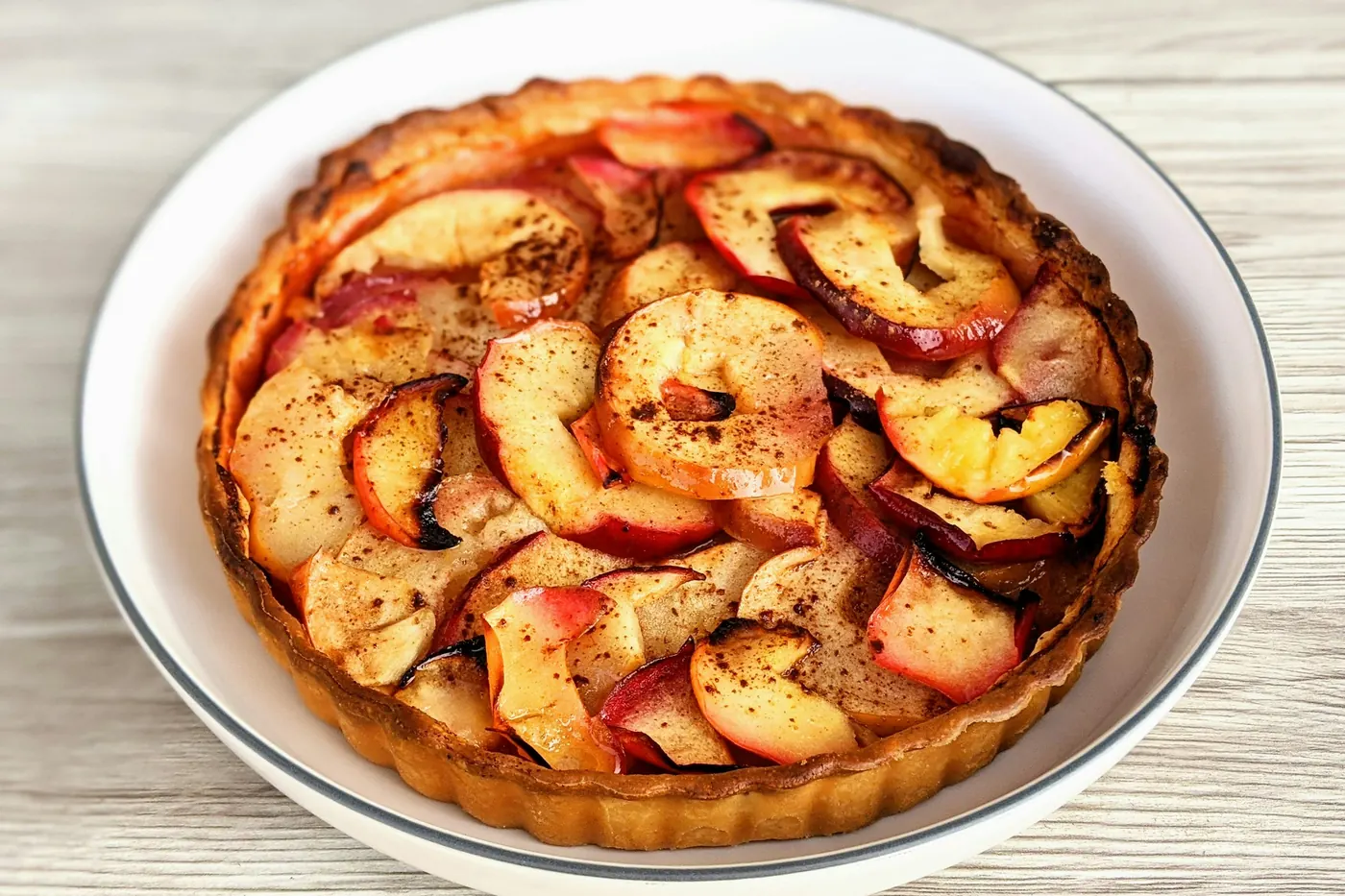
3. Anchor Hocking 9.5-Inch Glass Pie Plates, Set of 2 – Bake and Serve in One Dish
A pie plate is the alternative most people already own. The Bake School’s view is honest: it works, but it is not ideal, because you usually cannot unmold the tart and have to serve it in the dish. That makes it a good fit for tarts that are cut and lifted out in wedges anyway, such as quiche, custard tarts and cream tarts.
Anchor Hocking’s set (item 15195ECOM) is two 9.5-inch pie plates in tempered glass, made in the USA. The listing says they are oven, microwave and dishwasher safe and names pies, quiches and tarts as uses. It does not state an oven limit or depth. America’s Test Kitchen describes a classic pie plate as one continuous piece of glass, ceramic or metal, which is exactly why it cannot release a tart the way a two-piece pan does.
As general kitchen sense, clear glass lets you see whether the bottom crust has browned, which is handy when you blind bake. The sloped side gives a pie look rather than a tart’s straight edge. Our best pie dish guide covers metal and ceramic options too.
Why we like it
- Two plates in one set
- Tempered glass, made in the USA
- Oven, microwave and dishwasher safe
- Sold by Amazon when we checked
Key specifications
| Model | 15195ECOM |
|---|---|
| Type | Pie plate, set of 2 |
| Material | Tempered glass |
| Size | 9.5 in |
| Release | None; serve from the dish |
| Oven limit | Not stated |
| Made in | USA |
| Warranty | Not stated |
Why we recommend it
It suits a home cook making quiche or a custard tart for the family table, where serving from the dish is fine.
Skip it if you want to set the tart on a platter; it will not come out whole.
Pros and cons
Pros
- See the bottom crust as it browns
- Useful for pies and quiche all year
- Two dishes
Cons
- No unmolding
- Sloped sides look like pie
4. USA Pan Nonstick Half Sheet Pans, Set of 2 – A Galette Needs No Tart Pan
The simplest answer to “no tart pan” is a tart that never used one. America’s Test Kitchen’s Tess Berger describes the galette as a free-form, single-crust pie: roll the dough to a 12-inch circle, pile the filling in the middle leaving a 2-inch border, fold the border up over the filling without pressing it in, and bake on a parchment-lined baking sheet. If juice leaks, she writes, it caramelizes on the sheet. King Arthur Baking’s Rossi Anastopoulo makes the same point about small fold-up tarts, under the heading “No pie pan required.”
USA Pan’s half sheet (model 1050HS) is heavy-gauge aluminized steel with a corrugated surface and USA Pan’s nonstick silicone coating. The baking surface is 17.25 x 12.25 inches with a 1-inch rim, made in the USA from globally sourced materials, with a limited lifetime warranty, per the listing. This set has two pans. The same flat sheet is also what a tart ring sits on, so it pairs with pick 1. This is the two-pack listing of the USA Pan nonstick half sheet found singly in our nonstick baking pan guide; we chose the pair so one pan can hold a galette and the other a tart ring.
As general kitchen sense, use parchment even on a nonstick sheet; it lets you slide the galette onto a rack and keeps leaked sugar off the coating. Our best parchment paper guide covers sheets and rolls.
Why we like it
- ATK and King Arthur both bake fold-up tarts on a sheet
- Two pans, so one can hold a tart ring
- Made in the USA, per the listing
- Limited lifetime warranty
Key specifications
| Model | 1050HS |
|---|---|
| Type | Half sheet pan, set of 2 |
| Material | Aluminized steel, silicone nonstick |
| Size | 17.25 x 12.25 x 1 in baking surface |
| Release | Slides off on parchment |
| Oven limit | Not stated |
| Made in | USA, globally sourced materials |
| Warranty | Limited lifetime |
Why we recommend it
It suits anyone who likes fruit tarts more than fussing with crust edges, and anyone who wants a pan that does cookies and roasting the rest of the week.
Skip it if the recipe needs a wall to hold a liquid filling, such as custard or quiche.
Pros and cons
Pros
- No crimping, no unmolding
- Pairs with a tart ring
- Everyday pan beyond baking
Cons
- No walls for runny fillings
- Rustic look, not a neat tart
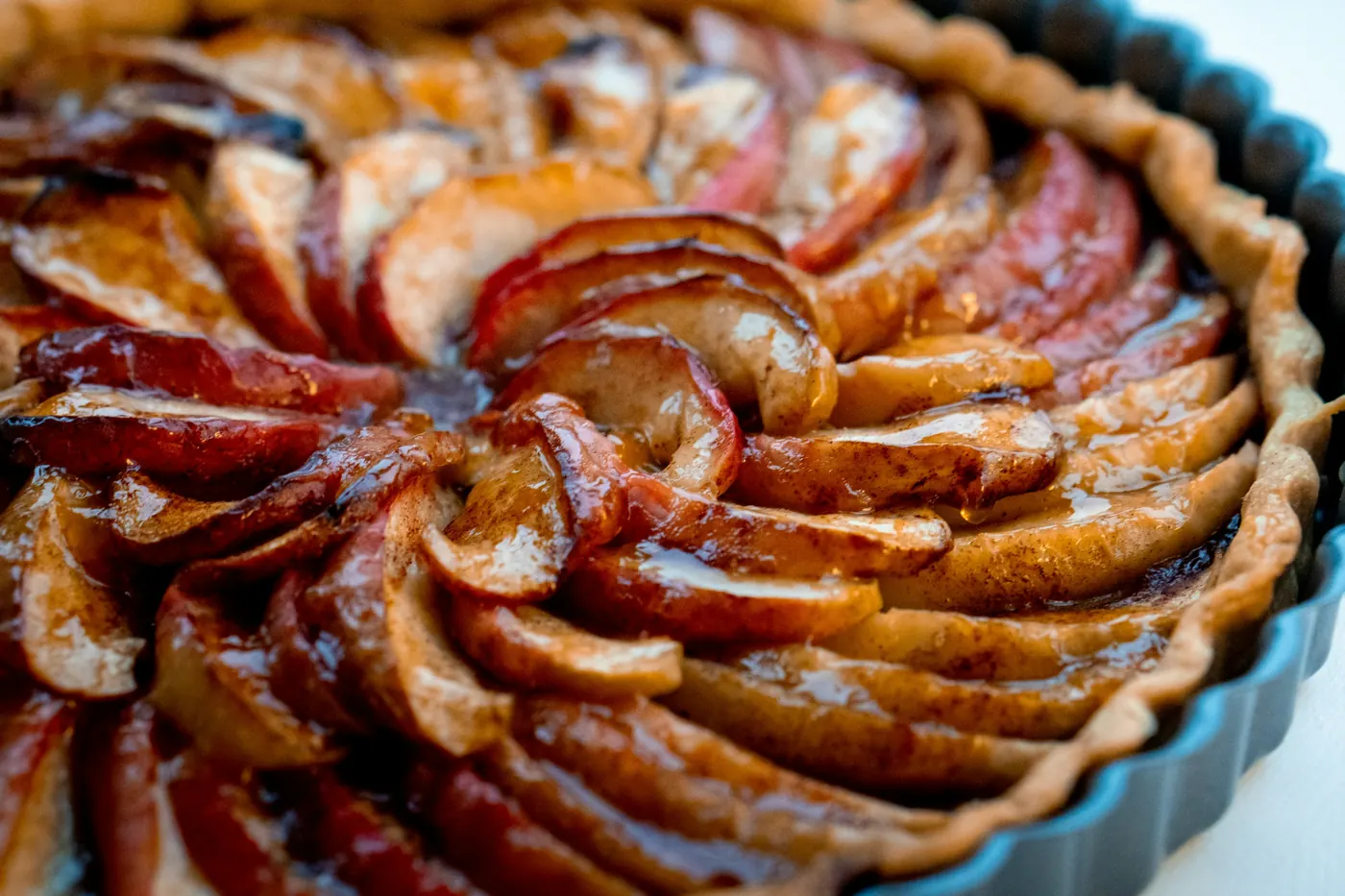
5. Lodge 9-Inch Cast Iron Skillet – For Tarts You Turn Upside Down
Some tarts are not made in a tart pan even in France. The Bake School points out that apple tarte Tatin is made in a large skillet and flipped out to serve: the fruit cooks in caramel in the pan, the pastry goes on top, and after baking the whole thing is turned onto a plate so the fruit faces up.
Lodge’s 9-inch skillet (model L6SK3) is cast iron, pre-seasoned, made in the USA, oven safe and stovetop compatible, with a lifetime warranty, per the listing. Being able to go from burner to oven is what a Tatin needs. A 9-inch pan suits a smaller Tatin; as general kitchen sense, a recipe written for a larger skillet will need less fruit and a smaller round of pastry.
Also general kitchen sense: cast iron is heavy and holds heat, so use two thick oven mitts and a plate wider than the pan when you flip. It is the right pan only for the upside-down style; it will not give you a shell you can fill.
Why we like it
- The Bake School names a skillet for tarte Tatin
- Goes from stovetop to oven
- Made in the USA
- Lifetime warranty, per the listing
Key specifications
| Model | L6SK3 |
|---|---|
| Type | Skillet |
| Material | Pre-seasoned cast iron |
| Size | 9 in |
| Release | Flip onto a plate |
| Oven limit | Not stated (oven safe) |
| Made in | USA |
| Warranty | Lifetime |
Why we recommend it
It suits a cook who wants tarte Tatin or other upside-down fruit tarts, and who will use the skillet for cornbread and searing the rest of the time.
Skip it if you need a filled shell; a skillet only works for tarts baked upside down.
Pros and cons
Pros
- Caramel and bake in one pan
- Useful far beyond dessert
- Sold by Amazon when we checked
Cons
- Heavy to flip
- One tart style only
Which stand-in fits which tart
- Fruit tart on pastry cream, or a lemon tart. Use the tart ring on a sheet. These are served bare, so you want the shell to come free. If you only have a springform, press the dough low and even.
- Quiche and custard tarts. A springform if you want to unmold; a glass pie plate if you will serve from the dish.
- Rustic fruit tarts. A galette on a sheet pan. No pan shape to match at all.
- Tarte Tatin. A skillet that can go from stove to oven.
- Little tarts. America’s Test Kitchen’s pecan tartlets use six 4-inch tart pans with removable bottoms; without them, King Arthur’s small fold-up tarts on a baking sheet are the pan-free route.
Whatever you use, let the tart cool before moving it. The Bake School says a warm shell is more fragile, and that the way to free a tart is to set it on something sturdy and narrower than the base, such as an inverted bowl or a glass, and slide the ring down.
Tart pan alternative questions, answered
Can I bake a tart in a pie pan?
Yes, but The Bake School says you usually cannot unmold it, so plan to serve it from the dish. The sloped sides also give it the look of a pie rather than a straight-sided tart.
Can I use a springform pan instead of a tart pan?
Yes. The Bake School recommends a springform for deep-dish tarts. Press the dough across the base and partway up the side, then unlatch the ring once the tart has cooled.
How do you bake a tart without a tart pan?
Set a tart ring on a parchment-lined baking sheet, as pastry chefs do, or skip the pan and make a free-form galette on the sheet, as America’s Test Kitchen describes. For tarte Tatin, use an ovenproof skillet.
Does the size have to match the recipe?
Not exactly. America’s Test Kitchen says 8- and 10-inch tart pans work fine for a 9-inch recipe; the tart is thicker or thinner. Judge doneness by the crust and filling.
Is a tart ring the same as a tart pan?
No. A tart ring has no bottom and sits on a baking sheet, while a tart pan has a separate loose base. The Bake School says the ring is the closest substitute and the one professionals use.
Our last word on baking a tart without a tart pan
The right tart pan alternative depends on the tart. A ring on a sheet pan gets you closest to the real thing; a springform handles deep tarts; a pie plate is fine if you serve from it; a sheet pan makes a galette; a skillet makes a Tatin. If you find yourself wanting fluted edges every month, pick a pan from our best tart pan guide, and keep a flat sheet from our best baking sheets guide for the ring and the galette.
And if you would rather someone else made dessert, see the menu or call to order.