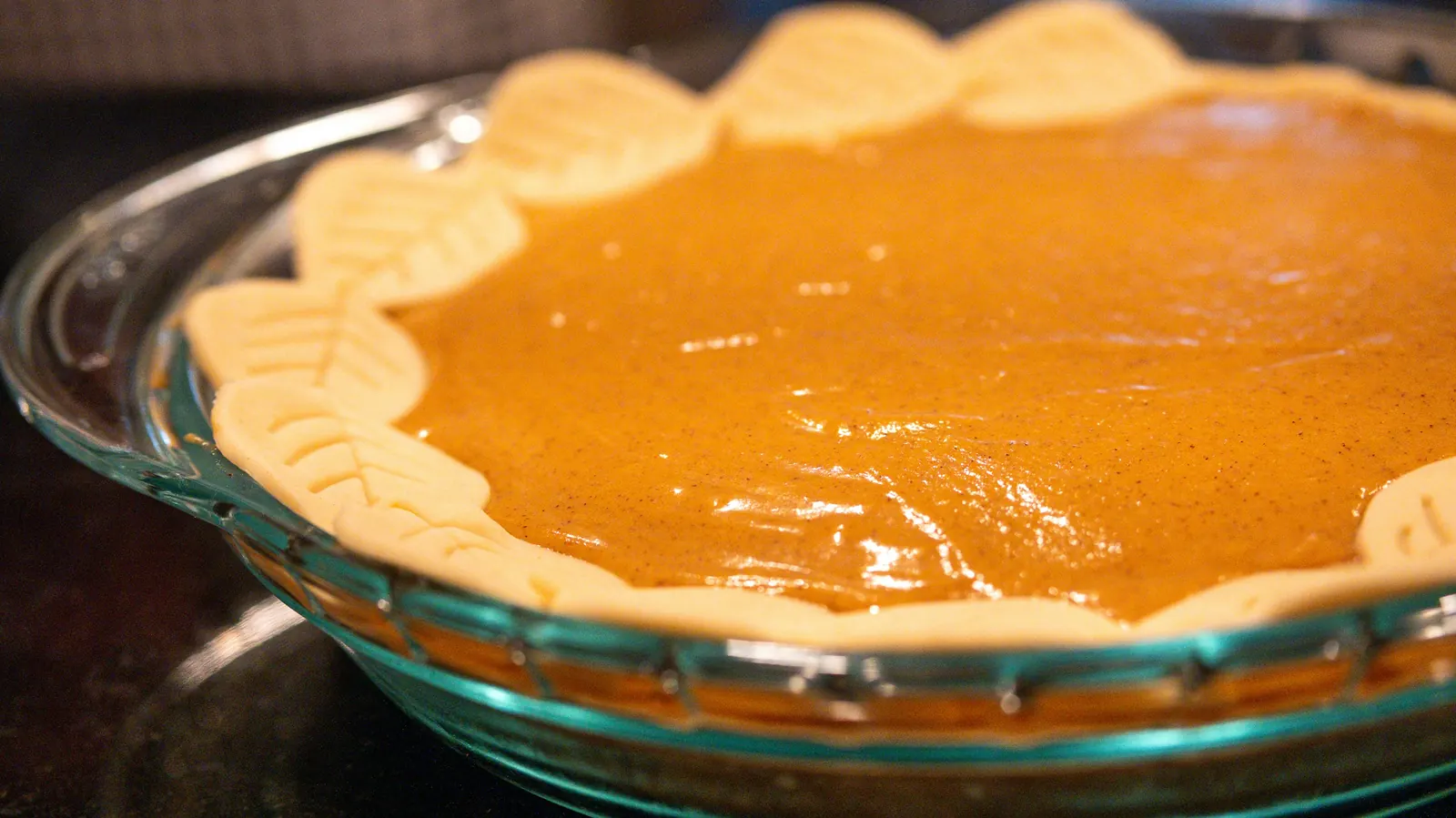
A pie dish looks like the simplest thing in the cupboard, but the material decides how the bottom crust turns out. Metal heats fast and browns evenly, glass lets you see the bottom before you pull it, and glazed clay holds heat and goes to the table looking finished. In a Mexican-American kitchen the same round dish bakes more than apple pie: a pay de queso with its crumb or pastry crust, a sweet potato or pumpkin pie for the holidays, a quiche-style tarta for brunch, or a pecan pie at Thanksgiving.
This guide compares glass, ceramic, porcelain and metal pie plates from makers we could identify. For each one we list the diameter, depth, rim, oven limit and dishwasher rule the maker or its listing states, and where a listing leaves something out, we say so.
Julia’s earns a commission on purchases made through links on this page, at no cost to you. Recommendations are based on what a restaurant kitchen looks for, product specifications and verified buyer reports.
Quick verdict: the best pie dish for most bakers
For one plate that handles most pies, buy the Pyrex 9.5-inch Deep and Easy Grab Glass Pie Plate Set: two clear glass plates that show you when the bottom crust has browned, one with a fluted edge for crimping and one deeper for tall fillings. If crisp, evenly browned crusts matter most, choose the USA Pan 9-inch Aluminized Steel Pie Pan. If the pie goes straight to the table, the Emile Henry 10.5-inch Ruffled Pie Dish is made in France and rated to 520°F.
The table below compares our five standout pie plates, one for each kind of baker. All eight are reviewed in full after it.
Five pie plates compared
One pick for each way you might bake a pie, with the size, material and oven limit each maker or listing states.
| Pie plate | Best for | Size | Material & oven limit | Buy on Amazon |
|---|---|---|---|---|
| Fruit pies, pumpkin, pay de queso | 9.5 in; depth not stated | Glass; preheated oven, no broiler, per Pyrex | View on Amazon | |

OXO Good Grips 9-inch Glass Pie Plate with LidBest with a lid
|
Make-ahead and frozen pies | 9 in, 1.4 qt | Borosilicate glass; limit not stated | View on Amazon |

Emile Henry 10.5-inch Ruffled Pie DishBest ceramic
|
Deep pies served at the table | 10.5 x 2.5 in | Glazed clay; up to 520°F and broiler | View on Amazon |
USA Pan 9-inch Aluminized Steel Pie PanBest metal
|
Crisp, evenly browned crusts | 9 x 1.5 in | Silicone-coated steel; up to 450°F | View on Amazon |
| Bakery-style crusts, two at once | 9 x 1.5 in, two pans | Anodized aluminum; limit not stated | View on Amazon |
Product images from Amazon. Sizes, materials and oven limits are as stated by the maker or its Amazon listing; check the listing before you buy. Glass and ceramic follow their makers’ preheating and broiler rules; see each review.
Our picks for the best pie dish, by material
These eight pie plates cover glass in three forms, glazed clay, fine porcelain, coated and uncoated metal, and a covered pan for carrying. For glazed ceramic and porcelain we picked only makers that state their materials are lead-free or food-safe; that is their claim, noted in each review. “Not stated” means the maker or listing does not give the figure.
1. Pyrex 9.5-inch Deep and Easy Grab Glass Pie Plates, 2-Pack – Watch the Bottom Crust Brown

This Pyrex set gives you two clear glass pie plates, both 9.5 inches across: a fluted Easy Grab plate and a non-fluted Deep plate with wide handles. Pyrex says the Deep plate is up to 60 percent deeper than its Basic and Easy Grab dishes, which gives a generous fruit filling or a pumpkin or sweet potato pie more room. The fluted Easy Grab rim gives you a guide for crimping and a place to grip.
The reason so many bakers start with glass is visibility. In King Arthur Baking’s comparison of pie plates, Rossi Anastopoulo notes that the clear material lets you check how brown your crust is getting, and suggests glass for fruit pies like apple that bake a long time. In the same comparison, glass gave a darker but less even bottom crust than metal, because glass is slower to heat but holds heat well.
The listing calls the set dishwasher, microwave and freezer safe and says the tempered glass goes directly into a preheated oven, but it gives no maximum temperature. Pyrex also says to preheat the oven before the dish goes in, to avoid sudden temperature changes, and not to use its glass under a broiler or on a stovetop. That matters for a chilled crust: let the plate sit out briefly rather than moving it from freezer to a hot oven, which Pyrex advises against.
Why we like it
- Clear glass shows bottom-crust browning
- Fluted Easy Grab plate for crimping and grip
- Deep plate for tall fillings
- Two plates in the box
Key specifications
| Model | 1149534 |
|---|---|
| Material | Tempered glass |
| Diameter | 9.5 in |
| Depth | Not stated |
| Fluted rim | Easy Grab yes; Deep no |
| Max temp (stated) | Not stated; preheated oven, no broiler, per Pyrex |
| Dishwasher-safe | Yes, per the listing and Pyrex |
Why we recommend it
Buy it if you bake fruit, custard and holiday pies and want to see the bottom crust before you pull the pie.
Skip it if your priority is the most even, crisp bottom crust; King Arthur’s comparison found metal browned more evenly.
Pros and cons
Pros
- See-through base
- One fluted plate, one deep plate
- Two plates in the box
Cons
- No broiler or stovetop use
- Less even browning than metal
- Depth and heat limit not stated
2. OXO Good Grips 9-inch Glass Pie Plate with Lid – Freezer to Oven, Lid for Storage
OXO’s pie plate solves two small problems with glass. It is made of borosilicate glass, which the listing says withstands extreme temperature changes without the risk of cracking or shattering, and OXO markets it as freezer-to-oven safe. Iowa State University Extension notes that OXO uses thermal-shock-resistant borosilicate glass, while much of the glass bakeware sold in the United States is tempered soda-lime glass.
That makes it a good plate for bakers who freeze an unbaked crust or a whole pie ahead of a holiday. It also comes with a leakproof lid, so a half-finished pay de queso or a quiche goes into the refrigerator covered, in the dish it baked in. The 9-inch size is marked on the glass, it holds 1.4 quarts, and the generous rim gives a secure, comfortable grip.
The listing says the plate is microwave, dishwasher and freezer safe. It does not state a maximum oven temperature or say whether the rim is fluted; the lid is for storage, not the oven.
Why we like it
- Borosilicate glass, freezer to oven, per OXO
- Leakproof lid included
- Generous rim for a secure grip
- Dishwasher, microwave and freezer safe
Key specifications
| Model | 11249100 |
|---|---|
| Material | Borosilicate glass |
| Diameter | 9 in (1.4 qt) |
| Depth | Not stated |
| Fluted rim | Not stated (generous rim) |
| Max temp (stated) | Not stated |
| Dishwasher-safe | Yes |
Why we recommend it
Choose it if you make crusts or whole pies ahead and freeze them, or want to store leftovers in the same plate.
Skip it if you need a published temperature limit; the listing does not give one.
Pros and cons
Pros
- Freezer-to-oven glass, per OXO
- Lid for storage
- Dishwasher safe
Cons
- No stated oven limit
- Depth not stated
3. Emile Henry 10.5-inch Ruffled Pie Dish – Deep French Clay for the Table
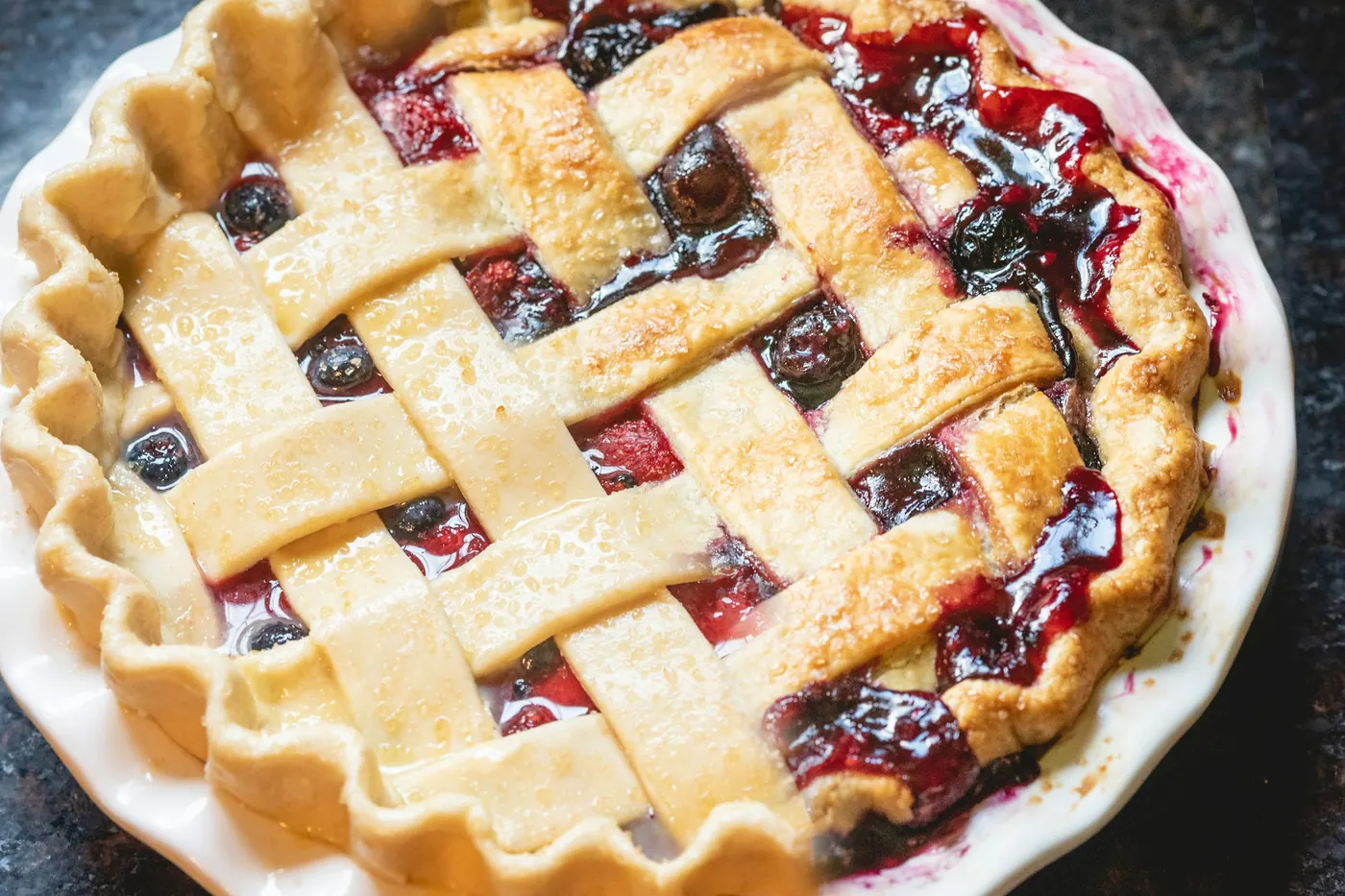
Emile Henry’s ruffled dish is larger and deeper than a standard pie plate: 10.5 inches across and 2.5 inches deep, which the maker’s Clay-color listing gives as 1.25 quarts. That depth suits a tall apple pie, a deep-dish chicken pot pie, or a generous pay de queso that you want to cut into neat, thick wedges. The ruffled edge is the decoration, so the pie looks finished on the table.
The dish is made in France from what Emile Henry calls high-fired Burgundy clay using its HR (high resistance) ceramic. The listing rates it for oven use up to 520°F, for the broiler and microwave, and says it can go directly from the freezer or refrigerator into a hot oven, which is Emile Henry’s claim for its own clay. The glaze is described as extremely hard, scratch-resistant and not prone to crazing, the dish is dishwasher safe, and it carries a 10-year guarantee against manufacturing defects in household use. On materials, Emile Henry’s US customer-service page says its raw materials are food-safe and meet strict food-use regulations, including California’s Proposition 65.
Expect ceramic to bake differently from metal. In King Arthur Baking’s pie plate comparison, the ceramic-baked crust was far from soggy but had the least even browning of the three, with a pale center.
Why we like it
- Deep: 10.5 x 2.5 inches
- Rated to 520°F and broiler safe, per the listing
- Freezer to oven, per Emile Henry
- Made in France, 10-year guarantee
Key specifications
| Model | 346187 |
|---|---|
| Material | Glazed Burgundy clay (HR ceramic) |
| Diameter | 10.5 in (1.25 qt, per the Clay colorway) |
| Depth | 2.5 in |
| Fluted rim | Yes, ruffled |
| Max temp (stated) | 520°F; broiler safe |
| Dishwasher-safe | Yes |
Why we recommend it
Buy it for deep pies and savory pot pies that go straight from the oven to the table.
Skip it if your recipes are written for a 9-inch plate; a 10.5-inch dish needs more crust and filling.
Pros and cons
Pros
- Deep and handsome
- Highest oven rating here
- Long guarantee
Cons
- Larger than standard recipes
- Ceramic browns less evenly than metal
- Heavy
4. USA Pan 9-inch Aluminized Steel Pie Pan – Even Browning, Easy Release
If you judge a pie by its bottom crust, start with metal. King Arthur Baking’s comparison found that metal gave the most even browning from edge to center, because it conducts heat well, and its author said she would choose an aluminum pan if she could pick only one. Metal also handles going from the refrigerator into the oven without the risk of shattering.
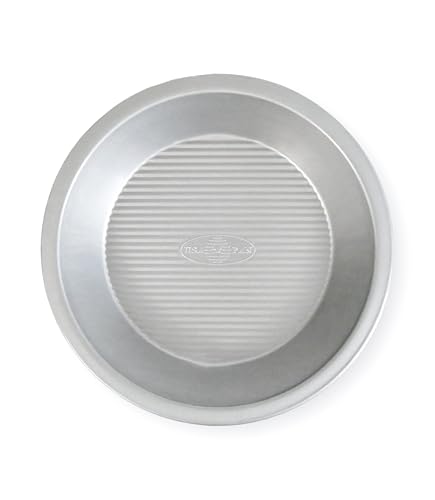
USA Pan’s pie pan is commercial-grade, heavy-gauge aluminized steel made in the USA. Its baking surface measures 9 by 9 by 1.5 inches and its outer edge 10 inches, according to USA Pan’s own product page. The base is corrugated, which USA Pan says helps air circulate for even baking and browning, and the pan is coated with Americoat, a silicone coating the maker describes as free of PTFE, PFOA and BPA, for quick release.
Care matters with this pan. USA Pan says not to exceed 450°F, not to put it in the dishwasher, and not to use cooking sprays, which it says may stain the bakeware; grease or flour the pan as your recipe says instead. It is covered by a limited lifetime warranty. The rim is a plain flat edge, so crimping is up to you.
Why we like it
- Metal browns most evenly, per King Arthur’s comparison
- Silicone release coating, per USA Pan
- Made in the USA, limited lifetime warranty
- Safe to go from refrigerator to oven
Key specifications
| Model | 1100PE |
|---|---|
| Material | Aluminized steel, Americoat silicone coating |
| Diameter | 9 in baking surface, 10 in outer |
| Depth | 1.5 in |
| Fluted rim | No (corrugated base) |
| Max temp (stated) | 450°F |
| Dishwasher-safe | No, per USA Pan |
Why we recommend it
Choose it for flaky crusts, blind-baked shells and any pie where a crisp, even bottom matters more than looks.
Skip it if you want a dish to serve from or put in the dishwasher; this is a hand-wash kitchen pan.
Pros and cons
Pros
- Even browning
- Easy release
- Made in the USA
Cons
- Hand wash only
- No cooking spray
- 450°F ceiling
5. Fat Daddio’s 9 x 1.5-inch Anodized Aluminum Pie Pans, Set of 2 – Bakery-Style, No Coating

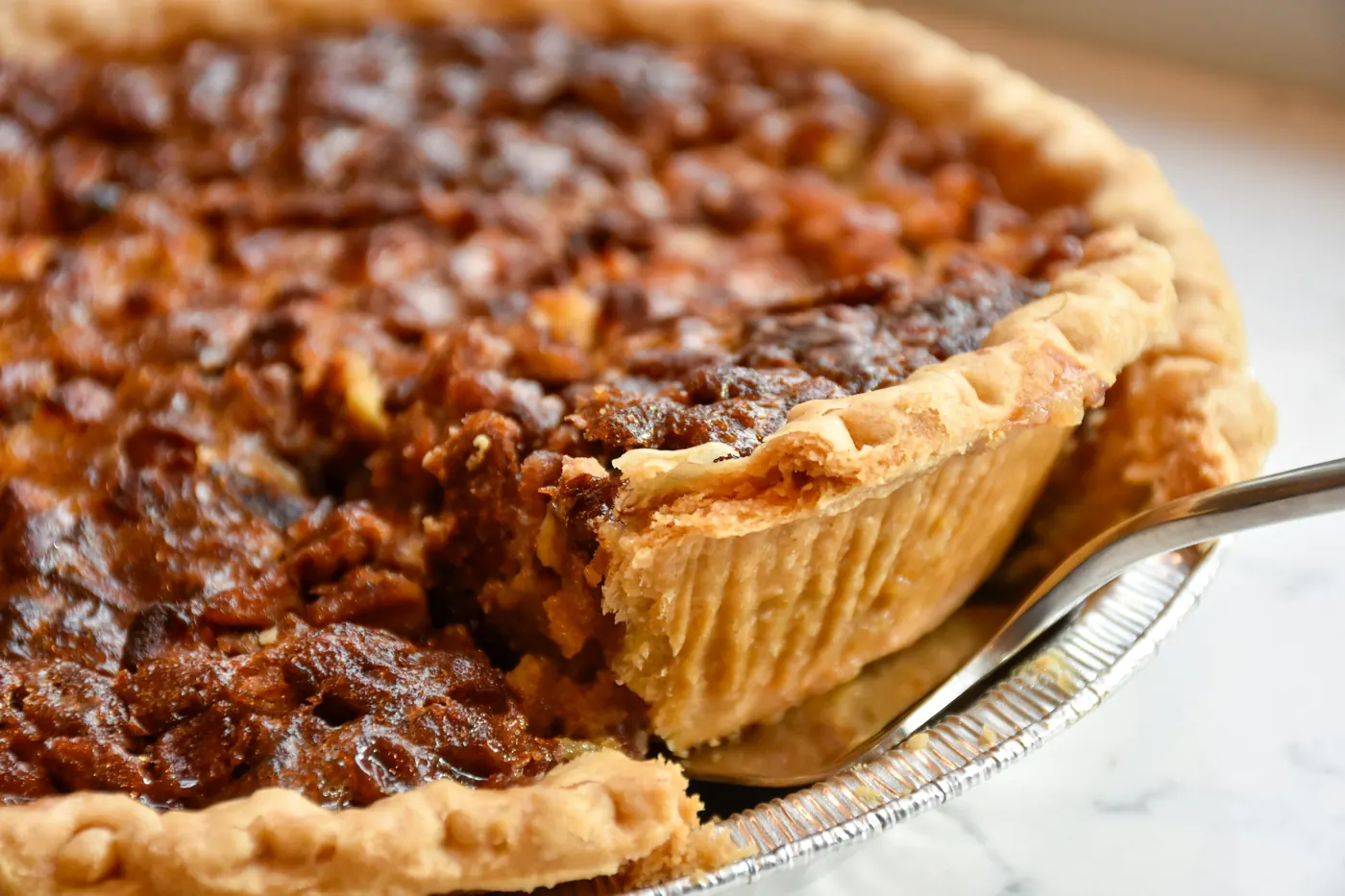
Fat Daddio’s makes pans for bakeries, and these two pie pans are built that way: 18-gauge anodized aluminum with sharp angled sides and a flat half-inch rim. The listing gives the measurements precisely: 9 inches across the top outside, 8 inches across the top inside, a 7-inch base and a 1.5-inch depth, which it describes as slightly deeper than traditional pie pans. Each holds 37.2 fluid ounces.
The anodized finish is the selling point. The listing says it releases easily, will never rust, peel or flake, and is safe for citrus-based foods, unlike traditional bakeware, which suits a lime pie or a citrusy pay de queso. Fat Daddio’s says the pans are made without extra metals, chemical additives, dyes, PFAS, PTFE or PFOA. Because aluminum conducts heat well, these are a good match for the even browning King Arthur Baking found with metal.
Two pans means two pies in one oven load, which is how most holiday baking happens. The listing recommends hand washing and notes that the pans fit pre-made grocery store crusts and 10-quart air fryers. It does not state a maximum oven temperature for this pan.
Why we like it
- Two pans in the set
- Uncoated anodized aluminum, safe with citrus, per Fat Daddio’s
- Precise stated measurements
- Slightly deeper than a standard pie pan
Key specifications
| Model | PIE-9SET |
|---|---|
| Material | 18-gauge anodized aluminum |
| Diameter | 9 in outside top, 8 in inside top, 7 in base |
| Depth | 1.5 in |
| Fluted rim | No (flat 1/2-inch rim) |
| Max temp (stated) | Not stated |
| Dishwasher-safe | Hand wash recommended |
Why we recommend it
Buy it if you bake two pies at a time and want plain, uncoated metal that browns evenly and does not mind citrus.
Skip it if you want a pie dish pretty enough to serve from; these are working pans.
Pros and cons
Pros
- Set of two
- No coating to wear
- Exact sizes listed
Cons
- No stated oven limit
- Hand wash recommended
- Plain rim, no flutes
6. HIC 10-inch Fine Porcelain Quiche Dish – Shallow Fluted Dish for Pay de Queso

Not every “pie” wants sloped pie-plate walls. A Mexican pay de queso, a quiche or a fruit tart often looks best in a shallow dish with straight, fluted sides, and HIC’s white porcelain quiche dish is the classic version. The listing gives it as 10 by 10 by 1.5 inches, holding 32 ounces, with fluted sides that it says create a decorative crust without extra shaping.
HIC describes the dish as fine porcelain and its title calls it lead and cadmium free, with a scratch-free glaze; that is HIC’s description of its own material. The listing says it is safe for the freezer, microwave, oven and broiler up to 350°F, and dishwasher safe.
That 350°F limit is the thing to plan around. Many custard-style fillings, such as pay de queso and quiche, bake at moderate temperatures; check that your recipe stays at or below 350°F. It is not for a blind-baked crust at 400°F or more; for that, use a metal pan.
Why we like it
- Shallow fluted sides for quiche and cheese pies
- Lead and cadmium free, per HIC
- 10 inches, 32 ounces
- Dishwasher safe
Key specifications
| Model | 98016 |
|---|---|
| Material | Fine porcelain, glazed |
| Diameter | 10 in (32 oz) |
| Depth | 1.5 in |
| Fluted rim | Yes, fluted sides |
| Max temp (stated) | 350°F (oven and broiler) |
| Dishwasher-safe | Yes |
Why we recommend it
Choose it for pay de queso, quiche and tarts you want to serve in the dish they baked in.
Skip it if you blind-bake crusts at high heat; the stated limit is 350°F.
Pros and cons
Pros
- Classic fluted look
- Plain white goes with anything
- Dishwasher safe
Cons
- Low 350°F limit
- Shallow for fruit pies
- No warranty listed
7. Anchor Hocking Oven Basics 9.5-inch Deep Pie Plate – Tempered Glass, Made in the USA

Anchor Hocking’s Oven Basics deep pie plate is the glass option for fillings that overflow a standard plate: a mile-high apple pie, a deep sweet potato pie or a cobbler. The listing sells it as a single 9.5-inch deep plate in clear glass, with no lid, made in the USA.
The listing calls it tempered glass and says it is safe in the microwave, a preheated oven, the refrigerator, the freezer and the dishwasher, and that it will not warp, stain or retain smells. It comes with a limited five-year warranty, per the listing. Iowa State University Extension notes that Anchor Hocking makes its bakeware from tempered soda-lime glass, which it says withstands thermal shock reasonably well with some caution. Anchor Hocking’s own safety page sets the rules: do not cook above 425°F, do not use the bakeware on a stovetop, broiler or toaster oven, do not add liquid to a hot dish, and do not use chipped, cracked or noticeably scratched pieces.
The listing does not give the exact depth or capacity, and it does not describe the rim style.
Why we like it
- Deep 9.5-inch plate for tall fillings
- Dishwasher, freezer and microwave safe, per the listing
- Clear glass shows the crust
- Made in the USA, with a five-year limited warranty
Key specifications
| Model | CZ81214L20 |
|---|---|
| Material | Tempered glass (soda-lime, per Iowa State Extension) |
| Diameter | 9.5 in |
| Depth | Not stated (sold as deep) |
| Fluted rim | Not stated |
| Max temp (stated) | 425°F, per Anchor Hocking; no broiler |
| Dishwasher-safe | Yes, per the listing |
| Made in | USA |
| Warranty | Limited five-year |
Why we recommend it
Buy it if your pies are tall and you want to see the bottom crust through the glass.
Skip it if you need an exact depth or capacity before you buy; the listing gives neither.
Pros and cons
Pros
- Extra depth
- Dishwasher safe
- Clear safety rules from the maker
Cons
- Depth and capacity not listed
- 425°F ceiling, no broiler
8. Nordic Ware Naturals 10-inch High Dome Covered Pie Pan – Bake It, Cover It, Carry It

Holiday pies travel, and a pie with a meringue or whipped topping is hard to cover without crushing it. Nordic Ware’s answer is a 10-inch aluminum pie pan with a tall, domed plastic cover. The listing gives the interior as 10 inches across and 1.8 inches high, the exterior as 11.5 inches, and the covered pan as 13.1 by 11.8 by 4 inches.
The pan is pure aluminum, which the listing says gives fast, even heat, with encapsulated galvanized steel rims for strength so it will not rust or warp. Like the other metal pans here, that suits even browning. It is made in the USA by Nordic Ware and carries a lifetime warranty.
The listing does not give an oven limit or a dishwasher rule; the plastic cover is for carrying and storage, not the oven.
Why we like it
- High domed cover clears tall toppings
- Pure aluminum with steel-reinforced rim
- Made in the USA, lifetime warranty
Key specifications
| Model | 44103AMZ |
|---|---|
| Material | Pure aluminum, galvanized steel rim; plastic cover |
| Diameter | 10 in interior, 11.5 in exterior |
| Depth | 1.8 in |
| Fluted rim | Not stated |
| Max temp (stated) | Not stated |
| Dishwasher-safe | Not stated |
Why we recommend it
Choose it if your pies leave the house for parties and holidays, especially ones with meringue or whipped cream.
Skip it if your recipes call for a 9-inch plate; this pan is 10 inches inside.
Pros and cons
Pros
- Tall cover for transport
- Even-heating aluminum
- Made in the USA
Cons
- No stated oven limit or care rule
- Larger than a standard 9-inch plate
What to look for in a pie dish
1. Match the material to the pie
King Arthur Baking’s comparison of the three materials is the clearest guide we found. Metal gave the most even browning, glass gave a darker but less even crust and lets you check browning through the bottom, and ceramic gave the least even browning, with a pale center. In practice: metal for flaky crusts and blind-baked shells, glass for long-baking fruit pies you want to watch, and ceramic for pies that go to the table.
2. Check the size your recipe assumes
Most pie recipes are written for a 9-inch plate, and many glass plates are 9.5 inches. Larger dishes, like the Emile Henry and the Nordic Ware at 10 inches and more, need more crust and filling. Depth matters as much: a deep dish holds a tall apple or sweet potato pie, while a shallow fluted dish suits quiche and pay de queso.
3. Look at the rim
A fluted or wide rim gives you a guide for crimping and a place to hold the dish with mitts. Plain-rimmed metal pans leave the decorating to you. Rolling and crimping go easier with a good pin; see our guide to the best rolling pin, and our best pastry brush guide for egg washes.
4. Respect glass and ceramic temperature rules
Pyrex says to preheat the oven before its glass goes in, to avoid sudden temperature changes and not to move a dish straight from the freezer to a hot oven; Anchor Hocking lists the same risks and adds a 425°F ceiling. OXO says its borosilicate plate can go from freezer to oven, and Emile Henry says the same of its clay. Metal pans, King Arthur notes, can go from refrigerator to oven without the risk of shattering.
5. Prefer makers that stand behind the glaze
The FDA explains that some pottery glazes may contain lead, and that pottery made in commercial factories for everyday use is much less likely to have lead problems than handmade, antique, worn or brightly decorated pieces, or pieces from makers you cannot verify. The glazed dishes here, from Emile Henry and HIC, come from makers that state their materials are food-safe or lead- and cadmium-free.
6. Think about care and transport
Coated metal like USA Pan’s is hand wash only and does not want cooking spray; glass and glazed ceramic usually go in the dishwasher. If pies travel, a lid or dome cover, like OXO’s or Nordic Ware’s, saves a lot of plastic wrap.
How we picked these eight pie plates
We started from what a home kitchen bakes in a round dish, fruit and custard pies, pay de queso, quiche and pot pie, and searched Amazon US for glass, ceramic, porcelain and metal pie plates from identifiable makers: Pyrex, OXO, Anchor Hocking, Emile Henry, HIC, USA Pan, Fat Daddio’s and Nordic Ware. We checked every listing for stock through Amazon’s product data and kept only plates that were in stock when we checked. Our best baking pan ceramic guide already reviews Emile Henry’s 9-inch deep pie dish, so here we chose its larger ruffled dish instead.
For glazed ceramic we kept only makers that state their glaze or materials are food-safe or lead-free, which ruled out some well-known brands whose listings and sites we checked did not say so. Sizes, materials, oven limits and care rules come from each Amazon listing and, where we could read them, the makers’ own pages: USA Pan’s pie pan page and use-and-care FAQ, Pyrex’s safety and warranty instructions, Anchor Hocking’s bakeware safety page and Emile Henry’s US customer-service page. Baking performance comes from King Arthur Baking’s comparison of metal, glass and ceramic pie plates; glass types from Iowa State University Extension; and lead guidance from the FDA. We have not baked in these pie plates ourselves for this guide.
Pie dish questions, answered
What is the best type of pie dish?
For the most even, crisp crust, metal. King Arthur Baking’s comparison found metal browned most evenly. Glass is a close second if you want to watch the bottom crust, and ceramic is the choice for pies you serve from the dish.
What is the best kind of pie dish for pay de queso?
A shallow fluted dish like the HIC porcelain quiche dish suits a cheese pie served at the table, as long as the recipe bakes at or below its 350°F limit. For a crumb or pastry crust you want crisp, a metal pan such as the USA Pan or Fat Daddio’s is the better base.
How do you tell a quality pie dish?
Look for a maker that states the size, depth, oven limit and care rules, and stands behind the product with a warranty. For metal, a heavy gauge and a reinforced rim; for glass, clear thermal-shock rules; for glazed ceramic, a maker that states its glaze is food-safe or lead-free.
Which pie dish should I buy first?
A 9 or 9.5-inch glass plate like the Pyrex covers most recipes. Add a metal pan for crisp crusts and blind baking, and a ceramic dish if you want one to bring to the table.
Can a glass pie plate go from the freezer to the oven?
Not the soda-lime glass plates here: Pyrex says not to move its glass directly from the freezer to a hot oven. OXO says its borosilicate plate is freezer-to-oven safe. Follow the rule for your own plate.
Our last word on pie plates
Buy the Pyrex 9.5-inch glass set if you want dependable pie dishes, the USA Pan or Fat Daddio’s metal pans for the crispest crusts, and the Emile Henry ruffled dish for pies that go to the table. The OXO plate suits make-ahead bakers, the HIC quiche dish suits pay de queso and quiche, the Anchor Hocking deep plate suits tall fillings, and the Nordic Ware covered pan suits pies that travel.
Baking something other than pie? See the best ceramic baking dishes, the best glass baking dishes and the best baking dishes with lids, or the best pans for brownies and the best baking dishes for lasagna.
Related guide: Best pie weights.
Related guide: Best pie crust shield.
Related guide: Best pie server.
Related guide: Best pie cookbook.
Related guide: Best tart pan.
Related guide: Glass vs ceramic pie dish.
For cake pans and metal bakeware, see our best baking pan cake guide. If your next dessert is flan rather than pie, our explainer on flan vs tres leches covers both, and our guide to Mexican desserts goes further. And if you would rather someone else did the cooking, see the menu or call to order.