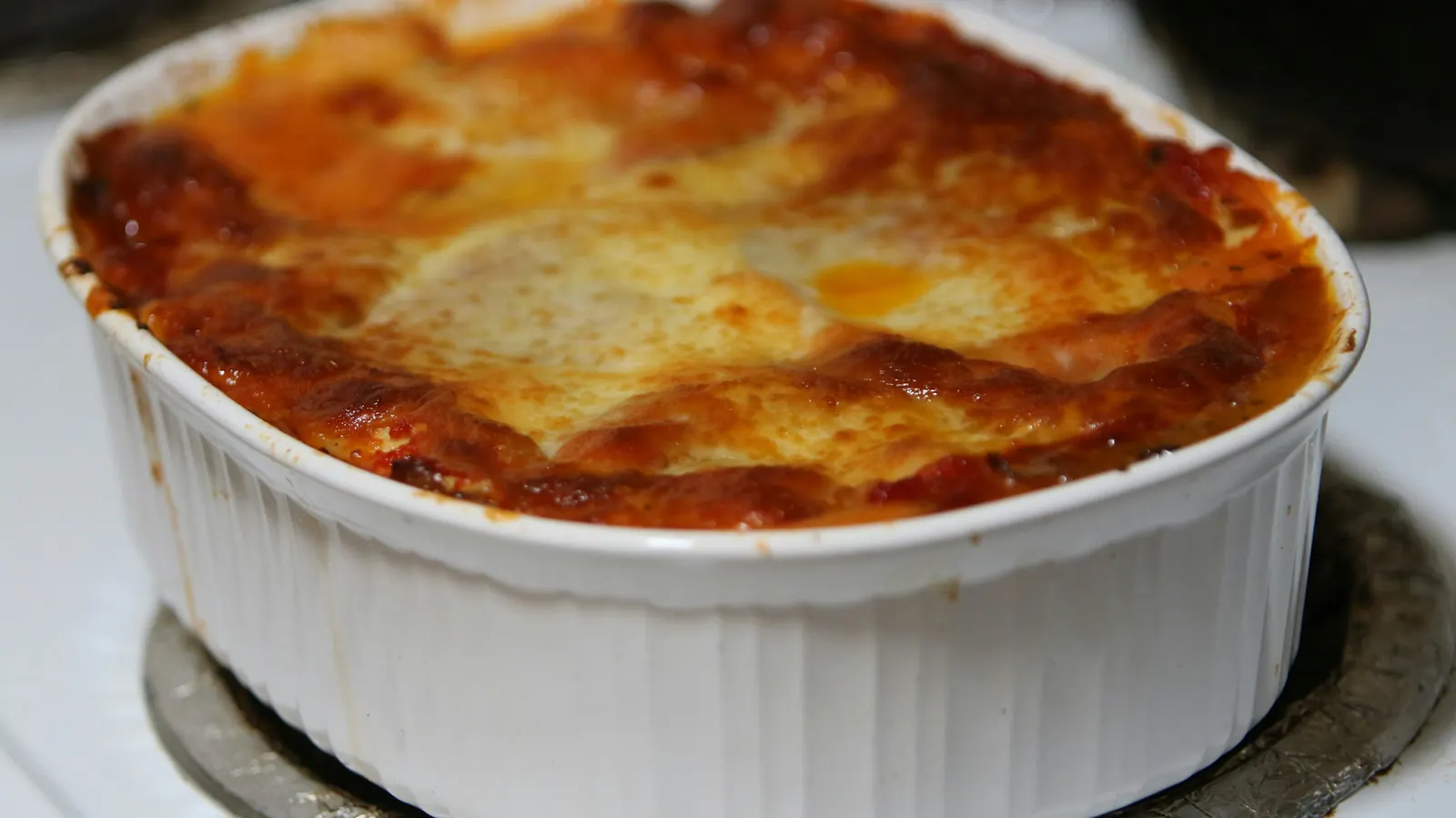
Ceramic bakeware does a different job from a metal pan. It heats slowly, holds that heat for a long time, and goes from oven to table looking like a serving dish. That makes it the right vessel for the things a Mexican kitchen bakes in a dish rather than a tin: a tray of enchiladas, a chile relleno casserole, a bread pudding for capirotada, or a flan set gently in a water bath. It is the wrong vessel for a quick-rising layer cake, which wants thin, light metal.
This guide compares glazed stoneware, porcelain and clay bakers from makers we could identify, explains how a ceramic-coated metal pan differs from a true ceramic dish, and notes the oven limit, glaze and care rules each maker states. Where a listing leaves something out, we say so.
Julia’s earns a commission on purchases made through links on this page, at no cost to you. Recommendations are based on what a restaurant kitchen looks for, product specifications and verified buyer reports.
Quick verdict: which ceramic baking dish to buy
For one dish that does most of the work, buy the Emile Henry 13 x 9-inch Rectangular Baker: 4.7 quarts of high-fired clay made in France, rated to 500°F and the broiler, dishwasher safe and covered by a 10-year warranty. For a nesting set in three sizes, the Le Creuset Heritage Stoneware Rectangular Dishes are the classic choice. If you cook under the broiler often, the Staub 2-piece Ceramic Baking Dish Set is rated to 572°F.
The table below compares our five standout pieces, one for each kind of cook. All eight are reviewed in full after it.
Five ceramic bakers compared
One pick for each way you might bake in ceramic, with the size, glaze or coating and oven limit each maker or listing states.
| Dish | Best for | Size | Material & oven limit | Buy on Amazon |
|---|---|---|---|---|
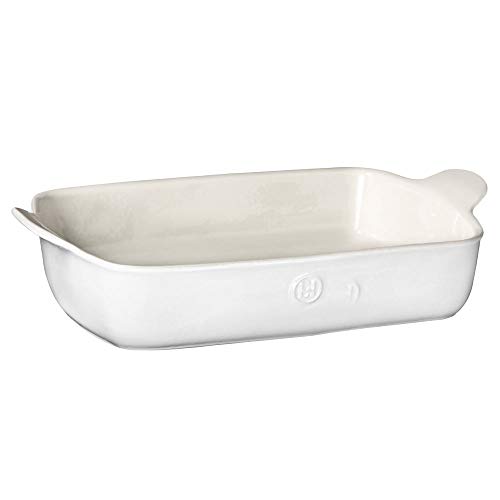
Emile Henry 13 x 9-inch Rectangular BakerBest overall
|
Enchiladas, lasagna, gratins | 13 x 9 in, 4.7 qt | Glazed Burgundy clay; up to 500°F | View on Amazon |
| Mains, sides and small bakes | 4 qt, 2.5 qt and 1.1 qt | Glazed stoneware; up to 500°F, per Le Creuset | View on Amazon | |
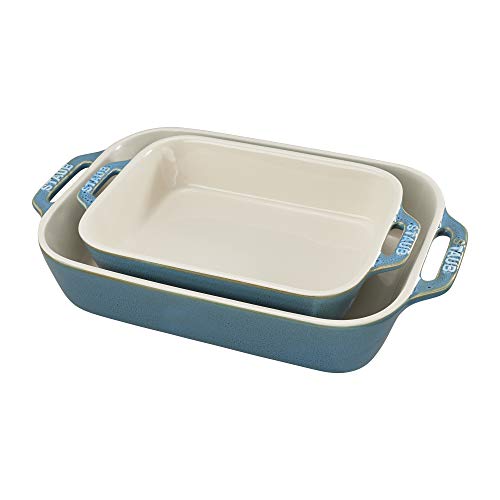
Staub 2-piece Ceramic Baking Dish SetBest for the broiler
|
Melting and browning cheese | 10.5 x 7.5 in and 7.5 x 6 in | Enameled stoneware; up to 572°F | View on Amazon |

HIC Fine Porcelain Ramekins, 6 oz, Set of 6Best for custards
|
Individual flans and custards | Six 6-oz ramekins | Glazed porcelain; to 350°F, per listing | View on Amazon |

Caraway Ceramic-Coated 9 x 13-inch Rectangle PanBest ceramic-coated metal
|
Brownies and cakes that need release | 9 x 13 in | Ceramic-coated steel; up to 550°F | View on Amazon |
Product images from Amazon. Sizes, materials and oven limits are as stated by the maker or its Amazon listing; check the listing before you buy. The Caraway pan is metal with a ceramic coating, not a ceramic dish; see the note in its review.
Our picks for the best baking pan ceramic cooks can use every week
These eight pieces cover the main kinds of ceramic bakeware: high-fired clay from France, stoneware with a hard glaze, enameled stoneware that takes the broiler, a deep pie dish, a deep porcelain souffle dish, porcelain ramekins, a decorative serving baker, and one ceramic-coated metal pan for comparison. Each “Glaze/coating” row says what covers the surface, as the maker describes it.
1. Emile Henry 13 x 9-inch Rectangular Baker – French Clay for Big Bakes
A 13 by 9-inch dish is the size most casserole recipes assume, and this one holds 4.7 quarts, enough for a full tray of rolled enchiladas with sauce to the edges. Emile Henry makes it from what it calls Burgundy clay, which the listing says spreads and holds heat evenly for consistent baking and for keeping food warm at the table. Emile Henry says on its own site that its products are made in France.
The practical specifications are strong. The listing rates it for oven, broiler and microwave use, with an oven limit of 500°F, describes the glaze as highly resistant, and says the dish is dishwasher safe. It carries a 10-year warranty.
Ceramic heats more slowly than metal, so a dish of enchiladas or a bread pudding may need a few extra minutes to bubble in the middle, and the edges will keep cooking after it leaves the oven. That retained heat is the point: the dish arrives at the table hot. Let it cool before it goes into water.
Why we like it
- Standard 13 x 9 size, 4.7-quart capacity
- Oven, broiler and microwave safe; to 500°F
- Dishwasher safe, per the listing
- Made in France with a 10-year warranty
Key specifications
| Model | 239626 |
|---|---|
| Shape/size | Rectangle, 13 x 9 in, 4.7 qt |
| Material | Burgundy clay ceramic |
| Glaze/coating | Highly resistant glaze |
| Depth | Not stated |
| Oven-safe to | 500°F; broiler safe |
| Dishwasher safe | Yes |
| Made in | France, per Emile Henry |
Why we recommend it
Buy it if you want one ceramic dish for enchiladas, lasagna, gratins and fruit crisps that you can also serve from.
Skip it if your oven is small; a 13 by 9 dish with handles takes up most of a narrow rack.
Pros and cons
Pros
- Full casserole size
- Broiler and dishwasher safe
- Long warranty
Cons
- Heavy when full
- Depth not stated in the listing
- Single dish, no lid
2. Le Creuset Heritage Stoneware Rectangular Dishes, Set of 3 – Three Sizes That Nest

Three dishes cover most of what a home kitchen bakes in ceramic: a 12.5-inch, 4-quart dish for a main course, a 10-inch, 2.5-quart dish for rice or a side of rajas con crema, and a 7.5-inch, 1.1-quart dish for a small gratin or a dessert for two. The set is sold in several colors; this listing is Sea Salt.
The listing describes stoneware that distributes heat for uniform browning, and a colorful glaze that is nonporous, non-reactive and scratch-resistant, resists stains and flavor absorption, and resists cracking and crazing. It calls the glazed interior virtually nonstick. Le Creuset’s own site gives an oven limit of 500°F for its stoneware and says it is dishwasher safe, though hand washing is preferred.
Le Creuset’s care guidance also covers the one way stoneware is commonly broken: sudden temperature change. It says a frozen dish should go into a cold oven and heat up with it, not into a preheated one, that stoneware never goes on a burner, and that the rim should sit at least 2.5 inches below the broiler element. The listing does not say where these dishes are made. Le Creuset says its products comply with FDA safety regulations; we found no explicit lead-free statement from the maker.
Why we like it
- Three useful sizes from 1.1 to 4 quarts
- Nonporous, scratch- and craze-resistant glaze, per the listing
- Oven-safe to 500°F, per Le Creuset
- Clear care guidance from the maker
Key specifications
| Model | PG7942-03717 |
|---|---|
| Shape/size | Rectangles: 12.5 in (4 qt), 10 in (2.5 qt), 7.5 in (1.1 qt) |
| Material | Stoneware |
| Glaze/coating | Nonporous, non-reactive colored glaze |
| Depth | Not stated |
| Oven-safe to | 500°F, per Le Creuset |
| Dishwasher safe | Yes; hand washing preferred, per Le Creuset |
| Made in | Not stated |
Why we recommend it
Choose it if you want matching dishes for a main and two sides, all nesting into one stack in the cupboard.
Skip it if you need a true 13 by 9; the largest dish is listed at 12.5 inches.
Pros and cons
Pros
- Three sizes in one box
- Hard, stain-resistant glaze
- Goes oven to table
Cons
- Origin and depth not in the listing
- Largest dish is under 13 x 9
- Frozen dishes must start in a cold oven
3. Staub 2-piece Ceramic Baking Dish Set – Highest Oven Rating Here
Staub’s ceramic bakers are built around a hard, glassy finish that takes high heat. The listing describes stoneware with a vitreous glass porcelain-enamel finish that is highly scratch resistant, will not absorb moisture, diffuses heat gently and retains it well. It rates the dishes for the microwave, freezer, broiler and oven up to 572°F, the highest figure on this page.
That matters when you finish a dish under the broiler: queso fundido, enchiladas suizas with the cheese browned on top, or a gratin of potatoes and poblanos. The set is two sizes, 10.5 by 7.5 inches and 7.5 by 6 inches, which suits a household of two to four rather than a party. The listing says both are dishwasher safe.
The listing states that the set is designed by Staub in France; it does not say where the dishes are made. It lists a lifetime warranty against manufacturer’s defects. The title rounds the oven limit to 570°F while the bullet points say 572°F; either way, it is well above the other ceramic pieces here.
Why we like it
- Oven-safe to 572°F and broiler safe, per the listing
- Vitreous enamel finish, highly scratch resistant
- Dishwasher safe
- Lifetime warranty against defects
Key specifications
| Model | 40511-924 |
|---|---|
| Shape/size | Rectangles: 10.5 x 7.5 in and 7.5 x 6 in |
| Material | Stoneware |
| Glaze/coating | Vitreous glass porcelain-enamel finish |
| Depth | Not stated |
| Oven-safe to | 572°F; broiler safe |
| Dishwasher safe | Yes |
| Made in | China (designed in France) |
Why we recommend it
Buy it if you brown and bubble dishes under the broiler regularly and want ceramic that is rated for it with room to spare.
Skip it if you cook for a crowd; neither dish is casserole size.
Pros and cons
Pros
- Highest heat rating here
- Broiler, freezer and dishwasher safe
- Two handy sizes
Cons
- No full 13 x 9 dish
- Made in China, if origin matters to you
4. Emile Henry 9-inch Deep Pie Dish – Round Dish for Flan and Pie

A deep 9-inch ceramic round is more versatile than its name. It bakes pies and quiches, but it is also a good shape for a family-size flan baked in a water bath, a pastel azteca layered with tortillas, chicken and salsa, or a cobbler. This one holds 1.4 quarts and is made from the same Burgundy clay as Emile Henry’s rectangular baker.
The listing says each piece is individually formed and hand-finished using Emile Henry’s French ceramic craftsmanship, and rates the dish for oven use up to 500°F as well as the microwave and broiler. It also says the dish can go straight from the freezer or refrigerator into a hot oven, which most stoneware makers advise against; that is Emile Henry’s claim for its own clay. The glaze is described as extremely hard, scratch-resistant and not prone to crazing.
King Arthur Baking notes that ceramic and stoneware conduct heat more slowly than metal and are fine for things like pie and bread pudding. For a flan, that slow, even heat is welcome. The dish is dishwasher safe and covered by a 10-year guarantee against manufacturing defects in household use.
Why we like it
- Deep 9-inch round, 1.4 quarts
- Freezer-to-oven use, per Emile Henry
- Hard glaze that resists scratching and crazing
- Made in France, 10-year guarantee
Key specifications
| Model | 236121 |
|---|---|
| Shape/size | Round, 9 in, 1.4 qt |
| Material | Burgundy clay ceramic |
| Glaze/coating | Extremely hard glaze, does not craze |
| Depth | Not stated (sold as deep) |
| Oven-safe to | 500°F; broiler safe |
| Dishwasher safe | Yes |
| Made in | France |
Why we recommend it
Choose it for pies, quiche and a whole flan when you want a round dish good enough to bring to the table.
Skip it if you want to unmold the flan onto a platter with straight sides; a dish with sloped pie walls gives a sloped edge.
Pros and cons
Pros
- Freezer to oven, per the maker
- Made in France, per Emile Henry
- Dishwasher safe
Cons
- Sloped sides, not a straight mold
- Exact depth not stated
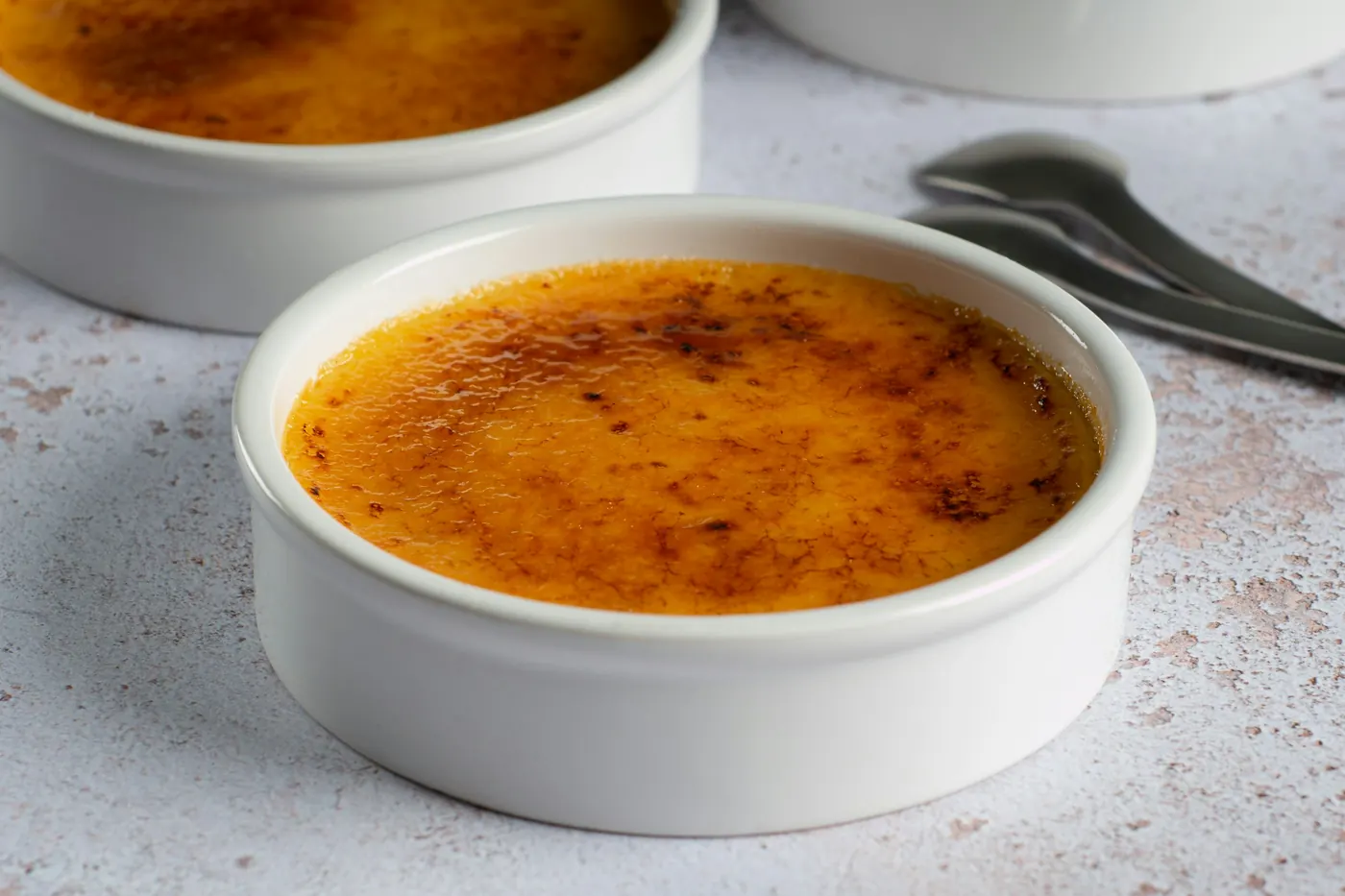
5. HIC Fine Porcelain 2-quart Souffle Dish – Deep Round Dish to Bake and Serve

A deep round dish is the one to reach for when a 13 by 9 is too big: a side of oven-baked Mexican rice, a bread pudding, a fruit crisp, a baked pasta or a souffle. HIC’s 2-quart porcelain dish measures 7.875 by 7.875 by 3.625 inches and holds 64 ounces, per the listing, and is designed to go from the oven straight to the table.
The listing describes fine porcelain that is lead- and cadmium-free, with a non-porous glaze that will not absorb odors or flavors. It rates the dish safe for the freezer, microwave, oven and broiler “to 350-degrees Fahrenheit”, and dishwasher safe. HIC also makes the ramekins in the next pick, so the two match on the table.
Like the ramekins, it is not a dish for a hot oven: 350°F suits most casseroles, custards and baked desserts, but not roasting or a very hot finish to brown a cheese top. The listing does not mention a lid, so cover it with foil when a recipe calls for a covered dish, and it does not say where the dish is made.
Why we like it
- Lead- and cadmium-free porcelain, per the listing
- Deep 2-quart capacity
- Freezer, microwave and dishwasher safe
- Non-porous glaze that resists odors
Key specifications
| Model | 98012 |
|---|---|
| Shape/size | Round, 7.875 x 7.875 in; 2 qt (64 oz) |
| Material | Fine porcelain |
| Glaze/coating | Non-porous glaze; lead- and cadmium-free, per the listing |
| Depth | 3.625 in |
| Oven-safe to | 350°F, per the listing |
| Dishwasher safe | Yes |
| Made in | Not stated |
Why we recommend it
Buy it if you bake rice, bread pudding, crisps or souffles in one deep round dish and want to serve from it.
Skip it if you need a rectangular baker for enchiladas or lasagna, or you bake hotter than 350°F.
Pros and cons
Pros
- Lead- and cadmium-free, per the listing
- Deep 2-quart capacity
- Dishwasher safe
Cons
- Low 350°F limit
- No lid mentioned
- Origin not stated
6. HIC Fine Porcelain Ramekins, 6 oz, Set of 6 – Single-Serve Custard Cups
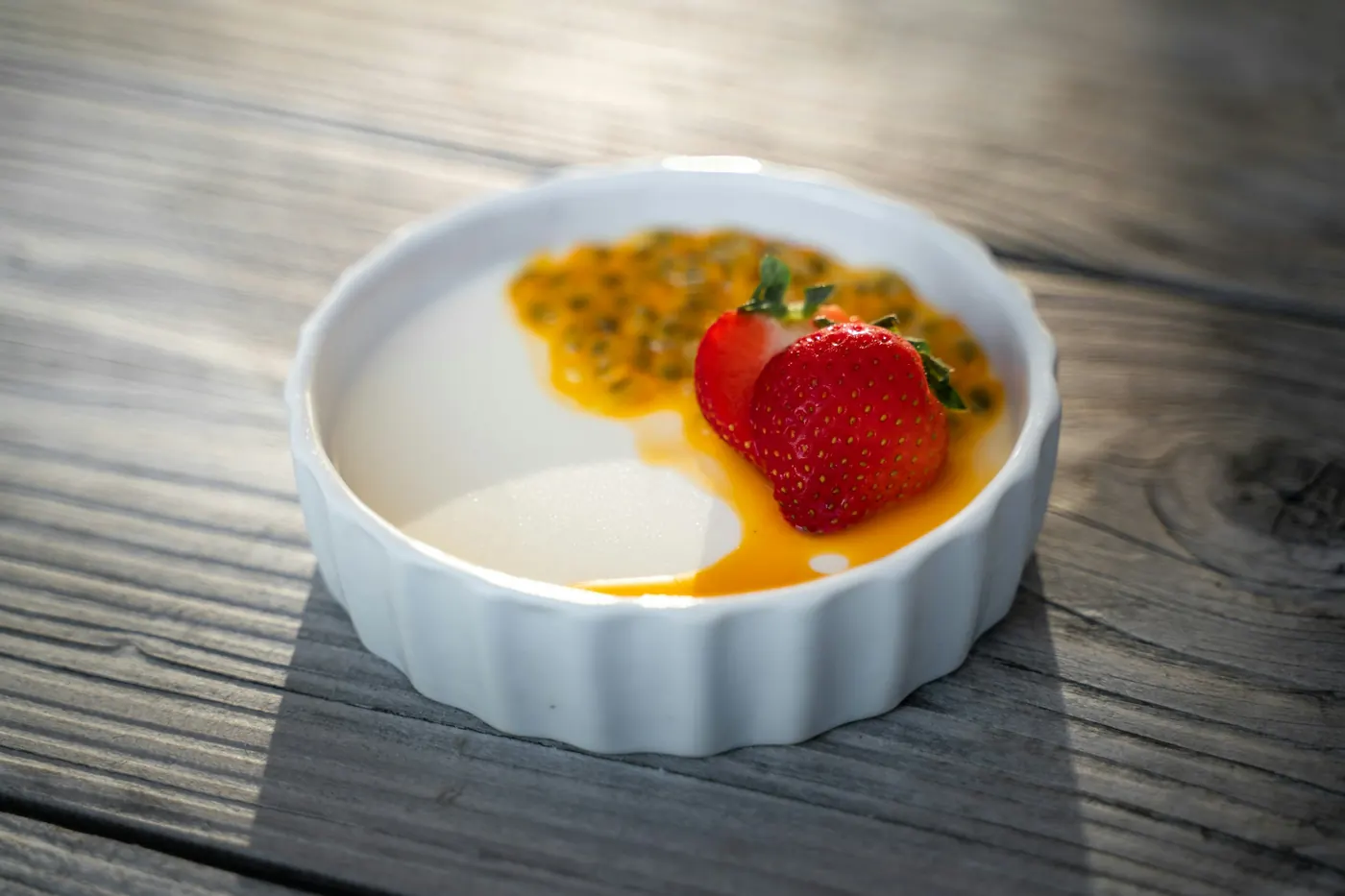
Individual flans are easier to get right than a large one. They set faster and more evenly, they unmold onto a small plate in one motion, and nobody argues over the slice with the most caramel. A 6-ounce ramekin is a common size for them, and HIC’s are plain white fine porcelain, 3.75 inches across and 2 inches tall.
The listing lists the set for custards, soufflés, lava cakes, pot pies and baked eggs, as well as for serving salsas, dips and toppings, which is how a set of ramekins earns its cupboard space. HIC describes the porcelain as lead- and cadmium-free and the glaze as non-porous, so it will not absorb odors or flavors. The ramekins are dishwasher safe.
Note the oven limit: the listing says the ramekins are safe for the freezer, microwave, oven and broiler “to 350-degrees Fahrenheit”. Most flan and custard recipes bake in a water bath at or below that temperature, which suits these well, but they are not for a hot oven or for browning under the broiler. The listing does not give a warranty or country of manufacture.
Why we like it
- Six matching 6-ounce cups
- Fine porcelain with a non-porous glaze
- Described by HIC as lead- and cadmium-free
- Dishwasher safe
Key specifications
| Model | 98005-6 |
|---|---|
| Shape/size | Round ramekins, 3.75 in, 6 oz; set of 6 |
| Material | Fine porcelain |
| Glaze/coating | Non-porous glaze |
| Depth | 2 in |
| Oven-safe to | 350°F, per the listing |
| Dishwasher safe | Yes |
| Made in | Not stated |
Why we recommend it
Choose them for individual flans, custards and baked eggs, and for serving salsas on a taco night.
Skip it if you want ramekins for high-heat baking; the stated limit is 350°F.
Pros and cons
Pros
- Good size for single flans
- Plain white, easy to match
- Dishwasher safe
Cons
- Low 350°F limit
- No warranty listed
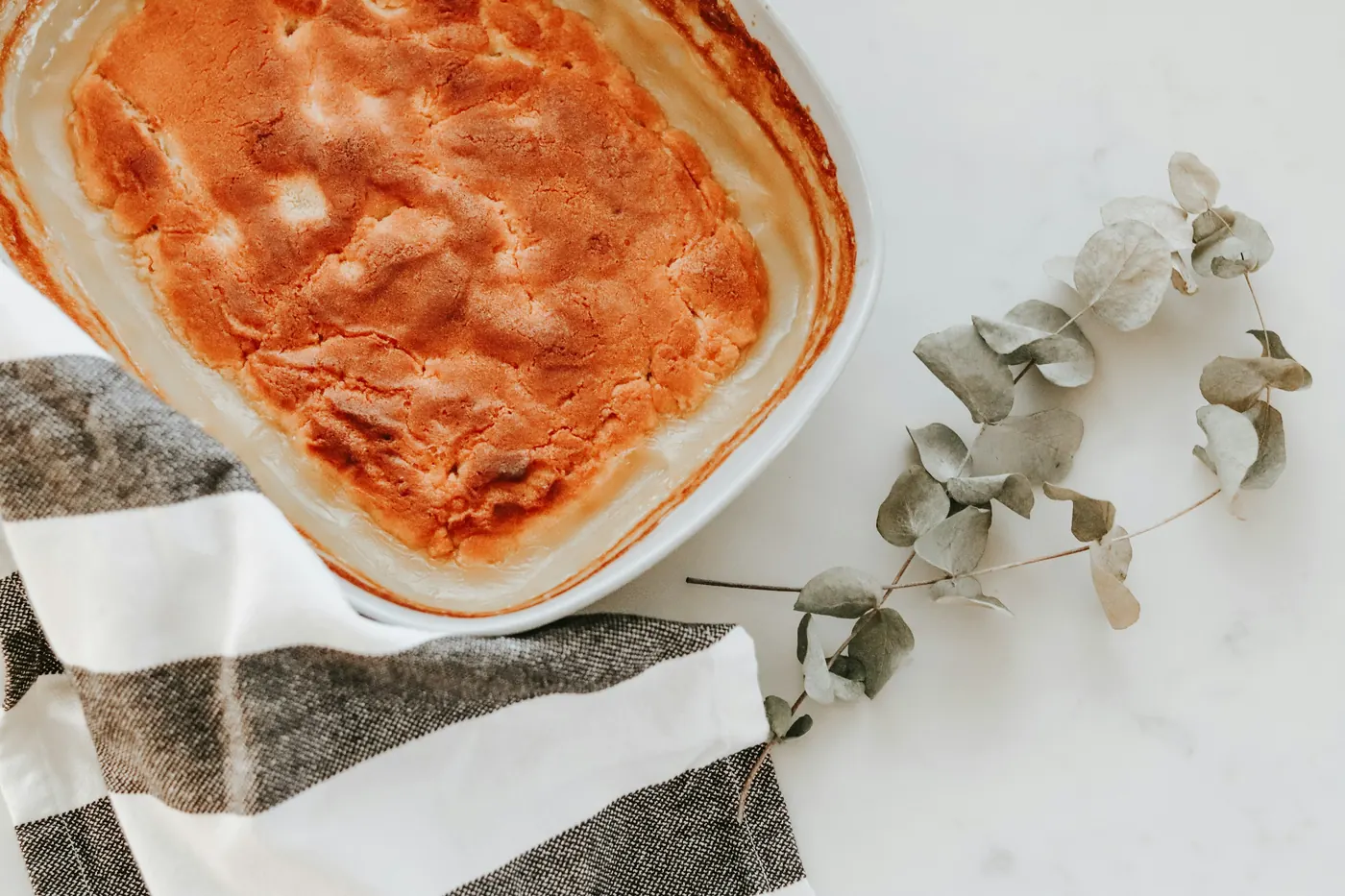
7. Martha Stewart Broadbrook 13 x 9-inch Stoneware Baker – Fluted Dish for the Table

Some baking dishes spend more time on the table than in the oven, and this one is designed for that. It is glazed stoneware in a creamy color with a fluted exterior and sturdy side handles, sized at 13.75 by 8.5 by 2.75 inches with a 3.4-quart capacity. That is a holiday-casserole dish: green-chile corn pudding, sweet potatoes, a dessert for a crowd.
The listing says the stoneware distributes heat evenly and describes a smooth, high-gloss finish. It is dishwasher and microwave safe. The dish is made by Gibson Homewares, whose customer service has said its products may contain a very minimal amount of lead or cadmium within FDA standards; we found no explicit lead-free statement from the maker.
The limit to know is heat. The listing rates it oven-safe only up to 350°F, well below the 500°F and higher of the Emile Henry, Le Creuset and Staub dishes. Most casseroles and baked desserts cook at or below 350°F, so it works for them, but it is not a dish for a hot oven, roasting or the broiler. The listing does not state where it is made or what warranty it carries.
Why we like it
- Near-13 x 9 size with 2.75-inch depth
- Fluted exterior and side handles for serving
- Dishwasher and microwave safe
Key specifications
| Model | 148920.01R |
|---|---|
| Shape/size | Rectangle, 13.75 x 8.5 in, 3.4 qt |
| Material | Stoneware |
| Glaze/coating | High-gloss glaze |
| Depth | 2.75 in |
| Oven-safe to | 350°F |
| Dishwasher safe | Yes |
| Made in | Not stated |
Why we recommend it
Buy it if presentation matters and your casseroles bake at moderate heat.
Skip it if you want one dish that can also roast or broil; the 350°F limit rules that out.
Pros and cons
Pros
- Attractive serving dish
- Generous depth
- Dishwasher safe
Cons
- 350°F oven limit
- No warranty or origin listed
8. Caraway Ceramic-Coated 9 x 13-inch Rectangle Pan – Metal Pan, Ceramic Surface
Search for ceramic baking pans and many results are this kind of pan, so it is worth being clear about what it is. The Caraway rectangle pan is a metal pan, with an aluminized steel body according to Caraway’s product page, and a thin ceramic nonstick coating on the baking surface. It heats like metal, quickly, and releases like nonstick. A stoneware or porcelain dish is ceramic all the way through, heats slowly and holds heat.
That makes the Caraway the better choice for brownies, a sheet of tres leches sponge or a snack cake you want to lift out cleanly, and the stoneware dishes above better for enchiladas and gratins you serve from the dish. The listing rates the pan to 550°F and asks you to hand wash it. Caraway’s product pages also say not to use it under the broiler.
Caraway says the coating is free of PTFE, PFOA, PFAS, lead and cadmium; that is the maker’s description of what the coating is made without. As with any coated pan, avoid metal utensils and cutting in the pan, and do not use abrasive pads. The listing does not give a model number, depth or country of manufacture.
Why we like it
- Easy release from a ceramic nonstick coating
- Rated to 550°F, per the listing
- Metal body heats faster than stoneware
Key specifications
| Model | Not stated |
|---|---|
| Shape/size | Rectangle, 9 x 13 in |
| Material | Aluminized steel, per Caraway |
| Glaze/coating | Ceramic nonstick coating |
| Depth | Not stated |
| Oven-safe to | 550°F; no broiler, per Caraway |
| Dishwasher safe | No, hand wash |
| Made in | Not stated |
Why we recommend it
Choose it for cakes and bars that need to come out whole, when you want a coating rated hotter than most nonstick pans.
Skip it if what you want is a true ceramic dish that holds heat at the table; this is a coated metal pan.
Pros and cons
Pros
- Quick, even metal heating
- Easy release
- 550°F rating
Cons
- Hand wash only
- No broiler
- Coating can wear with metal tools
How to choose a ceramic baking dish
1. Know which kind of “ceramic” you are buying
Stoneware, porcelain and clay bakers are fired ceramic with a glaze on the surface; they heat slowly and hold heat. Ceramic-coated pans, like the Caraway, are metal pans with a thin coating; they heat fast and release like nonstick. Glass, such as a Pyrex 9 by 13, is a third material. King Arthur Baking says glass is slower to take on heat but holds it longer than metal, and advises lowering the oven by 25°F when baking in glass.
2. Use ceramic for the right bakes
King Arthur Baking says ceramic and stoneware do not conduct heat as quickly as metal pans, and that they work for bread pudding or pie. Its baker Susan Reid calls stoneware “the wild card” because clay compositions vary, and says it takes some getting to know. In practice: casseroles, gratins, custards and fruit desserts in ceramic; layer cakes and cookies in light metal. Our guide to the best baking pan cake covers metal cake pans.
3. Check the oven limit
Ratings on this page run from 350°F (the HIC dishes and Martha Stewart baker) to 500°F (Emile Henry, Le Creuset) and 572°F (Staub). If you finish dishes under the broiler, buy one rated for it.
4. Respect thermal shock
Sudden temperature change is how ceramic cracks. Le Creuset says a frozen stoneware dish should start in a cold oven and heat with it; Emile Henry says its clay can go from freezer to hot oven. Follow the rule for your own dish, and never pour cold water into a hot one.
5. Buy glazed bakeware from makers you can identify
The FDA says the glaze on some pottery may contain lead to help the glaze melt, and that when pottery is not made properly, that lead can leach into food and drink. It says pottery made in commercial factories for everyday use is much less likely to have lead-related problems, and asks for particular care with handmade pieces with a crude or irregular shape, antiques, damaged or heavily worn pieces, pottery from flea markets or street vendors or from makers you cannot verify, and pieces brightly decorated in orange, red or yellow. That is worth knowing in a Mexican kitchen, where glazed clay cazuelas are traditional. The FDA advises testing doubtful pieces with lead-testing swabs, and says washing or boiling does not remove lead. Every dish on this page comes from an identifiable maker.
How we chose these eight ceramic bakers
We started from what a kitchen bakes in ceramic, casseroles, gratins, custards and pies, and searched Amazon US for glazed stoneware, porcelain and clay bakeware from makers with a long record: Emile Henry, Le Creuset, Staub and HIC, plus a ceramic-coated metal pan from Caraway to explain the difference. We checked every listing for stock through Amazon’s product data and kept only pieces that were in stock when we checked. HIC’s porcelain lasagna pan was not in stock, so the HIC picks are its 2-quart souffle dish and its ramekins.
Sizes, materials, glazes, oven limits, care rules and origin come from each Amazon listing, and from Emile Henry’s, Le Creuset’s and Caraway’s own sites where those add detail. Guidance on ceramic, glass and metal comes from King Arthur Baking’s complete guide to baking pans and its article on glass, metal and stoneware; the lead guidance comes from the FDA’s questions and answers on lead-glazed traditional pottery. We left out unbranded listings with thin specifications. We have not baked in these dishes ourselves for this guide.
Ceramic bakeware questions, answered
What are the best baking pans ceramic cooks should own first?
A 13 by 9-inch baker for casseroles and enchiladas, then a smaller dish for sides. The Emile Henry 13 by 9 covers the first job; the Le Creuset set covers all three sizes at once.
Is ceramic better than glass for baking?
Neither is better for everything. Both heat more slowly than metal and hold heat. Glass lets you see the browning on the bottom and sides; glazed ceramic is made to go from oven to table, and several of the dishes here are rated for the broiler. Check the maker’s rule before broiling any dish.
Can I bake a cake in a ceramic dish?
You can, but expect slower baking and less browning at the edges. King Arthur Baking says nearly all cake pans are light-colored aluminum because cakes need quick, steady heat to rise correctly. Snack cakes and puddings forgive ceramic better than layer cakes do.
Is a ceramic-coated pan the same as a ceramic dish?
No. A ceramic-coated pan is metal with a thin nonstick coating. A ceramic dish is fired clay, stoneware or porcelain throughout, with a glaze on the surface. They bake differently and have different care rules.
Can ceramic bakeware go from the freezer to the oven?
It depends on the maker. Emile Henry says its dishes can go straight from freezer to a hot oven; Le Creuset says frozen stoneware should go into a cold oven and heat up with it. When in doubt, use the cold-oven method.
Our last word on ceramic bakers
Buy the Emile Henry 13 by 9 for one dish that bakes, broils and serves. Choose the Le Creuset set for three nesting sizes, the Staub set for the broiler, the Emile Henry pie dish for flan and pie, the HIC souffle dish for deep round bakes, HIC ramekins for single custards, Martha Stewart’s fluted baker for the table, and the Caraway pan when you want a ceramic surface on a fast-heating metal pan.
For deeper pans for roasts and holiday birds, start with our cluster guide to the best roasting pan, and for complete kits, see the best baking pan sets. If your next bake is a flan, our explainer on flan vs tres leches covers how the two desserts differ. And if you would rather someone else did the baking, see the menu or call to order.