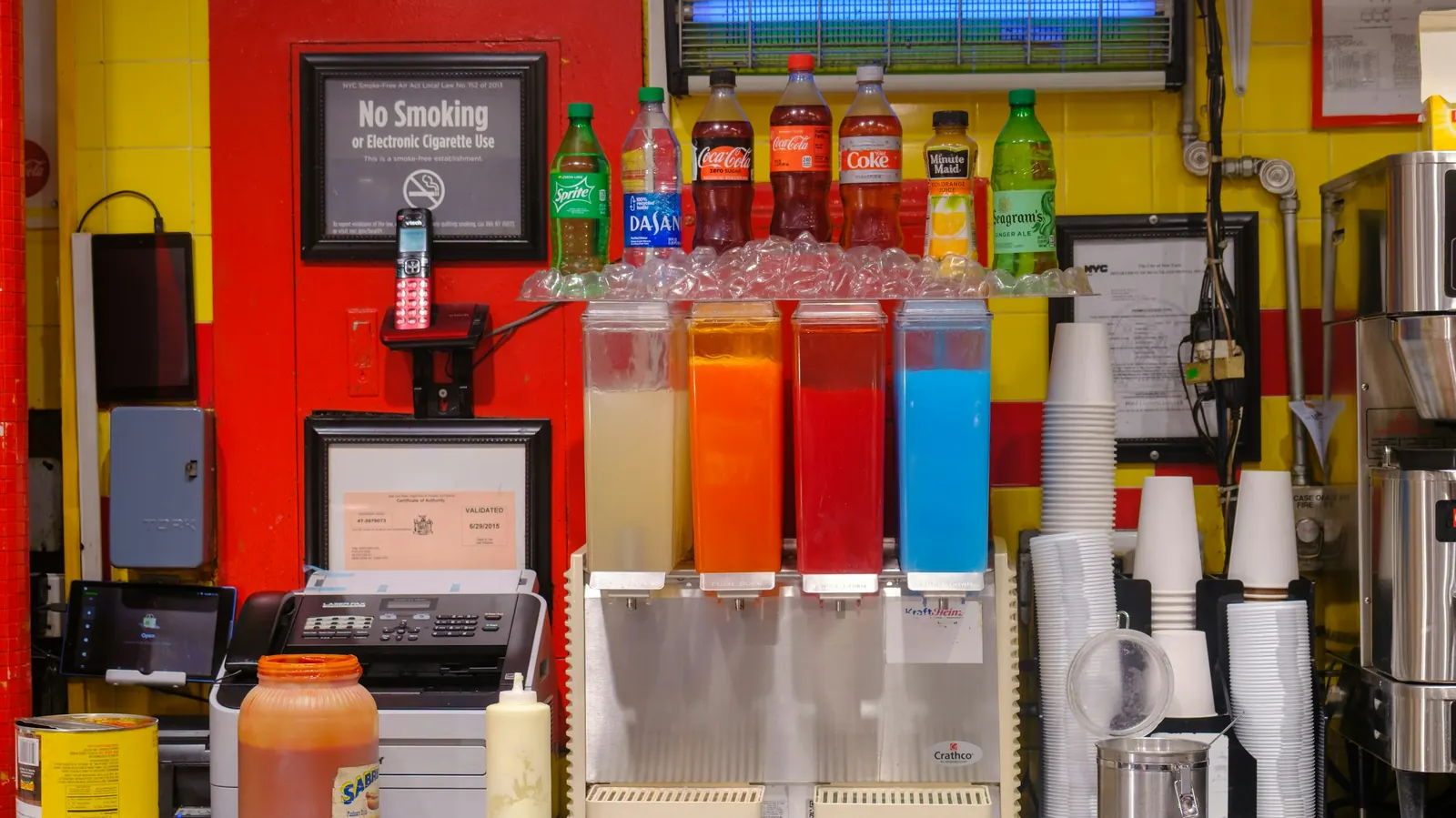
A commercial margarita machine is a different animal from the countertop concoction makers sold for home parties. It is a refrigerated frozen-beverage dispenser: a compressor chills a clear bowl, an auger or spiral keeps the mix moving, and a lever pours a frozen margarita on demand, hour after hour, without a scoop of ice. Bars, restaurants, caterers and event venues buy them because a full bowl serves dozens of drinks with the same texture from the first pour to the last.
Choosing one comes down to how many flavors you serve, how much you pour on a busy night, the outlet behind the counter and the certifications your health inspector will look for. This guide covers the machines worth considering on Amazon, from single-bowl units to three-bowl workhorses, plus two commercial blenders for bars that make frozen margaritas to order.
Julia’s earns a commission on purchases made through links on this page, at no cost to you. Recommendations are based on what a restaurant kitchen looks for in frozen drink equipment, the makers’ own specification sheets and Amazon listings, and dealer information, which we name.
Quick verdict: which commercial margarita machine to buy
For most bars and restaurants, the best commercial margarita machine is the Vollrath double 2.6-gallon frozen beverage machine: two independently controlled bowls, a gasketless spigot, NSF and cETLus listings, standard 120-volt power and a five-year compressor warranty. If you serve one flavor or have little counter space, the single-bowl Vollrath is the same machine at under eight inches wide. If you make frozen margaritas to order rather than from a bowl, a commercial bar blender such as Vitamix The Quiet One is the better tool.
The rest of this page explains why, and which machine suits your volume and your counter.
Five commercial frozen drink machines compared
Our five standout picks, one for each kind of operation, with the capacity and certifications each maker or listing states. All nine machines are reviewed in full below.
| Machine | Best for | Bowls & capacity | Certifications (as stated) | Buy on Amazon |
|---|---|---|---|---|
| Bars and restaurants serving two flavors | 2 x 10-liter bowls | NSF, cETLus | View on Amazon | |

Vollrath Single 2.6-Gallon Frozen Beverage MachineBest single bowl
|
One house margarita, tight counters | 1 x 10-liter bowl | NSF, cETLus | View on Amazon |

Omega Triple 3-Gallon Granita MachineBest for three flavors
|
High volume, three flavors at once | 3 x 3-gallon bowls | Not stated on the listing | View on Amazon |

Vitamix The Quiet One Commercial Bar BlenderBest blender
|
Made-to-order frozen drinks in front of guests | 48-ounce container | NSF, cULus (dealer listings) | View on Amazon |
| Events and seasonal use on a budget | 2 x 15-liter tanks | Not stated on the listing | View on Amazon |
Product images from Amazon. Capacities and certifications are as stated by each maker, its listing or, where noted, dealer listings; confirm them with the seller before you buy.
Our picks for the best commercial margarita machine
These nine machines cover the ways a bar or restaurant serves frozen margaritas: refrigerated bowl machines from Vollrath, Omega and Elmeco that freeze and hold the drink, a large-capacity budget unit for events, and two commercial blenders for drinks made one order at a time. Each pick lists the specs a buyer actually needs, such as bowl size, power and certifications, and one honest reason to skip it.
1. Vollrath Double 2.6-Gallon Frozen Beverage Machine – Two Flavors, Independent Controls

The machine to buy if you want a house margarita and a second flavor on tap. Vollrath’s two-bowl model holds 10 liters per bowl, which Vollrath rounds to two and a half gallons and the listing gives as 2.64 gallons, and each bowl has its own controls. You can run one in granita mode with consistency control for a thick, spoonable frozen margarita and the other in frozen beverage mode with temperature control for a looser slush, or switch one bowl off on a quiet afternoon.
Vollrath says the machines are designed to chill, freeze and serve slushes, smoothies, granitas and frozen cocktails, and that alcohol can be added directly to the hopper. A magnetic drive turns the augers, so there is no shaft seal passing through the bowl wall, and the spigot is gasketless, which the maker says is easy to clean and maintain. A bowl light, switchable on or off, shows off the drink to guests.
It runs on ordinary 120-volt power. Vollrath’s spec sheet lists 10 amps, a 2,550 BTU per hour compressor and a NEMA 5-20P plug, while the Amazon listing describes a 5-15P plug and 1,200 watts, so have your electrician confirm the outlet before installation. Leave six inches of clearance on every side; Vollrath limits it to indoor use at up to 89°F ambient, away from direct sunlight.
Why we like it
- Two 10-liter bowls, each set independently to granita, frozen beverage or off
- Magnetic drive and gasketless spigot for simpler cleaning
- NSF and cETLus listed, per Vollrath’s spec sheet
- Five-year compressor warranty and 24-hour service line
- Vollrath says alcohol can be added directly to the hopper
Key specifications
| Model | VCBF128-37 |
|---|---|
| Bowls and capacity | Two 10-liter bowls (about 2.6 gal each) |
| Refrigeration | Compressor, 2,550 BTU/hr (Vollrath) |
| Power | 120 V, 10 A; listing states 1,200 W |
| Certifications | NSF, cETLus |
| Dimensions | 15.5 W x 19.5 D x 27 H in; 99 lb |
| Cleaning | Magnetic drive, gasketless spigot |
| Warranty | 1 yr parts and labor; 2 yr parts; 3 yr electrical board; 5 yr compressor |
Why we recommend it
For a restaurant that sells frozen margaritas every day, two flavors is the sweet spot: a classic lime and a rotating fruit flavor, or frozen and a non-alcoholic slush for kids. The certifications, the seal-free drive and the long compressor warranty are what separate it from cheaper machines that look similar.
Skip it if you only pour a few frozen drinks a week. A refrigerated bowl machine needs a full bowl, daily cleaning and nearly 100 pounds of counter space to earn its keep, and a blender is simpler for low volume.
Pros and cons
Pros
- Two flavors with separate controls
- NSF and cETLus listed
- Seal-free magnetic drive
- Long compressor warranty
Cons
- Heavy at 99 lb
- Plug type differs between spec sheet and listing
- Needs 6 in of clearance all round
2. Vollrath Single 2.6-Gallon Frozen Beverage Machine – One Flavor, Under Eight Inches Wide
The same Vollrath design with one bowl, for a bar that serves one frozen margarita and needs to keep the rest of the counter free. At 7.75 inches wide it is narrower than most espresso machines, though at 27 inches tall and 19.5 inches deep it still needs clear space above and behind it.
The single 10-liter bowl has the same choice of granita mode with consistency control or frozen beverage mode with temperature control, the same magnetic drive and gasketless spigot, and the same bowl light. Vollrath lists a 1,100 BTU per hour compressor and a draw of 4.8 amps at 120 volts, so it is light on the circuit; the listing gives 1,200 watts. It weighs 61 pounds.
Like the two-bowl model it is NSF and cETLus listed, and Vollrath’s warranty is the same: one year on parts and labor, two on other warranty parts, three on the electrical board and five on the compressor. Every Vollrath frozen beverage machine includes what the maker calls White Glove Service, a single phone line for technical help, parts and on-site service dispatch.
Why we like it
- Only 7.75 inches wide
- Low 4.8-amp draw on a 120 V circuit
- Granita or frozen beverage mode in one bowl
- NSF and cETLus listed
- Five-year compressor warranty
Key specifications
| Model | VCBF118-37 |
|---|---|
| Bowls and capacity | One 10-liter bowl (about 2.6 gal) |
| Refrigeration | Compressor, 1,100 BTU/hr (Vollrath) |
| Power | 120 V, 4.8 A; listing states 1,200 W |
| Certifications | NSF, cETLus |
| Dimensions | 7.75 W x 19.5 D x 27 H in; 61 lb |
| Cleaning | Magnetic drive, gasketless spigot |
| Warranty | 1 yr parts and labor; 2 yr parts; 3 yr electrical board; 5 yr compressor |
Why we recommend it
Choose it for a single house frozen margarita, a small bar or a restaurant testing whether frozen drinks will sell before committing to a larger machine. You can add a second single unit later and run them side by side.
Skip it if you already know you want two flavors. Two single machines take more counter width than one double, and the double shares a frame and a single plug.
Pros and cons
Pros
- Very narrow footprint
- Low power draw
- NSF and cETLus listed
- Same warranty as the larger models
Cons
- One flavor only
- Tall at 27 inches
- Still needs daily cleaning
3. Omega Triple 3-Gallon Granita Machine – Three Flavors for Busy Service
Three separate 3-gallon bowls, about 11.4 liters each, make this the highest-capacity of the branded bowl machines here: nine gallons of frozen drink ready at once. Omega’s listing describes rotating agitators that keep the texture smooth and consistent, a 1/2-horsepower, 980-watt motor, clear high-impact polycarbonate bowls and a stainless steel base with roomy drip trays.
Omega’s instruction manual is worth reading before you buy, because it is specific. The mix must have a minimum of 13 to 15 percent Brix, that is sugar content, and the manual warns never to run plain water, which can damage the mixing parts and gear motors. Each bowl has its own consistency screw on the back, turned one way for thicker and the other for thinner. The machine needs a dedicated grounded outlet, no extension cords, and eight inches of clearance at the sides and back.
Cleaning is daily: drain the bowls, rinse with hot (not boiling) water to melt off sugar, take apart the draw valves, bowls, spirals and gaskets, wash them in warm water and re-lubricate the gaskets with food-grade lubricant. Omega says not to put the parts in the dishwasher. The air filter needs cleaning weekly and the condenser monthly.
Why we like it
- Three 3-gallon bowls, nine gallons in all
- 980-watt, 1/2 HP motor with rotating agitators
- Separate consistency adjustment for each bowl
- Stainless steel base and removable drip trays
- Clear, detailed cleaning instructions from Omega
Key specifications
| Model | OFS30 |
|---|---|
| Bowls and capacity | Three 3-gallon (11.4 L) bowls |
| Refrigeration | Compressor (BTU not stated) |
| Power | 980 W, 1/2 HP; 8 A at 120 V (Omega manual) |
| Certifications | Not stated on the listing |
| Dimensions | 24 x 18.5 x 33.25 in (listing) |
| Cleaning | Daily hand wash of bowls and valves; not dishwasher safe |
| Warranty | 1 year (Omega) |
Why we recommend it
Choose it for a high-volume bar, a patio that sells frozen drinks all weekend, or a restaurant that wants a frozen margarita, a fruit flavor and a non-alcoholic slush side by side. Three bowls on one frame take less space than three single machines.
Skip it if you need certifications on paper before you buy: the Amazon listing does not state NSF or ETL, so ask the seller for documentation. The listing’s dimensions also differ from those in Omega’s own manual, so measure against the seller’s figures.
Pros and cons
Pros
- Nine gallons across three flavors
- Per-bowl consistency control
- Detailed maker instructions
- Stainless base and drip trays
Cons
- Certifications not stated on the listing
- Only a one-year warranty
- Parts not dishwasher safe
4. Omega Double 3-Gallon Granita Machine – Six Gallons on a Smaller Frame

The two-bowl version of the Omega above, with two separate 3-gallon bowls for six gallons in all. The listing gives a 1/3-horsepower, 710-watt motor with continuous agitation, stainless steel construction, high-impact polycarbonate bowls, single-handed dispensing and a removable drip tray, in a 15 by 18.5 by 33.25-inch footprint.
Each bowl holds a little more than a Vollrath 10-liter bowl, which matters if you want to fill once before service and not again. Everything in Omega’s manual applies here too: a mix of at least 13 to 15 percent Brix, never plain water, a dedicated outlet, eight inches of clearance, and daily breakdown and hand washing of the bowls, spirals and valves. If the machine is switched off overnight with product in the bowls, Omega says a layer of ice can form on top, and it should be removed before restarting to protect the agitator.
Omega’s manual lists 6 amps at 120 volts for this model, so it sits comfortably on a standard commercial circuit. The warranty is one year from installation, and the manual asks owners to register within ten days to activate it.
Why we like it
- Two 3-gallon bowls, six gallons in all
- 710-watt, 1/3 HP motor with continuous agitation
- Stainless steel construction, clear polycarbonate bowls
- Single-handed dispensing and removable drip tray
Key specifications
| Model | OFS20 |
|---|---|
| Bowls and capacity | Two 3-gallon bowls |
| Refrigeration | Compressor (BTU not stated) |
| Power | 710 W, 1/3 HP; 6 A at 120 V (Omega manual) |
| Certifications | Not stated on the listing |
| Dimensions | 15 W x 18.5 D x 33.25 H in (listing) |
| Cleaning | Daily hand wash of bowls and valves; not dishwasher safe |
| Warranty | 1 year (Omega) |
Why we recommend it
Choose it if you want two flavors with slightly larger bowls than the Vollrath and do not need maker-stated certifications for your operation. It suits catering companies and seasonal bars that fill the bowls once for an event.
Skip it if long-term support matters most. The one-year warranty is short next to Vollrath’s and Elmeco’s compressor coverage, and one dealer lists this model as discontinued, so ask the seller about parts availability.
Pros and cons
Pros
- Large 3-gallon bowls
- Modest 6-amp draw
- Stainless construction
Cons
- One-year warranty only
- Certifications not stated on the listing
- Parts availability worth checking
5. Elmeco Two-Bowl 3.2-Gallon Granita Machine – Seal-Less Drive, Long Compressor Cover

Elmeco is an Italian maker of granita and frozen beverage machines, and its Millennium FCM-2 has two bowls of 3.2 gallons each, the largest per-bowl capacity among the branded machines here. The listing names frozen margaritas, Italian granita, slushies, frozen coffee, sorbet, sangria and lemonade among its uses.
The selling point is maintenance. Elmeco says its drive shaft is made with a patented seal-less design, which it calls the most hygienic of its kind, and that the design does away with the annual preventative maintenance some competing machines require. Fewer seals means fewer parts to wear, leak and replace, and fewer service calls during the season you need the machine most.
The warranty on the listing is the longest here on parts: five years on the compressor, three on electronics, two on other parts and one on labor. Elmeco’s listing does not give dimensions, power or certifications; dealer listings for the two-bowl model put it at about 31 inches tall, 16 to 17 inches wide and 22 inches deep, around 114 pounds, on 115 volts.
Why we like it
- Two 3.2-gallon bowls
- Patented seal-less drive shaft
- No mandatory preventative maintenance, according to Elmeco
- Five-year compressor, three-year electronics warranty
Key specifications
| Model | FCM-2 Millennium |
|---|---|
| Bowls and capacity | Two 3.2-gallon bowls |
| Refrigeration | Compressor (BTU not stated) |
| Power | 115 V (dealer listings); watts not stated on the listing |
| Certifications | Not stated on the listing |
| Dimensions | About 16 W x 22 D x 31 H in (dealer listings) |
| Cleaning | Seal-less drive; no mandatory preventative maintenance |
| Warranty | 5 yr compressor; 3 yr electronics; 2 yr parts; 1 yr labor |
Why we recommend it
Choose it if your frozen drink machine runs every day and downtime costs you sales. The long parts warranty and the seal-less drive both point to a machine built to keep running with less servicing.
Skip it if you need full specifications in hand before ordering. Elmeco’s Amazon listing is thin on power, size and certification details, so get the spec sheet from the seller first.
Pros and cons
Pros
- Largest bowls of the branded machines
- Seal-less drive shaft
- Longest parts warranty here
Cons
- Listing omits power and size
- Certifications not stated on the listing
- Heavy, at about 114 lb per dealers
6. Elmeco Big Biz 1.6-Gallon Frozen Beverage Dispenser – Compact for Small Bars

Elmeco describes the Big Biz ABB-1 as having the same technology and Italian craftsmanship as its Millennium machines, with tanks half the size. One transparent bowl holds about 1.6 gallons, according to the listing title, which suits a small bar, a café adding a frozen margarita at happy hour, or a taco shop that sells a few dozen frozen drinks a day.
Like the larger Elmeco, the listing says it does not need periodic seal replacement or a mandatory service contract, and it uses a patented dual-auger design. The uses Elmeco lists include frozen margaritas, coladas, daiquiris, slushies, sangria, iced coffee and lemonade. Dealer listings give it a footprint of about 9.8 inches wide, 18.7 inches deep and 22 inches tall, roughly 59 pounds, and a modest 320 watts on 115 volts.
A smaller bowl is easier to keep fresh: you can make a batch that sells in a day rather than holding a large one overnight. The trade-off is that a busy night may mean refilling during service.
Why we like it
- Single 1.6-gallon transparent bowl
- No periodic seal replacement, per Elmeco
- Patented dual-auger design
- Small footprint and low power draw (dealer figures)
Key specifications
| Model | ABB-1 (Big Biz) |
|---|---|
| Bowls and capacity | One 1.6-gallon bowl |
| Refrigeration | Compressor (BTU not stated) |
| Power | 115 V; about 320 W (dealer listings) |
| Certifications | Not stated on the listing |
| Dimensions | About 9.8 W x 18.7 D x 22 H in (dealer listings) |
| Cleaning | No periodic seal replacement or mandatory service contract |
| Warranty | Not stated on the listing |
Why we recommend it
Choose it for low to moderate volume where a 2.6-gallon bowl would sit half full. It is the smallest refrigerated machine here from an established commercial maker.
Skip it if you pour frozen margaritas all night: a 1.6-gallon bowl will need topping up, and refilling a frozen beverage machine means waiting for the new mix to freeze down.
Pros and cons
Pros
- Small footprint
- Low maintenance design
- Right-sized for modest volume
Cons
- One small bowl
- Warranty not stated on the listing
- Most specs from dealers, not Elmeco
7. VEVOR Double 15-Liter Commercial Slushy Machine – Big Tanks for Events

VEVOR’s two-tank slushy machine offers the most capacity on this list: two 15-liter tanks, 3.96 gallons each, which VEVOR says makes about 120 cups a batch. The listing describes a stainless steel body, food-grade PC tanks, a spring-loaded faucet, a removable drip tray and a digital display showing the temperature.
It is also the most explicit about margaritas. The listing gives an adjustable range of 5 to 50°F and suggests 37.4 to 41°F for cold drinks, 26.6 to 30.2°F for non-alcoholic slush and 5 to 21.2°F for alcoholic drinks, with a recommended sugar content of about 13 percent and alcohol below 13 percent. Each tank has its own settings, two modes (slushy and cold drink), a timer and one-button automatic cleaning, and VEVOR says the parts come apart without tools.
What the listing does not give is just as important for a commercial buyer: no wattage, no dimensions, no warranty terms and no NSF or ETL certification. Ask for all of them before you buy, especially if the machine will be inspected.
Why we like it
- Two 15-liter tanks, about 120 cups a batch
- Stated temperature targets for alcoholic and non-alcoholic drinks
- One-button automatic cleaning, tool-free disassembly
- Independent settings for each tank
Key specifications
| Model | X-300 |
|---|---|
| Bowls and capacity | Two 15-liter (3.96 gal) tanks |
| Refrigeration | Compressor; adjustable 5–50°F |
| Power | Not stated |
| Certifications | Not stated |
| Dimensions | Not stated |
| Cleaning | Automatic cleaning; tool-free disassembly |
| Warranty | Not stated |
Why we recommend it
Choose it for catering, festivals, church fundraisers or a seasonal patio where large capacity matters more than a long service record. The stated temperature targets take some guesswork out of setting it up for margaritas.
Skip it if your health department requires NSF-listed equipment or you need a machine to run daily for years. The listing names no certifications and no warranty, and an established maker such as Vollrath will be easier to service.
Pros and cons
Pros
- Largest capacity here
- Clear temperature guidance for cocktails
- Automatic cleaning cycle
Cons
- No certifications stated
- Power, size and warranty not stated
- Budget brand, not a specialist maker
8. Vitamix The Quiet One Commercial Bar Blender – Frozen Drinks to Order, Quietly
Not every bar needs a bowl machine. If you sell frozen margaritas in several flavors, make them with fresh fruit, or only pour a few an hour, a commercial blender making each drink to order wastes less and needs no overnight cleaning. The Quiet One is Vitamix’s commercial bar blender built for blending in front of guests.
Vitamix’s spec sheet lists an approximately 3-peak-output-horsepower motor, a 48-ounce Advance container designed for faster, smoother pours, and six program buttons with 34 optimized settings, so a bartender can press one button and walk away. A removable Twist Lock sound enclosure and vibration dampening keep noise down at the bar, and a larger centering pad makes cleanup a one-step wipe, according to Vitamix.
It runs on 120 volts at 15 amps, stands 18 inches tall (24.5 with the lid open) and weighs 19.2 pounds. Dealer listings show it as NSF and cULus listed. Vitamix backs it with three years on motor base parts and one year on labor. Note that Vitamix says the standard 64-ounce container cannot be used with the compact cover.
Why we like it
- Sound enclosure for blending at the bar
- Six buttons, 34 programmed settings
- 48-ounce Advance container for quick pours
- About 3 peak HP motor, 120 V
- Three-year motor base parts warranty
Key specifications
| Model | 36019 |
|---|---|
| Bowls and capacity | 48-oz container (blender) |
| Refrigeration | None: blends with ice |
| Power | About 3 peak HP; 120 V, 15 A |
| Certifications | NSF, cULus (dealer listings) |
| Dimensions | 18 H x 8.5 W x 10.7 D in; 19.2 lb |
| Cleaning | Removable sound enclosure; one-step centering pad |
| Warranty | 3 yr motor base parts; 1 yr labor |
Why we recommend it
Choose it for a bar that wants frozen margaritas on the menu without a bowl machine, or as a partner to one for fruit flavors and specials. Programmed cycles make the result consistent from bartender to bartender.
Skip it if you pour frozen margaritas by the dozen on a rush: each drink still takes a blend cycle, and a refrigerated bowl machine serves faster at high volume.
Pros and cons
Pros
- Quiet enough for front of house
- Programmable, consistent results
- Any flavor, made to order
Cons
- One drink batch at a time
- Needs a 15-amp circuit
- 64-oz container not compatible with the cover
9. Waring Commercial 40-Ounce Glass Bar Blender – Simple Toggle, Low Volume

The BB900G is Waring’s simple two-speed bar blender. The listing describes a 1/2-horsepower motor, a 40-ounce glass jar that is dishwasher safe, and a three-position toggle switch (high, low and off) on the front of the base that is easy to use in a dim bar.
The housing is chrome-plated die-cast zinc, which the listing says protects the motor and keeps the blender stable and quiet. Waring rates it for up to 25 drinks a day, an honest figure that tells you where it belongs: a restaurant bar that makes the occasional frozen margarita or daiquiri, a hotel lounge, or a back-up blender next to a frozen beverage machine.
It measures 8 by 7 by 16.5 inches. The listing title states NSF certification and the listing gives a two-year limited warranty, while an older Waring spec sheet lists UL and a one-year warranty, so confirm the current terms with the seller.
Why we like it
- Simple high/low/off toggle switch
- 40-ounce glass jar, dishwasher safe
- Chrome-plated die-cast zinc base
- NSF certified, according to the listing
Key specifications
| Model | BB900G |
|---|---|
| Bowls and capacity | 40-oz glass jar (blender) |
| Refrigeration | None: blends with ice |
| Power | 1/2 HP, two speeds; up to 25 drinks a day |
| Certifications | NSF (listing) |
| Dimensions | 8 x 7 x 16.5 in |
| Cleaning | Dishwasher-safe glass jar |
| Warranty | Limited 2 years (listing) |
Why we recommend it
Choose it if you sell only a few frozen drinks a day and want a durable, NSF-listed blender at the low end of the commercial range. The glass jar does not scratch or cloud the way plastic can.
Skip it if frozen margaritas are a big seller. A 1/2-horsepower motor rated for 25 drinks a day is not built for a busy happy hour; step up to a high-performance blender or a bowl machine.
Pros and cons
Pros
- Simple, durable controls
- Glass jar resists scratching
- Small footprint
Cons
- Rated for only 25 drinks a day
- Glass jar can break
- Warranty terms differ between sources
How to choose a commercial margarita machine
Six questions decide which machine fits your operation. Price follows from the answers.
1. Bowl machine or blender
A refrigerated bowl machine freezes the margarita mix itself and holds it at serving texture, so every pour is the same and service is as fast as pulling a lever. It suits steady, high volume. A commercial blender makes each drink from ice, which suits low volume, many flavors and fresh fruit. Plenty of bars run both. If you are deciding between these and a home appliance, our guide to the best margarita machine for home covers the shaved-ice concoction makers and compact slush machines built for households.
2. Number of bowls and capacity
One bowl for a single house margarita; two for a classic plus a flavor, or a frozen cocktail plus a non-alcoholic slush; three for high-volume bars. Size each bowl to what you sell in a day: a full bowl that sits overnight needs care, and a bowl that runs dry mid-service needs time to freeze a new batch.
3. Power and placement
Check amps and plug type against the outlet you have. Vollrath’s single bowl draws 4.8 amps and its two-bowl 10 amps; Omega’s manual asks for a dedicated outlet and no extension cords. Every machine needs breathing room for its condenser: six inches on all sides for Vollrath, eight inches at the sides and back for Omega, and both makers say to keep the machine away from heat sources. A machine squeezed next to a fryer or an ice maker will struggle.
4. Certifications
Ask your local health department which certifications it expects on bar and kitchen equipment before you shop. An NSF mark shows certification to a food equipment sanitation standard; ETL and UL marks show electrical safety listing. Vollrath states NSF and cETLus for its machines, while several listings here state nothing, so get any certification in writing from the seller before you order.
5. Cleaning and maintenance
Frozen beverage machines hold sugary mix at low temperatures and must be broken down and cleaned regularly; Omega’s manual calls for daily cleaning of the bowls, spirals and valves, weekly filter cleaning and monthly condenser cleaning. Design features that reduce the work are worth paying for: Vollrath’s magnetic drive and gasketless spigot, and Elmeco’s seal-less drive shaft.
6. Warranty and service
A compressor is the most expensive part to replace. Vollrath and Elmeco cover it for five years; Omega’s warranty is one year. Note too that commercial warranties are written for commercial use: one dealer notes Omega will not honor the warranty for residential use.
How we chose these nine machines
We started from what a working kitchen asks of a frozen drink machine: consistent texture across a long service, capacity that matches demand, power that suits an ordinary commercial outlet, and cleaning that a closing shift can manage. We then looked at frozen beverage machines and commercial blenders sold on Amazon in the United States, checked that each was in stock, and confirmed specifications from the maker’s own documents wherever we could: Vollrath’s frozen beverage spec sheet, Omega’s OFS20 and OFS30 instruction manual and Vitamix’s spec sheet for The Quiet One. Where a maker publishes nothing we could reach, we used the brand’s Amazon listing or named dealer listings, and each review says which. We left out machines from sellers with no identifiable maker, listings with almost no specifications, and machines that were out of stock or nearly so. Fewer branded refrigerated machines are sold on Amazon than through restaurant equipment dealers, so if you need a model not listed here, a local dealer is worth a call. We have not run these machines ourselves; where we describe how they work, we say whose information it is.
Running a frozen margarita machine well
The mix matters as much as the machine. Frozen beverage machines rely on sugar to keep the drink soft: Omega specifies a minimum of 13 to 15 percent Brix, and VEVOR recommends about 13 percent sugar. Alcohol lowers the freezing point, which is why VEVOR suggests a colder setting for alcoholic drinks and keeping alcohol below 13 percent. A batch with too much tequila or too little sugar may never freeze properly. Follow your mix maker’s directions, and if you use a concentrate, Omega’s manual says to dilute it in a separate container before it goes into the bowl.
Fill between the minimum and maximum lines, give a new batch time to freeze down before service, and adjust consistency per bowl. At close, drain, rinse with hot water, take apart the valve and auger and wash by hand unless the maker says otherwise. Serve responsibly: a frozen margarita goes down easily, and the NIAAA counts 1.5 fluid ounces of 80-proof spirits as one US standard drink, so know how much tequila goes into each cup you pour, and follow your local liquor laws.
Frozen or on the rocks is partly a matter of taste and partly of service; our guide to frozen vs. on-the-rocks margaritas explains the difference.
Commercial margarita machine questions, answered
What is the difference between a commercial and a home margarita machine?
A commercial machine has a refrigeration compressor that freezes the mix in a bowl and holds it for hours, with a tap for dispensing, and it is built and certified for daily use. Most home margarita machines shave ice and blend it into a jar, one batch at a time. Some newer home slush machines also use a compressor, as our comparison of a margarita machine vs. the Ninja SLUSHi explains.
Can you put tequila directly in a frozen drink machine?
Vollrath says alcohol can be added directly to the hopper of its machines. Keep the sugar and alcohol in balance, though: too much alcohol stops the mix from freezing. VEVOR, for example, recommends alcohol below 13 percent in its machine.
How many margaritas does a 3-gallon bowl make?
A US gallon is 128 fluid ounces, so a 3-gallon bowl holds 384 ounces of mix: about 32 twelve-ounce drinks, or more in smaller cups. Allow for some mix staying in the bowl below the minimum fill line.
Do commercial margarita machines need a special outlet?
Most of these run on 120 volts, but check the amps and plug. Vollrath’s spec sheet lists a NEMA 5-20P plug, and Omega asks for a dedicated outlet with no extension cords. Have an electrician confirm the circuit before installation.
Can I use a commercial margarita machine at home?
You can, but think about size, noise and warranty. These machines are heavy, need clearance for ventilation and daily cleaning, and some commercial warranties exclude residential use. For most homes, one of our picks for home margarita machines is a better fit.
Our final word on commercial frozen drink machines
Buy the Vollrath two-bowl machine if you want a certified, low-maintenance machine that serves two flavors all day; the single-bowl Vollrath if one flavor is enough or space is tight; and the Omega three-bowl if you need nine gallons ready at once. If you make frozen drinks to order, put a Vitamix Quiet One on the bar instead. Whichever you choose, get the certifications and plug type in writing before you order.
A frozen drink machine is one part of a margarita setup. Our guide to home margarita bar accessories covers the shakers, glasses and rimmers that go with it, and the best margarita mix covers what goes in the bowl.
And if you would rather someone else made the margaritas tonight, see our drinks and the menu, or call to order.