Every Mexican restaurant asks the same question when you order a margarita: frozen or on the rocks? Most people answer out of habit rather than preference.
They are genuinely different drinks, and the gap is bigger than temperature.
The short answer
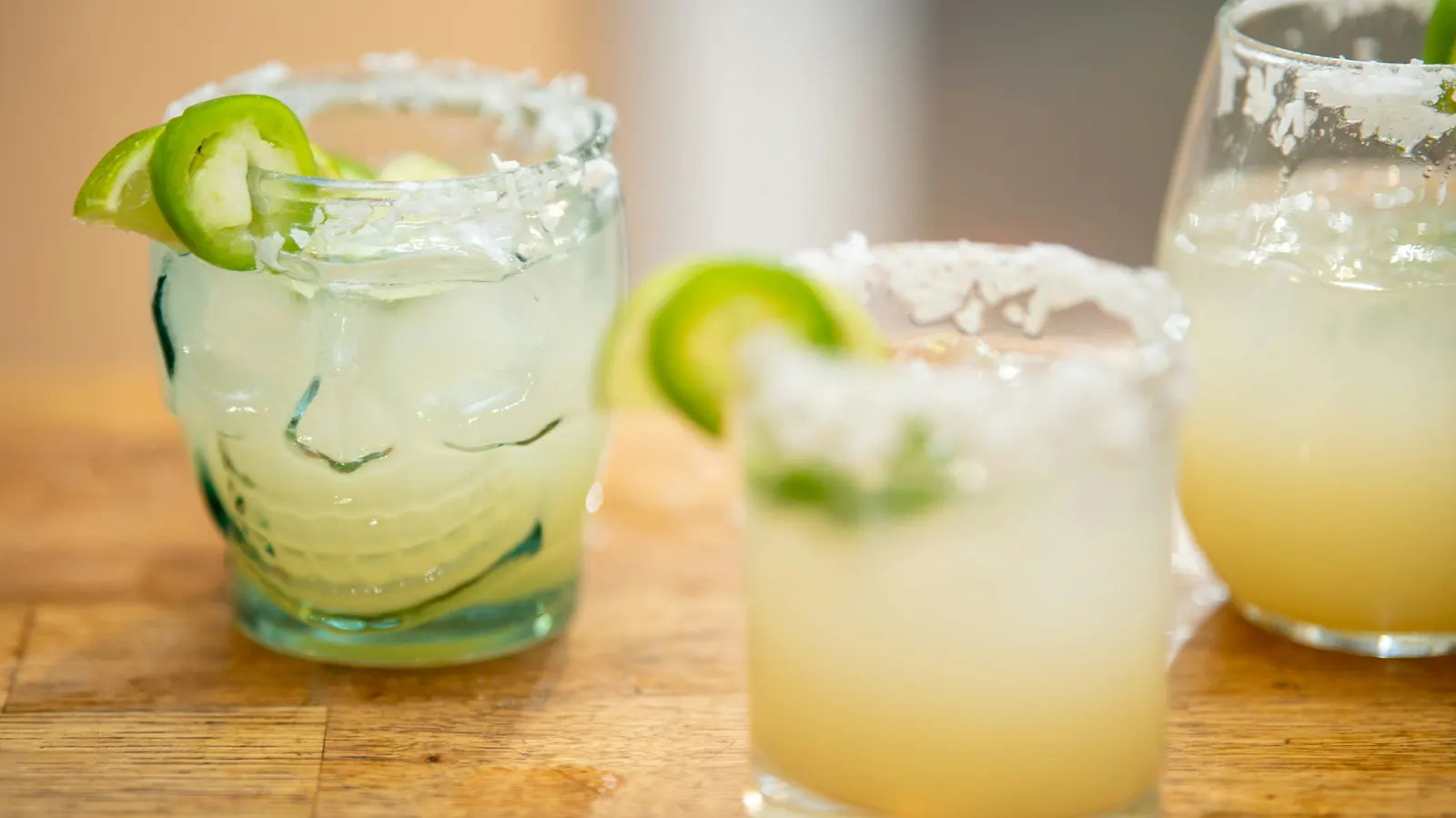
On the rocks means the margarita is shaken or built and poured over ice cubes. Frozen means it is blended with ice into a slush. Rocks keeps the tequila and lime forward and gets more diluted as you drink it. Frozen is colder, sweeter-tasting and better at carrying fruit flavors, but it hides the tequila.
What actually changes
The ice is doing different work in each glass.
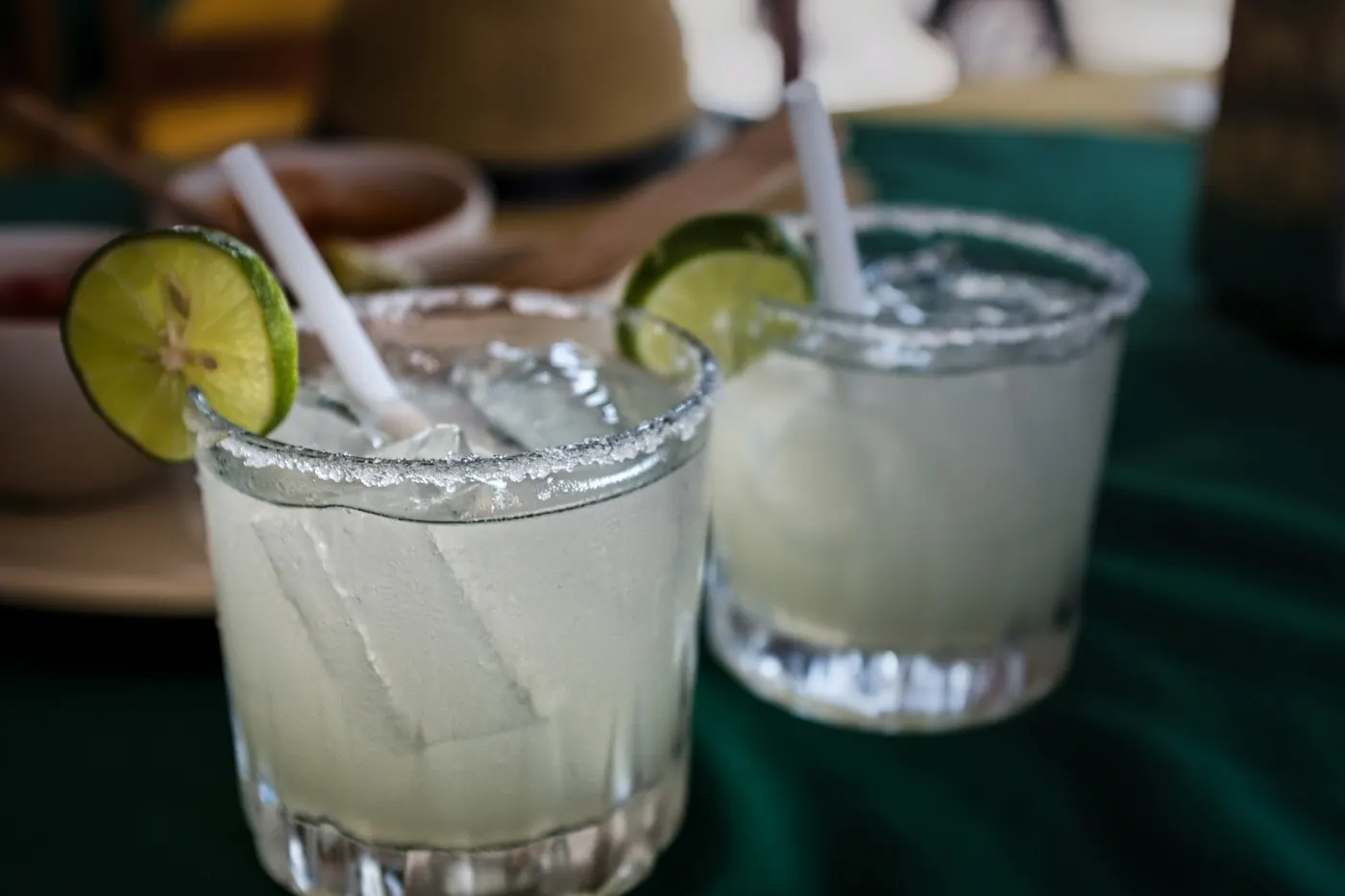
In a rocks margarita, the ice sits in cubes. It chills the drink slowly and melts slowly, which means the first sip and the last sip are noticeably different — the drink softens and waters down as you go.
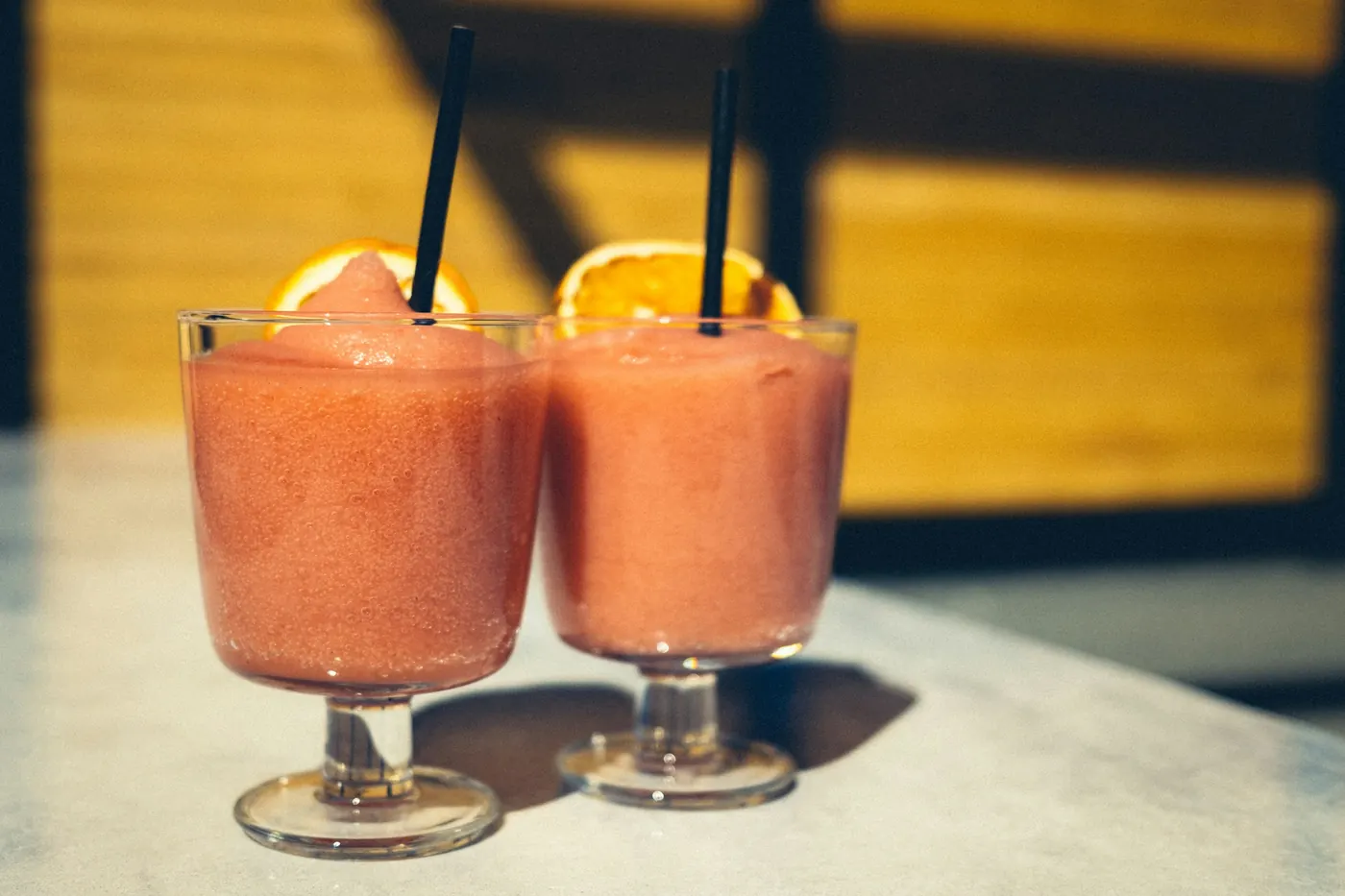
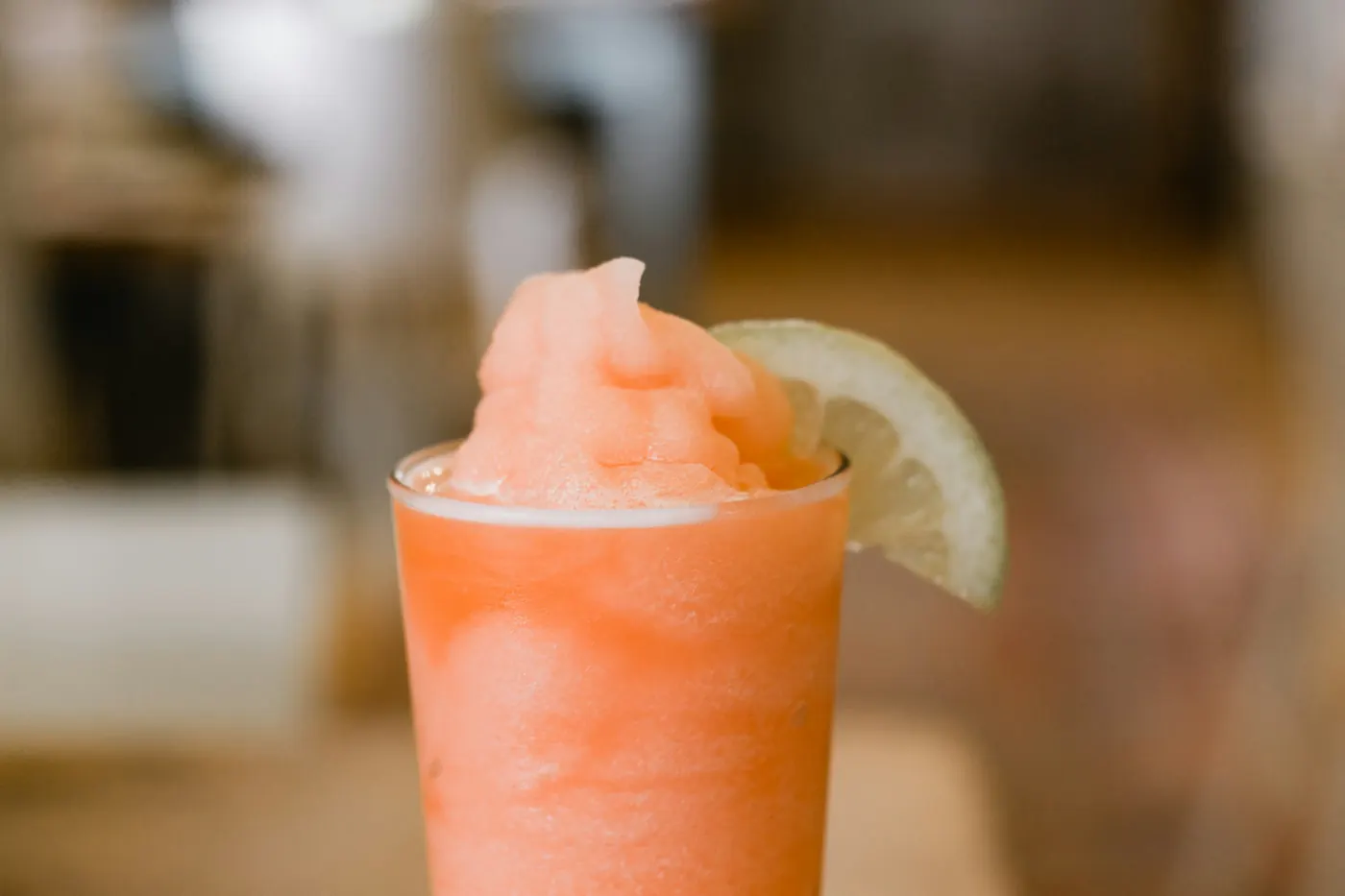
In a frozen margarita, the ice has already been shattered and mixed through. It is colder from the start, and because the dilution happened in the blender, the drink stays roughly consistent until it melts all at once near the end.
Cold changes what you taste
Very cold liquid mutes flavor, particularly the sharp edges. That is why a frozen margarita reads as sweeter and smoother even when the recipe is identical — the cold is suppressing the tequila’s bite and the lime’s acidity.
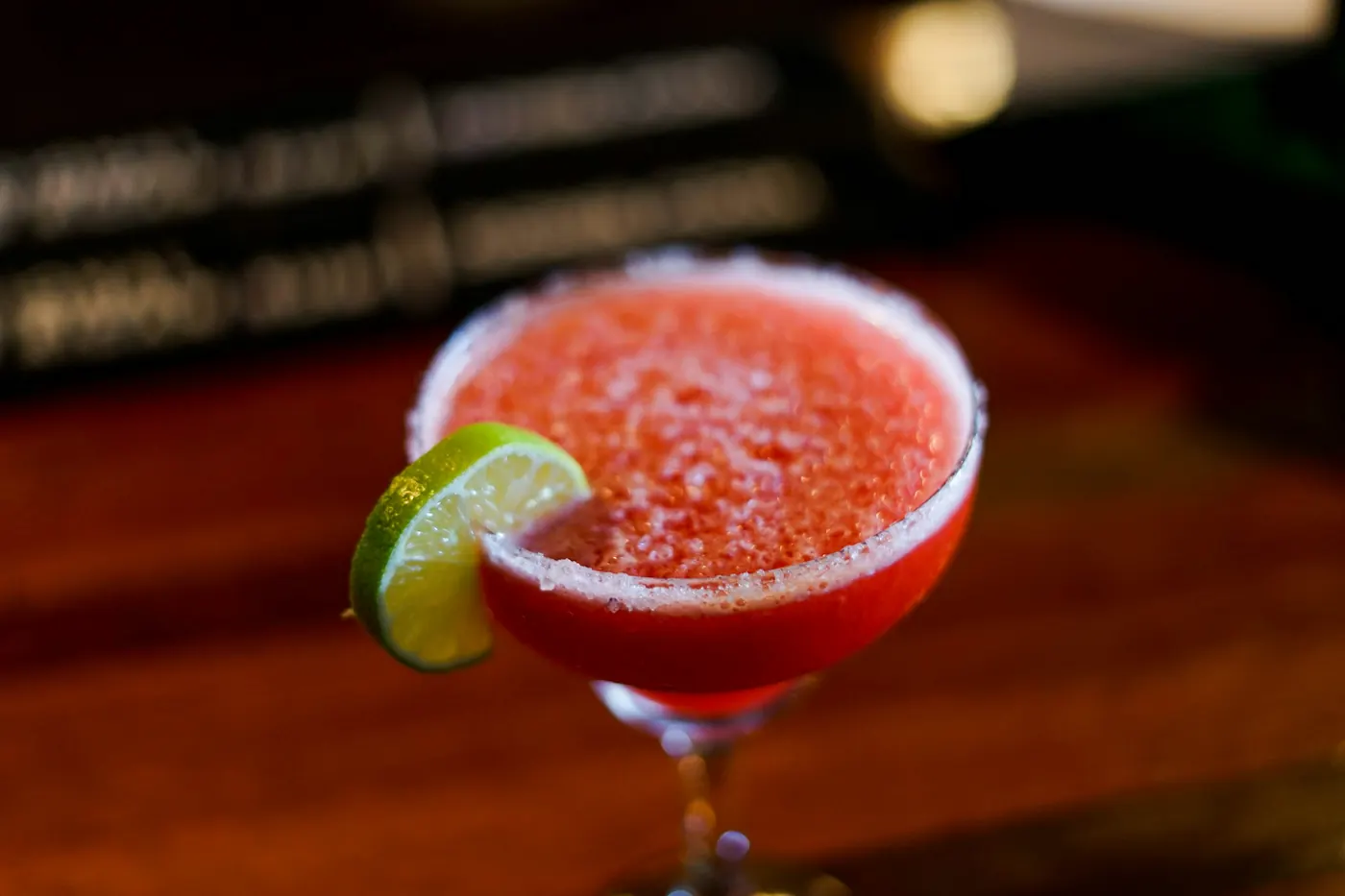
It is also why frozen suits fruit. Strawberry, mango and other additions come through clearly against a muted base, which is why blended fruit margaritas are common and rocks fruit margaritas are not.
Where the frozen margarita came from
The frozen margarita as we know it is a Texas invention, and a fairly recent one.
Blended margaritas existed from the 1930s onward, but they were inconsistent — a bartender with a blender produced a different drink every time and could not keep up with a busy room. As Smithsonian recounts, Dallas restaurateur Mariano Martinez solved that on 11 May 1971, pulling the lever on a repurposed soft-serve ice cream dispenser after a 7-Eleven Slurpee gave him the idea of premixing and freezing the drink.
That machine is why frozen margaritas are everywhere in Texas. It turned a fiddly blended cocktail into something a restaurant could pour consistently, hundreds of times a night.
Is one stronger than the other?
Usually not, though rocks margaritas taste stronger.
A standard pour is a standard pour in either format. What differs is how much you can detect it. Frozen margaritas carry more total ice and often a little more sweetener to balance the cold, so the alcohol is less obvious — which is worth knowing precisely because it is easy to drink faster than you intended.
If you want to actually taste what you are drinking, order on the rocks. That is also the format worth choosing if you are paying for a better tequila, because blending it with a cup of ice defeats the point.
Side by side
| On the rocks | Frozen | |
|---|---|---|
| How it is made | Shaken or built, poured over ice cubes | Blended with ice into a slush |
| Temperature | Cold | Colder |
| Tequila character | Forward and identifiable | Muted by the cold |
| Dilution | Increases as you drink | Fixed at the blender, then melts at the end |
| Suits fruit flavors | Less well | Very well |
| Worth a premium tequila | Yes | Not really |
| Drinking pace | Naturally slower | Easy to drink quickly |
| Best with | Grilled meat, anything charred | Hot weather, spicy food |
Which should you order?
Order on the rocks if
- You want to taste the tequila rather than the mixer.
- You are paying extra for a named or top-shelf pour.
- You are eating grilled food — fajitas, steak, anything charred.
- You intend to make one drink last through a meal.
Order frozen if
- It is hot, and you want something genuinely cold.
- You are eating something spicy and want relief between bites.
- You want a fruit flavor to actually come through.
- You find straight tequila too sharp.
A note on the salt
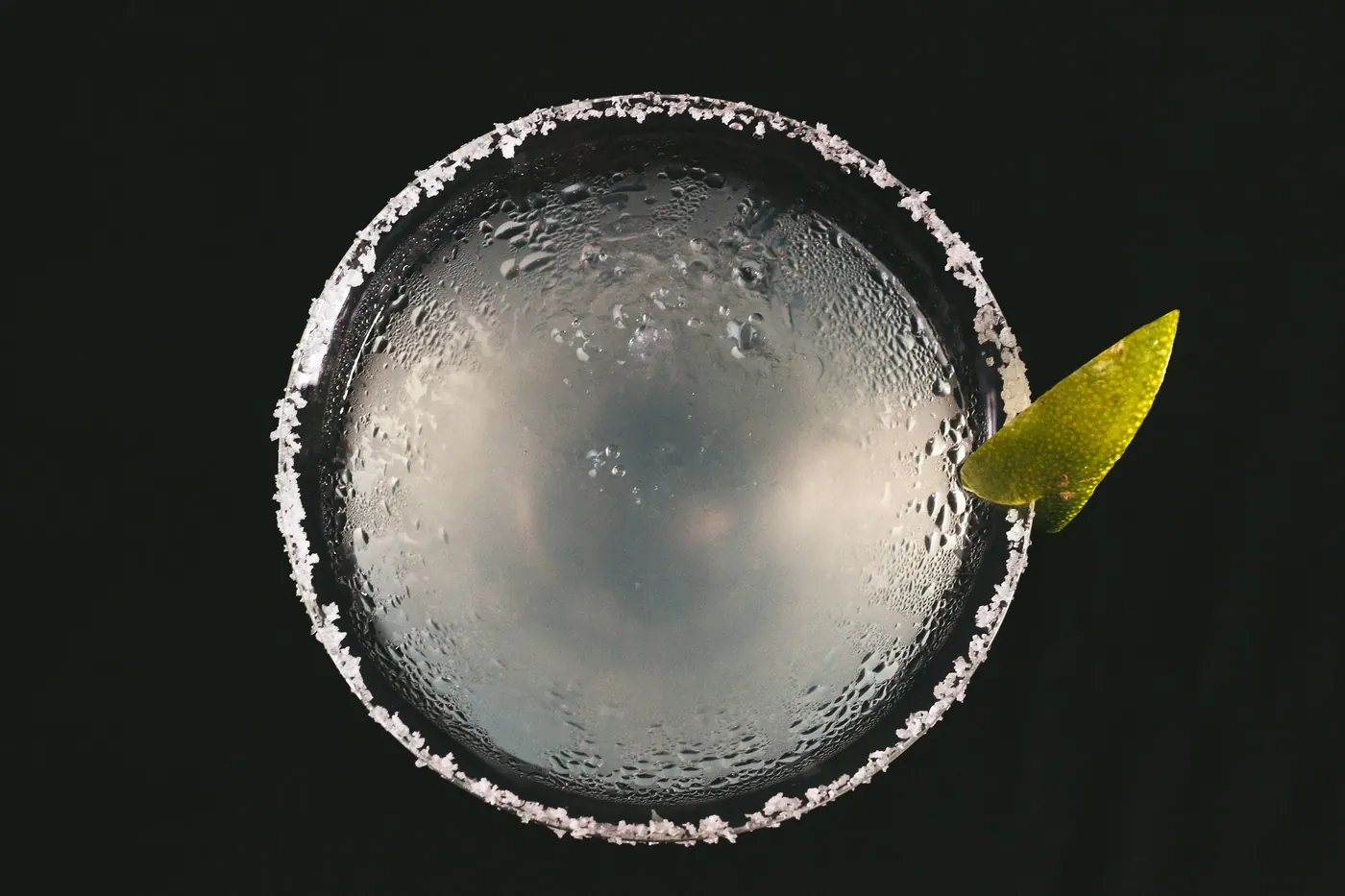
The rim is seasoning, not decoration. Salt suppresses bitterness and sharpens the perception of sweetness and citrus, which is why a salted margarita tastes rounder than the same drink served plain.
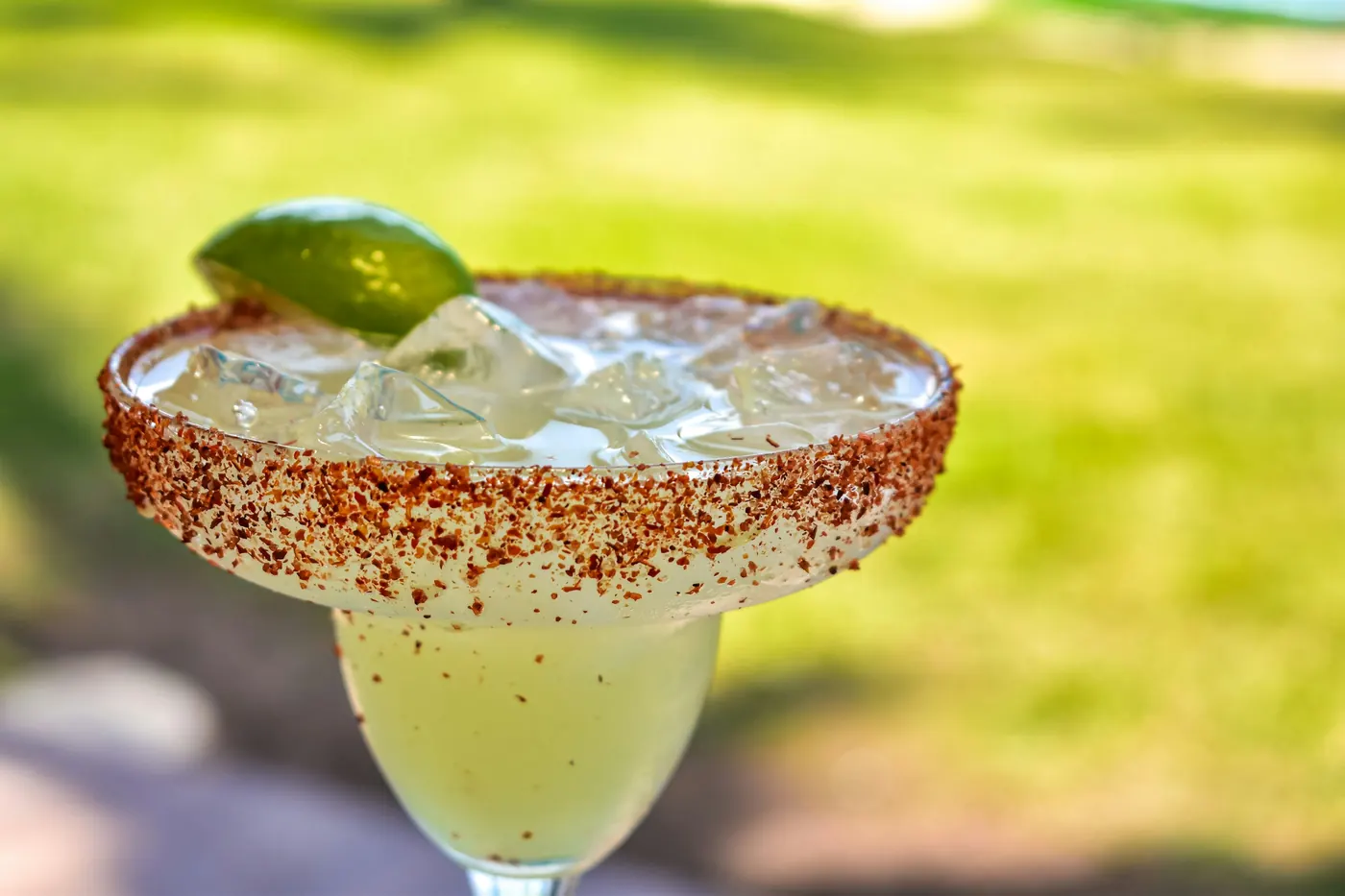
You can ask for no salt, half a rim, or a chile-salt blend where a kitchen offers it. Chile salt adds warmth at the lip without changing the drink underneath — a reasonable middle ground if you like the idea of heat but not a spicy cocktail.
How this looks on Julia’s menu
Julia’s splits the two in a way that is worth reading carefully.
The house margarita is offered either on the rocks or frozen, in two sizes, and the menu notes that the margaritas are made with fresh squeezed lime juice — which matters more to a rocks pour, where the lime is not competing with a cup of ice.
The named margaritas are a rocks list. The Golden, Skinni, Tropical, Acapulco, Top Shelf and Patrona each specify their tequila and orange liqueur, from Cuervo Gold and Jimador Silver up to Herradura and Patrón Silver. That is the tell: when a drink names its tequila, it is built to be tasted, and blending it would waste the distinction.
So the practical rule at Julia’s is straightforward. House margarita, either way. Named margarita, on the rocks.
Machine or blender?
Not all frozen margaritas are made the same way, and the difference shows up in the glass.
A machine holds a batch at a fixed temperature and dispenses it. That is what Martinez’s invention made possible, and its great virtue is consistency — the two hundredth drink of the night is identical to the first. The trade-off is that the recipe was fixed hours ago and cannot be adjusted for you.
A blended-to-order margarita is made per drink, so it can be adapted — less sweet, more lime, a different tequila. It also varies with whoever is making it, and it takes longer.
Neither is better in the abstract. If you want a reliable house frozen margarita, the machine is doing you a favor. If you want something specific, ask whether it can be blended to order.
Frequently asked questions
Is a frozen margarita weaker than one on the rocks?
Not usually in alcohol content — the pour is the same. It tastes weaker because cold and sweetness mask the tequila. That difference in perception is worth keeping in mind rather than treating frozen as the lighter option.
Why does my rocks margarita taste watery at the end?
Because the ice has been melting into it the whole time. That is normal and, up to a point, intended — a little dilution rounds the drink off. If it happens too fast, the ice was too small or the glass sat too long.
Which is better with spicy food?
Frozen, generally. The cold gives more immediate relief from chile heat than a rocks pour does, and the extra sweetness helps too. A cold beer does much the same job.
Can you get a top-shelf frozen margarita?
Some places will, but most do not offer it and there is a good reason. The characteristics you pay for in a better tequila are exactly the ones blending with ice removes.
What does a chile-salt rim change?
Only the first contact. It adds a warm, slightly savory note as you sip without making the drink itself spicy. If you are unsure, ask for it on half the rim.
The short version
Rocks for tequila and grilled food, frozen for heat and fruit. If the drink names its tequila, order it on the rocks; if you just want something cold with your fajitas, frozen is the better call.
The full drink menu lists both, along with the non-alcoholic options, and our guide to drink pairings covers what to reach for beyond margaritas.