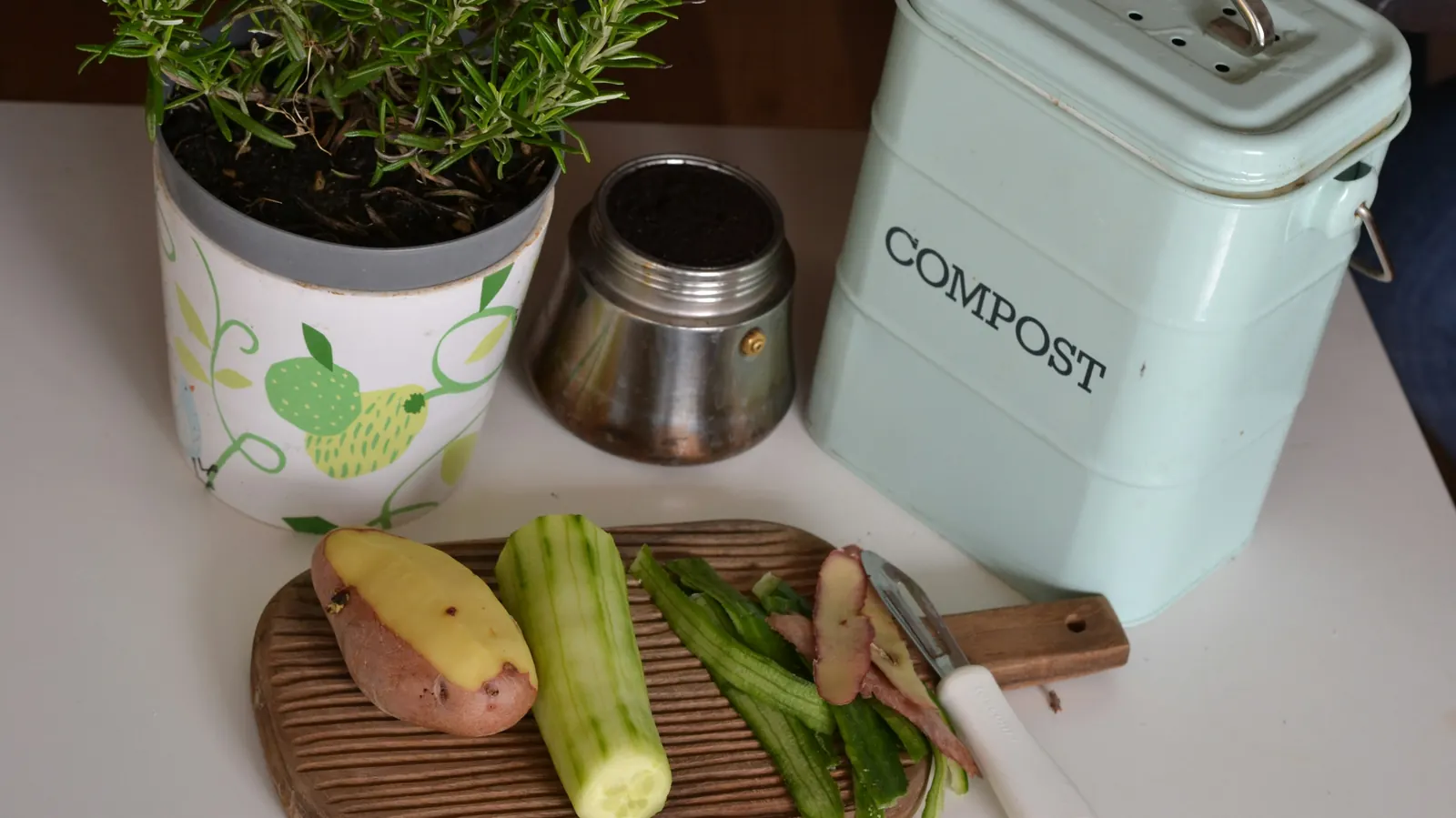
A Mexican kitchen makes a lot of scraps. Tomatillo husks, onion skins, avocado shells, cilantro stems and a mountain of corn husks after a tamale day all head for the same pail, and most of them are wet. A compost bag keeps that pail clean and gets the mess outside in one piece.
The catch is that not every compost bag can go everywhere. A bag that is welcome in one city’s green bin may be turned away in the next, and few belong in a backyard pile. This guide names the bags worth buying, says which certifications each maker actually states, and explains what to check before you order.
Julia’s earns a commission on purchases made through links on this page, at no cost to you. Recommendations are based on what a restaurant kitchen looks for, product specifications and verified buyer reports.
Quick verdict: which compost bags to buy
For most countertop pails, the best compost bags are the Glad Kitchen Compost Bags, 2.6-Gallon: the listing sizes them for countertop bins and says they meet the requirements of municipal compost programs, and the small box lets you try liners without a big commitment. Look for the BPI logo on your box. For a standard 3-gallon pail, choose the Repurpose 3-Gallon bags, and for wet scraps and bigger pails, the Full Circle 4-Gallon bags. For a tall kitchen can, the Matter 13-Gallon bags are the compostable trash bags to buy.
Before you order anything, check with your city or compost service. If your program does not take bags, no bag on this page will help.
Five compost bags side by side
Five standouts, one for each kind of bin. Certifications and home compost claims are as each maker or listing states them. All seven bags are reviewed in full below.
| Bag | Size | Certification (as stated) | Home compost | Buy on Amazon |
|---|---|---|---|---|

Glad Kitchen Compost Bags, 2.6-Gallon, 22 CountBest overall
|
2.6 gallons | BPI, per Glad’s FAQ; not on the listing | No; Glad says not to | View on Amazon |

Full Circle Compostable Food Waste Bags, 4-Gallon, 25 CountBest for wet scraps
|
4 gallons | BPI; TÜV | Yes, per listing | View on Amazon |
| 13 gallons | BPI; TÜV Home and Industrial | Yes, per listing | View on Amazon | |

Norpro Compostable Bags, 6-Liter, 50 CountBest for crocks
|
6 liters | BPI; OK Compost | No, commercial only | View on Amazon |

Primode Compostable Bags, 6-Gallon, 100 CountBest for big batches
|
6 gallons | BPI; TÜV Austria | Yes, per listing | View on Amazon |
Product images from Amazon. Certifications are as stated by each maker or listing; look for the logo on the box before you rely on one.
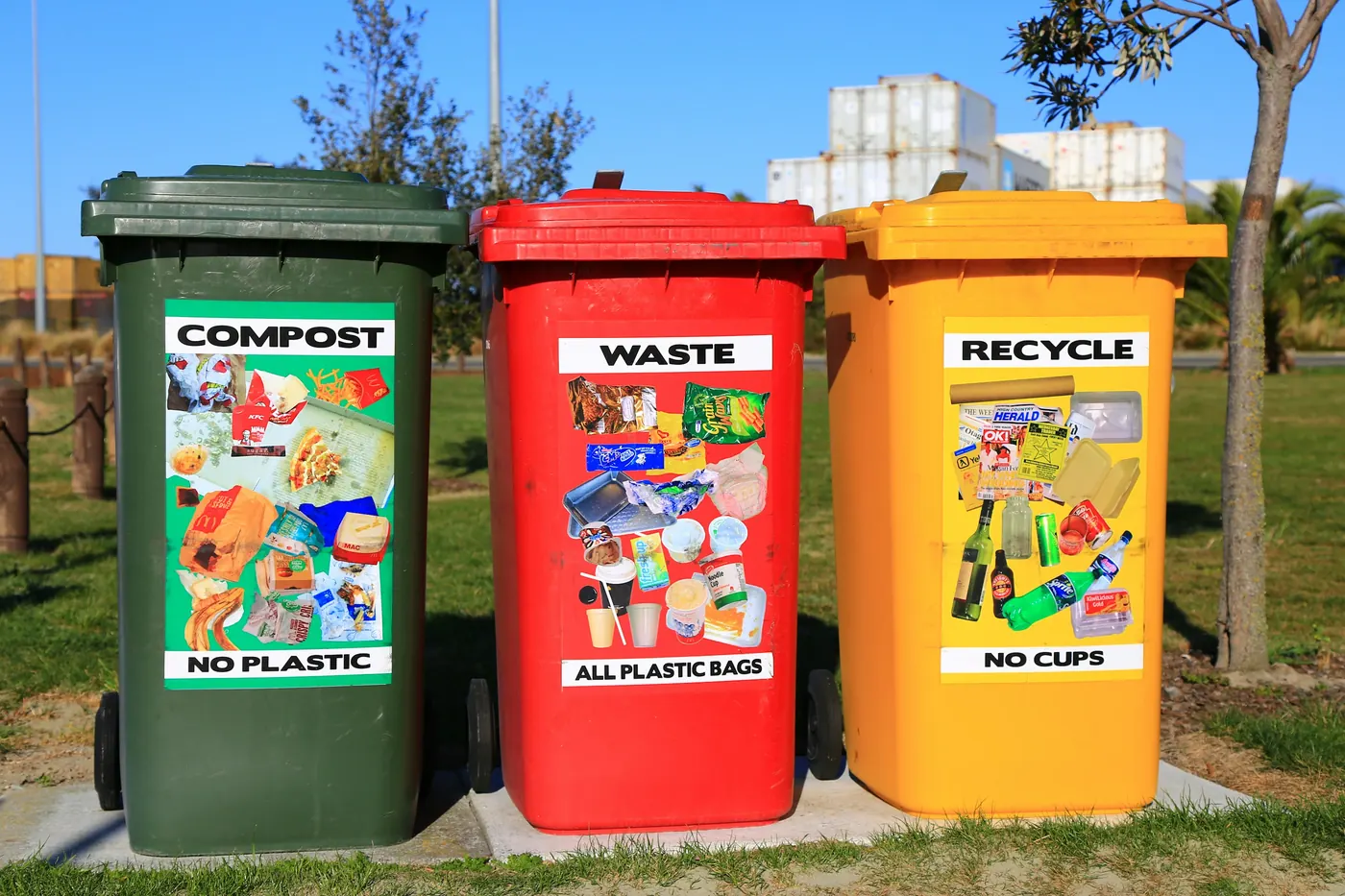
Our picks for the best compost bags
These seven bags run from a 1-gallon caddy liner to a 13-gallon drawstring bag. Each pick says what its maker states about certification and home composting, because that is where these bags differ most. Where a maker leaves something out, we say so.
1. Glad Kitchen Compost Bags, 2.6-Gallon, 22 Count – The Familiar Store Brand
Glad is the name most shoppers know, and this small box of 22 is an easy way to find out whether liners suit your routine before you buy a hundred of anything.
The bags are flat-top rather than drawstring and measure 16.3 by 16.5 inches, which the listing says suits countertop compost bins and other small bins. They are unscented. The listing asks you to keep them in a cool, dry area and use them within one year of purchase.
Read the certification carefully, because the Amazon listing and Glad’s website say different amounts. The listing says only that the bags meet the requirements of municipal compost programs. Glad’s own FAQ goes further and calls its compost bags BPI Certified Commercially Compostable. We could not confirm this 2.6-gallon size in the BPI directory, so check the box for the logo. Glad is also clear about home piles: its composting guide says not to put the bags in home compost bins.
Why we like it
- Small box for trying liners without a big commitment
- Unscented, with a flat top that is quick to change
- 16.3 by 16.5 inches, sized for small bins
- Glad states it is for municipal compost programs
Key specifications
| Model | TU_34098 |
|---|---|
| Capacity | 2.6 gallons |
| Bag size | 16.3 x 16.5 in |
| Count | 22 |
| Thickness | Not stated |
| Certification (as stated) | BPI Certified Commercially Compostable (Glad FAQ; not on the listing) |
| Home compost claim | No; Glad says not to use in home bins |
| Storage and use | Cool, dry area; use within one year |
Why we recommend it
It is our first choice for most kitchens: a household on a city compost program that wants a known brand and a small box. If your program takes BPI-certified bags and the logo is on your box, this is a simple way to start.
Skip it if you compost at home. Glad says plainly that these do not belong in a home bin.
Pros and cons
Pros
- Easy starter size
- Familiar maker with published guidance
- Unscented
Cons
- Small count per box
- BPI wording is on Glad’s site, not the listing
- Not for home compost bins
- Thickness not stated
2. Full Circle Compostable Food Waste Bags, 4-Gallon, 25 Count – Extra Room and a Sealed Bottom
Wet scraps are the hard part of any compostable bag. Tomato trimmings, citrus and coffee grounds are heavy and damp, and this is the bag on the list that speaks to that most directly.
Full Circle gives it a reinforced sealed bottom and calls it extra thick, though it does not publish a mil figure. At 4 gallons and 21.6 by 17.7 inches it is a step up from the usual countertop size, so it works for a larger pail or a small kitchen can. It is unscented.
The most useful line on the listing is the honest one. Full Circle says to expect reliable performance for three to five days before replacing the bag, and notes that compostable bags naturally begin to break down once they meet moisture. Take that as a working rule for every bag on this page, not only this one.
The listing says the bags are BPI certified to ASTM D-6400 and TÜV certified, and that they suit home and commercial composting. They are made from corn-derived material, according to the maker.
Why we like it
- Sealed bottom aimed at heavy, wet scraps
- States a working life of three to five days
- BPI and TÜV certification, per the listing
- Larger 4-gallon size
Key specifications
| Model | FG21808 |
|---|---|
| Capacity | 4 gallons |
| Bag size | 21.6 x 17.7 in |
| Count | 25 |
| Thickness | Not stated (described as extra thick) |
| Certification (as stated) | BPI to ASTM D-6400; TÜV |
| Home compost claim | Yes, per the listing |
| Storage and use | Change every 3 to 5 days |
Why we recommend it
It suits a busy cook who fills a pail quickly with wet trimmings and empties it twice a week. The stated three-to-five-day window is a realistic plan, and the extra capacity means fewer trips outside.
Skip it if you empty the pail only once a week. By the maker’s own guidance, the bag is not meant to sit that long.
Pros and cons
Pros
- Sealed bottom for wet loads
- Maker gives a clear change schedule
- Certified for home and commercial use, per the listing
Cons
- Only 25 in a box
- No thickness figure
- Larger than many countertop pails
3. Matter Compostable Tall Kitchen Bags, 13-Gallon, 60 Count – For the Full-Size Kitchen Can
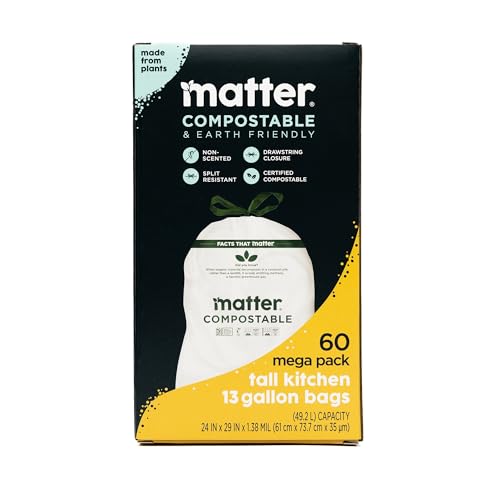
This is the compostable trash bag for people who skip the pail and run a tall kitchen can for scraps. UNNI’s 13-gallon bag, the one most guides name for this job, was low in stock when we checked, so this took its place.
A drawstring closes the bag and helps it stay on the rim, which a flat-top liner cannot do at this size. The maker says the bag is built for heavy, wet waste, including peels, bones and coffee grounds. Keep in mind that a tall bag full of wet scraps is heavy, so support it from below when you lift it.
The listing says the bags are BPI, TÜV Home and TÜV Industrial certified for backyard and commercial composting, and that they break down within 12 months when disposed of properly. That timing is the maker’s statement, and it depends on conditions. The EPA says to keep meat, fish and bones out of a backyard pile, whatever bag they sit in.
Why we like it
- 13-gallon size for a standard tall can
- Drawstring closure
- BPI and TÜV Home and Industrial, per the listing
- 60 bags in a box
Key specifications
| Model | M2302A |
|---|---|
| Capacity | 13 gallons |
| Bag size | Not stated |
| Count | 60 |
| Thickness | Not stated |
| Certification (as stated) | BPI; TÜV Home; TÜV Industrial |
| Home compost claim | Yes, per the listing |
| Storage and use | Not stated |
Why we recommend it
It suits a large household or a program that takes all food waste, where a small pail fills in a day. It also pairs well with a full-size can from our kitchen trash can guide.
Skip it if your program only wants small liners, or if you keep scraps on the counter. A big bag fills slowly, and a slow-filling bag sits with wet scraps for longer.
Pros and cons
Pros
- Tall size in plain stock
- Drawstring is easy to tie and carry
- Stated home and commercial certification
Cons
- Heavy when full of wet scraps
- Thickness and dimensions not stated
- Slow-filling bags sit longer
4. Norpro Compostable Bags, 6-Liter, 50 Count – Sized for a Countertop Crock
Norpro makes kitchen tools, and these liners are meant for the small ceramic, steel and plastic compost crocks that sit by the sink. At 6 liters, a little over 1.5 gallons, they are the better fit when a 3-gallon bag leaves too much film bunched around the rim.
The listing gives more detail than most: 14 by 16 inches, 0.65 mil, 50 bags in a perforated carton that dispenses one at a time. It says the bags are certified by BPI and OK Compost and comply with ASTM D6400, EN 13432 and California SB1749.
One limit is spelled out in the listing, and it is easy to miss: these are for commercial composting facilities only. If your scraps go to a backyard pile, choose a bag whose maker makes a home claim, or go without.
Why we like it
- Fits small 6-liter crocks without excess film
- Thickness stated at 0.65 mil
- Dispenser carton for one-at-a-time use
- BPI and OK Compost, per the listing
Key specifications
| Model | 870 |
|---|---|
| Capacity | 6 liters |
| Bag size | 14 x 16 in |
| Count | 50 |
| Thickness | 0.65 mil |
| Certification (as stated) | BPI; OK Compost; ASTM D6400; EN 13432 |
| Home compost claim | No; commercial facilities only, per the listing |
| Storage and use | Cool, dry place, away from heat |
Why we recommend it
It suits anyone with a small crock on a city compost route. The size is the point: a liner that fits sits cleanly under the lid, and the tidy carton fits in a drawer.
Skip it if you compost at home. The listing limits these to commercial facilities.
Pros and cons
Pros
- Right size for small crocks
- Detailed, stated specifications
- Compact dispenser box
Cons
- Commercial composting only
- Small capacity for big cooking days
5. simplehuman Code Z Compostable Liners, 1-Gallon, 30 Count – Made for One Caddy

If you own simplehuman’s 4-liter Compost Caddy, this is the liner the maker designed for it. The listing calls it the genuine fit for that caddy, and buying the matching code takes the guesswork out of sizing.
The listing describes extra-thick film with welded, double seams, and says the bag is made to be packed to the rim. It is made from PVOH, which simplehuman calls a plant-based plastic. The maker does not give a mil figure.
The listing says Code Z liners are certified compostable for backyard or commercial composting, but it does not name the certifier. If your program asks for the BPI logo, check the box before you commit. At 30 to a pack and 1 gallon each, these are also small, so they suit a household that empties the caddy often.
Why we like it
- Designed by the maker for its own 4-liter caddy
- Double-sealed seams, per the listing
- Backyard or commercial claim, per the listing
- One-gallon size empties often
Key specifications
| Model | CW0525 |
|---|---|
| Capacity | 1 gallon (4 liters) |
| Bag size | Not stated |
| Count | 30 |
| Thickness | Not stated (described as extra thick) |
| Certification (as stated) | Certified compostable; certifier not named |
| Home compost claim | Yes, per the listing |
| Storage and use | Not stated |
Why we recommend it
It suits simplehuman caddy owners, full stop. A matched liner is worth having on a bin you open many times a day, and you avoid the fiddling that comes with a general liner.
Skip it if you own any other pail. The size is tailored to one caddy, and the general liners above fit far more bins.
Pros and cons
Pros
- Made for its caddy
- Reinforced seams
- Small size keeps scraps moving
Cons
- Certifier not named on the listing
- Fits a narrow range of bins
- Small pack
6. Primode Compostable Bags, 6-Gallon, 100 Count – Thick Film for Bigger Bins
Primode is an Amazon-first brand, so it does not have the long history of Glad, but its listing states the numbers that matter. This 6-gallon bag measures 21 by 23 inches at 0.87 mil, the thickest figure stated by any pick on this page.
That makes it a sensible choice for a tamale day or a big salsa batch, when husks, tomato cores and onion skins all go in at once. The size fits a larger pail or a small kitchen bin, and 100 bags is a generous pack.
The listing says the bags are BPI certified to ASTM D6400 and meet TÜV Austria requirements for backyard composting. Primode’s 3-gallon listing recommends changing the bag every one to two days and buying only what you will use within 10 months. Those are good habits for this size as well, though the 6-gallon listing does not repeat them.
Why we like it
- 0.87 mil, the thickest stated here
- 100 bags in a pack
- BPI and TÜV Austria, per the listing
- Roomy 21 by 23 inches
Key specifications
| Model | CB6-100 |
|---|---|
| Capacity | 6 gallons |
| Bag size | 21 x 23 in |
| Count | 100 |
| Thickness | 0.87 mil |
| Certification (as stated) | BPI to ASTM D6400; TÜV Austria |
| Home compost claim | Yes, TÜV Austria for backyard use, per the listing |
| Storage and use | Cool, dry place; 10 months (Primode’s 3-gallon listing) |
Why we recommend it
It suits large families and anyone who does big cooking days, because the bag has the size and the stated thickness for a heavy load of trimmings all at once.
Skip it if you want a maker with a longer record or a bag for a small pail. A 6-gallon liner will bunch up in a countertop crock.
Pros and cons
Pros
- Thickest stated film on the list
- Large pack
- Backyard and commercial claims
Cons
- Amazon-first brand
- Too large for small pails
- A pack of 100 may outlast its shelf life in a small home
7. Repurpose Compostable Kitchen Bags, 3-Gallon, 100 Count – A Sealed Pail Liner

Repurpose also sells compostable plates, and this bag is the pick here for a standard 3-gallon pail, with 100 bags in the box.
The listing says the bags are BPI certified and have a star-sealed bottom to help prevent leaks. They are also listed as approved for the Lomi countertop composter, which is a useful detail if you own one, and the packaging is recyclable.
The listing is thin on the details. It does not state a thickness, flat size, home compost claim or shelf life. Treat this as a bag for commercial programs unless the box says otherwise, and store it cool and dry as you would any compostable bag.
Why we like it
- Star-sealed bottom, per the listing
- BPI certified, per the listing
- Approved for Lomi, per the listing
- Recyclable packaging
Key specifications
| Model | FBATRS3100 |
|---|---|
| Capacity | 3 gallons |
| Bag size | Not stated |
| Count | 100 |
| Thickness | Not stated |
| Certification (as stated) | BPI, per the listing |
| Home compost claim | Not stated |
| Storage and use | Not stated |
Why we recommend it
It suits anyone who wants a BPI-labeled 3-gallon liner in a large box, and Lomi owners in particular, since the listing names that machine.
Skip it if you want published specifications. Primode gives you more to go on.
Pros and cons
Pros
- 3-gallon size, 100 in the box
- Star seal at the bottom
- Names Lomi use
Cons
- Few stated specifications
- No home compost claim on the listing
- No stated shelf life
How to choose compost bags for your kitchen
Start with your program, not the bag
Rules change from one city to the next. Washington, DC says a plastic bag must be labeled BPI-certified compostable and warns against going by color alone. In California, StopWaste reports that Oakland no longer accepts compostable plastic bags, and that many large facilities screen them out and send them to landfill even where a city says it accepts them. Look up your own program first.
Know what the logo means
BPI uses ASTM D6400 as its base standard for commercial certification, and it also offers a Commercial and Home tier for items that break down in a properly managed home bin. A green color or the word biodegradable tells you nothing. Look for a certifier’s name on the box.
Be realistic about a backyard pile
The EPA lists compostable bags among the things to keep out of home compost, because backyard piles generally do not get hot enough to break them down. Some makers here do claim home compostability, but a cool pile may still hold on to a bag for a long time. If you compost at home, you may be better off without a liner.
Match the size to the pail
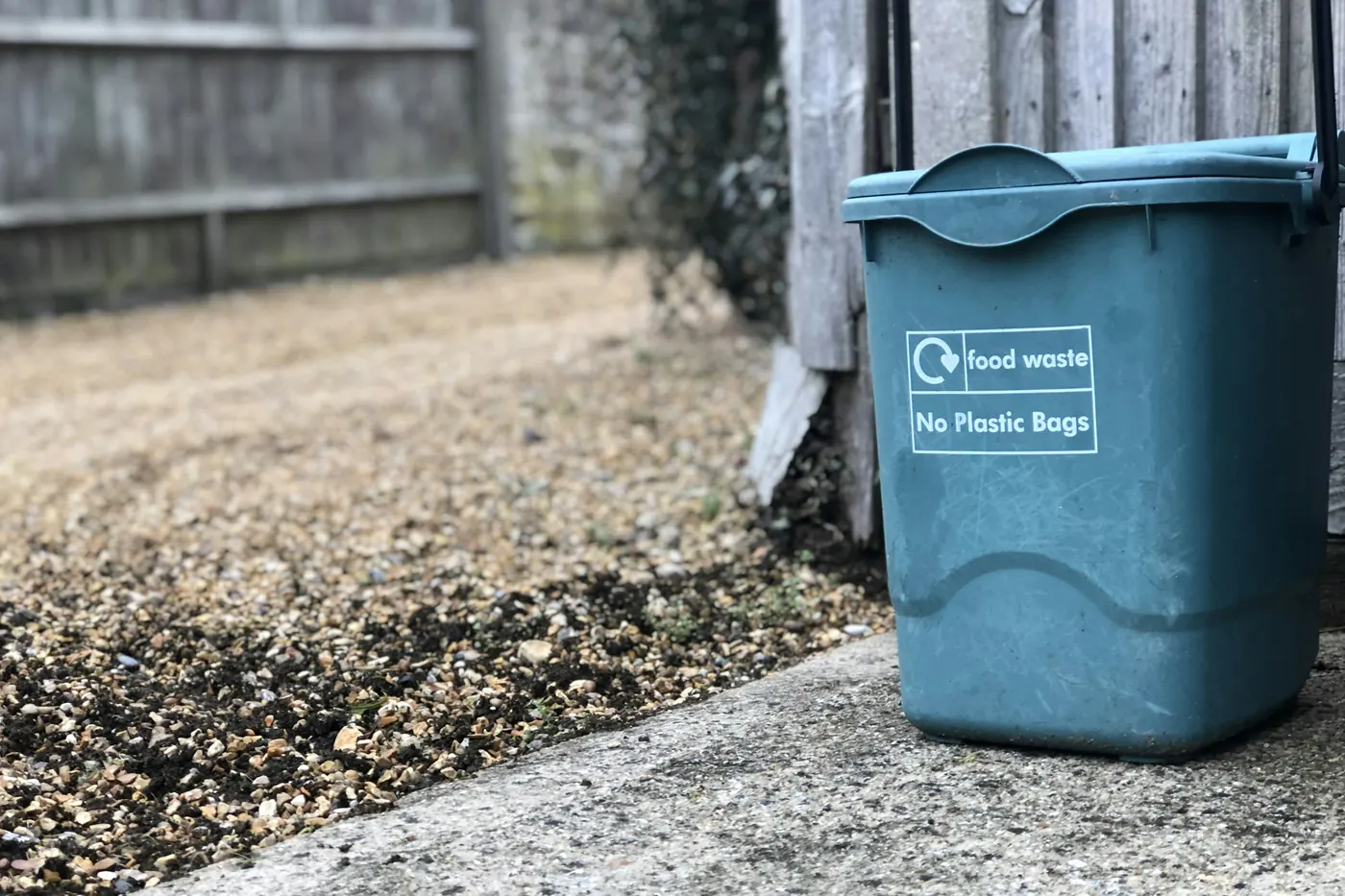
A liner should sit neatly over the rim with a little to spare. Too small and it slips in; too large and it bunches up and takes longer to fill. Measure your pail, and see our countertop compost bin guide if you are still choosing one.
Buy only what you will use
Compostable film has a shelf life. Glad says to use its bags within a year, and Primode says 10 months on its 3-gallon listing. Keep the box cool and dry, and do not stock up for two years to save a little.
Change the bag often
Moisture is what starts these bags breaking down. Full Circle’s three to five days and Primode’s one to two days are the best guidance we found. Drain wet scraps first, and take the bag out before it softens.
How we picked these seven compost bags
We started with what was in stock on Amazon from makers we could identify, and read each listing for stated certification, size and storage advice. We then read Glad’s own FAQ and composting guide, along with BPI, EPA and city guidance. We limited the list to two Amazon-first brands.
We searched for independent head-to-head reviews and found none we would rely on, so these picks rest on the maker and listing details, which we name throughout. We did not try these bags ourselves. UNNI’s tall bag was low in stock when we checked, so it is not included, and bags sold only as biodegradable were left out.
Compost bag questions, answered
Are compost bags the same as compostable trash bags?
Mostly, yes. Both names describe bags meant to go to composting with food scraps. The difference is usually size: compost bags tend to fit countertop pails, while compostable trash bags tend to fit tall cans. What counts is the certification on the box, not the name.
Can I put compost bags in my backyard pile?
Only if the maker says so, and even then with caution. Glad says not to, Norpro’s listing limits its bags to commercial facilities, and the EPA advises against compostable bags in home piles. Full Circle, Matter, Primode and simplehuman do make a home claim on their listings.
Do I need a bag at all?
Often not. DC’s guide says you are not required to use a bag, and StopWaste suggests newspaper or a paper bag instead. A pail you rinse out works well, as long as your program allows loose scraps.
How long can scraps sit in a compost bag?
Only a few days. Full Circle says three to five, and Primode recommends changing its 3-gallon bags every one to two. In a warm kitchen, plan on the shorter end.
Why did my compost bag fall apart?
Probably moisture, age or heat. Full Circle notes that compostable bags begin to break down when exposed to moisture. Drain wet scraps, change the bag sooner, and check how old your box is.
Our final pick for a cleaner pail
Buy the Glad 2.6-gallon bags if you have a small pail and a city compost program, the Repurpose 3-gallon bags for a standard pail, and move up to Full Circle if your scraps run wet. For the bin itself, start with our best countertop compost bin guide, or our indoor compost bin picks for something larger.
Corn husks left over from a batch of tamales are exactly the kind of thing these bags are for. And if you would rather skip the scraps tonight, see the menu or call to order.