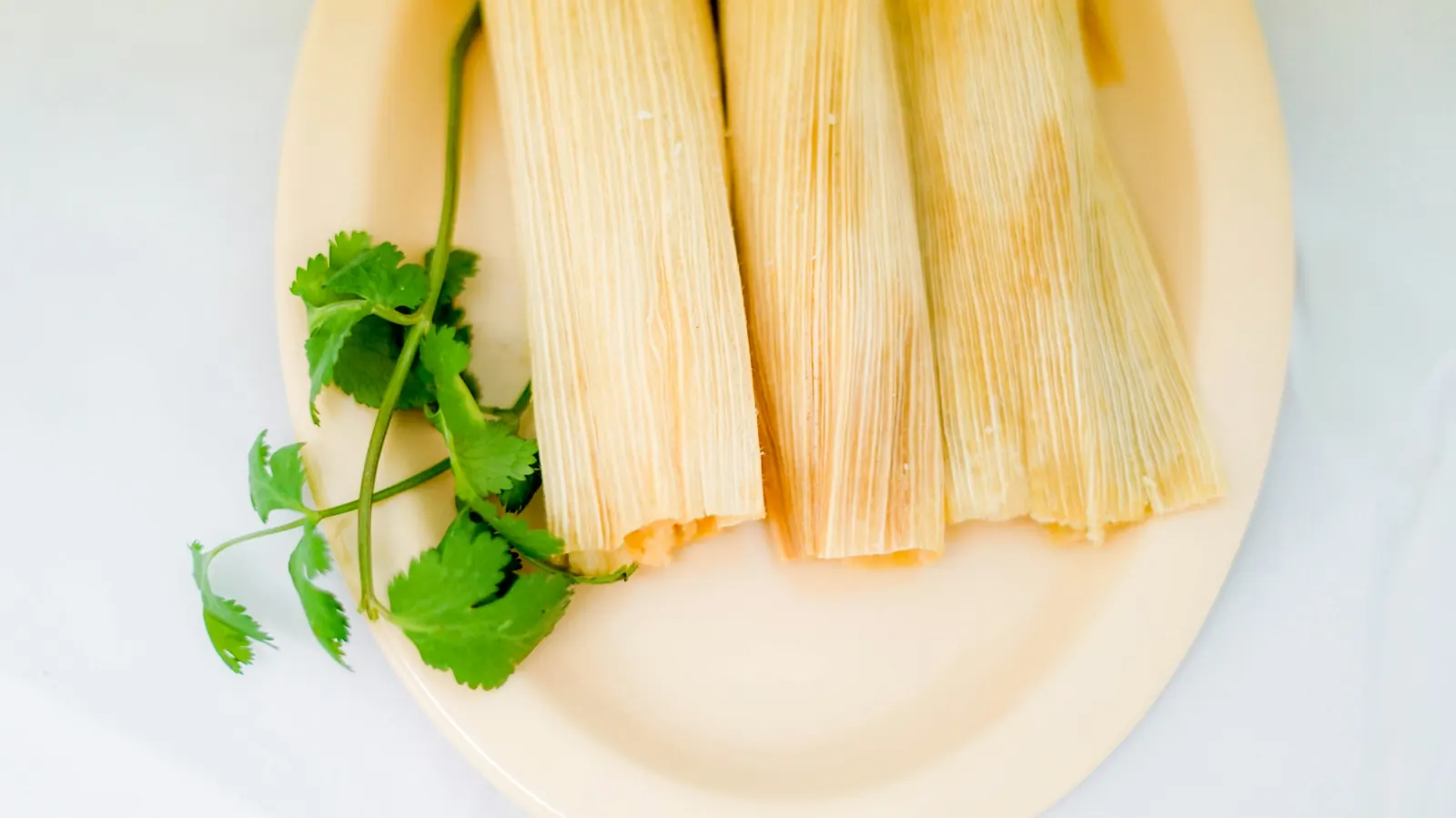
Tamales arrive at the table looking like a parcel, and for anyone who has not eaten one before that is genuinely confusing. There is a wrapper, and it is not obvious whether you are meant to eat it.
You are not. Here is what a tamal actually is, and how to handle one.
The short answer
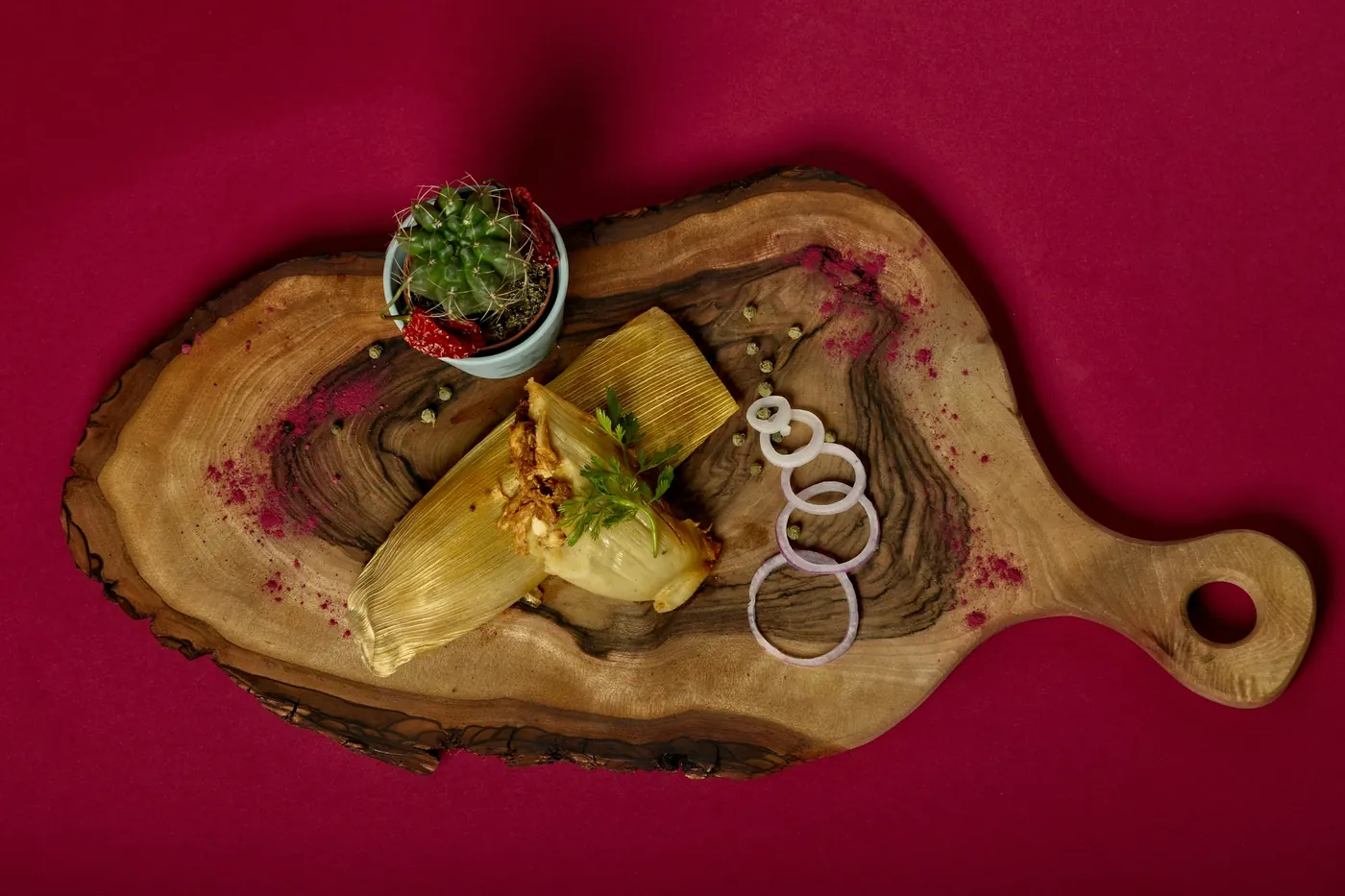
A tamal is a parcel of corn dough, called masa, wrapped around a filling and steamed inside a dried corn husk. The husk is packaging and is never eaten — you unwrap it at the table and eat the soft masa and filling inside, usually with a fork. Most are savory, filled with slow-cooked pork or beef.
What is inside
Two things: masa and a filling.
Masa is dough made from nixtamalized corn — maize soaked in an alkaline solution, then ground. Food Network’s explainer on masa describes it as the foundation of most Mexican corn cooking, the same base that becomes tortillas. For tamales it is mixed with fat and broth until it is soft enough to spread, which is what gives a tamal its light, almost cake-like texture rather than the density of a tortilla.
The filling is usually slow-cooked meat in a chile sauce. Pork is the most traditional; beef, chicken and cheese-and-chile versions are all common. Sweet tamales exist too, filled with fruit or studded with raisins.
The husk is not food
This is the one thing worth knowing before your first tamal.
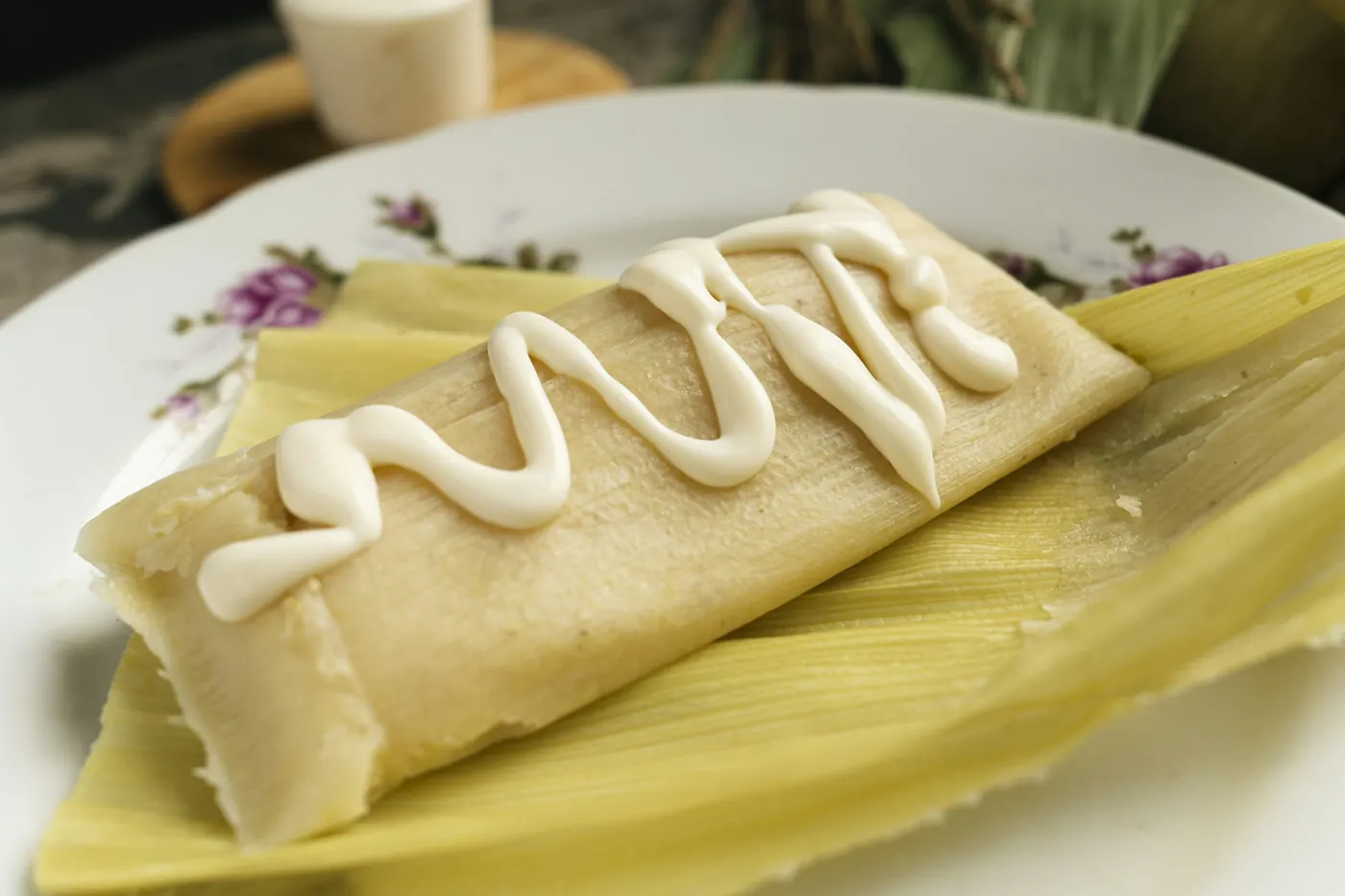
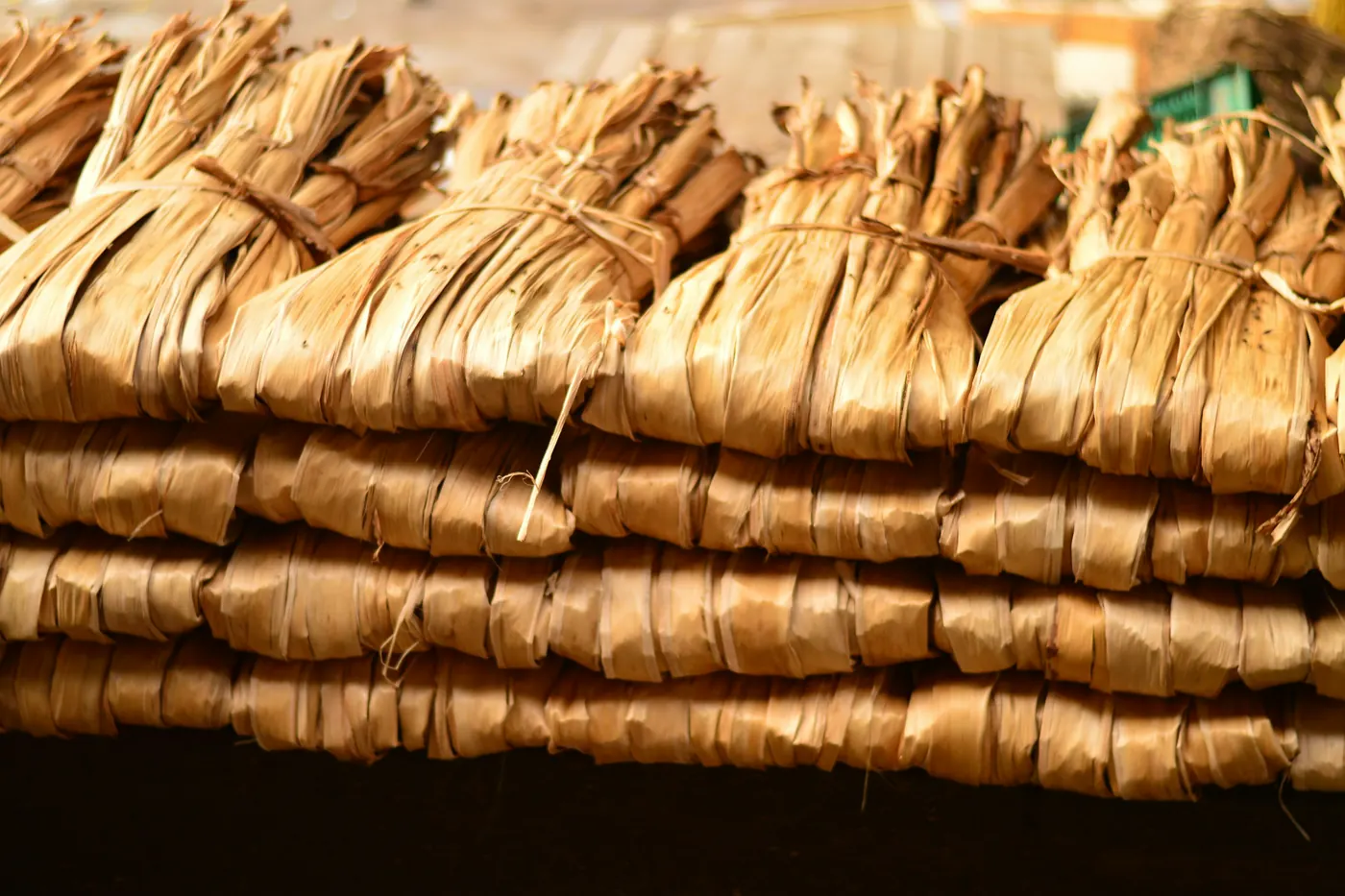
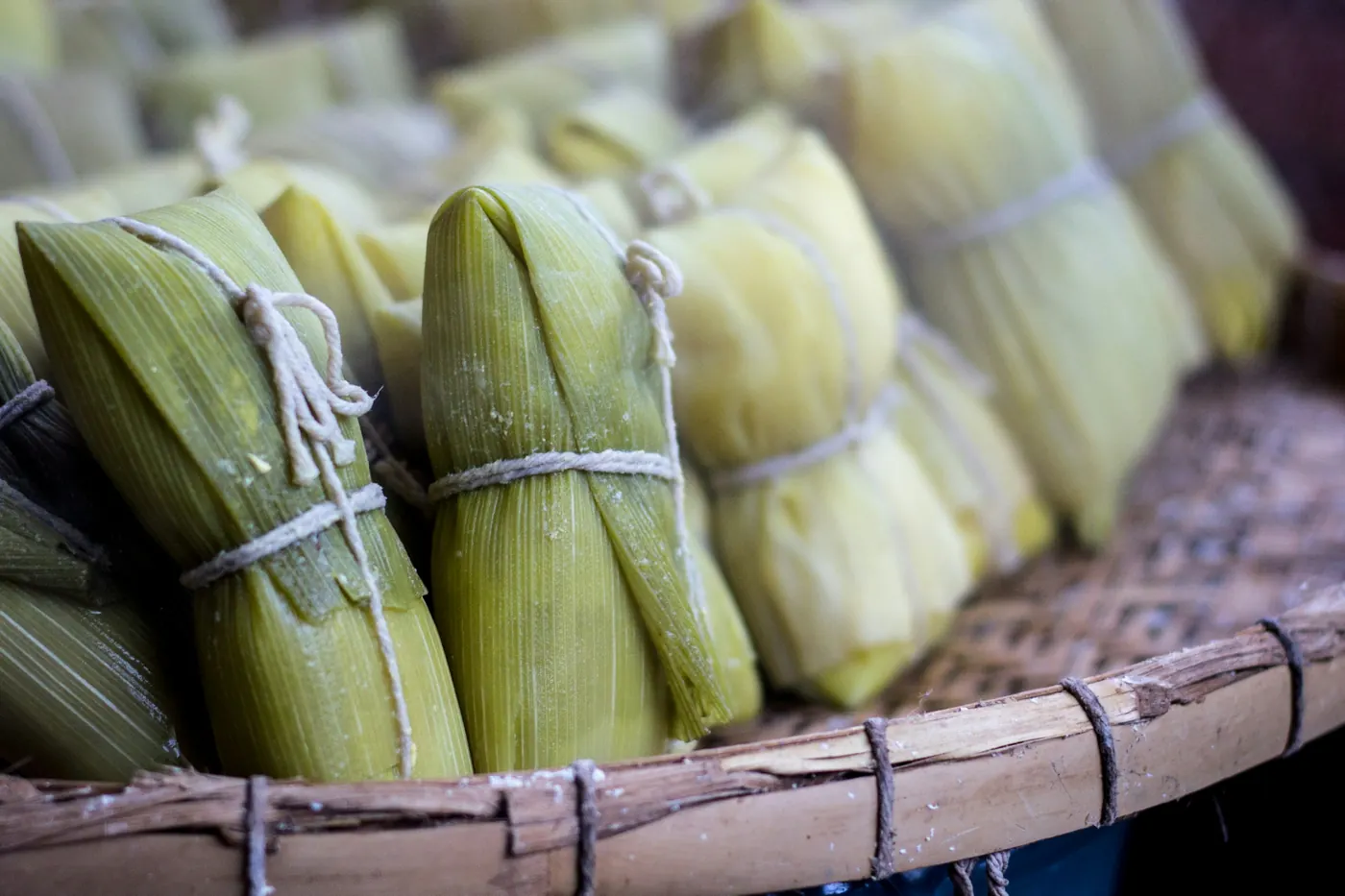
Dried corn husks are soaked until pliable, then used to wrap each parcel so it holds its shape while steaming. They keep the masa moist and give it a faint corn scent. They are tough, fibrous and completely inedible.
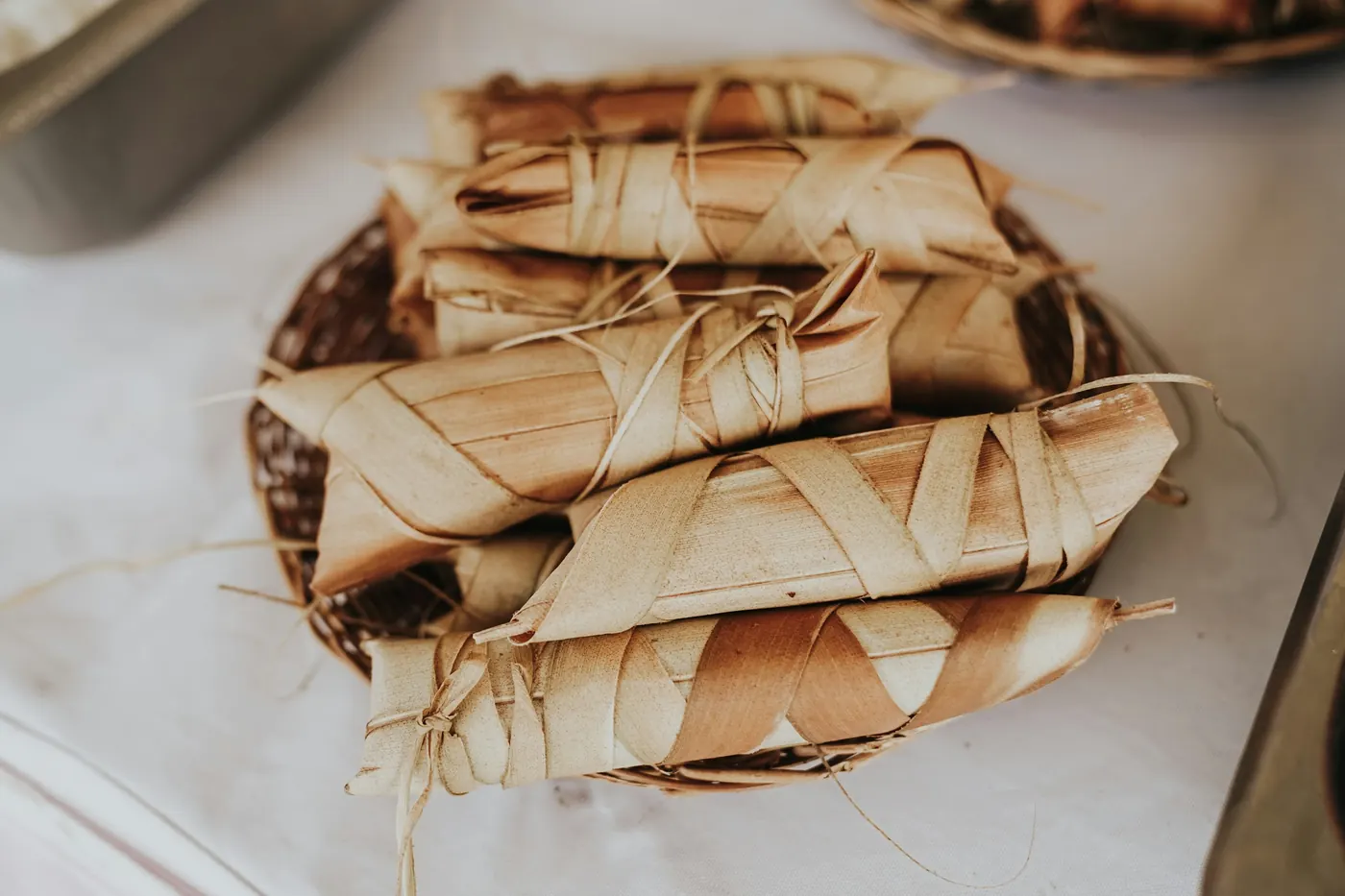
Some regional versions use banana leaves instead, which produce a broader, flatter parcel and a slightly different aroma. Same principle: the leaf is a wrapper.
How to eat one
- Untie or unfold the husk. Some are tied with a strip of husk; most are simply folded.
- Peel it open flat, like unwrapping a chocolate bar, and leave the husk on the plate underneath.
- Eat the masa and filling with a fork. It should be soft enough that a fork is all you need.
- Push the empty husk to the side of the plate. Nobody will think you have done something wrong.
If the masa is dry or crumbly rather than moist and yielding, it has been sitting too long. A good tamal is tender all the way through.
Why they are made in batches
Tamales are labor-intensive in a way that shapes when and how they are eaten.
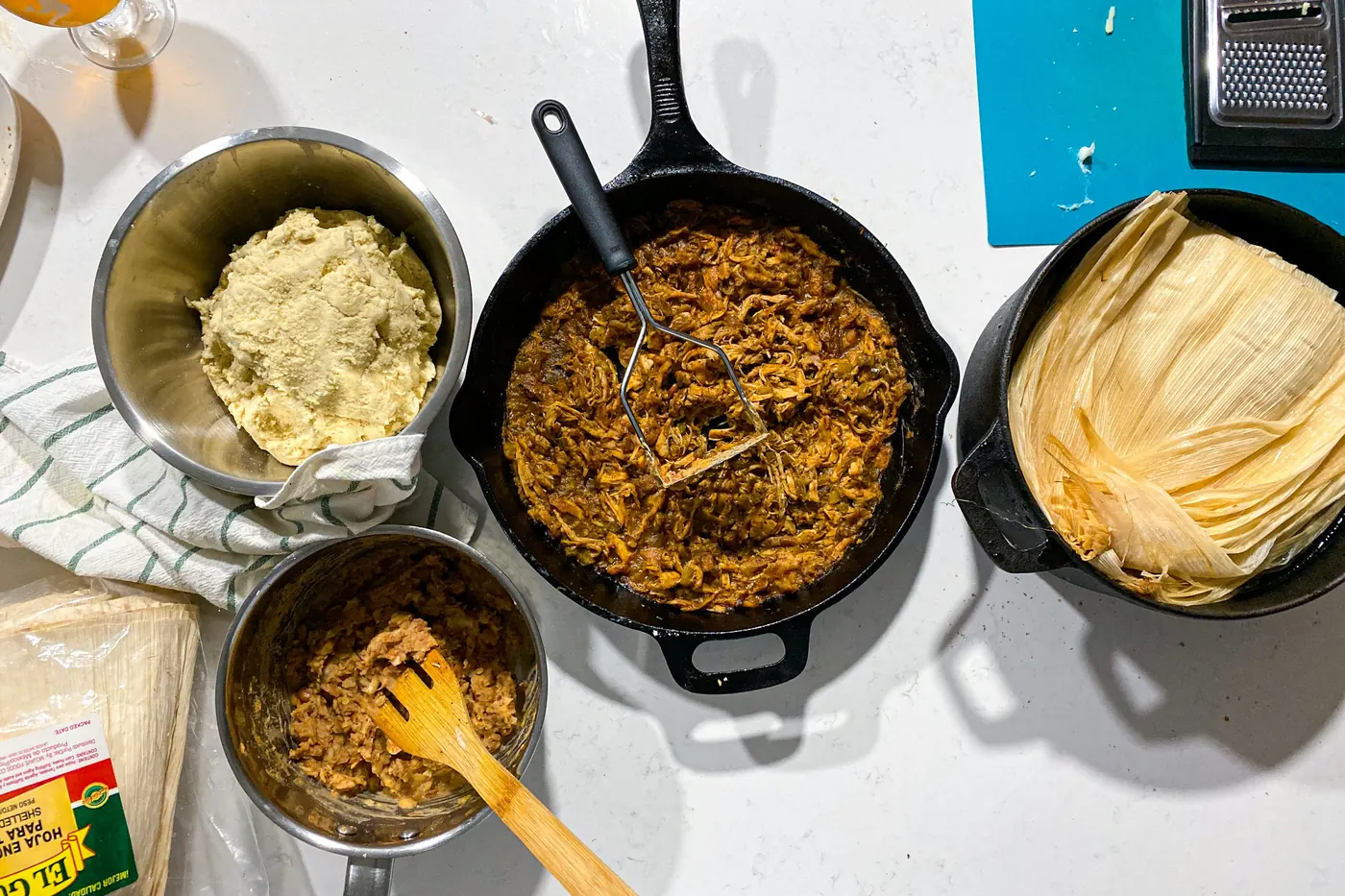
Every single one is assembled by hand: spread the masa, add the filling, fold, tie, stack. Nobody makes six. They are made by the dozen, which is why in Mexico and across Texas they are associated with Christmas, Día de Muertos and family gatherings — occasions where several people sit around a table assembling them together.
That effort is also why tamales are one of the more reliable indicators of a kitchen that makes things in house. A restaurant that describes its tamales as homemade is telling you something specific about how it operates.
Regional styles
| Style | Wrapper | Character |
|---|---|---|
| Central Mexican | Corn husk | Slim, firm masa, chile-based fillings |
| Tierra caliente | Corn husk | From Mexico’s hot lowlands; softer masa, pork common |
| Oaxacan | Banana leaf | Flatter and wider, often filled with mole |
| Tex-Mex | Corn husk | Usually pork in red chile sauce, served with rice and beans |
| Sweet | Corn husk | Pink or pale, with fruit or raisins, eaten as dessert |
The differences are real but not dramatic. If you like one kind of tamal you will almost certainly like the others.
What arrives on a restaurant plate
At a sit-down Mexican restaurant, tamales are a main course rather than a snack.
Expect two or three on the plate, with rice and beans alongside. That is a full meal for most people. Ordering them as a starter and then a main as well is a common way to end up with a box to take home — which is no bad thing, since tamales reheat better than almost anything.
They are also among the mildest things on a Mexican menu. Masa is neutral, and the chile in the filling is usually there for flavor rather than heat — which makes tamales a reasonable choice if you are avoiding spice, as covered in our guide to mild Mexican dishes.
How Julia’s serves them
Julia’s makes its tamales in house, in the tierra caliente style of Mexico’s hot lowlands, and lists them among the entrées rather than as an appetizer — which reflects the portion.
Pork is the standard filling. There is also a carne guisada version, using the same braised beef stew served elsewhere on the menu, which is a heavier and more savory option. Both come with charro beans and Mexican rice, and both are offered in lunch and dinner sizes.
Pork tamales also appear among the family packs that serve four, which suits a dish that has always been made for a crowd.
How to tell a good one
Tamales are simple enough that quality shows immediately.
The masa should be moist and light, yielding to a fork without crumbling and without turning gluey. Dry, dense masa means either too little fat in the dough or too long sitting after steaming. Both are common and both are avoidable.
The ratio matters too. There should be enough filling to reach most of the length of the tamal, not a thin seam at the center surrounded by dough. A generous filling is a reasonable sign that the kitchen is making them rather than buying them in.
Finally, a good tamal comes away from the husk cleanly. If half the masa stays stuck to the wrapper, it was either underdone or wrapped too tightly.
Frequently asked questions
Do you eat the corn husk on a tamale?
No. The husk is a wrapper used to hold the tamal together while it steams. Unwrap it, leave it on the plate, and eat only the masa and filling inside.
Is a tamale the same as a tamal?
They refer to the same thing. “Tamal” is the Spanish singular and “tamales” the plural; “tamale” is an English back-formation from the plural. Both are widely understood.
Are tamales spicy?
Rarely. The masa is neutral and the chile in the filling is generally used for depth rather than heat. If a version is hot, it is usually because of a sauce served over the top rather than the tamal itself.
How many tamales is a portion?
Two or three with rice and beans is a standard main course. One on its own works as a starter. They are more filling than they look, because masa is dense.
Why are tamales a Christmas food?
Because making them is a group activity. Assembling several dozen by hand suits a gathering, so the tradition attached itself to holidays and celebrations, particularly in Mexico and across Texas.
The short version
Masa wrapped around a filling, steamed in a husk you do not eat. Unwrap it, eat the inside with a fork, and expect two or three to be a full meal.
The full food menu lists both the pork and carne guisada versions. If you are working out the rest of the order, our guide to reading a Mexican menu covers the sections around them.