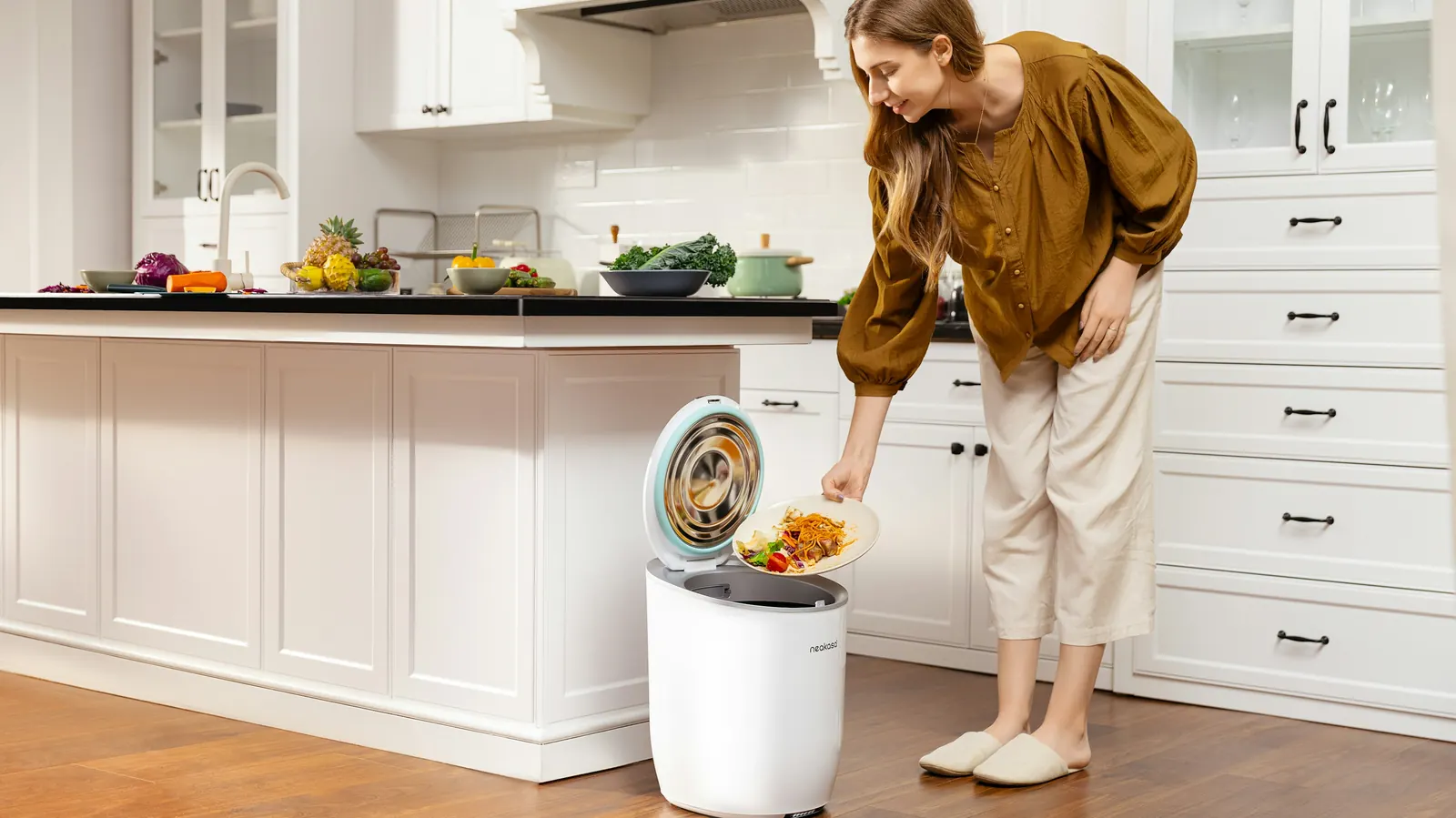
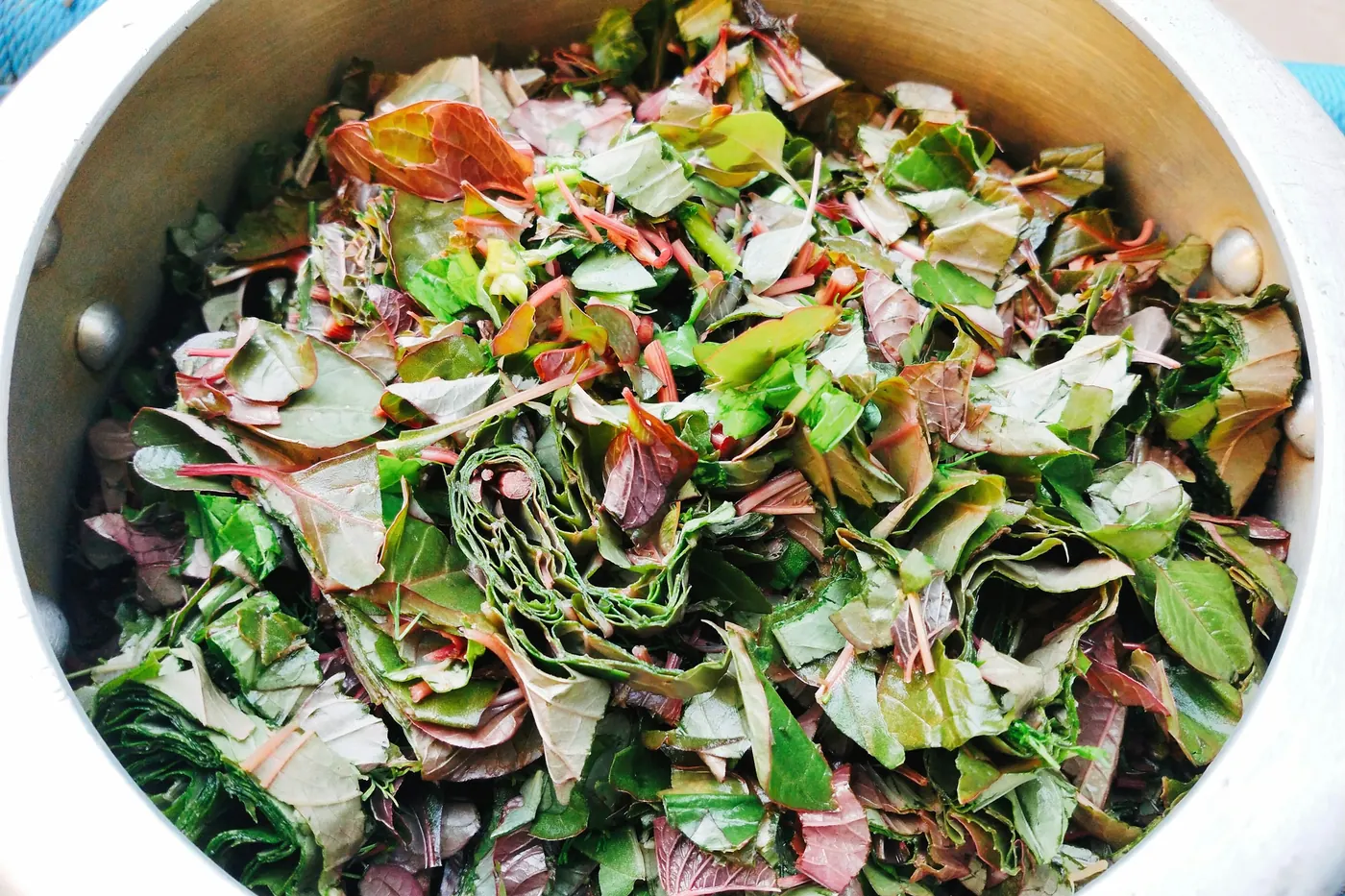
A Mexican kitchen makes a lot of scraps. Onion skins, lime rinds, cilantro stems, avocado shells and pits, tomato cores, corn husks, the ends of nopales. A countertop pail holds them until you carry them out to a compost pile. If you have no pile, no city collection and no wish to keep sending all of it to the trash, the question becomes what can deal with the scraps indoors.
The best indoor compost bin depends on what you want at the end. Some machines use live microbes and their makers call the output compost; some dry and grind scraps into a material their makers call plant food or powder; bokashi bins ferment scraps that you then bury. This guide covers seven from Reencle, GEME, FoodCycler, Airthereal, Bokashi Living and SCD Probiotics, and describes each output in the maker’s own words. It sits under our best countertop compost bin guide, which covers the simple pails.
Julia’s earns a commission on purchases made through links on this page, at no cost to you. Recommendations are based on what a restaurant kitchen looks for, product specifications and verified buyer reports.
Quick verdict: which indoor compost bin to buy
For most kitchens with a garden or houseplants, the pick is the Reencle Prime: a microbe-based machine you feed through the day, which Reencle says turns scraps into compost. For no power at all, choose the Bokashi Living two-bin kit, as long as you have soil to bury the fermented scraps in. For a small kitchen that mainly wants scraps out of the trash, the FoodCycler Eco 3 dries and grinds them, though its maker’s guide says the result is not compost.
Below, five standouts side by side, then all seven reviewed in full.
Five indoor compost options compared
One pick for each way of handling scraps indoors, with each output described in the maker’s words. All seven are reviewed below.
| Indoor bin or processor | How it works | Output (maker’s words) | Needs power | Buy on Amazon |
|---|---|---|---|---|

Reencle Prime Electric Composter, 14 LBest overall
|
Electric, with live microbes | “Real, nutrient-rich compost” | Yes, runs continuously | View on Amazon |

GEME Terra 2 Kitchen Electric Composter, 14 LNo filter to replace
|
Electric, with live microbes | “Nutrient-rich soil” (GEME) | Yes, runs continuously | View on Amazon |
Food Cycler Eco 3 Compact Kitchen Food RecyclerBest compact dryer
|
Electric, dries and grinds | “Plant food”; not compost, per maker’s guide | Yes, per cycle | View on Amazon |
Bokashi Living Premium Bokashi Composting Starter Kit, 2 BinsBest bokashi kit
|
Bokashi fermentation, no power | Fermented pre-compost to bury | No | View on Amazon |
SCD Probiotics All Seasons Indoor Composter Kit, 5 GallonBest for meat and dairy scraps
|
Bokashi fermentation, no power | “Compost” and “compost tea” (SCD) | No | View on Amazon |
Product images from Amazon. Outputs, capacities and times are as stated by each maker, listing or the extension services named; check the listing before you buy.
Our picks for the best indoor compost bin
There are three kinds of indoor option here, and they are not interchangeable. Microbe machines (Reencle, GEME) run all the time and break scraps down biologically; their makers call the output compost. Dryer-grinders (FoodCycler, Airthereal) run a cycle of a few hours and leave dry, ground material that their makers describe as plant food or powder; FoodCycler’s own guide says it is not compost. Bokashi bins (Bokashi Living, SCD Probiotics) need no power and ferment scraps for burying in soil. None of these repeat the pails on our countertop bin guide.
1. Reencle Prime Electric Composter, 14 L – Microbes Do the Work, Quietly
Reencle is the clearest example of the microbe-based machines. Instead of drying scraps, the Prime keeps a bed of microbes warm, moist and stirred, and Reencle says they break the food down aerobically. You add scraps through the day; there is no cycle to start. Reencle describes the output as real, nutrient-rich compost, and says the Prime handles up to 2.2 pounds of food scraps a day and reduces food waste by up to 90 percent.
Reencle’s own specification page lists the Prime’s average power draw at 52 watts, about 1.25 kWh a day, and gives a size of roughly 12 by 13 by 18 inches and a weight of about 20 pounds, so it is a floor or end-of-counter machine rather than a small caddy. The same page gives 0.7 kilograms (about 1.5 pounds) a day as the best load, so think of 2.2 pounds as the ceiling.
The box includes a carbon filter, a compost starter pack and a shovel. Reencle says a three-layer filter controls odor and that it runs at as low as 28 decibels. Reencle’s newer Essential listing tells owners to mix one part output with four parts soil and cure it for three weeks before feeding plants, so plan for that step rather than putting the output straight on a seedling.
Why we like it
- Microbes break scraps down rather than just drying them, per Reencle
- Add scraps any time, no cycles
- Up to 2.2 lb a day, 0.7 kg best
- Rated as low as 28 dB
Key specifications
| Model | Reencle Prime |
|---|---|
| Type | Electric, aerobic microbes |
| Capacity | 14 L chamber |
| Daily load (maker) | Up to 2.2 lb; 0.7 kg best |
| Output (maker’s words) | “Real, nutrient-rich compost” |
| Time (maker) | 2 to 24 hours per batch of scraps |
| Odor control | 3-layer carbon filter |
| Ongoing supplies | Carbon filter; electricity (about 1.25 kWh a day) |
Why we recommend it
It suits a household that cooks every day, wants a machine to handle scraps continuously and has a garden or houseplants to use the output.
Skip it if you have no use for the output and no room for a machine the size of a small trash can.
Pros and cons
Pros
- Continuous feeding
- Maker states power use
- Quiet
Cons
- Large and heavy
- Runs all the time
- Output needs curing in soil, per Reencle
2. GEME Terra 2 Kitchen Electric Composter, 14 L – A Kick-Open Lid and a Permanent Filter
GEME takes the same microbial approach as Reencle and says so plainly: the Terra 2 uses microbes to transform waste rather than just drying it, which GEME says produces nutrient-rich soil in six to eight hours. Like the Reencle, it is a continuous-feed machine; you add scraps whenever you like.
GEME’s selling point is upkeep. The listing describes an industrial-grade catalytic filter that it says does not need replacing, where most machines here use carbon filters you buy again. GEME also says the 14-liter bin handles up to 2 kilograms a day and needs emptying only once every one to two months.
Two details suit a busy kitchen. A toe-push trigger at the base pops the lid open, so you can scrape a cutting board of onion skins and lime rinds in with both hands full. And GEME says sensors track humidity, temperature and weight and adjust conditions on their own. GEME does not give the power draw or warranty in the Amazon listing.
Why we like it
- Microbial breakdown, per GEME
- Catalytic filter GEME says never needs replacing
- Foot-operated lid
- Empty every one to two months, per GEME
Key specifications
| Model | GEME GCM-23-U-2K |
|---|---|
| Type | Electric, microbes |
| Capacity | 14 L |
| Daily load (maker) | Up to 2 kg (4.4 lb) |
| Output (maker’s words) | “Nutrient-rich soil” |
| Time (maker) | 6 to 8 hours |
| Odor control | Catalytic filter, no replacement stated |
| Ongoing supplies | Electricity; power use not stated |
Why we recommend it
It suits a cook who wants to scrape scraps in with dirty hands and never buy a filter.
Skip it if you want the maker to state power use and warranty before you buy; the listing leaves both out.
Pros and cons
Pros
- No filter refills
- Hands-free lid
- Long gaps between emptying
Cons
- Power use not stated
- Warranty not in listing
- Newer model with little buyer history
3. Food Cycler Eco 3 Compact Kitchen Food Recycler – Dries and Grinds, Pits Included
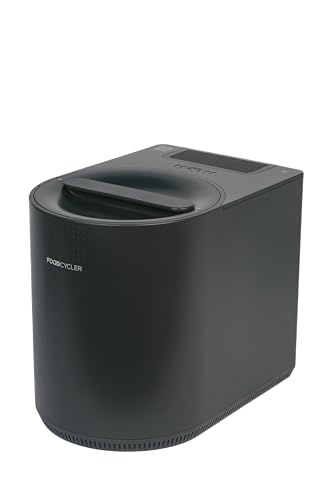
The FoodCycler works differently from the Reencle and GEME. You fill its bucket, close it and run a cycle; the machine dries and grinds the scraps into a dry, crumbly material. FoodCycler’s listing calls the result plant food, and the FoodCycler by-product guide handed out by Ontario towns that run FoodCycler programs says plainly that it is not compost but a soil amendment. That is the honest way to think of it.
The Eco 3 is the compact model: a 3.5-liter bucket in a body 11 inches high, 9 wide and 13 deep, per the listing. FoodCycler says its grinding system handles what others cannot, including pits, peels and bones, which matters in a kitchen that goes through avocados. Our countertop compost bin guide mentions the larger Eco 5; this is its smaller sibling.
The same guide says to mix the by-product into soil at no less than one part to ten, more for loads heavy in meat or dairy, and to let it sit in the soil for weeks before planting. Odor is handled by a refillable carbon filter. FoodCycler’s warranty terms are on its own website rather than the listing.
Why we like it
- Grinds pits, peels and bones, per FoodCycler
- Compact: 11 x 9 x 13 in
- Removable bucket
- One-touch button with progress lights
Key specifications
| Model | FoodCycler FC-200-0 |
|---|---|
| Type | Electric dryer and grinder |
| Capacity | 3.5 L bucket |
| Daily load (maker) | One bucket per cycle |
| Output (maker’s words) | “Plant food”; not compost per maker’s guide |
| Time (maker) | Not stated in listing |
| Odor control | Refillable carbon filter |
| Ongoing supplies | Carbon filter refills; electricity |
Why we recommend it
It suits a small kitchen that wants scraps out of the trash quickly, including avocado pits, and has somewhere to dig the output into soil.
Skip it if you want finished compost; the maker’s own guide says this is not compost.
Pros and cons
Pros
- Small footprint
- Handles hard scraps
- Short, contained cycles
Cons
- Output is not compost
- Filters to buy
- Small bucket for a big cooking day
4. Bokashi Living Premium Bokashi Composting Starter Kit, 2 Bins – Two Bins, So You Never Stop Collecting
Bokashi is the low-tech indoor option. You layer scraps in an airtight bin, sprinkle each layer with bran carrying lactic acid bacteria and yeasts, press out the air and close the lid. North Carolina State Extension explains that the process is anaerobic, a fermentation rather than rotting, and that the liquid that collects, called bokashi tea, should be drained regularly through the tap.
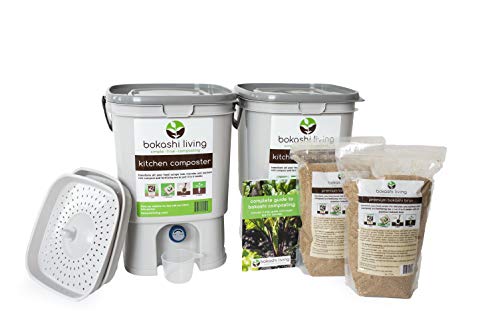
The bin does not make finished compost on its own. Washington State University Extension describes the result as a nutrient-dense pre-compost that has to be buried in soil or finished in another compost system. Cook County, Illinois, advises setting a full bin aside for two to three weeks to ferment before you bury it. That is why Bokashi Living sells this kit with two bins: one ferments while you fill the other.
The kit includes two bins, two 2.2-pound bags of bran and the maker’s guide to bokashi composting. Bokashi Living says the lids, spigots and drain plates are its own design and backs all parts with a one-year warranty, plus composting help by phone or email. The listing does not give the volume of each bin.
Why we like it
- Two bins for continuous use
- 4.4 lb of bran included
- One-year parts warranty
- No electricity or filters
Key specifications
| Model | Bokashi Living BL-SK2B |
|---|---|
| Type | Bokashi fermentation |
| Capacity | Not stated per bin |
| Daily load (maker) | Not stated |
| Output (maker’s words) | Fermented pre-compost (extension sources) |
| Time (maker) | 2 to 3 weeks to ferment, then bury |
| Odor control | Airtight lid and bran |
| Ongoing supplies | Bokashi bran |
Why we recommend it
It suits a household with a yard or garden bed to bury the fermented scraps, and no wish for another appliance.
Skip it if you have no soil to bury the output in; bokashi only works with a second step.
Pros and cons
Pros
- No power or filters
- Two-bin system
- Maker support
Cons
- Needs a place to bury output
- Bin size not stated
- Bran is an ongoing purchase
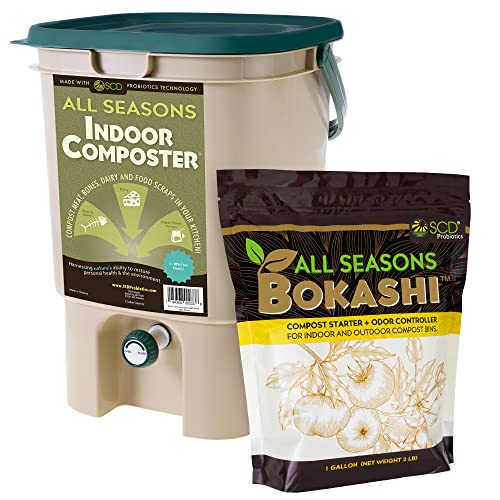
5. SCD Probiotics All Seasons Indoor Composter Kit, 5 Gallon – A Single Bin With a Spigot
SCD Probiotics sells a single five-gallon bokashi bin with a strainer, a spigot and 2 pounds (about a gallon) of its bokashi starter. The method is the same as any bokashi bin: scrape in the scraps from each meal, sprinkle a layer of starter, close the lid tightly. SCD says the starter reduces odor and starts breaking the food down.
Where many indoor options exclude animal scraps, SCD says this one takes meat, small bones and dairy along with everything else. The liquid you draw from the spigot is what SCD calls compost tea; it says to dilute it and use it as plant food. As with any bokashi bin, extension services describe the solids as pre-compost that still needs burying or finishing in a pile.
With no electronics, SCD points out, it can sit anywhere, including under the sink, and it works in winter when an outdoor pile does not. The company says its products are made in Kansas City, Missouri. One bin means you either stop collecting while it ferments or buy a second bin.
Why we like it
- Takes meat, small bones and dairy, per SCD
- Five-gallon bin with strainer and spigot
- 2 lb of starter included
- No electricity
Key specifications
| Model | SCD Probiotics K100 |
|---|---|
| Type | Bokashi fermentation |
| Capacity | 5 gallons |
| Daily load (maker) | Not stated |
| Output (maker’s words) | “Compost” and diluted “compost tea” (SCD) |
| Time (maker) | Fermentation time not stated in listing |
| Odor control | Airtight lid and starter |
| Ongoing supplies | Bokashi starter |
Why we recommend it
It suits a cook who wants one bin that accepts every scrap, including the trimmings from carne asada night.
Skip it if you want to keep collecting while a full bin ferments; that needs a second bin.
Pros and cons
Pros
- Accepts meat and dairy
- Large single bin
- Works anywhere indoors
Cons
- Only one bin
- Output needs burying
- Starter is an ongoing purchase
6. Reencle Essential Electric Kitchen Composter – The Lightest Reencle, No App

The Essential is Reencle’s simplest machine. It uses the same microbes, the same carbon filter and the same 2.2-pound daily limit as the Prime, according to Reencle, but drops the motion sensor and the motorized lid; you lift the lid yourself. At 19.6 pounds it is the lightest Reencle, and Reencle aims it at one- and two-person homes.
Reencle’s listing for this model is the most specific about what you get out of it. It says the microbes digest food with warmth, moisture and time to give real compost in 30 days, and contrasts that with dehydrators, which it says only remove water. It tells owners to mix one part output with four parts soil and cure it for three weeks before feeding plants.
It accepts meat, fish, dairy and citrus, Reencle says, but not bones or large pits, so avocado pits go elsewhere. There are no pods or subscriptions; Reencle says the microbes replicate themselves and the carbon filter is replaced every 9 to 12 months. It runs at 27 decibels and carries a two-year warranty.
Why we like it
- Meat, fish, dairy and citrus accepted, per Reencle
- Filter replaced every 9 to 12 months
- Two-year warranty
- Three buttons, no app
Key specifications
| Model | Reencle Essential (RE-WHITE) |
|---|---|
| Type | Electric, aerobic microbes |
| Capacity | Not stated in listing |
| Daily load (maker) | Up to 2.2 lb |
| Output (maker’s words) | “Real compost in 30 days” |
| Time (maker) | 30 days; then 3 weeks curing in soil |
| Odor control | 3-layer carbon filter |
| Ongoing supplies | Carbon filter every 9 to 12 months |
Why we recommend it
It suits a small household that wants a microbe machine without the Prime’s motorized lid and sensors.
Skip it if you go through avocados by the bag; Reencle says no large pits.
Pros and cons
Pros
- Clear output instructions
- Stated warranty
- Lighter than the Prime
Cons
- No bones or large pits
- Manual lid
- Capacity in liters not stated
7. Airthereal Revive R500 Electric Kitchen Composter, 2.5 L – Four-Hour Cycle While You Sleep

Airthereal is candid about what the R500 does: its listing says the machine turns food scraps into powder by drying them out and grinding them up, and that you can use the powder as fertilizer for plants or throw it away to cut the volume and smell of your trash. That is the right expectation for any dryer-grinder.
The suggested routine is simple. Collect scraps in the 2.5-liter bucket during the day, start the machine before bed, and after about four hours the scraps are dry powder to empty in the morning. Airthereal says its three-blade grinder pushes food into the blades from several directions and that the machine cuts waste volume by 90 percent.
The bucket is cast aluminum and dishwasher safe, according to the listing, and biodegradable carbon filters reduce odors between cycles. Airthereal gives a one-year warranty from the date of purchase. At 2.5 liters it is the smallest machine here, so a big cooking day may need two cycles.
Why we like it
- Honest description of the output
- About four hours per cycle
- Dishwasher-safe aluminum bucket
- One-year warranty
Key specifications
| Model | Airthereal Revive R500 |
|---|---|
| Type | Electric dryer and grinder |
| Capacity | 2.5 L |
| Daily load (maker) | One bucket per cycle |
| Output (maker’s words) | “Powder” for plants or the trash |
| Time (maker) | About 4 hours |
| Odor control | Carbon filters |
| Ongoing supplies | Carbon filter refills; electricity |
Why we recommend it
It suits an apartment kitchen that mainly wants to stop scraps smelling in the trash.
Skip it if you cook in volume; the bucket is small.
Pros and cons
Pros
- Short overnight cycle
- Easy-clean bucket
- Clear expectations from the maker
Cons
- Smallest capacity here
- Output is dried waste, not compost
- Filters to buy
How to choose an indoor compost bin
What you will do with the output. Decide this first. If you have garden beds, every option here works. If you only have a few houseplants, a microbe machine or a dryer gives you more than you can use, and bokashi needs soil to bury into. If you just want less smell and volume in the trash, a dryer-grinder does that most simply, and Airthereal says outright that you can throw the powder away.
Compost, pre-compost or dried scraps. These are different things. Reencle and GEME say their microbes make compost. FoodCycler’s by-product guide says its output is not compost but a soil amendment, mixed in at one part to ten or more. Washington State University Extension calls bokashi output pre-compost that must be buried or finished in another compost system. Read the claim on the box with that in mind.
What goes in. A Mexican kitchen throws out a lot of avocado pits. FoodCycler says its Eco 3 grinds pits and bones; Reencle says its Essential takes no bones or large pits. SCD Probiotics says its bokashi bin takes meat, small bones and dairy. Check the manual for anything hard, oily or large before you buy.
Power, noise and filters. Microbe machines run around the clock; Reencle lists the Prime at about 1.25 kWh a day. Dryers run only during a cycle. Most electric models use carbon filters you replace; GEME says its catalytic filter is permanent. Bokashi needs no power but needs bran or starter.
Space and size. The microbe machines are about the size of a small trash can; the Prime weighs about 20 pounds, per Reencle. Dryers fit on a counter. A five-gallon bokashi bin fits under most sinks.
How we chose these seven
We looked for indoor food-waste machines and bokashi kits from makers that sell under their own name, and checked that each was in stock on Amazon in the United States when we wrote this. Capacities, outputs, times and care come from each maker’s listing or website; the bokashi method comes from North Carolina State Extension, Washington State University Extension and Cook County, Illinois; and the FoodCycler output guidance comes from the by-product guide published by Ontario townships with FoodCycler programs. We describe each output in the maker’s own words rather than calling everything compost. We searched the U.S. Consumer Product Safety Commission’s recall pages for these brands’ composters and found no recall. Lomi was not sold as a machine on Amazon when we checked (only its pods and filters), and we passed over unbranded electric composters sold under changing names. We have not used these products ourselves.
Indoor compost bin reviews and questions
Is an electric composter really making compost?
It depends on the type. Reencle and GEME say their machines use microbes to make compost. Dryer-grinders such as the FoodCycler and Airthereal dry and grind scraps; FoodCycler’s own guide says the result is not compost, and Airthereal calls it powder.
Does an indoor compost bin smell?
Each maker here claims low odor: Reencle and FoodCycler use carbon filters, GEME a catalytic filter, and bokashi bins an airtight lid. WSU Extension says fermented bokashi should smell sour and pickled, not rotten.
Can I put meat and dairy in an indoor composter?
Some, yes. SCD Probiotics says its bokashi bin takes meat, small bones and dairy, and Reencle says the Essential takes meat, fish and dairy but no bones. Check each maker’s list.
What is the best indoor compost bin for an apartment?
If you have houseplants or a balcony garden, the Reencle Essential is the small microbe option. If you only want less trash, the Airthereal R500 is compact and runs overnight.
How is this different from a countertop compost bin?
A countertop pail only holds scraps until you take them to a pile or collection bin. The options here process scraps indoors. For pails, see our countertop compost bin guide.

Where we would start with kitchen scraps
Start with the Reencle Prime if you have somewhere to use compost and cook every day, or a bokashi kit if you would rather not run a machine. If you keep scraps for a pile or city pickup, a simple pail from our best countertop compost bin guide is enough, and for the rest of the trash, see our kitchen trash can for odor control. Less waste starts with leftovers that get eaten; see how to reheat Mexican leftovers and our best food storage containers.
When you would rather someone else did the cooking, see our menu and call to order.