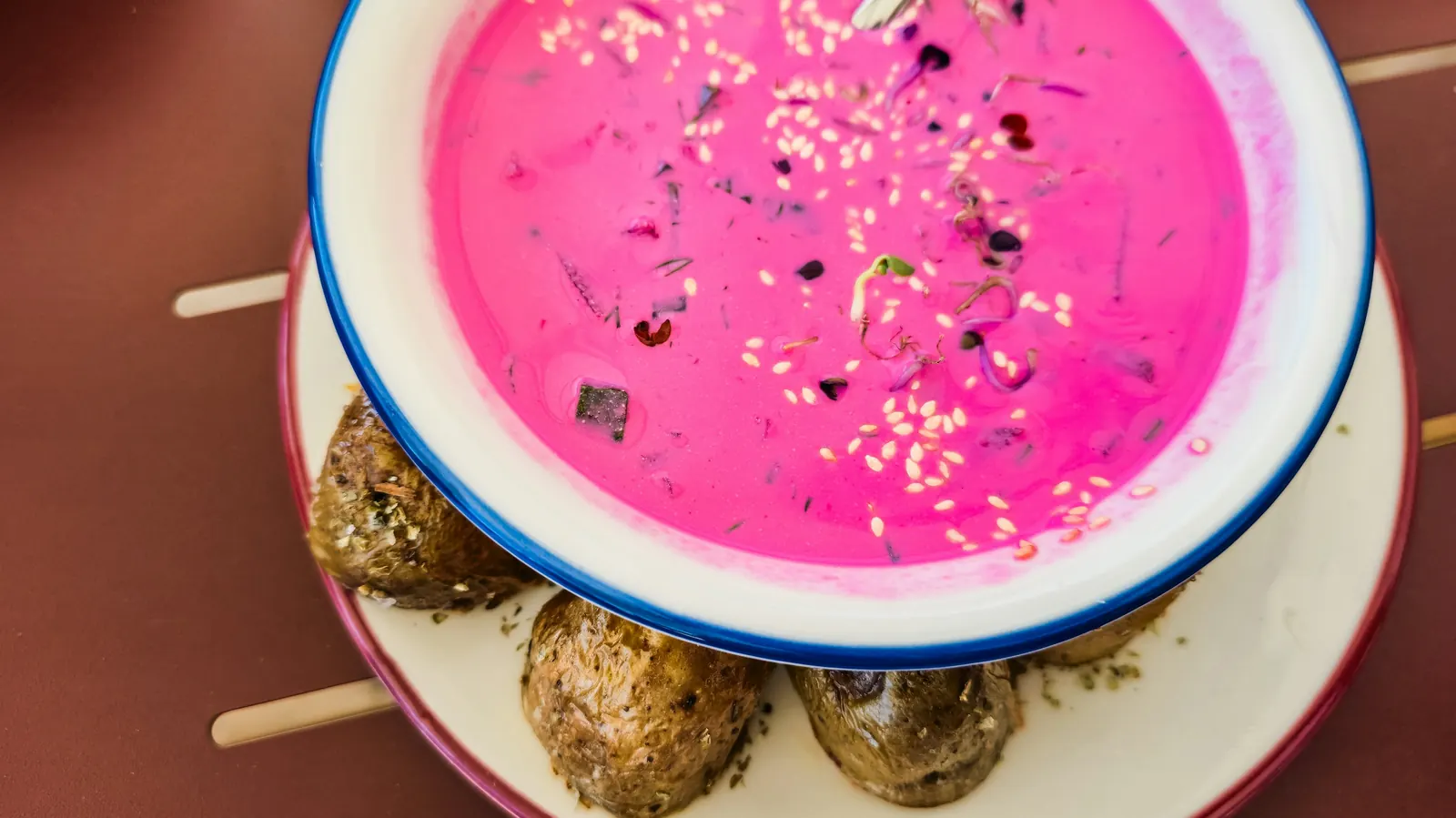
Eastern Europe is not one kitchen. Polish, Ukrainian, Hungarian and Romanian cooks would all want that said first, and these countries have good reason to care about the difference. What they share is a kitchen that keeps things: pickles, ferments, dumplings and slow-cooked pots, all of which a working Mexican kitchen can understand.
This guide gives eight books from named authors and established publishers, chosen so that each country or need has a clear choice. We say which picks rest on a named review and which on the publisher’s details.
Julia’s earns a commission on purchases made through links on this page, at no cost to you. Recommendations are based on what a restaurant kitchen looks for in a cookbook, the Amazon listing, publisher and author information and published reviews, which we name where we use them.
Quick verdict: the best Eastern European cookbook to start with
For the region as a whole, start with Olia Hercules’s Mamushka, an award-winning debut with over 100 recipes. For Ukraine in particular, choose Yevhen Klopotenko’s The Authentic Ukrainian Kitchen. For Poland, look at Zuza Zak’s Polska.
The other five cover the Danube, seasonal vegetables, the diaspora, Hungary and Russia.
Five Eastern European cookbooks side by side
Five of the eight, one for each kind of cook. All eight are described in full below.
| Cookbook | Best for | Recipes | Length | Buy on Amazon |
|---|---|---|---|---|

Mamushka, Olia HerculesBest overall
|
One book for the whole region | Over 100 | 240 pages, hardcover | View on Amazon |

The Authentic Ukrainian Kitchen, Yevhen KlopotenkoBest for Ukraine
|
Borsch, varenyky and more | 100 | 288 pages, hardcover | View on Amazon |

Danube, Irina GeorgescuBest for the Balkans
|
Romania, Serbia, Bulgaria | Over 80 | 272 pages, hardcover | View on Amazon |

Kapusta, Alissa TimoshkinaBest vegetable-forward
|
Vegetables first | Not stated | 224 pages, hardcover | View on Amazon |

Please to the Table, Anya von Bremzen and John WelchmanBest for Russia
|
A big Russian and Soviet reference | 400 | 688 pages, paperback | View on Amazon |
Cover images from Amazon. Page counts and formats are from the Amazon listings for the editions linked. Recipe counts are from the publisher’s copy or the title.
Our picks for the best Eastern European cookbook, book by book
All eight were in stock, new and sold by Amazon when we checked. We have not cooked from these books; where we describe a strength, we say whose view it is.
1. Mamushka, Olia Hercules – Ukraine and the Black Sea
Olia Hercules was born in Ukraine, lived in Cyprus and moved to London to become a chef, training at Leiths School of Food and Wine, according to her publisher. Mamushka was her first cookbook, and it won the Fortnum and Mason Award for best debut cookbook in 2016.
The publisher describes over 100 recipes “from the Black Sea to Baku, Kiev to Kazakhstan,” including broths, breads, pastries, dumplings, noodles and jams, with personal stories and “straightforward cooking techniques.”
Publishers Weekly reviewed it in 2015 and called it “a thoughtful and welcome diversion for foodies of all tastes.” Publisher copy also quotes Saveur calling it “a gorgeous love letter to the food of her homeland,” which we read through the publisher.
Why we like it
- Over 100 recipes, per the publisher
- Fortnum and Mason Award, per the publisher
- Reviewed by Publishers Weekly
- Straightforward techniques, per the publisher
Key specifications
| Author | Olia Hercules |
|---|---|
| Publisher | Weldon Owen |
| Year | 2015 |
| Pages | 240 |
| Format | Hardcover |
| Recipes | Over 100 |
| Focus | Ukraine and Eastern Europe |
| Best for | Most home cooks |
Why we recommend it
If you want one book that covers the broad region in a personal voice, start here.
Skip it if you want a focused Polish or Hungarian book. Its roots are in Ukraine, and it travels east more than west.
Pros and cons
Pros
- Broad regional range
- Award-winning debut
- Named PW review
Cons
- Poland is not named in the copy we read
- Published in 2015
2. The Authentic Ukrainian Kitchen, Yevhen Klopotenko – A Chef Rebuilds a Cuisine
Yevhen Klopotenko is a Kyiv-born chef, restaurateur and activist who graduated from Le Cordon Bleu in Paris, according to his publisher. His book offers 100 recipes, with vegetables, fermenting and pickling, dumplings, baked goods, long braises and desserts, and with signature dishes such as borsch, varenyky and deruny.
Publishers Weekly reviewed it in May 2024. Its review opens on the claim that foreign rule homogenized Ukraine’s native food, and it says “the true highlights are all in the chapter on main dishes.”
Publisher copy adds Library Journal calling it “an outstanding introduction to the food and culture of this brave country,” and NPR saying “The recipes are designed for a home cook to make easily.” We read those through the publisher.
Why we like it
- 100 recipes, per the publisher
- Reviewed by Publishers Weekly
- Fermenting and pickling are covered
- Library Journal praise, via the publisher
Key specifications
| Author | Yevhen Klopotenko |
|---|---|
| Publisher | Voracious |
| Year | 2024 |
| Pages | 288 |
| Format | Hardcover |
| Recipes | 100 |
| Focus | Ukrainian cooking |
| Best for | Curious home cooks |
Why we recommend it
If Ukrainian cooking is what you came for, this is the most direct book, from a chef with a clear point of view.
Skip it if you want the wider region. It stays in Ukraine.
Pros and cons
Pros
- Clear single-country focus
- Named PW review
- Home-cook friendly, per NPR
Cons
- PW singles out mains over the rest
- One country only
3. Polska, Zuza Zak – New Polish Cooking

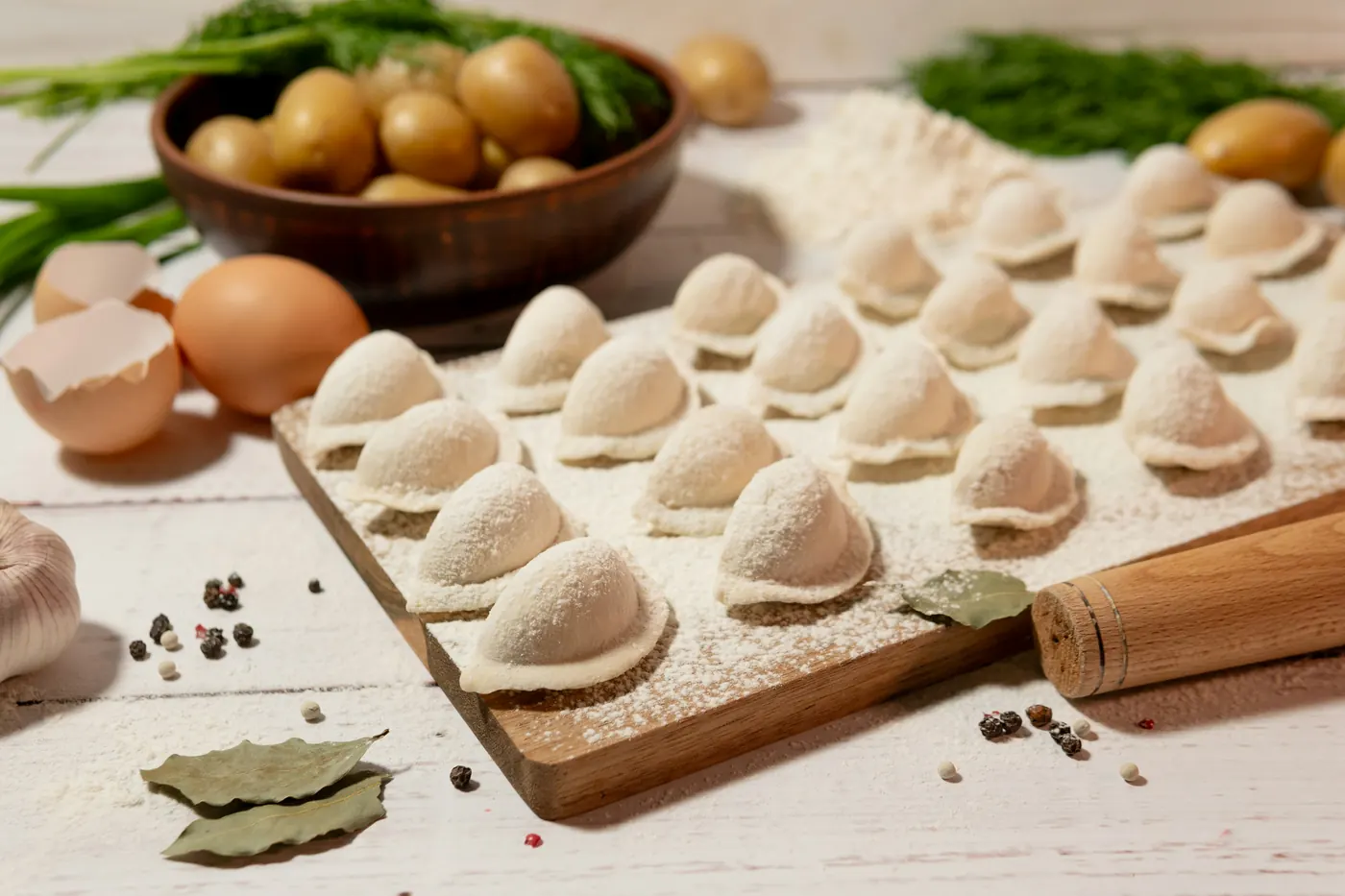
Poland deserved a pick of its own, and this was the best fit we found in stock. The publisher calls it a contemporary take on Polish cooking, with recipes for snacks, party foods, soups, preserves, breads, fish, meat, salads and desserts, placed within Poland’s history and geography.
Zuza Zak grew up in Poland, cooking with her mother and foraging with her grandmother, and she lives in London, according to the publisher. It says the recipes were passed down by word of mouth from mother to daughter.
We found no recipe count, no named outside praise and no Publishers Weekly review at this ISBN, so this pick rests on the publisher’s and the author’s details. The same author has a separate book on pierogi, which is not on this list.
Why we like it
- Full meals, not only pierogi
- Family recipes, per the publisher
- History and geography are included
- From a Polish-raised author
Key specifications
| Author | Zuza Zak |
|---|---|
| Publisher | Quadrille |
| Year | 2016 |
| Pages | 256 |
| Format | Hardcover |
| Recipes | Not stated |
| Focus | Contemporary Polish cooking |
| Best for | Polish food fans |
Why we recommend it
If your family is Polish, or you want Polish food beyond the church-hall classics, this is the book we would look at first.
Skip it if you want a traditional reference. The publisher pitches this as a reinvention.
Pros and cons
Pros
- Single-country focus
- Wide range of courses
- Family recipes
Cons
- Recipe count not found
- No named review in our sources
4. Danube, Irina Georgescu – Romania, Serbia and Bulgaria
This book follows a river through Romania, Serbia and Bulgaria, and that gives it a focus that most regional cookbooks lack. The publisher describes “over 80 extraordinary recipes” for everyday cooking, many built on vegetables, beans and pulses without meat, with festive lamb and chicken dishes as well.
Irina Georgescu is a Romanian food writer. Her publisher says her earlier book Tava won a James Beard award in 2023, and that this is her third cookbook.
Publisher copy quotes Nigella Lawson, “This is an utterly magical book,” and Naomi Duguid, “This is a book to read with pleasure as well as to cook from!” We read both through the publisher, and we found no Publishers Weekly review at this ISBN.
Why we like it
- Over 80 recipes, per the publisher
- Many meatless everyday dishes
- Author won a James Beard award, per the publisher
- Romania, Serbia and Bulgaria in one book
Key specifications
| Author | Irina Georgescu |
|---|---|
| Publisher | Quadrille |
| Year | 2024 |
| Pages | 272 |
| Format | Hardcover |
| Recipes | Over 80 |
| Focus | Danube River region |
| Best for | Vegetable-minded cooks |
Why we recommend it
If you want a region that most cookbooks leave out, and you like cooking with beans and vegetables, this is a good choice.
Skip it if you want classic Russian or Polish dishes. It stays along the river.
Pros and cons
Pros
- Distinct geography
- Strong author record
- Everyday and festive dishes
Cons
- Modest recipe count
- No PW review at this ISBN
5. Kapusta, Alissa Timoshkina – Five Humble Vegetables
Cabbage, beets, potatoes, carrots and mushrooms are what actually fill an Eastern European kitchen for much of the year, and this book is arranged around them. The publisher adds chapters on dumplings, pickles and ferments, with both meat-based and vegetarian recipes.
Alissa Timoshkina is a food writer, cook and historian born in Siberia, with Ukrainian-Jewish, Polish, Ukrainian, Russian and Belorussian heritage, according to her publisher. She founded the #CookforUkraine campaign. Dishes named include cabbage strudel, potato babka, pierogi and a tzimmes carrot cake.
The publisher quotes Yotam Ottolenghi, “Come for the food and stay for the stories,” and Olia Hercules, “A rare cookbook that engages our thinking and delights our senses.” We read those through the publisher. We found no recipe count, and no Publishers Weekly review at this ISBN.
Why we like it
- Built around five vegetables
- Dumplings, pickles and ferments
- Vegetarian and meat recipes
- Praise from Ottolenghi, via the publisher
Key specifications
| Author | Alissa Timoshkina |
|---|---|
| Publisher | Quadrille |
| Year | 2025 |
| Pages | 224 |
| Format | Hardcover |
| Recipes | Not stated |
| Focus | Cabbage, beetroot, potato, carrot, mushroom |
| Best for | Thrifty cooks |
Why we recommend it
If you cook with the seasons and want more from a head of cabbage, this will give you ideas the others do not.
Skip it if you want a broad meat-and-dumpling classics book. Hercules is the better match.
Pros and cons
Pros
- Original structure
- Historian author
- Pickles and ferments included
Cons
- Recipe count not found
- No PW review at this ISBN
6. Chesnok, Polina Chesnakova – A Diaspora Family Table

Polina Chesnakova was born in Ukraine to Russian and Armenian parents from Georgia, and she was raised in a Rhode Island community of refugees from the former Soviet Union, according to her publisher. The title is the Russian word for garlic, and the book is described as “A love letter to the food of her childhood.”
It has 100 regional recipes from Eastern Europe, the Caucasus and Central Asia, with essays and profiles of the cooks in her life. She has written the Chesnok blog and newsletter since 2015.
Publisher copy quotes Anya von Bremzen calling it “a delicious panorama of the flavors of the post-Soviet diaspora” and Naomi Duguid calling it “a beautiful invitation to explore the delicious home cooking traditions.” We read those through the publisher, and we found no Publishers Weekly review at this ISBN.
Why we like it
- 100 recipes, per the publisher
- Essays and cook profiles
- Reaches into the Caucasus
- Praise from Anya von Bremzen, via the publisher
Key specifications
| Author | Polina Chesnakova |
|---|---|
| Publisher | Hardie Grant |
| Year | 2025 |
| Pages | 240 |
| Format | Hardcover |
| Recipes | 100 |
| Focus | Eastern Europe, the Caucasus and Central Asia |
| Best for | Family cooks |
Why we recommend it
If your family’s cooking came with you from somewhere in the former Soviet Union, this may feel closer to home than any other book here.
Skip it if you want a strict Eastern European book. It goes well beyond that, into Central Asia.
Pros and cons
Pros
- Warm personal voice
- Wide regional range
- Recent book
Cons
- Extends past Eastern Europe
- No PW review at this ISBN
7. Second Generation, Jeremy Salamon with Casey Elsass – Hungarian Food, Rethought

Jeremy Salamon runs Agi’s Counter in Brooklyn, and this is his first cookbook. His publisher describes “100 classic Hungarian and Jewish recipes reinvented for a new generation,” including main dishes, sides, desserts, drinks, snacks and pantry staples.
The restaurant earned a Michelin Bib Gourmand in 2023 and was a Bon Appétit Best New Restaurants pick in 2022, according to the publisher. Praise quoted in the copy includes Darra Goldstein calling it “comfort food to the max” and Andy Baraghani calling it “quietly revolutionary.” We read those through the publisher.
We found no Publishers Weekly review at this ISBN. It is a restaurant chef’s updated take, so anyone after their grandmother’s exact recipe may want to compare it with something more traditional first.
Why we like it
- 100 recipes, per the publisher
- Hungarian classics are the subject
- Baking and pantry staples included
- Praise from Darra Goldstein, via the publisher
Key specifications
| Author | Jeremy Salamon and Casey Elsass |
|---|---|
| Publisher | Harvest |
| Year | 2024 |
| Pages | 240 |
| Format | Hardcover |
| Recipes | 100 |
| Focus | Hungarian and Jewish classics |
| Best for | Modern cooks |
Why we recommend it
If you like Hungarian food and do not mind seeing it updated, this is the liveliest take we found.
Skip it if you want strictly traditional recipes. The publisher says “reinvented,” and it means that.
Pros and cons
Pros
- Chef-written
- Hungarian focus
- Modern approach
Cons
- Reinvented, not traditional
- Also a Jewish cookbook, not only Hungarian
8. Please to the Table, Anya von Bremzen and John Welchman – The Russian and Soviet Classic
This one is a classic from an earlier time. The publisher calls it “Beyond borscht: 400 recipes including classic Russian cuisine,” covering the Baltic republics, Russia, the Caucasus, Central Asia and Ukraine, with recipes from chicken Kiev and blini to Uzbek lamb kebabs.
Publishers Weekly reviewed it in 1990, opening with “Soviet cuisine has as many sides as the numerous nationalities and ethnic groups that comprise it,” and it notes essays on the regional foods of the Soviet republics. Anya von Bremzen is a Moscow native, and her author bio in the publisher’s copy calls the book James Beard Award-winning.
The world it describes has changed, and the book is from 1990, so read it as a record of its time. At 688 pages in paperback, it is still the largest collection on this page by a long way.
Why we like it
- 400 recipes, per the publisher
- Reviewed by Publishers Weekly
- James Beard Award-winning, per the bio
- Paperback format
Key specifications
| Author | Anya von Bremzen and John Welchman |
|---|---|
| Publisher | Workman |
| Year | 1990 |
| Pages | 688 |
| Format | Paperback |
| Recipes | 400 |
| Focus | Soviet-era cooking across the former USSR |
| Best for | Reference lovers |
Why we recommend it
If you want a big reference with Russian food in it, and you like a cookbook with a sense of history, this is the one.
Skip it if you are uneasy with a Soviet-era frame, or you want a current voice on Ukraine. Klopotenko is the better choice for that.
Pros and cons
Pros
- Enormous range
- Long-respected book
- Named PW review
Cons
- Dated framing, from 1990
- Very long
How to choose a Polish or Ukrainian cooking book
Start with the country and work from there.
- Which country is your family from? This is the question that matters most. A general book is fine for curiosity, but a Polish cook and a Hungarian cook want different things.
- Do you want tradition or a fresh take? Polska and Second Generation both describe themselves as reinventions. The Authentic Ukrainian Kitchen pitches itself the other way.
- Will you pickle and ferment? Several of these books cover it. Our fermentation book guide is the place for the technique itself.
- Do you like soup? Beets and broth are at the center of this food. For more, see our soup cookbook guide.
How we chose these Eastern European cookbooks
We searched Amazon’s book listings first and kept print editions from named authors at established publishers, plain in stock with a new lead offer. Author, year, format and page count come from the Amazon listing. Recipe counts and descriptions come from the publisher’s copy, in some cases as carried by booksellers.
Here is what stands behind each pick. Mamushka, The Authentic Ukrainian Kitchen and Please to the Table have Publishers Weekly reviews that we read ourselves. Danube, Kapusta, Chesnok and Second Generation have praise we read only through the publisher. Polska rests on the publisher’s and the author’s details.
We left out some good in-stock books to keep the list varied. Hercules’s Summer Kitchens, Timoshkina’s new Lozhka and Georgescu’s Tava are all worth a look if you like those authors. Bonnie Frumkin Morales’s Kachka did not turn up in stock in our search.
Eastern European cookbook questions, answered
What is the best Polish and Ukrainian cooking book?
No single title here covers both equally. Buy Polska for Poland and The Authentic Ukrainian Kitchen for Ukraine, or Mamushka if you lean toward Ukraine and its neighbors.
Which book has the most recipes?
Please to the Table, with 400 by the publisher’s count, though it is from 1990.
Do these books include pierogi and dumplings?
The publishers of Mamushka, Kapusta and The Authentic Ukrainian Kitchen name dumplings. Kapusta names pierogi outright.
Is there a vegetarian option here?
Kapusta is vegetable-forward, and it has both vegetarian and meat recipes. Danube also says many of its everyday dishes have no meat.
Are these in American measures?
We could not confirm this for every title, and some come from UK-based publishers. Check a preview if that matters to you.
Which Eastern European cookbook should you buy first?
Buy Mamushka for a broad start, The Authentic Ukrainian Kitchen for Ukraine and Polska for Poland. Choose Danube or Kapusta if you like vegetables, Chesnok for a diaspora story, Second Generation for Hungary and Please to the Table for reference. For another European kitchen, see our best French cookbook guide.
And if you would rather let someone else cook tonight, see the menu or call to order.