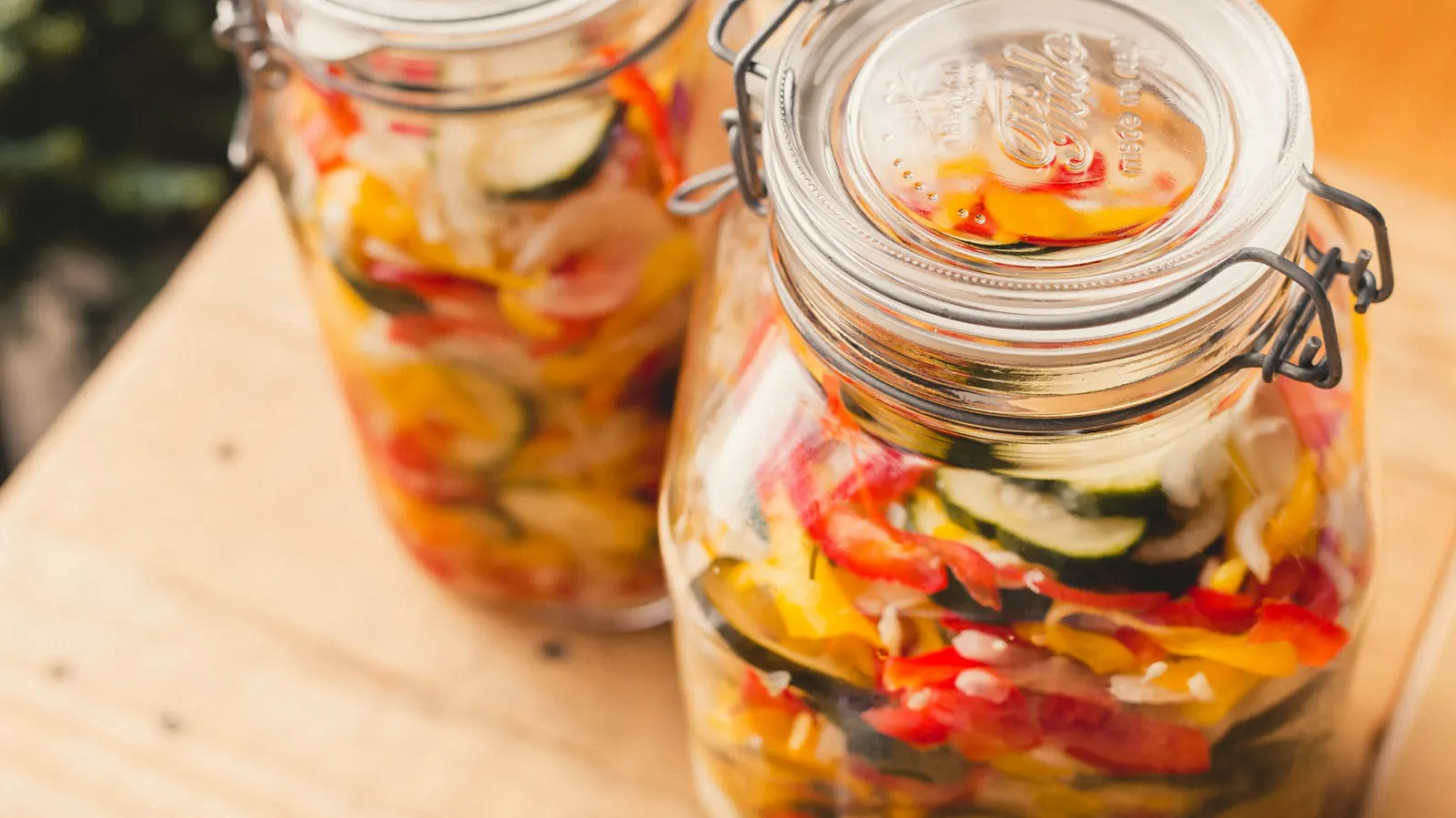
Fermenting is one of the oldest ways to keep food, and it asks for very little: vegetables, salt, a jar and some patience. It is also easy to get slightly wrong, which is why the book you learn from matters. A good one tells you what to expect from a jar each day. A bad one gives you a recipe and leaves you staring at a bubbling crock.
The shelf is crowded, and much of it is self-published, thin or wrapped in health promises. This page picks seven books from named authors at established publishers, from a first jar of kraut to a restaurant’s koji projects. It says which picks have a review we can name and which rest on the publisher’s details, and it explains what the home preservation authorities say.
Julia’s earns a commission on purchases made through links on this page, at no cost to you. Recommendations are based on what a working kitchen looks for in a food book, publisher and author information, published reviews and university food-preservation guidance, which we name.
Quick verdict: which fermentation book to buy
The best fermentation book for most home cooks is Kirsten and Christopher Shockey’s Fermented Vegetables: vegetables are the natural place to start, and the authors made these foods commercially. For a broader first read, choose Sandor Katz’s Wild Fermentation. For the full reference, choose his James Beard winner, The Art of Fermentation.
Here is how far the evidence goes. Five of the seven have a named review: the three above, the Noma guide and Fermentation Journeys. The Japanese Art of Pickling and Fermenting has an award listing but little else we could verify, and Fiery Ferments rests on the publisher’s and authors’ details. Each entry says so.
Five fermentation books side by side
Five of the seven, one for each kind of cook, with details from each listing, publisher, library record or review. All seven are described in full below.
| Book | Best for | Scope | Length | Buy on Amazon |
|---|---|---|---|---|
| Krauts, kimchis and pickles | 72 vegetables, fruits and herbs | 440 pages, paperback | View on Amazon | |

Wild Fermentation, Sandor Ellix KatzBest for beginners
|
A friendly first read | Vegetables, breads, drinks and more | 297 pages plus front matter | View on Amazon |

The Art of Fermentation, Sandor Ellix KatzBest reference
|
Looking everything up | Vegetables, fruits, grains, milk, beans, meats | 528 pages | View on Amazon |
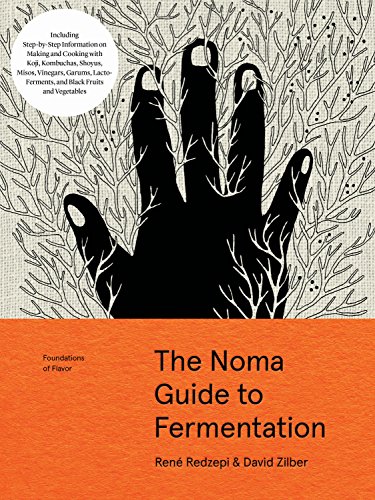
The Noma Guide to Fermentation, René Redzepi and David ZilberBest for advanced cooks
|
Ambitious, precise cooks | Koji, shoyus, misos, garums, vinegars | 456 pages, hardcover | View on Amazon |

Fiery Ferments, Kirsten K. and Christopher ShockeyBest for chile lovers
|
Hot sauce and chile pastes | 70 main recipes | 272 pages, paperback | View on Amazon |
Cover images from Amazon. Page counts are for the editions linked, as given by the publisher, a library record or Publishers Weekly.
Read this before you ferment
None of these books replaces basic safety guidance, and we have not checked their recipes against it. The National Center for Home Food Preservation at the University of Georgia says salt is essential to safety and texture, and warns against cutting back on it in sauerkraut or fermented pickles. It also says to use only recipes with tested proportions. Its own tested fermenting recipes are few: dill pickles, sauerkraut and kombucha tea.
Many recipes in these books go well beyond that short list, so treat them as the authors’ methods rather than tested guidance. Our kitchen advice is simple: start with sauerkraut or brined pickles, keep to the stated salt, keep the vegetables under the brine, and leave fermented meat and fish alone until you have real experience. If something looks wrong, the Center’s troubleshooting page says plainly: if spoilage is evident, do not eat it.
Fermenting is also different from canning. A fermented jar in the fridge is not a shelf-stable food, and if you want low-acid beans or chiles to keep in the pantry, you need tested recipes and the right equipment; see our guide to the best canning pressure cooker.
Our picks for the best fermentation book, book by book
The first three cover most readers; the rest serve a particular interest. We have not fermented our way through these books. Where we describe a strength, we say whose view it is, and all seven were in stock in print when we checked.
1. Fermented Vegetables, Kirsten K. and Christopher Shockey – The Everyday Home Ferments

Most home fermentation is vegetables, salt and time, and this is the book we would start with. Kirsten and Christopher Shockey once ran a farmstead food company that made more than 40 varieties of cultured vegetables and krauts, according to their publisher, and they now teach fermentation, including through The Fermentation School, which Kirsten co-founded.
This 10th Anniversary Edition from Storey runs to 440 pages. The listing’s title covers 72 vegetables, fruits and herbs in brined pickles, chutneys, kimchis, krauts, pastes and relishes. The publisher says it adds 65 new recipes, Japanese pickle beds and ways to turn ferments into seasoning pastes and powders.
Food & Wine’s Julia Skinner named the earlier edition best for fermenting vegetables and said the authors have an approachable writing style. The publisher’s page also quotes Library Journal on guidance for safely preserving garden-grown vegetables. Neither was written about this edition’s new material, so take them as a judgment of the book’s approach. The publisher mentions gut health as well; we make no such claims here.
Why we like it
- Named best for fermenting vegetables by Food & Wine (earlier edition)
- Covers 72 vegetables, fruits and herbs, per the listing
- Authors ran a cultured-vegetable food company
- Adds 65 new recipes, per the publisher
Key specifications
| Author | Kirsten K. Shockey and Christopher Shockey |
|---|---|
| Publisher | Storey (Workman Publishing) |
| Year | 2024 (10th Anniversary Edition) |
| Pages | 440 (publisher) |
| Recipes | Total not stated; 65 new |
| Focus | Vegetable ferments of every kind |
| Best for | Home cooks starting with vegetables |
| Review evidence | Food & Wine (earlier edition); publisher |
Why we recommend it
This suits nearly anyone who wants to make kraut, kimchi and brined pickles at home, then branch out by ingredient when the garden or market gives them a surplus.
Skip it if you are more interested in miso, koji or fermented drinks; this book stays with produce.
Pros and cons
Pros
- Organized around what you can buy or grow
- Writers with commercial experience
- Recent updated edition
Cons
- Long, at 440 pages
- Vegetables and fruit only, no drinks focus
- Named review predates this edition
2. Wild Fermentation, Sandor Ellix Katz – The Classic First Read
Sandor Ellix Katz is a food writer known for promoting home fermentation, and Wild Fermentation is his best-known book. It first appeared in 2003; this is Chelsea Green’s updated and revised second edition. Wikipedia reports that one source calls it the bible for do-it-yourself projects such as sourdough and sauerkraut.
Food & Wine’s Julia Skinner picked it as the best fermentation book for beginners and called it a classic for a reason. Where Fermented Vegetables stays with produce, this one ranges further, and that breadth is its charm: it treats fermentation as something ordinary that anyone can do.
We could not reach the publisher’s page to confirm what changed in this edition, and the listing gives few details, so the case here rests on the book’s reputation and on that one named recommendation. Katz writes as an enthusiast, and the subtitle mentions nutrition; read those parts as his view, not as medical advice. For salt levels on kraut and pickles, compare his method with the guidance further down this page.
Why we like it
- Named best for beginners by Food & Wine
- A long-standing starting point
- Ranges beyond vegetables
- Updated and revised second edition
Key specifications
| Author | Sandor Ellix Katz |
|---|---|
| Publisher | Chelsea Green |
| Year | 2016 (2nd edition) |
| Pages | xxi + 297 (library record) |
| Recipes | Not stated |
| Focus | Home fermentation, broadly |
| Best for | Curious first-timers |
| Review evidence | Food & Wine |
Why we recommend it
This suits someone who wants to understand the idea, try a few things, and find out whether fermenting is for them.
Skip it if you want a focused set of recipes for one category; Fermented Vegetables is the better fit.
Pros and cons
Pros
- Picked for beginners by Food & Wine
- Wide range of foods
- Short compared with his reference book
Cons
- Evidence is one named recommendation and reputation
- Edition changes not confirmed
- An enthusiast’s view on nutrition
3. The Art of Fermentation, Sandor Ellix Katz – The Reference Shelf Book
This is the big one. The Art of Fermentation won the 2013 James Beard Foundation book award for Reference and Scholarship, according to Wikipedia’s award list, and Food & Wine’s Julia Skinner called it the definitive English-language text on fermentation and her best deep dive.
The subtitle on the award entry, an in-depth exploration of essential concepts and processes, tells you what kind of book it is. The listing covers vegetables, fruits, grains, milk, beans and meats. Library records give 528 pages in hardcover. It is the book to pick up when you want to know why something happened, or how a tradition elsewhere in the world handles the same ingredient.
That reach needs a note of caution. We treat fermented meat and fish as a different level of risk from a jar of kraut, and a reference book describing a process is not the same as a tested recipe. If you are new to this, stay with vegetables until you can read a ferment with confidence. Read this as a companion to a recipe book, not a replacement for one.
Why we like it
- 2013 James Beard award, Reference and Scholarship
- Called the definitive English-language text by Food & Wine
- Very wide scope, per the listing
- Explains concepts, not only methods
Key specifications
| Author | Sandor Ellix Katz |
|---|---|
| Publisher | Chelsea Green |
| Year | 2012 |
| Pages | 528 (library record) |
| Recipes | Not stated |
| Focus | Concepts and processes worldwide |
| Best for | Experienced fermenters |
| Review evidence | James Beard list; Food & Wine |
Why we recommend it
This suits someone already fermenting who wants to understand what is going on and where these foods come from.
Skip it if you want a short recipe book for the kitchen counter; it is a reference first.
Pros and cons
Pros
- Award-winning reference
- Enormous scope
- Useful for years
Cons
- Long, at 528 pages
- More concept than recipe
- Covers higher-risk ferments that beginners should leave alone
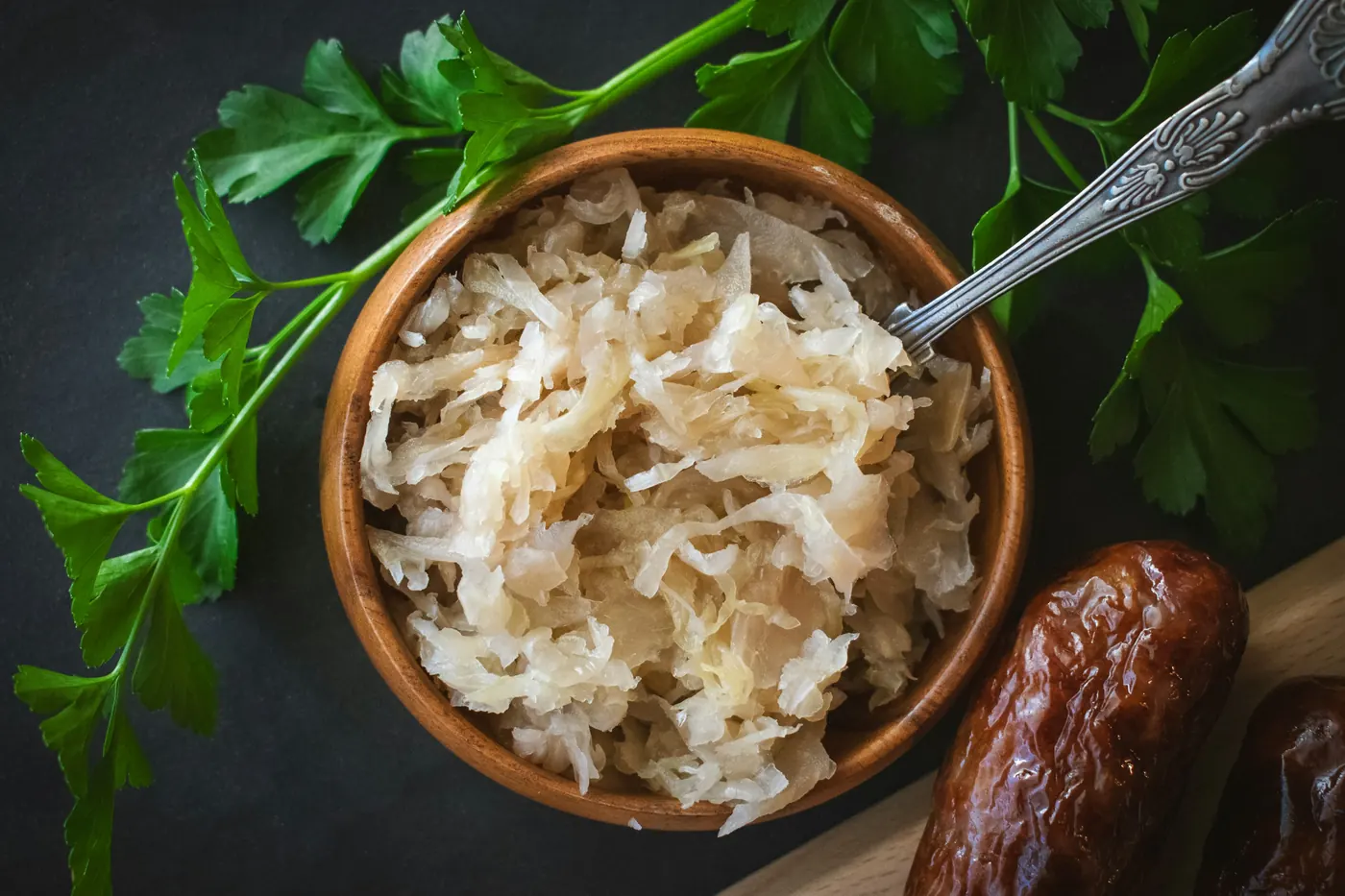
4. The Noma Guide to Fermentation, René Redzepi and David Zilber – Restaurant-Level Projects
This hardcover from Artisan comes from René Redzepi of Noma and David Zilber, whom Publishers Weekly names as the restaurant’s head of fermentation. It covers koji, kombuchas, shoyus, misos, vinegars, garums, lacto-ferments and black fruits and vegetables, and the publisher counts more than 500 step-by-step photographs and illustrations.
Publishers Weekly calls the recipes clearly written and describes a path from simple salt-based lacto-ferments of plums, blueberries and porcini up to garum, a strongly flavored relative of fish sauce. It notes that readers can build a fermentation chamber from a restaurant speed rack or a Styrofoam cooler. Food & Wine’s Julia Skinner named it best for creative cooks and said each process is broken down into easy-to-follow steps.
The authors’ own warning, as quoted by Publishers Weekly, is that you are playing with live ammo. The review’s point is that you must keep your workspace clean and follow the instructions closely. Take that seriously. These are controlled projects, and some need temperatures and equipment a normal kitchen lacks. A good kitchen scale is the minimum.
Why we like it
- Clearly written recipes, per Publishers Weekly
- More than 500 photographs and illustrations, per the publisher
- Named best for creative cooks by Food & Wine
- Starts with simple lacto-ferments
Key specifications
| Author | René Redzepi and David Zilber |
|---|---|
| Publisher | Artisan (Workman Publishing) |
| Year | 2018 |
| Pages | 456 (Publishers Weekly) |
| Recipes | 100+ using ferments (publisher) |
| Focus | Koji, garums, shoyus, misos, vinegars |
| Best for | Cooks after new flavors |
| Review evidence | Publishers Weekly; Food & Wine |
Why we recommend it
This suits a careful cook who already ferments, likes weighing everything and wants flavors that no shop sells.
Skip it if this is your first ferment, or if you are not prepared to follow hygiene and temperature instructions to the letter.
Pros and cons
Pros
- Hundreds of step-by-step images
- Moves from simple to advanced
- Covers things few home books do
Cons
- Some projects need a home-built chamber
- Long timelines and strict hygiene
- Not a first book
5. Fiery Ferments, Kirsten K. and Christopher Shockey – Hot Sauce and Chile Pastes
This is the book on this page closest to a Mexican kitchen’s heart. The same authors as our top pick turn to heat: 70 main recipes for hot sauces, chile pastes, relishes and spreads, with dozens of further recipes for breakfasts, snacks, entrées and drinks, according to their publisher, Storey.
Chiles are the focus, with horseradish, ginger and peppercorns also featured. The publisher’s sample recipes roam the world, from a Thai pepper paste to a mango, plantain and habanero ferment, and Darra Goldstein wrote the foreword. It opens with the history of spices and with fermentation technique before the recipes begin.
This pick rests on the publisher’s and authors’ details: Publishers Weekly’s page has no review, and we did not get to search further for one. If you know your chiles, you will want to swap in your own. Our guide to habanero peppers helps with heat, and our best Mexican hot sauce page shows what the bottled ones taste like.
Why we like it
- 70 main recipes, per the publisher
- Chile-led, with horseradish and ginger too
- Same authors as our top pick
- Technique comes before recipes
Key specifications
| Author | Kirsten K. Shockey and Christopher Shockey |
|---|---|
| Publisher | Storey (Workman Publishing) |
| Year | 2017 |
| Pages | 272 (publisher) |
| Recipes | 70 main, plus dozens more (publisher) |
| Focus | Fermented hot sauces and condiments |
| Best for | Chile lovers and hot sauce makers |
| Review evidence | Publisher and author details only |
Why we recommend it
This suits anyone who already goes through hot sauce quickly and wants to make their own from a fermented mash.
Skip it if you dislike heat or want a general first book; Fermented Vegetables covers the basics better.
Pros and cons
Pros
- Closest match to a Mexican pantry
- Narrow, clear subject
- Uses for the condiments in meals
Cons
- No named review to rely on
- International recipes, not Mexican ones
- Narrow scope
6. The Japanese Art of Pickling and Fermenting, Yoko Nakazawa – Vegetables and Family Tradition

This is the newest book here. Yoko Nakazawa’s The Japanese Art of Pickling & Fermenting: Preserving Vegetables and Family Traditions came from Smith Street Books in 2025, and Wikipedia’s James Beard list shows it under the 2026 book awards in Single Subject.
That is most of what we can say for certain. A library record gives 288 pages, and the subtitle shows the subject: vegetables, and the way a family keeps the practice going. Publishers Weekly’s page has no review, and our search budget ran out before we could look for another. We have left the recipe details out rather than guess at them.
It earns its place because the recognition is recent and specific, and because it offers something different from the Western and global books around it. If you like tsukemono, or are drawn to the Japanese pickle beds mentioned in the new edition of Fermented Vegetables, this is the natural next step. Look inside it before you buy if you can.
Why we like it
- Listed among 2026 James Beard book awards, Single Subject
- Focused on one tradition
- About family practice as well as technique
- New in 2025
Key specifications
| Author | Yoko Nakazawa |
|---|---|
| Publisher | Smith Street Books |
| Year | 2025 |
| Pages | 288 (library record) |
| Recipes | Not stated |
| Focus | Japanese vegetable pickling and fermenting |
| Best for | Cooks drawn to Japanese pickles |
| Review evidence | James Beard list; publisher details |
Why we recommend it
This suits a cook who has the basics and wants to go deep on one tradition, and it is a fine pairing with the Shockeys’ vegetable book.
Skip it if you want a general introduction or need detailed proof of what is inside before buying; we have less to go on here.
Pros and cons
Pros
- Recent award recognition
- A single, clear focus
- Different from the other picks
Cons
- Little published detail we could verify
- No review we could read
- Not a general introduction
7. Sandor Katz’s Fermentation Journeys, Sandor Ellix Katz – A Travel Book You Can Cook From

Publishers Weekly reads this as part cookbook and part travel memoir, and the 60 recipes each come with a discussion of the regional technique and tradition behind them. It covers places from Myanmar, where palm sap becomes wine, to Greenland. The review’s closing verdict is that this international romp is funky in the best of ways.
The chapters run from sugar-based drinks to vegetables and mold cultures. Readers of this site will spot tepache, the Mexican fermented pineapple drink, sitting beside turmeric mead, along with Chinese pickles, Croatian kraut and Indonesian tapè. It also describes more extreme traditions, such as Alaskan fermented salmon heads, and those are for reading rather than copying at home.
The review sets practical expectations: several vessels and storage jars, and above all patience, since many recipes take days, weeks or months. This listing is the paperback; Publishers Weekly’s page gives 352 pages for it, and it notes Katz as a James Beard Award winner.
Why we like it
- Publishers Weekly praises its range
- 60 recipes, each with context
- Includes tepache among the drinks
- Combines cooking with travel writing
Key specifications
| Author | Sandor Ellix Katz |
|---|---|
| Publisher | Chelsea Green |
| Year | 2021 (this paperback 2026) |
| Pages | 352 (Publishers Weekly, paperback) |
| Recipes | 60 (Publishers Weekly) |
| Focus | Fermentation traditions worldwide |
| Best for | Readers as much as cooks |
| Review evidence | Publishers Weekly |
Why we recommend it
This suits someone who likes food writing and travel as much as making things, and already has a basic book for the method.
Skip it if you want a step-by-step course; it assumes curiosity more than it teaches basics.
Pros and cons
Pros
- Good reading away from the stove
- Wide-ranging recipes
- Tepache for Mexican kitchens
Cons
- Needs jars, vessels and patience
- Some traditions are not for home copying
- Second Katz book is not essential if you own the reference
How to choose a home fermentation book
Five questions will narrow this down quickly.
1. What do you actually want to eat?
If you want kraut and pickles, buy a vegetable book. If you want hot sauce, buy Fiery Ferments. Broad books are lovely, but a focused one is more likely to get you started this week.
2. Do you want recipes or understanding?
The Art of Fermentation explains processes. The Shockeys’ books give you recipes by ingredient. Fermentation Journeys offers stories first. Decide whether you want to cook tonight or read tonight.
3. How does the book handle safety?
Look for specific salt amounts, signs of a good and a bad ferment, and clear storage instructions. Be wary of a book that treats everything as harmless, or that sells fermented food mainly as medicine. We would pass over those even if the recipes look good.
4. What gear will it ask for?
A quart jar will do for a first kraut; the Center says quart and half-gallon jars are acceptable, though they may lead to more spoilage losses than a larger container. Its containers guide covers crocks, food-grade plastic, glass and weights. The Noma guide can ask for much more, including a home-built chamber.
5. How patient are you?
Kraut takes weeks. The Center gives about three weeks for regular dills and sauerkraut, and Publishers Weekly says many recipes in Fermentation Journeys take days, weeks or months. The Center’s kombucha guidance gives 7 to 10 days, so that is a shorter project if you want quicker results.
How we picked these seven fermentation books
We went through the Amazon book listings and kept only print books that were in stock in the United States when we checked, from a named author and an established publisher, and on the subject of fermentation. We left out the many self-published and AI-looking titles in this category, including those built around gut-health promises, and anything already on our other pages.
We then read what we could. Publishers Weekly reviewed two of these, and Julia Skinner’s Food & Wine list named four, with one overlap. Our shared search allowance ran out partway through, so for the two picks with no named review and for the Nakazawa book we say so rather than claim that no review exists. Award details come from Wikipedia’s list of James Beard book awards. Safety guidance comes from the National Center for Home Food Preservation. We have not fermented from these books and do not claim to have.
Good titles missed out too. Koji Alchemy, which Food & Wine rates for koji lovers, is a specialist book that overlaps with the Noma guide and takes in charcuterie, so we left it out of a home-cook list. Miso, Tempeh, Natto & Other Tasty Ferments from the Shockeys is a strong next step but would have made three books by the same authors on one page. Mary Karlin’s Mastering Fermentation was not available to ship when we checked.
Fermentation book questions, answered
What is the best home fermentation book for a beginner?
Food & Wine picks Wild Fermentation. We lean to Fermented Vegetables if you already know you want kraut, kimchi and pickles, because it is built around them.
Is The Noma Guide to Fermentation too hard for home cooks?
Not all of it. Publishers Weekly says it starts with simple salt-based ferments and calls the recipes clearly written, but it builds up to garum and home-built chambers. It works best as a second or third book.
Which fermentation book won a James Beard Award?
The Art of Fermentation won in 2013 for Reference and Scholarship, and The Japanese Art of Pickling & Fermenting appears on Wikipedia’s 2026 list in Single Subject.
Is homemade fermented food safe?
The National Center for Home Food Preservation publishes tested methods for sauerkraut, dill pickles and kombucha, and stresses correct salt and tested proportions. Beyond those, you rely on the author’s method and your own care. If you are pregnant, immunocompromised or cooking for someone who is, ask a doctor first.
Is there a fermentation book with Mexican recipes?
Not as a focus among these seven. Fermentation Journeys includes tepache, according to Publishers Weekly, and Fiery Ferments is the closest for chile work. For Mexican cooking generally, see our best Mexican cookbooks.
Our last word on fermentation books
Related guide: Best preserving book.
Related guide: Best pickling book.
Start small: one book, one jar, one cabbage. Fermented Vegetables is the book we would hand most people, with Wild Fermentation as the friendlier read and The Art of Fermentation for later. When you are ready to keep food on the shelf rather than in the fridge, our best canning pressure cooker guide takes over. And if you only want good salsa and a cold drink tonight, look at the menu and call to order from Julia’s.