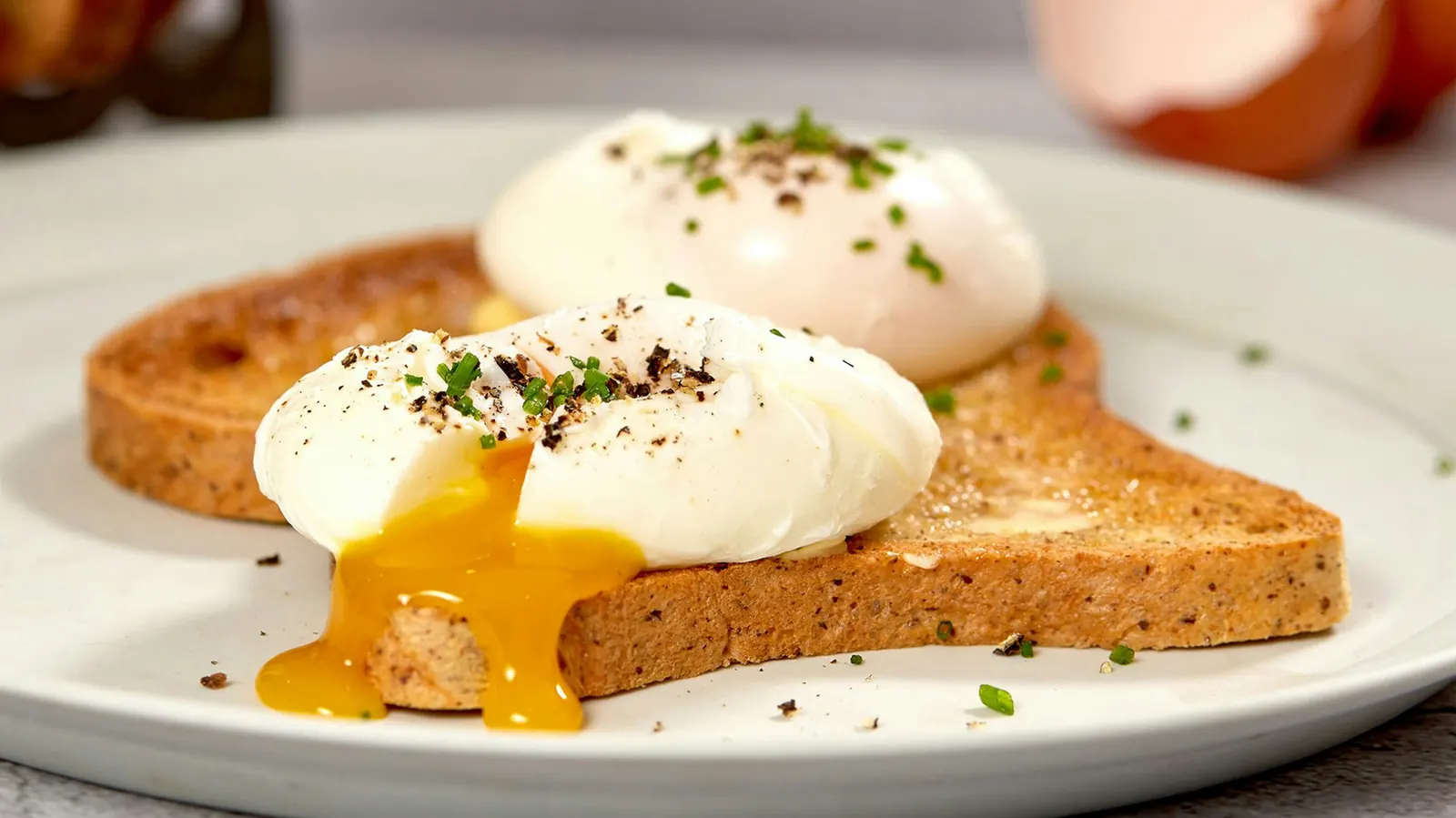
A poached egg is one of the plainest things a kitchen makes and one of the easiest to get wrong. Drop a cold egg into water at a rolling boil and the white tears into ragged threads; hold the water too cool and you wait forever while the white spreads. On a busy brunch line, cooks who poach to order keep a wide pan of water just under a simmer, crack each egg into a small cup first and slide it in. At home, with one or two plates to fill, an egg poacher pan takes most of that judgment out of the job.
Not every egg poacher works the same way, though. Some steam the egg in a cup above simmering water, some hold it in the water itself, and some do the job in a microwave or a plug-in cooker. This guide explains the differences, names the poachers worth buying, and is honest about which ones make a true poached egg and which make a steamed one.
Julia’s earns a commission on purchases made through links on this page, at no cost to you. Recommendations are based on what a restaurant kitchen looks for, product specifications and verified buyer reports.
Quick verdict: which egg poacher to buy
For most kitchens the best egg poacher pan is the Eggssentials 4-Cup Egg Poacher Pan: a stainless steel pan with an aluminum-encapsulated base that works on induction, four removable nonstick cups, a glass lid with a steam vent, and a body that doubles as a sauté pan once the insert is out. Cooking for a crowd? The RSVP Endurance 6-Egg Poacher Set does six at once. Already own a good skillet with a lid? The Norpro 4-Egg Poacher Insert turns it into a poacher. And if you want an egg that is cooked in the water rather than steamed above it, buy the Cuisipro Silicone Egg Poacher set.
The table compares the five we would point most cooks to first. Nine poachers are reviewed in full below it.
Five egg poachers side by side
One pick for each kind of cook, with the type, capacity and care each maker or listing states.
| Poacher | Best for | Type & capacity | Stove and care (per maker) | Buy on Amazon |
|---|---|---|---|---|

Eggssentials 4-Cup Egg Poacher PanBest overall
|
Everyday poached eggs for two to four | Stainless pan with insert, 4 cups | All stoves including induction; cups dishwasher safe | View on Amazon |

RSVP Endurance 6-Egg Poacher SetBest for a crowd
|
Eggs Benedict for a table of six | Stainless pan with insert, 6 eggs | Induction-safe base; dishwasher safe | View on Amazon |
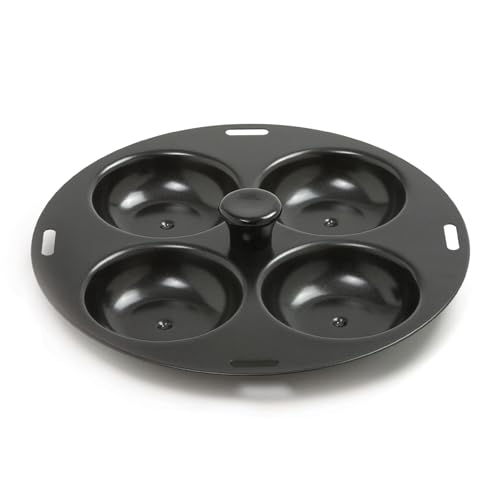
Norpro 4-Egg Poacher InsertBest skillet insert
|
Using a skillet you already own | Nonstick insert, 4 cups, 8.5 inches | Fits a 9-inch or larger lidded pan; hand wash | View on Amazon |

Cuisipro Silicone Egg Poacher, Set of 2Best silicone poaching cups
|
A true water-bath poach without the swirl | Silicone cups, 2 eggs | Any pot of water; top-shelf dishwasher safe | View on Amazon |

Dash Rapid Egg CookerBest electric
|
No stove, or a dorm or office counter | Plug-in steamer, 2 poached or 7 boiled | 360 watts, auto shut-off; trays dishwasher safe | View on Amazon |
Product images from Amazon. Capacity, stovetop and care details are as stated by each maker or its Amazon listing; check the listing before you buy.
Poached or steamed? The three ways egg poachers work
The word “poacher” covers three quite different tools, and knowing which one you are buying saves disappointment.
Cup poachers (poacher pans and inserts). A tray of shallow cups sits above an inch or two of simmering water, the lid goes on, and steam cooks the egg from below and above. This is how the Eggssentials, RSVP, Fox Run and Norpro poachers work. The result is a neat, round, flat-bottomed egg that sits well on an English muffin. Strictly, it is a steamed egg cooked in a cup, not one poached in water; the white is firmer and smoother, and the shape is set by the cup rather than by the egg.
In-water cups. Silicone or stainless cups that hold the egg in the water itself, like the two Cuisipro sets below. Water flows through holes around the egg, so the texture is closer to a classic poached egg, and the cup keeps the white from feathering away.
Microwave and electric cookers. A microwave poacher or a plug-in egg cooker steams the egg with a small measure of water. They are quick and need no stove, which is useful in a dorm, an office or a small apartment. They are not the same thing as stovetop poaching, and the UK reviewer Expert Reviews found that with the electric cooker it tried, it was not possible to get a runny yolk without the white still being wobbly. Buy one for convenience, not for a brunch-plate egg.
You do not strictly need a poacher
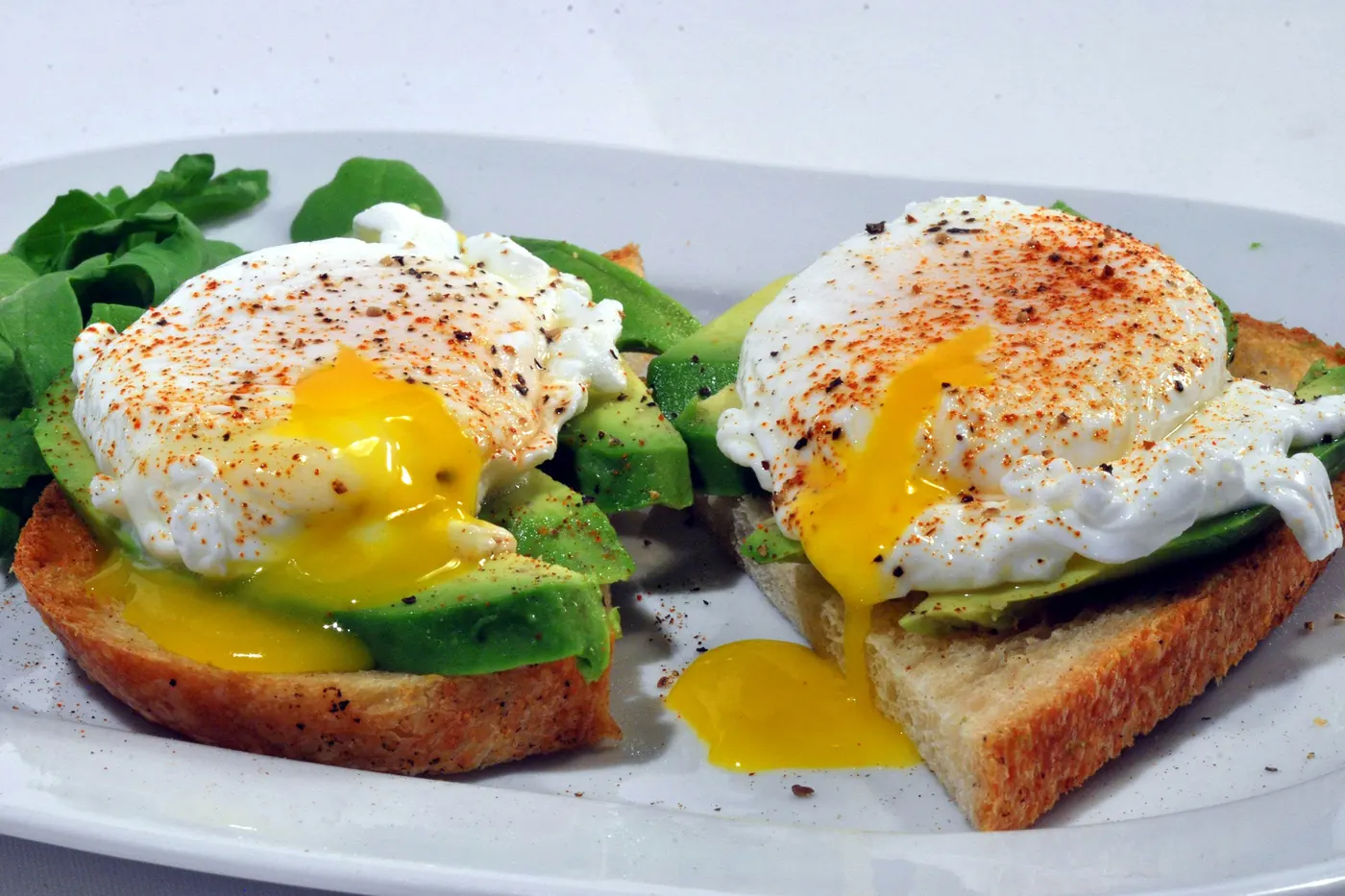
America’s Test Kitchen’s own method for poaching uses no gadget at all. It cracks the eggs into a colander first so the thin, watery part of the white drains away, adds vinegar and salt to the water, slides the eggs into boiling water, then covers the pot and takes it off the heat until the whites are set. Its point is that “gimmicky methods abound” but a few simple tricks and tools are all you need. A poacher is worth buying if you want the same result every morning without the practice, or if you need four or six eggs ready at once.
Our picks for the best egg poacher pan and its alternatives
These nine cover every way of poaching at home: stainless and aluminum poacher pans, a skillet insert, in-water cups in silicone and stainless steel, a microwave poacher and an electric cooker. Each lists the same eight specifications, taken from the maker or the Amazon listing.
1. Eggssentials 4-Cup Egg Poacher Pan – Induction Base, Two Pans in One
Eggssentials builds its range around egg tools, and this is its standard poacher pan: a stainless steel pan, a removable insert with four individual cups, and a tempered glass lid with a steam vent. The listing says the cups hold 75 ml each, sized for extra-large and jumbo eggs, and are coated with a PFOA-free nonstick finish. A spatula comes in the box for lifting each egg out.
The body is the reason to choose it over a cheaper aluminum poacher. According to the listing it is heavy stainless steel with a three-ply, aluminum-encapsulated bottom that spreads heat evenly, and it works on every stove type, including induction. The handle and lid knob are Bakelite, which the listing says stays cool. Lift the insert out and the pan becomes an ordinary sauté pan, so it earns its cabinet space on mornings without poached eggs.
The listing says the cups lift out individually and can go in the dishwasher; it does not say the same of the pan itself, so wash that by hand. A thin film of butter or oil in each cup helps release, as with any coated poacher cup.
Why we like it
- Stainless body with an aluminum-encapsulated base
- Works on induction, per the listing
- Four removable 75 ml cups sized for large eggs
- Glass lid with a steam vent, so you can watch the whites set
Key specifications
| Model | EG101 |
|---|---|
| Type | Stovetop poacher pan with removable insert |
| Cups/eggs | 4 cups, 75 ml each |
| Material | Stainless steel, 3-ply aluminum-encapsulated base |
| Coating | PFOA-free nonstick on the cups (type not stated) |
| Lid | Tempered glass with steam vent |
| Induction | Yes |
| Dishwasher safe | Cups yes; pan not stated |
Why we recommend it
It suits the household that poaches eggs every weekend and wants a sturdy pan that works on any stove and does a second job the rest of the week.
Skip it if you only poach eggs a few times a year; an insert for a skillet you already own costs less and takes less room.
Pros and cons
Pros
- Even-heating base
- Induction compatible
- Doubles as a sauté pan
Cons
- Pan size not published
- Pan’s dishwasher use not stated
- Steamed, cup-shaped eggs rather than water-poached
2. RSVP Endurance 6-Egg Poacher Set – Six Eggs at Once
RSVP International sells a line of stainless kitchen tools under its Endurance name, and this is the large version of its poacher: a stainless pan with a long handle, a nonstick poaching insert and a glass lid with a steam vent. The listing gives the size as 9.24 inches across and 5.5 inches tall, and the set holds six eggs, one per cup. That is the number you want for eggs Benedict for a family or a brunch table, without cooking in two rounds while the first plates go cold.
The base is triple-ply and encapsulated, with an outer layer of 18/0 magnetic steel, which is what makes it induction safe according to the listing. The glass lid is rated oven safe to 450°F, and the listing calls the set dishwasher safe. Our view from the kitchen: hand-washing the nonstick cups will keep them releasing longer, and RSVP’s own listing for its single-egg poacher says the same and warns that cooking spray builds up on nonstick cups.
A six-egg pan is wide. Check that it fits your largest burner, and expect it to take a little longer to come to a simmer than a four-cup pan.
Why we like it
- Six eggs in one batch
- Induction-safe encapsulated base
- Glass lid with a steam vent, oven safe to 450°F
- Dishwasher safe, per the listing
Key specifications
| Model | POACH-6IN |
|---|---|
| Type | Stovetop poacher pan with removable insert |
| Cups/eggs | 6 eggs; 9.24 inches across, 5.5 inches tall |
| Material | Stainless steel, triple-ply encapsulated base |
| Coating | Nonstick insert (type not stated) |
| Lid | Glass with steam vent, oven safe to 450°F |
| Induction | Yes |
| Dishwasher safe | Yes, per the listing |
Why we recommend it
Choose it if you regularly poach for four or more, or host a weekend brunch where every plate needs its eggs at the same moment.
Skip it if you cook for one or two; a six-cup pan heats more water and metal than you need for a single plate.
Pros and cons
Pros
- Largest capacity here
- Works on induction
- Published dimensions
Cons
- Wide for a small burner
- Coating type not stated
- More than a small household needs
3. RSVP Endurance Single Egg Poacher Set – One Egg, One Small Pan

Most poachers assume a crowd. RSVP’s single set is for the cook who wants one egg on toast: a small 18/8 stainless steel pan with a long handle, a lid, and a nonstick insert that holds one egg. The whole set measures 10 by 4.25 by 2.5 inches, handle included, so it stores in a drawer.
RSVP gives two care notes worth following. Do not use cooking spray in the nonstick cup, because it can leave a buildup that damages the surface, and wash the cup by hand even though the other pieces are dishwasher safe.
The listing does not mention induction or give a warranty. It works like the larger cup poachers here, so the egg steams above simmering water, and you can only make one at a time. If you often cook for two, the 6-egg RSVP set or the Eggssentials is the better buy.
Why we like it
- 18/8 stainless steel pan
- Holds one egg at a time
- Small enough for a drawer
- Pan and lid go in the dishwasher
Key specifications
| Model | POACH-1 |
|---|---|
| Type | Stovetop poacher pan with insert |
| Cups/eggs | 1 cup |
| Material | 18/8 stainless steel |
| Coating | Nonstick insert |
| Lid | Included; material not stated |
| Induction | Not stated |
| Dishwasher safe | Yes, except hand wash the nonstick cup |
Why we recommend it
It suits someone who cooks breakfast for one and does not want to heat a full pan for a single egg.
Skip it if you ever poach for two or more; you would be cooking in rounds.
Pros and cons
Pros
- Small and quick to store
- Long handle
- Clear care instructions
Cons
- One egg at a time
- No cooking spray in the cup
- Induction not stated
4. Fox Run Egg Poacher and Frying Pan Set – Poach or Fry in One Pan

Fox Run sells this as an egg pan first and a poacher second: a nonstick carbon steel frying pan, a removable insert that holds four eggs, and a domed lid. The listing gives the pan as 13.5 by 8 by 4.75 inches, a measurement that includes the handle. Poach four eggs for one breakfast, then take the insert out and fry or scramble in the same pan the next.
The body is carbon steel with what the listing calls a food-safe nonstick coating; it does not name the coating type. Fox Run is clear about care: hand wash only, not dishwasher safe, to protect the coating. The listing does not say whether the pan works on induction.
For poaching, the job is simply a steady simmer under a closed lid, and any pan that holds an inch of water does it. The extra value here is the frying pan you get with it.
Why we like it
- Frying pan, poaching insert and domed lid in one set
- Four eggs per batch
- Clear hand-wash care guidance from the maker
Key specifications
| Model | 5203 |
|---|---|
| Type | Frying pan with removable poacher insert |
| Cups/eggs | 4 eggs; 13.5 x 8 x 4.75 inches |
| Material | Carbon steel |
| Coating | Nonstick (type not stated) |
| Lid | Domed lid included |
| Induction | Not stated |
| Dishwasher safe | No, hand wash only |
Why we recommend it
Choose it for a small kitchen where one pan has to cover fried, scrambled and poached eggs.
Skip it if you want a dishwasher-safe poacher; Fox Run rules that out.
Pros and cons
Pros
- A real frying pan as well as a poacher
- Domed lid included
- Simple care instructions
Cons
- Hand wash only
- Coating type and induction not stated
5. Norpro 4-Egg Poacher Insert – Turns Your Skillet Into a Poacher
If you already own a skillet or sauté pan with a lid, you do not need a second pan to poach eggs. Norpro’s insert is a flat nonstick tray with four cups and an upright stay-cool knob in the center. Put an inch of water in your pan, bring it to a simmer, set the insert in, crack in the eggs and cover.
The listing gives the insert as 8.5 by 8.5 by 1.5 inches and says it sits in any standard pan of 9 inches or larger that has a lid. The center knob is the detail that matters on a busy morning: it lets you lower the insert into the simmering water and lift it out again without reaching into the steam. Norpro recommends hand washing to preserve the nonstick coating.
Because it relies on your pan, your stove type and lid are what decide how well it works. On induction, use a pan that is induction-ready; the insert itself never touches the burner. Nordic Ware makes a similar American-made insert for 10- to 12-inch skillets if your pans run large.
Why we like it
- Uses a skillet you already own
- Stay-cool center knob for lowering and lifting
- Published size: 8.5 inches square, fits 9-inch and larger pans
- Stores flat
Key specifications
| Model | 992 |
|---|---|
| Type | Insert for a skillet or sauté pan |
| Cups/eggs | 4 cups; 8.5 x 8.5 x 1.5 inches |
| Material | Not stated |
| Coating | Nonstick (type not stated) |
| Lid | None; use your pan’s lid |
| Induction | Depends on your pan |
| Dishwasher safe | Hand washing recommended |
Why we recommend it
It suits the cook who poaches now and then and does not want a single-purpose pan in the cabinet.
Skip it if your only lidded pan is smaller than 9 inches; the insert needs room to sit flat.
Pros and cons
Pros
- Lowest commitment of any cup poacher
- Safe lifting knob
- Stores flat
Cons
- Needs a lidded 9-inch or larger pan
- Material not stated
- Hand wash recommended
6. Cuisipro Silicone Egg Poacher, Set of 2 – A True Poach Without the Swirl
Cuisipro’s silicone poachers hold the egg in the water itself. Holes in each cup let the water circulate around the egg to poach it gently, according to the listing, while the cup keeps the white from spreading. Each poacher hooks securely onto the rim of the pan, so it stays put, and with the cups hanging from the rim it is easy to keep track of more than one egg.
Because the egg sits in the water rather than above it, this is one of the two picks here closest to a classic poached egg; the other is Cuisipro’s stainless version below. When the egg is done, holes at the back drain the water away as you lift the cup, so the cooking water does not end up on the plate.
The listing calls the silicone BPA-free, non-stick and food safe, heat resistant to 575°F, and safe on the top shelf of the dishwasher. Any saucepan works, on any stove, so there is no stovetop question to answer. Cuisipro gives a 25-year warranty, per the listing.
Why we like it
- Egg cooks in the water, like a traditional poach
- Hooks onto the pan rim
- Drain holes at the back
- Top-rack dishwasher safe, per the listing
Key specifications
| Model | 747182 |
|---|---|
| Type | In-water poaching cups that hook on the pan |
| Cups/eggs | 2 cups, 1 egg each |
| Material | Silicone, BPA free; heat resistant to 575°F |
| Coating | None |
| Lid | None |
| Induction | Any pot; use one that suits your stove |
| Dishwasher safe | Yes, top shelf |
Why we recommend it
Choose it if you want a soft, water-poached egg for toast or a brunch plate and have been put off by the vinegar-and-whirlpool method.
Skip it if you need four eggs at once; the set has two cups.
Pros and cons
Pros
- Close to a classic poached egg
- Works with any pot and stove
- Small to store
Cons
- Two eggs at a time
- Needs a pot rim the hook fits
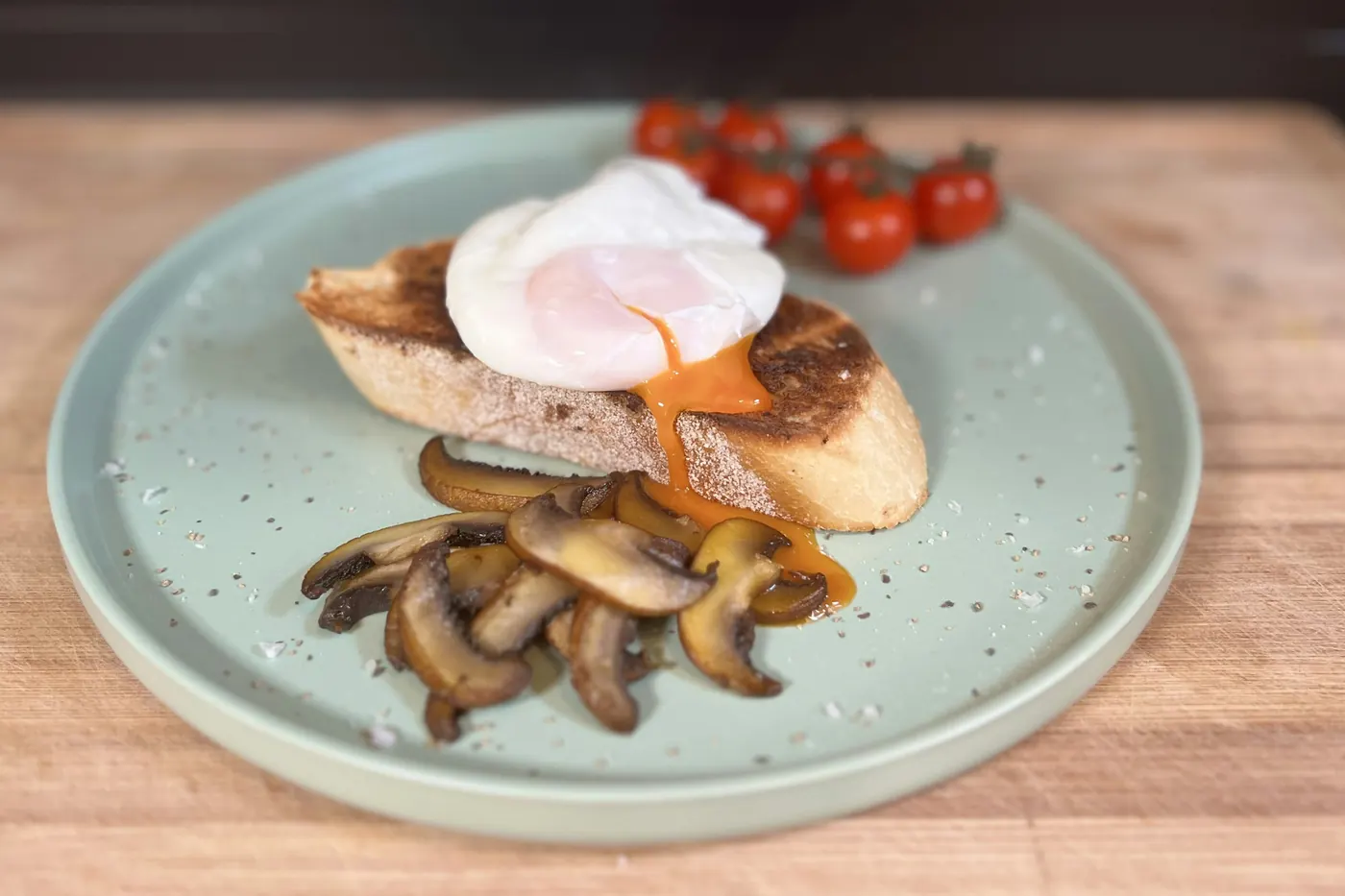
7. Cuisipro Stainless Steel Egg Poacher, Set of 2 – Hooks on the Pot Rim

Cuisipro’s poachers take the in-water idea and make it in metal. Each one is an 18/10 stainless steel cup on a rod, with a BPA-free plastic handle and a hook that clips over the rim of the pot. The hook adjusts for different pot heights, so the cup sits at the right depth in the water and stays put while you deal with toast and coffee.
Water circulates through the cup around the egg while the sides stop the white from spreading. When the egg is done, a drain hole lets the water run out as you tilt the cup back, so the egg comes out without a puddle on the plate. Because each cup hangs from the rim, you can poach one egg or two and keep track of which went in first.
Stainless steel has no coating to wear, which is the argument for it over a nonstick cup. The flip side is that a bare steel cup releases less readily; a light film of oil or butter inside helps. The listing does not say whether the set is dishwasher safe.
Why we like it
- 18/10 stainless steel cup and rod, no coating to wear
- Adjustable hook fits different pots
- Drain hole for a dry egg on the plate
Key specifications
| Model | 747308 |
|---|---|
| Type | In-water poaching cups that hook on the pot |
| Cups/eggs | 2 cups, 1 egg each |
| Material | 18/10 stainless steel; BPA-free plastic handle |
| Coating | None stated |
| Lid | None |
| Induction | Any pot; use one that suits your stove |
| Dishwasher safe | Not stated |
Why we recommend it
It suits a cook who wants water-poached eggs from a tool with no coating and no silicone, made to last.
Skip it if you want the easiest possible release; bare steel needs a little fat, and silicone cups let go more readily.
Pros and cons
Pros
- No coating to wear out
- Fits pots of different depths
- Poach one or two at a time
Cons
- Needs oil for clean release
- Dishwasher use not stated
- Two eggs per set
8. Nordic Ware 2-Cavity Microwave Egg Poacher, 2-Pack – Four Eggs, No Stove

Nordic Ware makes a range of microwave cookware, and this is one of its simplest pieces: a small poacher with two egg cavities, sold as a pack of two, so you can cook up to four eggs with both in the microwave. The listing describes it as for microwave and storage use only.
Be clear about what it makes: an egg steamed in a cup by the microwave, not one poached in simmering water. Microwave ovens vary in power, so expect to spend a few mornings learning the timing for yours; start with Nordic Ware’s directions and add time in small steps.
The listing does not say what plastic the poacher is made of. It asks you to hand wash it in warm, soapy water, says the dishwasher is not recommended because it may warp the poacher, and warns that metal utensils can scratch it. It is the right tool for an office kitchen or a dorm with a microwave and no stove, and the wrong one for a brunch plate.
Why we like it
- Two eggs per poacher, four with the pair, no stove
- Two poachers in the pack
- Also usable for storage, per the listing
Key specifications
| Model | 64702 (2-pack) |
|---|---|
| Type | Microwave egg poacher |
| Cups/eggs | 2 cavities each; 4 eggs with both |
| Material | Not stated |
| Coating | None stated |
| Lid | Not stated |
| Induction | Not applicable (microwave only) |
| Dishwasher safe | Not recommended; hand wash |
Why we recommend it
Choose it if a microwave is all you have, or if you want a hot egg for a breakfast sandwich in a few minutes at work.
Skip it if you want a soft, water-poached texture; a microwave steams the egg, and the timing takes practice.
Pros and cons
Pros
- No stove needed
- Four eggs with both poachers
- Two pieces for sharing or rotating
Cons
- Steamed, not poached
- Hand wash only; material not stated
- Timing varies by microwave
9. Dash Rapid Egg Cooker – Plug In, Set and Walk Away
Dash’s Rapid Egg Cooker is a small 360-watt countertop steamer. Dash says it boils up to seven eggs, poaches two, or makes one omelet at a time, with a separate tray for each job: a boiling tray, a poaching tray, an omelet bowl and a measuring cup with an egg-piercing pin, all of which store inside the cooker.
The useful feature is the thermal sensor. You measure the water, and when it has steamed away the cooker switches off and sounds an alert, so the eggs do not overcook while you get dressed. The non-electric parts go in the dishwasher, according to Dash, and the cooker carries a one-year warranty.
Two poached eggs is a small batch, and the result is a steamed egg, not a water-poached one. The UK reviewer Expert Reviews, writing about a similar plug-in cooker from another brand, found it could not give a runny yolk without the white still being wobbly. Buy it for hard- and soft-boiled eggs with the occasional poached egg as a bonus.
Why we like it
- Boils, poaches and makes omelets
- Auto shut-off with an alert
- Accessories store inside
- Non-electric parts dishwasher safe
Key specifications
| Model | DEC007BK |
|---|---|
| Type | Electric egg cooker with poaching tray |
| Cups/eggs | 2 poached, 7 boiled or 1 omelet |
| Material | Not stated (BPA-free, per the listing) |
| Coating | Not stated |
| Lid | Not stated |
| Induction | Not applicable (plug-in, 360 watts) |
| Dishwasher safe | Non-electric parts |
Why we recommend it
It suits a dorm, an RV or an office with an outlet and no stove, and anyone who mostly wants boiled eggs with a poached egg now and then.
Skip it if poached eggs are the main reason you are shopping; two at a time, steamed, is not what a brunch cook wants.
Pros and cons
Pros
- No stove and no watching
- Three egg styles in one appliance
- Compact storage
Cons
- Only two poached eggs per batch
- Steamed texture
- One-year warranty
How to choose an egg poacher pan
Five questions sort out which kind of poacher fits your kitchen.
1. Steamed in a cup, or poached in water?
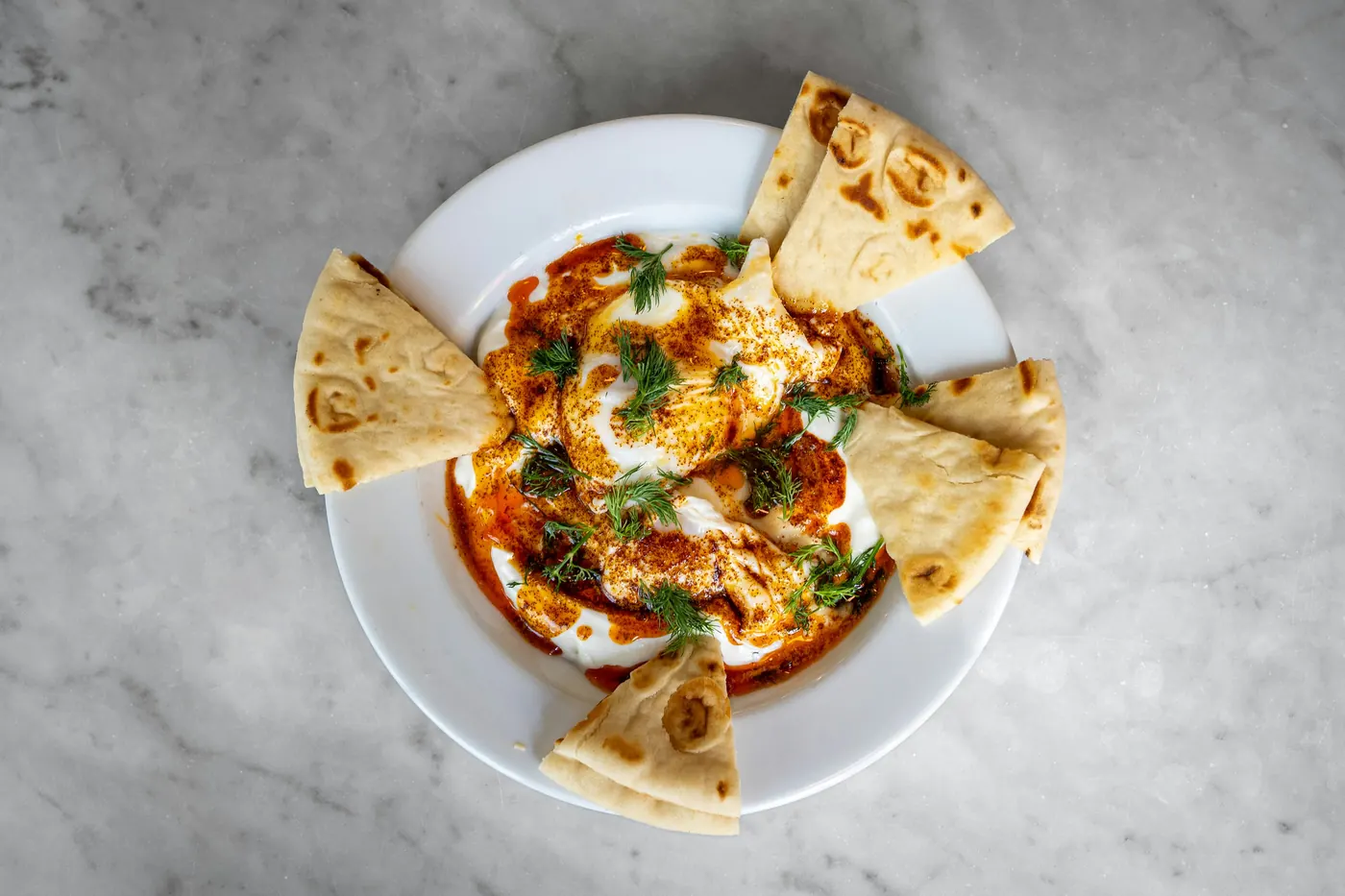
Cup poachers make tidy, round eggs with a firm, smooth white, ideal for stacking on a muffin. In-water cups make a softer egg closer to the classic. Neither is wrong; decide which plate you are cooking for. For a dish like huevos rancheros, where the egg sits on a tortilla under salsa, either works, and our guide to huevos rancheros vs. divorciados explains the two plates.
2. How many eggs at once
One egg: the RSVP single set. Two eggs: silicone or stainless cups, or the Dash. Four: the Eggssentials, Fox Run or Norpro insert. Six: the RSVP Endurance set. Buy for your usual weekend brunch, not for the one holiday a year.
3. Your stove
Induction needs a magnetic base. The Eggssentials and the 6-egg RSVP pan are rated for it. The single-egg RSVP and Fox Run do not say. The Norpro insert and the in-water cups use whatever pot you put them in.
4. The cup surface
Most poacher cups are coated nonstick; makers rarely say which kind, beyond “PFOA-free”. For context, the FDA lists nonstick cookware coatings among authorized food-contact uses of PFAS and says studies show negligible amounts of PFAS in this coating can migrate to food. PFOA itself was phased out of emissions and product content by the eight major manufacturers in the EPA’s PFOA Stewardship Program, all of which report meeting its goals. If you prefer no coating at all, choose Cuisipro’s silicone or bare stainless cups. We make no health claims beyond what the FDA and EPA say.
5. Cleaning and storage
Nonstick cups last longer washed by hand and kept away from cooking spray, which RSVP warns can build up and make eggs stick. Silicone cups collapse flat; inserts store flat; poacher pans need a cabinet slot of their own unless you also use them as a sauté pan.
How we picked these nine poachers
We started from what a kitchen asks of a poacher: a steady, gentle heat, a lid that holds in steam, cups that release the egg, and a capacity that matches the table. We searched for egg poachers sold on Amazon in the United States, checked each one’s availability, and kept only in-stock products from makers we could identify, leaving out unbranded listings and near-identical copies. For every product we took the capacity, materials, stove compatibility and care from the maker’s listing or website and wrote “Not stated” where neither gave it. Named reviews come from Expert Reviews, a UK site that poached several batches of eggs in each product it covered, and the poaching method from America’s Test Kitchen. Egg food-safety advice comes from the FDA, and facts about nonstick coatings from the FDA and EPA. We have not cooked with these poachers for this guide.
A note on egg safety
A runny yolk is part of the appeal of a poached egg, so it is worth knowing the official advice. The FDA says to cook eggs until both the yolk and the white are firm, to cook dishes containing eggs to 160°F, and to keep eggs refrigerated at 40°F or below. It notes that young children, older adults, pregnant women and people with weakened immune systems are at greater risk of severe illness. A poacher makes it easy to follow that advice: leave the lid on a little longer and the yolk sets through.
Egg poacher pan reviews and questions, answered
What do egg poacher pan reviews say?
The reviews we could read directly were from Expert Reviews in the UK. It found that coated poacher-pan cups can struggle with very large eggs and overspill, that they release best with a light coating of oil, and that a poacher pan earns its price when it also works as a general frying pan. It found silicone in-water cups set the egg quickly with little white leaking out, and that a plug-in cooker gave a flatter, jammier egg. We did not find a ranked review of poacher pans from America’s Test Kitchen.
Is a poacher pan better than poaching in a saucepan?
It is more consistent, not necessarily better. America’s Test Kitchen gets excellent poached eggs with a pot, a colander and a lid. A poacher pan’s advantage is that it gives the same round egg every time and cooks four or six together.
How much water goes in an egg poacher pan?
Enough to simmer under the insert without touching the cups, usually an inch or so; follow your maker’s line. Modern Innovations, which makes a six-cup pan we did not review, says its pan uses about two cups of water.
Do I need to grease the cups?
A thin film of butter or oil helps, even on nonstick. Expert Reviews found coated cups released best that way. Skip aerosol cooking spray in nonstick cups; RSVP says it leaves a buildup that makes eggs stick.
Can I poach eggs in the microwave?
You can steam them in a microwave poacher like Nordic Ware’s. The texture is firmer than a stovetop poached egg and the timing depends on your oven, so start short and add time in small steps.
Our final pick for poached eggs
Buy the Eggssentials 4-Cup Egg Poacher Pan if you want one dependable poacher for any stove. Choose the 6-egg RSVP for six eggs at once, the single RSVP for one egg, the Fox Run to poach and fry in one pan, the Norpro to use a skillet you already own, the Cuisipro silicone or stainless cups for an egg poached in water, the Nordic Ware for a microwave, and the Dash for a plug-in cooker that also boils.
For every kind of egg pan in one place, start with our guide to the best egg pan.
If you cook for one or two, the best egg pan small guide covers 6- to 8-inch skillets, and the best egg pan stainless steel guide covers uncoated steel. For ideas on what to put under the egg, read Mexican brunch explained. Or let someone else poach today: see the menu or call to order.