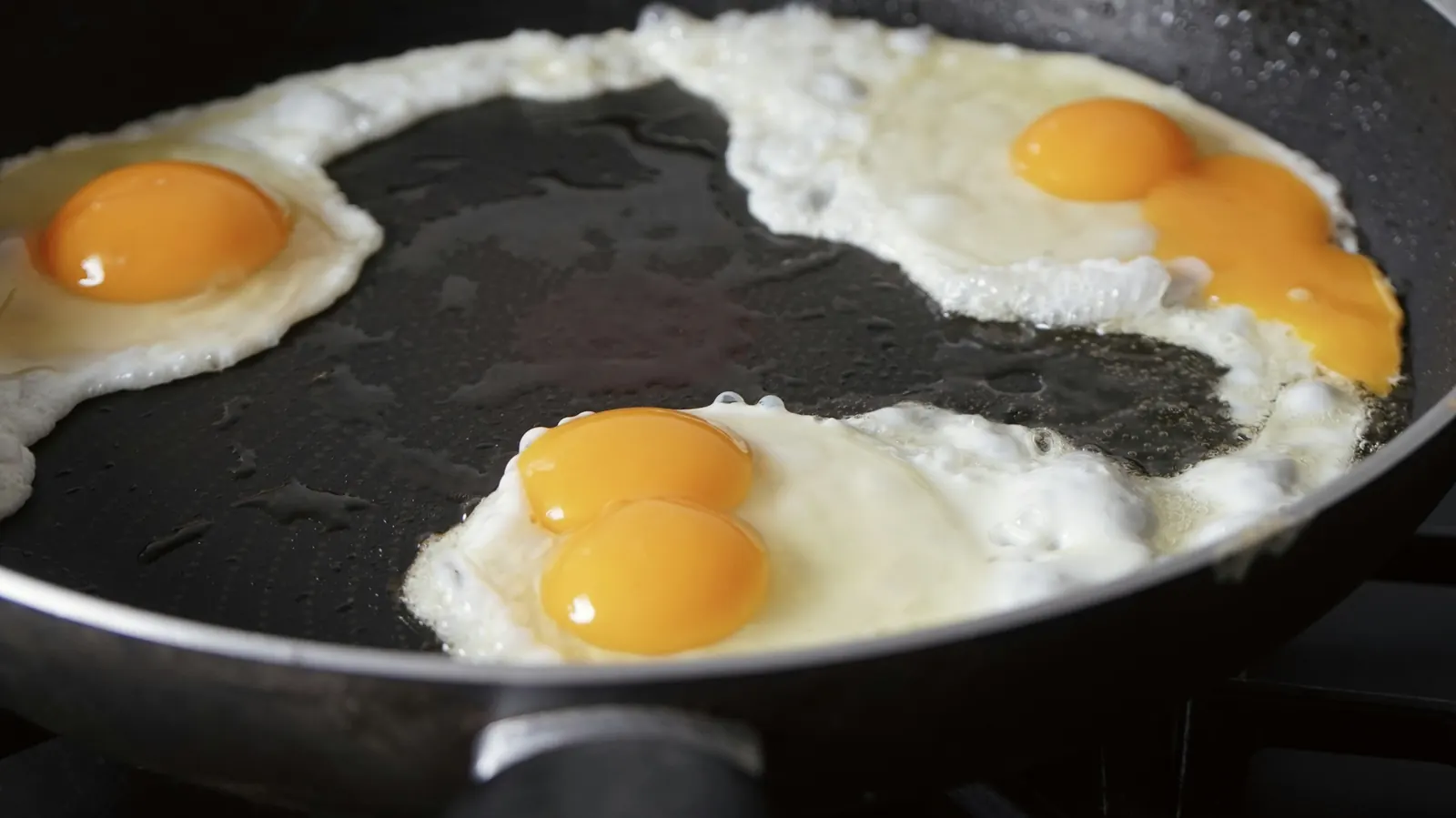
A restaurant breakfast line runs on eggs. Huevos rancheros, breakfast tacos, chilaquiles with a fried egg on top, a quick scramble with chorizo: the same small pans go back on the burner over and over, and the cooks know exactly which ones release a yolk cleanly and which ones grab. At home the question is the same, just with fewer eggs. Which pan lets an egg slide out whole, every morning, without a fight?
There is no single answer, because eggs work in more than one kind of pan. A small nonstick skillet is the easiest. Carbon steel and cast iron do the job once they are seasoned and heated properly, and they never wear out. Stainless steel can fry an egg with crisp, lacy edges if you learn its timing. This guide covers all of them, names the pans worth buying in each material, and sets out what the makers and published reviewers say about getting eggs out clean.
Julia’s earns a commission on purchases made through links on this page, at no cost to you. Recommendations are based on what a restaurant kitchen looks for, product specifications and verified buyer reports.
Quick verdict: which egg pan to buy
For most cooks, the best egg pan is the Tramontina Professional 8-inch nonstick fry pan: a heavy-gauge aluminum restaurant-style pan that Tramontina says is NSF certified, oven safe to 400°F and backed by a lifetime warranty, sized for one to three eggs. If you want a ceramic coating made without PFAS, choose the OXO Enhanced 8-inch. If you want a pan that never needs replacing, the pre-seasoned OXO Obsidian 8-inch carbon steel or the Lodge 8-inch cast iron skillet will cook eggs well once you manage the heat.
The table below compares the five picks that suit the most kitchens, one per material. All nine pans are reviewed in full after it.
Five egg pans side by side
One pick for each way of cooking eggs, with the surface, size and stovetop ratings each maker or listing states.
| Pan | Best for | Surface & size | Stovetops (per maker) | Buy on Amazon |
|---|---|---|---|---|
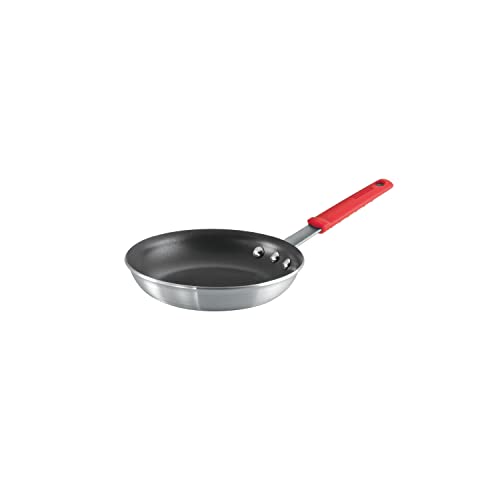
Tramontina Professional 8-inch Nonstick Fry PanBest overall
|
Everyday fried and scrambled eggs | Reinforced nonstick, 8-inch | Gas, electric, glass; not induction | View on Amazon |
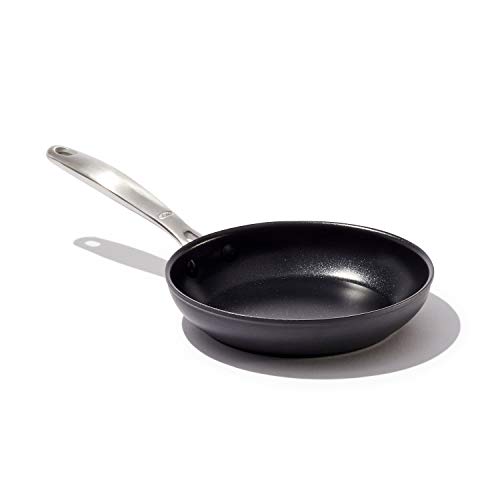
OXO Enhanced 8-inch Ceramic Frying PanBest ceramic
|
Cooks who want a PFAS-free coating | Ceramic nonstick, 8-inch | Induction not stated | View on Amazon |

OXO Obsidian 8-inch Carbon Steel Frying PanBest carbon steel
|
A coating-free pan that lasts | Pre-seasoned carbon steel, 8-inch | All, including induction | View on Amazon |

Lodge 8-inch Cast Iron SkilletBest cast iron
|
Steady heat, oven-finished eggs | Pre-seasoned cast iron, 8-inch | All, including induction | View on Amazon |

Cuisinart MultiClad Pro 8-inch Stainless SkilletBest stainless
|
Crisp-edged fried eggs, no coating | Tri-ply stainless, 8-inch | Check the listing for induction | View on Amazon |
Product images from Amazon. Stovetop and oven ratings are as stated by each maker or its Amazon listing; check the listing before you buy.
Our picks for the best egg pan
These nine pans cover every honest way to cook eggs at home: four coated nonstick pans (two conventional, two ceramic), two carbon steel pans (one pre-seasoned, one shaped for omelets), a cast iron skillet, a stainless skillet and a rectangular tamagoyaki pan for rolled omelets. Most are 8 inches across, the size America’s Test Kitchen recommends for “small tasks such as frying an egg or preparing a small batch of scrambled eggs.” Each pick names who it suits, the specifications that matter and one honest reason to skip it.
1. Tramontina Professional 8-inch Nonstick Fry Pan – Restaurant Build, Egg-Sized
This is the small pan of the restaurant-supply world: plain heavy-gauge aluminum, a reinforced nonstick interior and a riveted stainless handle with a removable red silicone sleeve. Tramontina’s listing calls it an 8-inch egg pan for frying eggs, omelets and single servings, and that is the right description. Two fried eggs fit side by side, or three eggs scrambled for a pair of breakfast tacos.
Aluminum heats fast and evenly, which suits eggs: you can bring the pan to medium, add butter, and have whites set within a minute or two without a hot ring at the center. According to the listing, the pan is NSF certified (the food-equipment certification commercial kitchens look for), made in Brazil, dishwasher safe and oven safe to 400°F once you pull the silicone sleeve off. That oven rating is handy for finishing a small frittata.
The limits are the usual ones for a coated pan. Tramontina rates it for gas, electric and ceramic glass cooktops, not induction, and it does not name the coating chemistry, so treat it as a conventional nonstick and keep the heat moderate. The lifetime warranty in the listing is generous for a pan at this level. The same line comes in 10, 12 and 14-inch sizes if you also want a bigger skillet.
Why we like it
- NSF certified, per the listing
- Heavy-gauge aluminum heats quickly and evenly
- Oven safe to 400°F with the sleeve removed
- Lifetime warranty, per the listing
Key specifications
| Model | 80114/534DS |
|---|---|
| Coating/material | Reinforced nonstick (type not stated) on heavy-gauge aluminum |
| Size | 8-inch fry pan |
| Weight | Not stated |
| Oven-safe to | 400°F (remove the silicone sleeve) |
| Induction | No |
| Dishwasher safe | Yes, per the listing |
| Warranty | Lifetime |
Why we recommend it
Buy it if you cook eggs most mornings on a gas or electric stove and want a dependable, restaurant-style small pan that releases eggs with very little fat.
Skip it if you cook on induction; Tramontina excludes it, and the GreenPan or Viking below are the coated pans that work there.
Pros and cons
Pros
- Commercial-style construction
- Right size for one to three eggs
- Oven and dishwasher safe
Cons
- Not for induction
- Coating type not named
- Coating will wear out in time
2. OXO Enhanced 8-inch Ceramic Frying Pan – PFAS-Free Coating, Steel Handle
The OXO Enhanced pairs a hard-anodized aluminum body with what OXO calls a diamond-reinforced ceramic nonstick coating. OXO’s listing says the coating is free of PFAS, PFOA, lead and cadmium, and that the pan is oven safe to 430°F and dishwasher safe. The handle is stainless steel rather than plastic, which is why the oven rating is higher than many coated pans.
Ceramic behaves a little differently from conventional nonstick, and it helps to know how before you buy. America’s Test Kitchen says ceramic “isn’t quite as nonstick or as durable as traditional nonstick” and “typically runs hotter,” so eggs cook faster and can catch if the burner is high. For eggs that means medium-low heat and a little butter or oil rather than a dry pan. In ATK’s ceramic review, OXO’s Ceramic Professional line released eggs well with “a bit of oil or butter”; that is a related OXO pan, not this one, but the advice carries over.
One open question is induction. OXO’s listing for this 8-inch does not say, and America’s Test Kitchen notes that the 12-inch OXO Non-Stick Enhanced “will not work on induction cooktops.” If you cook on induction, take the GreenPan below instead.
Why we like it
- Ceramic coating made without PFAS, per OXO
- Oven safe to 430°F
- Stainless steel handle
- Dishwasher safe, per the listing
Key specifications
| Model | CW000958-003 |
|---|---|
| Coating/material | Diamond-reinforced ceramic nonstick on hard-anodized aluminum |
| Size | 8-inch frying pan |
| Weight | Not stated |
| Oven-safe to | 430°F |
| Induction | Not stated (ATK says the 12-inch Enhanced is not) |
| Dishwasher safe | Yes, per the listing |
| Warranty | Not stated in the listing |
Why we recommend it
Choose it if you want an easy-release egg pan with a ceramic coating made without PFAS, and you cook on gas or electric at moderate heat.
Skip it if you want the longest-lasting slick surface; ATK found ceramic coatings in general less durable than conventional nonstick.
Pros and cons
Pros
- PFAS-free ceramic, per OXO
- Higher oven limit than most coated pans
- All-metal handle
Cons
- Induction not confirmed
- Ceramic runs hotter; needs gentle heat
- Weight and warranty not listed
3. GreenPan Valencia Pro 8-inch Ceramic Frying Pan – Ceramic That Works on Induction

GreenPan’s Valencia Pro is the ceramic pan that America’s Test Kitchen ranks first in its ceramic nonstick review, where the 12-inch was one of only three pans to pass its coating durability test. ATK also writes that it highly recommends the 8-inch and 10-inch versions, and names the 8-inch for cooks making meals for one or two. That is exactly the egg-pan job.
According to GreenPan’s listing, the pan has a hard-anodized body, a diamond-infused ceramic coating that GreenPan says is free of PFAS, PFOA, lead and cadmium, and a magnetized “Magneto” base that works on every stovetop including induction. It is dishwasher safe and rated oven and broiler safe to 600°F, the highest figure of any coated pan here. The handle is mirror-polished stainless steel with a V-shaped cutout to keep it cooler.
ATK notes the Valencia Pro “runs a little hotter” than its favorite conventional nonstick, so turn the burner down a notch for eggs. Like any ceramic, it rewards gentle cleaning: ATK warns that scrubbing off stuck food can degrade a ceramic surface, and suggests a soak in hot water instead. GreenPan calls the coating metal-utensil safe, but a silicone or wooden spatula is still the kinder choice for a small egg pan.
Why we like it
- Top ceramic pick in America’s Test Kitchen’s review
- Works on induction, per GreenPan
- Oven and broiler safe to 600°F
- PFAS-free ceramic, per GreenPan
Key specifications
| Model | CC002677-001 |
|---|---|
| Coating/material | Diamond-infused ceramic nonstick on hard-anodized aluminum |
| Size | 8-inch frying pan |
| Weight | Not stated |
| Oven-safe to | 600°F (lids 425°F) |
| Induction | Yes |
| Dishwasher safe | Yes, per the listing |
| Warranty | Not stated in the listing |
Why we recommend it
Choose it if you cook on induction and want a ceramic egg pan with the strongest published review record of the ceramic pans we found.
Skip it if you like to cook eggs over brisk heat; ceramic runs hot, and a conventional nonstick or carbon steel pan is more forgiving there.
Pros and cons
Pros
- Induction-ready base
- High oven and broiler rating
- Strong independent review
Cons
- Runs hot, per ATK
- Ceramic wears faster than PTFE
- Warranty not in the listing
4. Viking PureGlide Pro 3-Ply 8-inch Nonstick Fry Pan – Clad Stainless Body, Slick Interior
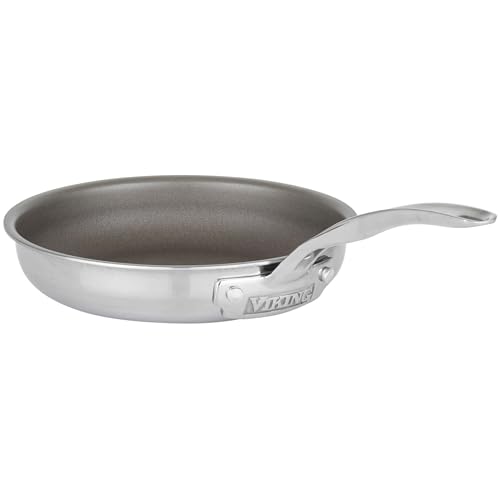
This is a nonstick pan built on Viking’s 3-ply clad body: stainless outside, an aluminum core, and a titanium nonstick surface that Viking says is made without PFAS and is safe with metal utensils. The extra weight and stainless exterior make it steadier on the burner than a plain aluminum pan, and Viking says it works on all cooktops including induction. The handle is riveted stainless steel, and flared rims are meant for drip-free pouring.
Viking rates the pan oven safe to 600°F but recommends low to medium heat for cooking, which suits eggs anyway. We found no independent review of this pan, so the details here are Viking’s own.
The listing does not say whether it can go in the dishwasher, and it states no warranty. Nothing about a titanium surface changes the egg technique: preheat gently and give the eggs a moment before you move them.
Why we like it
- Tri-ply stainless body with a PTFE interior
- Induction compatible, per Viking
- The line won ATK’s best 8-inch nonstick
- Limited lifetime warranty
Key specifications
| Model | 40011-1108PGC |
|---|---|
| Coating/material | Titanium nonstick on 3-ply clad stainless and aluminum |
| Size | 8-inch fry pan |
| Weight | Not stated |
| Oven-safe to | 600°F (listing) |
| Induction | Yes |
| Dishwasher safe | Not stated |
| Warranty | Not stated |
Why we recommend it
Choose it if you want a heavier, better-balanced nonstick egg pan that works on induction and is sold as made without PFAS.
Skip it if price matters most; the coating will eventually wear like any nonstick, and the Tramontina does the same egg job for far less.
Pros and cons
Pros
- Clad body heats steadily
- Works on every stovetop
- Made in the USA
Cons
- Premium price for a coated pan
- Hand wash only, in practice
- Listing gives two oven limits
5. OXO Obsidian 8-inch Carbon Steel Frying Pan – Pre-Seasoned, Ready for Eggs
Seasoned carbon steel is the closest an uncoated pan gets to nonstick, and it takes high heat with nothing to wear out. It is thinner and lighter than cast iron and responds quickly when you turn the burner down, which matters with eggs. OXO’s Obsidian line arrives pre-seasoned, so it can go to work straight out of the box, and OXO says it develops a “non-stick patina over time with use.”
According to OXO’s listing, the 8-inch Obsidian works on every stovetop including induction, is oven safe to 660°F and can take metal utensils. It comes with a removable silicone sleeve for the handle. It is hand wash only, because the dishwasher strips seasoning from bare steel. Carbon steel also rusts if it is left wet, so dry it on a warm burner and wipe in a few drops of oil before putting it away.
Fresh seasoning is thin. For the first few weeks, cook fattier things (bacon, potatoes, chorizo) and use a little more butter or oil with eggs. Christopher Kimball’s Milk Street, comparing cast iron and carbon steel for eggs, found carbon steel the better choice for low, slow eggs, while it “heated too quickly to properly fry an egg” at high heat. Keep the burner at medium or below and the Obsidian will do the job.
Why we like it
- Pre-seasoned and ready to use, per OXO
- Works on induction
- Oven safe to 660°F
- Metal-utensil safe, with no coating to wear out
Key specifications
| Model | CC005099-001 |
|---|---|
| Coating/material | Pre-seasoned carbon steel |
| Size | 8-inch frying pan |
| Weight | Not stated |
| Oven-safe to | 660°F |
| Induction | Yes |
| Dishwasher safe | No, hand wash only |
| Warranty | Not stated in the listing |
Why we recommend it
Choose it if you want an egg pan that will outlast any coating, works on induction and needs no first seasoning session.
Skip it if you want zero maintenance; carbon steel needs drying and oiling after washing and a little patience while the seasoning builds.
Pros and cons
Pros
- Ready to cook on day one
- Very high oven limit
- Responds quickly to heat changes
Cons
- Hand wash and dry every time
- Rusts if left wet
- Eggs may stick until seasoning builds
6. de Buyer Mineral B 8-inch Carbon Steel Omelette Pan – Rounded Sides for Rolling Eggs

de Buyer, a French maker since 1830, shapes this Mineral B pan specifically for omelets: its rounded edges, the listing says, let you roll an omelet and slide it straight onto the plate. It is 8 inches across with a 5.5-inch cooking surface, which suits a two- or three-egg French omelet, a folded egg for a breakfast taco or a pair of fried eggs. Like the OXO above, it is bare carbon steel with no coating of any kind, and it works on every cooking surface including induction.
Unlike the OXO, it is not pre-seasoned. It ships with a beeswax coating that de Buyer says to wash off with hot soapy water. Its seasoning method: dry the pan, heat it gradually to medium-high, wipe a thin layer of high-smoke-point oil over all sides, heat for about 10 minutes or until it smokes, then cool, drain the oil and reheat for 2 minutes. After that, de Buyer says hand wash only and avoid harsh soaps that strip the seasoning. The pan darkens as the seasoning builds, and eggs release more easily each time.
The oven rating is modest for bare steel, and specific: de Buyer says oven safe for up to 10 minutes at 400°F, enough to finish a small frittata but not to leave in a hot oven. As with any carbon steel, keep acidic sauces in another pan; slide the eggs over the ranchero sauce at the end.
Why we like it
- Omelette shape with rounded edges, per de Buyer
- No coating of any kind
- All cooking surfaces including induction
- Made in France
Key specifications
| Model | HZ604 |
|---|---|
| Coating/material | Uncoated carbon steel (beeswax finish; season before use) |
| Size | 8-inch, 5.5-inch cooking surface |
| Weight | Not stated |
| Oven-safe to | 400°F for up to 10 minutes |
| Induction | Yes |
| Dishwasher safe | No, hand wash only |
| Warranty | Not stated in the listing |
Why we recommend it
Choose it if you make omelets often and want a coating-free pan shaped for rolling them, and you are happy to season it yourself.
Skip it if you want to cook eggs the day the box arrives; it needs a seasoning session first, and the OXO Obsidian is the ready-to-use alternative.
Pros and cons
Pros
- Shaped for omelets
- Nothing inside to wear out
- Clear seasoning steps from de Buyer
Cons
- Must be seasoned before use
- Short oven allowance
- Small 5.5-inch cooking surface
7. Lodge 8-inch Cast Iron Skillet – Steady Heat, Made in the USA
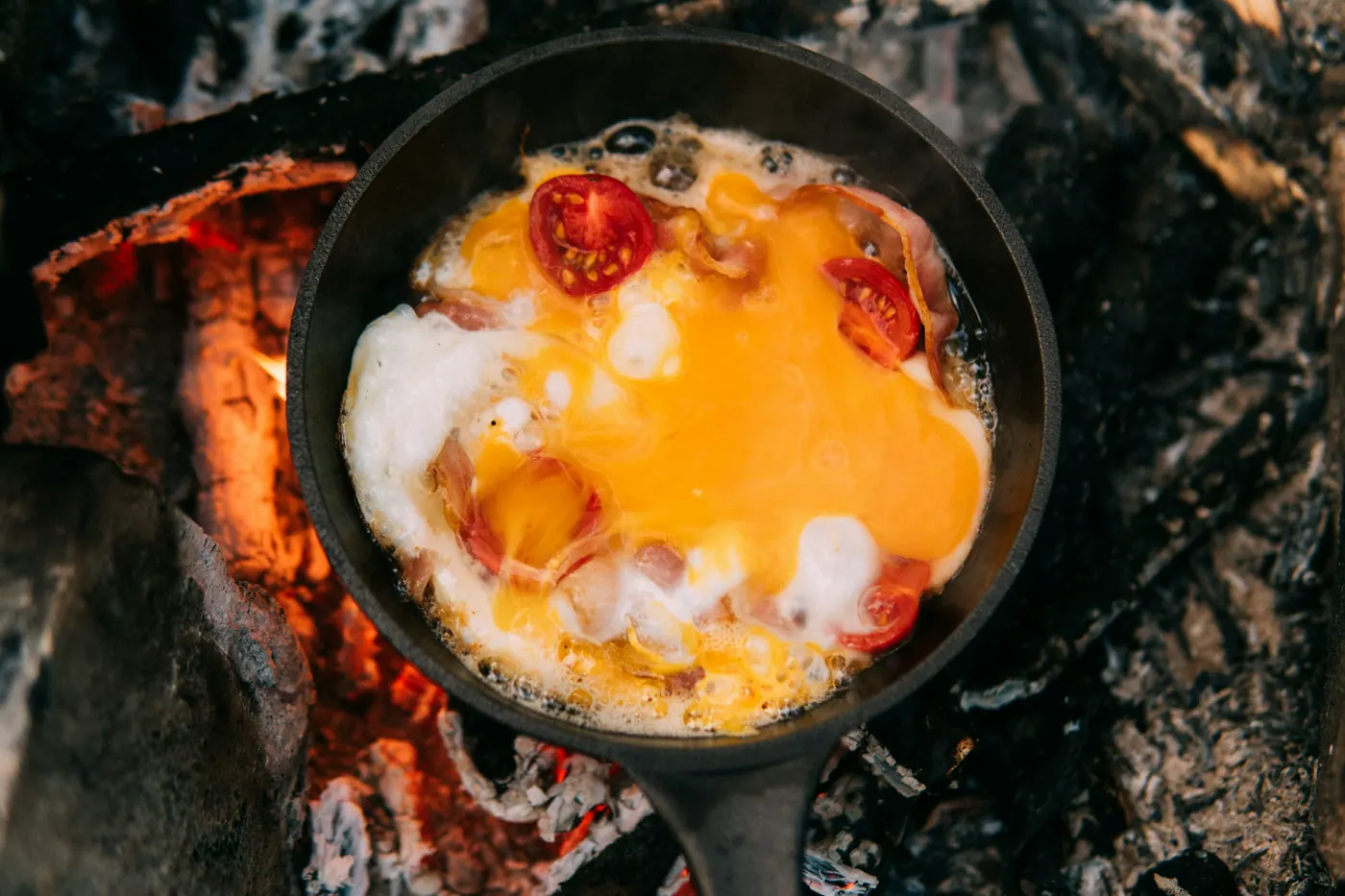
Lodge’s small skillet is the most familiar pan in American kitchens, and it cooks eggs well once you understand it. Cast iron heats slowly and holds that heat, so it gives a fried egg a set, lightly crisp base and keeps cooking after you turn the burner down. Lodge pre-seasons it with vegetable oil, says it is made without PFAS, and rates it for any stovetop including induction, plus the oven, grill and campfire.
Lodge’s own egg method is worth following exactly. Heat the skillet on medium-low for about five minutes, flick in a few drops of water, and if they “dance” the pan is ready; if the water vanishes instantly or the oil smokes, it is too hot, so take it off the heat for a few minutes. Melt a generous pat of butter or bacon fat, crack in the eggs, then lower the heat and let the stored heat finish them. Lodge says the most common reason food sticks to cast iron is simply that the pan is too hot.
Milk Street’s comparison found cast iron did well with eggs at higher heat but that eggs tended to stick at low heat on its more porous surface, the reverse of carbon steel. In other words, cast iron wants a proper preheat and enough fat. Care is hand wash, dry and oil, per Lodge; the dishwasher removes seasoning and invites rust. It is heavy for its size, and Lodge does not list its weight.
Why we like it
- Pre-seasoned and ready to use
- Any stovetop including induction, per Lodge
- Goes from stove to oven to campfire
- Lifetime limited warranty, per the listing
Key specifications
| Model | L5SK3 |
|---|---|
| Coating/material | Cast iron, seasoned with vegetable oil |
| Size | 8-inch skillet |
| Weight | Not stated |
| Oven-safe to | Oven safe; no limit stated |
| Induction | Yes |
| Dishwasher safe | No; hand wash, dry, oil |
| Warranty | Lifetime limited |
Why we recommend it
Choose it if you want an inexpensive pan that will last a lifetime, cooks eggs with a crisp edge and can go straight into the oven for a frittata or a skillet of huevos rancheros.
Skip it if you want eggs to slide around freely on day one; a new cast iron pan needs a preheat routine, enough fat and time to build seasoning.
Pros and cons
Pros
- Holds heat for crisp-edged eggs
- Works on any heat source
- Made in the USA
Cons
- Heavy for an 8-inch pan
- Slow to respond when you lower the heat
- Needs drying and oiling
8. Cuisinart MultiClad Pro 8-inch Stainless Skillet – No Coating, Dishwasher Safe
Stainless steel is the hardest surface for eggs and the easiest to live with. It has no coating to scratch and no seasoning to protect: the Cuisinart MultiClad Pro is triple-ply stainless, dishwasher safe and oven and broiler safe to 550°F, according to its listing, with a riveted cast stainless handle and tapered rims for drip-free pouring. It is also the pan to use for eggs cooked in a sauce, such as eggs poached in salsa roja, which would strip seasoning from carbon steel or cast iron.
The catch is technique. Eggs bond to bare stainless if the pan is too cool, and scorch if it is too hot. The same water test Lodge recommends for cast iron works here: preheat the empty pan over medium until a few drops of water bead and skate across the surface, add the fat, then the eggs, and leave them alone until the whites set and release by themselves. A generous spoonful of butter or oil, more than you would use in nonstick, is part of the method. Done right, stainless gives fried eggs a crisp, lacy edge that nonstick does not.
Cuisinart’s listing for this skillet does not say whether it works on induction, so check before you buy if that matters. It carries a limited lifetime warranty.
Why we like it
- Triple-ply stainless, no coating to wear
- Dishwasher safe, per the listing
- Oven and broiler safe to 550°F
- Limited lifetime warranty
Key specifications
| Model | MCPS22-20N |
|---|---|
| Coating/material | Uncoated triple-ply stainless steel |
| Size | 8-inch open skillet |
| Weight | Not stated |
| Oven-safe to | 550°F; broiler safe |
| Induction | Not stated |
| Dishwasher safe | Yes |
| Warranty | Limited lifetime |
Why we recommend it
Choose it if you want one pan that never needs replacing or babying, and you are happy to learn the preheat-and-wait routine for eggs.
Skip it if you want soft, pale omelets with no fuss; stainless is the least forgiving surface for delicate eggs.
Pros and cons
Pros
- Nothing to scratch or season
- Goes in the dishwasher
- Fine with acidic sauces
Cons
- Eggs stick without good technique
- Needs more fat than nonstick
- Induction not stated
9. TECHEF Medium Tamagoyaki Pan – Square Corners for Rolled Omelets

A tamagoyaki pan is a small rectangular pan made for Japanese rolled omelets, where thin layers of egg are cooked and rolled up one after another into a neat log. It is a specialist pan, but it is also useful in a breakfast kitchen for square egg patties that fit a sandwich or a folded flour tortilla better than a round fried egg. TECHEF’s medium size measures 7.5 by 5.5 by 1.2 inches, according to the listing, with a sloped front and straight sides for rolling.
The listing describes forged heavy-gauge aluminum with a three-layer Teflon nonstick coating made without PFOA, and an induction-ready forged base. It is oven safe to 350°F, dishwasher safe and made in Korea. Treat it like any conventional coated pan: moderate heat, soft utensils and never an empty pan left over a high flame.
Be honest with yourself about whether you need one. If you only fry and scramble eggs, a round pan does everything this one does. If you want tamagoyaki, square breakfast sandwiches or neat egg strips for fried rice, its shape does something a round pan cannot. TECHEF also sells a large square version, 8.5 by 8.5 inches.
Why we like it
- Rectangular shape with a sloped front for rolling
- Induction-ready forged base
- Dishwasher safe, per the listing
- Made in Korea
Key specifications
| Model | EPMB |
|---|---|
| Coating/material | Teflon nonstick (PFOA-free) on forged aluminum |
| Size | 7.5 x 5.5 x 1.2 inches |
| Weight | Not stated |
| Oven-safe to | 350°F |
| Induction | Yes |
| Dishwasher safe | Yes |
| Warranty | Not stated in the listing |
Why we recommend it
Choose it if you want to make rolled omelets or square egg patties for sandwiches and breakfast burritos, on any stovetop.
Skip it if you just want a pan for fried and scrambled eggs; a round 8-inch pan is more versatile.
Pros and cons
Pros
- Shape a round pan cannot copy
- Works on induction
- Goes in the dishwasher
Cons
- Specialist pan
- Low 350°F oven limit
- Small cooking area
How to choose a pan for eggs
Every pan above can cook a good egg. The right one depends on how you cook eggs, how much care you will give a pan and what stove you have. Five things decide it.
1. Surface: coated, seasoned or bare
Coated nonstick (PTFE or ceramic) is the easiest surface for eggs and the only one that releases a soft omelet with almost no fat. It is also the only kind that wears out: America’s Test Kitchen says “all PTFE coatings will eventually wear out with use,” and that ceramic is less durable still. Seasoned carbon steel and cast iron get slicker with use and last indefinitely, but need preheating, fat and drying. Bare stainless never wears and never needs care beyond washing, but asks the most technique.
2. Size: 8 inches for most egg cooking
An 8-inch pan holds two fried eggs or a three-egg scramble, which covers most home breakfasts. Bigger pans make it harder to keep a small amount of egg in an even layer, and the fat runs to the edges. Cook for a family or make big batches of migas or chilaquiles with eggs? Add a 10 or 12-inch pan rather than replacing the small one. For a dozen eggs baked at once, a muffin pan is the easier tool; see our best egg muffin pan guide.
3. Your stovetop
Induction needs a magnetic base. Of these picks, the GreenPan, Viking, OXO Obsidian, de Buyer, Lodge and TECHEF list induction; Tramontina excludes it; OXO’s Enhanced and Cuisinart’s MultiClad listings do not say. On a glass cooktop, lift heavy cast iron rather than sliding it.
4. Heat: what the coating can take
Eggs rarely need high heat, which is good news for coated pans. Follow the maker’s limits: oven ratings here run from 350°F (TECHEF) to 600°F (GreenPan) for coated pans, and ATK advises never putting a nonstick skillet in an oven above 450°F, or broiling it, even when the maker allows more, and following a lower maker figure when there is one. Carbon steel, cast iron and stainless have no coating to protect.
5. Coating chemistry, in plain terms
Conventional nonstick coatings are what the FDA groups under PFAS “nonstick coating applications”; TECHEF’s listing names Teflon. The FDA says it has authorized specific PFAS-containing substances for food-contact use since the 1960s, and that for nonstick cookware, “studies show negligible amounts of PFAS in this coating can migrate to food.” Ceramic coatings, such as OXO’s and GreenPan’s, are sold by their makers as made without PFAS, as is Viking’s titanium surface. Seasoned and bare metal pans have no coating at all. Choose by how you cook and what you prefer; our job here is to report what the makers and the FDA state.
Egg technique, from the makers and reviewers
Most egg-sticking problems are heat problems, not pan problems. The sources we read agree on four habits.
Preheat, then test. Lodge’s method for cast iron is about five minutes on medium-low, then a few drops of water: if they dance, the pan is ready. The same bead-and-skate test works for stainless and carbon steel. Nonstick needs only a minute or so and should never sit empty over high heat.
Use enough fat. Lodge calls for “a generous pat of butter” and notes that butter and bacon fat hold in place better than thin oils. Milk Street got clean releases from both cast iron and carbon steel with about a teaspoon of oil. Stainless needs at least that much.
Lower the heat once the eggs go in. Lodge’s advice is to turn the burner down after cracking the eggs, because a hot pan keeps cooking them. Ceramic runs hot, per ATK, so start lower there too.
Wait for the release. On seasoned or bare metal, eggs stick at first and then let go as the whites set. Nudge too early and they tear. Leave them alone for a minute and they usually slide.
On doneness, the FDA advises cooking eggs “until both the yolk and the white are firm,” cooking egg dishes such as casseroles to 160°F, and refrigerating cooked egg dishes within two hours. That is worth knowing if you serve eggs to young children, older relatives or anyone pregnant. For the difference between a ranchero plate and a divorciado plate, see our guide to huevos rancheros vs. divorciados.
How we chose these nine egg pans
We started from what a restaurant breakfast line asks of an egg pan: even heat across a small surface, clean release, a handle that stays tight, and clear limits on how hot it can go. We then searched Amazon US for 8-inch and similar egg pans in every material, kept only pans from identifiable makers that were in stock when we checked, and took coatings, materials, sizes, oven limits, stovetop ratings and warranties from each maker’s Amazon listing or website. For technique and performance we relied on America’s Test Kitchen’s nonstick and ceramic nonstick reviews, Milk Street’s cast iron and carbon steel egg comparison, Lodge’s egg and anti-sticking guides and de Buyer’s seasoning instructions; for coating chemistry, the FDA’s page on PFAS in food-contact applications; for egg safety, the FDA’s egg safety advice. We left out no-name pans, listings that contradicted themselves and scarce items. We also left out Matfer Bourgeat’s black steel pans: America’s Test Kitchen reports that certain lots were recalled in France after a regional agency’s acidic-solution testing, that Matfer has appealed and that the pans have not been recalled in the United States, and ATK says it no longer recommends them while alternatives exist. We have not cooked with these pans for this guide.
Egg pan questions, answered
What is the best frying pan for eggs?
For most people, a small nonstick pan, such as the Tramontina Professional 8-inch, because it releases eggs with the least fat and the least technique. If you would rather not replace a coated pan every few years, a pre-seasoned carbon steel pan like the OXO Obsidian is the best long-term alternative.
Can you fry eggs in cast iron or stainless steel without sticking?
Yes, with the right heat and enough fat. Preheat until a few drops of water dance, add butter or oil, add the eggs, lower the heat and wait until the whites set and release. Lodge says the most common cause of sticking in cast iron is a pan that is too hot.
Is carbon steel or cast iron better for eggs?
Milk Street found carbon steel better for low, slow eggs and cast iron better at higher heat, with both working well given about a teaspoon of oil. Carbon steel is also lighter and responds faster when you turn the heat down.
What size pan is best for eggs?
An 8-inch pan for one to three eggs; America’s Test Kitchen recommends that size for frying an egg or a small scramble. Go to 10 inches for four to six eggs.
How long does a nonstick egg pan last?
No maker here promises a coating lifespan, and America’s Test Kitchen says all PTFE coatings eventually wear out. Moderate heat, soft utensils and hand washing all help; once eggs start to grab, the coating is done.
Should I buy a separate pan just for eggs?
Many kitchens do. Keeping one small pan for eggs means the surface never sees high-heat searing or acidic sauces, so it stays slick far longer.
Our last word on egg pans
Buy the Tramontina Professional 8-inch if you want the simplest path to good eggs on a gas or electric stove. Choose the OXO Enhanced or GreenPan Valencia Pro for a ceramic coating, the Viking PureGlide Pro for a clad nonstick on induction, the OXO Obsidian or de Buyer Mineral B for carbon steel, the Lodge for cast iron, the Cuisinart for stainless and the TECHEF for rolled omelets. Whatever you choose, keep it for eggs, preheat it properly and give the eggs a moment before you move them.
On a budget? See our guide to the best value egg pans.
By material: the best carbon steel egg pans, the best cast iron egg pans and the best stainless steel egg pans. Cooking for one or two? See the best small egg pans, and for poached eggs, the best egg poacher pans.
Related guide: Best egg rings.
Related guide: Best omelet pan.
Related guide: Best breakfast cookbook.
Related guide: Best egg cookbook.
To bake a dozen eggs at once, see our best egg muffin pan guide; for cast iron’s place next to the comal, read comal vs. cast iron skillet; and for what goes into the tortilla, our guide to breakfast tacos. If you would rather someone else made breakfast, see the menu or call to order.