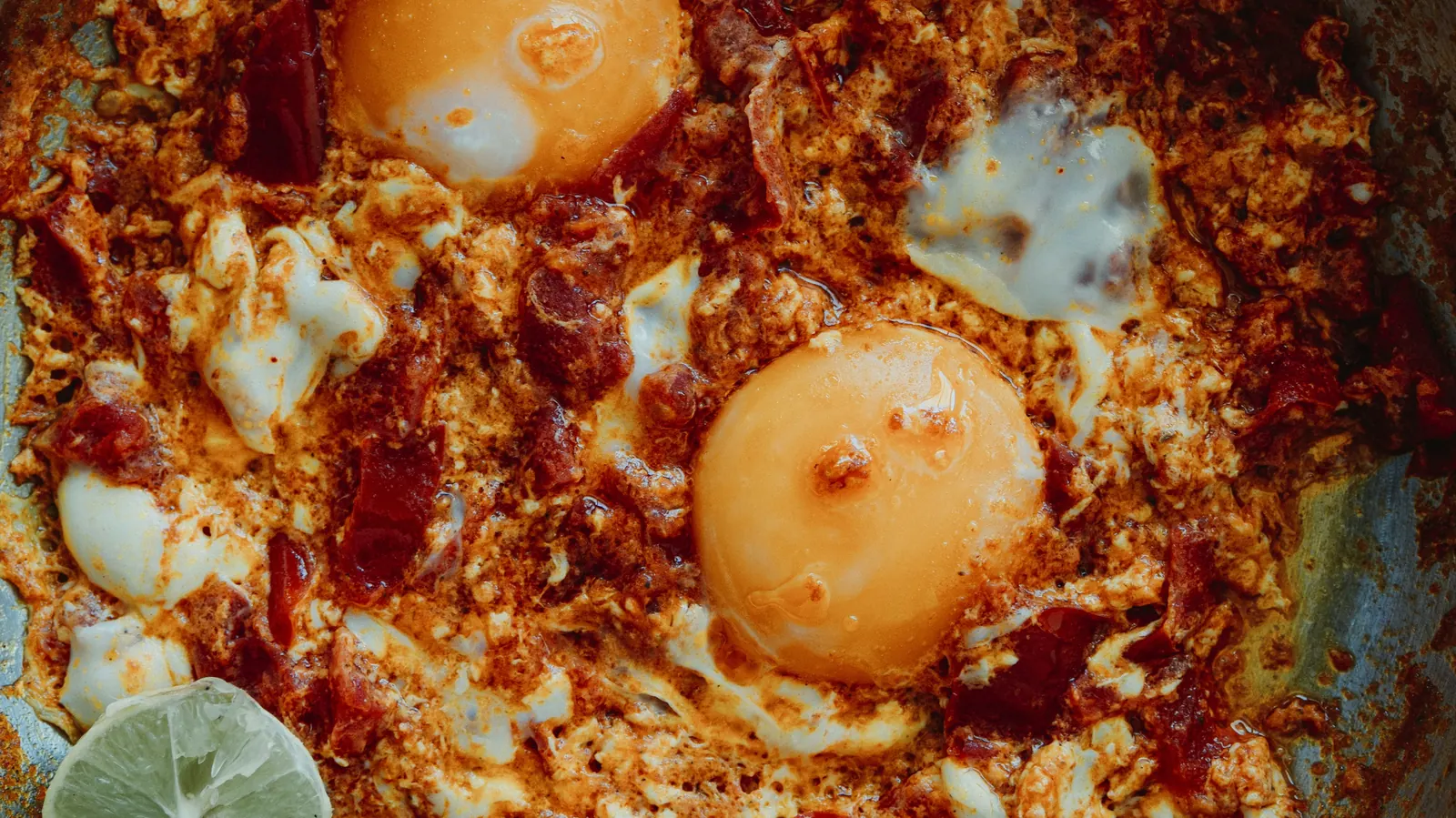
A Mexican brunch menu will often list three egg dishes that look nearly identical in the description: rancheros, divorciados, a la mexicana. Same eggs, same tortillas, same beans on the side.
What separates them is the sauce, and where it goes.
The short answer
Huevos rancheros are fried eggs on a tortilla with one red salsa poured over. Huevos divorciados are the same, but with two eggs under two different salsas — red on one, green on the other, kept apart. Huevos a la mexicana are scrambled with tomato, onion and green chile mixed in. Fried and sauced, versus scrambled and mixed.
Huevos rancheros
The oldest and most widespread of the three, and the name is literal: rancher’s eggs.
Nuestro Stories, writing on the history of huevos rancheros, traces the dish to the mid-morning meal eaten on rural Mexican farms — food for people who had already been working for several hours and needed something substantial before the afternoon.
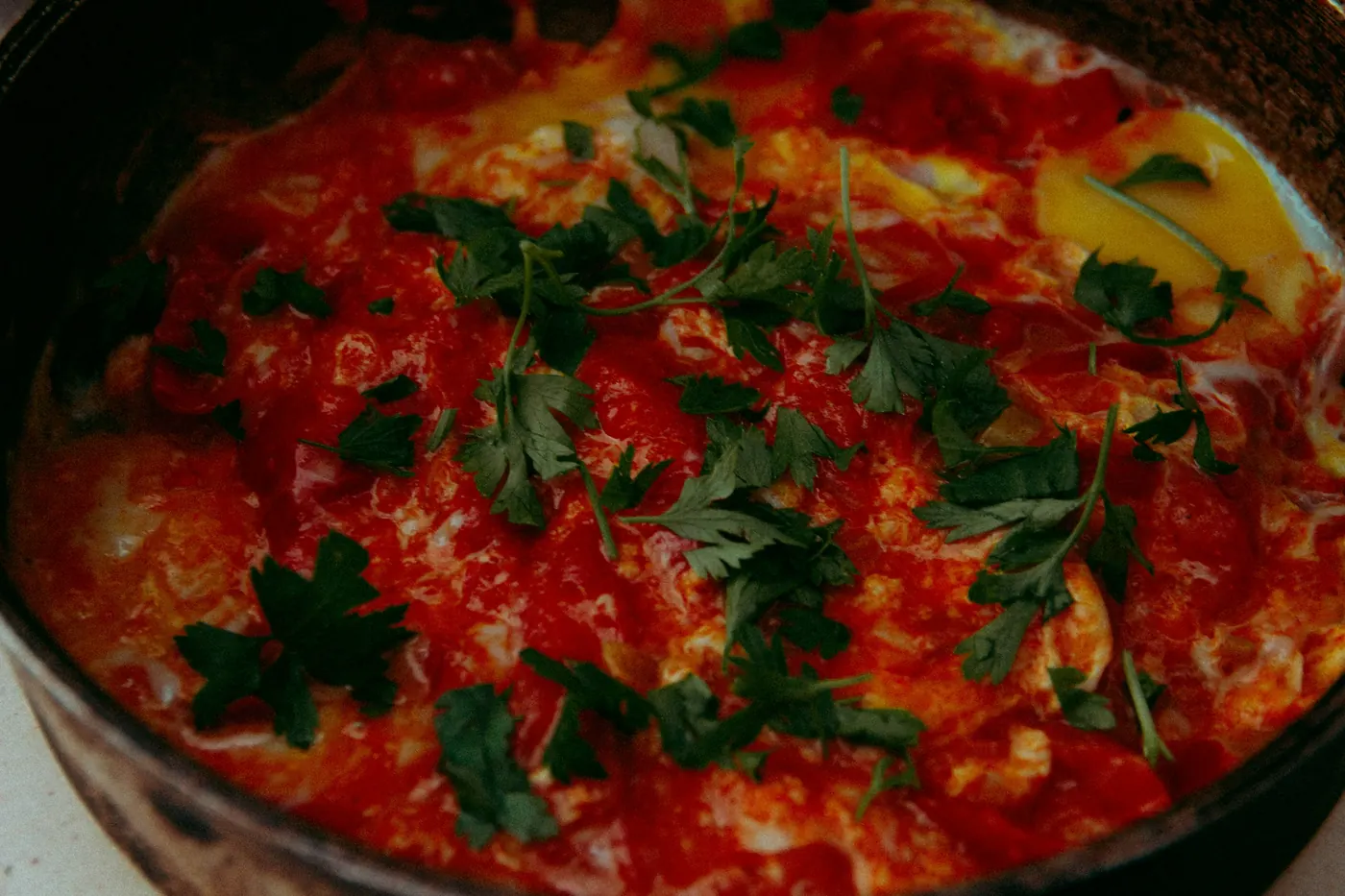
The construction is fixed. A lightly fried corn tortilla goes down first, eggs go on top, and a cooked red salsa — tomato, chile, onion, garlic — goes over the whole thing. Refried beans and rice sit alongside.
The tortilla underneath is not a garnish. It is fried just enough to hold up under sauce, and it is meant to be cut into and eaten with everything else.
Huevos divorciados
Divorced eggs, and the name explains the plate.
Two eggs, two tortillas, two sauces — one under salsa roja, one under salsa verde — with something in the middle keeping them apart. Traditionally that separator is a line of refried beans, sometimes chilaquiles, occasionally just a gap.
The joke is the point, and so is the practical benefit: you get both sauces in one order without having to choose. Given that red and green are genuinely different — one built on tomato and dried chile, the other on tomatillo — that is a real advantage rather than a novelty.
Our salsa guide covers what actually separates the two, and it is worth knowing before you decide whether you want them on the same plate.
Huevos a la mexicana
The outlier, because the eggs are scrambled rather than fried and nothing is poured over anything.
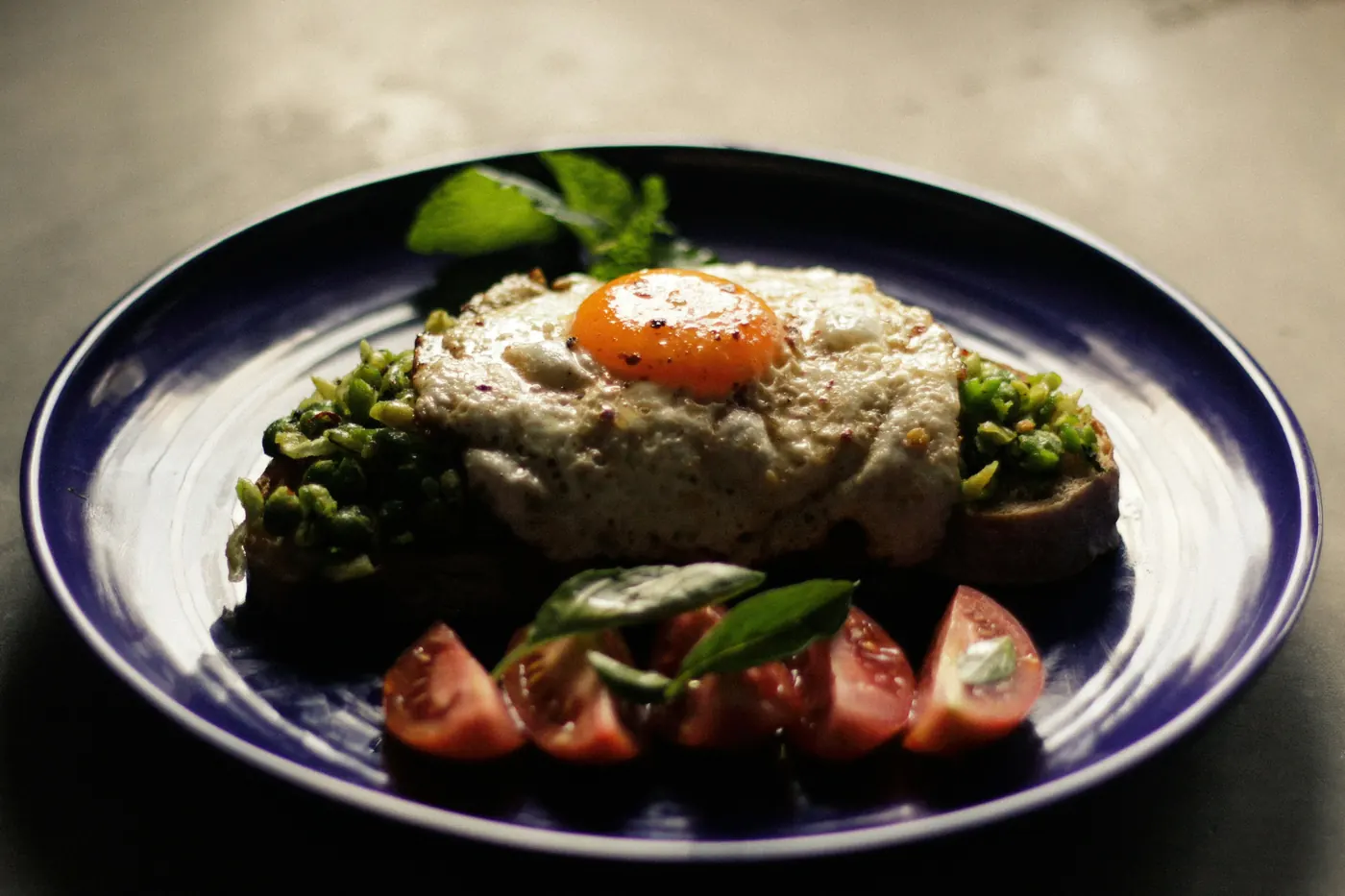
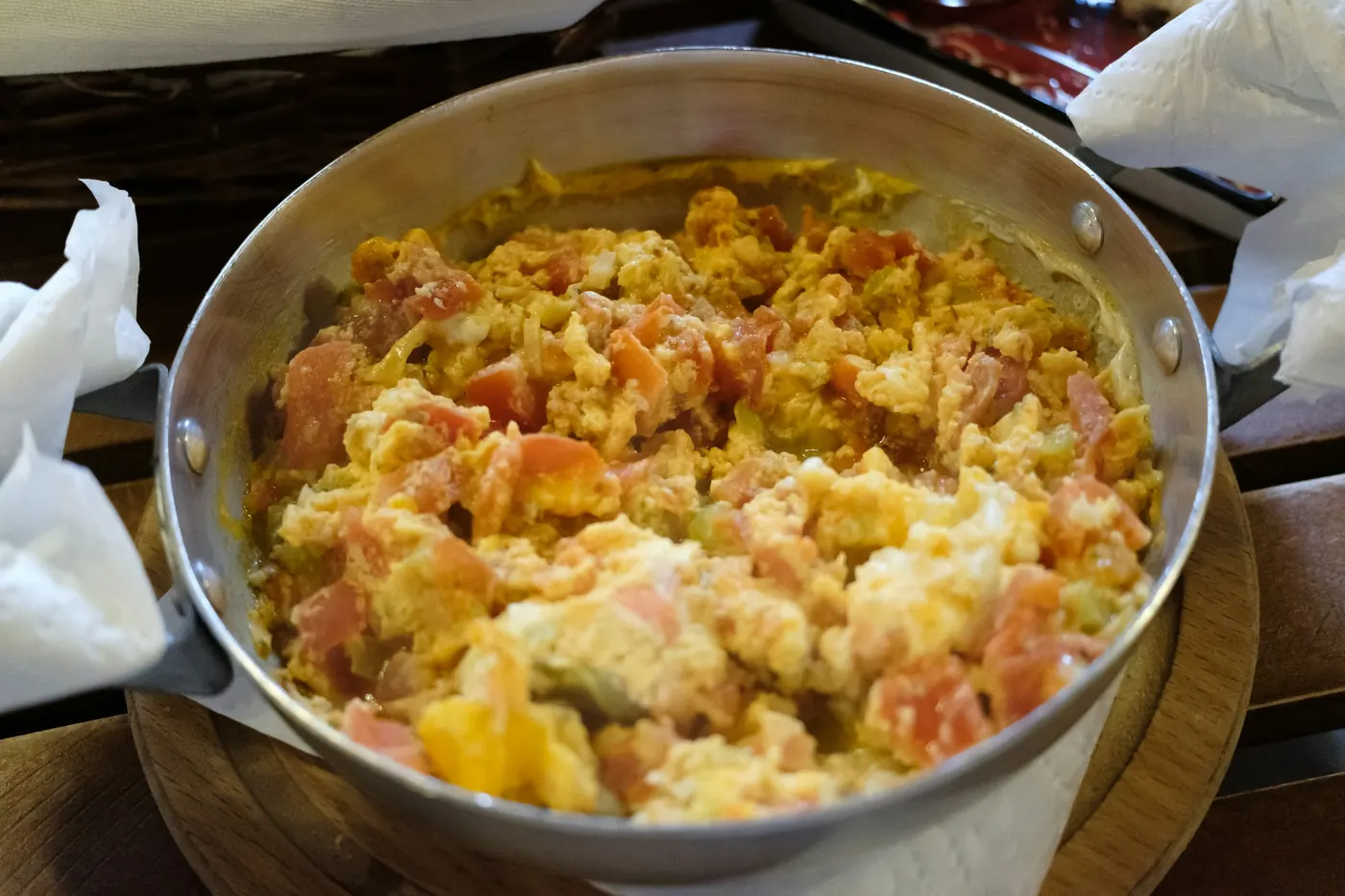
Tomato, white onion and green chile are cooked briefly, then the eggs go in and everything is scrambled together. The vegetables are inside the eggs, not on top.
The name comes from the colors: green chile, white onion, red tomato — the flag. The same naming convention turns up across the menu, as our glossary notes, and it always means the same three ingredients.
It is also the mildest of the three by default, since the chile is cooked into the mixture in a controlled quantity rather than arriving as a sauce.
Side by side
| Rancheros | Divorciados | A la mexicana | |
|---|---|---|---|
| Eggs | Fried | Fried | Scrambled |
| Sauce | One, red | Two, red and green | None poured |
| Tortilla | Underneath | Underneath, two | On the side |
| Vegetables | In the sauce | In the sauces | In the eggs |
| Heat | Depends on the salsa | Depends on both | Usually mild |
| Eat with | Knife and fork | Knife and fork | Fork, or a tortilla |
The others you will see
Three more turn up often enough to be worth recognizing.
Huevos motuleños are Yucatecan: eggs on a tortilla with black beans, peas, ham, plantain and cheese. Considerably more construction than the rest.
Huevos ahogados — drowned eggs — are poached directly in the salsa rather than fried and then sauced. Softer, and the eggs take on the sauce.
Machacado con huevo is northern: dried shredded beef scrambled into the eggs. Salty, dense, and a completely different proposition.
Why this is a mid-morning meal
None of these are quick breakfasts, and they were not designed to be.
The Mexican day traditionally runs desayuno early and light, then almuerzo mid-morning — the substantial one — then the main meal in the afternoon. Huevos rancheros belong to that mid-morning slot, which is why they arrive with beans, rice and tortillas rather than as eggs on their own.
That structure is the same one behind lunch and dinner portions on a modern menu, which our guide to portion sizing works through.
On Julia’s brunch menu
Julia’s runs two of the three, on the brunch menu alongside chilaquiles, barbacoa, menudo and a breakfast taco plate.
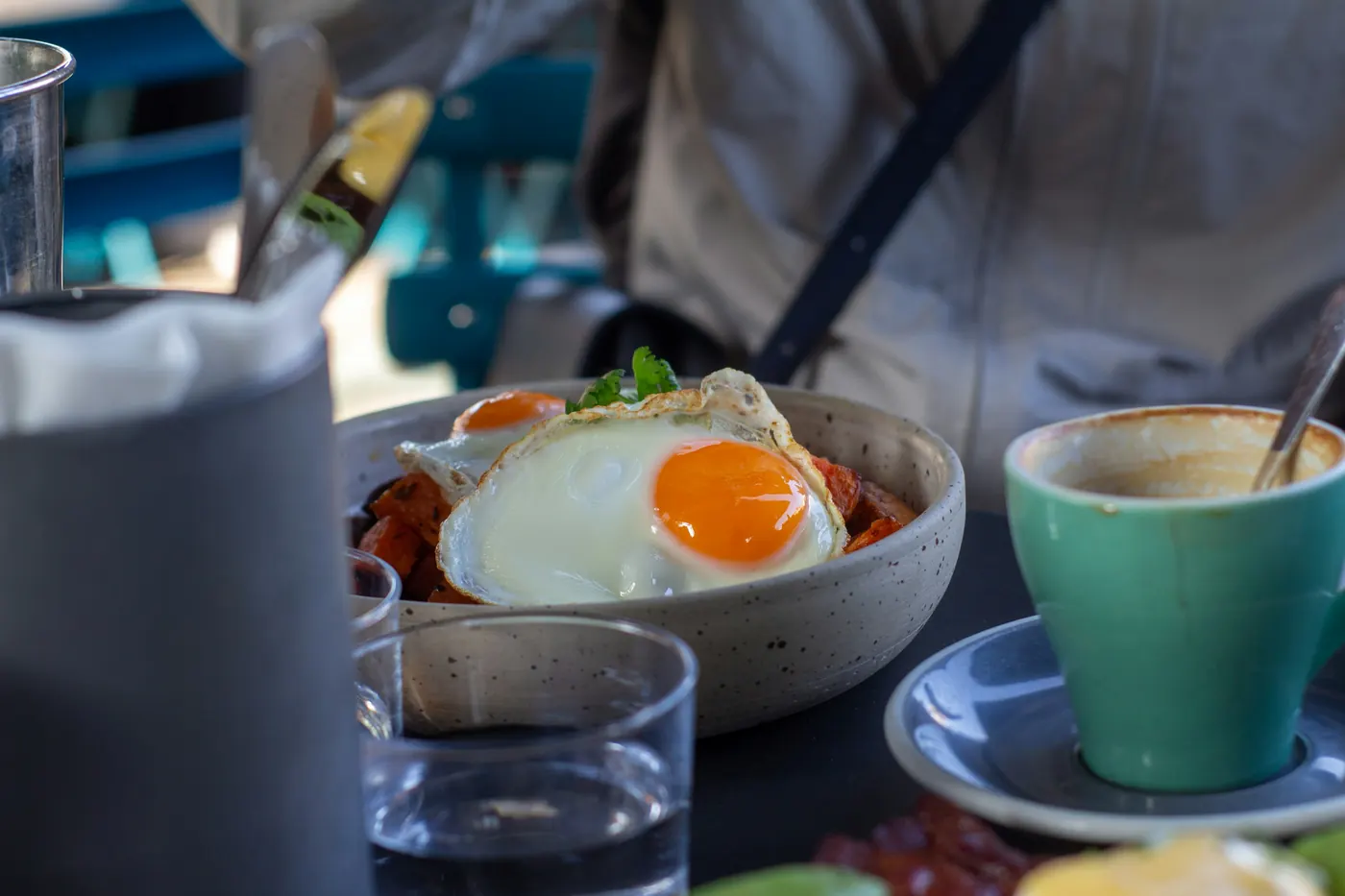
The huevos rancheros are ham and fried eggs under a ranchera sauce, with a choice of flour or corn tortillas. The ham is a Tex-Mex addition rather than the ranch original, and the tortilla choice is worth thinking about — corn holds up better under a wet sauce, for the reasons our tortilla guide sets out.
The huevos a la mexicana are the scrambled version, and they are the milder order of the two.
Divorciados are not on the menu, which is normal — they are more common in Mexico than in Texas. The chilaquiles are offered in red or green, though, which is the same choice arriving in a different dish. Our brunch guide covers the section as a whole.
What comes alongside
All three arrive as a plate rather than as eggs, and the accompaniments are fixed enough to be predictable.
Refried beans are near-universal, often with a dusting of cheese. Mexican rice appears on Tex-Mex versions more than Mexican ones. Sliced avocado turns up frequently, and fried plantain does in the south. Warm tortillas arrive separately regardless of whether one is already under the eggs.
How to tell a good one
Three things, and the first is the one kitchens get wrong.
The tortilla underneath should still have structure. It is fried briefly for exactly that reason, and if it has dissolved into the sauce it was either not fried or the plate sat too long.
The yolk should be runny unless you asked otherwise, because it is functionally part of the sauce once you cut into it. And the salsa should taste cooked rather than raw — ranchera is simmered, not blended and poured.
Frequently asked questions
What is the difference between huevos rancheros and huevos divorciados?
Rancheros have one red salsa over both eggs. Divorciados have two eggs under two different salsas, red and green, separated on the plate.
What does “a la mexicana” mean?
Cooked with tomato, onion and green chile — the colors of the Mexican flag. With eggs it means scrambled with those three mixed in.
Are huevos rancheros spicy?
It depends entirely on the salsa. The ranchera sauce is usually mild to moderate, built on tomato with chile for flavor rather than heat.
Why are they called divorced eggs?
Because the two eggs are kept apart on the plate, each under its own sauce, usually with a line of beans between them.
Should I order corn or flour tortillas with rancheros?
Corn, if you want the traditional version and a base that holds up under sauce. Flour is softer and will go slack faster.
The short version
Rancheros: fried, one red sauce. Divorciados: fried, two sauces, kept apart. A la mexicana: scrambled with tomato, onion and chile mixed in.
Julia’s serves the first and the third on the brunch menu, both with a choice of tortilla.