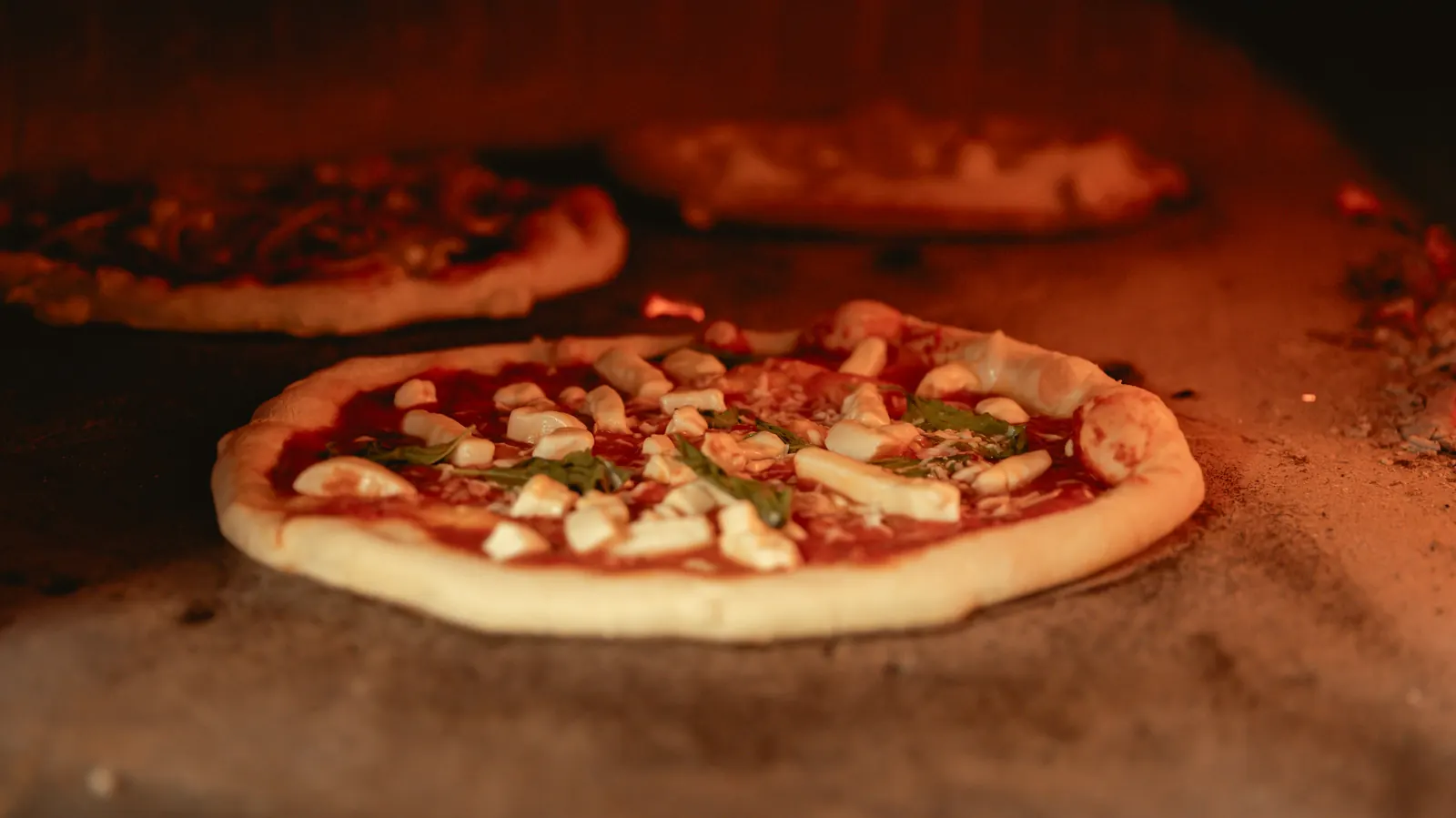
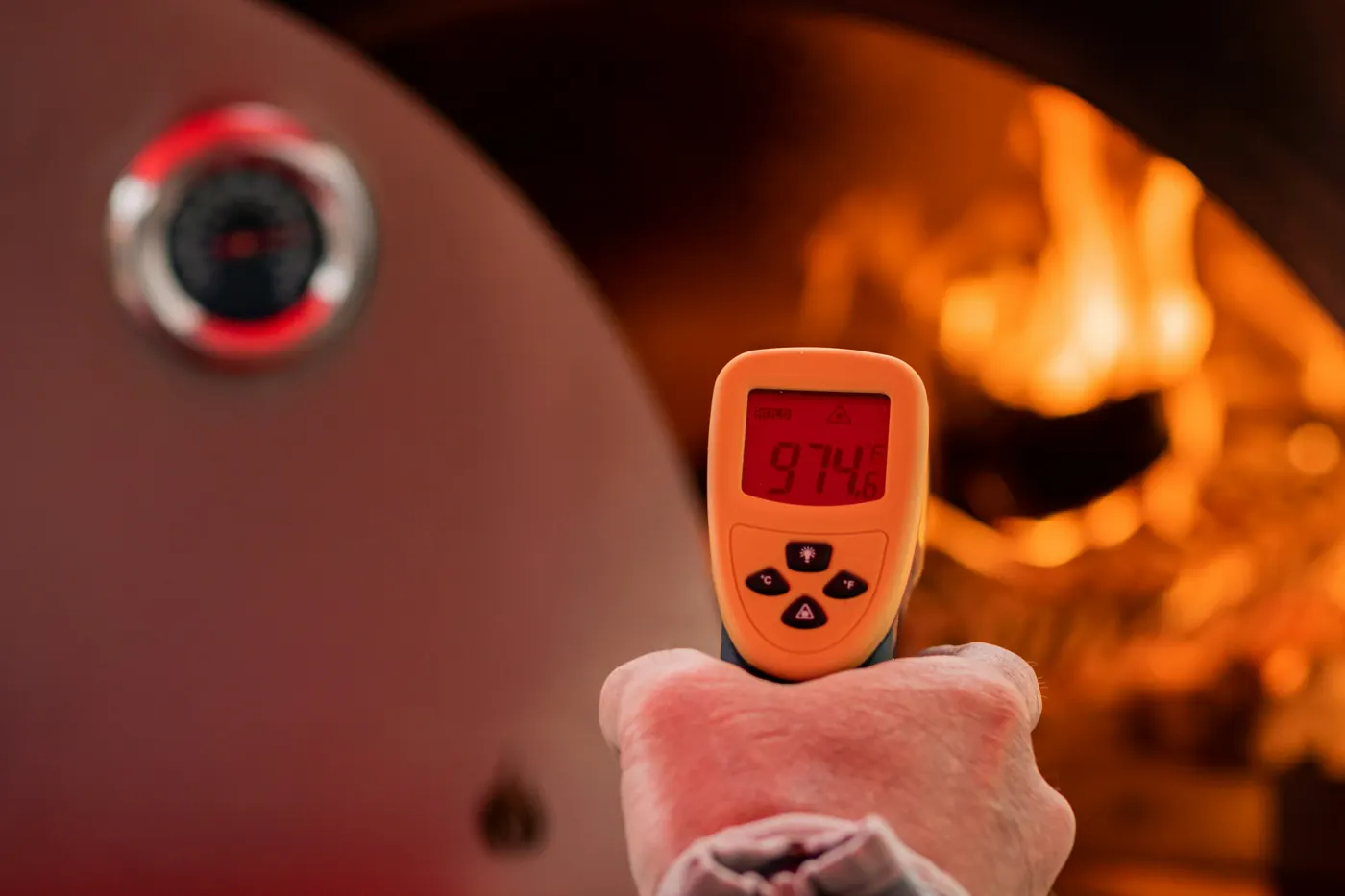
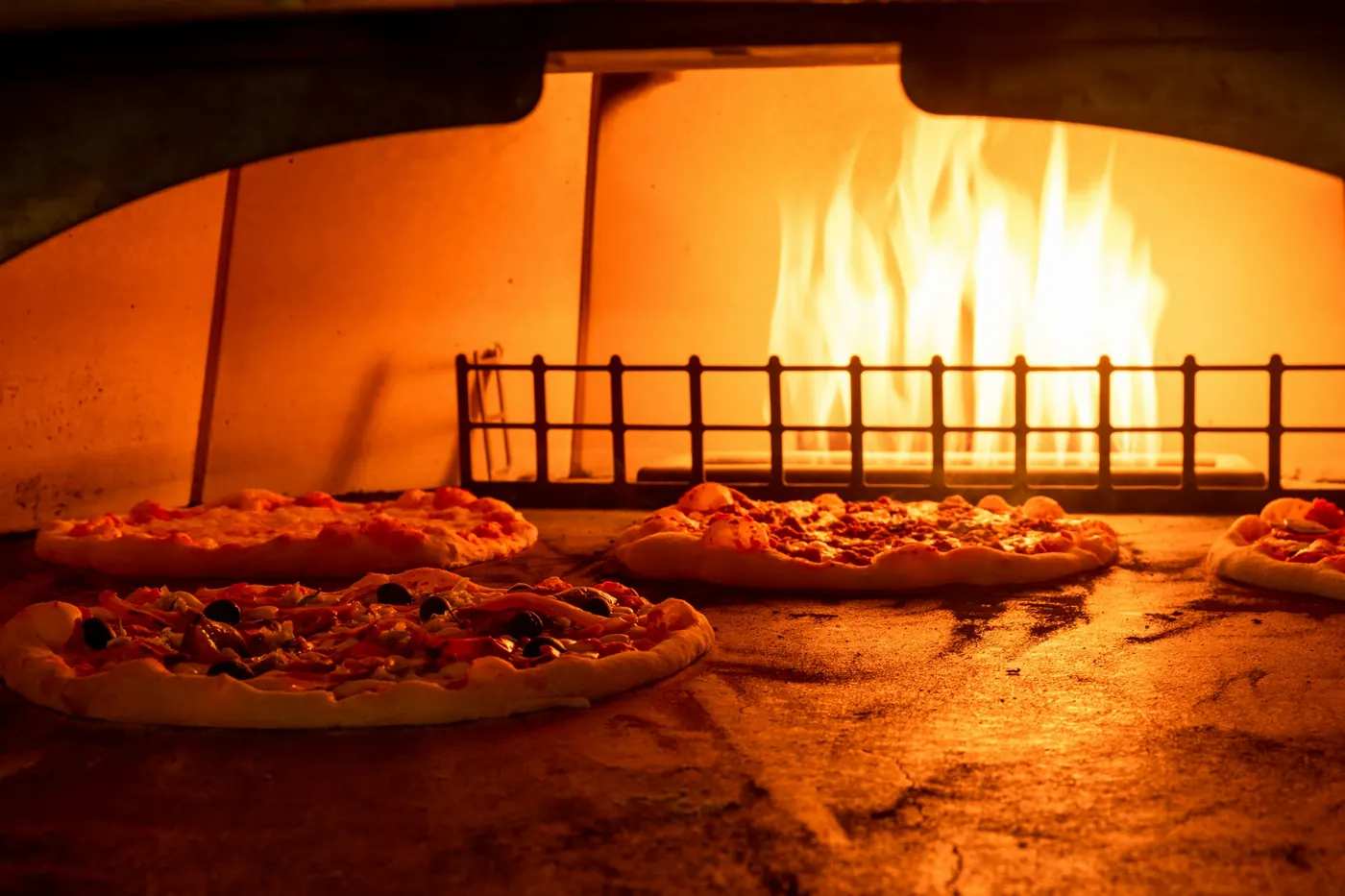
A pizza oven’s dial, if it has one, tells you the temperature of the air somewhere in the dome. The pizza cooks on the stone. That gap is why so many pizza oven owners end up with an infrared thermometer: point it at the middle of the stone, pull the trigger, and you know in under a second whether the floor is ready for the next pie or still recovering from the last one.
Restaurant cooks use the same trick on a comal, a plancha or a cast iron pan: the surface temperature decides whether a tortilla puffs or dries out, and an infrared gun reads it without touching anything. This guide covers what matters in an infrared thermometer for pizza ovens (range, distance-to-spot ratio and emissivity), what these tools cannot do, and seven worth buying.
Julia’s earns a commission on purchases made through links on this page, at no cost to you. Recommendations are based on what a restaurant kitchen looks for in a surface thermometer, the makers’ own specifications and verified buyer reports.
Quick verdict: which infrared thermometer to buy
For most home pizza ovens, the Etekcity Lasergrip 1025D dual-laser thermometer is the one to buy: it reads to 1022°F, its emissivity is adjustable for stone, brick or cast iron, and Etekcity backs it with a two-year warranty. If you own an Ooni, the Ooni infrared thermometer comes preset for Ooni’s baking stones. If you run a wood-fired oven that goes hotter than 1,000°F, the BTMETER BT-1500C reads to 2732°F from further back.
One thing to keep in mind before buying any of them: an infrared thermometer reads the surface it is pointed at, not the inside of the food. Read on for why that matters and which model suits your oven.
Five infrared thermometers compared
Our five standout picks, one for each kind of pizza oven owner, with the specifications each maker or listing states. All seven thermometers are reviewed in full below.
| Thermometer | Best for | Range (stated) | Emissivity | Buy on Amazon |
|---|---|---|---|---|
| Most home pizza ovens | -58°F to 1022°F | Adjustable, 0.1 to 1.0 | View on Amazon | |

Etekcity Lasergrip 800 Long-Range IR ThermometerBest long range
|
Reading from further back | -58°F to 1382°F | Fixed at 0.95 | View on Amazon |

Ooni Infrared Thermometer and Peel BundleBest for Ooni owners
|
Ooni ovens and stones | -22°F to 999°F | Adjustable, preset for Ooni stones | View on Amazon |

BTMETER BT-1500C High-Temperature IR ThermometerBest for wood-fired ovens
|
Very hot wood-fired domes | -58°F to 2732°F | Adjustable, 0.1 to 1.0 | View on Amazon |

TempPro TempScan 2-in-1 IR and Probe ThermometerBest IR plus probe
|
Surface and internal temps in one tool | IR -58°F to 1022°F; probe to 572°F | Adjustable, default 0.95 | View on Amazon |
Product images from Amazon. Ranges, emissivity and accuracy are as stated by each maker or listing; check the listing before you buy.
Our picks for the best infrared thermometer for pizza oven cooks
These seven cover the range of pizza ovens people actually own: gas and pellet ovens that top out below 1,000°F, wood-fired domes that run hotter, and pizza stones on a grill. Each pick lists the range, distance-to-spot ratio and emissivity the maker states, who it suits, and one honest reason to skip it.
1. Etekcity Lasergrip 1025D Dual-Laser IR Thermometer – Adjustable Emissivity to 1022°F
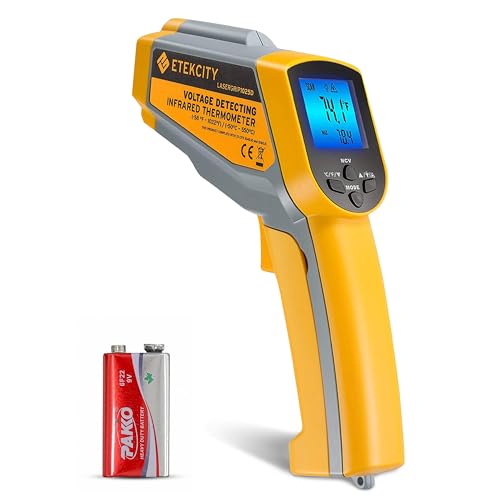
The thermometer to buy if you want one tool for the pizza oven, the grill and the stovetop. It reads from -58°F to 1022°F, which covers a pizza stone in most home ovens, a cast iron pan, a comal and the grates of a gas grill.
Two features set it apart from the cheapest guns. First, the emissivity is adjustable from 0.1 to 1.0. Etekcity’s listing explains that most organic materials and painted or oxidized surfaces have an emissivity of 0.95, while reflective surfaces sit lower, and that adjusting the setting improves accuracy on different materials. That matters when you move from a dark stone to a brick floor or a well-seasoned skillet. Second, it has two lasers, which Etekcity says make it easier to see the area being measured.
The distance-to-spot ratio is 12:1, so from 12 inches away it reads a circle about an inch across. Etekcity recommends holding it about 14 inches (36 cm) from the target for best accuracy. It responds in under 500 milliseconds, holds the maximum reading, and runs on a 9V battery, which is included.
It also has a non-contact voltage detector for electrical work, which you can ignore at the pizza oven. The listing describes the aiming laser as Class 2.
Why we like it
- Reads to 1022°F, enough for most home pizza ovens
- Adjustable emissivity, 0.1 to 1.0
- Dual lasers mark the measuring area
- Max-hold and response under 500 ms
- Two-year warranty from Etekcity
Key specifications
| Model | Lasergrip 1025D |
|---|---|
| Range (stated) | -58°F to 1022°F (-50°C to 550°C) |
| Distance-to-spot | 12:1; best at about 14 in (36 cm) |
| Emissivity | Adjustable, 0.1 to 1.0 |
| Accuracy (stated) | Not stated in the listing |
| Response time | Under 500 ms |
| Battery | 9V (included) |
| Warranty | 2 years (Etekcity) |
Why we recommend it
It covers the temperatures most home ovens reach, lets you set emissivity for the surface you are reading, and comes from a maker that publishes a warranty. That combination is what a kitchen wants from a surface thermometer.
Skip it if your oven runs past 1,000°F on the floor. A wood-fired dome at full heat can exceed this range, and the listing does not give an accuracy figure.
Pros and cons
Pros
- Adjustable emissivity
- Dual lasers
- Two-year warranty
Cons
- Tops out at 1022°F
- Accuracy not stated
- 9V battery rather than AAA
2. Etekcity Lasergrip 800 Long-Range IR Thermometer – 16:1 Optics, Reads to 1382°F
If your oven runs hot or you would rather stand further back from the mouth, the Lasergrip 800 has the higher range and the tighter optics. It reads from -58°F to 1382°F with a 16:1 distance-to-spot ratio, so from 16 inches away it measures a circle about an inch across.
The trade-off is emissivity. The listing’s specifications describe it as fixed at 0.95, which suits a dark stone, brick, cast iron and food, but cannot be changed for shinier surfaces. For a pizza stone or an oven floor, that is usually fine; for a stainless steel oven shell or a polished pan, readings will run low (see the emissivity section below).
Etekcity lists accuracy at 2 percent, a 500 ms response, and a 9V battery good for about 14 hours of cumulative use, with an auto-off after 15 seconds. One useful detail in the listing: the measuring spot sits about 2 cm below the laser dot, so aim the dot slightly above the middle of the stone. Etekcity’s listing also recommends a distance of about 14 inches for best accuracy, and gives a two-year warranty. Do not confuse it with the Lasergrip 1080, a different model that Etekcity sells on its own site.
Why we like it
- Reads to 1382°F, higher than most guns at this level
- 16:1 distance-to-spot ratio
- Stated accuracy of 2 percent
- Two-year warranty
Key specifications
| Model | Lasergrip 800 |
|---|---|
| Range (stated) | -58°F to 1382°F (-50°C to 750°C) |
| Distance-to-spot | 16:1; best at about 14 in (36 cm) |
| Emissivity | Fixed at 0.95 |
| Accuracy (stated) | ±2% |
| Response time | 500 ms |
| Battery | 9V (included); about 14 hours of use |
| Warranty | 2 years (Etekcity) |
Why we recommend it
Choose it if your oven runs above 1,000°F or you want to read a small spot from a comfortable distance. For a dark stone or brick floor, the fixed 0.95 emissivity is a reasonable default.
Skip it if you also want to read shiny metal accurately. Fixed emissivity means you cannot correct for stainless steel or aluminum.
Pros and cons
Pros
- Highest Etekcity range here
- Tight 16:1 optics
- Accuracy stated
Cons
- Emissivity fixed at 0.95
- Spot sits below the laser dot
- Single laser
3. Ooni Infrared Thermometer and Peel Bundle – Preset for Ooni Baking Stones
Ooni sells its own infrared thermometer, and this Amazon bundle pairs it with Ooni’s 12-inch perforated aluminum peel and a turning peel, according to the listing. Check the listing for exactly what is in the box before you order.
The thermometer is the reason it is here. Ooni states a range of -22°F to 999°F, a 10:1 distance-to-spot ratio, and accuracy within the larger of 2 percent or 4°F. The emissivity is adjustable but preset for Ooni baking stones, and the Amazon listing says it is calibrated for the cordierite stones used inside Ooni ovens. Readings appear in under 300 milliseconds, and a scan mode records the minimum, maximum and average across an area, which is a quick way to find the cool side of a stone.
Ooni says the thermometer is designed for use during heat-up and recharge periods, the minutes after a pizza comes out when the stone is reheating. A colored ring on the display marks Ooni’s ideal baking temperatures. It runs on two AAA batteries, included, which Ooni says give five hours of continuous use. The Amazon listing says Ooni Koda ovens can reach up to 950°F, comfortably inside this thermometer’s range.
Why we like it
- Emissivity preset for Ooni’s cordierite stones
- Scan mode with minimum, maximum and average
- Stated accuracy: larger of 2% or 4°F
- Response under 300 ms
- Peels included in the bundle
Key specifications
| Model | Ooni Digital Infrared Thermometer (bundle with peels) |
|---|---|
| Range (stated) | -22°F to 999°F (-30°C to 550°C) |
| Distance-to-spot | 10:1 |
| Emissivity | Adjustable; preset for Ooni baking stones |
| Accuracy (stated) | Larger of ±2% or ±4°F |
| Response time | Under 300 ms |
| Battery | 2 x AAA (included); about 5 hours continuous |
| Warranty | Not stated on the product page |
Why we recommend it
If you cook in an Ooni, this is the thermometer set up for your stone, and the bundle covers the peels you need to launch and turn the pizza.
Skip it if you already own good peels or cook in a hotter wood-fired oven. The 999°F ceiling and the 10:1 optics are a step behind the Etekcity and BTMETER models.
Pros and cons
Pros
- Preset for Ooni stones
- Scan mode for the whole stone
- Accuracy stated
Cons
- Range stops at 999°F
- 10:1 optics
- Bundle contents need checking
4. BTMETER BT-1500C High-Temperature IR Thermometer – Reads Past 2,700°F From Further Back
This is an industrial pyrometer that happens to suit a wood-fired pizza oven very well. BTMETER states a range of -58°F to 2732°F, well past anything a backyard oven will reach, and a 30:1 distance-to-spot ratio, so from 30 inches away it reads a circle about an inch across. You can take a reading on the back of the floor without leaning into the heat.
The emissivity adjusts from 0.1 to 1.0, two lasers frame the measuring spot, and the color screen shows minimum, maximum, average and difference readings. High and low alarms can warn you when a surface passes a set temperature. BTMETER states an average accuracy of ±2 percent and a response under 250 milliseconds. It runs on a 9V battery, which is included, along with a zipped case, and the listing offers a one-year warranty.
BTMETER sells it for furnaces, kilns and forges as much as for kitchens, so expect more buttons than a kitchen gun. The listing describes the lasers as Class II, with output under 0.5 mW.
Why we like it
- Range to 2732°F
- 30:1 optics for reading from further back
- Adjustable emissivity, 0.1 to 1.0
- Min, max, average and difference modes, plus alarms
Key specifications
| Model | BT-1500C |
|---|---|
| Range (stated) | -58°F to 2732°F (-50°C to 1500°C) |
| Distance-to-spot | 30:1 |
| Emissivity | Adjustable, 0.1 to 1.0 |
| Accuracy (stated) | ±2% on average |
| Response time | Under 250 ms |
| Battery | 9V (included) |
| Warranty | 1 year (listing) |
Why we recommend it
Choose it if you cook in a wood-fired dome, or want the most range and the tightest optics on this list. It reads the hottest corner of the floor from a safe distance.
Skip it if you own a gas or pellet oven that stays under 1,000°F. The extra range adds menus you will not use, and the Etekcity 1025D covers those ovens.
Pros and cons
Pros
- Highest range here
- Tightest optics here
- Alarms and scan modes
Cons
- More complex to use
- Built for industry, not kitchens
- Shorter warranty than Etekcity
5. TempPro TempScan 2-in-1 IR and Probe Thermometer – Surface and Inside in One Tool
An infrared gun cannot tell you the inside of a calzone, a stuffed pepper or a chicken thigh roasted in the pizza oven. The TempScan solves that by putting a fold-out meat probe on the same body as the infrared sensor.
TempPro states an infrared range of -58°F to 1022°F with a 12:1 distance-to-spot ratio and adjustable emissivity (0.1 to 1.0, default 0.95). Infrared accuracy is ±3°F from 14°F to 212°F and ±2 percent above that. The 304 stainless steel probe reads -58°F to 572°F, with accuracy of ±1.8°F between 32°F and 212°F and a reading in two to three seconds, according to the listing.
TempPro sells it for griddles, pizza stones and oven walls on the infrared side, and for steak, poultry, candy and frying oil on the probe side. It wakes when you open the probe or pick it up, has a backlit screen and a magnet, and runs on two AAA batteries, included. Infrared readings can show minimum, maximum and average. The listing gives two model names (TempScan PLUS TP420W and TP410), and no warranty term is stated.
Why we like it
- Infrared sensor and meat probe in one body
- IR range to 1022°F with adjustable emissivity
- Probe accuracy of ±1.8°F in the cooking range
- Magnet and motion wake
Key specifications
| Model | TempScan PLUS TP420W (listing also shows TP410) |
|---|---|
| Range (stated) | IR -58°F to 1022°F; probe -58°F to 572°F |
| Distance-to-spot | 12:1 |
| Emissivity | Adjustable, 0.1 to 1.0 (default 0.95) |
| Accuracy (stated) | IR ±3°F (14–212°F), else ±2%; probe ±1.8°F (32–212°F) |
| Response time | IR 0.5 s; probe 2–3 s |
| Battery | 2 x AAA (included) |
| Warranty | Not stated |
Why we recommend it
Choose it if you cook more than pizza in the oven, such as roast chicken, chiles or cast iron dishes, and want one tool for both the stone and the food.
Skip it if your oven floor runs above 1,000°F, or you want a published warranty. The infrared side has the same ceiling as our top pick.
Pros and cons
Pros
- Reads surface and inside
- Adjustable emissivity
- AAA batteries
Cons
- IR stops at 1022°F
- Warranty not stated
- Model name inconsistent in listing
6. SOVARCATE HS960D IR Thermometer with Meat Probe – Two Tools in One Box

Where the TempPro builds the probe into the gun, SOVARCATE ships a separate infrared thermometer and a separate meat thermometer in one box. Some cooks prefer that: the probe can stay in the kitchen while the gun lives by the oven.
The infrared thermometer reads -58°F to 1112°F, a little higher than our top pick, with a 12:1 distance-to-spot ratio and emissivity adjustable from 0.1 to 1.0, preset to 0.95. SOVARCATE states accuracy of ±2 percent and a 500 ms response, and the color screen is backlit. The meat thermometer reads -58°F to 572°F with a stainless steel probe. The gun takes two AAA batteries and the probe an LR44 cell, both included, according to the listing, and SOVARCATE says it offers a two-year warranty.
Two details in the listing are worth noting at a hot oven. SOVARCATE gives an ambient operating range of 32°F to 104°F for the gun, so take your reading and set it down away from the oven rather than resting it on a hot ledge. And it warns: “Do not point laser directly at eye or in-directly off reflective surface.”
Why we like it
- IR range to 1112°F
- Separate meat thermometer included
- Adjustable emissivity, preset 0.95
- Stated accuracy ±2%; two-year warranty
Key specifications
| Model | HS960D |
|---|---|
| Range (stated) | IR -58°F to 1112°F; probe -58°F to 572°F |
| Distance-to-spot | 12:1 |
| Emissivity | Adjustable, 0.1 to 1.0 (preset 0.95) |
| Accuracy (stated) | IR ±2% |
| Response time | 500 ms |
| Battery | 2 x AAA (gun) and LR44 (probe), included |
| Warranty | 2 years (SOVARCATE, per listing) |
Why we recommend it
Choose it if you want an infrared gun with a bit more range than 1022°F and a separate probe thermometer, without buying two products.
Skip it if you want a well-known maker with published support pages. SOVARCATE’s details come only from its Amazon listing.
Pros and cons
Pros
- Two thermometers in one box
- Range to 1112°F
- Two-year warranty stated
Cons
- Gun rated for 32–104°F surroundings
- Maker details only on the listing
- Two battery types to stock
7. Etekcity Lasergrip 774 IR Thermometer – Simple and Compact for Cooler Ovens

The Lasergrip 774 is Etekcity’s simplest gun and a sensible choice for a pizza stone on a gas grill or in a kitchen oven, where the surface rarely goes past 800°F. Its stated range is -58°F to 842°F, with a 12:1 distance-to-spot ratio.
Etekcity’s own page states accuracy of ±2 percent above 212°F and ±3.6°F below, a response under 500 ms, two AAA batteries, and a two-year limited warranty. The listing adds that the reading is the average temperature across the circle the sensor sees, not a single point, and that a maximum-temperature display is built in. It measures about 6 by 3 inches, small enough for a drawer by the stove.
The emissivity figures disagree. Etekcity’s site lists it at 0.95, while the Amazon listing describes it as adjustable from 0.1 to 1.0. Treat it as fixed at 0.95 unless your unit’s manual says otherwise, and it will still read dark stones, cast iron and brick sensibly.
Why we like it
- Compact, about 6 inches long
- Stated accuracy ±2% above 212°F
- AAA batteries
- Two-year limited warranty
Key specifications
| Model | Lasergrip 774 |
|---|---|
| Range (stated) | -58°F to 842°F (-50°C to 450°C) |
| Distance-to-spot | 12:1; best at about 14 in (36 cm) |
| Emissivity | 0.95 (Etekcity site); listing says 0.1 to 1.0 |
| Accuracy (stated) | ±2% above 212°F; ±3.6°F below |
| Response time | Under 500 ms |
| Battery | 2 x AAA (included) |
| Warranty | 2-year limited (Etekcity) |
Why we recommend it
Choose it for a pizza stone on a grill, a kitchen oven, a comal or a skillet, where 842°F is plenty and a small, simple gun is all you need.
Skip it if you own a dedicated pizza oven. Many reach temperatures above its 842°F ceiling, and a gun that maxes out cannot tell you how far past it you are.
Pros and cons
Pros
- Small and simple
- Accuracy stated by Etekcity
- Two-year warranty
Cons
- Range stops at 842°F
- Emissivity details conflict
- Too low for many pizza ovens
What an infrared thermometer can and cannot tell you
An infrared thermometer reads the heat radiating from a surface. Ooni describes its own as measuring surface temperature without contact, and every maker here sells theirs for surfaces: stones, pans, grills and oven walls. That makes it the right tool for a pizza stone, the floor of a wood-fired oven, a comal, a plancha or a cast iron pan.
It cannot read the air in the dome, the inside of a pizza, or the center of a roast. For doneness you need a probe thermometer, which is why the TempPro and SOVARCATE kits include one, and why our guide to the best grill thermometer covers probe thermometers for meat. Use the infrared gun to know when the stone is ready, and a probe to know when the food is done.
The reading is also an average of a circle, not a point. Etekcity’s listing for the Lasergrip 774 says so plainly: the display shows the average temperature within the circular area the sensor sees. If that circle takes in part of the stone and part of a flame or the dark dome above it, the number will be a blend.
How to choose an infrared thermometer for a pizza oven
1. A range above your oven’s hottest surface
Check how hot your oven gets and buy a thermometer that reads past it. The Amazon listing for Ooni’s bundle says Ooni Koda ovens reach up to 950°F, so a gun that tops out at 842°F, like the Lasergrip 774, would be too low for that oven; one that reads to 999°F or 1022°F covers it. Wood-fired domes can run hotter, which is where the 1382°F Lasergrip 800 or the 2732°F BTMETER earn their place. Our guide to the best pizza oven lists what each oven’s maker states.
2. Distance-to-spot ratio
The ratio tells you how big a circle the gun reads at a given distance. At 12:1, standing 12 inches away reads a circle about an inch across; standing 36 inches away reads a circle about 3 inches across. At a pizza oven you often stand back from the mouth, so a higher ratio (16:1 or 30:1) keeps the circle on the stone rather than spilling onto the flame or the oven’s lip. Etekcity recommends about 14 inches for best accuracy on its guns, so get as close as the heat allows.
3. Emissivity you can adjust
Emissivity is how efficiently a surface gives off heat compared with a perfect emitter, on a scale from 0 to 1, as ThermoWorks explains in its emissivity table. Most guns default to 0.95, which suits food and dark, dull surfaces. ThermoWorks lists fired clay at 0.91, red brick at 0.90, masonry brick at 0.94 and heavily rusted iron at 0.91 to 0.96, so a dark stone, brick floor or seasoned cast iron reads close to true at the default.
Shiny metal is another matter. ThermoWorks lists stainless steel at 0.59 and polished aluminum at 0.05, so a gun set to 0.95 will read a stainless oven shell or a polished peel far too low. ThermoWorks also says emissivity figures are hard to guarantee and recommends checking a surface with an accurate surface probe, then adjusting the infrared thermometer to match. An adjustable gun lets you do that; a fixed one does not.
4. Speed, display and modes
Every pick here reads in half a second or less. More useful at an oven are a max-hold button, so you can read the number after stepping back, and a scan mode that shows minimum, maximum and average as you sweep across the stone. A backlit screen helps at night.
5. Battery and warranty
AAA batteries are easier to keep in the kitchen drawer than 9V. Etekcity gives two years of warranty on its guns, SOVARCATE says it does the same, BTMETER lists one year, and Ooni and TempPro do not state a term on the pages we read.
Using an infrared thermometer on a stone, comal or skillet
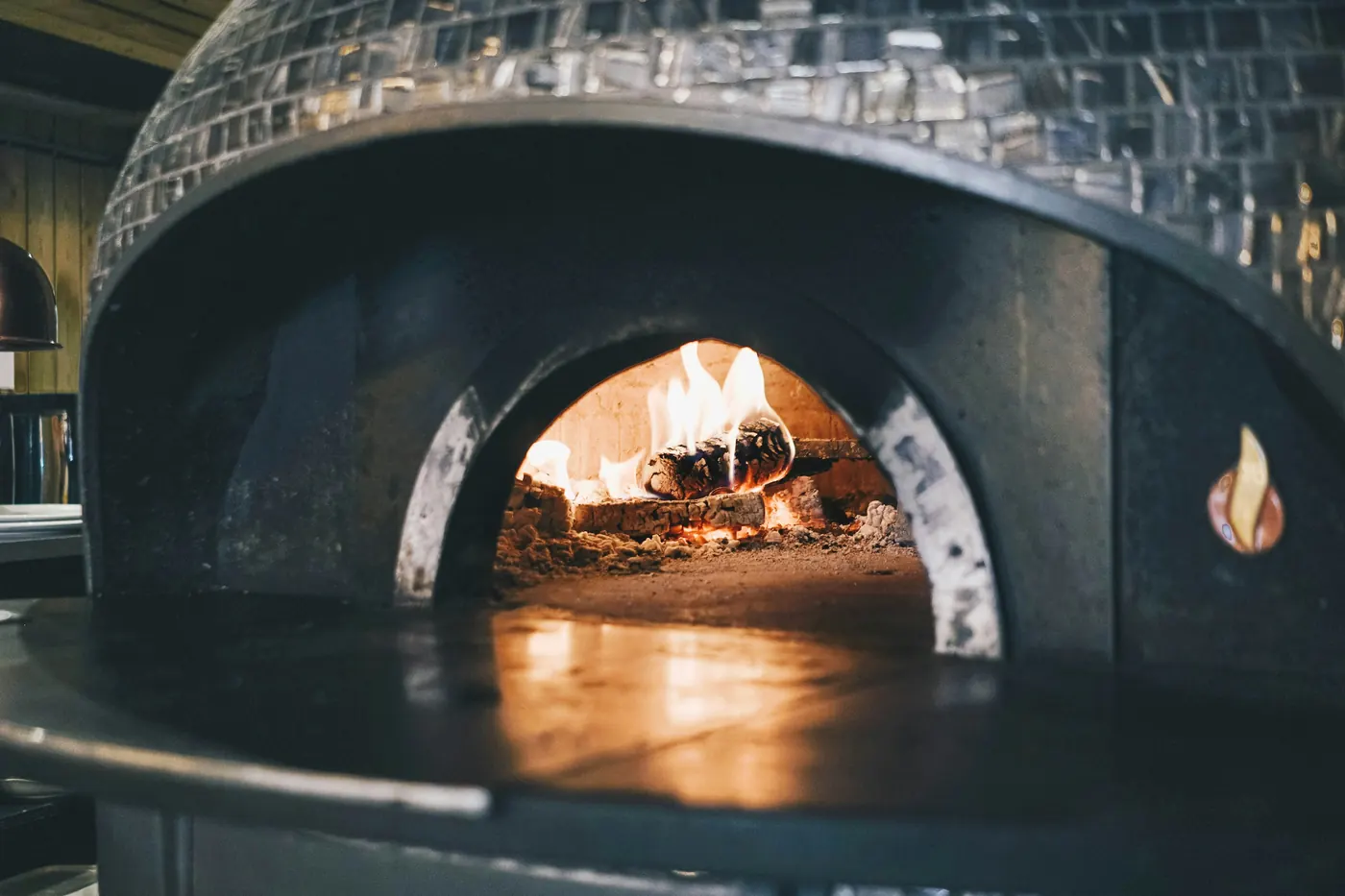
Take readings in the middle of the stone where the pizza will sit, then at the back and near the mouth; the difference tells you where the hot side is. With the Lasergrip 800, aim the laser dot a little above the spot you want to read, because Etekcity says the measuring area sits about 2 cm below the dot. Take another reading between pizzas: Ooni designed its thermometer for those heat-up and recharge periods, when the stone is catching up after the last pie.
The same habit works indoors. Point the gun at the middle of a comal before the first tortilla goes on, or at a cast iron pan before a steak, and you stop guessing whether it has had long enough. Our guides to the best comal for tortillas, the best cast iron skillet and the best pizza stone for the grill cover the surfaces worth measuring.
On lasers: the U.S. Food and Drug Administration groups laser products into hazard classes and requires Class II and higher products to carry a warning label showing the class and output power, according to the FDA’s laser products page. Etekcity and BTMETER describe their aiming lasers as Class 2, and SOVARCATE warns not to point the laser at an eye, directly or off a reflective surface. Read the label on yours and follow it. And none of these is a medical thermometer: every maker here says they are for objects, not people.
How we chose these seven thermometers
We started from what a kitchen needs from a surface thermometer: a range above the hottest surface it will read, optics that keep the spot on the stone from a safe distance, an emissivity setting that suits stone, brick and iron, and a maker who states its accuracy and warranty. We searched Amazon US for infrared thermometers from identifiable makers, confirmed each pick was in stock through Amazon’s product data, and took specifications from the makers’ own pages where they publish them (Etekcity and Ooni) and otherwise from the brand’s Amazon listing. Where the two disagree, as with the Lasergrip 774’s emissivity, we say so. Emissivity values come from ThermoWorks’ published table, and laser labeling from the FDA. We left out guns from sellers with no identifiable brand, near-identical models, and listings that were short of stock. Fluke’s 62 MAX was out of stock on Amazon when we checked, and we did not find ThermoWorks or Gozney infrared thermometers sold on their own there. We have not used these thermometers ourselves.
Infrared thermometer questions, answered
Can an infrared thermometer tell me if my pizza is cooked?
No. It reads the surface only. Use it to check the stone or oven floor before you launch the pizza, and a probe thermometer if you need the inside temperature of food.
What range do I need for a pizza oven?
One that reads above the hottest surface in your oven. For ovens that reach around 950°F, as Ooni states for its Koda, a gun reading to 999°F or 1022°F is enough; for hotter wood-fired domes, choose one that reads to 1382°F or beyond.
Why does my thermometer read differently on the stone and the oven door?
Partly because they are different temperatures, and partly because of emissivity. A dark stone gives off heat efficiently; a shiny metal door does not, so a gun set to 0.95 reads it low. Adjust the emissivity, or read only dull surfaces.
How far away should I stand?
As close as the heat comfortably allows. Etekcity recommends about 14 inches for best accuracy, and the higher the distance-to-spot ratio, the further back you can stand while still reading a small spot.
Can I use it on a comal or griddle?
Yes. ThermoWorks lists dark, heavily oxidized iron at 0.91 to 0.96, so a well-seasoned cast iron or carbon steel comal should read close at the default 0.95. Shiny stainless or aluminum griddles need a lower setting or a check with a surface probe.
Our final pick for the pizza oven
Buy the Etekcity Lasergrip 1025D if you want one infrared thermometer for the pizza oven, the grill and the stove: it reads to 1022°F and lets you set emissivity. Ooni owners should consider Ooni’s own thermometer, set up for Ooni stones, and wood-fired oven owners the BTMETER BT-1500C for its range and optics. If you also cook food that needs an internal temperature, the TempPro TempScan covers both jobs.
Choosing the oven itself? See the best pizza oven, and for the probe side of the kit, the best grill thermometer.
Related guide: Infrared vs probe thermometer.
And if tonight is a night off from the oven, see the menu or call to order.