Open a bottle on Tuesday, pour two glasses, and by the weekend the rest tastes flat and a little stale. Air did that. Every wine preserver is a different way of keeping oxygen away from what’s left in the bottle, and the different ways don’t work equally well.
The market splits into four camps: pumps that pull air out, gas that sits on top of the wine, stoppers that absorb oxygen, and needle systems that never really open the bottle. These are products for adults who drink wine, and the right one depends mostly on how long a bottle stays open at your house.
Julia’s earns a commission on purchases made through links on this page, at no cost to you. We have not used these products ourselves. Recommendations rest on maker and listing details, and we name the sources we read.
Quick verdict: which wine preserver to buy
For most households, buy Repour: it needs no pump or gas and did well in both side-by-side tastings we read. If you keep good bottles for weeks or months and want a glass at a time, the Coravin Timeless Six Plus is the one that keeps the cork in. For a can of gas that covers many bottles, choose Private Preserve. For sparkling wine, the Coravin Sparkling is the one here built for it.
Five wine preservers side by side
The five that cover the most drinkers, one for each way of using a bottle.
| Pick | Best for | How it works | Claimed time | Buy on Amazon |
|---|---|---|---|---|

Repour Wine Saver, 10-PackBest overall
|
Most households | Oxygen absorber in a stopper | Up to two months, per Repour | View on Amazon |
Coravin Timeless Six Plus, SilverBest for long storage
|
Good bottles, one glass at a time | Needle and argon, cork stays in | Weeks to years, per Coravin | View on Amazon |

Private Preserve Wine Preservation SystemBest gas spray
|
Many bottles a month | Gas blend sprayed in, then re-cork | Not stated | View on Amazon |

Coravin Sparkling Wine Preservation SystemBest for sparkling
|
Sparkling wine | CO2 and a locking stopper | Up to 4 weeks, per Coravin | View on Amazon |

Vacu Vin Concerto Wine Saver, 4 StoppersBest reusable pump
|
Reusable, no refills | Hand pump and stoppers | Up to 10 days, per Vacu Vin | View on Amazon |
Our picks for the best wine preserver
1. Repour Wine Saver, 10-Pack – Pulls Oxygen Out From the Stopper
Repour looks like an ordinary stopper with a foil tab. Peel the tab, push it into the bottle, and a packet inside starts taking up the oxygen in the headspace. Pour a glass later and put the same stopper back. There’s nothing to pump, spray or charge.
Each one is good for one 750 ml bottle, whether you finish it in days or weeks. When the bottle is empty, so is the stopper, and you need a new one. Repour claims up to two months of freshness, a figure we’d treat as the maker’s best case.
The independent evidence is the reason it leads this guide. The Drunken Cyclist wine blog sealed bottles of the same Chianti with different systems for a week at room temperature, and rated Repour with an argon spray as the best value of the group. Testarossa Winery’s staff tasted after eight days and said it works well overall. Neither was a controlled study, but both were real side-by-side comparisons.
Why we like it
- Nothing to pump, spray or charge.
- Fits nearly all 750 ml bottles, the listing says, including fortified wine.
- One stopper covers one bottle, so there’s no system to buy into.
- Did well in both independent tastings we read.
Key specifications
| Model | RWS-10pk |
|---|---|
| Method | Oxygen absorber |
| Count | 10 stoppers |
| Uses | One bottle per stopper |
| Maker’s claimed time | Up to two months |
| Sparkling wine | No |
| Needs refills | Yes, a new stopper per bottle |
| Power | None |
Why we recommend it
This suits anyone who opens a bottle, drinks part of it, and comes back within a week or two. It’s the simplest way we found to do clearly better than the original cork.
Skip it if you drink sparkling wine, since Repour says the pressure can pop the stopper off, or if you dislike a single-use product.
Pros and cons
Pros
- No technique to learn
- Rated well in two independent tastings
- Easy to keep in a drawer
Cons
- Single use per bottle
- Not for sparkling wine
- The two-month claim is the maker’s own
2. Coravin Timeless Six Plus, Silver – Pours Without Pulling the Cork
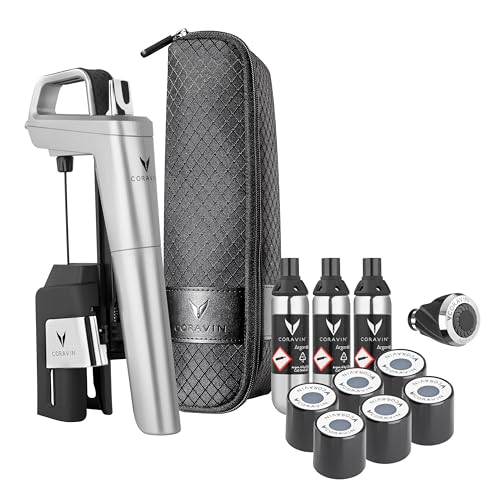
The Coravin Timeless is the one type here where the bottle is never really open. A needle goes through the cork, argon goes into the bottle, and wine flows out. Coravin says you can then preserve the rest for weeks, months or even years.
The Six Plus kit includes three argon capsules, six screw caps, an aerator, a needle clearing tool, a bottle sleeve and a carrying case. Coravin says to use only its own capsules, and warns that others may cause breakage or malfunctions. To clean it, rinse the spout with warm water and clear the needle; it can’t be submerged or put in the dishwasher.
In The Drunken Cyclist’s week-long comparison, the reviewer found no difference at all between a freshly opened control bottle and the bottle sampled with a Coravin. Testarossa’s staff said it definitely keeps wine fresh for a long time. The catch is cost, up front and in capsules, and the reviewer left the value question to the reader. This model also appears on our gift page in another finish; we list the silver listing here so the pick isn’t a repeat of that exact item.
Why we like it
- The Drunken Cyclist found no difference from a fresh bottle after a week.
- Cork stays in the bottle, per Coravin.
- Six screw caps for bottles without corks are included.
- 99.9% pure argon capsules, according to the listing.
Key specifications
| Model | Six+ |
|---|---|
| Method | Needle through cork, argon |
| Count | 1 system, 3 capsules, 6 screw caps |
| Uses | Not stated per capsule on the listing |
| Maker’s claimed time | Weeks, months or years |
| Sparkling wine | Not stated; Coravin sells a separate system |
| Needs refills | Yes, Coravin argon capsules |
| Power | None |
Why we recommend it
Choose this if you own bottles too good to rush, or if two people at home want different wines on the same night. It’s the only pick here that lets you taste a bottle and put it back in the rack.
Skip it if you mostly drink everyday wine within a few days. A stopper or pump covers that job for far less.
Pros and cons
Pros
- Strongest result in the tastings we read
- Keeps the cork in place
- Comes with screw caps, aerator and sleeve
Cons
- Costs far more than anything else here
- Capsules are an ongoing purchase and must be Coravin’s
- No submerging or dishwasher
3. Private Preserve Wine Preservation System – An Inert Gas Blanket From a Can
Private Preserve is a can of inert gas. You spray it into the open bottle, re-cork right away, and store the bottle upright so the protective layer stays on the wine. The gas is a blend of carbon dioxide, nitrogen and argon, according to the listing.
The listing claims 120 uses per can, and says the gas also suits port, sake, cognac, whiskey and fine oil and vinegar. It gives no figure for how many days or weeks you gain.
We did not find a named test of this exact product. The closest evidence is for similar gas: The Drunken Cyclist’s argon spray, a different brand, did very well over a week, and Testarossa’s staff were surprised how well argon gas held up, though it wasn’t as fresh as a just-opened bottle. Private Preserve is a blend, so read that as support for the method and not for this can.
Why we like it
- 120 uses per can, by the listing.
- Works with the bottle’s own cork.
- Also named for spirits, oil and vinegar.
- Non-toxic inert gas, as the listing describes it.
Key specifications
| Model | SS-TRU-1026 |
|---|---|
| Method | Inert gas blend |
| Count | 1 can |
| Uses | 120 per can, per the listing |
| Maker’s claimed time | Not stated |
| Sparkling wine | Not stated |
| Needs refills | Yes, a new can when empty |
| Power | None |
Why we recommend it
This is for the person who opens several bottles a month and prefers the original cork to a new stopper. A spray and a tight cork is all there is to it.
Skip it if you keep bottles lying down, since the listing says to store them upright.
Pros and cons
Pros
- Many uses from one can
- Works with the bottle’s own cork
- No pump or batteries
Cons
- No named test of this exact product
- Bottles must stay upright
- Sold by a third-party seller
4. Coravin Sparkling Wine Preservation System – Keeps the Bubbles for Weeks
Sparkling wine is a poor match for a pump, because its appeal is the gas already in the bottle. Coravin’s answer is a charger that tops up the bottle with carbon dioxide from a capsule, and a locking stopper that adjusts to standard and magnum bottles.
A regulator inside the charger stops at the right pressure, according to the listing, and Coravin claims up to four weeks from the same bottle. It uses its own CO2 capsules, not the argon ones made for the Timeless.
We found no independent test of this model in the tastings we read, so the four-week figure is Coravin’s. For a bottle you plan to finish in a day or two, a plain clamp stopper from our wine stopper guide is the simpler buy.
Why we like it
- Built for sparkling wine, which most preservers here aren’t.
- Internal regulator stops charging at set pressure.
- Stopper adjusts to standard and magnum bottles.
Key specifications
| Model | Not stated |
|---|---|
| Method | CO2 charge and locking stopper |
| Count | Charger, stopper and capsules |
| Uses | Not stated |
| Maker’s claimed time | Up to 4 weeks |
| Sparkling wine | Yes |
| Needs refills | Yes, Coravin CO2 capsules |
| Power | None |
Why we recommend it
Good for anyone who likes a single glass of Champagne or cava on a weeknight and hates pouring the rest away.
Skip it if you only open sparkling wine at parties, where the bottle gets finished anyway.
Pros and cons
Pros
- Made for sparkling wine
- Fits magnums
- Pressure regulated by the charger
Cons
- No independent test found
- Its capsules are another thing to buy
- Does nothing for still wine
5. Vacu Vin Concerto Wine Saver, 4 Stoppers – The Reusable Pump, With Honest Limits
This is the familiar one: push a stopper into the neck, set the pump on top and work it until you hear the click, which Vacu Vin says confirms the seal. The stoppers are reusable and dishwasher safe, and there’s nothing to buy later unless you lose one.
Vacu Vin claims up to ten days of freshness. The independent results were less kind. Testarossa’s staff judged about five days and called it so-so. The Drunken Cyclist found it better than the cork alone after a week, but with stale flavors and signs of oxidation, and discouraged it. We still include it because it asks nothing further of you once bought, and because many bottles only need to last three or four days.
A two-stopper Concerto is on our gift page. We list the four-stopper pack here because a pump is most useful when you have more than one bottle open.
Why we like it
- No capsules, cans or disposable stoppers.
- Stoppers go in the dishwasher, per the listing.
- The click tells you when to stop pumping.
- Sold by Vacu Vin’s US store.
Key specifications
| Model | 987460 |
|---|---|
| Method | Hand vacuum pump |
| Count | 1 pump, 4 stoppers |
| Uses | Reusable |
| Maker’s claimed time | Up to 10 days |
| Sparkling wine | Not stated; the listing names red and white |
| Needs refills | No |
| Power | None |
Why we recommend it
Choose this if your bottles rarely last more than three or four days and you want one tool that needs no refills.
Skip it if you’re saving wine for a week or more. Both tastings we read found it fell behind gas and absorber methods by then.
Pros and cons
Pros
- One purchase, no refills
- Simple and quick
- Fits most standard bottles
Cons
- Weaker results than gas or absorbers
- Tasters found less time than the maker’s ten days
- A pump to store and stoppers to keep track of
6. Le Creuset Wine Pump and 3 Stoppers – A Pump for Bottles Stored Flat

Le Creuset’s pump does the same job as a Vacu Vin with two useful differences. Its barrel is wide, so the listing says it takes fewer strokes, and its three stoppers are described as airtight enough to store a bottle horizontally without leaking. That helps if your fridge has no tall door shelf.
Le Creuset says it preserves flavor for up to seven days, a shorter claim than some rivals make. It comes with a five-year limited warranty, and the handle is soft-touch over durable plastic. This is a plastic tool with no glaze or enamel touching the wine.
Neither tasting we read covered this pump directly, so treat the vacuum results above as the guide: useful for a few days, not for weeks.
Why we like it
- Stoppers are described as safe for storing bottles on their side.
- Wide barrel means fewer strokes, per the listing.
- Five-year limited warranty is stated.
Key specifications
| Model | WA137L-50 |
|---|---|
| Method | Hand vacuum pump |
| Count | 1 pump, 3 stoppers |
| Uses | Reusable |
| Maker’s claimed time | Up to 7 days |
| Sparkling wine | Not stated |
| Needs refills | No |
| Power | None |
Why we recommend it
This suits a small fridge or a wine rack where bottles lie down, and anyone who wants a stated warranty on a small tool.
Skip it if you want a plainer option. A basic pump does the same core job.
Pros and cons
Pros
- Stated horizontal storage
- Fewer strokes per bottle
- Long stated warranty
Cons
- No independent test found
- Only three stoppers
- Still a vacuum method, with its limits
7. Peugeot Line Preserve Electric Wine Pump – Vacuum Without the Pumping

Peugeot, the French mill and wine-tool maker, puts the same vacuum idea into a small USB-charged pump. Fit a stopper, press down, and the pump starts by itself. It beeps and flashes blue when it’s done, so there’s no counting strokes and no effort for anyone whose hands get sore.
The body is aluminum with a carbon finish at 5.5 inches, and two stoppers for still wine come in the box. Peugeot makes no specific claim about how many days you gain, and the tastings we read didn’t include it. An electric pump is still a vacuum method, so we wouldn’t expect it to beat the gas and absorber results above.
Why we like it
- Starts and stops by itself, with a sound and light signal.
- Wireless, with USB charging and cable included.
- Named maker with a long record in table tools.
Key specifications
| Model | 4006950210908 |
|---|---|
| Method | Electric vacuum pump |
| Count | 1 pump, 2 stoppers |
| Uses | Reusable |
| Maker’s claimed time | Not stated |
| Sparkling wine | No, still wines only |
| Needs refills | No, charge by USB |
| Power | Rechargeable by USB |
Why we recommend it
Pick this if you’d use a pump but find hand pumping awkward, or you want something that looks good on a bar cart.
Skip it if you’re happy with a hand pump. It does the same job with no battery to charge.
Pros and cons
Pros
- No pumping effort
- Clear finish signal
- Compact
Cons
- Battery to charge
- No stated time gain
- Only two stoppers
8. Platypus PlatyPreserve Flexible Wine Bottle – No Air Left to Worry About

PlatyPreserve takes a different route. Instead of treating the air in a half-empty bottle, you pour the wine into this flexible 27-ounce container and press the air out before closing it, so the wine isn’t sitting under a pocket of oxygen.
The listing describes a food-grade lining free of BPA, BPS and phthalates, a weight of 0.8 ounces and manufacture in the USA, with a limited lifetime warranty. The angled spout helps with filling and pouring. Moving wine from bottle to pouch does mean a little air on the way, and it also means your wine stops looking like wine at the table.
Why we like it
- Air-tight and collapsible, per the listing.
- Made in the USA, the listing states.
- No gas, pump or battery.
- Very light at 0.8 ounces.
Key specifications
| Model | 25010 |
|---|---|
| Method | Collapsible container |
| Count | 1 pouch |
| Uses | Reusable |
| Maker’s claimed time | Not stated |
| Sparkling wine | Not stated |
| Needs refills | No |
| Power | None |
Why we recommend it
Good for campers, picnickers and anyone who wants to take a good bottle along without the glass.
Skip it if presentation matters to you, or you don’t want to wash a narrow pouch between wines.
Pros and cons
Pros
- Removes air rather than treating it
- Very light and portable
- Long stated warranty
Cons
- Pouring in exposes the wine once
- No independent test found
- Narrow pouch to clean
How to choose a wine preserver
Start with how long the bottle stays open
If it’s gone in three days, a pump is fine and has no running cost. A week or two calls for an absorber or gas. Weeks and beyond is where a needle system earns its cost.
Know the limits of a vacuum
The Drunken Cyclist’s reviewer had stopped using vacuum sealing after reading it may remove esters, the compounds behind some of a wine’s aroma, and found stale notes in the pumped bottle. Both tastings we read ranked pumps behind other methods, so treat a pump as a short-term tool.

Count the running costs
Repour uses one stopper per bottle, Private Preserve one can over many uses, and Coravin a stream of capsules. Pumps need nothing after you’ve bought them. Think about how many bottles you open each month, not just the first purchase.
Check for sparkling wine
Most tools here don’t cover it. Repour warns that pressure can lift its stopper, and Peugeot’s stoppers are for still wines. If bubbles are your habit, buy for that.
Decide where the bottle will live
Private Preserve asks you to keep bottles upright, while Le Creuset says its stoppers hold a bottle lying flat. We’d keep any opened bottle somewhere cool, and a small wine cooler gives you a steady place for bottles you mean to come back to.
How we picked these wine preservers
We searched Amazon for pumps, gas sprays, stoppers and needle systems, and kept only those in stock with a new lead offer from makers we could identify. We left out rechargeable vacuum pumps from brands we couldn’t place.
We have not tried any of these. We read two independent comparisons directly: The Drunken Cyclist’s 2017 test of several methods on one Chianti, held for a week at room temperature, and Testarossa Winery’s 2021 staff tasting of five methods on a Pinot Noir after eight days. Both are small and informal, and Testarossa is a winery writing about its own tasting room’s needs. Neither covered every pick, and we say where a pick rests only on its listing. Other search results were affiliate lists that we did not use.
Wine preserver questions, answered
How long does wine last with just the cork?
In The Drunken Cyclist’s test, a re-corked Chianti at about 74°F was clearly oxidized after a week, with stale flavors, though still drinkable.
Is argon better than a vacuum wine saver?
In both comparisons we read, argon came out ahead of the vacuum pump. Neither was a controlled study, so take that as a strong hint and not a settled fact.

Does a Coravin work on screw caps?
The Six Plus kit includes six Coravin screw caps, and the listing title names them as part of the set. Without one, the needle system relies on a cork.
What’s the difference between a wine preserver and a wine stopper?
A plain stopper just closes the bottle and leaves the air inside. A preserver also deals with the oxygen, by removing it, covering the wine or absorbing it.
Can I use these for anything besides wine?
Private Preserve’s listing names port, sake, cognac, whiskey, fine oil and vinegar. Check each maker’s list before trying something else.
Our final pick for the open bottle on your counter
For most people, Repour is the sensible first buy, with the Coravin Timeless for anyone protecting a bottle they can’t easily replace. Before you open the next one, see our wine opener guide, and if you’d rather keep a simple stopper in the fridge door, start with our wine stopper and pourer guide. If you’d rather leave the pouring to someone else tonight, look over the drinks at Julia’s, or call to order at (346) 546-8283.