
Every restaurant server carries the same tool in an apron pocket: a folding waiter’s corkscrew with a small knife for the foil and a hinged lever that braces against the bottle. It is cheap, it fits anywhere and, once you have the knack, it opens a bottle in a few seconds without breaking the cork. For most homes it is still the best wine opener there is.
Not everyone wants to learn the knack, though, and not every pair of hands has the grip for it. Lever openers, winged corkscrews and rechargeable electric openers all do the job with less effort, and a needle system such as Coravin lets you pour a glass without pulling the cork at all. This guide sorts out which type suits you, then names the openers worth buying in each.
Julia’s earns a commission on purchases made through links on this page, at no cost to you. Recommendations are based on what a restaurant kitchen looks for, product specifications and verified buyer reports.
Quick verdict: which wine opener to buy
For most people, the best wine opener is the Pulltap’s Classic 500 double-hinged waiter’s corkscrew: the two-step lever that Pulltap’s patented in Barcelona in 1995 lifts the cork in two short pulls, the spiral is non-stick coated, and the whole thing folds into a pocket. If you want something cheaper, the True Truetap works the same way. If your grip is weak, choose the Rabbit Original Lever or the rechargeable Secura electric opener, which do the pulling for you.
Below are five standouts side by side, then all eight openers reviewed in full.
Five wine openers compared
One pick for each kind of household, with the type and power source each maker or listing states. All eight openers are reviewed in full below.
| Wine opener | Best for | Type | Hand strength needed | Buy on Amazon |
|---|---|---|---|---|

Pulltap’s Classic 500 Waiter’s CorkscrewBest overall
|
Most homes, pocket or drawer | Double-hinged waiter’s corkscrew | Moderate | View on Amazon |
| A spare for the picnic bag | Double-hinged waiter’s corkscrew | Moderate | View on Amazon | |

Rabbit Original Lever CorkscrewBest lever
|
Opening many bottles at a party | Lever corkscrew | Low | View on Amazon |

Secura Rechargeable Electric Wine OpenerBest electric
|
Weak grip, sore wrists | Rechargeable electric | Very low | View on Amazon |

Coravin Timeless Three Plus Wine SystemBest by the glass
|
One glass from a good bottle | Needle and argon system (cork stays in) | Low | View on Amazon |
Product images from Amazon. “Hand strength needed” is our general guide to each type of opener, not a maker’s figure.
Our picks for the best wine opener
These eight openers cover every common way to get a cork out: two waiter’s corkscrews at different levels, two lever openers, a winged corkscrew, two rechargeable electric openers and Coravin’s needle system, which is a different tool altogether. Each pick says what it is, who it suits and one honest reason to skip it.
1. Pulltap’s Classic 500 Waiter’s Corkscrew – The Server’s Two-Step Lever
The double-hinged waiter’s corkscrew is the design you see in restaurants, and Pulltap’s says it is the original: the listing describes the double-hinged lever as patented in Barcelona in 1995. The hinge has two notches. You brace the first against the lip of the bottle and lift the cork halfway, then move to the second notch and lift it the rest of the way. Splitting the pull into two short, straight strokes is what keeps the cork from bending and breaking.
The spiral retracts into the handle and has a Teflon coating, which the listing says lets it glide through natural and synthetic corks. A hinged blade at the other end cuts the foil. The body is metal and folds flat into a pocket or drawer, and the listing title says it is made in Spain. It comes in a long list of colors; we link the chrome one.
There is a small learning curve. Center the tip of the spiral on the cork, turn until one curl of the spiral is left showing, then lever. After a few bottles it becomes second nature.
Why we like it
- Two-step double-hinged lever, patented by Pulltap’s in 1995
- Non-stick (Teflon) coated spiral for natural and synthetic corks
- Hinged foil-cutting blade
- Folds flat; made in Spain
Key specifications
| Opener | Pulltap’s Classic 500 |
|---|---|
| Type | Double-hinged waiter’s corkscrew |
| Foil cutter | Hinged blade |
| Power/charging | None (manual) |
| Best for | Everyday use, pocket or drawer |
| Hand strength needed | Moderate |
| Warranty | Not stated |
Why we recommend it
It suits anyone who opens a bottle now and then and wants the tool that servers carry: small, quick once learned and with nothing to charge or break.
Skip it if you have arthritis or a weak grip; even with two steps, a waiter’s corkscrew needs you to hold the bottle firmly and pull.
Pros and cons
Pros
- Two-step lever keeps the pull straight
- Coated spiral
- Pocket-sized, nothing to charge
Cons
- Takes a little practice
- Needs a firm grip
- Small blade means careful foil cutting
2. True Truetap Double-Hinged Waiter’s Corkscrew – Same Idea, Smaller Cost

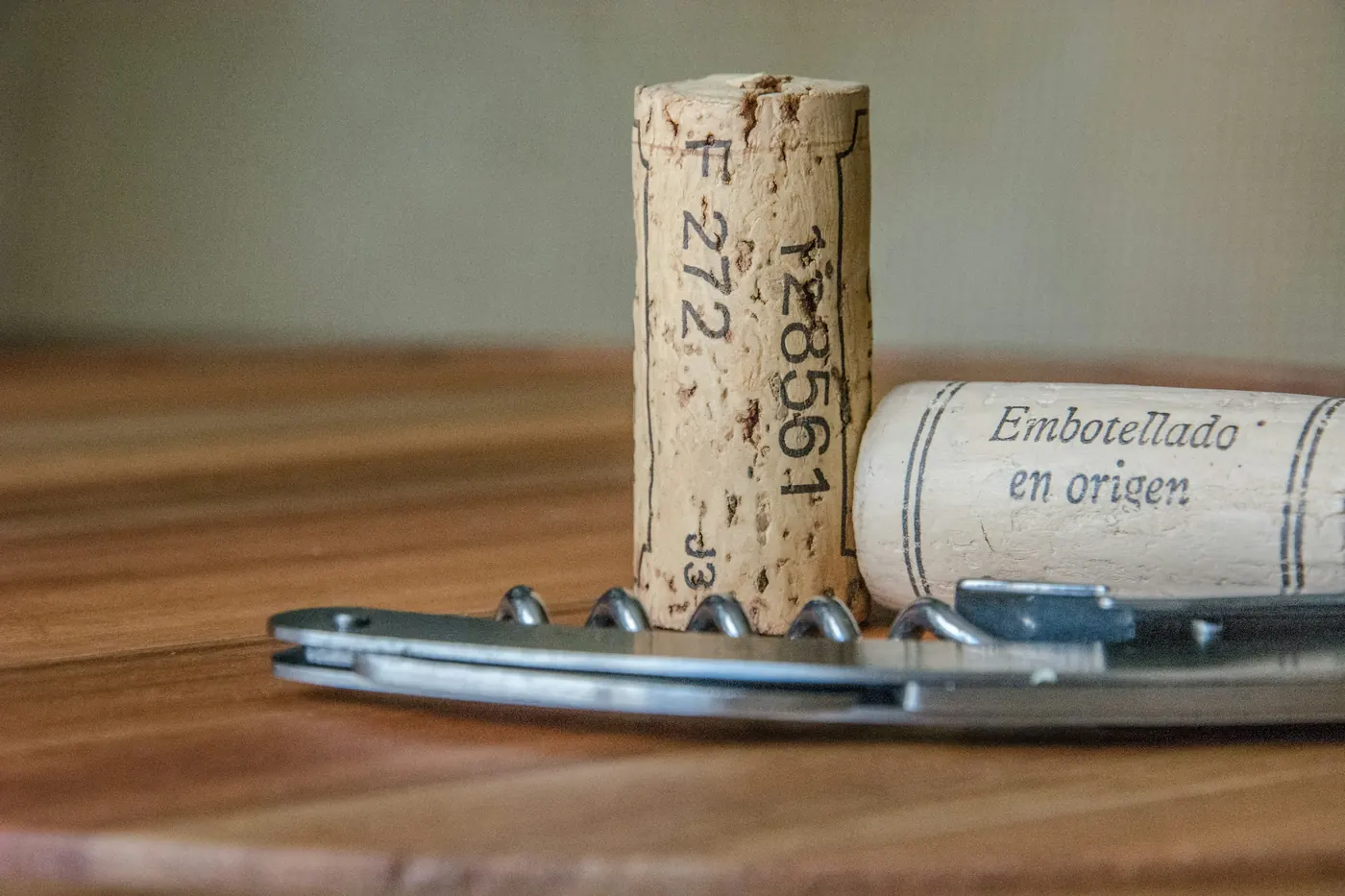
The Truetap is a double-hinged waiter’s corkscrew built on the same two-step principle as the Pulltap’s, at a lower cost. The listing describes a double-hinged arm for leverage, a flat-blade foil cutter, a built-in bottle opener for beer and soda, and a body of stainless steel and plastic.
That bottle opener is useful in a Mexican kitchen, where a cold beer with tacos is as likely as a bottle of wine. Because it is inexpensive, the Truetap also makes sense as the second opener: one in the kitchen drawer, one in the picnic basket or the cooler bag for the park. It folds flat like any waiter’s corkscrew.
Why we like it
- Double-hinged arm for a two-step pull
- Flat-blade foil cutter
- Built-in bottle-cap opener
- Stainless steel and plastic body, per the listing
Key specifications
| Opener | True Truetap, model 2225 |
|---|---|
| Type | Double-hinged waiter’s corkscrew |
| Foil cutter | Flat blade |
| Power/charging | None (manual) |
| Best for | A spare, picnics, a budget |
| Hand strength needed | Moderate |
| Warranty | Not stated |
Why we recommend it
It suits anyone who wants a proper double-hinged corkscrew without paying for a premium one, or who needs a second one for the car, the beach bag or the patio.
Skip it if you want the heavier metal feel of the Pulltap’s; the Truetap’s body is partly plastic.
Pros and cons
Pros
- Low cost
- Two-step lever
- Opens beer bottles too
Cons
- Partly plastic body
- Needs a firm grip

3. Rabbit Original Lever Corkscrew – One Pull, Cork Out
A lever corkscrew clamps around the neck of the bottle and does the work with one long handle: push the lever forward to drive the spiral in, pull it back to lift the cork, then push and pull again to release the cork from the spiral. The Rabbit is the best-known version, and the listing calls it the world’s best-selling wine opener.
Rabbit says each opener is tested for 20,000 cork pulls and is built from polycarbonate, metal and nylon. It comes with a foil cutter with stainless steel blades and an extra non-stick replacement spiral, and the listing says it works on all bottle sizes and cork types. Product information gives a five-year warranty.
It is the opener to set out on the counter when you are opening several bottles at a party, because each one takes a single pull and the cork ejects on its own. The trade-off is size: it is too bulky for a drawer full of utensils.
Why we like it
- Removes the cork in one pull and releases it automatically
- Rated for 20,000 pulls, per Rabbit
- Foil cutter and spare spiral included
- Five-year warranty
Key specifications
| Opener | Rabbit Original Lever, model W6005 |
|---|---|
| Type | Lever corkscrew |
| Foil cutter | Separate cutter, stainless steel blades |
| Power/charging | None (manual) |
| Best for | Parties, opening several bottles |
| Hand strength needed | Low |
| Warranty | Five years |
Why we recommend it
It suits hosts and anyone who finds a waiter’s corkscrew awkward, since the lever does most of the work and the bottle stays clamped.
Skip it if drawer space is tight; it is much bigger than a pocket corkscrew and needs its own spot.
Pros and cons
Pros
- Fast, one-pull action
- Spare spiral and foil cutter included
- Five-year warranty
Cons
- Bulky to store
- More parts than a simple corkscrew
4. OXO Steel Vertical Lever Corkscrew – Squeeze, Pump, Done
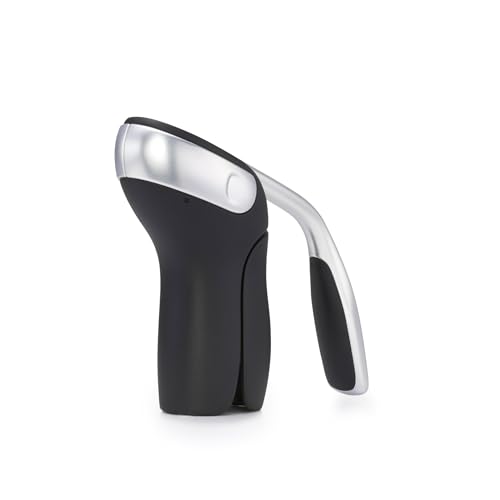
OXO’s vertical lever corkscrew sits on top of the bottle rather than clamping around it from the side. You squeeze the handle around the neck, pull the lever down and up, and the cork comes out; another pump of the lever releases it. The listing describes it as a one-pump design with a non-stick screw that works with natural and synthetic corks.
The handle is die-cast zinc with a soft, non-slip grip, and the listing notes that the symmetrical design works for both left- and right-handed people. The foil cutter is removable and stores on the corkscrew, and OXO includes an extra non-stick screw.
Why we like it
- One pump removes the cork, another releases it
- Die-cast zinc handle with non-slip grip
- Works for left- and right-handed users
- Removable foil cutter and extra screw
Key specifications
| Opener | OXO Steel Vertical Lever, model 11147600 |
|---|---|
| Type | Vertical lever corkscrew |
| Foil cutter | Removable, stores on the opener |
| Power/charging | None (manual) |
| Best for | Easy opening, left-handed users |
| Hand strength needed | Low |
| Warranty | Not stated |
Why we recommend it
It suits anyone who wants lever-style ease in a more compact, upright shape than the Rabbit, and left-handed cooks who struggle with other designs.
Skip it if you want something to carry; like any lever opener, it lives on the counter or in a cupboard.
Pros and cons
Pros
- Low effort
- Ambidextrous design
- Spare screw included
Cons
- Not pocket-sized
- Warranty not stated on the listing
5. OXO Steel Winged Corkscrew – Arms Do the Lifting

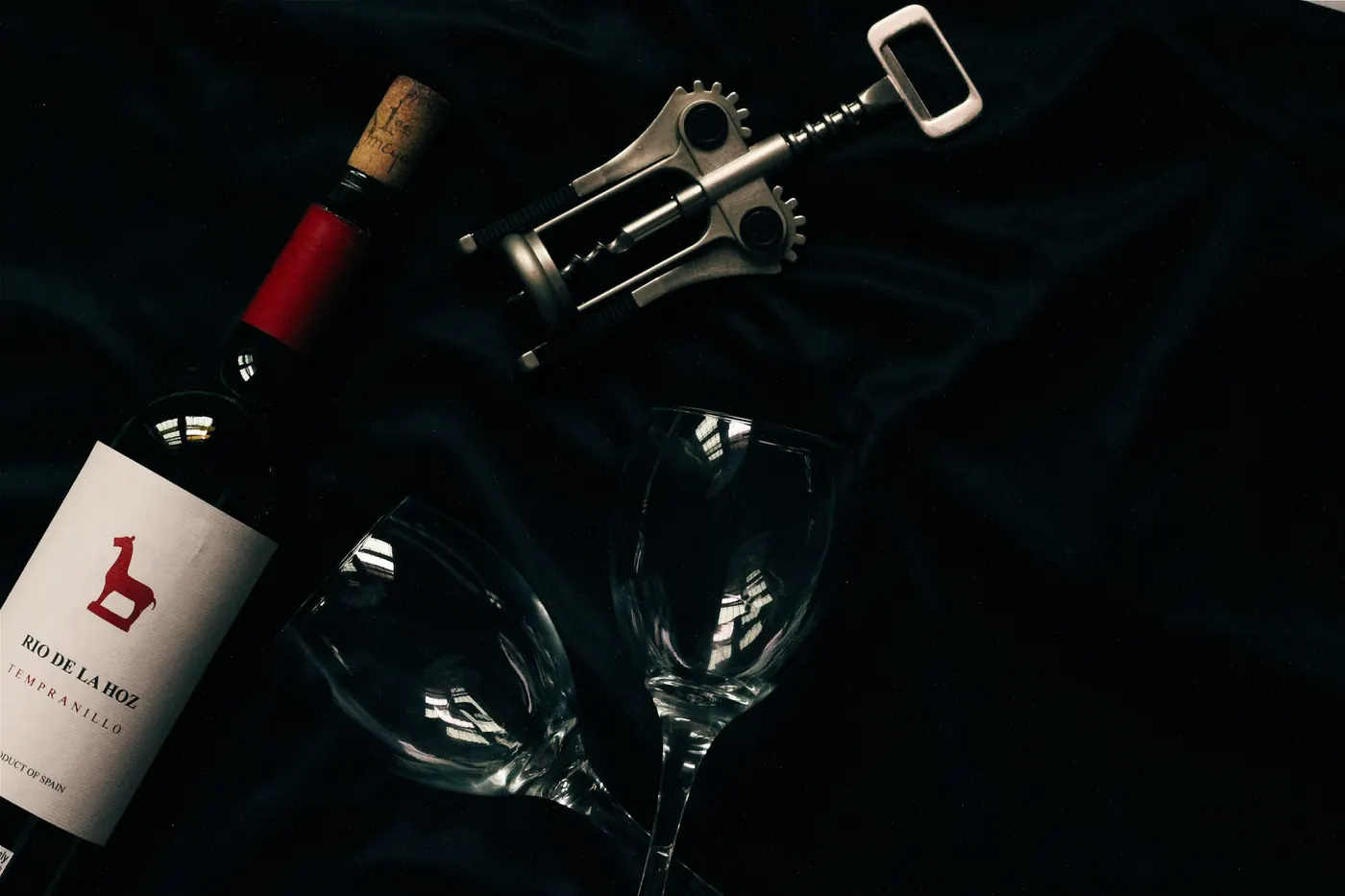
The winged corkscrew is the one many of us grew up with: turn the knob on top and the two arms rise as the spiral goes in, then press both arms down and the cork comes up. OXO’s steel version has an extended body for stability on the bottle and a non-slip turning knob, according to the listing.
The listing says it removes corks smoothly without pulling, and the removable foil cutter snaps into the base for storage. It is a sensible middle ground: easier than a waiter’s corkscrew for most people, smaller and simpler than a lever opener, and it does not need charging.
Why we like it
- Arms lift the cork, so there is no pulling
- Extended body steadies it on the bottle
- Non-slip turning knob
- Removable foil cutter stores in the base
Key specifications
| Opener | OXO Steel Winged, model 3113400 |
|---|---|
| Type | Winged corkscrew |
| Foil cutter | Removable, snaps into base |
| Power/charging | None (manual) |
| Best for | Occasional use, simple operation |
| Hand strength needed | Low to moderate |
| Warranty | Not stated |
Why we recommend it
It suits the occasional wine drinker who wants a familiar, no-fuss opener that fits in a utensil drawer.
Skip it if you open a lot of bottles; a lever opener is faster, and a waiter’s corkscrew is smaller.
Pros and cons
Pros
- Easy and familiar
- No pulling needed
- Foil cutter stores with it
Cons
- Bulkier than a waiter’s corkscrew
- Slower than a lever opener
6. Secura Rechargeable Electric Wine Opener – Press a Button
An electric opener does the whole job: you set it on the bottle and press a button, a motor drives the spiral in and draws the cork up, and a second press releases the cork. The Secura is rechargeable and sits on a charging base, and the listing says it works with most wine bottle sizes. A separate foil cutter is included.
For anyone with arthritis or weak hands, that button is the whole point. The listing gives a 100–240 V input range, which means it can travel, and a 12-month service promise. Secura also advises charging the opener every three months even when you are not using it, which is worth remembering if it lives in a cupboard between parties.
Why we like it
- Push-button operation
- Rechargeable, with a charging base
- Foil cutter included
- 100–240 V input, per the listing
Key specifications
| Opener | Secura electric, model SWO-3N |
|---|---|
| Type | Rechargeable electric |
| Foil cutter | Separate cutter included |
| Power/charging | Rechargeable; charging base; 100–240 V |
| Best for | Weak grip, arthritis |
| Hand strength needed | Very low |
| Warranty | 12 months (listing) |
Why we recommend it
It suits anyone for whom pulling a cork is hard or painful, and hosts who want every bottle opened the same way by whoever is helping.
Skip it if you dislike things that need charging; a flat battery means no wine until it charges, so keep a waiter’s corkscrew as backup.
Pros and cons
Pros
- Almost no effort
- Rechargeable with base
- Works on most bottles
Cons
- Needs charging, even in storage
- Bulkier than a manual corkscrew
7. Oster Cordless Electric Wine Opener – A Simple Electric Choice

Oster’s cordless opener is a straightforward push-button electric corkscrew. The listing says it opens up to 30 bottles on a single charge, has a soft-grip handle and comes with a recharging base and a foil cutter. It is UL approved for 110–120 V household current, and Oster gives a one-year limited warranty.
It works the same way as the Secura: set it on the bottle, press to remove the cork, press again to release it. Thirty bottles per charge means most households will only charge it occasionally, though as with any battery tool it is worth keeping it on the base.
Why we like it
- Up to 30 bottles per charge, per the listing
- Recharging base and foil cutter included
- Soft-grip handle
- One-year limited warranty
Key specifications
| Opener | Oster cordless, model FPSTBW8207 |
|---|---|
| Type | Rechargeable electric |
| Foil cutter | Separate cutter included |
| Power/charging | Rechargeable; base; up to 30 bottles per charge; 110–120 V |
| Best for | Weak grip on a smaller budget |
| Hand strength needed | Very low |
| Warranty | One-year limited |
Why we recommend it
It suits anyone who wants push-button opening from a familiar small-appliance brand without spending much.
Skip it if you travel abroad with it; the listing rates it for 110–120 V only, unlike the Secura.
Pros and cons
Pros
- Push-button, little effort
- Many bottles per charge
- One-year warranty
Cons
- 110–120 V only
- Needs a spot for the base
8. Coravin Timeless Three Plus Wine System – Pour Without Pulling the Cork
Coravin is not really a corkscrew. It is a different tool for a different need: pouring one glass from a bottle while leaving the rest sealed. A thin needle passes through the cork, the system pours the wine out and replaces it with argon gas from a capsule, and when the needle comes out the cork closes up behind it. The listing describes it as a way to enjoy wine without pulling the cork, preserving the rest with 100% argon.
Coravin says its Timeless needles are designed for natural or agglomerated cork, or for Coravin’s own Timeless screw cap; its needle page does not mention synthetic corks. This Three Plus kit includes two argon capsules, two screw caps for screw-top bottles, a needle-clearing tool and Coravin’s aerator, according to the listing. The capsules are a running cost.
It makes most sense for someone who keeps a few good bottles and wants a single glass on a weeknight, not for a party, where you will open the whole bottle anyway.
Why we like it
- Pours a glass without removing the cork
- Fills the bottle with argon as it pours, per Coravin
- Screw caps for screw-top bottles included
- Aerator and needle-cleaning tool included
Key specifications
| Opener | Coravin Timeless Three Plus |
|---|---|
| Type | Needle and argon wine system (cork stays in) |
| Foil cutter | Not stated |
| Power/charging | Argon gas capsules (2 included) |
| Best for | One glass at a time from good bottles |
| Hand strength needed | Low |
| Warranty | Not stated |
Why we recommend it
It suits the person who wants a single glass of a good red with dinner and would rather not open, and then have to finish or save, the whole bottle.
Skip it if you mostly open everyday bottles to share; a corkscrew is far cheaper, and the argon capsules cost money every time.
Pros and cons
Pros
- One glass at a time, cork stays in
- Argon replaces the wine poured
- Screw caps and aerator included
Cons
- Capsules are an ongoing cost
- Synthetic corks not mentioned by Coravin
- Far more expensive than a corkscrew
Waiter’s, lever, winged or electric: the four types
Waiter’s corkscrews fold into a pocket and are what servers and sommeliers use. A double-hinged lever (Pulltap’s, Truetap) splits the pull into two short strokes, which keeps the cork straight. They take a little practice and a firm grip.
Lever openers (Rabbit, OXO vertical) clamp onto the bottle and pull the cork with a handle. They are fast and easy and need little strength, but they are bulky.
Winged corkscrews (OXO winged) raise two arms as you twist; pressing the arms down lifts the cork. Familiar and simple, with moderate effort.
Electric openers (Secura, Oster) do everything at the press of a button. They need charging, and they are the clearest help for anyone with arthritis or weak hands.
Needle systems (Coravin) pour without removing the cork and are for preserving good bottles rather than opening everyday ones.
How to choose a wine opener for your kitchen
Be honest about your grip. If twisting a jar lid is hard, skip the waiter’s corkscrew and go straight to a lever or electric opener.
Count the bottles. A bottle on a weekend is a job for a waiter’s or winged corkscrew. A party with several bottles open at once is where a lever or electric opener earns its space.
Look at the spiral. A coated, open spiral (a “worm”) grips the cork without tearing it. Solid, drill-like screws tend to bore a hole and pull out the middle of the cork. Several picks here include a spare spiral or screw.
Check the foil cutter. A clean cut below the lip keeps foil out of the pour. Waiter’s corkscrews have a small knife; lever and electric openers usually come with a separate cutter that you squeeze and turn.
Think about storage. A waiter’s corkscrew fits in a drawer or a pocket. A lever opener or an electric opener with its charging base needs its own spot.
How we chose these eight openers
We started from what a restaurant expects of a wine opener: it removes the cork cleanly without breaking it, it is quick once learned and it survives daily use. We then narrowed the field to openers sold on Amazon in the United States by identifiable makers, checked that each was in stock when we wrote this, and took every specification from the maker’s own listing or, for Coravin, the maker’s needle page. We picked one or two of each type rather than a list of near-identical waiter’s corkscrews. The Laguiole en Aubrac sommelier corkscrews we considered were all low in stock when we checked, so this list has no premium waiter’s corkscrew. We have not used these products ourselves; where we describe how a type works, it is a general description of that design.

Wine opener questions, answered
What is the best kind of wine opener for home?
A double-hinged waiter’s corkscrew for most people: small, cheap and quick once learned. If you have a weak grip, a lever or rechargeable electric opener is easier.
How do you use a waiter’s corkscrew without breaking the cork?
Cut the foil below the lip. Set the point of the spiral just off-center so the spiral itself runs down the middle, and turn until one curl is left showing. Brace the first hinge on the lip, lift halfway, then move to the second hinge and lift the rest of the way, keeping the pull straight.
Are electric wine openers worth it?
For anyone with arthritis or weak hands, yes. For everyone else, they are a convenience: quick and consistent, but they need charging, so keep a manual corkscrew as backup.
What do you do with a broken cork?
Try to remove the rest by driving the spiral in at an angle and lifting gently. If it crumbles into the bottle, pour the wine through a fine strainer or a coffee filter into a decanter or pitcher.
Is a Coravin a wine opener?
Not in the usual sense. It pours wine through a needle while the cork stays in, which suits people who want one glass at a time. To open the whole bottle, you still need a corkscrew.
Our pick for opening a bottle tonight
Buy the Pulltap’s Classic 500 if you want the tool servers use: small, quick and with nothing to charge. Choose the Truetap if you want the same design for less or a spare for the picnic bag, the Rabbit lever if you open several bottles at a time, and the Secura electric if pulling a cork is hard on your hands. Keep the Coravin in mind only if you want one glass at a time from a good bottle.
Once the bottle is open, pour moderately and keep water and food on the table. If you are setting up a home bar beyond wine, see our guides to the best cocktail shaker, margarita glasses and a punch bowl for sangria at a party.
More wine guides: wine glasses, wine aerators, wine decanters, wine chillers, bar carts.
Rather press a button? See our guide to the best electric wine openers.
Saving the rest of the bottle? See our guide to the best wine stoppers and pourers.
On a budget? See our guide to the best value wine openers.
Prefer a classic waiter’s corkscrew? See our guide to the best wine keys.
Related guide: Manual vs electric wine opener.
And if you would rather someone else did the cooking tonight, see the menu or call to order.