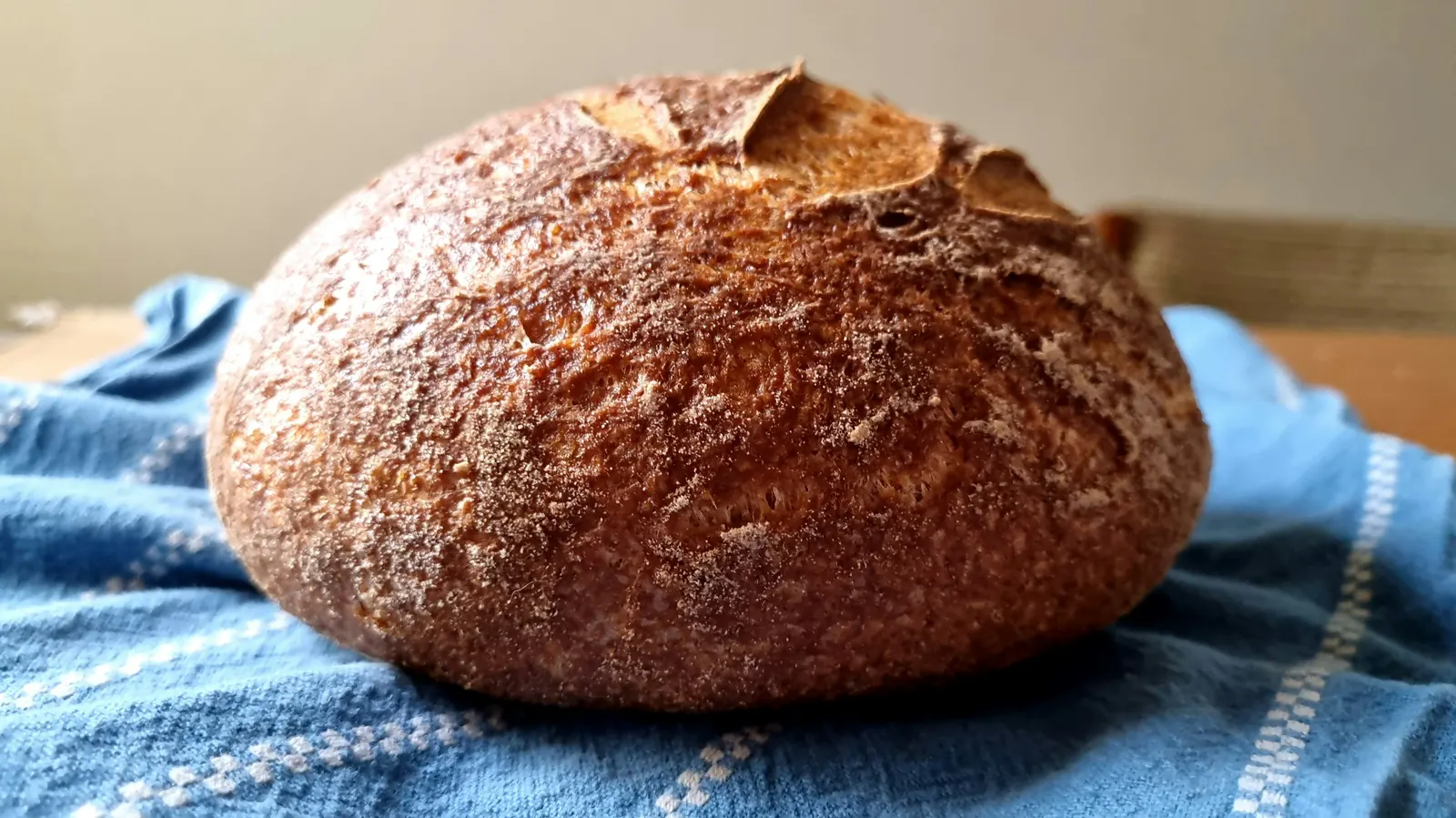
A bread box is a nice thing to have, but plenty of kitchens do not have the counter space for one, and plenty of cooks would rather not buy another large object for one loaf a week. The good news is that a bread box is not the only way to keep bread fresh. A cotton towel, a beeswax wrap, a freezer bag, a reusable silicone bag or a lidded loaf keeper can each do part of its job, and the freezer does one part of it better than any box.
We go through a lot of bread at our restaurant, from bolillos for tortas to pan dulce with morning coffee, and the problem of bread going hard or moldy before it is eaten is a familiar one. This guide explains what actually keeps bread fresh, using guidance from King Arthur Baking and the University of Wyoming Extension, and then picks five bread box alternatives that genuinely work, with what each does well and where it falls short.
Julia’s earns a commission on purchases made through links on this page, at no cost to you. Recommendations are based on what a restaurant kitchen looks for, product specifications and verified buyer reports.
Why people look for a bread box alternative
Most people looking for a substitute have one of three reasons. The first is space: a bread box can take up as much counter as a stand mixer. The second is that a box did not solve their problem; the bread still went stale in a few days or grew mold in a humid kitchen. The third is that they bake their own bread and want something that suits a crusty boule rather than a sliced sandwich loaf.
Each of those points to a different answer, which is why there is no single best substitute. The right one depends on what kind of bread you buy and how fast you eat it.
Quick verdict: the best bread box alternative
For most homes, the best bread box alternative is a two-part routine: keep what you will eat in the next day or two wrapped on the counter, and freeze the rest in a freezer bag, sliced or in single-day portions. King Arthur Baking says bread kept longer than a few days is best in the freezer, and both King Arthur and the University of Wyoming Extension say not to refrigerate it. For the counter part, use a cotton towel or beeswax wrap for crusty bread, and a sealed bag or loaf keeper for soft sandwich bread.
What keeps bread fresh, and what a substitute has to copy
Bread goes off in two ways. It stales, which means it dries and firms, and it molds, which needs moisture and warmth. A good storage method slows the first without encouraging the second.
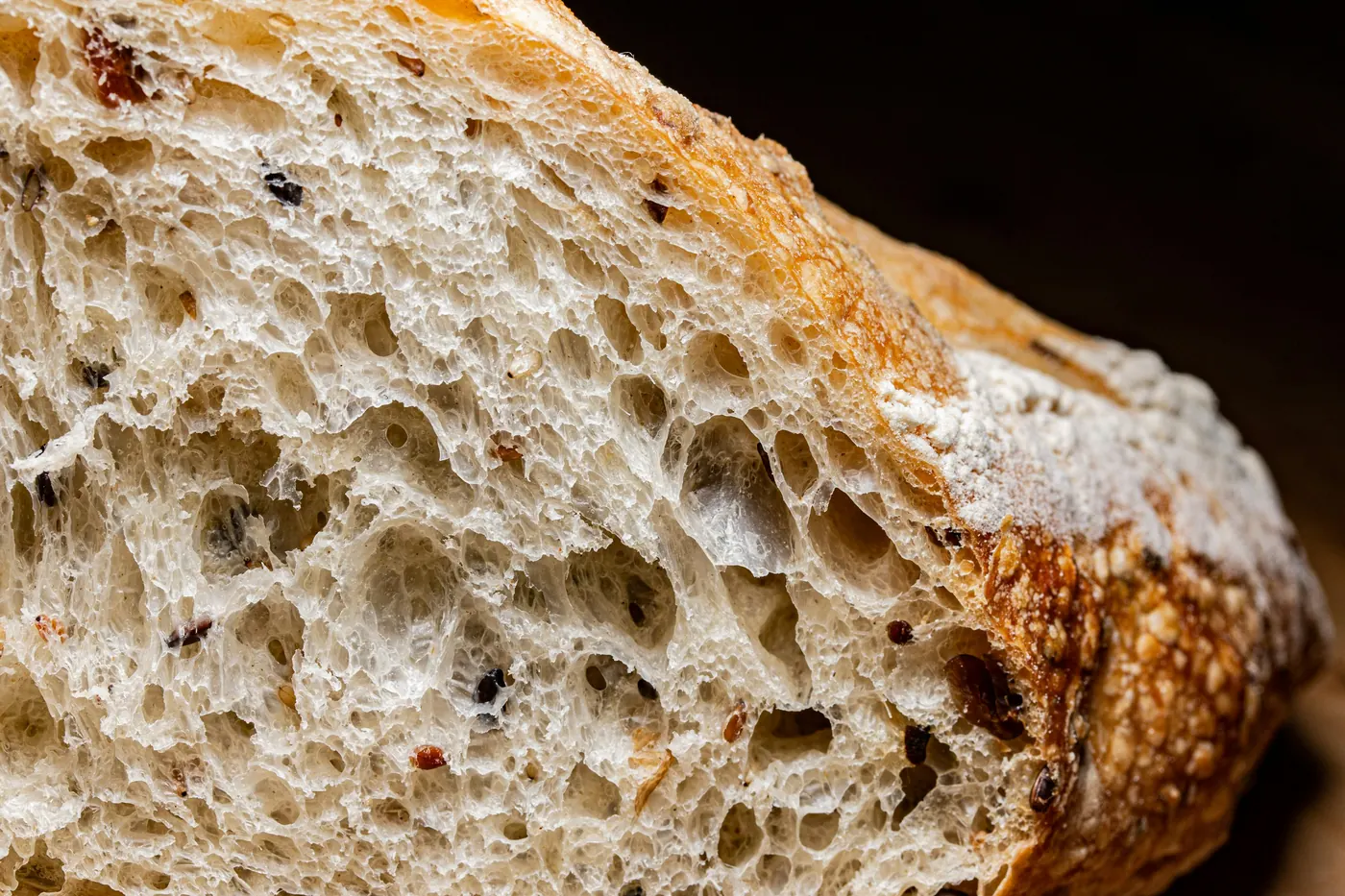
King Arthur Baking’s PJ Hamel explains the trade-off. Airtight plastic or foil traps moisture, so “wrapping in plastic (or foil) rather than cloth keeps bread soft longer.” Cloth, being breathable, “retains less moisture,” so the crust hardens rather than softens. She sums it up: “There’s simply no way bread will retain both a crispy crust and soft interior for longer than a day.” For a large crusty loaf, King Arthur says it can be stored “unwrapped, cut side down on the counter” for a day or so.
The University of Wyoming Extension says the same in plainer terms. Vicki Hayman, its nutrition and food safety educator, writes: “To retain the freshness of a crusty loaf of bread, store it unwrapped at room temperature,” and “to maintain the freshness of soft-crust loaves, store them in airtight plastic bags.” She suggests eating bread at room temperature within three days.
On the fridge, both sources agree. King Arthur says, “Don’t do it,” unless you will toast or reheat the bread, because chilling encourages moisture to move to the surface. The Extension writes, “Never store your bread in the refrigerator!” and says it “speeds up the staling process faster than anything else.” The freezer is the opposite: King Arthur says freezing stops the starch from releasing its water, and the Extension says bread keeps in the freezer for one to three months, with flavor fading the longer it is stored.
A bread box sits between those two methods: a dark, enclosed space at room temperature, holding some moisture but not sealed. King Arthur lists a bread box, cupboard, drawer or dark pantry as good spots, and says to keep bread “dark and away from sunlight.” Any substitute should copy that: room temperature, out of the sun, and the right balance of air for the bread you have.
Five substitutes side by side
One pick for each kind of substitute, with what each maker or listing states. All five are reviewed in full below.
| Alternative | Best for | How well it keeps bread | Main limit | Buy on Amazon |
|---|---|---|---|---|

Ziploc Gallon Freezer Bags, 28 CountBest overall alternative
|
Bread you will not eat within a few days | Months in the freezer | Single-use plastic; bread must be thawed | View on Amazon |

Bee’s Wrap Beeswax Bread Wrap, 17 x 23 inBest for crusty loaves
|
Sourdough and artisan loaves | Breathable cover for a few days | Hand wash only; contains beeswax and tree resin | View on Amazon |

Nordic Ware Loaf Cake KeeperClosest to a bread box
|
Soft loaves, quick breads, pan dulce | Covered and protected on the counter | Holds one loaf up to about 11 in long | View on Amazon |

Stasher Stand-Up Mega Silicone Bags, 104 oz, 2-PackBest reusable bag
|
Rolls, bagels, tortillas, sliced bread | Airtight on the counter or in the freezer | Softens crusts; too small for a long loaf | View on Amazon |

Now Designs Cotton Floursack Towels, Set of 3Simplest alternative
|
Covering a crusty loaf for a day | Breathable; crust stays firm | Bread dries out sooner than when sealed | View on Amazon |
Already in your kitchen
Before buying anything, try what you have. A large crusty loaf can sit cut side down on a cutting board for a day, which King Arthur describes. A clean kitchen towel wrapped around it keeps off dust and slows drying a little. A paper bag, which the University of Wyoming Extension mentions as a porous wrap, does much the same. A sandwich loaf can simply stay in the plastic bag it came in, closed tightly, which matches the Extension’s advice for soft bread. A cupboard or deep drawer away from the stove gives the dark, room-temperature spot a bread box would.
For anything you will not finish in two or three days, the freezer does more than any box can. That is why our top pick is the plainest product on this page.
Our picks for a bread box alternative
None of these repeats a product from our best bread box or best bread storage bag guides. If you want a fabric bag made for bread, that second guide covers linen, cotton and beeswax-lined bags in depth.
1. Ziploc Gallon Freezer Bags, Stand-Up Bottom, 28 Count – Freeze What You Will Not Eat This Week
Twenty-eight gallon-size freezer bags with a stand-up bottom that stays open while you fill it. Ziploc says the bags help prevent freezer burn for up to 12 weeks, a figure it tested on ground beef, so read it as a guide rather than a promise for bread.
This is the most effective bread box alternative because it does what a bread box cannot: it stops staling for weeks. King Arthur Baking’s advice is to wrap bread in single-day portions and freeze it, and to keep it in the freezer if you are storing it longer than a few days. The University of Wyoming Extension adds that bread should cool completely before freezing and keeps one to three months, with flavor fading over time.
In practice, slice a loaf before freezing so you can take out a few pieces at a time and toast them straight from frozen. As general kitchen sense, bolillos and teleras can be frozen whole and warmed in the oven to bring the crust back. Squeeze out as much air as you can before sealing. A gallon bag holds a sliced sandwich loaf, a few rolls, or half a boule.
Ziploc’s gallon freezer bags also appear, in a different pack, in our freezer bags guide. We include them here because freezing is the best-supported alternative to a bread box, and a gallon bag from a major maker, sold by Amazon.com, is the simplest way to do it.
Why we like it
- The freezer stops staling for weeks
- Stand-up bottom for easy filling
- Gallon size holds a sliced loaf
- Sold by Amazon.com
Key specifications
| Model | 351126 |
|---|---|
| Type | Gallon freezer bag, zipper seal |
| Count | 28 bags |
| Where it works | Freezer |
| Reusable | Mainly single use |
| Best for | Sliced loaves, rolls, half a boule |
Why we recommend it
It suits anyone who buys or bakes more bread than they eat in two or three days.
Skip it if you want to avoid single-use plastic; the Stasher bag below also goes in the freezer.
Pros and cons
Pros
- Most effective way to keep bread long term
- Takes no counter space
- Easy to portion
Cons
- Single-use plastic
- Bread needs thawing or toasting
- Crusty bread loses some crispness
2. Bee’s Wrap Beeswax Bread Wrap, 17 x 23 in – A Breathable Cover for Crusty Loaves
One large 17 x 23 inch sheet of cotton coated with beeswax, organic plant oils and tree resin, made in the USA by Bee’s Wrap and sold by the maker. Bee’s Wrap says it lets air through while protecting flavor and texture, and suggests it for sourdough, baguettes and homemade loaves. It is hand washed, reused, and can be composted when it wears out.
A beeswax wrap sits between a towel and a plastic bag. It clings around the loaf and covers the cut face better than cloth, but it is not airtight. That suits a crusty loaf you will eat over two or three days, which is exactly what most bread boxes are bought for. King Arthur’s PJ Hamel mentions a reusable wrap as one way to wrap bread at room temperature.
Two cautions. The wrap contains beeswax and tree resin, so skip it if anyone in your home is sensitive to those. As general kitchen sense, keep it away from heat and do not wrap a still-warm loaf. Our beeswax wrap vs plastic wrap guide covers how the two compare for other foods.
Why we like it
- Big enough for a full loaf
- Breathable, per the maker
- Made in the USA
- Sold by Bee’s Wrap
Key specifications
| Model | 15317231 (XL Bread Wrap, Honeycomb) |
|---|---|
| Type | Beeswax-coated cotton wrap |
| Size | 17 x 23 in |
| Where it works | Counter |
| Reusable | Yes; hand wash |
| Contains | Beeswax, organic plant oils, tree resin |
Why we recommend it
It suits someone who bakes or buys crusty bread and wants a plastic-free cover that keeps the crust firm.
Skip it for soft sandwich bread; a sealed bag or the Nordic Ware keeper keeps it softer.
Pros and cons
Pros
- Covers the cut face snugly
- Reusable and compostable
- Folds flat in a drawer
Cons
- Hand wash only
- Not for anyone sensitive to beeswax or resin
- Will not keep bread soft for long
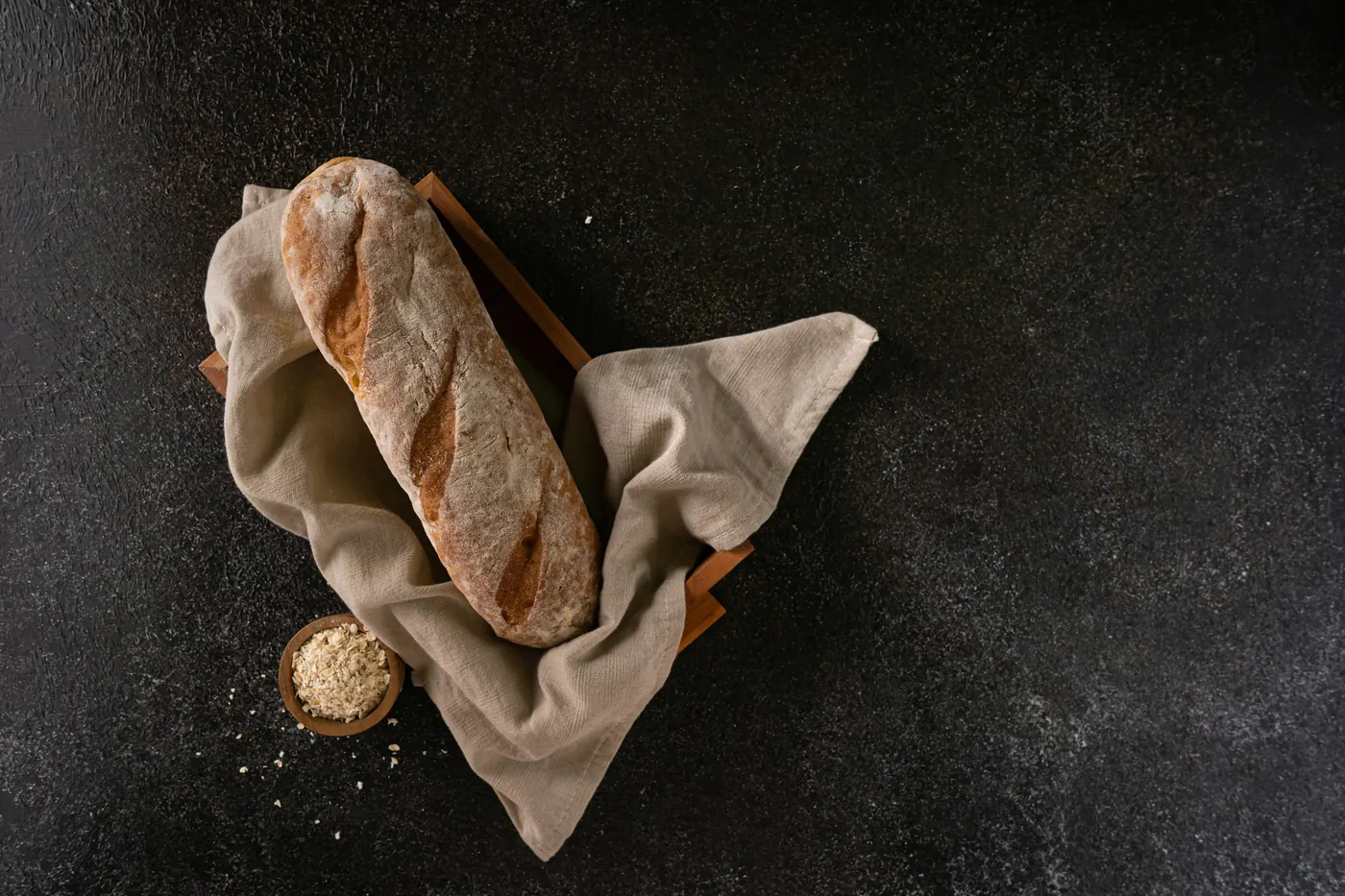
3. Nordic Ware Loaf Cake Keeper – A Covered Base for One Loaf
A plastic base with a snug cover, made for a single loaf. Nordic Ware says the base measures 11.1 x 6.5 inches and the keeper is 12.8 x 7.3 x 4.6 inches with the lid on. It is made in America from BPA- and melamine-free plastic and carries a 5-year limited warranty. Nordic Ware says it keeps loaves protected from dust, spills and handling, and that you can serve from it and carry it.
This is the nearest thing here to a bread box, at a fraction of the size. It suits a soft sandwich loaf, banana bread, a pound cake or a few conchas, and it slides into a cupboard when you need the counter. The cover keeps bread from drying as fast as it would in the open.
Its limits are size and shape. A long baguette or a tall round boule will not fit, so measure your usual loaf against the 11.1-inch base. Nordic Ware also warns that cutting on the base with a metal knife will scratch it, so slice on a board.
Why we like it
- Small footprint for one loaf
- Made in America (maker)
- BPA- and melamine-free plastic
- 5-year limited warranty
Key specifications
| Model | 50050 |
|---|---|
| Type | Lidded loaf keeper |
| Size | Base 11.1 x 6.5 in; 12.8 x 7.3 x 4.6 in with lid |
| Where it works | Counter or cupboard |
| Reusable | Yes |
| Warranty | 5-year limited |
Why we recommend it
It suits someone who likes the idea of a bread box but only ever has one soft loaf or sweet bread at a time.
Skip it if your bread is long or tall; it is sized for a standard loaf.
Pros and cons
Pros
- Fits in a cupboard
- Also works for quick breads and cakes
- Sold by Amazon.com
Cons
- One loaf only
- Will not fit a baguette or tall boule
- Base scratches if you cut on it
4. Stasher Stand-Up Mega Silicone Bags, 104 oz, 2-Pack – A Reusable Bag for the Counter or Freezer
Stasher’s largest stand-up bag, holding 104 ounces, sold here as a pack of two clear bags, in platinum food-grade silicone with a Pinch-Loc seal. Stasher says it is free from lead, latex, phthalates, BPA and BPS, safe in the dishwasher, microwave and oven up to 425°F, and covered by a lifetime warranty against damage in normal use.
A sealed silicone bag treats bread the way a plastic bag does: it holds moisture in, which the University of Wyoming Extension recommends for soft-crust bread. That makes it good for bagels, rolls, sandwich slices or a stack of flour tortillas on the counter, and it also goes in the freezer, so it can replace the Ziploc bags if you would rather not throw bags away.
It will soften a crusty loaf, and a full-length loaf will not fit; half a sandwich loaf or a few rolls is the practical load. Stasher says to avoid turning the bag inside out when washing, as it can tear.
Why we like it
- Reusable for years, with a lifetime warranty
- Counter and freezer
- Stands up for easy filling
- Sold by Amazon.com
Key specifications
| Model | STSUL01 |
|---|---|
| Type | Stand-up silicone bag, Pinch-Loc seal |
| Capacity | 104 oz each; 2 bags |
| Where it works | Counter or freezer |
| Reusable | Yes; dishwasher safe |
| Warranty | Lifetime (maker) |
Why we recommend it
It suits a household that eats rolls, bagels or sliced bread and wants one reusable bag for counter and freezer.
Skip it for a whole crusty boule; use the beeswax wrap instead.
Pros and cons
Pros
- Keeps soft bread soft
- Replaces single-use bags
- Dishwasher safe
Cons
- Softens crusts
- Too small for a full loaf
- Needs to dry fully between uses
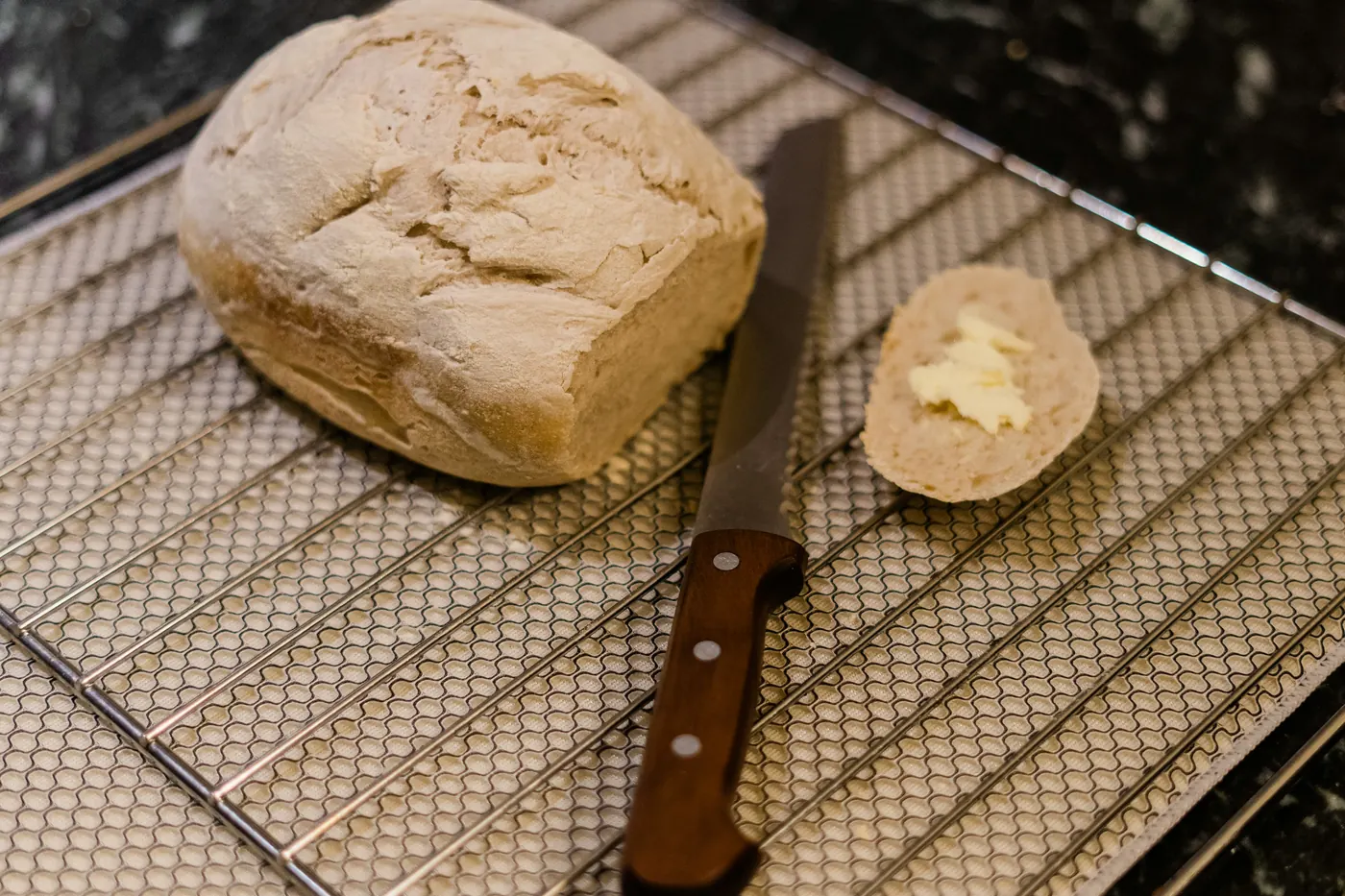
5. Now Designs Cotton Floursack Towels, Set of 3 – The Simplest Cover for a Loaf
Three 20 x 30 inch floursack towels in 100% cotton, printed with a Mediterranean pattern of olives, tomatoes and lemons. Now Designs describes them as lightweight, lint-free and tightly woven from thin threads, and they machine wash warm and tumble dry.
A cotton towel is the oldest bread box alternative there is. Wrapped loosely around a crusty loaf, or laid over a basket of bolillos, it keeps off dust and slows drying while letting the crust stay firm. The University of Wyoming Extension mentions a dish towel as a porous wrap that “won’t cause as much moisture to be trapped.” King Arthur says cloth retains less moisture than plastic, so expect the inside to dry sooner. Use a towel for bread you will eat within a day or two.
The towels earn their place in the kitchen for other jobs too: covering rising dough, drying glasses and lining a tortilla basket. As general kitchen sense, use a freshly washed towel for bread and keep it separate from the one you dry your hands on. Our dish towels guide has more options.
Why we like it
- 100% cotton, lint-free (maker)
- Large 20 x 30 in size
- Machine wash and tumble dry
- Doubles as a dough cover
Key specifications
| Model | 2221025 |
|---|---|
| Type | Cotton floursack towel |
| Size | 20 x 30 in |
| Where it works | Counter |
| Reusable | Yes; machine wash warm, no bleach |
| Count | 3 towels |
Why we recommend it
It suits someone who buys fresh crusty bread often and eats it within a day or two.
Skip it if bread sits for days in your kitchen; freeze it instead.
Pros and cons
Pros
- Breathable, so crusts stay firm
- Useful for many other kitchen jobs
- Easy to wash
Cons
- Bread dries out faster than when sealed
- Does not protect against pests
- Print may not suit every kitchen
How to keep bread fresh without a bread box
Put the five tools together and the routine is simple:
- Day one: leave a crusty loaf cut side down on a board, or loosely in a towel or beeswax wrap. Keep soft sandwich bread in a sealed bag or a keeper.
- Days two and three: keep bread out of the sun and away from the stove. King Arthur says room temperature of about 60°F to 80°F is fine, and warmer than that may lead to mold, especially when it is humid.
- Anything beyond that: slice it, bag it and freeze it once it has cooled completely. Take out what you need and toast it or warm it in the oven.
- Never the fridge, unless your kitchen is so hot and humid that bread molds first. King Arthur allows it only then, and only if you toast or reheat the bread.
The University of Wyoming Extension notes that homemade bread without preservatives molds faster than store-bought bread, so if you bake, freeze sooner rather than later.
When it’s time to buy a real bread box
A bread box makes sense if you have the counter space, keep more than one loaf at a time, and want bread within reach without unwrapping it. It also keeps bread out of sight and away from light, which is what King Arthur suggests. Our best bread box guide covers steel, ceramic, wood and plastic boxes and what each does well.
We looked for a ceramic bread crock as a sixth alternative, since unglazed clay is a traditional way to store bread. The ceramic options we found were either low in stock or already in our bread box guide, so we did not add one here. If you choose any glazed ceramic container for food, look for a maker’s lead-free statement.
Keeping bread without a bread box: common questions
What can I use instead of a bread box?
A freezer bag for bread you will not eat within a few days, plus a towel, beeswax wrap, sealed bag or lidded loaf keeper for what you will eat soon. Which one suits you depends on whether your bread is crusty or soft.
Is it better to keep bread in the fridge or on the counter?
The counter for a few days, then the freezer. King Arthur Baking and the University of Wyoming Extension both advise against the fridge because it speeds staling.
How do you keep crusty bread fresh?
Leave it cut side down on a board for the first day, then wrap it loosely in a towel or beeswax wrap. Freeze what you will not eat within two or three days and crisp it in the oven.
Does a plastic bag keep bread fresher than a bread box?
A sealed bag keeps soft bread softer, according to the University of Wyoming Extension and King Arthur, but it softens crusty bread and can encourage mold in a warm kitchen. A bread box is in between.
How long does bread last in the freezer?
The University of Wyoming Extension says one to three months, with flavor fading the longer it is stored. Let it cool completely before freezing.
Can I store tortillas or pan dulce the same way?
As general kitchen sense, pan dulce behaves like soft bread, so a keeper or sealed bag suits it for a day or two, and the freezer handles anything longer. Keep flour tortillas sealed so they do not dry out, and freeze them with sheets of parchment between them if you have a big stack.
Our last word on storing bread
Skip the bread box if space is tight: keep today’s bread wrapped on the counter and freeze the rest. A beeswax wrap or towel suits crusty bread, and a sealed silicone bag or Nordic Ware’s keeper suits soft bread. For more ways to store and bake bread, see our bread storage bags, freezer bags and reusable freezer bags guides, and our cake carrier picks for sweet breads. If you would rather have your bolillos baked for you, call Julia’s at (346) 546-8283.