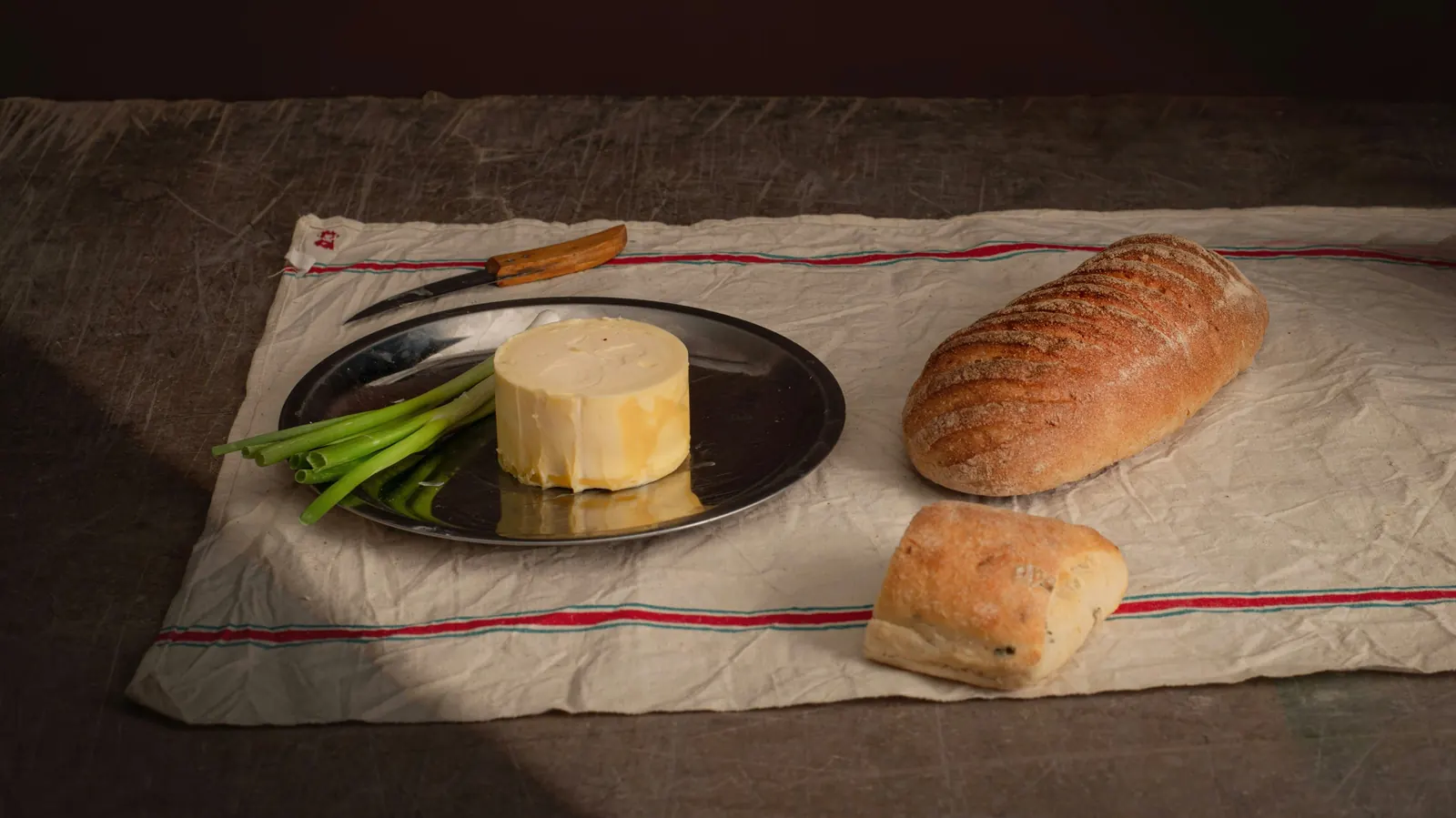
Beeswax wrap and plastic wrap both cover a bowl of salsa or half an onion, but they are not interchangeable. Beeswax wrap is a sheet coated in beeswax, plant oils and tree resin that you press around food or a bowl, then wash and use again. Plastic wrap is a thin film that clings, seals and gets thrown away. One can go in the microwave under the right conditions; the other must stay away from heat entirely.
This guide compares the two on what each can wrap, heat, the seal, washing, lifespan and waste, then says which to keep in the drawer and names one pick for each side. Uses and limits come from the makers and from the University of California’s Master Food Preservers, and the food-contact points come from Germany’s Federal Institute for Risk Assessment (BfR).
Julia’s earns a commission on purchases made through links on this page, at no cost to you. Recommendations are based on what a restaurant kitchen looks for, product specifications and verified buyer reports.
Quick verdict: beeswax wrap or plastic wrap?
Most kitchens need both, for different jobs. Use beeswax wrap for cut fruit and vegetables, bread, cheese and covering bowls of cool food: it is reusable for up to about a year with care, according to UC Master Food Preservers. Keep plastic wrap for raw meat and fish, for anything hot, and for reheating in the microwave, because beeswax wraps are not recommended for raw meat or hot items and melt with heat. If you only want one, plastic wrap covers more jobs; beeswax wrap covers the everyday ones with less waste.
The table sums up the differences. The sections after it explain each one.
Beeswax wrap vs plastic wrap, side by side
| Beeswax wrap | Plastic wrap | |
|---|---|---|
| Raw meat and fish | No (UC ANR; BfR) | Yes; discard after use |
| Hot food | No; heat melts the wax (UC ANR) | Cover a container, not touching food (Reynolds) |
| Microwave | No | Reheating only, vented, 3 minutes max (Reynolds) |
| Oven | No | Not recommended (Reynolds) |
| Seal | Conforms to bowls and food; breathable (UC ANR) | Clings tight to bowls and food |
| Washing | Cool water, mild soap, air dry (UC ANR) | Single use |
| Lifespan | Up to about a year with care (UC ANR) | One use |
| Best for | Produce, bread, cheese, bowls of cool food | Raw meat, hot dishes, microwave reheating, freezer wrapping |
What each can wrap
This is the first thing to know, because it decides most of the choice. The University of California’s San Joaquin Master Food Preservers say beeswax wraps are not recommended for use with raw meat or hot items. Germany’s Federal Institute for Risk Assessment (BfR) goes further on hygiene: reusable cloths should especially not touch raw food from animals, because pathogens can be passed to other foods if the cloth has not been cleaned properly. A beeswax wrap cannot be scrubbed in hot water, so raw meat, poultry and fish stay in plastic or a sealed container.
Beeswax wraps shine with produce. The BfR says cloths whose wax contains extra substances are suitable for fruit and vegetables. That covers half an avocado, a cut onion, a lime, a bunch of cilantro or a bowl of pico de gallo that has cooled. Bee’s Wrap suggests its small size as a snack bag, the medium for a sandwich or cheese, and the large as a produce bag or bowl cover.
Fatty foods are the gray area. The BfR says cloths with additional substances should not be used for fatty foods, because wax can transfer to foods such as pastries, sausage and cheese, and it says relevant amounts of jojoba oil can move from the cloth into fatty foods. It does not recommend jojoba oil in beeswax cloths. Bee’s Wrap lists its wraps as beeswax, organic plant oils and tree resin, and suggests the medium for cheese. If you want to follow the BfR’s caution, keep fatty cheeses and chorizo in plastic wrap or a container.
Heat: plastic wrap handles it, beeswax does not
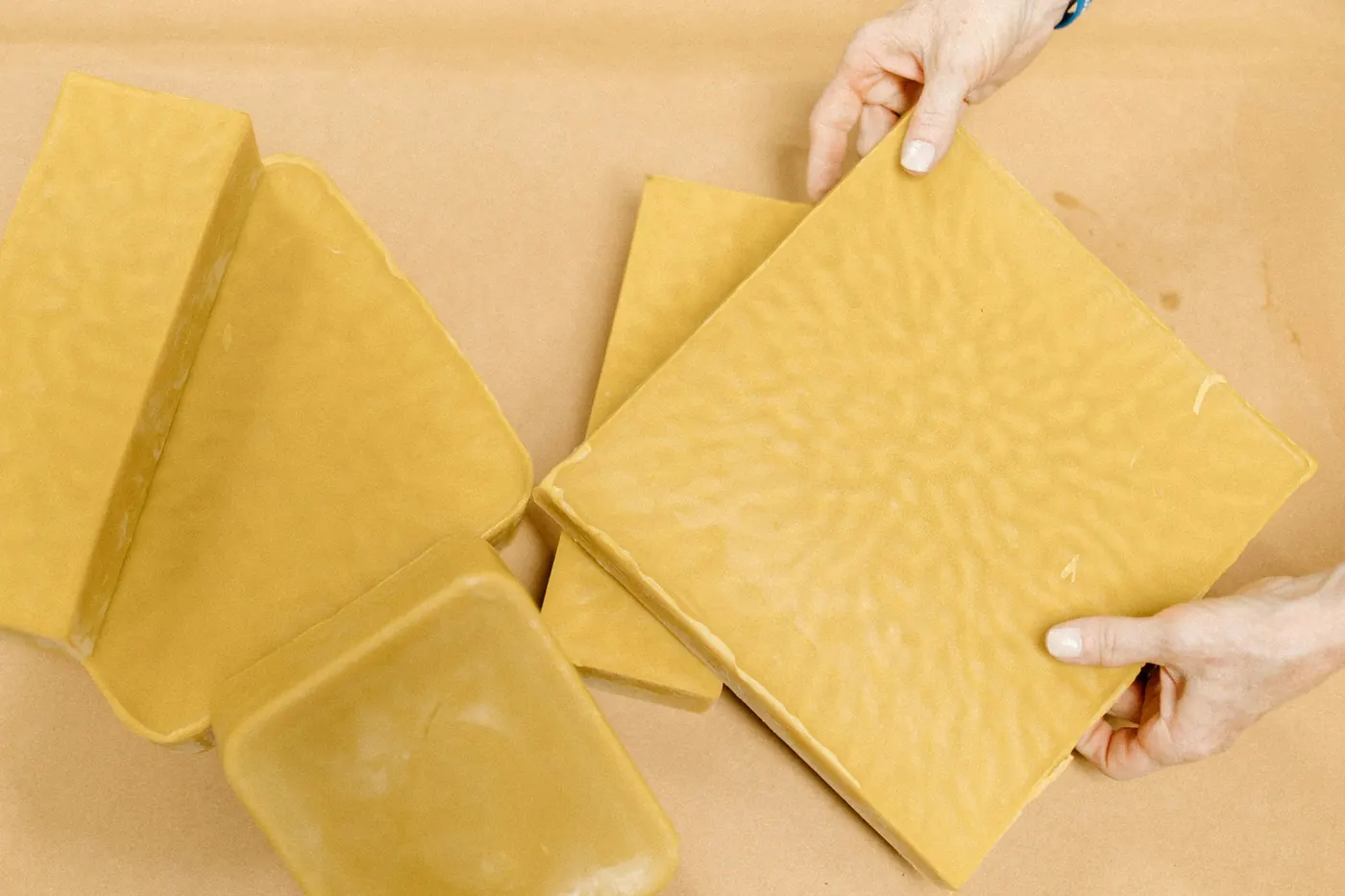
Beeswax wraps and heat do not mix. UC Master Food Preservers say the heat of hot items can melt the wax coating, and that wraps should be kept away from heat sources. The BfR says beeswax cloths cannot be cleaned at high temperatures because the coating would melt. That rules out the microwave, the oven, the dishwasher and covering a pot of beans straight off the stove.
Plastic wrap can take some heat, within the maker’s rules. Reynolds says its Quick Cut plastic wrap has been tested to meet FDA standards for microwave reheating. Its directions: cover a microwave-safe container, leave at least one inch between the wrap and the food, turn back one corner to vent steam, and reheat for no longer than three minutes. Reynolds warns that overheating foods high in fat or sugar can melt the wrap, that the wrap should not be used for cooking, and that it is not recommended in the oven or toaster oven.
The FDA’s general advice on microwave ovens is to use cookware made for microwave use and to follow your oven’s instructions. In practice: reheat in a microwave-safe bowl, cover it with plastic wrap that does not touch the food, or cover it with a plate instead.
The seal: breathable versus airtight
The two wraps hold differently. Plastic wrap clings to glass, ceramic and itself, so a tight layer over a bowl blocks air. UC Master Food Preservers describe beeswax wraps as conforming to containers as a flexible alternative to plastic wrap. As general kitchen sense, pressing the wrap with your hands for a few seconds helps it hold its shape around a bowl.
They also describe beeswax wraps as breathable, which avoids condensation and can help keep some foods fresh. That suits bread, whole cheeses and produce that sweats in plastic. It is a drawback for anything that must be kept airtight. As general kitchen sense, not a maker rule: liquids, cut melon and anything wet do better in a lidded container than under either wrap, and plastic wrap pressed directly onto guacamole is still the better way to slow browning.
Washing and how long each lasts
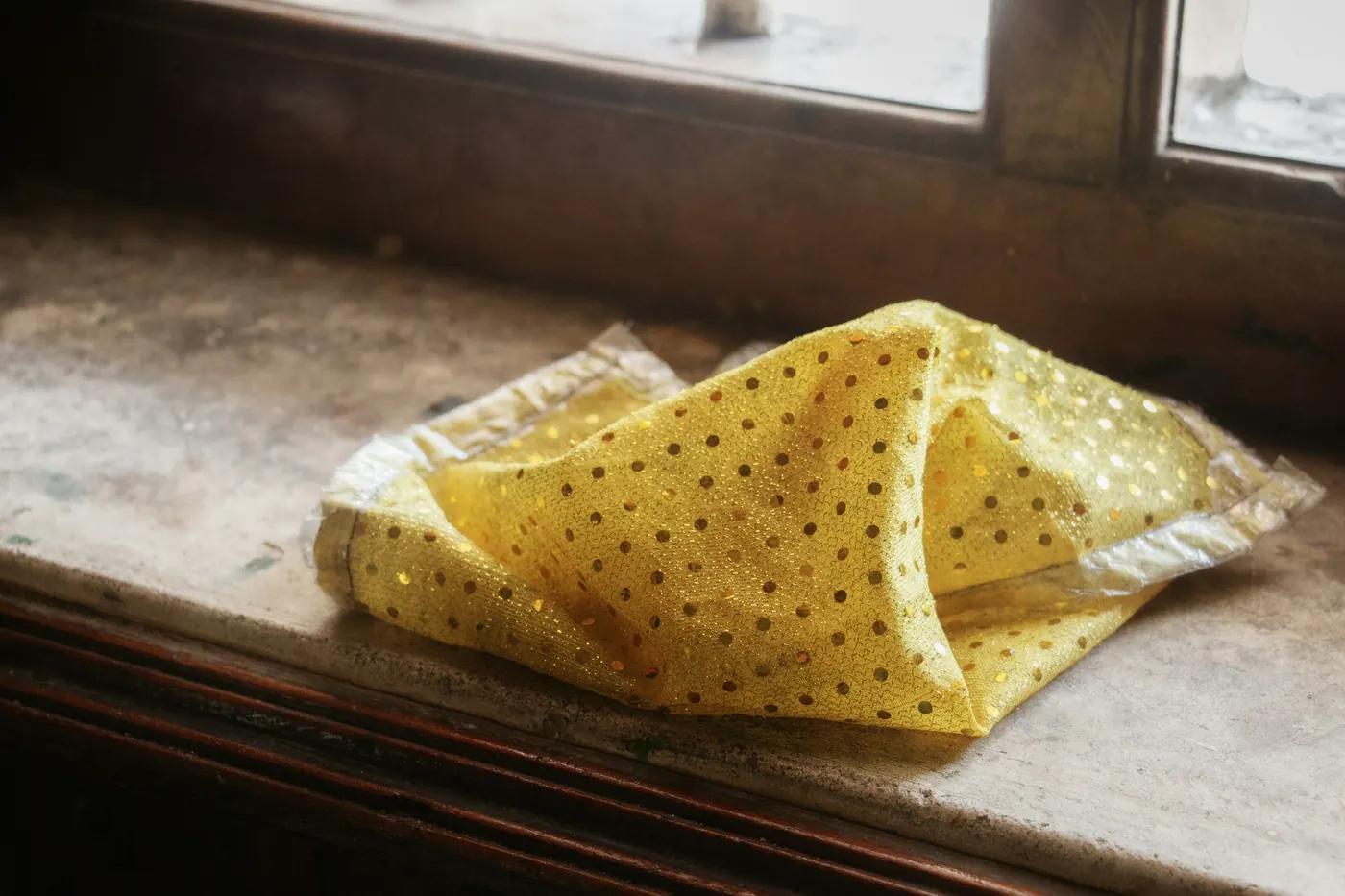
Beeswax wraps need gentle care. UC Master Food Preservers say to wash them in cold water with mild soap and air-dry them, and to avoid hot water, which can melt the wax. Bee’s Wrap says its wraps can be hand washed and used repeatedly. With proper care, UC Master Food Preservers say wraps can be used for up to a year, but the wax wears off over time, so they need replacing or re-waxing.
Plastic wrap needs no care because it is not kept. That is its strength in a busy kitchen and its cost over a year: you keep buying rolls.
Waste
The reason most people try beeswax wrap is waste. UC Master Food Preservers point out that plastic wrap is typically non-biodegradable and can persist in the environment for a long time, while beeswax wraps can break down naturally. Bee’s Wrap says its wraps can be composted when finished. The trade-off is that a wrap only cuts waste if you actually use it in place of plastic for the jobs it can do.
Ingredients and allergies
Bee’s Wrap lists its wraps as made from beeswax, organic plant oils and natural tree resin. Some wraps use jojoba oil, which the BfR discusses above. The Bee’s Wrap listing we read gives no allergy guidance, so we make no allergy claim either way. If anyone in your home is sensitive to bee products, plant oils or tree resins, ask the maker what its wraps contain before using one on food. UC Master Food Preservers also advise checking with the manufacturer that the materials meet food-contact safety standards.
For plastic wrap, Reynolds says its Quick Cut wrap is BPA free. We make no health claim for either material.
Choose beeswax wrap if… / Choose plastic wrap if…
Choose beeswax wrap if…
- You wrap cut produce, bread and cheese most days.
- You cover bowls of cool food for the refrigerator.
- You want to cut down on single-use plastic and will wash wraps by hand.
- Breathable storage suits what you keep.
Choose plastic wrap if…
- You wrap raw meat, poultry or fish.
- You cover hot dishes or reheat in the microwave.
- You need an airtight seal pressed onto food, as with guacamole.
- You wrap food for the freezer.
Our pick on each side of the beeswax wrap vs plastic wrap question
One pick per side. Both were in stock when we checked, and neither exact listing appears on our other pages. The Bee’s Wrap set is another print of a set we cover in our best beeswax wraps guide; we chose it because it has the same three sizes and it is the maker whose size guidance we quote above.
1. Bee’s Wrap Beeswax Food Wraps, 3-Pack Assorted, Bees and Bears – Small, Medium and Large

Three Bee’s Wrap sheets in small, medium and large, in a blue bees-and-bears print. The listing says they are made from beeswax, organic plant oils and natural tree resin, and made in the USA. Bee’s Wrap suggests the small as a snack bag, the medium as a sandwich wrap or for cheese, and the large as a produce bag or bowl cover.
The wraps are hand washed and reused, and Bee’s Wrap says they can be composted when finished. Follow the limits above: no raw meat or fish, no heat, and cool water with mild soap. With care, UC Master Food Preservers say wraps like these last up to about a year. Three sizes are a starter set; a household that wraps a lot of produce will want more.
Why we like it
- Three useful sizes in one set
- Made in the USA (listing)
- Hand washable and reusable
- Compostable when worn out (Bee’s Wrap)
Key specifications
| Model | 854016005227 |
|---|---|
| Materials | Beeswax, organic plant oils, tree resin |
| In the set | Small, medium, large |
| Not for | Raw meat or fish; hot food; heat |
| Cleaning | Hand wash, cool water, mild soap |
| Made in | USA |
Why we recommend it
It suits a cook who wants to replace plastic wrap on produce, bread and bowls of cool food and will hand-wash the wraps.
Skip it if most of what you wrap is raw meat or hot food; plastic wrap does those jobs.
Pros and cons
Pros
- Reusable for months
- Breathable for bread and produce
- Compostable at the end
Cons
- No raw meat, fish or heat
- Hand wash only
- Not airtight like plastic
2. Reynolds Kitchens Quick Cut Plastic Wrap, 225 sq ft – Slide Cutter and Microwave Reheating Rules
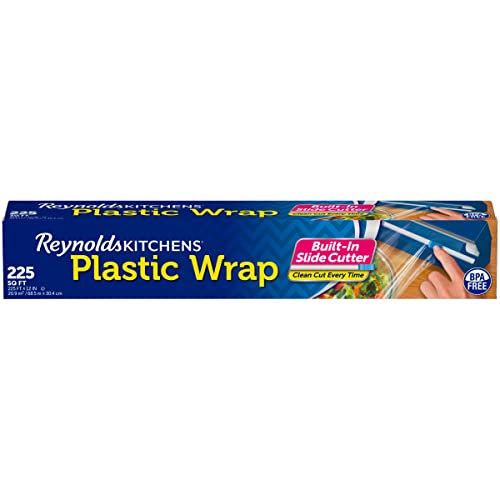
One 12-inch by 225-foot roll of Reynolds Quick Cut plastic wrap in a box with a built-in slide cutter. The slide cutter is the reason to pick it: the listing says it gives a clean cut every time, and a blue starter tab marks the edge of the roll so you are not hunting for it with wet hands. End tabs hold the roll in the box, and a grip strip keeps the wrap ready for the next pull.
Reynolds publishes clear heat rules for this wrap: it is tested to meet FDA standards for microwave reheating, with at least one inch of space between wrap and food, a corner turned back to vent, and no more than three minutes. It is not for cooking or for the oven. Reynolds says it is BPA free. Use it for raw meat, hot dishes and the freezer, where beeswax wrap cannot go.
Why we like it
- Built-in slide cutter (listing)
- Published microwave reheating directions (Reynolds)
- Starter tab finds the edge (listing)
- BPA free (Reynolds)
Key specifications
| Part number | 10010900102244 |
|---|---|
| Size | 12 in × 225 ft (225 sq ft) |
| Cutter | Built-in slide cutter |
| Microwave | Reheating only; 1 in gap, vented, 3 min max |
| Oven | Not recommended |
| Use | Single use |
Why we recommend it
It suits every kitchen as the wrap for raw meat, hot food and microwave reheating, alongside reusable wraps for everything else.
Skip it for bread and cut produce if you are trying to use less plastic; that is beeswax wrap’s job.
Pros and cons
Pros
- Safe for raw meat, then discarded
- Clear microwave rules from the maker
- Easy, clean cuts
Cons
- Single use
- Not for cooking or the oven
- Can melt on fatty or sugary food if overheated
Beeswax and plastic wrap questions, answered
Can beeswax wrap replace plastic wrap?
For produce, bread, cheese and cool bowls, yes. Not for raw meat, hot food or the microwave, according to UC Master Food Preservers and the BfR.
Can you use beeswax wrap on raw meat?
No. UC Master Food Preservers do not recommend it, and the BfR says reusable cloths should especially not touch raw food from animals.
Can you microwave plastic wrap?
For reheating, if the maker allows it. Reynolds says to leave at least an inch between wrap and food, vent one corner and heat for no more than three minutes.
How do you clean a beeswax wrap?
Cold water and mild soap, then air dry. Hot water can melt the wax, per UC Master Food Preservers.
How long do beeswax wraps last?
Up to about a year with proper care, according to UC Master Food Preservers. Bee’s Wrap says worn wraps can be composted.
Which wrap to buy first
Keep a roll of plastic wrap for raw meat, hot dishes and the freezer, and add a set of beeswax wraps for produce, bread and bowls. For more wraps, see our best beeswax wraps guide. For containers that replace both, see our best food storage containers and silicone food storage bags guides, and for bread, our bread storage bag guide. And when you would rather someone else did the cooking, see the menu or call to order.