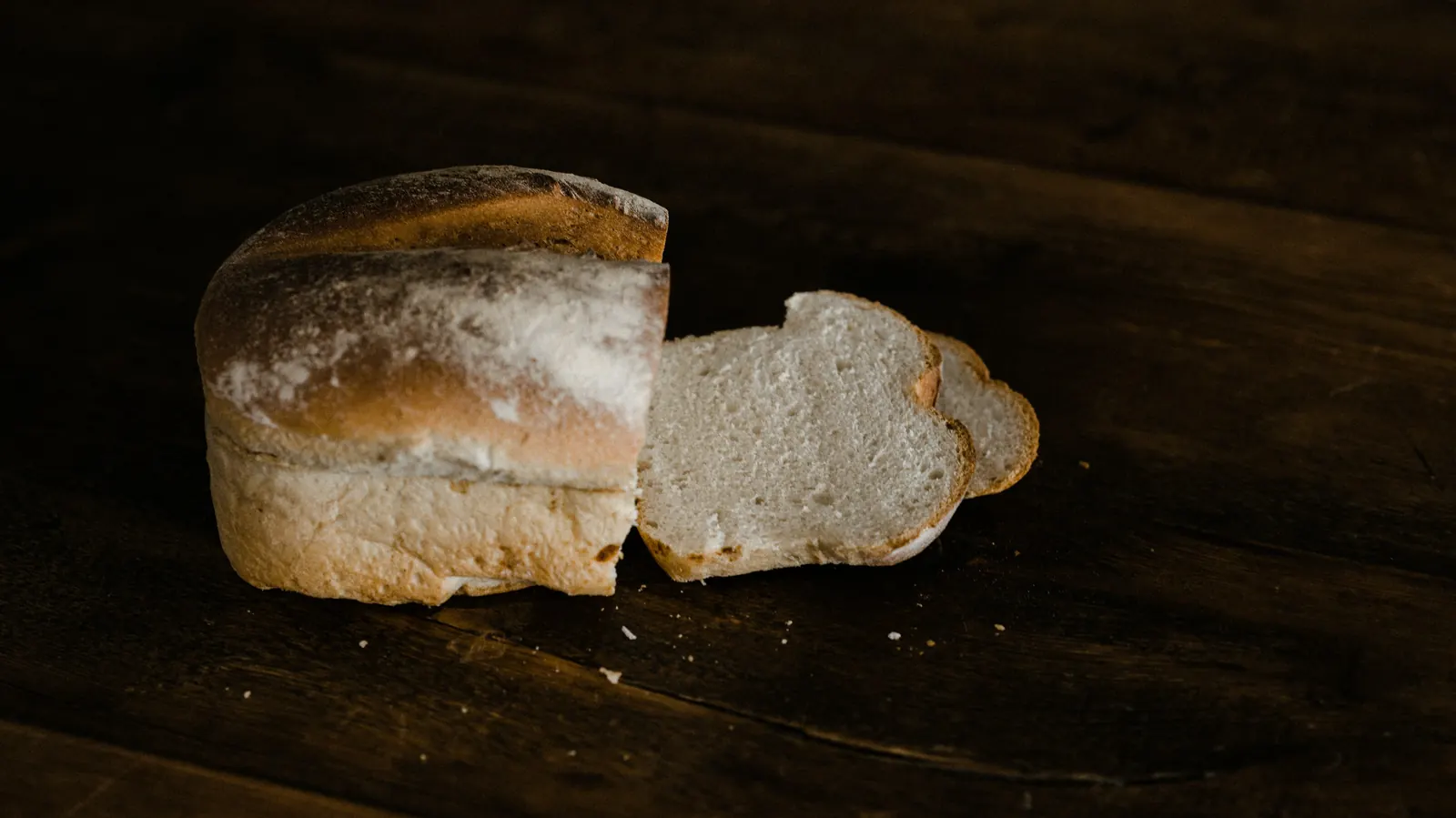
A bread machine and a stand mixer both promise to take the hard work out of homemade bread, but they solve different problems. A bread machine is a closed box with one pan and one paddle: you add the ingredients, pick a cycle, and it mixes, kneads, rises and bakes on a fixed program. A stand mixer is an open bowl and a motor: it kneads faster and handles bigger batches, but you decide when the dough is ready, and the rising, shaping and baking are still up to you and your oven.
So the real question is how much of the job you want to hand over. This guide compares the two on what each one actually does, how much dough it takes, the loaf you get, how much attention it needs, what else it can make, and the space and cleanup it costs. Then it says who should buy which and names one example of each.
Julia’s earns a commission on purchases made through links on this page, at no cost to you. Recommendations are based on what a restaurant kitchen looks for, product specifications and verified buyer reports.
Quick verdict: bread machine or stand mixer for homemade bread?
Buy a bread machine if bread is the only reason you are shopping and you want it as hands-off as possible: one sandwich loaf or one batch of rolls or pizza dough at a time, with a delay timer so it is ready when you wake up. Buy a stand mixer if you also bake cakes, cookies and frostings, want to make more than one loaf at a time, or care most about a shaped, oven-baked loaf. If you bake bread every week and nothing else, the bread machine is the better buy for most people; once you bake anything else, the mixer earns its counter space.
The table sums up the differences; the sections after it explain each one.
Bread machine vs stand mixer, side by side
| Bread machine | Stand mixer | |
|---|---|---|
| What it does | Mixes, kneads, rises and bakes on a program; a dough cycle stops before baking | Mixes and kneads; you handle the rise, shaping and baking |
| Needs an oven | No, unless you use the dough cycle | Yes, for every loaf |
| Batch size | One loaf; Hamilton Beach’s 29987 caps dry ingredients at 4 1/2 cups | Depends on the model; often more than a bread machine |
| Your attention | Add ingredients and press start | Watch the dough, judge when it is kneaded, time the rise |
| Loaf shape | Tall loaf shaped by the pan, with a paddle hole | Any shape: sandwich loaf, boule, rolls, braids |
| Other jobs | Cake, jam, quick bread on most models | Cakes, cookies, frosting, whipped cream, meringue; attachments on many |
| Timer | Delay start on most models | No; you start it when you are ready |
| Cleanup | Nonstick pan and paddle | Bowl, hook or beater, plus loaf pan or baking sheet |
What each machine actually does
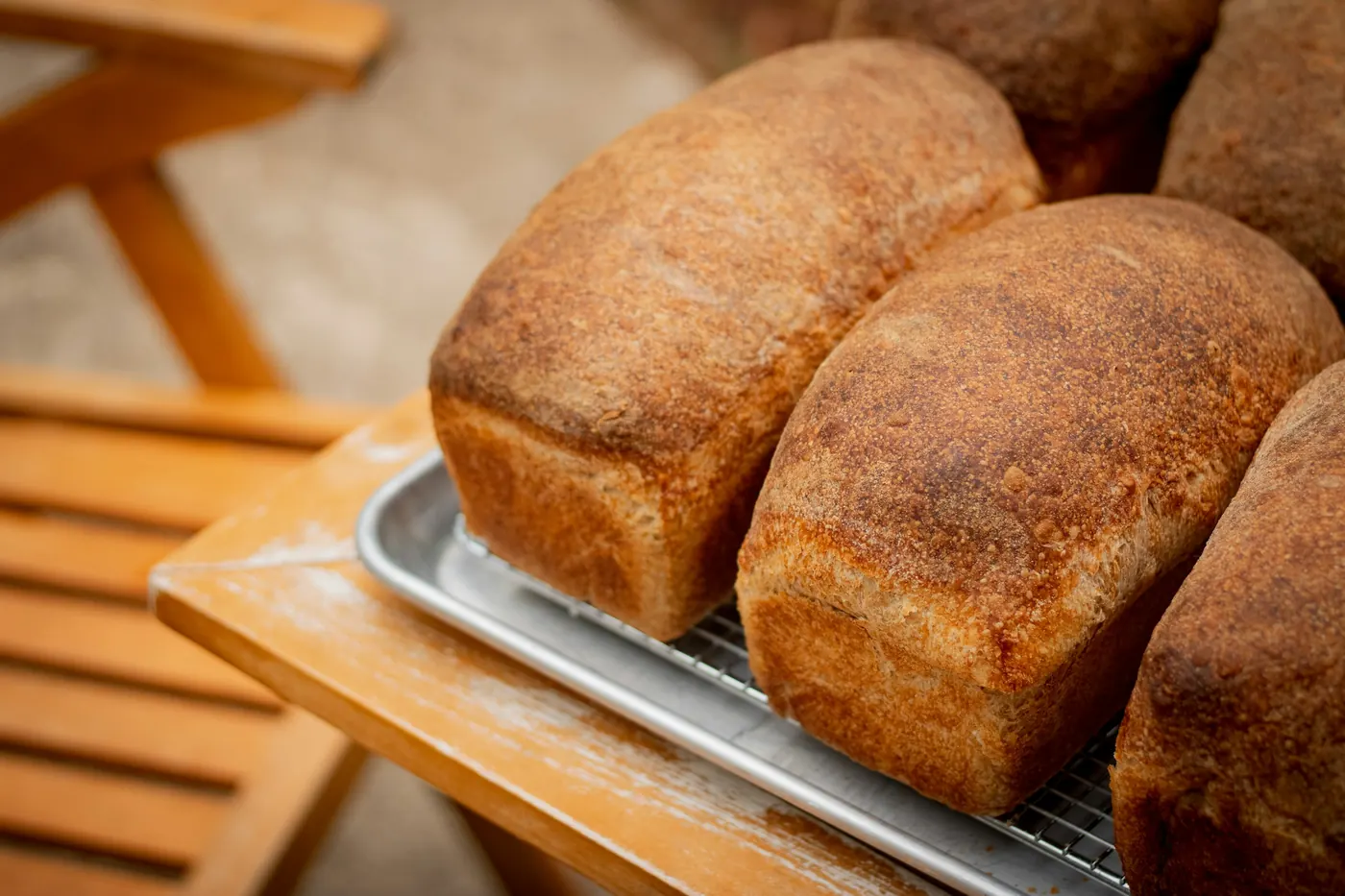
A bread machine runs the whole process in one pan. Hamilton Beach’s manual for its 29987 Artisan bread maker lays out the cycles: basic, French, whole grain, gluten-free, sweet, express and others mix, knead, rise and bake, while the Dough cycle “prepares yeast dough for buns, pizza crust, etc., to be baked in a conventional oven. There is no baking in this cycle.” Paula Rhodes, the home economist behind the Salad in a Jar blog, sums it up the same way: the machine mixes, kneads and manages the first rise on a programmed schedule, and it gives the dough gentle warmth while it rises.
A stand mixer does the mixing and kneading, and that is where its part ends. With a dough hook fitted, it works the dough far harder and faster than your hands would. Breville’s guide to kneading in a stand mixer says most breads take about eight minutes. After that the dough comes out of the bowl, rises under a towel, gets shaped and goes into a hot oven. The mixer saves you the kneading, which is the most tiring part of making bread, but it does not save you the rest.
Batch size: one loaf against several
A bread machine is built around a single loaf. The Hamilton Beach 29987 bakes 1, 1.5 or 2 lb loaves, and its manual says never to go over 4 1/2 cups (540 g) of dry ingredients, counting flour, oats and cornmeal together. Rhodes gives a similar rule of thumb for most machines: no more than 4 1/2 to 5 cups of flour. That is plenty for a family sandwich loaf or a batch of dinner rolls, but you cannot make two loaves at once.
A stand mixer’s limit depends on the model and its motor. Rhodes notes that stand mixers may take more dough than a bread machine, depending on the model, and warns that some can walk across the counter when kneading a big batch. If you bake for a crowd or want to freeze extra loaves, a larger mixer with a stated dough capacity is the tool; our best stand mixer for bread guide covers models that publish one.
The loaf you get
A loaf baked in the machine takes the shape of its pan: tall and squarish, with a hole in the bottom where the kneading paddle sat. Hamilton Beach includes a paddle hook in the box just for prying the paddle out of a finished loaf. The crust is set by the crust-shade button, and the top bakes in an enclosed chamber rather than an open oven.
Rhodes, who has used bread machines for decades, says she usually shapes the dough by hand and bakes it in a regular oven because that “produces a better shape, texture, and crust.” That is the stand mixer’s route by default, and it is also open to bread machine owners through the dough cycle. Many cooks end up there: the machine does the kneading and first rise, and the oven does the baking.
How much attention each one needs
This is the bread machine’s biggest advantage. The Hamilton Beach manual describes the routine as adding ingredients, choosing a cycle and pressing start, and a delay timer lets you load it at night for a warm loaf in the morning. Express cycles in that model finish a loaf in under two hours, and the basic 2 lb loaf takes about three.
A stand mixer needs you in the room. KitchenAid’s product help recommends kneading on speed 2 and warns that over-kneading “can make the dough tough, tight, and difficult to work with.” Breville suggests a low speed and the windowpane test: if a small piece of dough stretches thin enough to let light through without tearing, it is kneaded. High speeds, Breville says, can overheat the dough and overload the motor. None of this is hard, but it is judgment the bread machine makes for you. The upside is control: Rhodes points out that with a mixer you set the speed and time yourself instead of relying on a programmed cycle, so you can adjust a dough that feels too wet or too dry.
What else they make
Here the stand mixer wins easily. Rhodes calls the bread machine’s usefulness limited and describes it as designed mainly for yeast dough; it can also make cake, jam and quick bread on most models, including the Hamilton Beach. A stand mixer handles yeast dough plus cakes, cookies, frosting, whipped cream and pastry, and many have a power port for pasta rollers, meat grinders and other attachments. If you already bake sweets, a mixer gives you bread as well. If you only bake bread, those extra jobs may not matter to you.
Space, noise and cleanup
Both are bulky. A bread machine is a tall box that needs a spot on the counter or in a cupboard, and one reader on Rhodes’ blog said hers crept across the counter until she set it on a placemat. A stand mixer is heavy enough that many owners leave it out. Cleanup favors the bread machine: Hamilton Beach says its bread pan, paddle, measuring cup and spoon are dishwasher-safe, though it also tells you to avoid abrasive cleaners on the nonstick pan. With a mixer you wash the bowl and hook, then the loaf pan or baking sheet, and you have a floured counter from shaping. That is general kitchen sense rather than a source’s claim, but anyone who has made bread both ways will recognize it.
If you would rather skip both and knead by hand or with a smaller tool, our stand mixer alternatives guide compares hand mixers, food processors and dough whisks for bread.
Choose a bread machine if… / Choose a stand mixer if…
Choose a bread machine if…
- You want fresh bread with as little effort as possible.
- You bake one loaf, or one batch of rolls or pizza dough, at a time.
- You like the idea of loading it at night and waking up to bread.
- You want gluten-free, whole grain or sweet bread programs without learning the timing yourself.
- You don’t bake cakes and cookies often enough to justify a mixer.
Choose a stand mixer if…
- You bake cakes, cookies, frosting or meringue as well as bread.
- You want to make two loaves at once or bake for a crowd.
- You care about a hand-shaped loaf, boule or braid baked in the oven.
- You enjoy judging the dough yourself and adjusting as you go.
- You want attachments such as a pasta roller or meat grinder later.
Our pick on each side of the bread machine vs stand mixer choice
One pick per side, both sold by Amazon itself when we checked and both in stock. The bread machine appears on no other page of ours. The stand mixer is a different listing (the Silver Lining finish) of the Cuisinart 5.5-quart mixer in our best stand mixer guide; we include it because it is a mid-size, general-purpose mixer that matches the bread machine’s place in the market, which keeps the comparison fair. For more models, see our full best bread machine guide and the stand mixer guides linked above.
1. Hamilton Beach Artisan Dough & Bread Maker, 2 lb – Bakes Loaves or Makes Oven Dough

This is the kind of bread machine most people should start with: a 2 lb, single-paddle machine from a large appliance maker with the programs you will actually use. Hamilton Beach lists 14 settings: basic, French, gluten-free, whole grain, three express sizes, quick bread, sweet, dough, cake, jam, bake and artisan dough. It makes 1, 1.5 or 2 lb loaves with three crust shades, and it has a delay start.
The setting that sets it apart is Artisan Dough. Hamilton Beach’s manual says this cycle provides a long, cool rise to develop flavor and texture, and that the dough is then shaped and baked in your own oven. It runs about three and a half hours. That makes this machine a reasonable bridge between the two sides of this page: let it bake a sandwich loaf on a busy weekday, or let it make the dough for a hand-shaped loaf on the weekend.
Care is simple. The manual says the nonstick bread pan, paddle, measuring cup and spoon are dishwasher-safe, and that you should not use abrasive cleaners on the pan. It caps a recipe at 4 1/2 cups of dry ingredients, so it is a one-loaf machine.
Why we like it
- 14 settings, including gluten-free, whole grain and dough (listing)
- Artisan Dough cycle with a long, cool rise (manual)
- Three loaf sizes and three crust shades (listing)
- Pan and paddle are dishwasher-safe (manual)
Key specifications
| Model | 29987MN |
|---|---|
| Type | Bread machine, single paddle |
| Capacity | 1, 1.5 or 2 lb loaf; max 4 1/2 cups dry ingredients |
| Programs or speeds | 14 settings |
| Bakes bread | Yes; dough and artisan dough cycles stop before baking |
| Timer | Delay start, up to 15 hours on some cycles |
| Cleaning | Pan and paddle dishwasher-safe |
| Warranty | 1 year in the U.S. (manual) |
Why we recommend it
It suits a household that wants a weekly loaf with little effort, plus a dough cycle for pizza and rolls, from a maker with a published manual and U.S. support.
Skip it if you want a horizontal loaf or two kneading paddles; this is a tall, single-paddle machine, and our bread machine guide covers horizontal two-paddle models.
Pros and cons
Pros
- Express loaves in under two hours (manual)
- Artisan dough option for oven-baked loaves
- Sold by Amazon when we checked
Cons
- One loaf at a time, 4 1/2 cups dry ingredients at most
- Tall loaf with a paddle hole, like most machines
- Only a one-year U.S. warranty
2. Cuisinart Precision Master 5.5-Quart Stand Mixer – Bread Dough Plus Everything Else
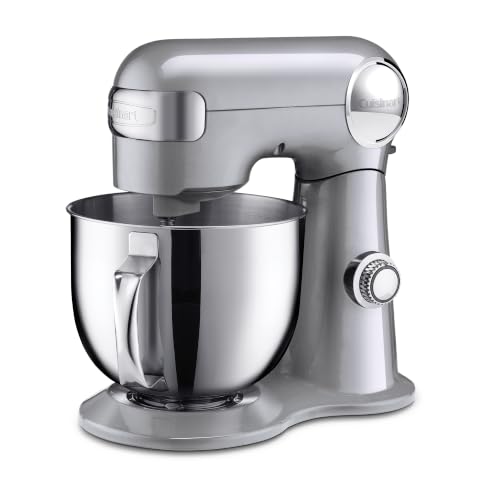
On the mixer side, the Cuisinart Precision Master is a sensible match: a mid-size tilt-head mixer with a 5.5-quart polished stainless steel bowl and a 500-watt motor, according to Cuisinart’s listing. It comes with a dough hook, a flat mixing paddle, a chef’s whisk and a splash guard with a pour spout, so it handles bread dough on day one and cakes, cookies and whipped cream the next.
Cuisinart lists 12 speeds on a dial with click stops, and planetary mixing, where the attachment travels around the bowl as it spins. The head tilts back and locks up or down. Cuisinart describes the die-cast body as lighter than heavyweight mixers, which helps if it lives in a cabinet; the trade-off is that lighter mixers can shift on the counter with stiff dough, so knead on a low speed as KitchenAid and Breville advise. A front power port takes optional attachments.
The bowl, paddle and dough hook are dishwasher-safe, Cuisinart says. The listing does not state a maximum dough or flour capacity, so start with a one- or two-loaf recipe and watch how the motor handles it.
Why we like it
- 5.5-quart stainless bowl and 500-watt motor (listing)
- Dough hook, paddle, whisk and splash guard included (listing)
- 12 speeds with planetary mixing (listing)
- Limited 3-year warranty (listing)
Key specifications
| Model | SM-50BC |
|---|---|
| Type | Tilt-head stand mixer |
| Capacity | 5.5-quart bowl; dough capacity not stated |
| Programs or speeds | 12 speeds |
| Bakes bread | No; needs an oven |
| Timer | None |
| Cleaning | Bowl, paddle and dough hook dishwasher-safe |
| Warranty | Limited 3-year (listing) |
Why we recommend it
It suits a baker who wants one machine for bread, cakes and cookies, with a bowl big enough for a typical loaf or two and a longer stated warranty than the Hamilton Beach bread machine above.
Skip it if you mostly make large batches of stiff whole-grain dough; a heavier bowl-lift mixer with a stated dough capacity is the better tool for that.
Pros and cons
Pros
- Handles bread, cakes, cookies and whipped cream
- Power port for optional attachments (listing)
- Sold by Amazon when we checked
Cons
- No stated dough capacity
- Lighter body may shift with stiff dough
- You still rise, shape and bake by hand
Bread machine and stand mixer questions, answered
Is a bread machine better than a stand mixer for kneading?
For one loaf, a bread machine kneads well and does it without you, and then it also manages the rise. A stand mixer kneads faster and takes bigger batches, but you have to judge when the dough is done. Neither is better at every job; it depends on how many loaves you make and whether you want to be involved.
Can you use a bread machine just to make dough?
Yes, on machines with a dough cycle, which is common. Hamilton Beach’s manual says its Dough cycle prepares yeast dough for buns and pizza crust to be baked in a conventional oven, with no baking in the cycle. Its Artisan Dough cycle adds a long, cool rise for oven-baked loaves.
Can a stand mixer make bread without a dough hook?
Use the dough hook for kneading. The flat beater is for mixing batters, and KitchenAid and Breville both describe kneading with the hook on a low speed.
Do I need both a bread machine and a stand mixer?
Most kitchens do not. If you bake bread and sweets, a stand mixer covers both. If you bake only bread and want it hands-off, a bread machine is enough. Owning both makes sense only if you want the machine’s timer for weekday loaves and the mixer for everything else.
Which makes better bolillos or pan dulce?
Shaped breads such as bolillos and conchas need to be formed by hand and baked in an oven, so either the mixer or the bread machine’s dough cycle will get you there. The bread machine cannot bake them in its pan.
Which one belongs on your counter
If bread is the goal and convenience is the priority, a bread machine like the Hamilton Beach Artisan gives you a fresh loaf with almost no effort, and its dough cycles let you move to oven-baked loaves when you feel like it. If you bake a bit of everything, a stand mixer like the Cuisinart Precision Master does the kneading and the rest of your baking too. Either way, a good bread knife is the next thing you will want.