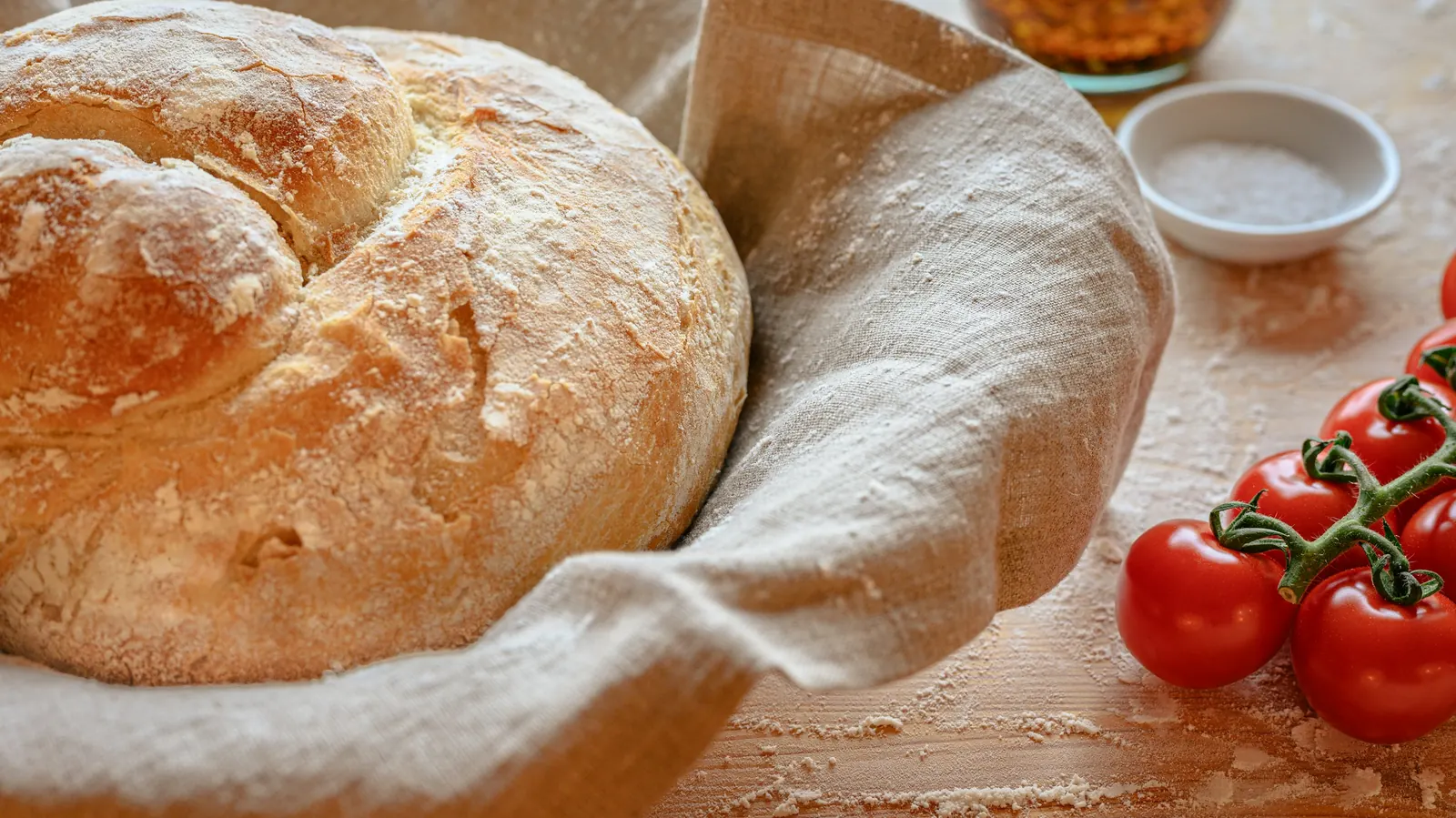
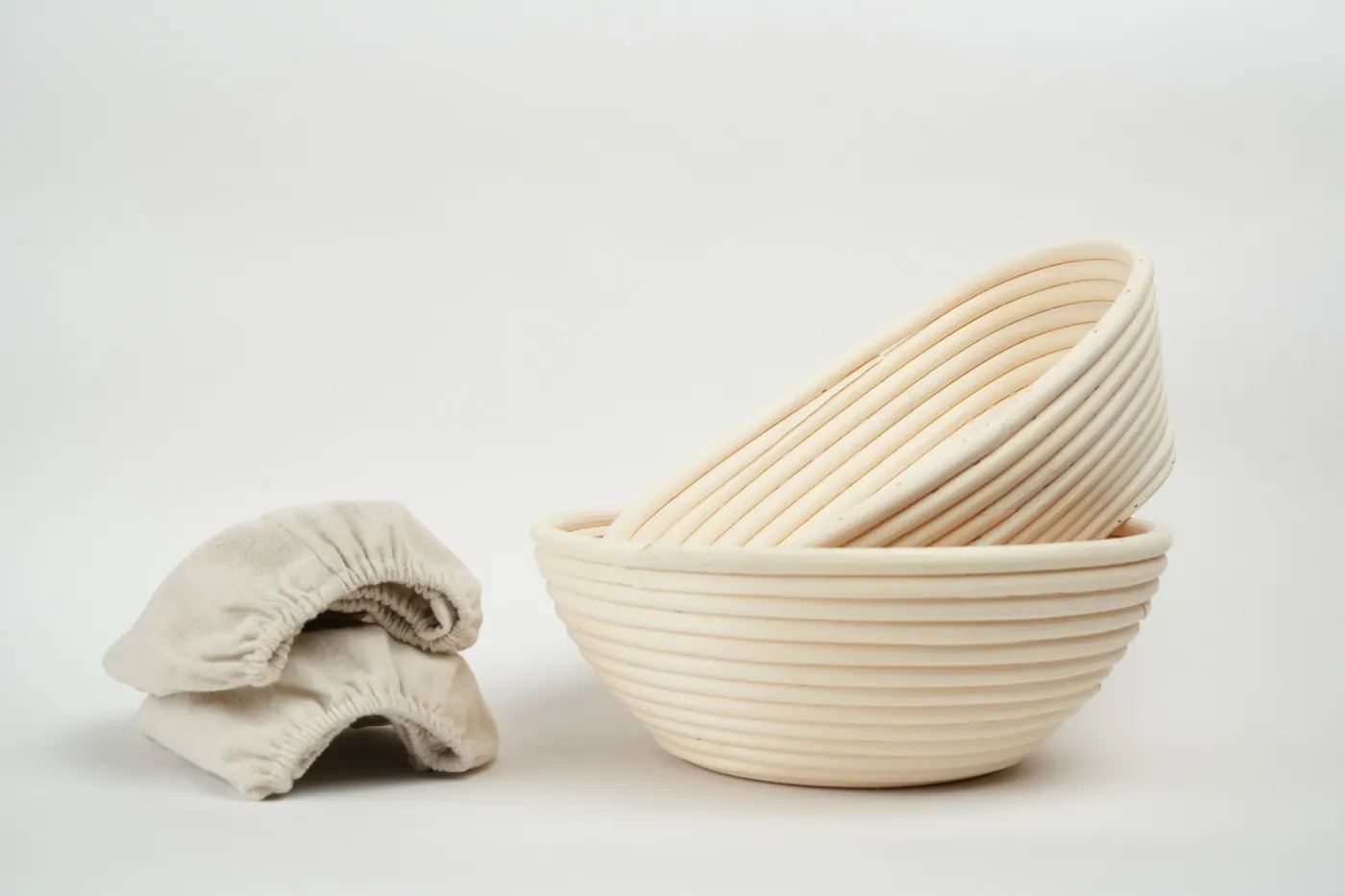
A banneton is a basket with one job: holding a shaped loaf while it rises, so it keeps its height and goes into the oven with a dry, smooth skin you can score. It is a good tool, but it is not the only way to get there. Cloth-lined bowls, colanders and linen folds can do the same job, and baking writers have published how.
Each stand-in changes something, though. A bowl gives a different curve, a colander lets the dough spread, a couche holds long loaves rather than round ones, and a loaf pan gives you a sandwich loaf instead of a free-standing boule. This guide covers the bread proofing basket alternatives that work, what each one does to shape and crust, and which inexpensive pieces from identifiable makers are worth buying if you do not already own them.
Julia’s earns a commission on purchases made through links on this page, at no cost to you. Recommendations are based on what a restaurant kitchen looks for, product specifications and verified buyer reports.
Why bakers look for a banneton substitute
- Trying sourdough before buying gear. America’s Test Kitchen’s banneton review says a banneton is worth buying if you bake about a loaf a week; for occasional bakes, it says you can simply proof in a colander lined with a dish towel.
- Different loaf shapes. A round basket makes a round loaf. Baguettes, long batards and sandwich loaves need something else.
- Several loaves at once. A couche or a few lined bowls hold a full batch without buying a stack of baskets.
- Storage and care. Cane baskets need drying and brushing between bakes. A towel goes in the wash and a bowl goes back in the cupboard.
Quick verdict: the best bread proofing basket alternative
For most home bakers, the best bread proofing basket alternative is a mixing bowl lined with a thin cotton towel dusted with rice flour. The Winco 5-quart stainless steel bowl and a pack of Aunt Martha’s flour sack towels cover it. The loaf keeps a round shape, the cloth helps the surface dry, and you lose only the basket’s ring pattern. For long loaves, use the Saint Germain Bakery linen couche. If you mainly want sandwich bread, proof straight in a USA Pan 9 x 5-inch loaf pan and bake in it.
Five banneton substitutes side by side
Our five picks, one for each kind of baker, with what each maker or listing states.
| Alternative | Best for | Loaf shape | What changes | Buy on Amazon |
|---|---|---|---|---|

Winco 5-Quart Stainless Steel Mixing BowlBest overall alternative
|
Round loaves, any home baker | Boule | No rings; needs a cloth liner | View on Amazon |

Aunt Martha’s Flour Sack Towels, 2-PackBest liner
|
Lining any bowl or colander | Takes the vessel’s shape | Smooth skin; dust well | View on Amazon |

OXO Good Grips 3-Quart Stainless Steel ColanderMost basket-like
|
Air around the dough | Boule | Wide colanders let dough spread | View on Amazon |

Saint Germain Bakery Linen Couche, 35 x 26 inBest for long loaves
|
Baguettes, batards, several loaves | Long loaves in folds | Little side support for slack dough | View on Amazon |

USA Pan 9 x 5-Inch Loaf PanBest for sandwich bread
|
Sliceable everyday loaves | Tin loaf | Proof and bake in the pan | View on Amazon |
Product images from Amazon. Sizes and materials are as stated by each maker or listing; check the listing before you buy.
What a banneton does, and what a substitute has to copy
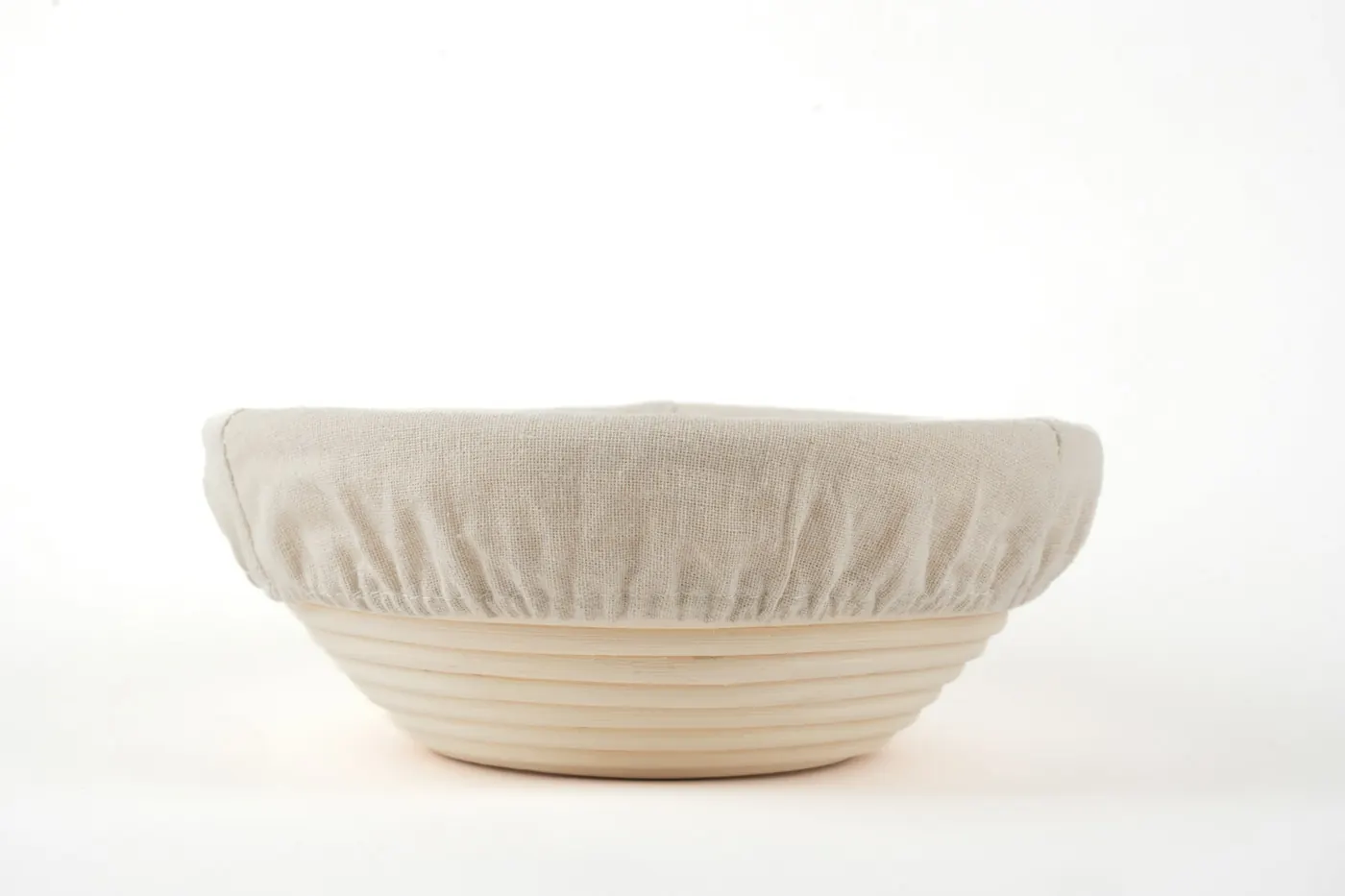
America’s Test Kitchen’s review lists the jobs plainly. The basket gives a shaped loaf structure as it proofs, so it comes out well formed rather than slumped. The cloth liner keeps the dough from sticking, which can leave a loaf deformed and flat, keeps the surface smooth so your score shows, and helps the outside of the dough dry, which supports a crisp crust. Used without a liner, cane imprints its rings on the loaf.
Any substitute has to do the first three. That means a vessel of the right size and shape, a thin cloth, and the right dusting flour. Kate Freebairn of The Pantry Mama, in her guide to proofing basket alternatives, recommends a thin linen tea towel, napkin or even a pillowcase, warns that anything too thick will deform the loaf, and calls rice flour usually the best flour for dusting the cloth. What you give up is the ring pattern, and with some vessels a little height.
Gareth Busby of Busby’s Bakery, in his roundup of proofing basket substitutes, adds a useful rule for choosing among them: lined mixing bowls work for most loaves, wide colanders let the dough spread and suit larger doughs, linen suits oblong loaves, and proofing with no support at all works only for strong, slightly drier doughs.
Five tools that stand in for a proofing basket
All five are from identifiable makers and were in stock on Amazon, sold new, on the day of writing. Each review says what happens to the shape and crust and one honest reason to skip it.
1. Winco 5-Quart Stainless Steel Mixing Bowl – A Boule-Shaped Cradle
A plain mixing bowl is the substitute most bakers already own, and Busby says any suitably shaped mixing bowl can be used to proof bread dough once it is lined with a clean cloth. A round-bottomed bowl gives a boule much the same curve a round banneton does. The difference is airflow: a solid bowl does not breathe the way cane or wood pulp does, so the cloth liner does all the work of drying the surface and stopping the dough from sticking.
Winco’s listing calls this a 5-quart bowl in commercial-grade stainless steel with a thick reinforced rim that resists bending and a wide lip, dishwasher safe, with a one-year warranty. Five quarts is roomy for a typical home loaf. If your dough spreads in it, a smaller bowl gives more side support; Pantry Mama makes the same point about colanders, that smaller supports the dough better.
Line the bowl with a thin towel, rub rice flour into the cloth, set the shaped loaf in seam side up, and cover. It goes in the fridge as easily as a basket for an overnight proof.
Why we like it
- Busby names a lined mixing bowl as a working substitute
- Round bottom gives a boule its curve
- Reinforced rim, per the listing
- Dishwasher safe and useful every day
Key specifications
| Model | MXB-500Q |
|---|---|
| Type | Mixing bowl (line with cloth) |
| Material | Stainless steel |
| Size | 5 quarts |
| Loaf shape | Round boule |
| Needs a liner | Yes |
| Care | Dishwasher safe |
| Warranty | 1 year against workmanship defects |
Why we recommend it
Choose it if you bake round loaves now and then and want the closest everyday match to a round banneton.
Skip it if you want the ringed pattern on your crust or bake slack, high-hydration dough every week; a basket gives better support and airflow.
Pros and cons
Pros
- Doubles as a mixing bowl
- Easy to clean
- Fits in the fridge
Cons
- No airflow through the sides
- Needs a cloth every time
- Large for small loaves
2. Aunt Martha’s Flour Sack Towels, 2-Pack – The Liner That Makes It Work
The towel matters more than the vessel. A thin, smooth, tightly woven cloth releases the dough and lets its surface dry; a thick, fluffy towel is the wrong choice, since Pantry Mama warns that a thick liner deforms the loaf. Plain flour sack cotton sits at the thin end of kitchen towels, which is why bakers reach for it.
Aunt Martha’s listing describes these as 100 percent cotton, 28 by 28 inches, hemmed on all four sides, and pre-washed and bleached, sold as a pack of two. That size drapes over the rim of a 5-quart bowl or a colander with cloth to spare for folding over the top while the dough rises.
Rub rice flour into the center of the towel before each use. Freebairn finds rice flour the best for release, with cornmeal or semolina as backups. Shake the towel out after baking and let it dry fully before it goes back in the drawer.
Why we like it
- Thin cotton, the kind Pantry Mama recommends
- Large enough to line a bowl and fold over
- Pre-washed, per the listing
- Hemmed on all four sides, so less fraying
Key specifications
| Model | PKTT28 |
|---|---|
| Type | Flour sack towel (liner) |
| Material | 100% cotton |
| Size | 28 x 28 in, 2 per pack |
| Loaf shape | Takes the shape of the bowl or colander |
| Needs a liner | It is the liner |
| Care | Not stated on the listing |
| Warranty | Not stated |
Why we recommend it
Choose it if you will proof in a bowl or colander; without a good cloth, neither works.
Skip it if you plan to build a pleated, free-standing nest from cloth alone; Pantry Mama says that needs a thick linen towel, and the couche below is the better fit.
Pros and cons
Pros
- Thin enough not to distort the loaf
- Generous size
- Useful for other kitchen jobs
Cons
- Cotton, not linen
- Only two per pack
- Wash instructions not on the listing
3. OXO Good Grips 3-Quart Stainless Steel Colander – Air on Every Side
A colander is the substitute America’s Test Kitchen names, and it is the most basket-like thing in most kitchens: open on all sides, so a lined loaf gets air around it rather than sitting in a closed bowl. Busby’s caution is size. Colanders tend to be wide, so the dough spreads wide and they suit large doughs. Pantry Mama agrees that a smaller colander supports the dough better and stops it spreading.
That is why we chose OXO’s 3-quart size rather than a large pasta colander. OXO’s listing describes a perforated stainless steel strainer with elevated non-slip handles and three feet for stability on the counter, that nests in mixing bowls and is dishwasher safe. A 5-quart version exists if you bake larger loaves.
Always line it. Busby covers the colander with a dusted tea towel or cloth to stop the dough sticking; bare perforations will grip the dough and tear the skin.
Why we like it
- The substitute America’s Test Kitchen suggests
- Perforations let air reach the cloth
- Smaller size limits spreading
- Feet keep it steady on the counter
Key specifications
| Model | 11330800 |
|---|---|
| Type | Colander (line with cloth) |
| Material | Stainless steel |
| Size | 3 quarts |
| Loaf shape | Round boule |
| Needs a liner | Yes |
| Care | Dishwasher safe |
| Warranty | Not stated on the listing |
Why we recommend it
Choose it if you want airflow closer to a basket’s and a tool that drains pasta the rest of the week.
Skip it if you bake large loaves; a 3-quart colander may be too snug, and the 5-quart size or a bowl suits better.
Pros and cons
Pros
- Breathes like a basket
- Steady on three feet
- Dishwasher safe
Cons
- Must be lined
- Small for big loaves
- Handles add width in the fridge
4. Saint Germain Bakery Linen Couche, 35 x 26 in – Proofs Several Long Loaves
A couche is heavy linen that you pleat into folds, laying a shaped loaf in each channel so the cloth walls hold them apart. Busby calls it the original way bakers proof baguettes and ciabatta and a fantastic solution for oblong or batard-shaped bread. Pantry Mama adds that a couche works for batards too and suggests a weight at each end to stop the loaves pushing outward.
Saint Germain Bakery, which also makes bannetons, lists this couche as 100 percent natural flax linen, untreated and unbleached, imported from France and tailored in the USA, 35 by 26 inches. That is enough cloth for several baguettes or two or three batards side by side, and it works for torpedo-shaped rolls such as bolillos as well.
What changes is support. A couche holds the sides but not the bottom curve, so it suits firmer doughs; a very slack dough will flatten. Flour the cloth before each use and let it dry completely before folding it away.
Why we like it
- The traditional tool for baguettes, per Busby
- 100% flax linen, per the listing
- Large enough for a full batch
- Folds flat for storage
Key specifications
| Model | PBC-525 |
|---|---|
| Type | Baker’s couche (proofing cloth) |
| Material | 100% flax linen, untreated, unbleached |
| Size | 35 x 26 in |
| Loaf shape | Baguettes, batards, long rolls |
| Needs a liner | No; flour the cloth |
| Care | Not stated on the listing |
| Warranty | Performance guarantee, per the listing |
Why we recommend it
Choose it if you bake long loaves, rolls or more than one loaf at a time and want one cloth that holds them all.
Skip it if you bake round, wet sourdough; it gives no bottom support, and a lined bowl or basket holds a boule better.
Pros and cons
Pros
- Holds a whole batch
- Heavy linen releases well when floured
- Stores flat
Cons
- No support underneath
- Not for round loaves
- Care not stated
5. USA Pan 9 x 5-Inch Loaf Pan – Proof and Bake in One Pan
A loaf pan skips the turn-out step entirely. Pantry Mama shapes the dough as a batard, sets it in an oiled loaf tin to proof, and bakes it in the same tin, calling the result perfect for sandwiches. The pan’s walls do all the supporting, so even a slack dough rises up instead of out.
The trade is shape and crust. You get a squared tin loaf rather than a free-form boule, and the sides and base bake against metal rather than open oven heat, so expect a softer side crust than a loaf baked on a stone or in a Dutch oven (general kitchen sense). Scoring the top still lets it open.
USA Pan’s listing gives the pan as 9 by 5 by 2.75 inches, holding a 1.25-pound loaf, heavy-gauge aluminized steel with a corrugated surface for air circulation and release, coated with Americoat, which it describes as a silicone free of PTFE, PFOA and BPA. It is made in the USA from globally sourced materials and carries a limited lifetime warranty.
Why we like it
- Proof and bake without turning out the dough
- Supports even slack dough
- Made in the USA, per the listing
- Limited lifetime warranty
Key specifications
| Model | 1145LF |
|---|---|
| Type | Loaf pan (proof and bake) |
| Material | Aluminized steel, Americoat silicone coating |
| Size | 9 x 5 x 2.75 in, 1.25 lb loaf |
| Loaf shape | Tin loaf |
| Needs a liner | No; oil the pan |
| Care | Not stated on the listing |
| Warranty | Limited lifetime |
Why we recommend it
Choose it if you want everyday sandwich bread from your sourdough or yeasted dough and would rather not turn a loaf out of anything.
Skip it if you want a free-standing boule with a crackly crust all around; a pan cannot give you that. Our guide to the best loaf pan for baking compares more pans.
Pros and cons
Pros
- No turning out, no sticking cloth
- Even slices for sandwiches
- Stated warranty
Cons
- Tin shape only
- Softer side crust
- Coated surface needs gentle tools
How to proof a loaf in a lined bowl
This works for the bowl or the colander. It follows the liner and flour advice from Pantry Mama and Busby’s Bakery.
- Choose the size. Pick a bowl or colander only a little wider than your shaped loaf, so the dough is held at the sides rather than spreading.
- Line it. Lay a thin, smooth cotton or linen towel inside, pressing it into the curve. Avoid terry cloth.
- Dust the cloth. Rub rice flour into the towel where the dough will sit. Wetter doughs need more.
- Load seam side up. Set the shaped loaf in upside down, fold the towel ends over or cover the bowl, and proof at room temperature or in the fridge as your recipe says.
- Turn out and score. Tip the loaf onto parchment or a peel, peel the cloth away gently, score and bake.
If the dough sticks, the cloth needed more rice flour or the dough was over-proofed; if it spreads after turning out, the bowl was too wide or the shaping too loose. Our guide to mixing bowls for sourdough covers bowls that also suit the bulk rise.
Substitutes we did not pick
- Terracotta pots. Busby’s test loaf stuck fast, and Pantry Mama warns some pots contain chemicals and should be lined, and never baked in. Not worth the risk.
- Decorative wicker baskets. Pantry Mama warns against baskets coated in chemicals, and many of the bread-serving baskets our Amazon search turned up were plastic. Unless you know what a basket is made of, a lined bowl is safer.
- No support at all. Busby says free-standing proofing works for strong, slightly drier doughs. It needs no tool, so there is nothing to buy.
- A proofing box. It controls temperature, not shape; it works alongside a basket or bowl rather than replacing it. See the best bread proofing box.
When a real banneton is worth buying
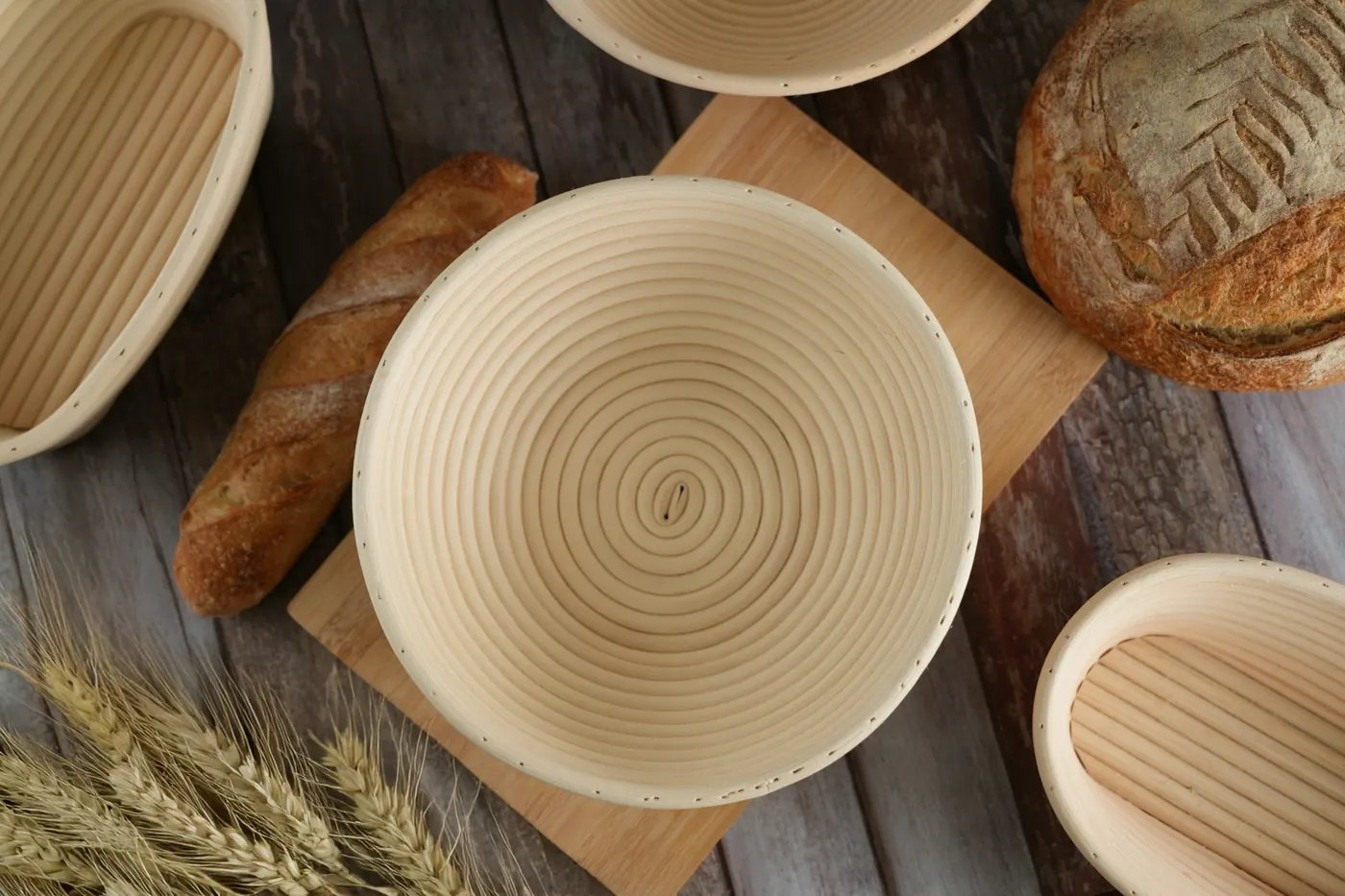
America’s Test Kitchen’s line is a good one: if you bake about a loaf a week, buy a banneton. It supports high-hydration dough better than a bowl, breathes better than a colander, and gives the ringed crust some bakers love. Our guide to the best bread proofing basket compares cane, wood pulp and lined baskets, round and oval. Bake in a Dutch oven for bread and the crust takes care of itself.
Banneton substitute questions, answered
What can I use instead of a banneton?
A mixing bowl or colander lined with a thin, rice-floured towel for round loaves, a linen couche for long loaves, or a loaf pan if you want sandwich bread baked in the same pan.
Does a bowl change the crust?
Only slightly. You lose the ring pattern, and a solid bowl lets less air reach the dough than a basket, so use a thin cloth that helps the surface dry. The crust itself comes from how you bake.
What towel is best for proofing bread?
A thin, smooth cotton or linen towel. Pantry Mama recommends a thin linen tea towel, napkin or pillowcase and warns that thick cloth deforms the loaf. Avoid terry towels.
Why does my dough stick to the towel?
Usually too little dusting, the wrong flour or a very wet dough. Pantry Mama prefers rice flour, with cornmeal or semolina as backups, and says tight shaping gives a smooth skin that resists sticking.
Can I proof bread in a colander?
Yes, lined with a dusted towel. America’s Test Kitchen suggests it, and Busby notes wide colanders let dough spread, so choose a smaller one.
Our final word on proofing without a basket
Line a bowl with a thin flour sack towel, rub in rice flour, and you have a banneton substitute that gives up only the rings. Use a small colander if you want more air around the dough, a linen couche for baguettes and batards, and a loaf pan for sandwich bread. If you are baking every week, the real basket earns its place; our proofing basket guide picks the best.
And if tonight is not a baking night, see the menu or call to order.