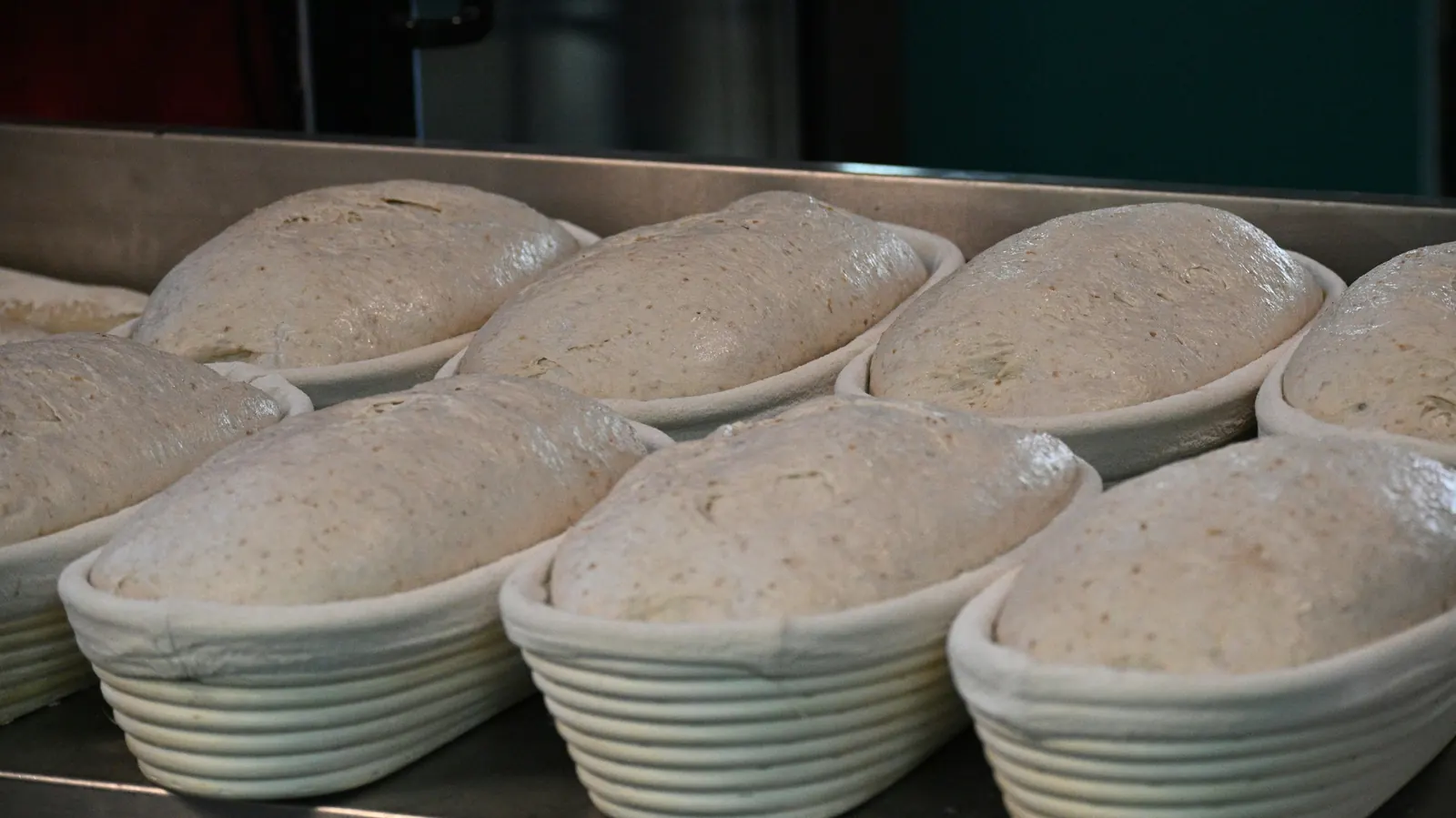
A bread proofing basket, also called a banneton or brotform, holds a shaped loaf through its final rise. It keeps a soft, wet dough from slumping into a puddle, draws a little moisture from the surface so the crust bakes crisp, and, if you use it bare, prints those flour-dusted rings on the finished bread. Turn it out onto a peel or into a hot Dutch oven and the loaf keeps its shape.
Rolls like bolillos and teleras proof on a floured cloth, not in a basket. A banneton is for one big loaf, usually sourdough or a rustic country bread. This guide covers the three materials you will see (rattan cane, spruce wood pulp and molded fiber), round versus oval, liners and care, and names seven baskets from Bulka, Saint Germain Bakery, Brød & Taylor and Bread Bosses.
Julia’s earns a commission on purchases made through links on this page, at no cost to you. Recommendations are based on what a restaurant kitchen looks for, product specifications and verified buyer reports.
Quick verdict: which bread proofing basket to buy
The best bread proofing basket for most home bakers is a 9-inch spruce wood pulp banneton like the Bulka 1kg round. America’s Test Kitchen found wood pulp bannetons the easiest to use: dusted with a little flour, they released even very wet doughs from the first use, with no liner. If you want the classic coiled rings and a liner for smooth, scored loaves, choose a Saint Germain Bakery 9-inch rattan banneton, which comes with a cloth liner.
Five proofing baskets side by side
Our five standout bannetons, one for each kind of baker. All seven are reviewed in full below.
| Banneton | Best for | Material | Shape and capacity | Buy on Amazon |
|---|---|---|---|---|

Bulka 9-inch Round Wood Pulp BannetonBest overall
|
Wet sourdough, no liner needed | Spruce wood pulp | Round, 1.1–1.2 kg dough | View on Amazon |
Saint Germain Bakery 9-inch Round Rattan BannetonBest rattan with liner
|
Coiled rings or a smooth, scored loaf | Natural rattan, cloth liner | Round, medium to large loaf | View on Amazon |
| Batards for slicing | Spruce wood pulp | Oval, 800–900 g dough | View on Amazon | |

Brød & Taylor Batard Banneton with Linen LinerBest stackable
|
Small kitchens, several loaves | Bamboo and sugarcane pulp | Oval, 700–850 g (medium) | View on Amazon |

Bread Bosses 9-inch Round Rattan Banneton KitBest starter kit
|
First loaves, liner and scraper included | Rattan cane, cloth liner | Round, 1.5 lb of dough | View on Amazon |
Product images from Amazon. Sizes and capacities are as each maker or listing states them; check the listing before you buy.
Our picks for the best bread proofing basket, round and oval
Seven baskets in three materials: spruce wood pulp, rattan cane, and molded bamboo and sugarcane fiber. Each pick lists the shape, size, stated dough capacity, liner and care that the maker or listing gives, with one honest reason to skip it.
1. Bulka 9-inch Round Wood Pulp Banneton – Wet Dough Releases Without a Liner
Wood pulp bannetons are the easiest kind to use, according to America’s Test Kitchen. In its banneton review, thick spruce-pulp baskets absorbed moisture from the outside of the dough so well that, with just a little flour, they released even the highest-hydration doughs, and did it from the very first use, before any seasoning. ATK’s pick in this style was from Flourside, which isn’t sold on Amazon; Bulka makes the same kind of basket.
This is Bulka’s large round, pressed from spruce wood pulp and handmade in Germany, according to the listing. The interior measures 9 x 2.2 inches and holds 1.1 to 1.2 kilograms of dough, baking a 1-kilogram loaf, which matches the size most sourdough recipes make. Bulka says the pulp is bound by its own natural lignin, with no added binders, and that the thick walls insulate the dough so it proofs steadily in a cool kitchen. This one has a grooved interior, which leaves rings on the crust.
Care is different from rattan. Bulka says never to wash it with water: dry it in the residual heat of the oven at 210 to 250°F for 30 minutes, then brush off the flour. For very wet doughs or ones with olives or fruit, it suggests a linen liner or kitchen towel.
Why we like it
- Wood pulp was ATK’s easiest banneton type to use.
- Holds 1.1 to 1.2 kg of dough, per Bulka.
- Spruce pulp with no added binders, per Bulka.
- Handmade in Germany.
Key specifications
| Model | Bulka 1kg round, groove |
|---|---|
| Material | Pressed spruce wood pulp |
| Shape | Round, grooved interior |
| Size/dough capacity (stated) | 9 x 2.2 in interior; 1.1–1.2 kg dough, 1 kg loaf |
| Liner included | No |
| Care | No water; dry in a 210–250°F oven for 30 min, then brush |
Why we recommend it
It suits new sourdough bakers and anyone working with wet doughs who wants a basket that releases cleanly from day one.
Skip it if you want a blank surface for decorative scoring; without a liner, the grooves always print on the loaf.
Pros and cons
Pros
- Easy release with no seasoning period.
- Sized for a standard 1 kg loaf.
- Clear capacity from the maker.
Cons
- Cannot be washed with water.
- No liner in the box.
2. Saint Germain Bakery 9-inch Round Rattan Banneton – Classic Rings, Liner Included
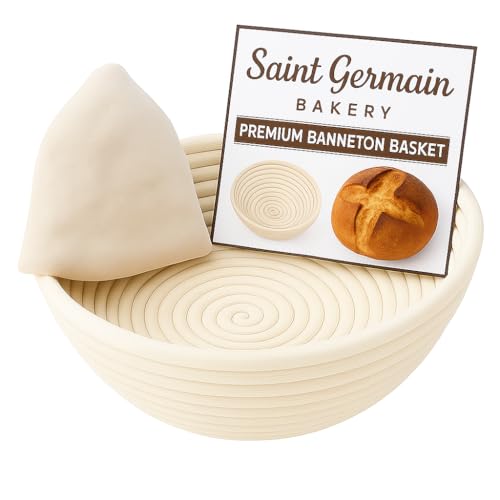
Rattan, also called cane, is the traditional banneton material, and America’s Test Kitchen’s overall favorites were rattan bannetons with cloth liners. ATK’s winner, from Breadtopia, isn’t on Amazon. Saint Germain Bakery’s 9-inch round is the same type: handmade from natural rattan by a small family business in Vietnam, according to the listing, with a cloth liner in the box.
That combination gives you two looks from one basket. Used bare and dusted with flour, rattan prints the classic coil pattern on the loaf. With the liner, you get a smooth surface that shows off your scoring. ATK found the liner essential for high-hydration doughs, around 80 percent water and up, because cloth wicks moisture away better than the basket does on its own.
Expect a short break-in. ATK found rattan bannetons release best once they build up a layer of flour, or “seasoning,” and some dough may stick the first few times. Saint Germain says to shake out the excess flour after each use, and if dough sticks, let it dry and remove it with a stiff brush. The listing calls the rattan splinter-free and smooth, and describes 9 inches as right for a medium to large loaf.
Why we like it
- Rattan and cloth liner, the pairing ATK preferred.
- Liner included.
- Handmade natural rattan, per the listing.
- Simple care: shake out, brush when dry.
Key specifications
| Model | STG-ROUND-999 |
|---|---|
| Material | Natural rattan; cloth liner |
| Shape | Round |
| Size/dough capacity (stated) | 9 in; “medium to large loaf” (grams not stated) |
| Liner included | Yes, cloth |
| Care | Shake out flour; dry, then stiff brush |
Why we recommend it
It suits bakers who want the traditional coiled look and the option of a liner for wetter doughs and fancy scoring.
Skip it if you don’t want a break-in period; rattan can stick for the first few loaves.
Pros and cons
Pros
- Two decorating options.
- Liner in the box.
- Light and sturdy.
Cons
- Needs seasoning before it releases well.
- Dough capacity not given in grams.
3. Bulka 11.4-inch Oval Wood Pulp Banneton – Even Slices from a Batard

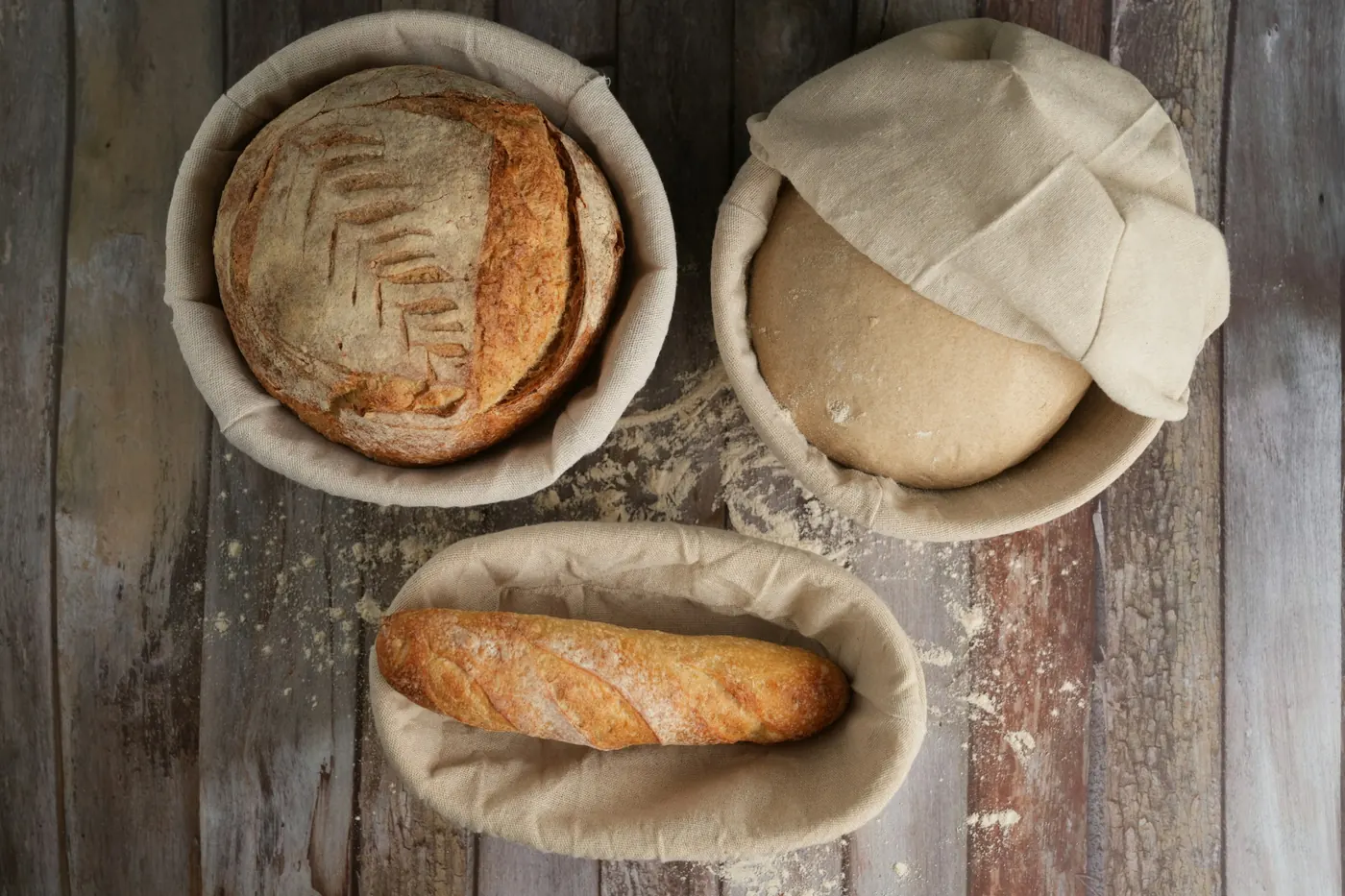
An oval basket shapes a batard, a long loaf that gives you more slices of the same size, which matters if the bread is for sandwiches or toast. Bulka’s oval is the same spruce wood pulp as its round, handmade in Germany, and measures 11.4 x 5.3 x 2.4 inches. Bulka says it holds 800 to 900 grams of dough and bakes a 750-gram batard.
America’s Test Kitchen’s oval wood pulp pick, again from Flourside, released even the wettest doughs with no sticking, just like the round version. The same caution applies: without a liner, the basket’s grooves always show on the crust, so scoring patterns are less visible. Bulka recommends a linen liner or towel for very wet doughs or doughs with wet add-ins.
Before you buy any oval, check it against your baking vessel. An 11-inch batard needs an oval Dutch oven or a covered baker long enough to hold it; it won’t fit in many round pots.
Why we like it
- Stated capacity of 800–900 g of dough.
- Wood pulp release, no seasoning needed.
- Handmade in Germany, per Bulka.
Key specifications
| Model | Bulka 750g oval, groove (1.5.2) |
|---|---|
| Material | Spruce wood pulp |
| Shape | Oval, grooved interior |
| Size/dough capacity (stated) | 11.4 x 5.3 x 2.4 in; 800–900 g dough, 750 g loaf |
| Liner included | No |
| Care | No water; dry in a 210–250°F oven for 30 min, then brush |
Why we recommend it
It suits bakers who want sandwich-friendly slices and an oval vessel to bake them in.
Skip it if you only own a round Dutch oven; a batard this long may not fit.
Pros and cons
Pros
- Even slices from an oval loaf.
- Easy release.
- Clear sizing from the maker.
Cons
- Needs an oval baking vessel.
- Cannot be washed with water.
4. Saint Germain Bakery 10-inch Oval Rattan Banneton – A Rattan Batard with Liner

This is the oval version of pick 2: natural rattan, handmade in Vietnam, 10 inches long, with a cloth liner, according to the listing. A 10-inch oval is the size America’s Test Kitchen used for its oval tests, and ATK found 10-inch oval bannetons can hold a 1-kilogram loaf.
Rattan behaves the same in any shape. Dusted with flour, it gives the loaf coiled lines along its length; with the liner, a clean surface for a long single slash or a wheat-stalk pattern. Expect some sticking for the first few uses while the basket builds up flour, and use the liner for wet doughs. ATK’s oval rattan winner, from Breadtopia, worked best once both basket and liner were seasoned.
Care is the same as the round: shake out the excess flour after each use, and if dough sticks, let it dry, then brush it off. Let the basket dry fully before you put it away.
Why we like it
- 10-inch oval, the size ATK used for 1 kg loaves.
- Cloth liner included.
- Natural rattan, per the listing.
Key specifications
| Model | OBV-450 |
|---|---|
| Material | Natural rattan; cloth liner |
| Shape | Oval |
| Size/dough capacity (stated) | 10 in; “medium to large loaf” (grams not stated) |
| Liner included | Yes, cloth |
| Care | Shake out flour; dry, then stiff brush |
Why we recommend it
It suits bakers who want a rattan batard basket with the liner already in the box.
Skip it if you bake very wet doughs and dislike breaking in a basket; the Bulka oval releases from the first use.
Pros and cons
Pros
- Classic coil pattern.
- Liner included.
- Light to handle.
Cons
- Seasoning period.
- Capacity not given in grams.
5. Brød & Taylor Batard Banneton with Linen Liner – Baskets That Nest
Brød & Taylor, which also sells dough-proofing containers and baking shells, takes a different approach to the banneton. Its batard basket is molded from upcycled sugarcane pulp and renewable bamboo, light and stiff, with ridges inside that support the dough. The baskets nest inside each other, so several take up the shelf space of one. This bundle pairs the basket with a 100 percent linen liner.
Brød & Taylor gives the medium batard as 10 x 5 x 3 inches and says it holds 700 to 850 grams of dough. The listing says the smooth, absorbent interior releases dough easily and helps absorb surface moisture for a crisp crust. The linen liner, per the listing, wicks moisture to help high-hydration doughs release, and keeps add-ins like garlic, herbs or cheese out of the basket.
Care is simple but strict. Let the basket dry completely, then brush out the flour; Brød & Taylor’s FAQ says not to wash it with soap and water or put it in the dishwasher. The liner can be washed.
Why we like it
- Nesting design saves shelf space.
- Linen liner included in this bundle.
- Stated capacity of 700–850 g (medium).
- Molded bamboo and sugarcane fiber.
Key specifications
| Model | Brød & Taylor Batard Banneton & Linen Liner bundle |
|---|---|
| Material | Sugarcane pulp and bamboo; linen liner |
| Shape | Oval (batard), ridged |
| Size/dough capacity (stated) | Medium batard 10 x 5 x 3 in; 700–850 g dough |
| Liner included | Yes, linen |
| Care | Dry, then brush; no soap and water, no dishwasher |
Why we recommend it
It suits bakers who make more than one loaf at a time, or who are short on storage.
Skip it if you want a basket that has been through an independent review; this design is newer and we found no reputable test of it.
Pros and cons
Pros
- Stacks neatly.
- Linen liner in the bundle.
- Light and stiff.
Cons
- No independent review found.
- Listing doesn’t confirm medium or large size.
6. Bread Bosses 9-inch Round Rattan Banneton Kit – Liner and Scraper in the Box
If this is your first banneton, a kit saves a second order. Bread Bosses sells a 9-inch round rattan cane basket together with a proofing cloth liner and a plastic bench scraper, plus a sourdough starter e-book. The listing gives the basket as 9 inches across and 3.5 inches deep and says it holds 1.5 pounds of dough, a little under 700 grams, which suits a standard loaf.
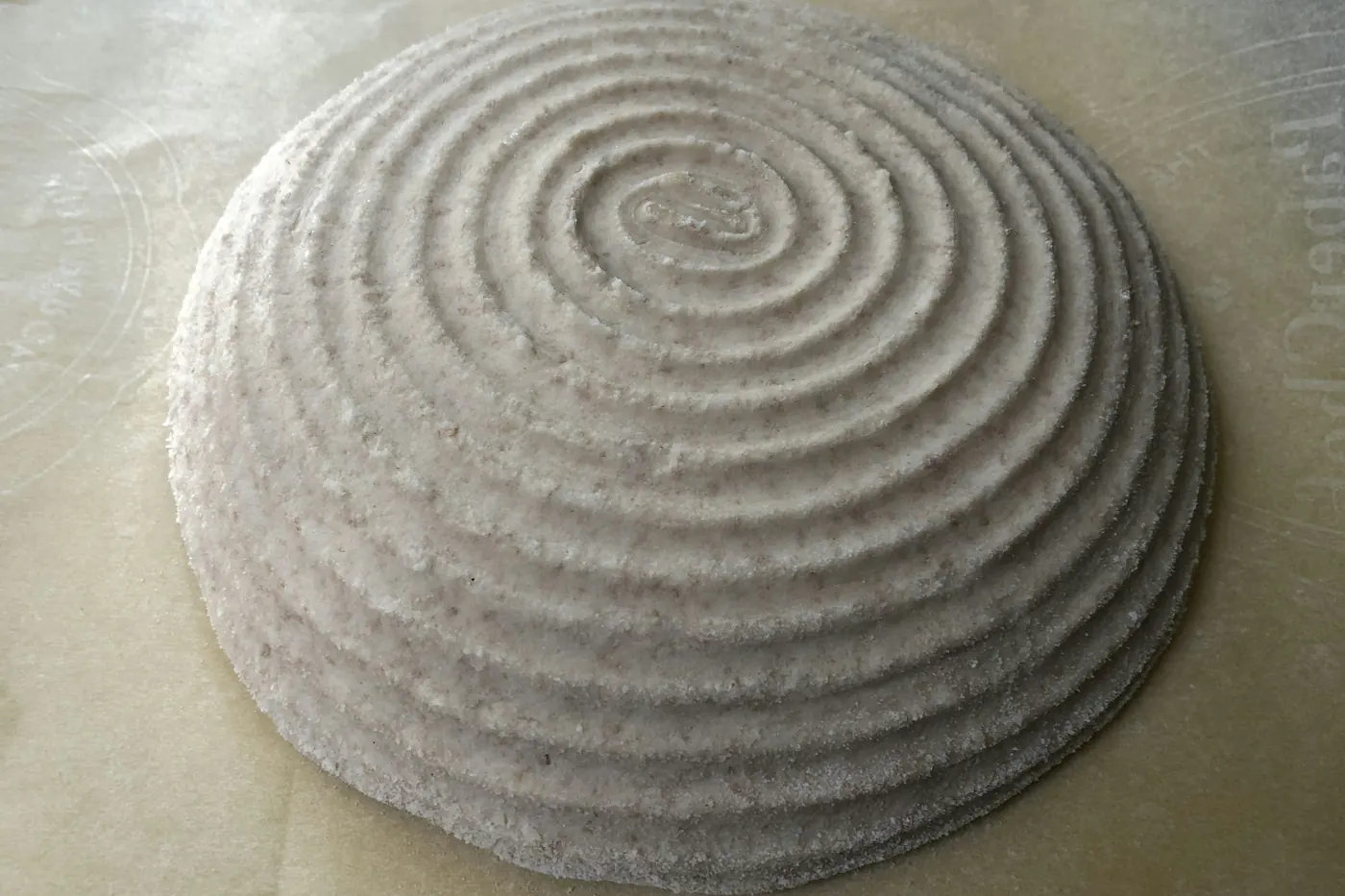
The rattan works like any coiled cane basket: its ridges print a spiral ring pattern on the crust, and Bread Bosses says the dough releases better and needs less flour as the basket builds up use. The listing says the basket can hold dough overnight in the fridge if you cover it tightly with a bag. Use the cloth liner for wet doughs and when you want a smooth surface for scoring; ATK doesn’t recommend bare rattan for doughs of 80 percent hydration or more.
We found no independent review of this kit, so the case for it rests on the listing. Like any natural-fiber basket, it needs brushing out and drying completely after use to keep mold away, as ATK notes for rattan.
Why we like it
- Stated capacity: 1.5 pounds of dough.
- Cloth liner and bench scraper included.
- Rattan ridges print the classic spiral rings.
- Suited to overnight proofing in the fridge, per the listing.
Key specifications
| Model | Not stated (9-inch round kit) |
|---|---|
| Material | Natural rattan cane |
| Shape | Round |
| Size/dough capacity (stated) | 9 x 3.5 in; 1.5 lb of dough |
| Liner included | Yes, cloth liner; plus a plastic scraper |
| Care | Not stated; brush and dry fully |
Why we recommend it
It suits a first-time sourdough baker who wants the basket, liner and scraper in one box.
Skip it if you bake very wet doughs without a liner; a wood pulp basket like the Bulka releases them more easily.
Pros and cons
Pros
- Capacity stated by weight.
- Liner and scraper included.
- Classic ring pattern.
Cons
- Bare rattan needs seasoning before it releases well.
- Care instructions not stated; no independent review found.
7. Bulka 7-inch Round Wood Pulp Banneton – Sized for Half-Batch Loaves

Not every household wants a kilogram of bread at once. Bulka’s small round is the same spruce wood pulp as its big basket, handmade in Germany, with a 7.1 x 2.5-inch interior that holds 550 to 650 grams of dough and bakes a 500-gram loaf, according to the listing. That is a half batch of most sourdough recipes, and a good size for a two-person household or a smaller Dutch oven.
This one has a smooth interior rather than grooves, so the loaf comes out with a plain floured surface, closer to what a liner gives you, while keeping wood pulp’s easy release. Care is the same as Bulka’s other baskets: no water, dry it with leftover oven heat at 210 to 250°F for 30 minutes, and brush off the flour.
Why we like it
- Holds 550–650 g of dough, per Bulka.
- Smooth interior for a plain crust.
- Wood pulp release.
Key specifications
| Model | Bulka 500g round, smooth (0.1) |
|---|---|
| Material | Pressed spruce wood pulp |
| Shape | Round, smooth interior |
| Size/dough capacity (stated) | 7.1 x 2.5 in interior; 550–650 g dough, 500 g loaf |
| Liner included | No |
| Care | No water; dry in a 210–250°F oven for 30 min, then brush |
Why we recommend it
It suits small households and anyone baking half batches in a smaller pot.
Skip it if your recipes make a full kilogram of dough; it will overflow.
Pros and cons
Pros
- Right size for small loaves.
- Plain surface for scoring.
- Easy release.
Cons
- Too small for standard recipes.
- No water washing.
How to choose a bread proofing basket
Material. Rattan (cane) is the classic: sturdy, light and slightly porous, and it prints a coil pattern on the loaf. It needs a few uses to build up “seasoning,” and America’s Test Kitchen doesn’t recommend proofing doughs of 80 percent hydration or more in bare rattan. Spruce wood pulp was ATK’s easiest material: it absorbed enough moisture to release even the wettest doughs from the first use, no liner needed. Molded fiber, like Brød & Taylor’s, is newer and stackable. Plastic bannetons are the easiest to clean and can go in the dishwasher, according to ATK, but nearly every dough stuck to the bare plastic, so you always need a liner.
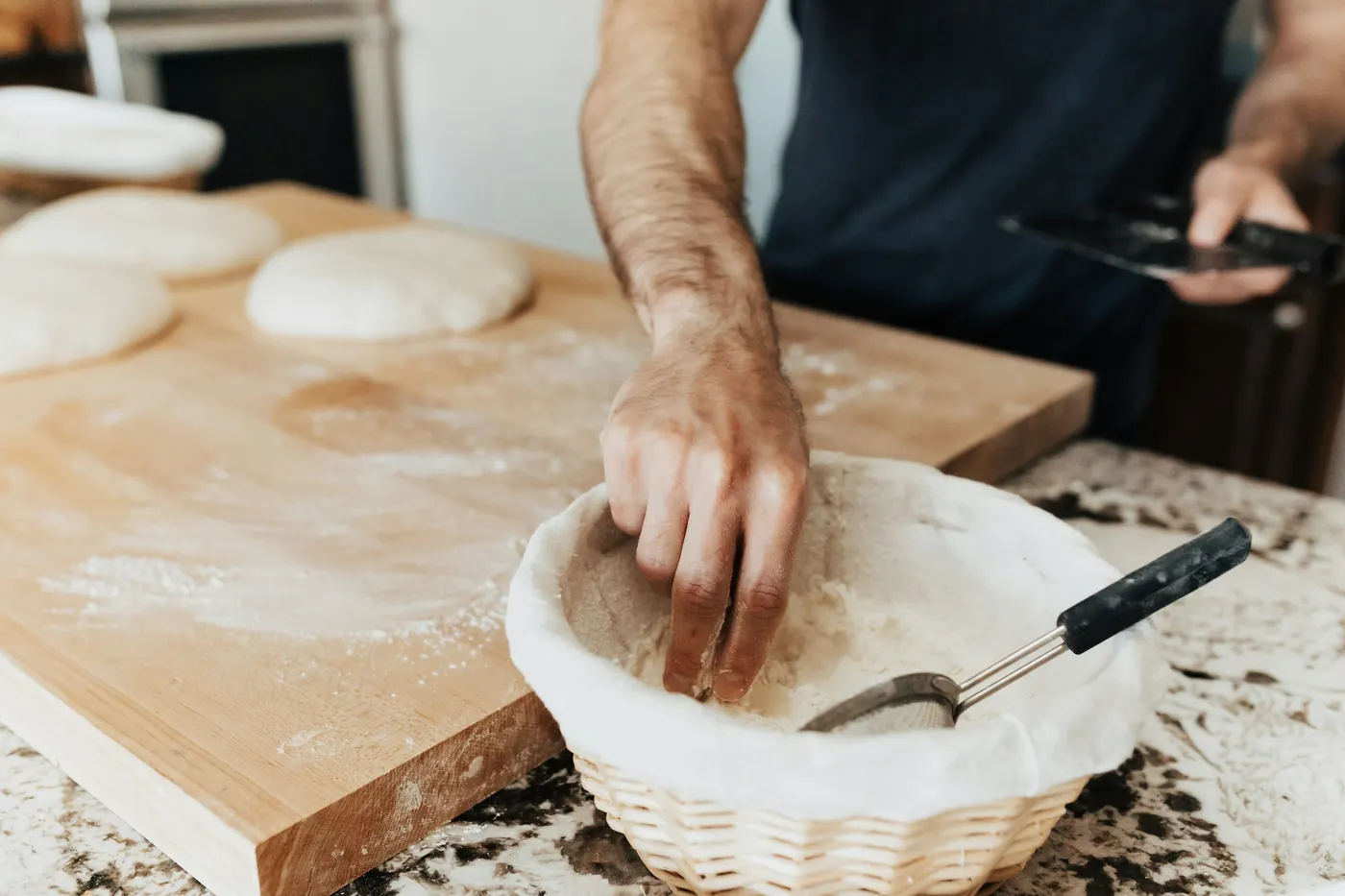
Size and capacity. Match the basket to the dough weight your recipe makes, not the loaf. ATK found 9-inch rounds and 10-inch ovals hold loaves up to about 1 kilogram, the size most recipes make. Smaller 7-inch baskets suit half batches. Where a maker states grams, as Bulka and Brød & Taylor do, use that.
Round or oval. A round basket makes a boule, which fits any round Dutch oven. An oval makes a batard, which slices more evenly for sandwiches but needs an oval baker or a long enough pot. If you own one round Dutch oven, start with a round basket.
Liner or no liner. A cloth liner helps wet doughs release, gives you a smooth surface that shows off scoring, and keeps add-ins out of the basket. ATK found little practical difference between linen and cotton, and it preferred removable liners, which are easier to clean than attached ones. Without a liner, you get the basket’s pattern on the crust.
Care. Natural fibers need drying. Rattan and wood pulp can develop mold if put away damp, ATK notes, so brush out the flour after each use and let the basket dry completely; Bulka suggests leftover oven heat at 210 to 250°F for its wood pulp baskets. Bulka and Brød & Taylor both say not to wash their baskets with soap and water. Wash cloth liners as needed and dry them well.
How to use a banneton
Dust the basket, or the liner, with flour before each use. Put the shaped dough in seam side up, so the smooth top sits against the basket. Cover it and proof at room temperature or overnight in the fridge. To bake, turn the basket over onto parchment, a peel or a silicone sling, score the loaf and move it into a hot Dutch oven or onto a stone. Weigh the dough with a kitchen scale so it suits the basket’s stated capacity.
How we picked these seven bannetons
We started from the bannetons America’s Test Kitchen reviewed and the makers bakers ask about most, then checked what is actually sold and in stock on Amazon. ATK’s favorites, from Breadtopia, Flourside and King Arthur Baking Company, and the TMB Baking plastic basket it tested, aren’t sold there, so we chose Amazon-listed baskets of the same materials and sizes. Frieling’s brotforms showed only limited stock. We found no plastic banneton on Amazon from a maker we could identify, so this guide has none; ATK’s findings on plastic are in the buying guide above. We also left out the many unbranded multi-basket starter kits, and we do not cover Matfer Bourgeat products on this site.
Specifications come from the Amazon listings and makers’ pages, including Brød & Taylor’s product page for its banneton’s size, capacity and care. We read America’s Test Kitchen’s banneton review in full and quote its findings where we use them. We have not used these baskets for this guide, and we did not rely on Serious Eats or Wirecutter.
Proofing basket questions, answered
What is the best bread proofing basket for sourdough?
A 9-inch wood pulp banneton, like the Bulka 1kg round, is the easiest for sourdough, which is often wet and sticky; ATK found wood pulp released even very high-hydration doughs from the first use. A rattan basket with a liner is the more versatile choice once you are comfortable shaping.
What is the best type of bread proofing basket?
ATK slightly preferred rattan with a removable cloth liner for its decorating options, and rated wood pulp the easiest to use. Plastic is easiest to clean but always needs a liner.
Do I need a liner?
Not with wood pulp. With rattan, use one for wet doughs (80 percent hydration or more, per ATK) and whenever you want a smooth surface for scoring.
How do I keep a banneton from getting moldy?
Brush out the flour after every use and let the basket dry completely before you store it. Don’t stack damp baskets, and don’t wash wood pulp or molded fiber baskets with water unless the maker says you can.
Can I proof bread without a banneton?
Yes. ATK notes a colander lined with a floured dish towel works. A banneton is worth it if you bake a loaf a week.
Our final pick for proofing a loaf
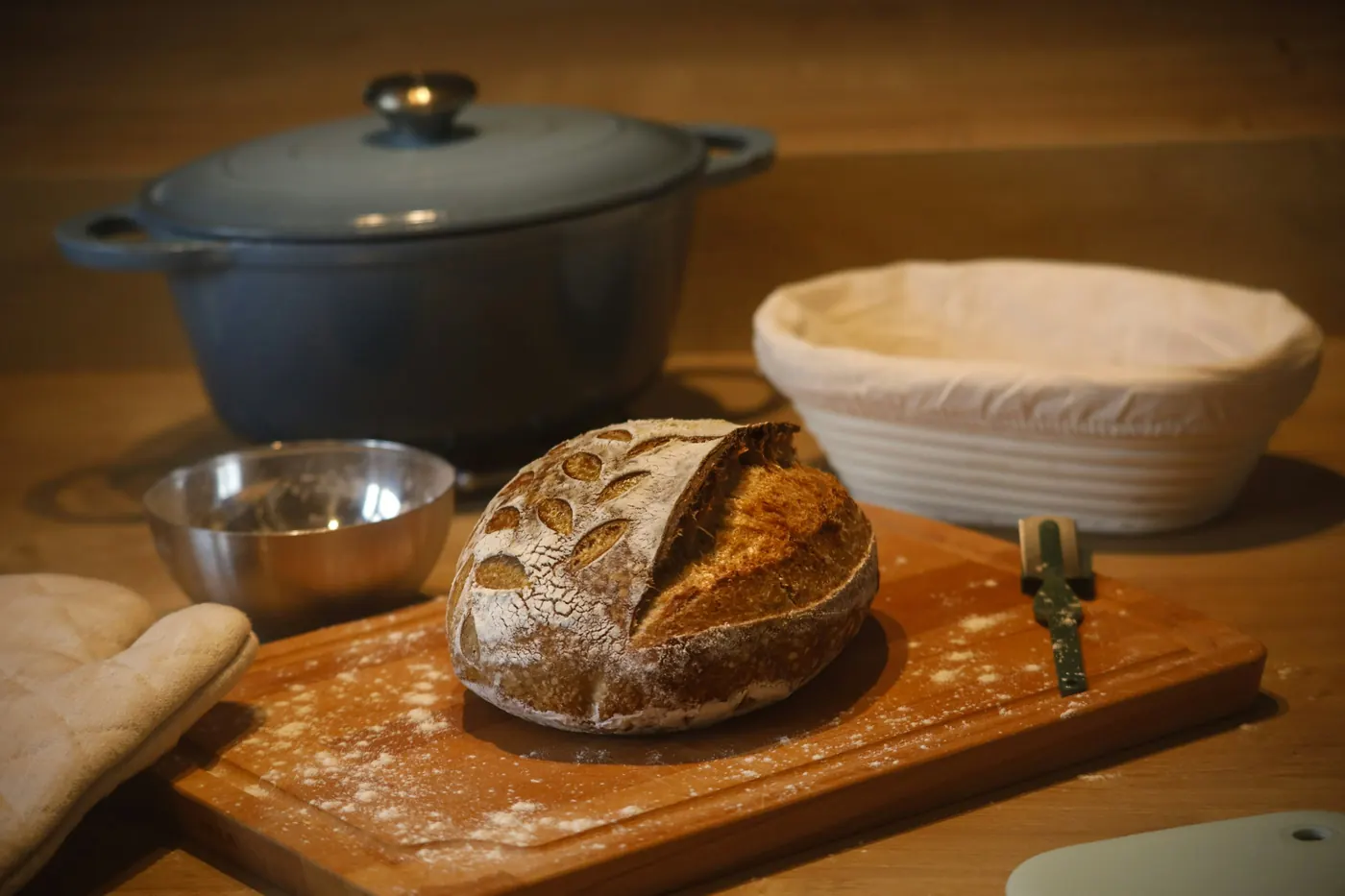
Start with the Bulka 9-inch wood pulp round for easy release, or the Saint Germain rattan round if you want the coil pattern and a liner. Bake the loaf in one of the pots from our best Dutch oven guide, score it with a blade from our best bread lame picks, weigh the dough on a kitchen scale, and mix it with a dough whisk. When it’s baked and cooled, our best bread knife guide covers the slicing.
To shape and move sticky dough before it goes into the basket, use a bench scraper.
Want controlled warmth too? See our guide to the best bread proofing boxes.
Related guide: Bread proofing basket alternative.
And if you would rather leave the baking to our kitchen tonight, see the menu or call to order.