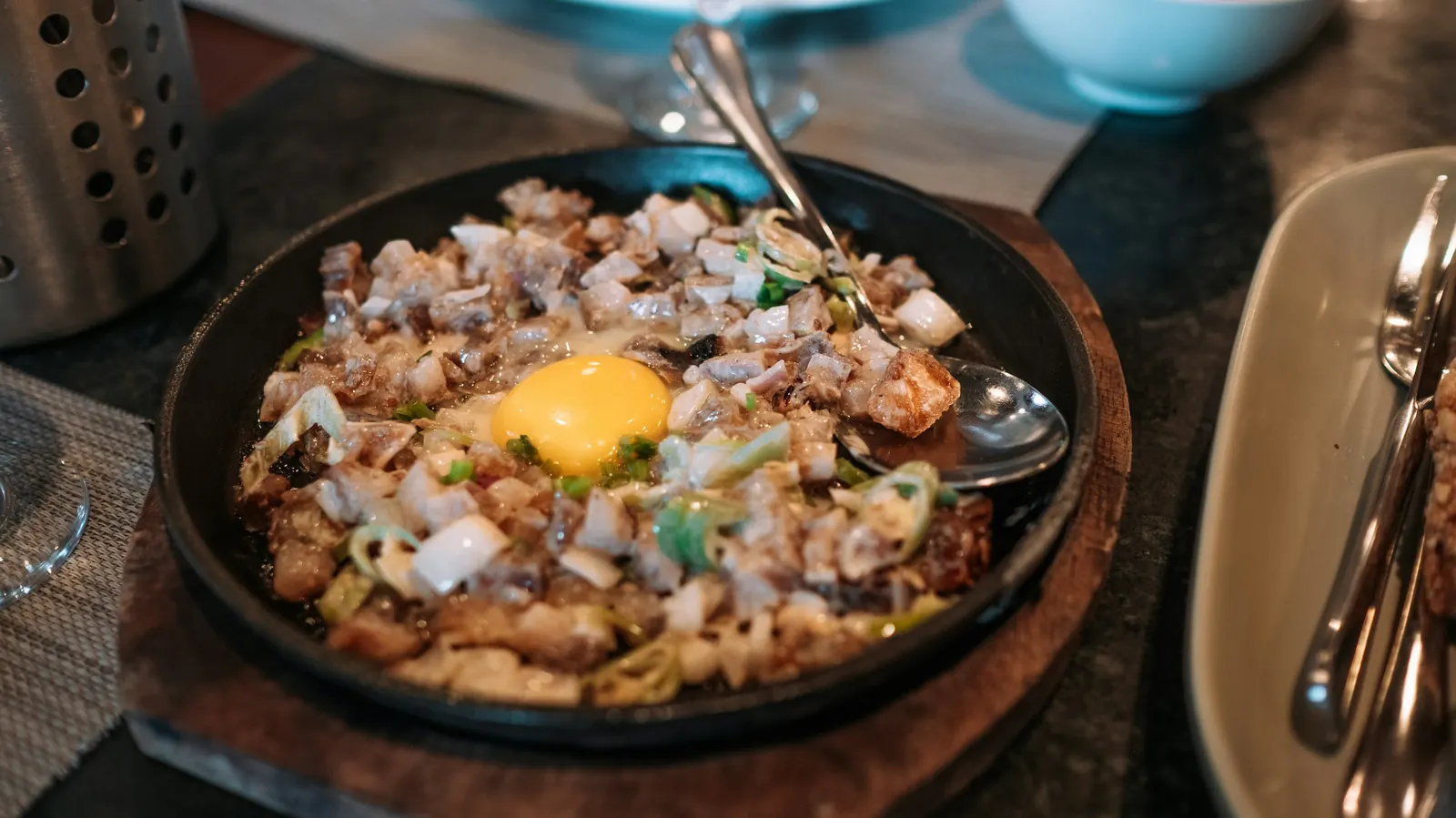
A cast iron skillet and a nonstick pan look like rivals for the same spot on the stove, but they solve different problems. Cast iron is a heavy slab of metal that holds heat and gets better as its seasoning builds up. A nonstick pan is usually a light pan with a slick coating on top: it lets food go easily from the first day, and it wears out slowly from then on.
In a restaurant kitchen both kinds of pan earn their keep. The heavy pans and the plancha do the searing, and eggs and delicate fish go into something slick. This guide compares the two on heat, weight, release, care, coating life and high-heat safety, says which to buy first, and names a pick in two sizes on each side.
Julia’s earns a commission on purchases made through links on this page, at no cost to you. Recommendations are based on what a restaurant kitchen looks for, product specifications and verified buyer reports.
Quick verdict: which skillet for everyday cooking
If you can own only one pan, make it a cast iron skillet. It sears, fries, bakes and goes into the oven, it has no coating to wear out, and with care it outlasts any nonstick pan. Buy a nonstick pan first only if most of your cooking is eggs, pancakes and delicate fish, or if lifting a pan of about 8 pounds is a problem. For many kitchens the best answer is a cast iron skillet for daily use plus one modest nonstick pan for eggs, replaced when its coating gives out.
The table sums up the differences. The sections after it explain each one.
Cast iron vs nonstick pan, side by side
| Cast iron skillet | Nonstick pan | |
|---|---|---|
| Cooking surface | Bare iron with baked-on oil seasoning | Factory coating, usually on aluminum |
| Heat | Holds heat well; start at medium-low and work up (Lodge) | Medium-low to medium is the advice (Made In) |
| Weight, 12-inch | About 8 pounds for top-rated pans (America’s Test Kitchen) | About 2.5 to 2.75 pounds for top-rated pans (America’s Test Kitchen) |
| Eggs and fish | Good once the seasoning is built up; new pans stick more | Easy release from day one |
| Searing | Its strength: mass holds heat for deep browning | Possible, but high heat is the coating’s enemy |
| Cleaning | Hand wash, dry, light coat of oil (Lodge) | Quick wipe; some are dishwasher safe, but the dishwasher can wear the coating (Made In) |
| Lifespan | No coating to wear out; seasoning can be redone at home | Five to seven years for a quality coating, per the Cookware and Bakeware Alliance |
| Heat limit | No coating to overheat; Backcountry Iron lists oven and broiler use | PTFE coatings: keep under 500°F; America’s Test Kitchen says no broiling |
Heat: mass against speed
Cast iron’s main strength is the heat it holds. Lodge says cast iron “retains heat like no other cookware,” and America’s Test Kitchen’s cast iron review explains why: a thick, heavy pan has the mass to hold more heat than a thin one, and that stored heat gives deep, even browning. When cold meat hits the pan, a heavy skillet loses less temperature, so the meat sears instead of steaming.
That same mass means patience. Lodge recommends letting the pan preheat for a couple of minutes and starting at medium-low, working up from there, rather than blasting it on high. A thin, light pan of either kind reacts faster when you turn the knob down, which matters for sauces and eggs. America’s Test Kitchen also found that lighter cast iron pans developed hot spots, so a thicker pan is the better buy if even browning is the point.
Nonstick pans are mostly aluminum underneath, and the coating sets the rules. Made In advises medium-low heat for nonstick on the stovetop, and warns that long exposure to high heat can degrade the coating. That makes nonstick a poor tool for the hard sear that carne asada or a pan of fajita vegetables wants.

Weight and handling
This is nonstick’s clearest win. America’s Test Kitchen’s favorite 12-inch cast iron skillets weighed around 8 pounds, while its favorite 12-inch nonstick skillets weighed 2.5 to 2.75 pounds. That gap is the difference between tossing vegetables with one hand and needing two hands and a helper handle to move the pan.
If you have weak wrists or a high shelf, or you cook for one in small amounts, weight may settle the question by itself. For a cast iron pan, a helper handle on the far side makes the 12-inch size far easier to lift, and a 10-inch pan is a good deal lighter. Use a proper mitt either way, because the whole cast iron pan, handle included, gets hot.
Eggs, fish and release
A new nonstick pan lets a fried egg slide out with no fat at all; that is how America’s Test Kitchen judges them. Cast iron can do the same, but only once its seasoning has built up and the pan is properly preheated with some fat. A brand-new skillet, even one sold pre-seasoned, will usually stick more at first. Lodge’s advice is simply to keep cooking in it, since use is what builds the seasoning.
Lodge also suggests holding off on tomato and lemon dishes until the seasoning is established, which matters in a Mexican kitchen full of salsa and lime. Nonstick has no such limit. This is general kitchen sense rather than a sourced claim: if your mornings are eggs and quesadillas and your evenings are sauces, nonstick will feel easier in the first months, and cast iron catches up as it seasons.
Care and cleaning
Lodge’s routine for cast iron is short: let the pan cool, hand wash it with warm, soapy water, dry it and rub on a light layer of oil. For stuck-on food, simmer water in it for three to five minutes and scrape once it has cooled. Soap is fine. Backcountry Iron adds the rest: cast iron can rust, so keep it out of the dishwasher, don’t soak it overnight and don’t leave it to air dry. If the seasoning ever gets patchy, you can reseason it at home and keep going.
Nonstick is quicker day to day, since most food wipes out. The care rules are about protecting the coating. Made In says never to use metal tools, which can scratch or chip it, and that the dishwasher’s heat and pressure can degrade it, even though some makers label their pans dishwasher safe. America’s Test Kitchen recommends silicone or wooden tools. A good fish spatula for nonstick pans fits that rule.
Coating lifespan: the cost nobody lists
A nonstick pan is a pan you will buy again. America’s Test Kitchen says PTFE coatings “will eventually wear out with use,” so the pans have to be replaced from time to time. In a separate piece, it quotes Fran Groesbeck of the Cookware and Bakeware Alliance: expect five to seven years from a pan with a quality coating, and how you treat it decides how long it lasts. If the coating is flaking off, throw the pan out.
Cast iron has no coating to wear out. Its seasoning is oil baked onto the iron, and you renew it by cooking and oiling. That is why a cast iron skillet is the better long-term buy even when a nonstick pan costs less on the day, and why our best cast iron skillet guide treats it as a pan for decades.
High heat and PFAS: what the authorities say
The US Food and Drug Administration lists nonstick coatings on pots and pans among the uses of PFAS-containing substances it has authorized for food contact since the 1960s. It says the manufacturing process vaporizes off virtually all of the smaller PFAS molecules that could migrate, and that studies show negligible amounts can migrate to food. We report what the FDA says and make no wider health claim either way.
The firmer rule is about heat. America’s Test Kitchen notes that PTFE can give off toxic fumes when heated above 500°F, advises against broiling a nonstick pan or using it in an oven above 450°F, and says to follow any lower limit the maker sets. So never preheat an empty nonstick pan on high. Plain cast iron has no coating to overheat, which is one more reason it is the searing pan.
Choose a cast iron skillet if… / Choose a nonstick pan if…
Choose a cast iron skillet if…
- You sear meat, char peppers or fry often and want deep browning.
- You want one pan that goes from stove to oven to grill.
- You would rather buy a pan once than replace a coating every few years.
- Hand washing and a wipe of oil after cooking don’t bother you.
Choose a nonstick pan if…
- Most of your cooking is eggs, pancakes, crepes or delicate fish.
- An 8-pound pan is hard for you to lift.
- You cook at medium heat and want the quickest cleanup.
- You accept replacing it when the coating wears out.
Our picks for the cast iron vs nonstick pan question
Two picks per side, in matching sizes: a 10-inch and a 12-inch of each kind. All four were in stock when we checked. None of these exact listings appears on our other pages, but two are different sizes of lines we cover. The Bayou Classic 12-inch is from the same pre-seasoned line as the 8 and 10-inch Bayou Classic set in our best cast iron skillet set guide; we chose it here for its helper handle, which matters on a heavy 12-inch pan. The Tramontina 10-inch is the smaller size of the 12-inch Tramontina in our best induction frying pan guide, chosen because 10 inches is the size most cooks use for eggs.
1. Backcountry Iron 10.25-inch Cast Iron Skillet – Pre-Seasoned, Every Heat Source
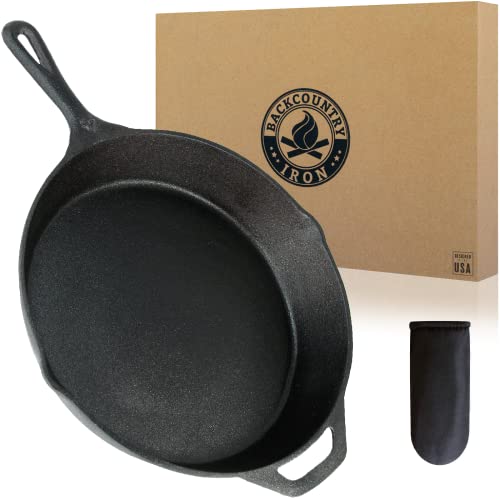
This is a plain, round cast iron skillet from Backcountry Iron, which describes itself as a small business and says its pans are designed in the USA. The listing gives a 10.25-inch diameter, 10.75 inches spout to spout and a 4.75-inch handle, and says the pan comes pre-seasoned with the maker’s own oil blend, ready to use.
The listing names gas, electric and induction cooktops, plus the oven, broiler, grill and fire pit, so it covers everything from morning eggs to cornbread to a skillet set over the coals. Ten inches is the right size for one or two people, and it is a good deal easier to lift than a 12-inch pan. Backcountry Iron also says its finish is smoother than other leading brands; treat that as the maker’s claim.
The care advice matches Lodge’s: no dishwasher, no overnight soak and no air drying. Use warm water, scrape off stuck food with a flat tool, wipe it dry at once and apply a fresh layer of oil.
Why we like it
- Pre-seasoned and ready to use (listing)
- Induction, oven, broiler and grill use stated
- Dimensions given, including the handle
- Clear care instructions from the maker
Key specifications
| Model | UK0040 |
|---|---|
| Material | Cast iron |
| Size | 10.25 inches |
| Surface | Pre-seasoned, maker’s oil blend |
| Stovetops | Gas, electric, induction |
| Oven and broiler | Yes (limit not stated) |
| Dishwasher | No |
| Warranty | 90 days |
Why we recommend it
It suits a cook for one or two who wants a first cast iron pan that can do eggs, searing and baking, at a weight that is still easy to handle.
Skip it if you want a long warranty and a maker with a long record; the Lodge skillets in our best cast iron skillet guide have both.
Pros and cons
Pros
- Works on every heat source listed
- Ready to cook on arrival
- Lighter to lift than a 12-inch pan
Cons
- Short 90-day warranty
- Weight and country of manufacture not stated
- Small brand; the listing is the main source
2. Bayou Classic 12-inch Cast Iron Skillet – Helper Handle for a Heavy Pan

Bayou Classic’s 7432 is a 12-inch seasoned cast iron skillet with a helper handle on the far side and pour spouts. The listing says it transfers and retains heat evenly and is seasoned to ease cleaning and prevent rust, and it suggests it for breakfast, pan frying, sautéing and baking. An alligator is etched on the bottom.
Twelve inches is the family size: room for a full batch of fajita strips or four chicken thighs without crowding. That size is also where weight starts to bite. America’s Test Kitchen’s top 12-inch cast iron pans weighed about 8 pounds, and the helper handle is what makes lifting one with two hands manageable. The pour spouts help when you drain fat or pour off a pan sauce.
The listing does not state weight, oven limit, stovetops or warranty, so we follow the general cast iron routine from Lodge: preheat gradually, hand wash, dry at once and oil lightly.
Why we like it
- Helper handle for two-handed lifting
- Two pour spouts
- Seasoned at the factory (listing)
- Family-size 12-inch surface
Key specifications
| Model | 7432 |
|---|---|
| Material | Cast iron |
| Size | 12 inches |
| Surface | Seasoned |
| Stovetops | Not stated |
| Oven and broiler | Baking named; limit not stated |
| Dishwasher | Not stated (cast iron is hand wash) |
| Warranty | Not stated |
Why we recommend it
It suits a cook feeding a family who wants one big searing and frying pan and needs a second handle to move it safely.
Skip it if you want full maker specifications; the listing is thin, and our best cast iron skillet guide has pans with more published detail.
Pros and cons
Pros
- Large cooking surface
- Helper handle and pour spouts
- No coating to wear out
Cons
- Heavy, as any 12-inch cast iron pan is
- Weight, stovetops and warranty not stated
3. Tramontina 10-inch Tri-Ply Base Nonstick Frying Pan – Induction-Ready Egg Pan

This Tramontina pan pairs an 18/10 stainless steel body with a tri-ply base and a reinforced nonstick coating, according to the listing. The steel base is why it works on induction as well as gas, electric and ceramic glass cooktops, which many aluminum nonstick pans don’t. Tramontina makes it in Brazil and backs it with a lifetime warranty.
Ten inches is the classic egg pan size: two or three eggs, an omelet, a couple of tortillas warmed with cheese for quesadillas. The listing says it is oven safe to 450°F, which sits right at the limit America’s Test Kitchen gives for nonstick in the oven, so treat 450°F as the ceiling and don’t use the broiler.
The listing calls it dishwasher safe. Made In warns that dishwasher heat can wear a coating down over time, so hand washing is the safer habit if you want the coating to last. Use silicone or wooden tools, and keep the heat at medium or below.
Why we like it
- Works on induction (listing)
- Oven safe to 450°F
- Lifetime warranty from Tramontina
- Made in Brazil
Key specifications
| Model | 80154/081DS |
|---|---|
| Material | 18/10 stainless steel, tri-ply base |
| Size | 10 inches |
| Surface | Reinforced nonstick coating |
| Stovetops | Gas, electric, induction, ceramic glass |
| Oven and broiler | Oven to 450°F; no broiler |
| Dishwasher | Yes (listing); hand wash extends coating life |
| Warranty | Lifetime |
Why we recommend it
It suits a cook with an induction or glass cooktop who wants one dedicated pan for eggs and delicate fish next to a cast iron skillet.
Skip it if you want the lightest possible pan; a stainless body is heavier than plain aluminum, and the listing does not state the weight.
Pros and cons
Pros
- Induction compatible
- High oven rating for nonstick
- Lifetime warranty
Cons
- Coating type and weight not stated
- The coating will still wear out with use
4. Cuisinart 12-inch Chef’s Classic Stainless Nonstick Skillet – Big Pan, Helper Handle

Cuisinart’s 722-30HNS is a 12-inch open skillet with a stainless body, an aluminum-encapsulated base and Cuisinart’s Quantanium nonstick interior, which the listing describes as titanium reinforced. The listing says the base heats quickly and spreads heat evenly. It has riveted stainless Cool Grip handles, a long one and a helper handle, and carries a limited lifetime warranty.
A 12-inch nonstick pan is the one for a family breakfast: a dozen scrambled eggs, a batch of pancakes, or fish fillets that must not tear. The helper handle is unusual on a nonstick pan and helps when the pan is full. As with any coated pan, it is not the tool for a hard sear; save that for the cast iron.
The listing does not give an oven limit, induction compatibility or dishwasher guidance. Follow America’s Test Kitchen’s general rule of no broiling and no oven above 450°F unless Cuisinart’s insert says otherwise, keep metal tools out of it, and hand wash it.
Why we like it
- Helper handle on a 12-inch pan
- Aluminum-encapsulated base (listing)
- Riveted stainless handles
- Limited lifetime warranty
Key specifications
| Model | 722C-30HNS |
|---|---|
| Material | Stainless steel, aluminum-encapsulated base |
| Size | 12 inches |
| Surface | Quantanium titanium-reinforced nonstick |
| Stovetops | Not stated |
| Oven and broiler | Not stated; no broiler |
| Dishwasher | Not stated; hand wash |
| Warranty | Limited lifetime |
Why we recommend it
It suits a family cook who wants a large slick pan for eggs, pancakes and fish, with a second handle for moving it when full.
Skip it if you cook on induction; the listing does not confirm it, and the Tramontina above does.
Pros and cons
Pros
- Family-size nonstick surface
- Helper handle
- Long warranty
Cons
- Oven limit, induction and weight not stated
- The coating will wear out in time
Cast iron and nonstick questions, answered
Which skillet is best for everyday cooking?
For most kitchens, cast iron. It handles searing, frying, baking and oven finishing, and it doesn’t wear out. Add a nonstick pan for eggs if you cook them often.
Can cast iron replace a nonstick pan?
Mostly, once the seasoning is built up. Preheat it, use some fat, and eggs will release. A new skillet sticks more, and very delicate fish and crepes are still easier in nonstick.
Is cast iron healthier than nonstick?
We make no health claim either way. The FDA has authorized PFAS-containing nonstick coatings for food contact and says studies show negligible migration to food. The clear safety rule is heat: don’t heat a PTFE pan above 500°F, per America’s Test Kitchen.
How long does a nonstick pan last?
About five to seven years for a quality coating, according to the Cookware and Bakeware Alliance as quoted by America’s Test Kitchen, and less with metal tools, high heat or the dishwasher. Replace it when the coating flakes.
Can I use soap on cast iron?
Yes. Lodge says to hand wash it with warm, soapy water once it cools, then dry it and oil it lightly. What to avoid is soaking it and putting it in the dishwasher.
Which pan goes on the stove first
Start with cast iron. It does more jobs, it lasts, and it gets better the more you cook in it. Add a nonstick pan when eggs and fish start to feel like a fight, and treat it as a pan you will replace. If weight is the limit, reverse the order, or look at the lighter carbon steel pans in our nonstick pan alternatives guide. For more choices on each side, see our best cast iron skillet and best nonstick pans guides, and if you make tortillas often, our comal vs cast iron skillet guide explains when a flat comal is the better buy.
And when you would rather someone else did the cooking, see the menu or call to order.