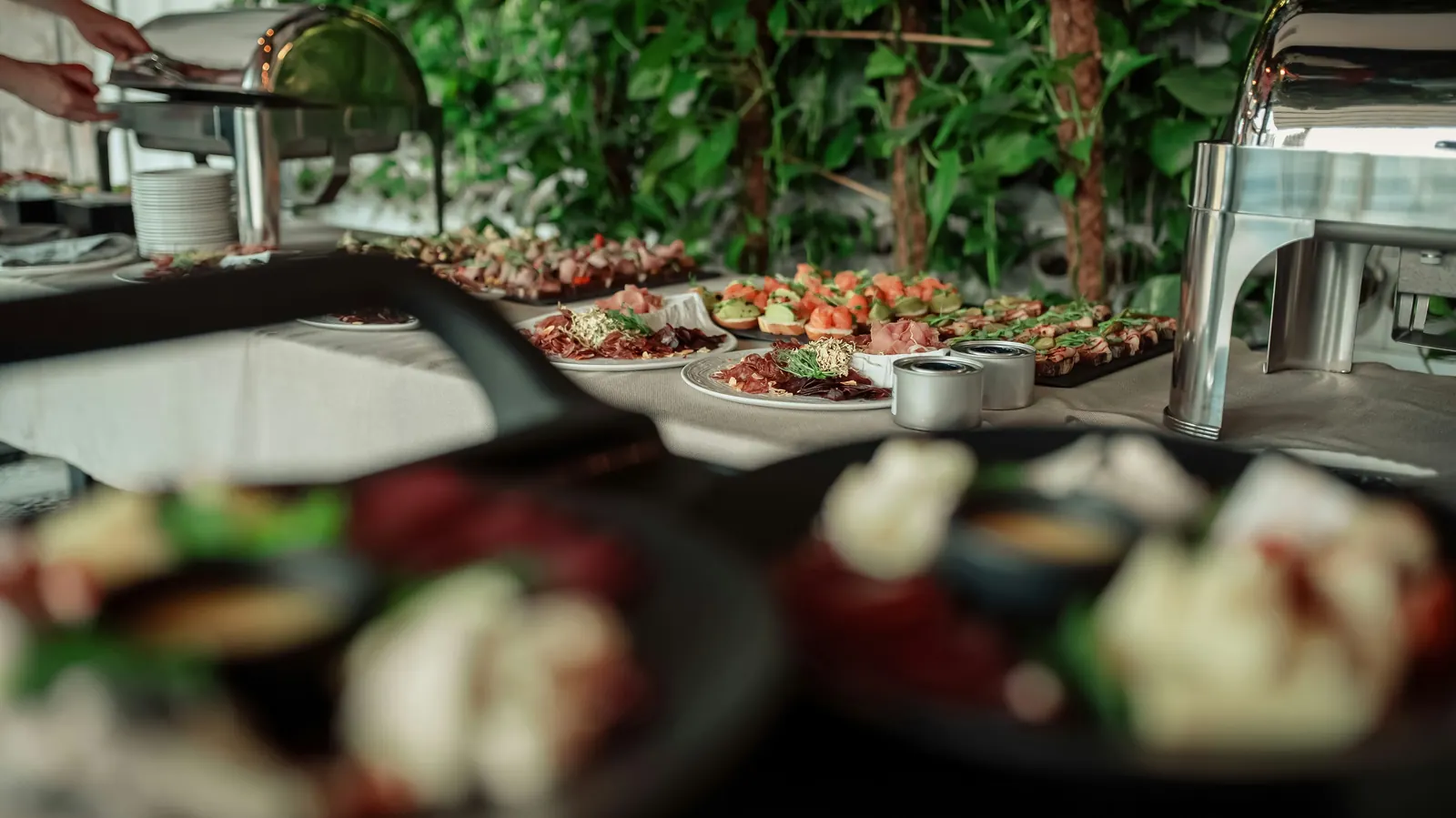
A chafing dish and a warming tray both keep cooked food hot on a party table, and food-safety extension services name both, alongside slow cookers, as the way to hold hot food at 140°F or warmer. They get there differently. A chafing dish sets a pan of food over a pan of hot water, warmed from below by a can of fuel. A warming tray is a flat electric hot plate: you plug it in and set your own dishes on top.
That difference decides where each one works, what you can serve from it and how much fuss it adds to the party. In a restaurant kitchen, holding food is its own job, separate from cooking it, and both tools are built only for holding. This guide compares them on heat source, temperature, food types, table and space, safety, cleanup and running cost, then names one example of each.
Julia’s earns a commission on purchases made through links on this page, at no cost to you. Recommendations are based on what a restaurant kitchen looks for, product specifications and verified buyer reports.
Quick verdict: chafing dish or warming tray?
For most home parties held indoors near an outlet, start with a warming tray. There is no flame and no fuel to buy, it holds the casserole dishes you already own, and it stores flat. Choose a chafing dish if you serve outdoors or far from an outlet, feed a big crowd from full-size pans, or serve wet dishes like beans, rice and guisados for hours, where a water bath is gentler. Whichever you buy, it holds hot food; it does not reheat cold food.
The table sums up the differences. The sections after it explain each one.
Chafing dish vs warming tray, side by side
| Chafing dish (fuel) | Warming tray (electric) | |
|---|---|---|
| Heat source | Canned chafing fuel under a water pan | Electric heating element under a flat top |
| How heat reaches food | Through hot water (moist, indirect) | Dry heat straight into the dish |
| Needs an outlet | No | Yes |
| Run time | Set by the fuel: 45 minutes to 6 hours, per Sterno | As long as it is plugged in and watched; Chefman says up to 72 hours |
| Temperature control | None beyond fuel choice and water level | A dial; Chefman’s RJ22 lists Low 120°F, Med 195°F, High 265°F |
| Serving dishes | Its own steam-table pans | Your own heat-resistant dishes; no plastic |
| Indoors or out | Both | Indoors only (Chefman) |
| Ongoing cost | Fuel cans for every event | Electricity only |
| Storage | Bulky unless the frame folds | Flat |
Heat source: a flame or a plug
A chafing dish is a frame that holds a water pan, with a food pan sitting in the water and a lid on top. One or two cans of chafing fuel burn in holders under the water pan. Sterno, the best-known fuel maker, sells fuels that burn from 45 minutes to six hours and says to choose one that lasts the whole event, so you are not changing cans during service. Sterno also says its chafing fuels are made to keep food at serving temperature, not to cook it.
A warming tray needs nothing but a wall outlet. Chefman’s user guide for its RJ22 family-size tray says to let the tray warm up, then set a heat-resistant pot, pan or glass dish of already-cooked food on top. The guide is just as plain that the tray is not a cooking appliance.
That is the first fork in the road. If your table is in a backyard, a park pavilion or a church hall with one outlet across the room, the chafing dish wins by default. Chefman’s guide says not to use its tray outdoors at all.

Holding temperature: 140°F is the line
The number that matters is 140°F. Amber Griswold of Extension Dodge County (University of Wisconsin–Madison) writes that hot foods should be held at 140°F or warmer, and that chafing dishes, slow cookers and warming trays will do it. The National Center for Home Food Preservation at the University of Georgia and Julie Albrecht of Nebraska Extension say the same. Both tools can hold food at that temperature. The question is how easily you can tell.
With a warming tray, the dial helps, but read the settings. Chefman’s guide gives its RJ22 tray three marked points: Low at 120°F, Medium at 195°F and High at 265°F. Low sits below 140°F, so it is not a holding setting for hot food. Those are surface settings, not food temperatures; a deep dish of beans on Medium may still read lower in the middle.
A chafing dish has no dial at all. Heat depends on the fuel, the water level and how often guests leave the lid open. Sterno advises starting with very hot water in the water pan. In both cases, the only way to know is a probe thermometer in the food. Our instant-read thermometer guide covers good ones.
Neither tool reheats. Griswold says leftovers should be heated to 165°F before eating, and both Sterno and Chefman say their products hold food rather than cook it. Heat food on the stove or in the oven first, then move it to the buffet. Our guide on reheating Mexican leftovers covers tamales, rice and beans.
Wet heat or dry heat: what each one serves best
This part is general kitchen sense rather than a sourced test. A chafing dish holds food over hot water, so the heat is moist and gentle, much like a restaurant steam table. That suits wet, saucy food that sits for a long time: frijoles charros, chile colorado, rice, pozole in a deep pan, shredded meats in their juices. The water also spreads the heat, so the bottom of the pan is less likely to scorch.
A warming tray heats the dish from below with dry heat. It does well with food in a heavy casserole or baking dish that holds heat: enchiladas, a lidded dish of tamales, baked queso, roasted vegetables. On a long party, thin sauces can dry and thicken at the edges, so stir now and then and keep a lid on where you can. Tortillas keep better in a cloth or a tortilla warmer than on either one.
Capacity is the other half. A full-size chafer holds one large steam-table pan; Vollrath rates its Orion at 9 quarts. A 21 by 16-inch tray holds two or three home casserole dishes side by side. If you are feeding thirty people, a line of chafers scales up in a way one tray does not.
Your table, your outlets and your space
A warming tray has rules about where it sits. Chefman’s guide says to place it on a flat, sturdy, heat-resistant surface such as granite, stainless steel, quartz or marble, and not on butcher block, wood, bamboo or plastic. It asks for at least 8 inches of space around the tray so air can move underneath, and it says never to cover the tray with foil or cloth. A folding wooden table or a tablecloth over wood needs a heat-resistant layer first; check with the table’s maker.
A chafing dish takes more room on the table. Vollrath lists its Orion full-size chafer at 27 inches wide, 14 inches deep and 13.5 inches high. It is bulky to store unless you buy a folding frame. A warming tray stores flat in a cabinet.
Count your outlets too. Two trays on one circuit with a coffee maker and a slow cooker can trip a breaker. A chafing dish never adds to that load.
Fire, hot cans and hot glass: the safety trade
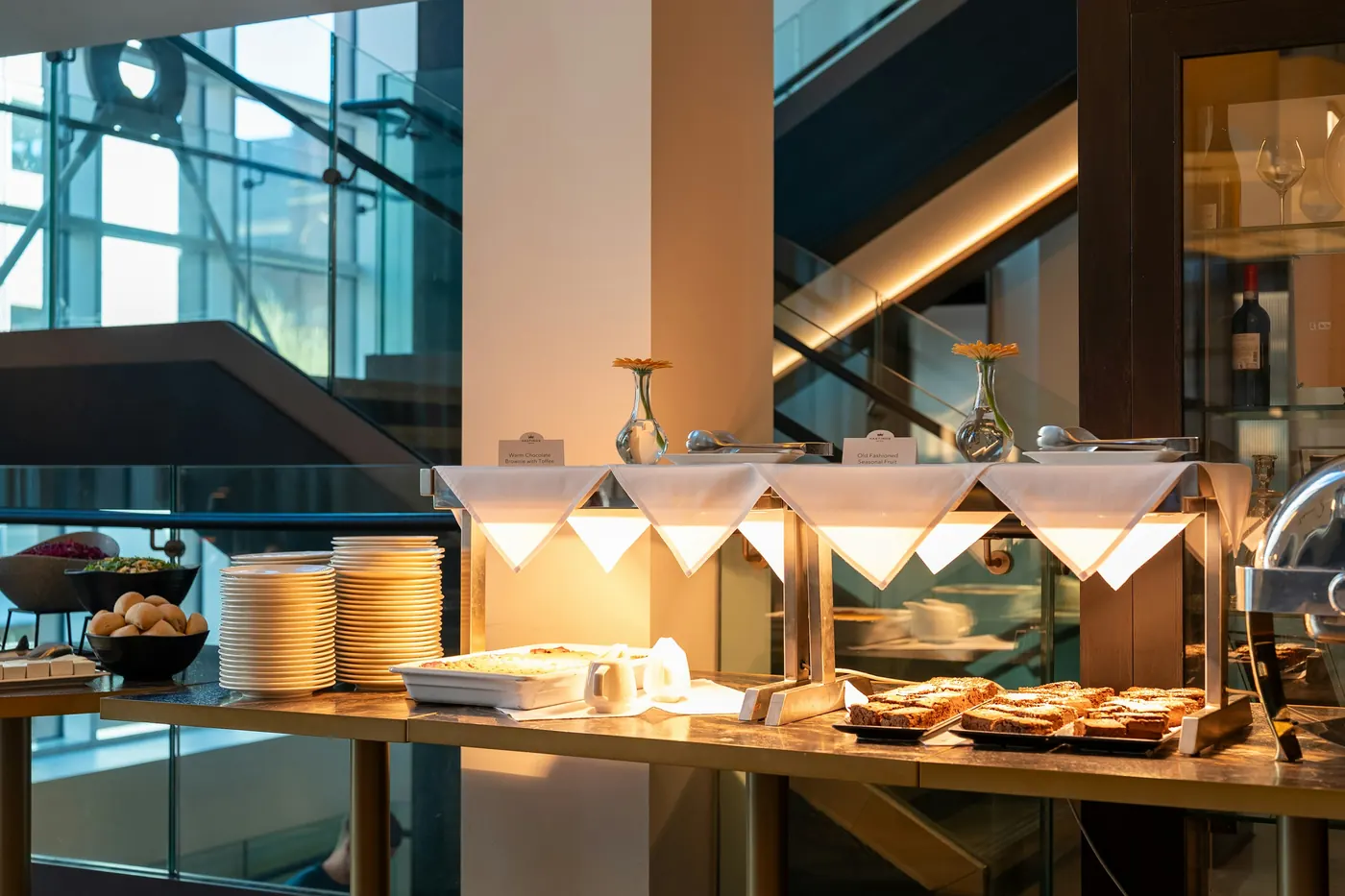
An open flame on a crowded table is the chafing dish’s main risk. Sterno’s chafing fuel FAQ says to keep fuel away from curtains and flammable table decorations, as you would with candles. It says to put the can in the chafer’s fuel holder before lighting it with a long-reach butane lighter, never to light one can from another, and to put a can out with a snuffer paddle or ceramic saucer. Sterno calls its wick fuels the safer option because they are not flammable if spilled and the can stays cool when lit. Its gel fuels burn hotter, suit events up to about two hours, and the cans get very hot.
A warming tray has no flame, which is why many hosts with small children or a crowded room prefer it. It is still hot. Chefman says the surface gets hot, to use the cool-touch handles and pot holders, not to move the tray while it is in use and never to leave it unattended. It also warns against plastic dishes or plastic wrap on the tray, because they can melt and create a fire risk.
For a home party, the tray is the simpler safety story indoors. The chafer is the better choice outdoors, where a cord across a lawn is its own hazard and the tray is not rated for use.
Cleanup and running cost
A chafing dish has more parts: lid, food pan, water pan, frame and fuel holders. The pans wash like any steam-table pan, but the water pan needs emptying once it cools, and spent fuel cans need recycling. Sterno says its cans are steel and asks that you recycle them. Sterno also suggests using fuel within two years of purchase.
A warming tray has one surface to wipe. Chefman says to let it cool, wipe it with a damp cloth, avoid abrasive cleaners and never immerse it or put it in the dishwasher. Your serving dishes go through the dishwasher as usual.
On cost, the difference is ongoing rather than up front. A chafing dish needs a new fuel can or two for every event, more for a long one. A warming tray costs only the electricity. If you host often, that adds up in the tray’s favor. Disposable chafing kits fill a different role for one-off events; our best chafing dish guide covers those.
A middle ground: the electric chafer
If you like the water bath but not the flame, there is a third option. Electric chafing dishes plug in and heat a water pan with a dial, so you get moist heat with no fuel. They still need an outlet. Our guide to the best electric chafing dish compares them, and our best buffet server guide covers plug-in servers with their own lidded pans.
Choose a chafing dish if… / Choose a warming tray if…
Choose a chafing dish if…
- The party is outdoors, or there is no outlet near the serving table.
- You serve wet dishes like beans, rice and stews for several hours.
- You are feeding a crowd from full-size pans.
- You are comfortable managing lit fuel cans, as Sterno describes.
Choose a warming tray if…
- You host indoors with an outlet and a heat-resistant counter or table.
- You want to serve from your own casserole and baking dishes.
- You would rather not have an open flame near guests or children.
- You host often and do not want to buy fuel every time.
Our pick on each side of the chafing dish vs warming tray question
One pick per side, both from established makers and both in stock when we checked. The chafer comes from Vollrath, a foodservice maker. The tray is Chefman’s family-size glass-top model. This exact listing appears on no other page here, but it is the earlier 400-watt version of the Chefman 21 by 16-inch tray in our best food warming mat guide. We chose it because Chefman’s own user guide for this model gives the setting temperatures, which is the detail this comparison turns on.
1. Vollrath Orion Full-Size 9-Quart Lift-Off Chafer – Complete Set From a Foodservice Maker

This is the chafing dish in its classic form: a full-size oblong chafer in mirror-finish stainless steel, sold complete. Vollrath lists the 46518 with a dome cover, a cover holder, a dripless water pan, a food pan and a fuel holder, and rates it at 9 quarts. It measures 27 by 14 by 13.5 inches, according to Vollrath. That is the footprint of one full steam-table pan, enough for a main dish at a large party.
Vollrath describes the construction as heavy-duty, welded stainless steel. The lid lifts off and rests in the cover holder, so guests are not left looking for somewhere to put it down. Fuel is not listed as included, so plan on buying cans. Sterno’s advice applies: pick a fuel that lasts the event and start with very hot water in the water pan.
The trade-off is size. This is a catering piece, not a folding home chafer, and it needs shelf space between parties. The Amazon listing also says Vollrath’s warranty does not apply to products bought for personal, family or household use, so a home buyer should treat it as sold without one.
Why we like it
- Complete set: cover, holder, water pan, food pan, fuel holder (Vollrath)
- 9-quart full-size capacity (Vollrath)
- Welded, mirror-finish stainless steel (Vollrath)
- Built-in cover holder for the lift-off lid
Key specifications
| Model | 46518 |
|---|---|
| Heat source | Chafing fuel (holder included, fuel not listed) |
| Capacity or surface | 9 quarts, full-size food pan |
| Size | 27 x 14 x 13.5 inches |
| In the box | Dome cover, cover holder, water pan, food pan, fuel holder |
| Temperature setting | None; set by fuel and water |
| Cleaning | Not stated |
| Warranty | Listing: does not apply to household purchases |
Why we recommend it
It suits a host who throws large or outdoor parties and wants one solid, complete chafer to anchor the main dish, from a maker that supplies restaurants.
Skip it if you need something that folds flat or you want a warranty for home use; our best chafing dish guide covers foldable sets.
Pros and cons
Pros
- Everything but fuel in one listing
- Full-size pan for a crowd
- Works with no outlet
Cons
- Bulky to store
- No warranty for household purchases (listing)
- Fuel bought separately for every event
2. Chefman Family-Size Glass-Top Warming Tray, 21 x 16-inch – Marked Settings, No Flame

This is the warming tray in its plainest form: a black tempered-glass top in a stainless steel frame, with a temperature dial and cool-touch handles. The listing gives the surface as 21 by 16 inches, room for two or three casserole dishes, and lists 400 watts on a standard 120-volt outlet. It says the tray is cETL approved and carries a one-year limited warranty from Chefman.
The reason to pick it is the user guide. Chefman’s guide for the RJ22-BLACK-TC lists its dial settings as Low 120°F, Medium 195°F and High 265°F, so you know where you stand. Use Medium or High for hot food, not Low, and check the food itself with a thermometer. The guide says to warm the tray first, then add heat-resistant dishes of already-cooked food. It can stay on up to 72 hours, but never unattended.
Follow the placement rules. The guide asks for a heat-resistant surface, not wood or plastic, and 8 inches of clear space around the tray. Never cover it with foil or cloth, and never put plastic dishes or wrap on it. To clean, let it cool and wipe it with a damp cloth. It is not dishwasher safe and must not be immersed.
Why we like it
- Setting temperatures published by the maker
- 21 x 16-inch glass top (listing)
- cETL approved (listing)
- One-year limited warranty (Chefman)
Key specifications
| Model | RJ22-BLACK-TC-DS |
|---|---|
| Heat source | Electric, 400 W, 120 V (listing) |
| Capacity or surface | 21 x 16-inch glass top |
| Size | Overall size not stated |
| In the box | Tray only; use your own dishes |
| Temperature setting | Low 120°F, Med 195°F, High 265°F (user guide) |
| Cleaning | Damp cloth when cool; not dishwasher safe |
| Warranty | 1-year limited |
Why we recommend it
It suits an indoor host with an outlet and a stone or steel counter who wants to keep two or three dishes hot without a flame or fuel.
Skip it if your serving table is wood with no heat-resistant layer, or the party is outdoors; Chefman rules out both.
Pros and cons
Pros
- No flame and no fuel to buy
- Holds the dishes you already own
- Stores flat
Cons
- Low setting is below 140°F
- Indoor use only (Chefman)
- Needs a heat-resistant surface and clear space around it
Party warmer questions, answered
Is a warming tray better than a chafing dish?
For an indoor home party near an outlet, it is usually the easier choice: no flame, no fuel and it uses your own dishes. A chafing dish is better outdoors, away from outlets, for a large crowd or for wet dishes held for hours.
Do warming trays keep food at a safe temperature?
They can, if the setting is high enough. Extension services say hot food should stay at 140°F or warmer. Chefman’s RJ22 tray lists Low at 120°F, which is below that, so use a higher setting and check the food with a thermometer.
How long does a chafing dish keep food hot?
As long as the fuel burns and the water pan holds water. Sterno’s fuels run from 45 minutes to six hours; choose one that covers the whole event and start with very hot water.
Can I use a warming tray outside?
Not the Chefman RJ22: its user guide says not to use it outdoors. For an outdoor party, a fuel chafing dish is the usual choice.
Can I reheat food in either one?
No. Sterno and Chefman both say their products hold food rather than cook it. Heat food fully on the stove or in the oven first, then move it to the chafer or tray.
Setting up your party table
For most home hosts, the warming tray comes first: plug it in, set it to a holding temperature and put out the dishes you cooked in. Add a chafing dish when the party moves outdoors or the guest list outgrows two or three casseroles. Whichever you choose, cook or reheat the food fully first, keep it at 140°F or above, and check it with a thermometer. Our best food warming tray guide compares seven trays, and our best chafing dish for buffet guide covers a full buffet line. For a taco night spread, see our taco bar supplies guide. And when you would rather someone else did the cooking, see the menu or call to order.