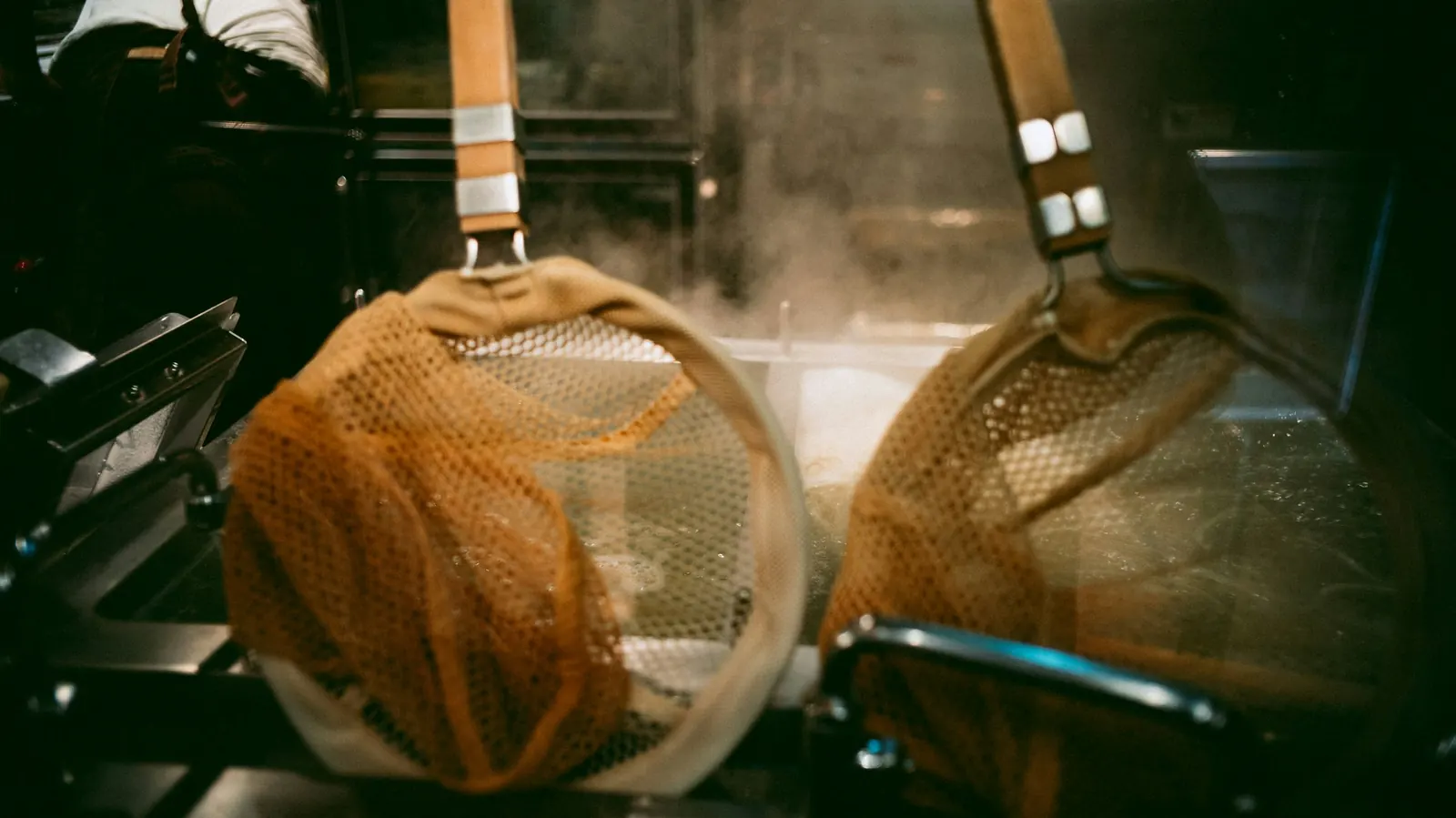
Cheesecloth is one of those things you buy for one recipe and then cannot find when the next one calls for it. It is also not very good at its job: the loose gauze sold in grocery stores usually has to be folded into several layers, it snags, and most people throw it away after one use.
The good news is that nearly every job cheesecloth does can be done as well, and often better, by something else. This guide covers the cheesecloth alternative that fits each job, from a nut milk bag you can wring hard to a fine-mesh strainer for stock and a stand that drips jelly clear, and says where each one falls short.
Julia’s earns a commission on purchases made through links on this page, at no cost to you. Recommendations are based on what a restaurant kitchen looks for, product specifications and verified buyer reports.
Why people give up on cheesecloth
Cheesecloth has three jobs in a home kitchen: straining liquids from solids, draining dairy such as yogurt and fresh cheese, and holding things together while they cook, such as a bundle of herbs in a pot of beans. The complaints tend to be the same:
- It is too loose. Grocery-store cheesecloth is open gauze. Recipes and canning guides tell you to use at least a double layer.
- It does not survive squeezing. Wring a bundle of nut pulp hard and the threads part or the corners slip.
- It is disposable. Washing loose gauze is fiddly, so most people use it once.
- It is never there when you need it. A towel, a strainer or a box of coffee filters usually is.
Which alternative is right depends on the job, so the picks below are sorted by what you are straining.
Quick verdict: the best cheesecloth alternative
For most kitchens the best cheesecloth alternative is a few plain white flour sack towels, such as Norpro’s, kept for straining only: they line a colander, tie into a bundle, drain yogurt and wash for the next job. If you squeeze a lot (nut milk, juice, wet curds), add a fine nylon nut milk bag such as Ellie’s Best XL, which is built to be wrung hard, per the listing. For hot stock and sauces, a fine-mesh bouillon strainer needs no cloth at all; for clear jelly, a jelly strainer stand drips hands-free; and for a weekly batch of Greek yogurt, a mesh yogurt strainer goes straight into the fridge. A paper coffee filter is the finest, slowest option for small jobs.
Five straining swaps side by side
Our five standout picks, one per kind of job, with what each maker or listing states. All six alternatives are reviewed in full below.
| Alternative | Best for | How it strains | Reusable | Buy on Amazon |
|---|---|---|---|---|
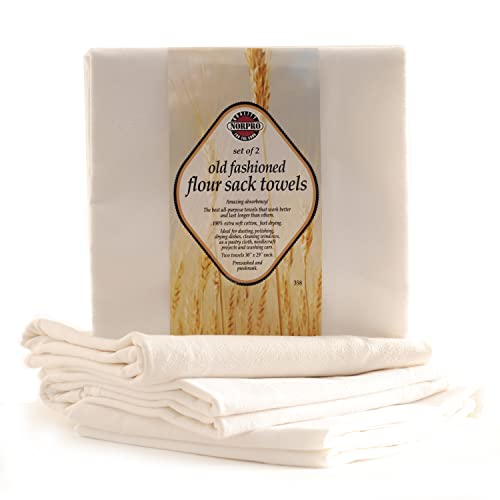
Norpro Large White Flour Sack Towels, 2-PackBest overall
|
Yogurt, cheese, lining a colander | Drip or tie through cotton | Yes, washable | View on Amazon |

Ellie’s Best XL Nylon Nut Milk BagBest for squeezing
|
Nut milk, juice, cold brew | Squeeze through fine nylon | Yes, rinse and dry | View on Amazon |

New Star Foodservice 8-Inch Reinforced Bouillon StrainerBest for stock and sauces
|
Stock, sauces, soups | Pour through steel mesh | Yes | View on Amazon |

Norpro Jelly Strainer Stand with Cloth BagBest for jelly and juice
|
Jelly and clear juice | Hands-free drip through a bag | Yes, hand wash | View on Amazon |

Hatrigo 2-Quart Greek Yogurt StrainerBest for yogurt
|
Greek yogurt and labneh | Drip through steel mesh in the fridge | Yes | View on Amazon |
Match the swap to the job
Before you buy anything, it helps to know what you already own will do. Here is how the common household swaps compare, using the sources we name.
Straining and squeezing: nut milk, juice, cold brew
This is where cheesecloth is weakest and a nut milk bag is strongest. A bag made for the job has sewn seams and a drawstring, so you can twist and squeeze until the pulp is nearly dry. A flour sack towel also works, but it absorbs some of the liquid and drains more slowly.
Draining yogurt and fresh cheese
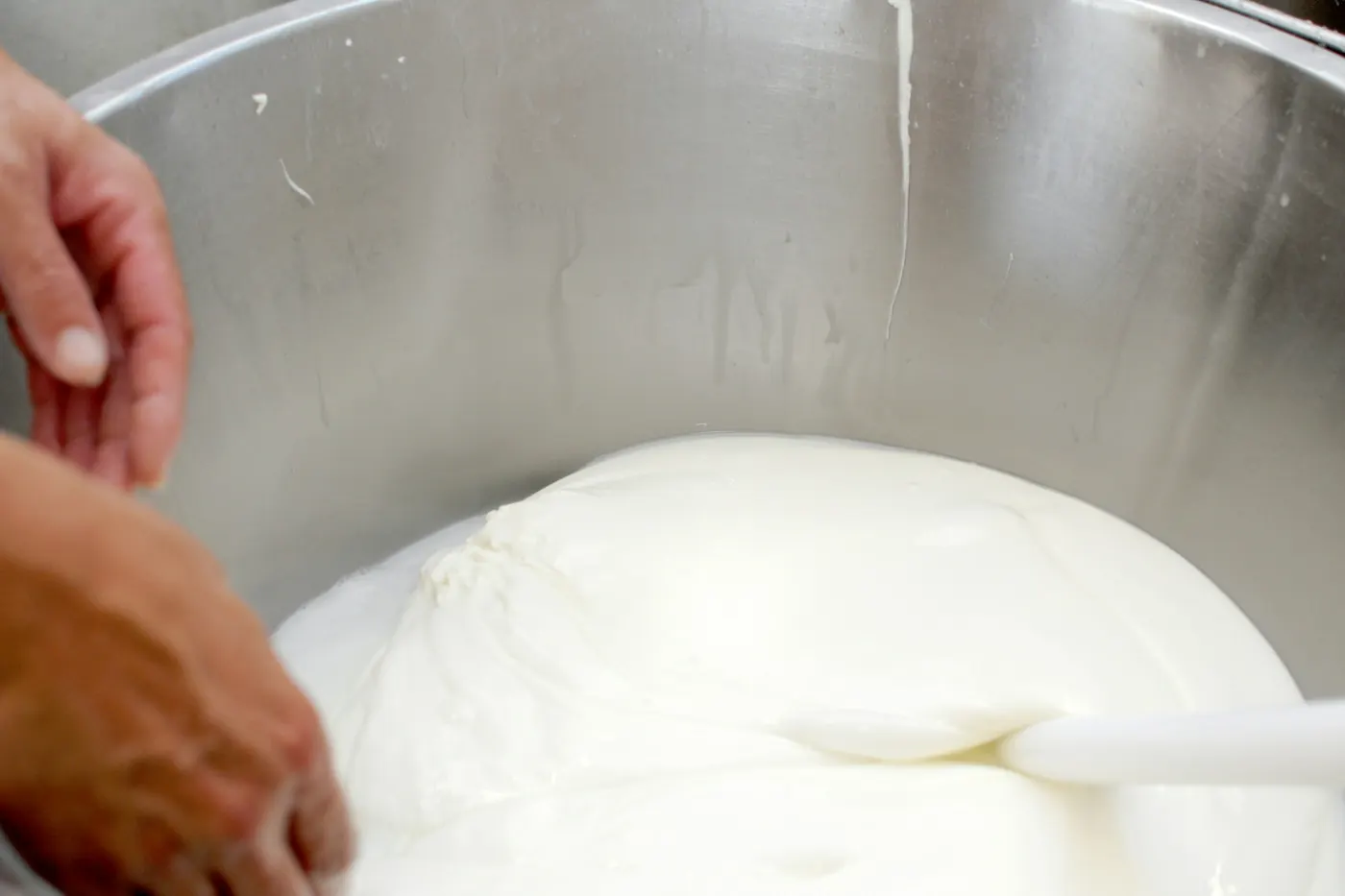
University of Illinois Extension’s guide to making yogurt at home drains yogurt through a double layer of cheesecloth set over a bowl, covered and refrigerated: 2 to 4 hours for Greek-style yogurt, 8 to 24 hours for yogurt cheese. Any of a clean flour sack towel, a nut milk bag, a coffee filter in a strainer or a purpose-made mesh yogurt strainer can stand in for the cheesecloth; the timing and the refrigerator stay the same. A tighter cloth or paper will simply take longer to reach the same thickness, so check it early and stir the whey back in if it goes too far.
Clear stock, broth and sauces
For hot liquids, start with a fine-mesh strainer. America’s Test Kitchen’s review of fine-mesh strainers (Miye Bromberg) lists straining sauces and purees “so they are silky-smooth” among their main jobs. If you want a stock that is clearer still, line the strainer with a damp flour sack towel or a coffee filter; the steel takes the weight and the cloth or paper catches the fine particles.
Jelly and clear fruit juice
Jelly has a rule cheesecloth users learn the hard way. The National Center for Home Food Preservation says to strain the cooked fruit “through a double layer of cheesecloth or a jelly bag” and warns that pressing or squeezing the bag or cloth will make the jelly cloudy. That makes a jelly bag on a stand the best substitute: it holds the fruit while gravity does the work.
Bundles, sachets and basting
For a spice bundle in a pot, a basting cloth over a turkey or a bag of herbs in a soup, you need something that can sit in hot liquid. A plain cotton flour sack towel, cut or folded and tied with butcher’s twine, is the practical swap. Tasting Table’s guide to cheesecloth substitutes cautions that some reusable mesh bags are plastic and may melt over high heat, so check a bag’s stated heat limit before you cook in it; none of the nylon bags we looked at states one.
What not to use
Tasting Table also warns against dyed fabric, because color can run into food, and calls paper towels a solid substitute for gravity draining but not as durable as cotton, with some liquid lost to the towel. Terry-cloth bath towels shed lint, and a colander’s holes are too big to catch fine solids on their own. Those are fallbacks, not tools.
Our picks for the best cheesecloth alternative
1. Norpro Large White Flour Sack Towels, 2-Pack – Plain Cotton That Lines Anything
Before cheesecloth was sold in little boxes, kitchens strained through thin cotton cloths, and a flour sack towel is still the most useful one to keep in a drawer. Norpro’s are plain cotton, prewashed and preshrunk, and large: each measures 30 by 29 inches, which is enough to line a big colander with room to gather the corners and tie them.
Tasting Table’s list of cheesecloth substitutes notes that tea towels and flour sack towels are made from thin cotton or linen and do not shed lint the way terry cloth does, and it warns to choose a white towel with no dyes so that nothing colors your cheese. A plain white towel like this one meets both points. Its weave is tighter than most grocery cheesecloth, so liquid runs through more slowly; that suits yogurt, queso fresco curds and stock that you want very clear, and it is a drawback for thick purees, which can clog it.
Wash a new towel before using it with food, and keep one or two set aside for straining only, washed without fabric softener so nothing scented ends up in the next batch. That last point is general kitchen sense rather than a maker instruction.
Why we like it
- 100% cotton, prewashed and preshrunk, per the listing
- Large 30 x 29-inch towels line a big colander
- White with no print, so no dye near your food
- Doubles as a dish or pastry cloth, as Norpro suggests
Key specifications
| Model | 358 |
|---|---|
| Material | Cotton |
| Size | 30 x 29 in each |
| Count | 2 towels |
| Reusable | Yes |
| Best jobs | Yogurt, fresh cheese, stock, lining a colander |
| Care | Not stated; prewashed and preshrunk |
| Made in | Not stated |
Why we recommend it
Choose these if you want one cloth that does most of what cheesecloth does, including gathering into a bundle, and you would rather wash it than throw it away.
Skip them if you mostly strain thick, pulpy mixtures by squeezing; a nylon nut milk bag drains faster.
Pros and cons
Pros
- Closest in use to cheesecloth: lines, ties and squeezes
- Washable and reusable
- Big enough for a full pot of stock
Cons
- Tighter weave strains more slowly
- Lead offer came from a third-party seller (Hearthshire), not Norpro or Amazon
- Absorbs some liquid before it drips
2. Ellie’s Best XL Nylon Nut Milk Bag – Squeeze Hard, Strain Fine
A nut milk bag is the closest thing to a cheesecloth that is built to be squeezed. Ellie’s Best makes this one from what the listing calls food grade fine nylon mesh, with triple-stitched seams, a nylon drawstring and a 12 by 12-inch body. You pour the blended nuts, the grated cucumber or the yogurt in, close the top and wring it with both hands, which is exactly the job a single layer of grocery-store cheesecloth tends to fail at.
The bag works for nut and oat milk, cold brew, juicing from a blender, draining yogurt and pressing ricotta or paneer curds. Tasting Table’s cheesecloth substitutes piece calls nut milk bags “a flawless replacement for cheesecloth in a pinch”. Where it falls short is anything you want to tie into a bundle and cook, such as a sachet of spices in a pot of beans: the maker does not state a heat limit, so we would keep it for cold and warm straining.
Because it is nylon rather than cotton, it rinses clean and dries quickly, which the listing makes a point of. Turn it inside out, rinse the pulp off, wash and hang it to dry.
Why we like it
- Fine nylon mesh the maker calls food grade, with triple-stitched seams
- Large 12 x 12-inch bag with a wide opening for pouring
- Strong enough to wring with both hands, per the listing
- Rinses clean and dries fast, so it can be used again
Key specifications
| Model | KD2100 |
|---|---|
| Material | Fine nylon mesh, nylon drawstring |
| Size | 12 x 12 in |
| Count | 1 bag |
| Reusable | Yes |
| Best jobs | Nut milk, juice, cold brew, yogurt, soft cheese |
| Care | Rinse, wash and air dry |
| Made in | Not stated |
Why we recommend it
Choose this if you strain by squeezing: nut milk, juices, cold brew or wet cheese curds. Ellie’s Best says it outlasts cotton bags and holds up to squeezing with both hands.
Skip it if you need a cloth to cook in, such as a spice bundle or a basting cloth; the listing gives no heat limit for the nylon.
Pros and cons
Pros
- Holds up to hard squeezing
- Reusable for years, the listing says
- One bag covers milk, juice and yogurt
Cons
- Ellie’s Best is an Amazon-first brand with little information beyond the listing
- No stated heat limit
- Only one bag in this listing
3. New Star Foodservice 8-Inch Reinforced Bouillon Strainer – Clear Stock With No Cloth
If you reach for cheesecloth mainly to get a stock, a consomme or a smooth sauce clear, a fine-mesh bouillon strainer may be all you need. This cone from New Star Foodservice is 18/8 stainless steel with a reinforced frame, 8 inches across, and the maker lists stocks, sauces, soups and purees as its jobs.
America’s Test Kitchen’s fine-mesh strainer review (Miye Bromberg) says these strainers are used for “straining sauces and purées so they are silky-smooth”, and Tasting Table describes a fine-mesh sieve as “a bowl-shaped, metal version of cheesecloth”. The cone shape also lets you press solids against the mesh with a ladle without the risk of tearing a cloth.
The limit is fineness. Even a fine mesh lets the smallest particles through, so for crystal-clear jelly or for draining yogurt you would still line it with a damp flour sack towel or a coffee filter. Many cooks use the two together: the steel does the holding, the cloth or paper does the fine work.
Why we like it
- 18/8 stainless steel with a reinforced frame, per New Star
- Cone shape lets you press solids with a ladle
- 8-inch size suits home pots
- Sold by the maker, New Star Foodservice
Key specifications
| Model | 38071 |
|---|---|
| Material | 18/8 stainless steel mesh, reinforced |
| Size | 8 in diameter |
| Count | 1 strainer |
| Reusable | Yes |
| Best jobs | Stock, broth, sauces, purees |
| Care | Easy cleaning stated; method not stated |
| Made in | Not stated |
Why we recommend it
Choose this if your cheesecloth jobs are mostly hot liquids: stock, broth, sauces and soups that you want smooth.
Skip it if you need to drain yogurt or make clear jelly without a liner; the mesh alone is not that fine.
Pros and cons
Pros
- Never wears out like cloth
- Handles hot stock safely
- Can be lined with cloth or paper for finer work
Cons
- Not fine enough on its own for yogurt or jelly
- Dishwasher use not stated
- Takes drawer space a cloth does not
4. Norpro Jelly Strainer Stand with Cloth Bag – Hands-Free Drip for Clear Jelly
Jelly is the job where cheesecloth is hardest to replace, because the juice has to drip on its own. The National Center for Home Food Preservation tells home canners to “strain through a double layer of cheesecloth or a jelly bag”, and warns that “pressing or squeezing the bag or cloth will cause cloudy jelly.”
Norpro’s stand answers that directly. It is a wire frame, 12 inches high, with legs that bend to grip the rim of a bowl or saucepan, and it comes with a cotton-polyester cloth bag that ties around the top ring. The fruit mash sits in the bag and drips into the bowl without anyone holding it. Norpro lists jellies, juices, vinegars, broths and syrups among its uses.
The frame comes apart to store flat, and Norpro recommends hand washing. Replacement bags are sold separately; the listing says the stand takes standard replacement filter bags.
Why we like it
- Hands-free gravity straining, which NCHFP advice for jelly calls for
- Bendable legs fit different bowls and pans
- Includes a reusable cotton-polyester bag
- Packs flat for storage
Key specifications
| Model | 614 |
|---|---|
| Material | Wire frame, cotton-polyester bag |
| Size | 12 in high, about 6.25 in across |
| Count | 1 stand, 1 bag |
| Reusable | Yes |
| Best jobs | Jelly, fruit juice, syrups, broth |
| Care | Hand wash recommended |
| Made in | Not stated |
Why we recommend it
Choose this if you make jelly, fruit syrups or clear juice, or if you are tired of tying a cloth to a cabinet handle.
Skip it if you only strain now and then; a towel over a bowl does the same job with less gear.
Pros and cons
Pros
- Follows the drip-don’t-squeeze method for clear jelly
- Frees your hands for hours-long drips
- Sold by Amazon.com
Cons
- Only one bag included
- Bag capacity not stated
- Single-purpose next to a towel or nut milk bag
5. Hatrigo 2-Quart Greek Yogurt Strainer – Drain Yogurt in the Fridge
Draining yogurt is one of the most common reasons people buy cheesecloth. University of Illinois Extension’s yogurt guide uses a double layer of cheesecloth over a bowl, covered and refrigerated, and gives the times: 2 to 4 hours for Greek-style yogurt and 8 to 24 hours for yogurt cheese.
Hatrigo’s strainer replaces the cloth with a fine stainless steel mesh basket that sits inside a 4-quart outer container. The inner basket holds up to 2 quarts of yogurt, the whey collects underneath, and the whole thing goes into the fridge with no cloth to tie or wash. The maker says the mesh can be used instead of cheesecloth and also lists nut milk and cheese among its uses.
It is a bulky, single-purpose box next to a cloth, so it suits people who make yogurt every week, often from an electric pressure cooker batch. For an occasional cup of labneh, a towel in a strainer is enough.
Why we like it
- Fine stainless steel mesh basket, no cloth needed
- Holds up to 2 quarts in a 4-quart container
- Drains in the fridge, as Extension advice calls for
- BPA-free, per the maker
Key specifications
| Model | HTG-YGT-P01 |
|---|---|
| Material | Stainless steel mesh, BPA-free container |
| Size | 12 x 8 x 6 in |
| Count | 1 strainer set |
| Reusable | Yes |
| Best jobs | Greek yogurt, labneh, nut milk, soft cheese |
| Care | Not stated in the listing |
| Made in | Not stated |
Why we recommend it
Choose this if you drain a large batch of yogurt every week and want to stop washing cloths.
Skip it if you drain yogurt only occasionally or want a tool for other jobs too; it takes fridge and cupboard space.
Pros and cons
Pros
- Nothing to tie or wring
- Large 2-quart batch
- Sold by the maker, Hatrigo Brands
Cons
- Hatrigo is an Amazon-first brand
- Single-purpose and bulky
- Cleaning method not stated in the listing
6. Melitta #4 White Cone Coffee Filters, 6-Pack – The Finest Strain in the Pantry

A paper coffee filter is the finest filter most kitchens already own. Set in a fine-mesh strainer or a pour-over cone, it catches particles that slip through cloth, which makes it handy for small jobs: a cup of yogurt to thicken, a little brown butter to clarify, or infused oil you want perfectly clear.
Melitta’s #4 white cone filters are made in the USA from chlorine-free paper with a double-crimped edge that Melitta says resists bursting; the listing also states FSC certification and BPI commercial compostability. This pack holds six boxes of 100.
The trade-off is speed and size. Tasting Table notes that straining through a coffee filter “will take longer than when using a cheesecloth”, and a paper cone holds a cup or two, not a pot of stock. Thick or oily mixtures can clog the paper, and it cannot be squeezed.
Why we like it
- Finest filtering of anything on this page
- Chlorine-free paper, made in the USA, per Melitta
- Double-crimped seams the maker says resist bursting
- Sold by Amazon.com
Key specifications
| Model | 62446 |
|---|---|
| Material | Chlorine-free white paper |
| Size | #4 cone (8 to 12-cup) |
| Count | 6 boxes of 100 |
| Reusable | No |
| Best jobs | Yogurt, brown butter, infused oil, small batches |
| Care | Single use; BPI commercially compostable |
| Made in | USA |
Why we recommend it
Choose these if your straining jobs are small and you want the clearest result, or as a liner inside a fine-mesh strainer.
Skip them for anything you need to squeeze or for big batches; paper is slow and tears under pressure.
Pros and cons
Pros
- Very fine filtering
- Cheap per use and always in the cupboard
- Fits any #4 cone or a strainer
Cons
- Slow, especially with thick liquids
- Cannot be squeezed
- Disposable

How to choose what to strain with
Think about the jobs you actually use cheesecloth for, then pick for those.
- Do you squeeze? Nut milk, juice and wet curds need a bag with sewn seams. Nylon drains fastest; cotton holds more liquid.
- Is it hot? Stock and sauces go through steel, lined with cotton if you want them clearer. Avoid cooking in a bag that states no heat limit.
- Does it need to drip on its own? Jelly and yogurt cheese take hours. A stand or a strainer that sits in a container saves you tying a cloth to a cabinet handle.
- How fine? Paper is finest and slowest, then tight cotton, then fine nylon, then steel mesh.
- Will you wash it? A cloth that touches food should be white, undyed and kept for kitchen straining only. Cotton and nylon both rinse best right after use, before pulp dries on.

How we chose these six alternatives
We started from the jobs cheesecloth does in a home kitchen and the guidance that names it: University of Illinois Extension for draining yogurt and the National Center for Home Food Preservation for jelly. We then looked for one alternative per job from a maker we could identify, checked each listing for materials, size and care, and confirmed every pick was in stock with a new offer. Strainer uses come from America’s Test Kitchen’s fine-mesh strainer review, and the strengths and limits of household swaps from Tasting Table’s cheesecloth substitutes guide by Emilee Unterkoefler. Food-contact descriptions such as “food grade” and “BPA-free” are the makers’ own words; we did not verify them independently, and we did not handle these products ourselves.
We left out cheesecloth itself and butter muslin, since this page is about what to use instead, and we left out any pick already recommended on another of our guides. There is no single all-purpose winner: if you strain often, a nut milk bag plus a fine-mesh strainer covers most jobs between them.
Cheesecloth alternative questions, answered
What can I use instead of cheesecloth?
A nut milk bag, a clean white flour sack towel, a fine-mesh strainer, a paper coffee filter or a jelly bag, depending on the job. Squeezing calls for a bag, hot stock for a strainer, and small, very fine jobs for a coffee filter.
Can I use a paper towel instead of cheesecloth?
For a small amount of liquid that drains by gravity, yes, in a strainer. Tasting Table notes that paper towels are less durable than cotton and soak up some of the liquid, so do not squeeze them and do not use them for large batches.
Is a coffee filter a good cheesecloth substitute?
It strains more finely than cheesecloth but much more slowly, and it cannot be squeezed. It is a good choice for a cup of yogurt, clarified butter or infused oil, set inside a fine-mesh strainer. Our best coffee filters guide covers the options.
Can I strain yogurt without cheesecloth?
Yes. Line a strainer with a flour sack towel or coffee filter, or use a mesh yogurt strainer, set it over a bowl, cover it and refrigerate. University of Illinois Extension gives 2 to 4 hours for Greek-style yogurt. For machines that make the yogurt itself, see our best Greek yogurt maker guide.
Is a nut milk bag the same as cheesecloth?
They do the same straining job, but a nut milk bag is sewn into a bag and made to be squeezed, so it holds up better. Cheesecloth is a flat, loose gauze that you fold and tie yourself, which makes it more flexible for wrapping and less sturdy for wringing.

Our final word on straining without cheesecloth
You can retire the box of gauze. A couple of plain flour sack towels and a nut milk bag handle most of what cheesecloth was bought for, a fine-mesh strainer takes care of hot stock, and the specialist tools on this page earn their place only if you make jelly or Greek yogurt often. If you are straining to make plant milk, our guide to the best nut milk maker compares machines that do the straining for you. For stocks and sauces, see the best fine-mesh strainer and best chinois guides, and for towels to set aside for the job, the best dish towels guide.
And if you would rather leave the straining to someone else tonight, see the menu or call to order.