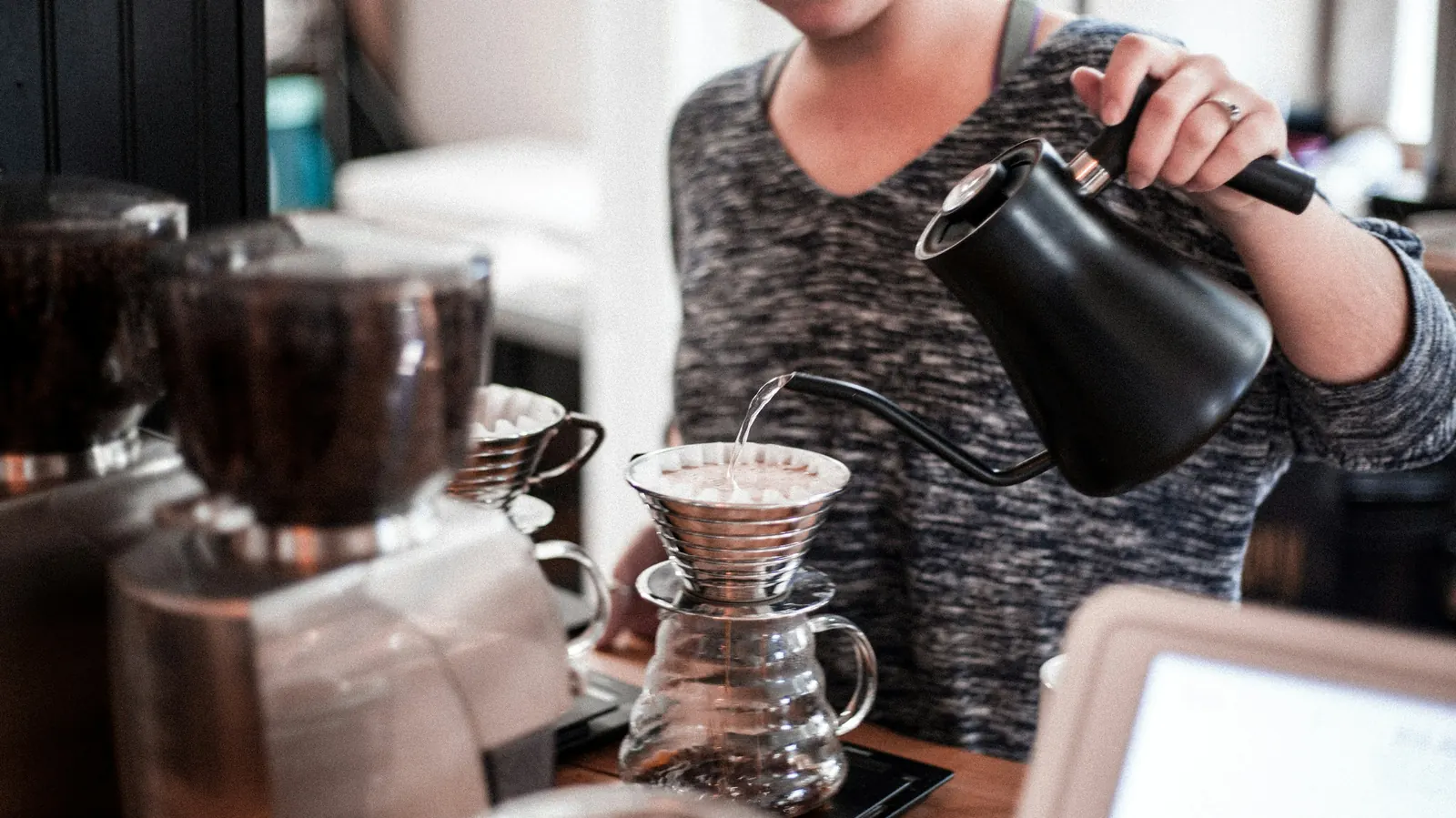
A gooseneck kettle and a regular kettle both heat water, and many of them do it on the same kind of cordless electric base. The difference is in the pour. A regular kettle has a short, wide spout built to empty a liter into a teapot, a pot of oats or a pan of noodles quickly. A gooseneck kettle has a long, thin, curved spout that releases water in a slow, narrow stream you can aim at a single spot. That one change in shape decides who should buy which.
This guide compares the two by what you will actually use the water for: pour control, capacity, speed, temperature control, handling and care. It ends with which to buy and one good example of each.
Julia’s earns a commission on purchases made through links on this page, at no cost to you. Recommendations are based on product specifications, maker information and published equipment reviews, which we name.
Quick verdict: gooseneck or regular kettle?
Buy a gooseneck kettle if you brew pour-over coffee by hand (a V60, Kalita, Chemex or similar cone): its thin, steady stream is what lets you wet the grounds evenly and control the brew. Buy a regular kettle if you mostly make tea, French press, instant coffee, oatmeal or hot water for cooking: it holds more, pours faster and usually boils sooner. If you do both often, many coffee drinkers end up owning one of each.
The table sums up the differences; the sections after it explain each one.
Gooseneck kettle vs regular kettle, side by side
| Gooseneck kettle | Regular kettle | |
|---|---|---|
| Spout | Long, thin, curved | Short and wide |
| Pour | Slow, narrow, aimable stream | Fast, full flow |
| Typical capacity | About 0.8 to 1 liter | About 1.5 to 1.8 liters |
| Typical electric power | Often 1000 to 1200 watts | Often 1500 watts |
| Temperature control | Common, often to the degree | Boil-only or a few presets on most; some adjustable |
| Filling and cleaning | Narrower opening on many models | Wide lid opening |
| Best jobs | Pour-over coffee, careful tea pours, a single cup | Teapots, French press, big mugs, cooking water |
Pour control: the reason goosenecks exist
America’s Test Kitchen’s review of electric gooseneck kettles puts it plainly: these kettles “dispense water slowly and precisely, allowing users to hydrate coffee grounds and tea leaves gently.” For pour-over coffee, which ATK describes as “pouring a thin stream of hot water over coffee grounds,” that control is the whole method. You wet the grounds first and let them bloom, then pour in slow circles so water passes through the coffee bed evenly instead of tunneling down one side.
A regular kettle can’t do that well. Tip it gently and the water either dribbles down the side of the spout or comes out in a wide gush that churns the grounds and floods the filter. That is fine, even ideal, when you are filling a teapot, a French press or a pot of rice, because there the water only has to get in. It matters only when the pour itself is part of the recipe.
Capacity and speed
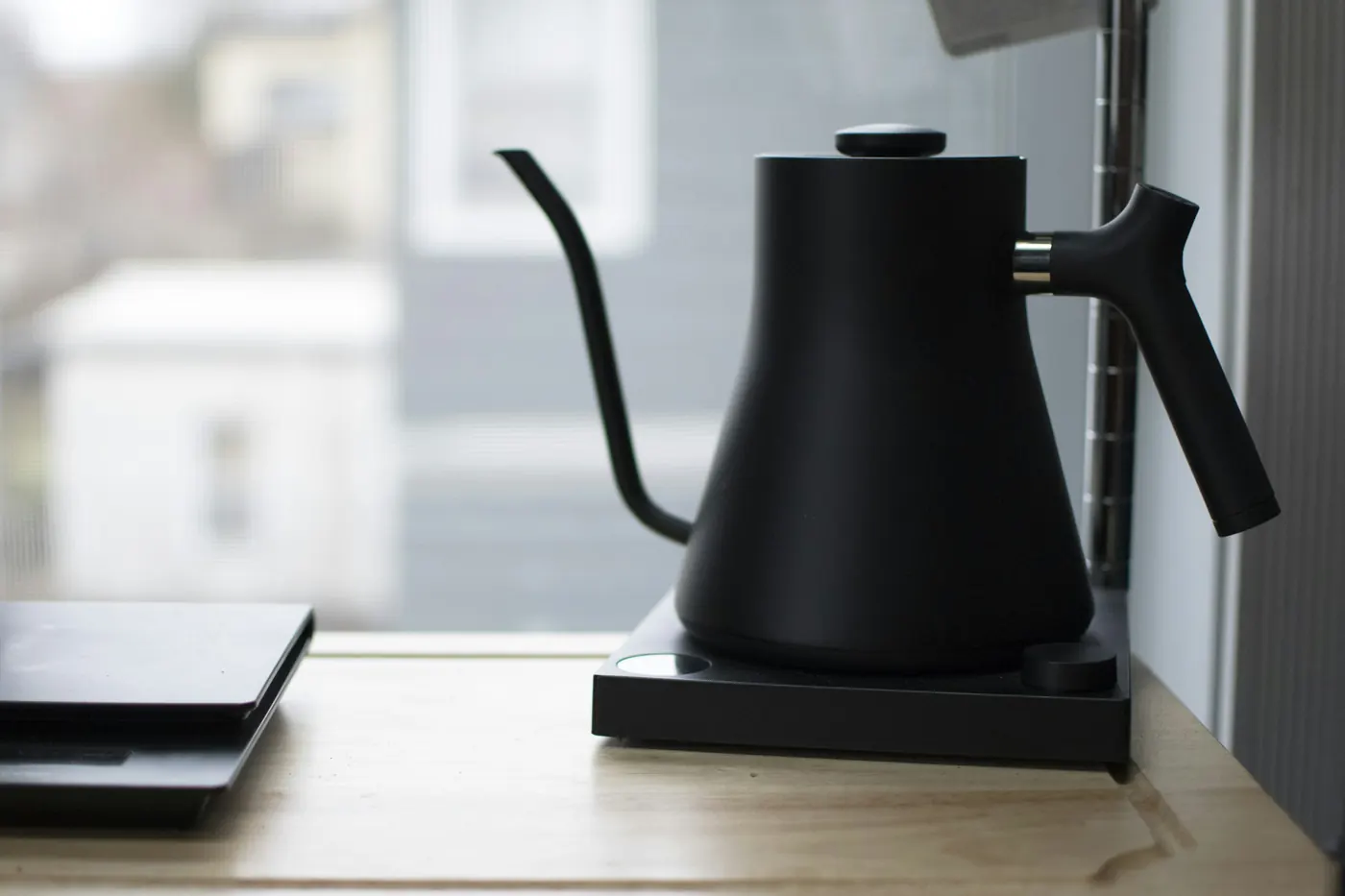
Gooseneck kettles are smaller. ATK’s winning electric goosenecks hold about 34 ounces, which it says is “enough water to make at least four 8-ounce servings of coffee”; its winning regular electric kettle stands out for “its large capacity (about 60 ounces).” Our two picks below follow the same pattern: 1 liter for the gooseneck, 57 ounces for the regular kettle.
Regular kettles also tend to heat faster. Many run at 1500 watts, while many electric goosenecks run at 1000 to 1200 watts. Bonavita’s listing for our gooseneck pick gives 1200 watts and a boil in about five minutes; Breville’s listing for our regular pick gives 1500 watts. For one or two cups the difference is small. For a family’s worth of tea or a pot of hot water for cooking, the bigger, faster kettle is simply more practical.
Temperature control: no longer a gooseneck-only feature
Variable temperature used to be the gooseneck’s selling point, and it is still standard on most electric goosenecks: you set a number, often to the degree, and the kettle heats to it and holds it. ATK notes that “the whole point of an adjustable kettle is to heat water to precise temperatures.” That matters for coffee brewed slightly below boiling and for green, white and oolong teas that turn bitter with boiling water.
Many regular kettles now offer the same idea in a simpler form: a handful of preset temperatures named for tea types and French press, plus a keep-warm button. That covers most tea drinkers. What a regular kettle won’t give you is the pour, so if temperature is all you need, a regular kettle with presets is enough; if you need both temperature and a controlled stream, buy an adjustable gooseneck.
Handling, filling and care
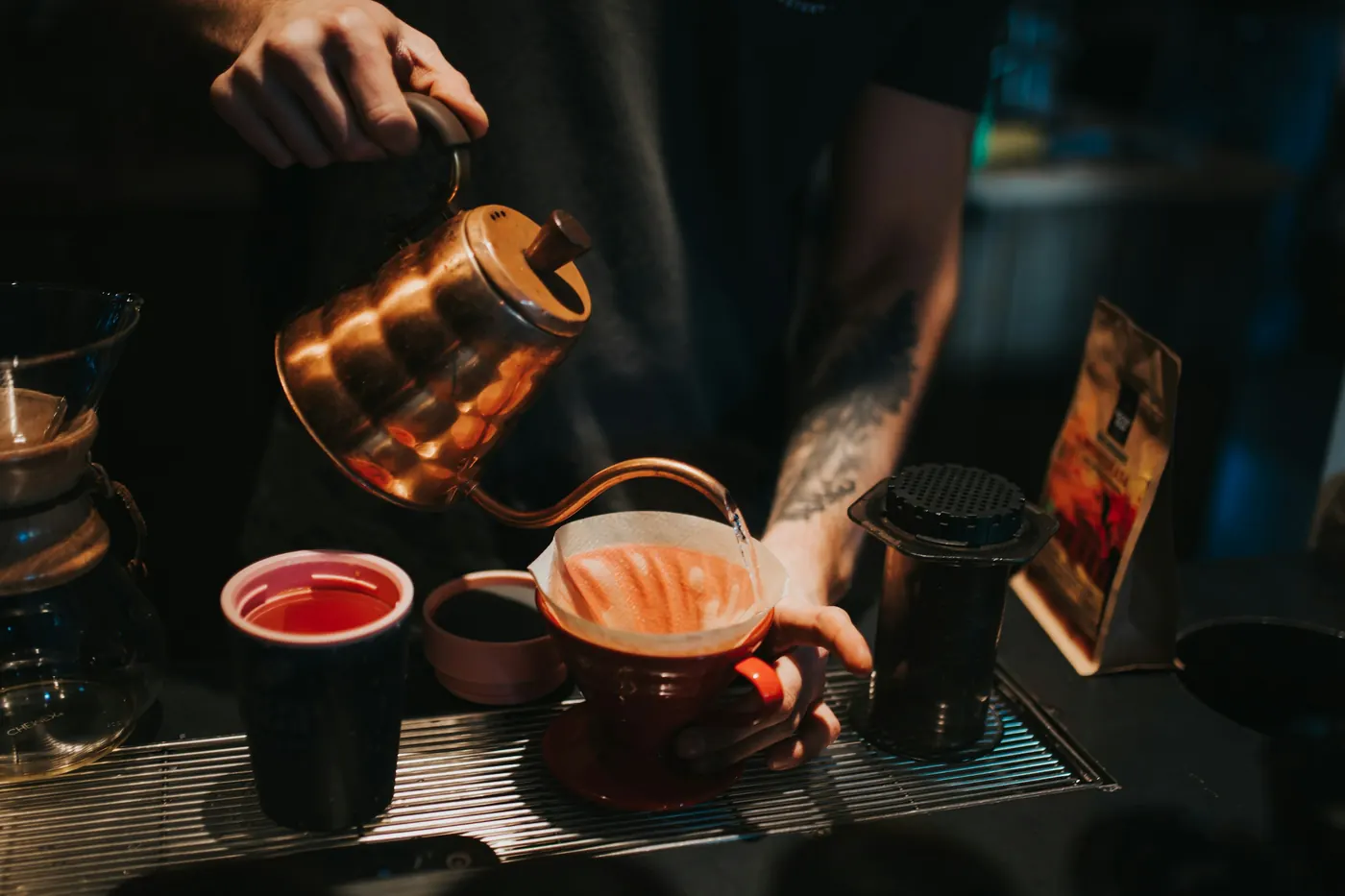
A gooseneck’s long spout shifts its balance forward, and its handle is designed for a slow, controlled tip rather than a quick dump. Most have narrower lid openings, so filling from a tap and wiping the inside take a little more care. A regular kettle has a wide lid, a spout you can rinse easily and a body big enough to reach into. Both need occasional descaling if your water is hard; follow the maker’s instructions for vinegar or citric acid.
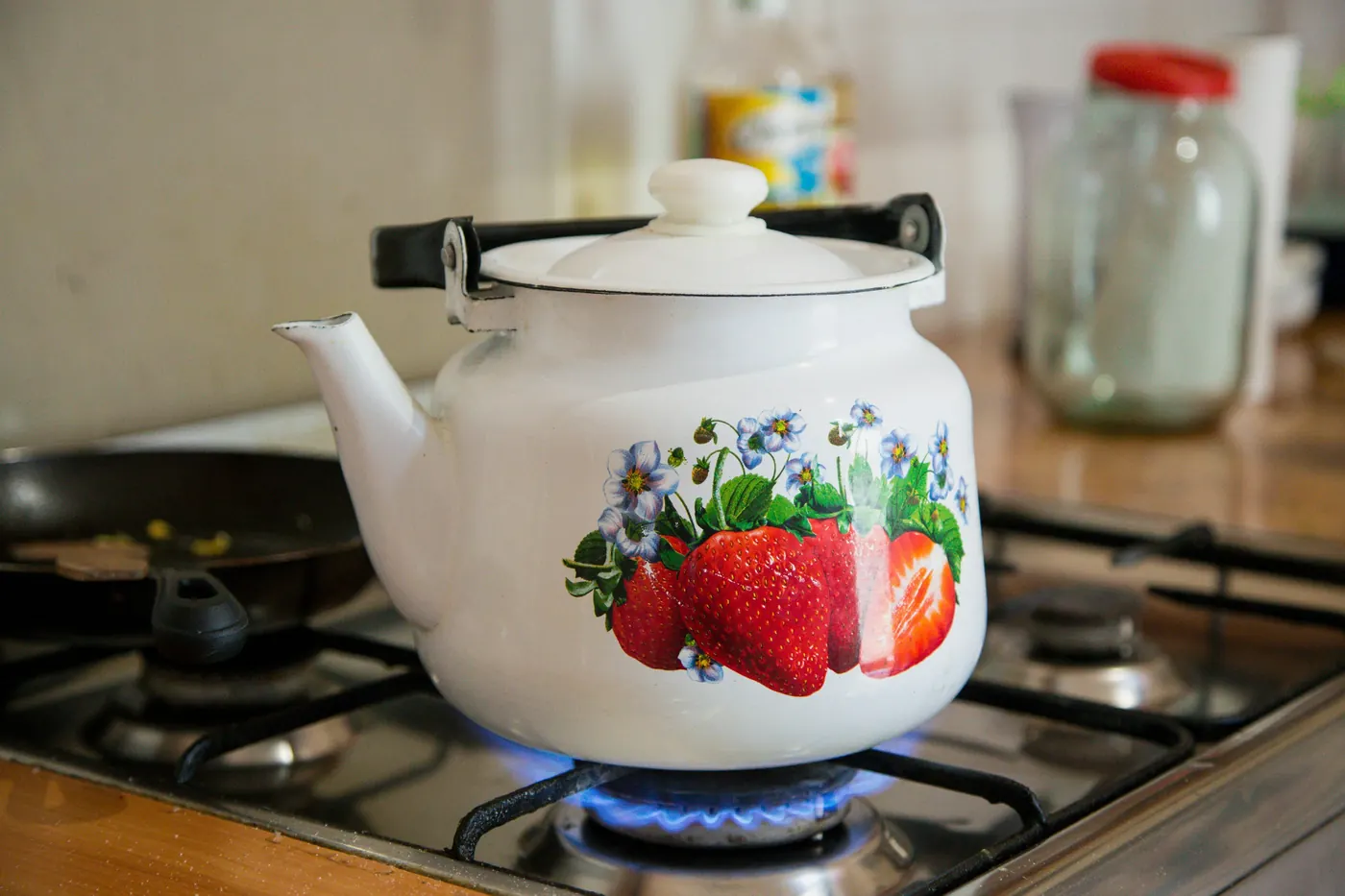
Stovetop versions exist on both sides. A stovetop gooseneck works on any burner and has no electronics to fail, but you need a thermometer or a guess to hit a temperature; our guide to the best gooseneck kettle stovetop covers those. Regular stovetop kettles, including whistling ones, are covered in our best tea kettle guide.
Gooseneck kettle vs regular for tea, coffee and cooking
For pour-over coffee, the gooseneck wins without a contest; our guide to the best pour-over coffee maker covers the cones and carafes it pairs with. For a French press, an AeroPress or a moka pot, the pour doesn’t matter much, and a regular kettle is quicker.
For tea, a regular kettle is usually the better tool. A teapot of black tea, a pot of té de canela simmered from cinnamon sticks or a few mugs of manzanilla need volume, not precision. A gooseneck is pleasant for a single cup of loose green tea, but not necessary. For cooking, the regular kettle wins again: hot water for rice, for blanching, for topping up a pot of beans or soaking dried chiles comes out of a wide spout faster and in greater quantity.
Choose a gooseneck kettle if… / Choose a regular kettle if…
Choose a gooseneck kettle if…
- You brew pour-over coffee by hand, or plan to.
- You make one or two cups at a time.
- You want to set an exact temperature and hold it.
- You already own a regular kettle for big batches.
Choose a regular kettle if…
- You make tea by the pot, French press or instant coffee.
- You often need a liter or more at once.
- You use hot water for cooking: rice, oats, noodles, soaking chiles.
- You want the fastest boil and the easiest kettle to fill and clean.
Our pick on each side of the gooseneck kettle vs regular question
Both picks are electric, cordless and adjustable, which keeps the comparison fair: both can heat water below boiling, but one is built to pour slowly and the other to pour a lot. Both were in stock when we checked.
1. Bonavita Cosmopolitan 1.0 L Gooseneck Electric Kettle – Degree-by-Degree for Pour-Over

The Cosmopolitan is Bonavita’s electric gooseneck. The listing describes temperature control in one-degree steps from 140°F to 208°F, plus a button that cycles through six presets, and a hold that keeps the water at temperature for up to 60 minutes. That covers the usual pour-over range and lower settings for green tea.
Per the listing, the kettle body is 304 stainless steel with BPA-free plastics, the base has a glass touch panel, and the 1200-watt element brings water to a boil in about five minutes. The 1-liter capacity is enough for a full pour-over carafe or a couple of mugs.
The trade-off is the gooseneck’s: a smaller kettle that heats a little slower and pours slowly by design.
Why we like it
- 1-degree steps, 140 to 208°F
- Six presets plus manual setting
- Holds temperature up to 60 minutes
- Thin, steady pour for bloom and circles
Key specifications
| Model | BVK2024 |
|---|---|
| Type | Electric gooseneck, variable temperature |
| Capacity | 1.0 L |
| Power | 1200 W |
| Temperature range | 140–208°F, 1-degree steps |
| Keep warm | Up to 60 minutes |
| Material | 304 stainless steel, BPA-free plastics |
| Finish | Matte black |
Why we recommend it
It suits a coffee drinker who brews pour-over most mornings and wants the temperature set and held without guessing.
Skip it if you mainly make tea by the pot or need hot water for cooking; the regular kettle below holds more and boils faster.
Pros and cons
Pros
- Precise, controlled pour
- Exact temperature and long hold
- Stainless body
Cons
- Only 1 liter
- Slower than a 1500 W kettle
- Slow to pour a large amount
2. Breville Temp Select Hot Water Kettle BKE720BSS – Big, Fast and Preset for Tea

Breville’s Temp Select is a full-size regular kettle with the useful part of temperature control built in. Breville describes five settings for black, green, white and oolong tea and French press coffee, and a keep-warm button that holds the water for 20 minutes. The 57-ounce jug, per the listing, fills a large teapot or several mugs in one go.
Its Soft Top lid, Breville says, “gently releases steam and eliminates splashing,” and the cordless jug lifts off a 360-degree base with cord storage. The listing gives 1500 watts and a one-year limited warranty.
The trade-off is the regular kettle’s: a wide spout that pours quickly but can’t give you the slow, aimed stream pour-over needs, and presets rather than exact degrees.
Why we like it
- 57 oz capacity, per the listing
- Five tea and coffee presets
- 20-minute keep warm
- Soft Top lid limits splashing
Key specifications
| Model | BKE720BSS |
|---|---|
| Type | Electric kettle, preset temperatures |
| Capacity | 57 oz (about 1.7 L) |
| Power | 1500 W |
| Temperature settings | 5 presets (black, green, white, oolong tea; French press) |
| Keep warm | 20 minutes |
| Material | Brushed stainless steel |
| Warranty | 1 year limited, per the listing |
Why we recommend it
It suits a household that makes tea by the pot, French press coffee or hot water for cooking, and wants a few sensible temperatures without fuss.
Skip it if you brew pour-over by hand; the gooseneck above gives you the controlled pour this spout can’t.
Pros and cons
Pros
- Large capacity
- 1500 W heating
- Useful tea presets
Cons
- Not suited to pour-over
- Presets, not exact degrees
- Shorter warranty than some
Gooseneck and regular kettle questions, answered
Is a gooseneck kettle worth it if I don’t make pour-over?
Usually not. Its advantage is the slow, aimed pour, and outside pour-over that rarely matters. A regular kettle with temperature presets covers tea and French press, holds more and boils faster.
Can you make pour-over coffee with a regular kettle?
You can, but it is harder to pour slowly and evenly, so the grounds wet unevenly and the brew is less consistent. Some people heat water in a regular kettle and pour it into a gooseneck or a small pitcher to brew.
Do gooseneck kettles boil water slower?
Often, yes, because many electric goosenecks use lower-wattage elements than full-size kettles. Our gooseneck pick is listed at 1200 watts; our regular pick at 1500 watts.
Is a gooseneck kettle good for tea?
It works well for a single cup of loose-leaf tea, and adjustable models help with green and white teas. For a teapot or several mugs, a regular kettle is more practical.
Electric or stovetop gooseneck?
Electric models heat faster and usually set an exact temperature. Stovetop models work on any burner and have no electronics but need a thermometer for precise temperatures.
Which kettle belongs on your counter
If you brew pour-over coffee, buy a gooseneck: nothing else gives you the same control of the stream. For everyone else, a regular kettle is the better first purchase, especially one with a few temperature presets for tea. Many coffee drinkers end up with both, a gooseneck for the morning cone and a big kettle for everything else.
If the gooseneck wins, our guide to the best gooseneck kettle compares electric and stovetop models, and the best value gooseneck kettle guide covers simpler ones. If the regular kettle wins, see our best electric kettle guide. And when you would rather someone else made the drinks, see our drinks or call to order.