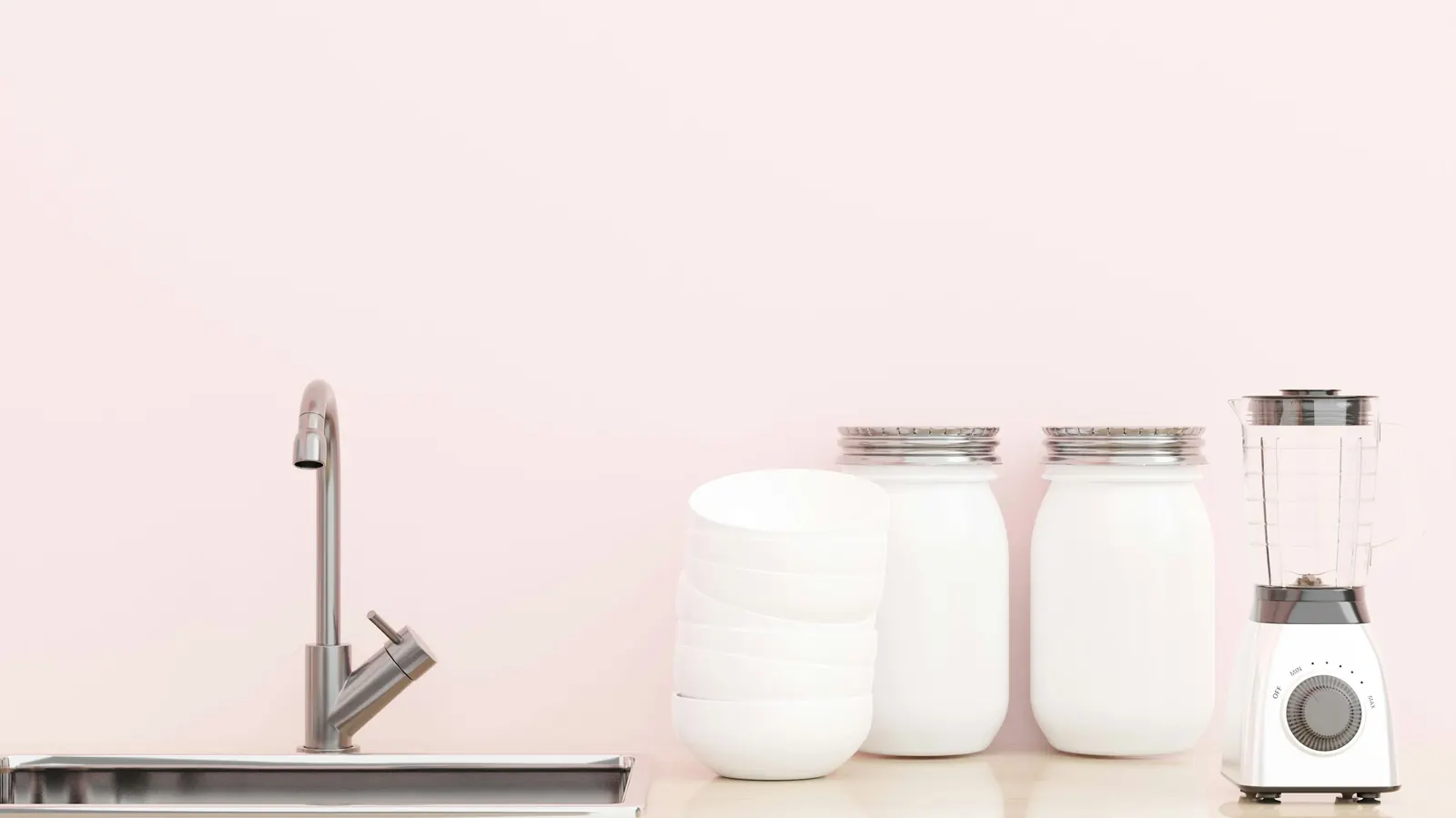
A stick blender and a countertop blender both spin a small blade very fast, and that is where the likeness ends. One goes into the food: you lower it into a pot of beans or a pitcher of agua fresca and blend where the food already is. The other takes the food in: you pour it into a closed jar, lock a lid on and let a big motor pull everything down into the blade. That difference decides almost everything else, from how smooth the result gets to how long the washing up takes.
In a restaurant kitchen both earn their place, often on the same afternoon. This guide compares the immersion blender and the countertop blender on soups, smoothies, ice, sauces, cleanup, storage and safety, says who should buy which first, and names one example of each.
Julia’s earns a commission on purchases made through links on this page, at no cost to you. Recommendations are based on what a restaurant kitchen looks for, product specifications and verified buyer reports.
Quick verdict: stick blender or countertop blender?
If you can own only one and you make smoothies, frozen drinks, moles or nut sauces, buy a countertop blender: it blends smoother, handles ice and thick mixtures better, and America’s Test Kitchen calls a full-size blender like the Vitamix 5200 good for “everything.” Buy an immersion blender first if you mostly purée soups, beans and cooked salsas in the pot, have little counter or cupboard space, or want something cheaper and quicker to clean. Most cooks who blend often end up with both.
The table sums up the differences; the sections after it explain each one, with the source behind it.
Immersion blender vs blender, side by side
| Immersion (stick) blender | Countertop blender | |
|---|---|---|
| Where it blends | In the pot, pitcher or beaker | In its own closed jar |
| Hot soup | Blends in the pot on the stove, no transfer (ATK) | Needs care: hot liquid can spray or steam; start on low, don’t fill to the top (Vitamix manual) |
| Smoothness | Smooth, but ATK’s favorites left tiny bits of kale | Smoothest; ATK’s favorite countertop blenders left none |
| Ice and frozen fruit | Can do it in a tall cup (ATK), in small batches | Built for it; Vitamix says High speed breaks down ice and frozen fruit to a lump-free result |
| Cleanup | Detach the shaft and rinse it (ATK) | Jar, lid and blade; Vitamix’s jar cleans itself with soap and water in 30 to 60 seconds |
| Storage | Fits in a drawer | Lives on the counter; the Vitamix 5200 measures 20.5 x 8.75 x 7.25 in and weighs over 10 lb |
| Cost class | Often less expensive (ATK) | From budget to high-end; ATK’s top pick is a high-end model |
Soups, beans and cooked salsas: the stick blender’s home ground
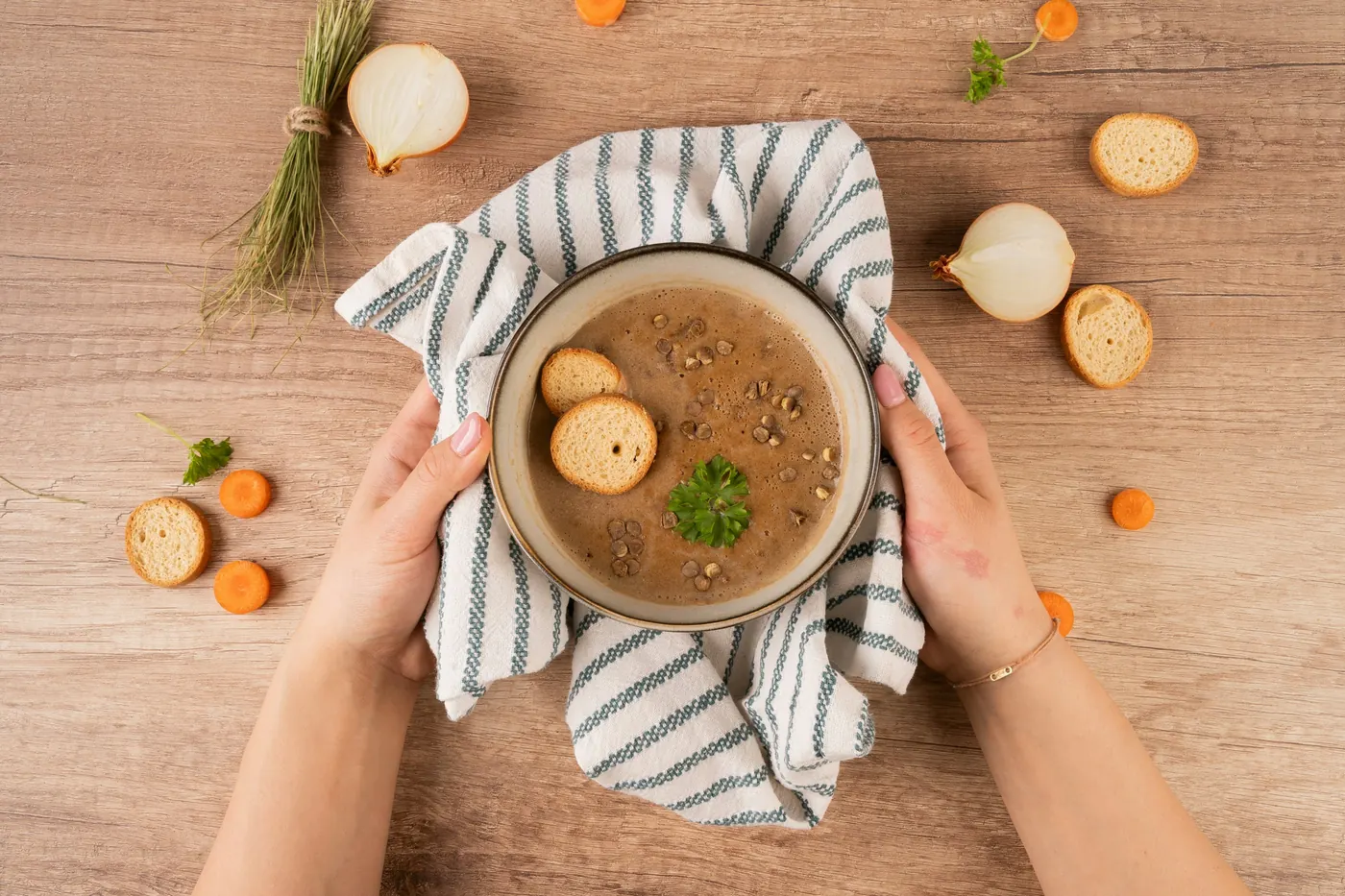
This is the job the immersion blender was made for. America’s Test Kitchen’s 2025 review, by Chase Brightwell, opens with the problem it solves: “Anyone who has pureed hot soup in a countertop blender knows it can be a hassle.” With a stick blender the soup stays in the pot, so there is no ladling hot liquid into a jar, no working in batches and no second vessel to wash.
In a Mexican kitchen that covers a lot of ground. A pot of frijoles de olla turns into a smooth bean soup. A cooked salsa roja, simmered with its tomatoes and chiles, gets blended in the pan. Crema de elote and squash soups come together in one pot. Take the pot off the heat, keep the blade guard fully under the surface before you switch on, and lift it out only after the motor stops; ATK found that guards without vents or large holes kept food from splattering.
A countertop blender can do all of this too, and it will make a soup a little silkier. But the hot pour is the catch, which the next section covers.
Hot liquids and safety
Hot food in a closed jar builds pressure. Vitamix’s owner’s manual for the 5200 warns that when blending hot liquids, “spray or escaping steam may cause scalding and burns.” Its rules are simple: don’t fill the container to its maximum, always start on the lowest speed and turn it up slowly, keep the two-part lid locked, and keep your hands away from the lid opening. It also says to wait until the blades stop completely before lifting the lid.
Follow that and a countertop blender handles hot soups and sauces well. Ignore it and you risk a burn. A stick blender in a pot has no lid to blow off, though the blade can still throw hot food if you raise it while it runs. That is a matter of kitchen habit rather than a maker’s rule: blend low in the pot, start slowly, and keep the head submerged.
Smoothies, frozen drinks and ice
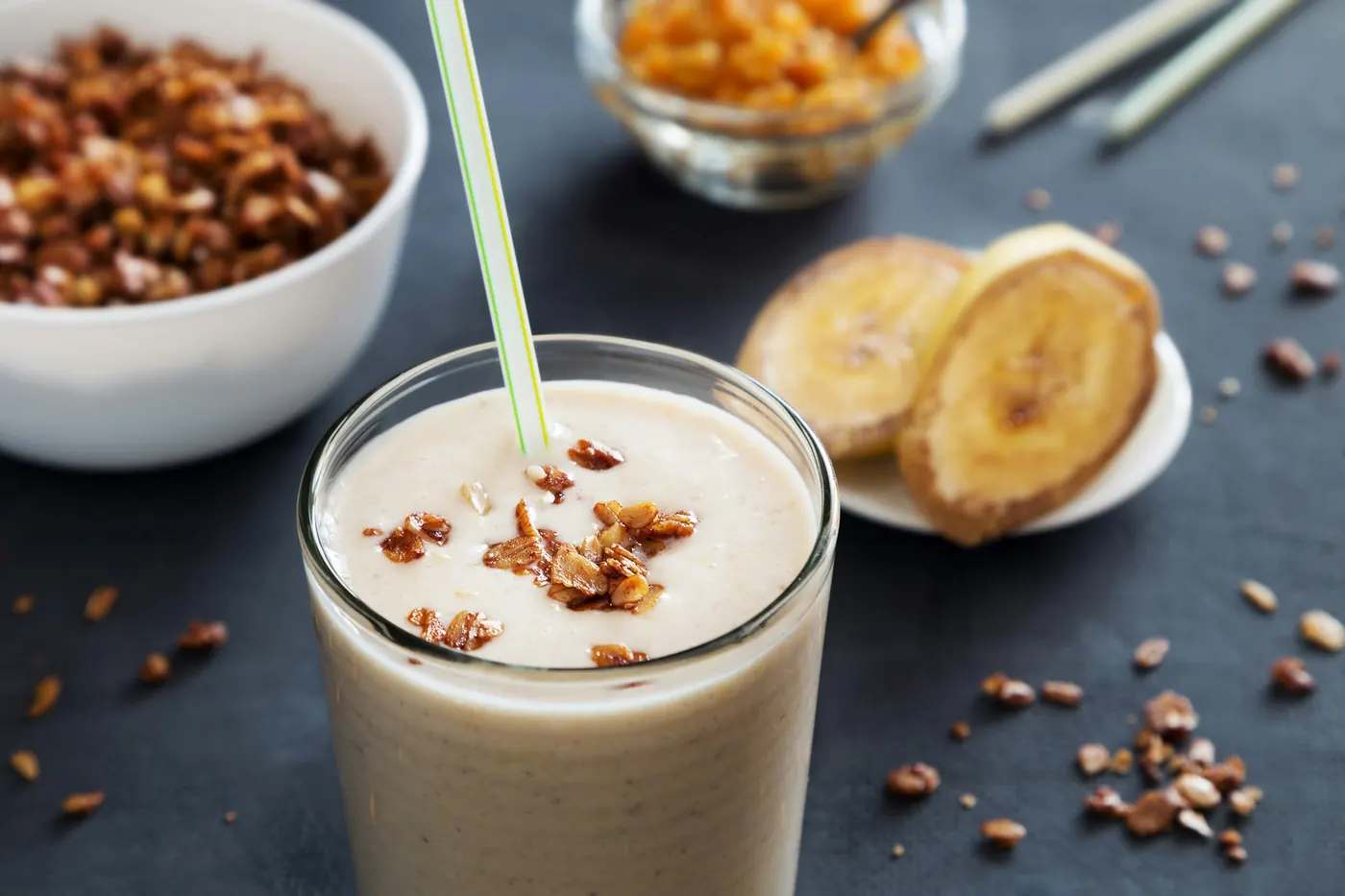
Here the countertop blender wins clearly. Vitamix’s manual says its High setting “provides the best quality of refinement, breaking down ice, frozen fruit, whole fruits or vegetables, and grains to a smooth lump-free consistency,” usually in under a minute. The tall jar and the vortex keep pulling food down into the blade, and a tamper pushes thick mixtures along.
A stick blender can manage, which surprises people. ATK says immersion blenders can handle crushing ice and making frozen cocktails, and its winner broke down frozen pineapple for smoothies and blended 25 in a row. But ATK is also plain about the limit: its favorite stick blenders “don’t always blend as smoothly,” leaving tiny bits of kale that its favorite midpriced and high-end countertop blenders did not. For a single smoothie in a tall cup, a stick blender is fine. For a pitcher of frozen margaritas or a green smoothie every morning, buy the countertop machine.
Moles, nut sauces and thick blends
Thick, dense mixtures are the second place a stick blender runs out of road. Toasted chiles, seeds, nuts and bread for a mole, soaked rice for horchata, pepitas for a pipián: these need a lot of power and a closed jar that keeps everything moving past the blade. ATK’s blender guide by Lisa McManus lists the Vitamix 5200 as good for “heavy-duty blending,” including “raw foods, nuts, grains, and more,” while it lists the stick blender for puréeing soups in the pot, mixing salad dressings and whipping cream.
Vitamix adds a warning worth knowing: for nut butters and oil-based foods, don’t process for more than one minute after the mixture starts to circulate, because longer can overheat it. Our best blender for salsa guide goes further into raw and cooked salsas, where either machine can work.
Cleanup and storage
ATK sums up the stick blender’s everyday advantage: “They’re easier to clean and store than most countertop blenders.” You detach the shaft, rinse it under the tap and put the motor body in a drawer. Nothing lives on the counter.
A countertop blender asks more of both. Vitamix’s self-clean is genuinely quick: warm water and a drop of dish soap, run for 30 to 60 seconds, then rinse. But its manual says not to put the container, lid or lid plug in the dishwasher, and the machine itself is big. Vitamix lists the 5200 at 20.5 by 8.75 by 7.25 inches and 10 pounds 9 ounces, which is why most owners leave it out. Measure the space under your wall cabinets before you buy any full-size blender.
Cost, power and how long they last
ATK notes that immersion blenders are often less expensive than countertop blenders, and that is the general pattern: a well-made stick blender usually costs a fraction of a high-end countertop machine. The motors differ in scale too. Braun’s new MultiQuick 5 MQ515 is rated at 500 watts, while the Vitamix 5200 has a 2-horsepower motor, according to each maker.
Warranties follow the same line. Braun lists 3 years on the MQ515, and Vitamix gives the 5200 a 7-year limited warranty. Judge any blender by the warranty and parts support as much as by its wattage; ATK describes its stick-blender winner as “lightweight and compact,” and preferred models of about 2 pounds or less, because comfort and splatter control matter more for that job than raw power.
Choose an immersion blender if… / Choose a countertop blender if…
Choose an immersion blender if…
- You mostly purée soups, beans and cooked salsas in the pot.
- You want blending with almost no washing up.
- Counter space is short and the tool has to live in a drawer.
- You make the odd single smoothie and don’t mind a few flecks.
Choose a countertop blender if…
- You make smoothies, frozen drinks or aguas frescas often.
- You blend moles, nut sauces, horchata or anything thick and dense.
- You want the smoothest possible texture.
- You have the counter space and the budget, and will follow the hot-liquid rules.
Our pick on each side of the immersion blender vs blender question
One pick per side, both in stock when we checked. Neither listing appears on our other pages. The Braun is a new model in the MultiQuick 5 line that America’s Test Kitchen has favored for years; ATK reviewed the older MQ505, not this one. The Vitamix is a red listing of the Vitamix 5200, the same model that tops our best blender guide; we repeat the model here because it is the countertop blender ATK uses as its reference for “everything,” which makes it the fairest comparison.
1. Braun MultiQuick 5 Hand Blender, 500-Watt – Simple Two-Speed Stick Blender

The MQ515 is the newest stick blender in Braun’s MultiQuick 5 range, released in 2026 according to the listing. It keeps what made the line popular, a slim body, two speeds and a bell-shaped blade guard, and adds a 500-watt motor. Braun says the PowerBell vPlus guard has a milling blade and six internal ribs that draw food toward the blade, and that the bell shape is designed to keep splashing down when you blend in the pot.
The kit is simple: the blending shaft, a whisk and a beaker, all clicking onto the motor with Braun’s EasyClick system. A mini chopper and a masher are sold separately. The warranty is 3 years, per the listing.
Use it for beans, soups, cooked salsas, crema sauces and single smoothies. Be clear about what we don’t know: ATK’s long-running winner is the older MQ505, not this model, so this pick rests on Braun’s listing and the line’s record rather than an independent review. The listing does not give the shaft length, weight or which parts are dishwasher safe, so check the manual in the box.
Why we like it
- Two plain speeds, one-hand operation (listing)
- Bell-shaped guard designed to limit splashing (Braun)
- Whisk and beaker included
- 3-year warranty
Key specifications
| Model | Braun MultiQuick 5 MQ515 |
|---|---|
| Type | Corded immersion (hand) blender |
| Power (stated) | 500 W |
| Speeds | 2 |
| Capacity | Beaker included; size not stated |
| Included | Blending shaft, whisk, beaker |
| Cleaning | Detachable shaft; dishwasher use not stated |
| Warranty | 3 years |
Why we recommend it
It suits a cook who wants one simple stick blender for the pot, from a maker with a long record in this category, and doesn’t need a chopper in the box.
Skip it if you want an independently reviewed model; the MultiQuick 5 MQ505 in our best immersion blender guide is ATK’s winner.
Pros and cons
Pros
- Simple two-speed control
- Splash-limiting bell guard
- Accepts extra EasyClick attachments
Cons
- New model, not yet reviewed by ATK
- No chopper included
- Shaft length and weight not stated
2. Vitamix 5200 Blender, 64 oz, Red – The Reference Countertop Blender

The Vitamix 5200 is the countertop blender most others are measured against. America’s Test Kitchen lists it as good for “everything,” from heavy-duty blending and smoothies to frozen drinks, nuts and grains. It pairs a 2-horsepower motor with a tall 64-ounce container, a variable-speed dial with 10 settings plus a High switch, and a tamper for pushing thick blends into the blade, according to Vitamix.
The plain dial is the reason a restaurant cook likes it. You can stop a salsa while it still has texture, or run a mole on High until it is completely smooth. Vitamix says most blends take under a minute, and its High setting breaks down ice and frozen fruit to a lump-free result.
Cleaning is a 30-to-60-second self-clean with warm water and a drop of soap, but Vitamix’s manual says the container, lid and lid plug should not go in the dishwasher. It is big: Vitamix lists 20.5 by 8.75 by 7.25 inches and 10 pounds 9 ounces. For hot soups, follow the manual: start on speed 1, don’t fill to the top and keep the lid locked. The warranty is 7 years.
Why we like it
- ATK’s reference full-size blender
- 2 HP motor, 10 speeds plus High
- Tamper for thick blends
- 7-year limited warranty
Key specifications
| Model | Vitamix 5200 (001392-1138) |
|---|---|
| Type | Full-size countertop blender |
| Power (stated) | 2 HP |
| Speeds | 10 variable plus High |
| Capacity | 64 oz container |
| Included | Motor base, 64 oz container, tamper |
| Cleaning | Self-clean with soap and water; container not for dishwasher |
| Warranty | 7-year limited |
Why we recommend it
It suits a cook who blends every day, from smoothies and frozen drinks to moles and nut sauces, and wants one machine that does it all for years.
Skip it if counter space or budget is tight; our best blender guide also covers ATK’s midpriced pick and a budget choice.
Pros and cons
Pros
- Handles ice, frozen fruit and thick blends
- Fine texture control with the dial
- Long warranty
Cons
- Large and heavy for the counter
- Container not dishwasher safe
- High-end cost class
Stick and countertop blender questions, answered
Can an immersion blender replace a regular blender?
For soups, beans, cooked salsas, dressings and the odd smoothie, largely yes. For smooth green smoothies, pitchers of frozen drinks, moles and nut sauces, no: ATK found its favorite stick blenders don’t blend as smoothly as good countertop models.
Can you crush ice with an immersion blender?
ATK says immersion blenders can handle crushing ice and making frozen cocktails. Work in a tall, narrow cup with some liquid, in small amounts. For regular frozen drinks, a countertop blender is quicker and more even.
Is it safe to blend hot soup in a countertop blender?
Yes, if you follow the maker’s rules. Vitamix says not to fill the container to the top, to start on the lowest speed and increase slowly, to lock the lid and to keep your hands away from the lid opening, because spray or steam can scald.
Which is easier to clean?
The immersion blender. ATK says you simply detach the shaft and rinse it. A countertop blender has a jar, lid and blade to clean, though Vitamix’s self-clean cycle takes under a minute.
Should I buy both?
If you cook soups and beans often and also make smoothies or moles, yes. The two overlap less than they seem: one blends in the pot, the other blends what the pot can’t.
Which blender to buy first
For most kitchens that blend more than soup, the countertop blender comes first, because it does the widest range of jobs and does the hard ones better. The stick blender is the better first buy if your blending mostly happens in a pot, if space is short, or if you want something quick to rinse. Our best immersion blender guide compares seven stick blenders, including a cordless option, and our best blender for smoothies guide covers jars built for frozen fruit. And when you would rather someone else did the blending, see the menu or call to order.