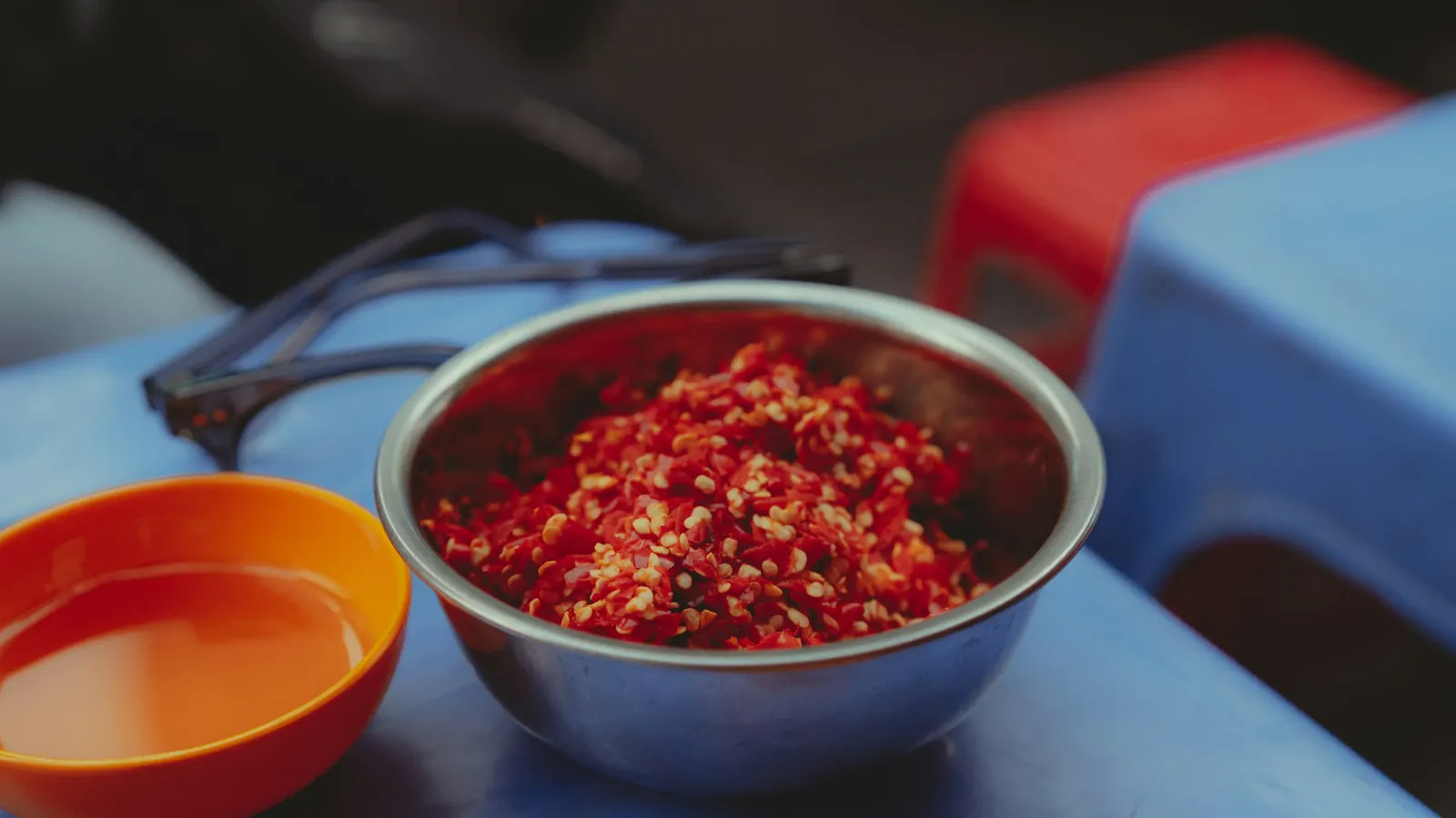
Most cooked Mexican salsas end up in a machine at some point. Roasted tomatoes, tomatillos, garlic and chiles go into a blender for a smooth taquería-style salsa, or into a food processor for something chunkier, and dried-chile salsas almost always get blended, because grinding rehydrated guajillos by hand is slow work. Rick Bayless, interviewed by The Takeout, points out that blenders are the most common appliance used in Mexico.
The right machine depends on the salsa you make. A blender gives you anything from rough to completely smooth, a food processor chops and gives more texture, a mini chopper suits a cup or two, and an immersion blender works straight in the pot. This guide explains the differences and names the blenders and processors for salsa worth buying, from a large Vitamix to a small chopper.
Julia’s earns a commission on purchases made through links on this page, at no cost to you. Recommendations are based on what a working Mexican kitchen looks for in salsa tools, the makers’ own specifications and published equipment reviews and guidance, which we name.
Quick verdict: which salsa machine to buy
For most kitchens, the Vitamix 5200 is the blender to buy for salsa: its dial of 10 variable speeds lets you stop at a coarse salsa or run on to a smooth one, and America’s Test Kitchen rates it its top blender. If you prefer chunky salsa, choose the Cuisinart Custom 14-Cup food processor, ATK’s top food processor, with a responsive pulse button. For a cup or two at a time, the KitchenAid 3.5 Cup Food Chopper; for one machine that does both jobs, the Ninja Kitchen System BL770; and for blending in the pot, the Braun MultiQuick 5.
If you want the coarsest, most traditional texture, no machine quite matches a stone bowl; our comparison of a molcajete vs a blender explains why. The rest of this page is about the machines.
Five salsa machines side by side
Our five standout picks, one for each kind of salsa maker, with the capacity, power and controls each maker or listing states. All nine machines are reviewed in full below.
| Machine | Best for | Capacity | Controls | Buy on Amazon |
|---|---|---|---|---|
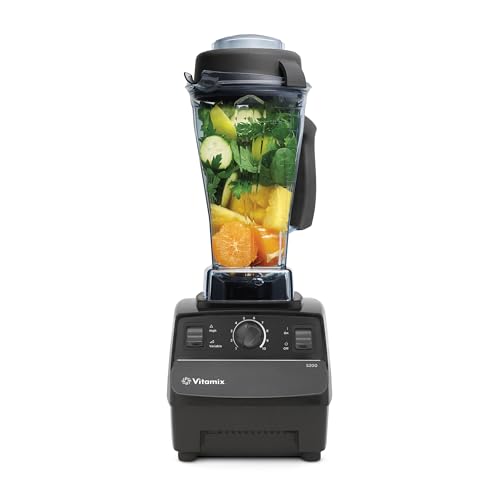
Vitamix 5200 Blender, 64 ozBest overall
|
Any texture, dried-chile salsas | 64 oz | 10 variable speeds plus High | View on Amazon |

Cuisinart Custom 14-Cup Food ProcessorBest for chunky salsa
|
Chunky salsa, big batches | 14 cups | On and off/pulse | View on Amazon |
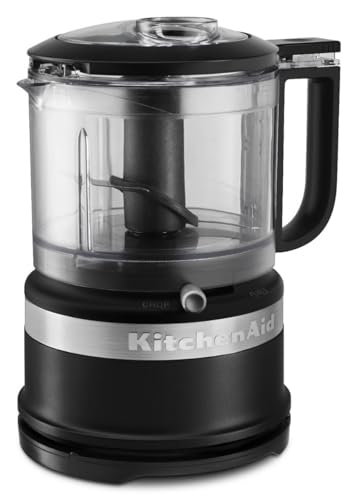
KitchenAid 3.5 Cup Food ChopperBest for small batches
|
A cup or two of salsa | 3.5 cups | 2 speeds plus pulse | View on Amazon |

Ninja Kitchen System BL770, 72 oz pitcher and 8-cup bowlBest two-in-one
|
Smooth and chunky from one base | 72 oz pitcher; 8-cup bowl | 4 functions plus pulse | View on Amazon |
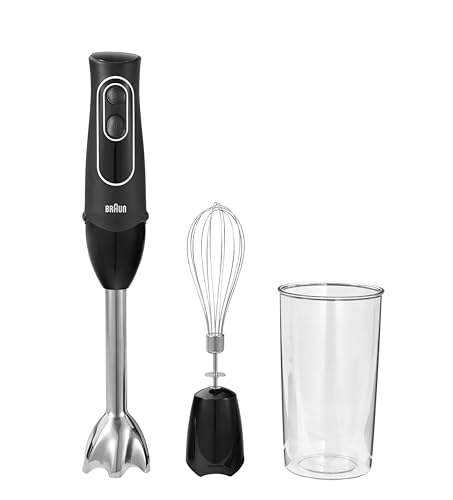
Braun MultiQuick 5 Hand BlenderBest immersion
|
Blending cooked salsa in the pot | 20 oz beaker; any pot | 2 speeds | View on Amazon |
Product images from Amazon. Specifications are from each maker’s Amazon listing or website, or from the equipment reviews named in each section; where a figure comes from a retailer, we say so.
Blender or food processor: the texture question
The two machines cut differently, and that shows in the salsa. A blender’s blades sit at the bottom of a tall jar and spin fast, pulling everything down into a vortex. Bayless notes that a blender’s blades turn more than twice as fast as a food processor’s, which gives a more consistent texture. That is ideal for smooth salsas: salsa verde, dried-chile salsas, creamy avocado salsa and enchilada sauce.
A food processor has a wide, flat bowl and an S-shaped blade. With short pulses it chops rather than purées, which makes a chunkier salsa with more distinct pieces. America’s Test Kitchen calls a food processor “excellent for making salsa, pesto, and other chunky sauces,” and says a short, powerful pulse function is essential: models with responsive pulse buttons gave its testers uniform cuts, while weak ones over-chopped some food while the rest rode around on the blade.
Two cautions apply to both. First, raw pico de gallo belongs to the knife: Bayless says a food processor turns it mushy and dulls the flavors. Second, speed adds air. Chef Rick Martinez, quoted by Tasting Table, says, “Never blend a salsa in a blender above medium-low speed,” because higher speeds whip air into it and leave it frothy. Pulse, stay low, and stop early.
And neither matches stone. Consumer Reports made the same roasted salsa in a blender and a molcajete and found the blender version smooth and watery and the molcajete version thicker; our guide to the best molcajete covers the stone bowls worth buying.
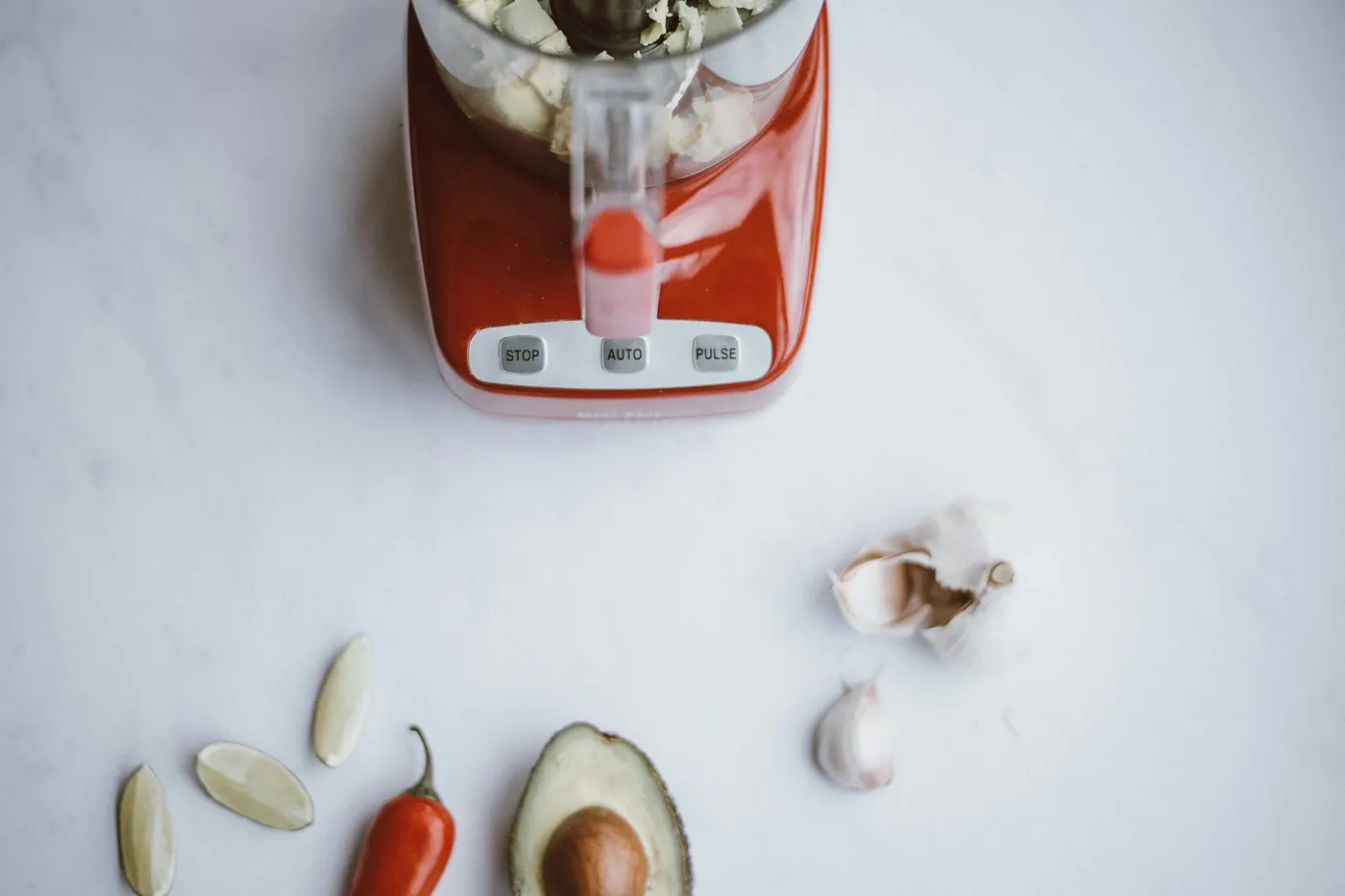
Our picks for the best blender salsa machines
These nine cover full-size blenders, food processors, a combination system, mini choppers and an immersion blender, at a range of sizes and budgets. For each we give the capacity, power and controls as the maker or listing states them, and one honest reason to pass on it.
1. Vitamix 5200 Blender, 64 oz – Fine Speed Control for Any Texture
The 5200 is Vitamix’s long-running classic, and America’s Test Kitchen still names it its top blender, calling it a longtime favorite. For salsa, its most useful feature is not power but the dial: 10 variable speeds plus a High switch. You can start at the lowest speed, nudge it up for a few seconds and stop while the salsa still has texture, which is exactly the low-and-short approach Rick Martinez recommends. Vitamix’s own salsa method, published by Sur La Table, does the same: start on speed 1, go quickly to 4 or 5, and blend for 3 to 5 seconds with the tamper.
When you want a smooth salsa, the same machine goes all the way. The listing gives a 2-horsepower motor and laser-cut stainless steel blades, enough to grind rehydrated guajillo and árbol chiles into a silky salsa or an enchilada sauce. The 64-ounce container comes with a tamper for pushing thick mixtures into the blades, and Vitamix says it handles small to large batches.
Vitamix gives the size as 20.5 by 8.75 by 7.25 inches, so check the height under your cabinets. It cleans itself in 30 to 60 seconds with warm water and a drop of dish soap, and it carries a 7-year limited warranty. It has no pulse button and no presets; the speed dial does that job.
Why we like it
- 10 variable speeds plus High, from chunky to smooth
- America’s Test Kitchen’s top blender
- Tamper keeps thick salsas moving
- Self-cleans in 30 to 60 seconds, per Vitamix
- 7-year limited warranty
Key specifications
| Model | 5200 (001372) |
|---|---|
| Type | Countertop blender |
| Capacity | 64 oz container |
| Power | 2 HP motor; 11.5 A, 120 V |
| Settings/pulse | 10 variable speeds plus High; no pulse button |
| Size | 20.5 x 8.75 x 7.25 in |
| Cleaning | Self-cleaning with warm water and dish soap |
| Warranty | 7-year limited |
Why we recommend it
Choose it if you make salsa often and in more than one style: chunky roasted salsa one day, smooth salsa verde or a dried-chile salsa the next, plus soups and sauces.
Skip it if you only make a small bowl of salsa now and then; it is a large, heavy machine and a big purchase for that job alone.
Pros and cons
Pros
- Precise speed control
- Smooth dried-chile salsas
- Long warranty
Cons
- Tall at 20.5 inches
- No pulse button
- Easy to over-blend at high speed
2. Cuisinart Custom 14-Cup Food Processor – A Responsive Pulse for Chunky Salsa
If you like a salsa with pieces in it, a food processor is the easier tool, and this is the one America’s Test Kitchen rates highest. Its review praises the Custom 14 as “powerful, precise, and compact,” and says its “fast, responsive pulse button allows for precision.” That is what chunky salsa needs: a few one-second pulses, a look, and a few more.
One detail from ATK’s separate note on pulse buttons is worth knowing: on this Cuisinart, the blade stops as soon as you lift your finger, so hold the button down for the full second the recipe asks for. That gives you good control over how far the tomatoes and onions break down.
The listing gives a 720-watt motor, a 14-cup bowl, on and off/pulse buttons, an extra-large feed tube, and a chopping blade with slicing and shredding discs, all dishwasher safe. Cuisinart’s listing names salsa and guacamole among its uses, and the same machine slices cabbage for tacos and shreds cheese. The warranty is three years on the whole unit and five years on the motor.
Why we like it
- America’s Test Kitchen’s top food processor
- Responsive pulse for chopping, not puréeing
- 14-cup bowl for party batches
- Five-year motor warranty
Key specifications
| Model | DFP-14BCNY |
|---|---|
| Type | Full-size food processor |
| Capacity | 14 cups |
| Power | 720 W |
| Settings/pulse | On and off/pulse buttons |
| Size | Not stated in the listing |
| Cleaning | Dishwasher-safe parts |
| Warranty | 3-year limited; 5-year full on motor |
Why we recommend it
It suits cooks who prefer chunky roasted salsa, make big batches for parties, and want a machine that also slices, shreds and makes dough.
Skip it if you mostly make smooth or dried-chile salsas; a blender does those better.
Pros and cons
Pros
- Precise pulse
- Large bowl
- Slices and shreds too
Cons
- No mini bowl for very small batches, per ATK
- Only one speed besides pulse
- Bulky to store
3. KitchenAid 3.5 Cup Food Chopper – Small Batches, Coarse or Fine
Most weeknight salsa is a cup or two, and a full-size processor is a lot to wash for that. America’s Test Kitchen’s review of small food processors names this KitchenAid its winner, saying the “small but mighty food processor does a stellar job of mincing, dicing, grating, chopping, and blending quickly.” The same review warns that small machines can “accidentally turn a salsa into a vegetable puree,” which is why controls matter at this size.
KitchenAid gives it two speeds and a pulse, which its listing describes as giving “coarse or fine results for anything from chunky pico de gallo and salsa” to a smooth sauce. The 3.5-cup bowl has a handle, a pour spout and a blade that locks in place so you can pour without it falling out, and a drizzle basin in the lid lets you add oil or lime juice while it runs.
ATK noted two small faults: oil sometimes got trapped in the drizzle basin, and it chopped hard almonds less evenly than some models. Neither matters much for salsa. The bowl is dishwasher safe, and it has a cord wrap for storage.
Why we like it
- America’s Test Kitchen’s top small food processor
- Two speeds plus pulse
- Locking blade and pour spout
- Small footprint
Key specifications
| Model | KFC3516BM (Matte Black) |
|---|---|
| Type | Mini food chopper |
| Capacity | 3.5 cups |
| Power | Not stated in the listing |
| Settings/pulse | 2 speeds plus pulse |
| Size | Not stated in the listing |
| Cleaning | Dishwasher-safe work bowl |
| Warranty | 2-year limited (listing) |
Why we recommend it
Choose it if you make salsa for two to four people, want a quick chop of onion, garlic and chiles, and have little counter space.
Skip it if you make party batches; 3.5 cups fills up fast with roasted tomatoes.
Pros and cons
Pros
- Good control for its size
- Easy to store and wash
- Pour spout
Cons
- Small capacity
- Oil can collect in the drizzle basin, per ATK
- Wattage not stated
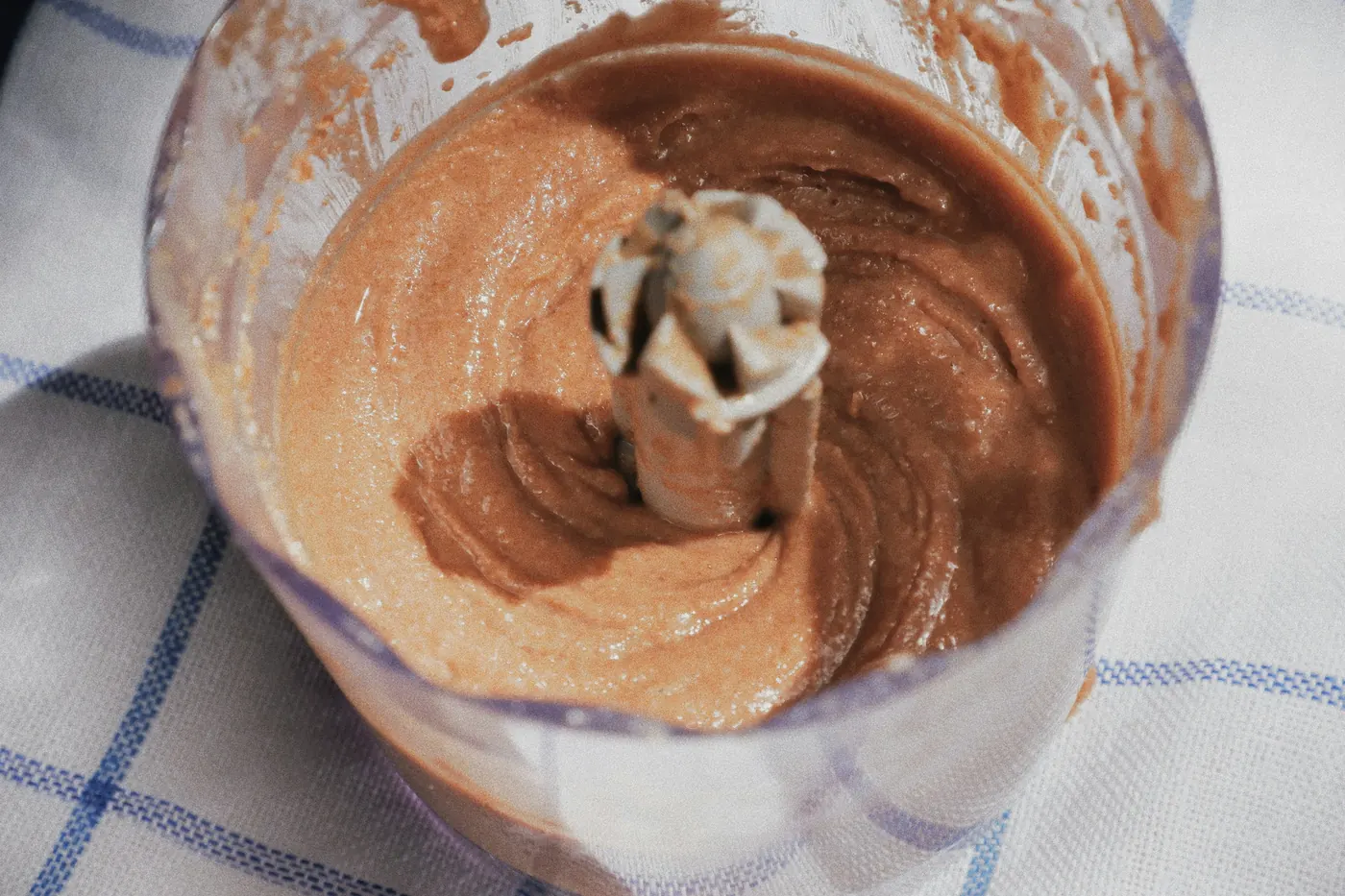
4. Ninja Kitchen System BL770, 72 oz pitcher and 8-cup bowl – Blender and Processor on One Base
If you cannot decide between a blender and a food processor, this Ninja gives you both on one 1,500-watt motor base. The listing describes a 72-ounce pitcher (64 ounces of liquid at most) for smooth salsas and sauces, and an 8-cup processor bowl with its own chopping blade for chunky ones; Ninja’s own title says it “processes salsa”.
The base offers four functions, Blend, Mix, Crush and Single-Serve, and RTINGS lists a pulse mode as well. For salsa, use the processor bowl and pulse for chunky, or the pitcher at a low setting in short bursts for smooth. The pitcher’s stacked blade assembly is built for crushing ice, so it purées quickly; watch it closely if you want texture.
Everything except the motor base is dishwasher safe on the top rack, per the listing, which also includes two 16-ounce cups for smoothies and a dough blade. RTINGS gives the unit as about 17.9 inches tall. The warranty is one year.
Why we like it
- Blender pitcher and food processor bowl in one
- 1,500-watt motor base
- Dishwasher-safe pitcher, bowl and blades
- Large 72-ounce pitcher for party batches
Key specifications
| Model | BL770AMZ |
|---|---|
| Type | Blender and food processor system |
| Capacity | 72 oz pitcher (64 oz liquid); 8-cup bowl |
| Power | 1,500 W |
| Settings/pulse | Blend, Mix, Crush, Single-Serve; pulse (per RTINGS) |
| Size | About 17.9 x 8.3 x 9.4 in (RTINGS) |
| Cleaning | Dishwasher safe, top rack |
| Warranty | 1-year limited |
Why we recommend it
It suits a kitchen with room for one appliance that has to make both smooth and chunky salsas, plus smoothies and frozen drinks.
Skip it if fine speed control matters most; four functions are not a variable-speed dial.
Pros and cons
Pros
- Two machines in one
- Strong motor
- Easy cleanup
Cons
- Fixed functions, no speed dial
- Tall pitcher purées quickly
- Short warranty
5. Braun MultiQuick 5 Hand Blender – Blend Cooked Salsa in the Pot
Many cooked salsas are simmered after blending, and many sauces are blended after simmering. An immersion blender skips the transfer: you blend in the pot. America’s Test Kitchen names the MultiQuick 5 its top immersion blender and says, “We’ve recommended this model for more than a decade,” praising its light weight, comfortable grip and durability.
Braun gives it 350 watts and two speeds, and its bell-shaped blending shaft is designed to reduce suction and splashing, which matters with hot tomato salsa. It comes with a 20-ounce beaker, per Braun’s spec sheet, which is a good size for a single batch of salsa verde, and a whisk. Braun’s sheet lists the removable parts as dishwasher safe, but not the motor unit.
An immersion blender will not give you the precise chunky texture of a processor, and it struggles with dry, thick mixtures. It is at its best with roasted tomatoes and chiles that have some liquid, or with a pot of salsa ranchera or enchilada sauce.
Why we like it
- America’s Test Kitchen’s top immersion blender
- Blends hot salsa without a transfer
- Splash-control shaft, per Braun
- Small to store; 3-year warranty
Key specifications
| Model | MQ505 |
|---|---|
| Type | Immersion (hand) blender |
| Capacity | 20 oz beaker; blends in any pot |
| Power | 350 W |
| Settings/pulse | 2 speeds |
| Size | Not stated in the listing |
| Cleaning | Removable parts dishwasher safe; motor unit not |
| Warranty | 3-year |
Why we recommend it
Choose it if you make cooked salsas and sauces in a pot and want the least washing up, or have no room for a countertop machine.
Skip it if you want chunky salsa from raw ingredients; a processor or chopper is better.
Pros and cons
Pros
- Blends in the pot
- Light and easy to store
- Long-standing ATK pick
Cons
- Little control over chunky texture
- Only two speeds
- Small beaker for big batches
6. Cuisinart Pro Custom 11 Food Processor – A Smaller Full-Size Processor

America’s Test Kitchen names the Pro Custom 11 its Best Buy among full-size food processors, saying it “aced our chopping, slicing, and shredding tests,” and it recommends its flat lid for jobs like “making pie dough or salsa,” where you add everything at the start.
The 11-cup bowl is smaller than the Custom 14’s but still holds a party batch of salsa. Retailers give it a 625-watt motor and the familiar on and off/pulse controls, and the listing calls it dishwasher safe. Like the Custom 14, it slices and shreds as well as chopping.
The listing itself is thin on specifications; the power and warranty here come from retailer copies, which agree on 625 watts but differ on the motor warranty, so check the box when it arrives.
Why we like it
- America’s Test Kitchen’s Best Buy food processor
- Pulse control for chunky salsa
- 11-cup bowl, a little smaller to store
Key specifications
| Model | DLC-8SBCY |
|---|---|
| Type | Full-size food processor |
| Capacity | 11 cups |
| Power | 625 W (retailers) |
| Settings/pulse | On and off/pulse |
| Size | Not stated in the listing |
| Cleaning | Dishwasher-safe bowl and parts (listing) |
| Warranty | 3-year limited (retailers) |
Why we recommend it
It suits cooks who want a well-reviewed full-size processor for chunky salsa and everyday prep without the size of the Custom 14.
Skip it if you want a smooth salsa; it chops, and a blender purées better.
Pros and cons
Pros
- Strong review record
- Pulse control
- Slices and shreds
Cons
- Thin Amazon listing
- Warranty details vary between sources
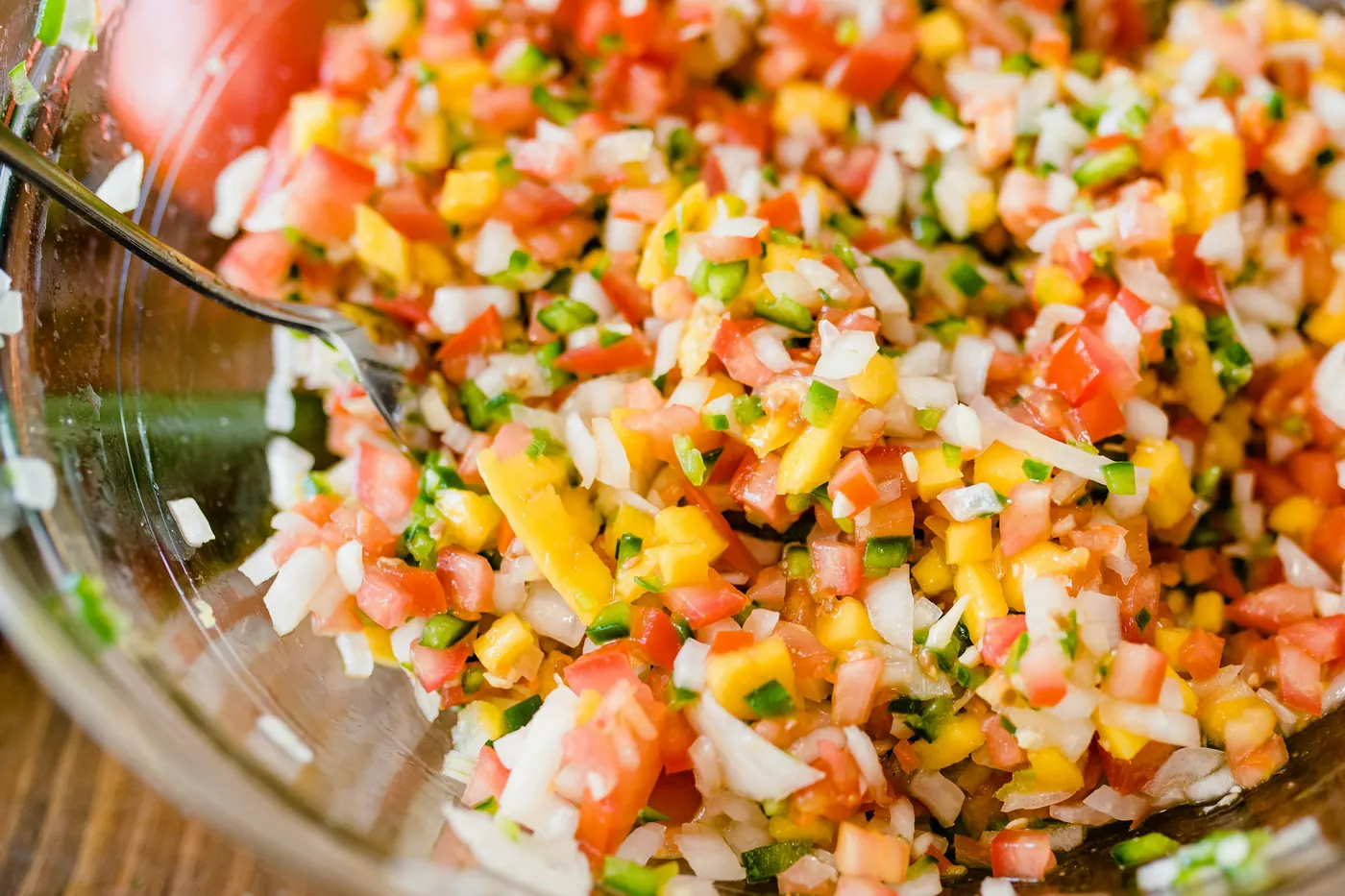
7. Hamilton Beach 10-Cup Food Processor with Bowl Scraper – Budget Chunky Salsa

Hamilton Beach’s 10-cup processor is the low-cost way into chunky salsa. The listing gives it a 450-watt motor, two speeds plus pulse, and a 10-cup bowl, and names homemade salsa among its uses. Its distinctive feature is a built-in bowl scraper: you move a handle on the lid from side to side and a scraper sweeps the wall of the bowl, even while the motor runs, so pieces of tomato and onion stuck to the wall get pulled back into the blade without stopping to use a spatula.
It comes with a chopping blade and a reversible slicing and shredding disc. The blades, bowl and lid are dishwasher safe, and the listing says all parts in food zones are BPA free.
It is lighter-built than the Cuisinarts, with less power and a one-year warranty, but for a few batches of salsa a month that is a fair trade.
Why we like it
- Built-in bowl scraper
- Two speeds plus pulse
- 10-cup bowl
- Dishwasher-safe parts
Key specifications
| Model | 70730 |
|---|---|
| Type | Full-size food processor |
| Capacity | 10 cups |
| Power | 450 W |
| Settings/pulse | 2 speeds plus pulse |
| Size | Not stated in the listing |
| Cleaning | Dishwasher-safe blades, bowl and lid |
| Warranty | 1-year |
Why we recommend it
Choose it if you want a full-size processor for chunky salsa and everyday chopping on a tight budget.
Skip it if you process dense doughs or use it daily; a Cuisinart is sturdier and better reviewed.
Pros and cons
Pros
- Bowl scraper saves stopping
- Low-cost entry
- Two speeds and pulse
Cons
- Less powerful
- One-year warranty
8. Oster Classic Series 8-Speed Blender, 6-Cup Glass Jar – Budget Blender With a Glass Jar

A simple glass-jar blender makes perfectly good smooth salsa, and Oster’s Classic Series is the familiar version. The Amazon listing says little beyond a glass jar, stainless steel blade and an ice-crushing button, so the details here come from retailer copies of Oster’s specifications: a 6-cup (48-ounce) glass jar, eight speeds plus pulse, and a 700-watt rating, described by one retailer as 700 power watts and 450 blending watts.
Eight speeds and a pulse are enough control for salsa if you follow the same rule as with any blender: low speed, short bursts. Retailers describe the glass jar as dishwasher safe.
It will not grind dried chiles as finely as a Vitamix, so strain a dried-chile salsa if you want it silky. Retailers give a 3-year limited warranty.
Why we like it
- Glass jar, dishwasher safe (retailers)
- Eight speeds plus pulse
- Compact at about 15 inches tall (retailers)
Key specifications
| Model | BLSTMEG-G00 (Classic Series, gray) |
|---|---|
| Type | Countertop blender |
| Capacity | 6-cup (48 oz) glass jar |
| Power | 700 W peak (retailers) |
| Settings/pulse | 8 speeds plus pulse (retailers) |
| Size | About 15 in tall (retailers; figures vary) |
| Cleaning | Dishwasher-safe jar (retailers) |
| Warranty | 3-year limited (retailers) |
Why we recommend it
It suits a kitchen that wants a basic blender for smooth salsas, aguas frescas and the occasional sauce without the cost of a high-power machine.
Skip it if you blend dried chiles often; it will not get them as smooth as the Vitamix.
Pros and cons
Pros
- Glass jar
- Pulse and eight speeds
- Low cost
Cons
- Thin Amazon listing
- Less power for dried chiles
- Specs from retailers, not the listing
9. Cuisinart Mini-Prep Plus 3-Cup Food Processor – A Simple Mini Chopper
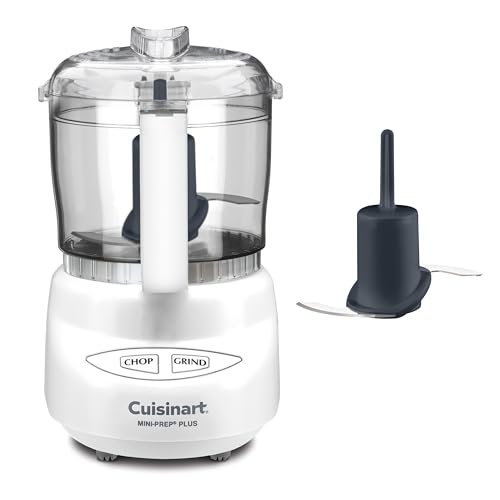
The Mini-Prep Plus is the long-running small Cuisinart, and it is the simplest machine here: two buttons, chop and grind, and a 24-ounce (3-cup) bowl. The listing gives it a 250-watt motor and a reversible stainless steel blade with a sharp edge for chopping and a blunt edge for grinding.
For salsa, use Chop in short presses for a chunky texture, and Grind for a smoother salsa or a garlic and chile paste. It is too small for a family’s worth of roasted tomatoes at once, but it is right for a bowl of salsa for two or a quick batch of chopped onion, cilantro and jalapeño.
The bowl and lid are dishwasher safe, the base wipes clean, and it comes with a spatula. The warranty is 18 months, shorter than the KitchenAid’s.
Why we like it
- Simple chop and grind buttons
- Reversible blade, per Cuisinart
- Small and light to store
Key specifications
| Model | DLC-2A |
|---|---|
| Type | Mini food processor |
| Capacity | 3 cups (24 oz) |
| Power | 250 W |
| Settings/pulse | Chop and grind push buttons |
| Size | Not stated in the listing |
| Cleaning | Dishwasher-safe bowl and lid |
| Warranty | 18-month limited |
Why we recommend it
Choose it if you want the simplest small chopper for salsa for one or two and quick prep of aromatics.
Skip it if you want separate speeds; the KitchenAid gives more control.
Pros and cons
Pros
- Very simple
- Compact
- Dishwasher-safe bowl
Cons
- Small bowl
- No separate speeds
- Shorter warranty
How to choose a blender for salsa
A kitchen chooses a salsa machine by the salsa it makes most. These are the factors that matter.
1. Chunky or smooth
For chunky roasted salsa, a food processor or mini chopper with a good pulse. For smooth salsa verde and dried-chile salsas, a blender. If you make both, a variable-speed blender or a two-in-one system covers the range.
2. Control: pulse and low speed
Salsa needs short bursts, not long runs. Look for a pulse button or a dial with low speeds. America’s Test Kitchen found that pulse buttons behave differently between brands, so learn whether yours stops instantly or coasts.
3. Batch size
A cup or two suits a 3- to 3.5-cup chopper. A taco night or party needs a 10- to 14-cup processor or a 48- to 64-ounce blender jar.
4. Dried chiles
Rehydrated guajillos, anchos and árbol chiles need power to grind smooth. A high-power blender gets them silkiest; with a smaller blender, strain the salsa afterward.
5. Cleaning and storage
A machine you dislike washing is a machine you will not use. Check for dishwasher-safe parts, a self-clean cycle, and whether it fits under your cabinets or in a drawer.
How we picked these nine machines
We started from the salsas a Mexican kitchen actually makes, roasted tomato salsas, salsa verde, dried-chile salsas and small batches for a weeknight, and the controls each one needs. We searched Amazon in the United States for blenders, food processors, mini choppers and immersion blenders from identifiable makers that were in stock when we checked, and chose nine that cover every size and budget.
Specifications come from the makers’ Amazon listings and websites, or from retailer copies where the listing is thin, and each review says which. For performance we relied on published reviews we could read: America’s Test Kitchen’s reviews of blenders, full-size food processors, small food processors and immersion blenders, its note on pulse buttons, and RTINGS for the Ninja’s measurements. For salsa technique we relied on Rick Bayless via The Takeout, Rick Martinez via Tasting Table, Vitamix’s published salsa method and Consumer Reports’ molcajete-versus-blender comparison. We have not used these machines for this guide, and we say whose finding each observation is.
Salsa machine questions, answered
What is the best blender for salsa?
For most kitchens, the Vitamix 5200: its variable speed dial lets you make anything from coarse to smooth, and America’s Test Kitchen rates it its top blender. On a budget, a basic glass-jar blender with a pulse, such as the Oster Classic Series, makes good smooth salsa.
Is a blender or food processor better for salsa?
It depends on the texture. A food processor chops and gives a chunkier salsa; America’s Test Kitchen calls it excellent for chunky sauces. A blender purées more evenly, which Rick Bayless prefers for smooth salsas. For pico de gallo, use a knife.
Why is my blender salsa foamy?
It ran too fast or too long. Rick Martinez advises never going above medium-low speed, because higher speeds whip air into the salsa. Pulse, and stop as soon as it looks right.
Can I make salsa with an immersion blender?
Yes, especially cooked salsas: blend roasted tomatoes and chiles right in the pot or a tall jar. It gives less control over chunky texture than a processor.
Do I still need a molcajete?
Not to make good salsa, but no machine gives quite the same crushed texture. Many cooks keep both: a molcajete for guacamole and small rustic salsas, and a blender or processor for everything else.
Our final pick for salsa
If you make salsa often and in more than one style, buy the Vitamix 5200 and keep it on low. If you prefer chunky salsa, the Cuisinart Custom 14; for small batches, the KitchenAid 3.5 Cup Food Chopper; for both jobs on one base, the Ninja BL770; and for cooked salsas in the pot, the Braun MultiQuick 5.
For the stone side of the question, see molcajete vs blender and the best molcajete; our guide to salsa roja vs salsa verde explains the styles, and the best jarred salsa covers the nights you would rather open a jar. And if you would rather someone else made the salsa, see the menu or call to order.