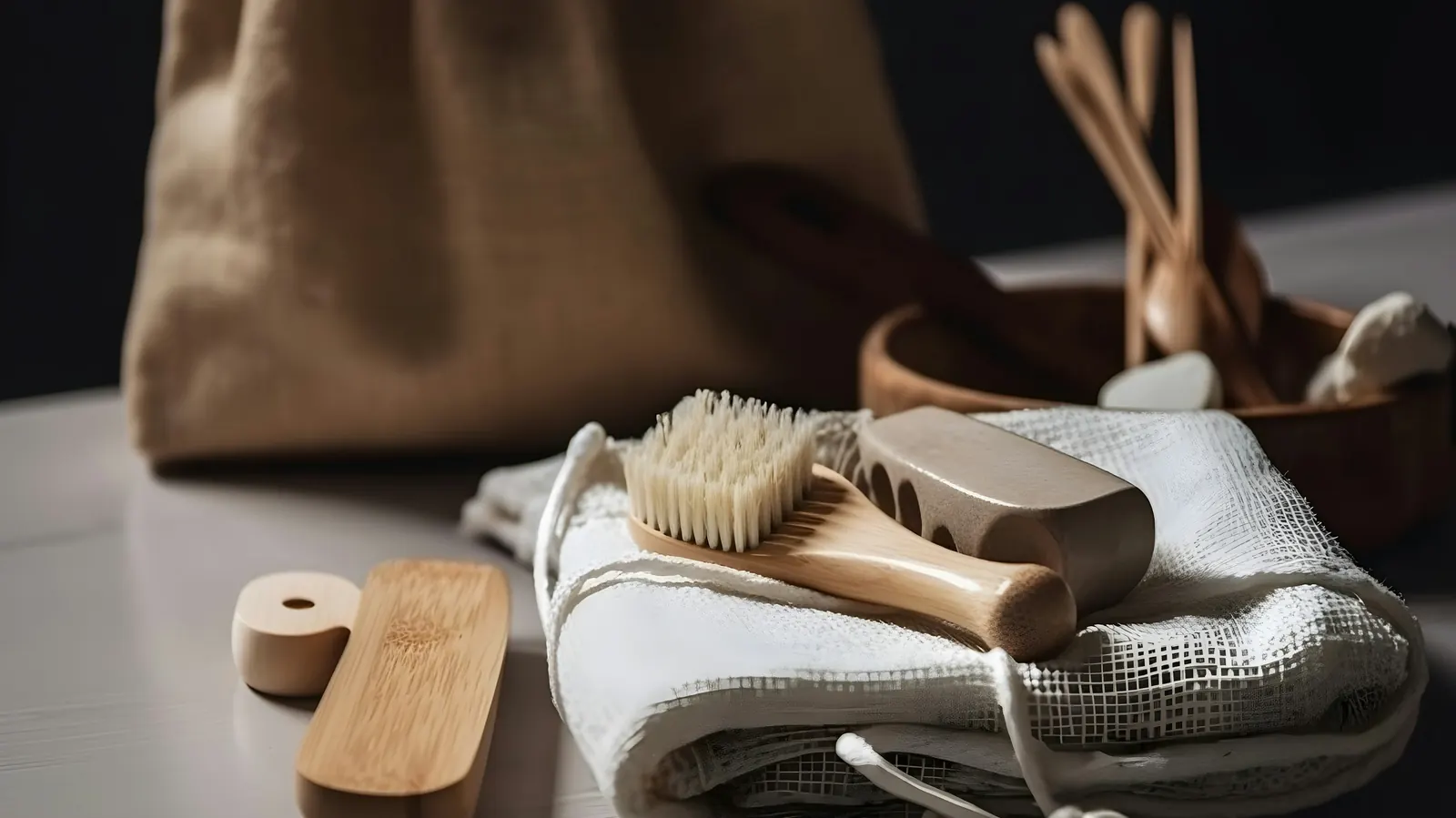
The sponge by the sink is the one kitchen tool most of us replace without thinking. It goes soft, starts to smell, and gets swapped for a new one from the pack under the counter. Plenty of cooks would rather stop that cycle, either because a damp sponge bothers them or because they want something that lasts longer and goes in the wash. The good news is that the jobs a sponge does, washing plates, scrubbing pans and wiping counters, are each done well by something else.
This guide covers the kitchen sponge alternative for each of those jobs: sponge cloths, dish brushes, silicone scrubbers, chainmail and scrub-and-wipe cloths. It says what each one does well, where it falls short, and what the published research says about brushes versus sponges.
Julia’s earns a commission on purchases made through links on this page, at no cost to you. Recommendations are based on what a restaurant kitchen looks for, product specifications, makers’ statements and the independent sources we name. We have not used these products ourselves.
Why look for a kitchen sponge alternative
Our best kitchen sponges guide sorts the real thing by what it is safe on, and a good sponge still earns a place at many sinks. These are the usual reasons people want something else:
- Drying and smell. A thick foam block stays wet. University of Illinois Extension notes that sponges especially hang on to moisture, which aids bacterial growth.
- Constant replacement. A sponge is built to be thrown out. Most of the swaps below go in the dishwasher or the laundry and keep going.
- The wrong tool for the pan. A scrub face that suits a stainless pot can mark a nonstick skillet, and soapy foam is not what seasoned cast iron wants.
- Waste. Reusable cloths and brushes cut down on the steady stream of worn sponges in the trash.
Quick verdict: the best kitchen sponge alternative
For most kitchens, the best kitchen sponge alternative is a pair of tools rather than one: a dish brush for washing and a sponge cloth for wiping. The OXO Good Grips Soap Dispensing Dish Brush holds soap in its handle, has nylon bristles OXO says are safe on nonstick, and a scraper on the back for stuck food. Research from the Norwegian food research institute Nofima found brushes dried faster and held fewer bacteria than sponges. For counters, spills and glasses, the Scotch-Brite Sponge Cloth 24-pack wipes like a cloth and absorbs like a sponge, per the listing. Add the Knapp Made CM Scrubber if you cook in cast iron, and the Kuhn Rikon Stay Clean Silicone Scrubber if you want something you can hold like a sponge. If you scrub nonstick pans often and like a thick grip, a sponge may still be the better tool; replace it on schedule.
Five sponge swaps side by side
Our five main picks, one per kind of substitute, with the details each maker or listing states. All six alternatives are reviewed in full below.
| Alternative | Type | Best for | Surface note | Buy on Amazon |
|---|---|---|---|---|

OXO Good Grips Soap Dispensing Dish BrushBest overall
|
Handled dish brush | Plates, pots, stuck food | Nonstick safe, per OXO | View on Amazon |

Scotch-Brite Sponge Cloth, 24 PackBest for wiping
|
Cellulose sponge cloth | Counters, spills, glasses | Gentle on nonstick, per listing | View on Amazon |

Kuhn Rikon Stay Clean Silicone ScrubberBest sponge-shaped swap
|
Silicone bristle pad | Light washing, produce, sinks | Soft silicone; weak on baked-on food | View on Amazon |

Knapp Made CM Scrubber, 4 x 4-InchBest for cast iron
|
Stainless chainmail | Cast iron, Dutch ovens, woks | Not for nonstick (general kitchen sense) | View on Amazon |

Scotch-Brite Dobie Scrub & Wipe Cloths, 2 PackBest scrub-and-wipe cloth
|
Flat cloth with scrub face | Everyday dishes and wiping | Non-scratch, per listing | View on Amazon |
Product images from Amazon. Details are as stated by each maker or listing. Check the listing before you buy.

Brushes or sponges: what the research says
The strongest evidence for swapping comes from two studies by Nofima, the Norwegian food research institute. In the first, published in the International Journal of Food Microbiology in 2021, Trond Møretrø and colleagues surveyed consumers about how they use and clean dishwashing tools and ran experiments on sponges and brushes. Brushes dried fastest. Salmonella survived more than seven days in two of the three sponge types tested, while in brushes, Campylobacter and Salmonella fell below the detection limit after one and three days. The authors concluded that brushes are more hygienic than sponges and that their use should be encouraged.
The follow-up, in the Journal of Applied Microbiology in 2022, collected used sponges and brushes from homes in Norway and Portugal. It found lower bacterial levels in used brushes than in sponges overall, and Salmonella died more rapidly in brushes. The same 2021 study also found that chlorine, boiling or a dishwasher run reduced Salmonella on both sponges and brushes, so whatever you use, cleaning it matters.
University of Illinois Extension draws the same line for home cooks: it calls scrub brushes the more hygienic option because they dry faster, advises washing brushes in the dishwasher, and says dishcloths and rags should go through the hot cycle of the washing machine. It also warns never to use a sponge, cloth or brush for dishes after it has been used to clean up spills.
Which swap for which job
No single tool does everything a sponge does. As a rule of thumb, which is general kitchen sense rather than a tested rule:
| Job | Good swap | Watch out for |
|---|---|---|
| Plates, bowls, glasses | Dish brush or scrub-and-wipe cloth | Brushes miss the inside of narrow glasses; a cloth reaches |
| Stuck-on rice, beans or cheese | Dish brush with a scraper, after a soak | Soft silicone bristles struggle here |
| Nonstick pans | Nylon dish brush or non-scratch cloth | Keep chainmail and steel pads away |
| Cast iron and carbon steel | Chainmail scrubber or a stiff brush | Dry the pan right away and oil it lightly |
| Counters, spills, the stovetop | Sponge cloth or cotton dish cloth | Use a separate cloth, or paper, for raw-meat juices |
| Produce and the sink basin | Silicone scrubber | Keep the produce one for produce only |
The free option is a stack of cotton dish cloths you already own, washed hot and swapped often. Our dish cloth vs sponge guide covers that choice in detail.
Six sponge alternatives, reviewed
We chose one product per kind of substitute from makers that state what their tools are made of and what they are for: OXO, Scotch-Brite, Kuhn Rikon, Knapp Made and Full Circle. Each was in stock on Amazon US, sold new, when we checked. Specifications come from the makers’ listings, and advice not backed by a named source is labeled general kitchen sense.
1. OXO Good Grips Soap Dispensing Dish Brush – Soap in the Handle, Scraper on the Back
A handled dish brush is the swap the research backs most clearly, and this one covers most of what a sponge does at the sink. You fill the handle with dish soap and press a button to dispense it, so there is no reaching for a slippery bottle mid-wash. OXO’s listing says the nylon bristles were chosen to be safe for nonstick cookware, and a built-in scraper on the back of the head lifts baked-on food that bristles alone leave behind.
The long handle keeps your hand out of hot water and grease, and the brush shape gets into the corners of a casserole dish and the ridges of a grill pan. Between washes it sits upright or lies on a sink caddy and dries fast, which is exactly the advantage Nofima and Illinois Extension describe. Run it through the dishwasher now and then, as Illinois Extension advises for scrub brushes, but check the care note on your package first, since the listing does not state it.
The limits are reach and wiping. A brush won’t get the bottom of a tall narrow glass or wipe a counter, so keep a cloth for those jobs. When the bristles splay, replace the head or the brush.
Why we like it
- Soap dispenses at a button press
- Nylon bristles safe on nonstick, per OXO
- Built-in scraper for baked-on food
- Dries faster than a sponge
Key specifications
| Model | 12361700 |
|---|---|
| Type | Soap-dispensing dish brush |
| Bristles | Nylon |
| Extras | Built-in scraper; soap reservoir in handle |
| Surfaces | Safe for nonstick, per the listing |
| Care | Not stated on the listing |
Why we recommend it
It suits a cook who washes up by hand every day and wants one tool for plates, pots and stuck-on food.
Skip it if you mostly wipe counters and rinse glasses; a cloth does those jobs better.
Pros and cons
Pros
- Soap on demand
- Scraper handles stuck food
- Sold by Amazon.com when we checked
Cons
- Doesn’t wipe counters
- Can’t reach into narrow glasses
- Care not stated on the listing
2. Scotch-Brite Sponge Cloth, 24 Pack – Wipes Like a Cloth, Soaks Like a Sponge
A sponge cloth is the closest thing to a sponge that still behaves like a cloth. It is thin and stiff when dry, soft and floppy when wet, and it holds a lot of water for its size. Scotch-Brite’s listing says each cloth absorbs ten times its weight in water and is soft enough for nonstick cookware, tile, countertops, mirrors and faucets. It also says one cloth outlasts up to ten rolls of paper towels, which is the maker’s claim, not ours.
Twenty-four cloths is the real advantage here. With that many, you can put a fresh one out every day or two and wash the used ones in a batch, which is the routine extension advice points toward for dishcloths. Because the cloth is thin, it dries much faster than a foam block when you hang it open over the faucet; that is general kitchen sense rather than a measured result. It also folds into a glass or jar where a brush can’t go.
What it lacks is grit. A sponge cloth will not lift dried cheese or rice from a pan on its own, so pair it with a brush. The listing does not give the cloth size or care instructions, so follow the package. These are the Swedish-style cloths in a big-brand pack; our best Swedish dish cloths guide covers the original makers.
Why we like it
- Absorbs 10x its weight, per the listing
- Gentle on nonstick and countertops, per the listing
- 24 cloths for a daily swap
- Thin enough to dry quickly
Key specifications
| Model | 9055 |
|---|---|
| Type | Reusable sponge cloth |
| Count | 24 cloths |
| Size | Not stated on the listing |
| Surfaces | Nonstick cookware, tile, countertops, mirrors, faucets |
| Care | Not stated on the listing; follow the package |
Why we recommend it
It suits a cook who wants a sponge’s absorbency for counters and spills without a block that stays wet.
Skip it if you need scrubbing power; it has no rough face.
Pros and cons
Pros
- Very absorbent
- Big pack for rotation
- Sold by Amazon.com when we checked
Cons
- No scrub side
- Stiff when dry
- Care and size not on the listing
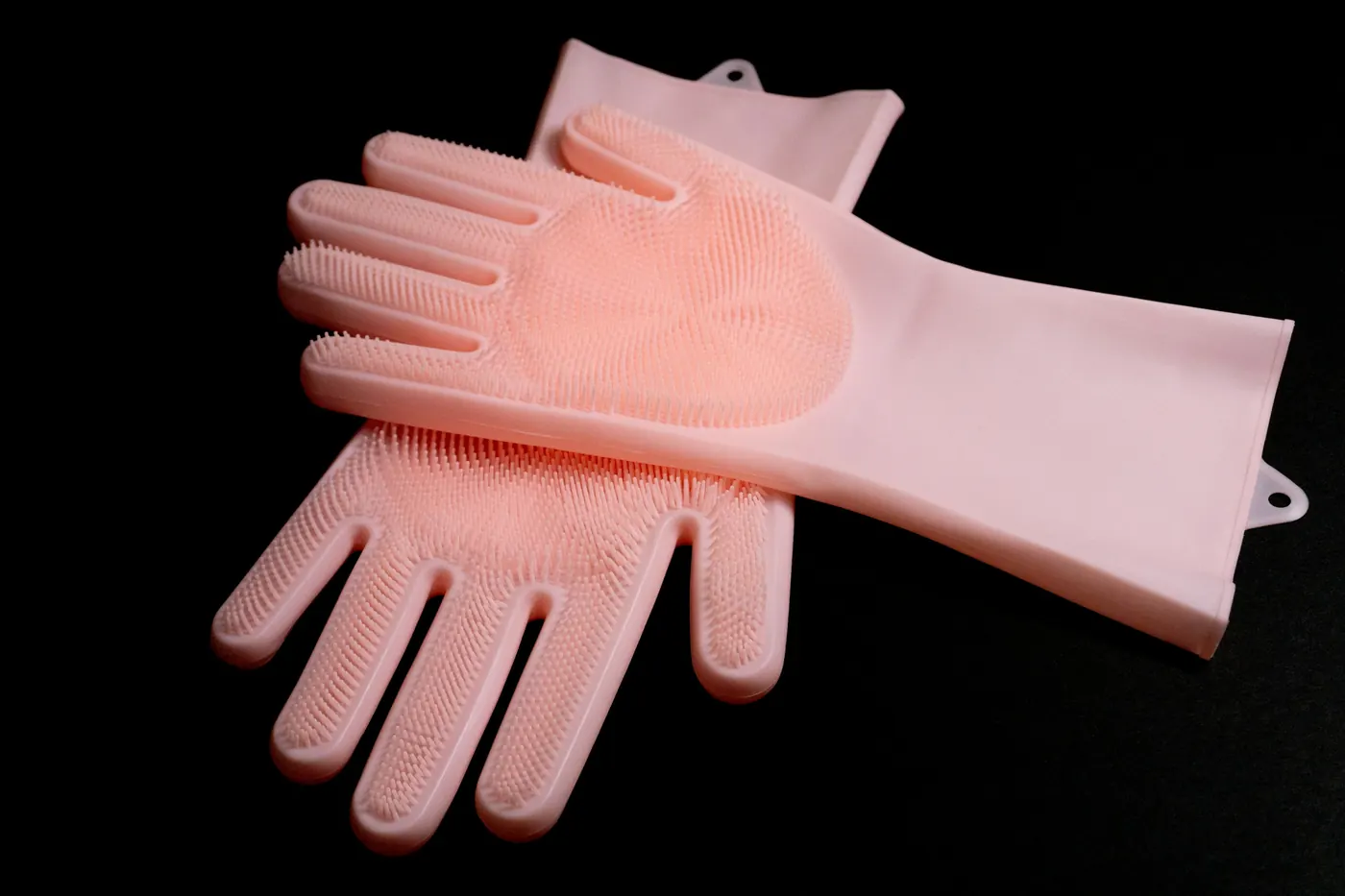
3. Kuhn Rikon Stay Clean Silicone Scrubber – A Sponge-Shaped Pad That Won’t Soak Up Water
If you like the feel of a sponge in your hand, a silicone scrubber is the nearest match. Kuhn Rikon’s is a flat, flexible pad covered in what the listing calls over 5,000 silicone bristles, and it is sold to clean dishes and other surfaces. Silicone doesn’t absorb water, and Kuhn Rikon says it dries faster than a sponge. The maker also claims it won’t harbor bacteria; that claim rests on Kuhn Rikon’s listing, not on a study we could read, so treat it as the maker’s word.
The soft bristles suit plates, mugs, fruit and vegetables, and the sink basin, and they won’t scratch. That softness is also the weakness. Silicone bristles hold little soap and have no real bite, so they are slow on greasy pans and close to useless on baked-on food; that is general kitchen sense, and it is why we rank this behind a brush. Rinse it, shake it and stand it on edge to dry.
The listing says it can also be used dry to pick up lint and hair, which is handy, but keep the dish scrubber for dishes.
Why we like it
- Holds like a sponge
- Silicone doesn’t soak up water
- Over 5,000 bristles, per the listing
- Gentle on most surfaces
Key specifications
| Model | 20125 |
|---|---|
| Type | Silicone bristle scrubber |
| Material | Silicone |
| Count | 1 |
| Surfaces | Dishes and multiple surfaces, per the listing |
| Care | Not stated on the listing |
Why we recommend it
It suits a cook who washes mostly lightly soiled dishes and produce and wants something that never goes sour.
Skip it if your pans see burnt-on food; a brush with a scraper does that job.
Pros and cons
Pros
- Familiar sponge grip
- Non-scratch
- Dries fast
Cons
- Weak on stuck food
- Holds little soap
- Sold by a third-party kitchen retailer
4. Knapp Made CM Scrubber, 4 x 4-Inch – Stainless Rings for Cast Iron
Cast iron is where a sponge does the least good. A chainmail scrubber is a square of linked stainless steel rings that knocks stuck food off a skillet or comal with hot water and little or no soap. Knapp Made’s listing says its scrubber is handmade from food service grade 316 stainless steel, lists cast iron, Dutch ovens, casseroles, stainless cookware and woks as uses, and comes with a lifetime replacement guarantee.
This is the small 4-inch square. It is the same scrubber Knapp Made sells in the 6-inch size on our best chainmail scrubber guide; we chose the smaller one here because it fits a palm the way a sponge does and gets into the corners of a small pan. The rings don’t hold food or water, so a rinse and a shake clean it.
Keep it away from nonstick and enameled surfaces; steel rings belong on bare iron, carbon steel and stainless, and that is general kitchen sense rather than a maker statement. After scrubbing cast iron, dry the pan on the burner and wipe in a little oil.
Why we like it
- 316 stainless steel, per the listing
- Lifetime replacement from the maker
- Palm-sized 4-inch square
- Rinses clean
Key specifications
| Model | SS18-20 |
|---|---|
| Type | Chainmail scrubber |
| Material | 316 stainless steel |
| Size | 4 x 4 in |
| Surfaces | Cast iron, Dutch ovens, stainless, woks, per the listing |
| Warranty | Lifetime replacement or repair |
Why we recommend it
It suits a cook who uses a cast iron skillet or comal most days and wants it clean without soaking foam in soap.
Skip it if your pans are nonstick or enameled.
Pros and cons
Pros
- Lasts for years
- Nothing for food to soak into
- Small enough for tight corners
Cons
- Not for nonstick or enamel
- Only for scrubbing, not wiping
- Sold by a third-party seller

5. Scotch-Brite Dobie Scrub & Wipe Cloths, 2 Pack – A Flat Cloth With a Scrub Face
A scrub-and-wipe cloth splits the difference between a sponge and a dish cloth. It is flat and flexible like a cloth, but it has a textured scrub surface, so it handles everyday plates and pans as well as counters. Scotch-Brite’s listing says the Dobie cloths give absorbent wiping and non-scratch scrubbing that does not take protective coatings off cookware, that they dry fast and fit into corners, and that they are reusable and long lasting.
For a kitchen that mostly washes plates, bowls and the odd skillet, this is the easiest switch, because it works the way a sponge does but lies flat to dry. Hang it over the faucet or the edge of the sink rather than leaving it balled up; that is general kitchen sense. Two cloths is a short rotation, so expect to rinse and wash them often.
It won’t match a brush on heavily baked-on food, and the listing does not give a size, material or care method, which is a real gap. Follow the package directions for cleaning.
Why we like it
- Scrubs and wipes in one cloth
- Non-scratch on coated cookware, per the listing
- Fast drying, per the listing
- Flat, so it dries open
Key specifications
| Model | 9057-2 |
|---|---|
| Type | Scrub-and-wipe cloth |
| Count | 2 cloths |
| Material | Not stated on the listing |
| Surfaces | Non-scratch on cookware coatings, per the listing |
| Care | Not stated on the listing |
Why we recommend it
It suits a cook who wants to replace a sponge with one flat cloth and change nothing else about how they wash up.
Skip it if you need a lot of cloths in rotation; two is a small pack.
Pros and cons
Pros
- Closest to a sponge in use
- Safe on coated pans, per the listing
- Sold by Amazon.com when we checked
Cons
- Only two in the pack
- Material and care not stated
- Slower than a brush on baked-on food
6. Full Circle Bubbly Palm Brush – A Brush You Hold Like a Sponge
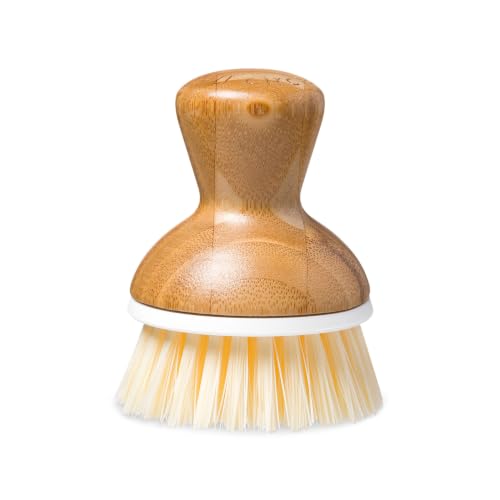
Some cooks find a long-handled brush awkward and miss the way a sponge sits in the palm. A palm brush fixes that: a short, rounded body with bristles underneath, so you scrub with your whole hand. Full Circle’s listing describes it for dishes, nonstick cookware, cast iron pots, vegetables and sinks, made from bamboo and recycled plastic.
It gives you the drying advantage of a brush with the grip of a sponge, and it is a good second brush to keep for pans while the handled one does plates. Full Circle says to hand wash it in warm, soapy water and let it dry thoroughly, and to avoid long soaks for the bamboo parts, so this one should stay out of the dishwasher.
There is no soap reservoir and no scraper, so you dip it in soapy water or add soap to the pan. Your hand is also closer to hot water than with a long handle.
Why we like it
- Sponge-like palm grip
- For nonstick and cast iron, per the listing
- Bamboo and recycled plastic
- Dries open between uses
Key specifications
| Model | FC12115W |
|---|---|
| Type | Palm dish brush |
| Material | Bamboo and recycled plastic |
| Count | 1 |
| Surfaces | Dishes, nonstick, cast iron, vegetables, sinks |
| Care | Hand wash, dry thoroughly, avoid long soaks |
Why we recommend it
It suits a cook who wants a brush’s quick drying but prefers holding something the size of a sponge.
Skip it if you want dishwasher cleaning; the bamboo needs hand care.
Pros and cons
Pros
- Comfortable palm shape
- Works on nonstick and cast iron
- Sold by Amazon.com when we checked
Cons
- Hand wash only
- No soap reservoir or scraper
- Hand sits close to the water
What about microfiber, steel wool and scrub pads?
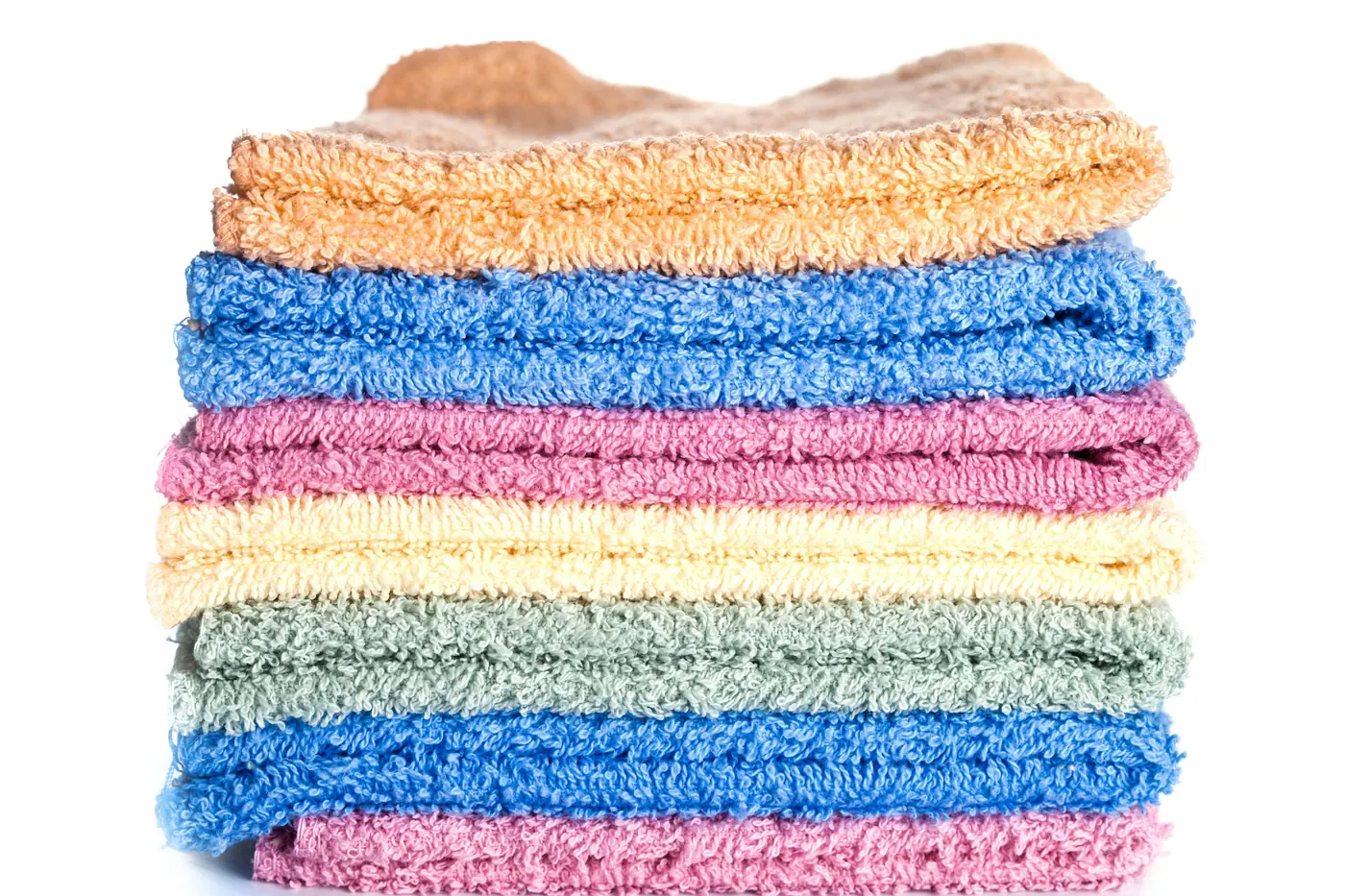
Microfiber cloths wipe counters and dry glasses well, but they are a wiping tool more than a dish tool; our best microfiber cloths guide covers them. Steel wool and green scouring pads are strong scrubbers for uncoated pots and grill grates, and the best scouring pads guide sorts them by what they will scratch. A plastic pan scraper is worth keeping beside any of the swaps above for the first pass on stuck food. And a plain cotton dish cloth, washed hot, is still the cheapest swap of all.
Kitchen sponge alternative questions, answered
What can I use instead of a kitchen sponge?
A dish brush for washing, a sponge cloth or cotton dish cloth for wiping, a chainmail scrubber for cast iron, or a silicone scrubber or scrub-and-wipe cloth if you want something you hold like a sponge. Most kitchens do best with a brush and a stack of cloths.
Is a dish brush more hygienic than a sponge?
The published evidence says yes. Nofima’s 2021 and 2022 studies found brushes dried faster, held lower bacterial levels and let Salmonella die off sooner than sponges, and University of Illinois Extension calls scrub brushes the more hygienic option because they dry faster.
How do I keep a dish brush clean?
Rinse it, shake it out and let it dry fully between uses. Illinois Extension advises washing scrub brushes in the dishwasher, and Nofima found a dishwasher run, boiling or chlorine reduced Salmonella on brushes. Follow the maker’s care note, since wooden brushes often need hand washing.
Can I use a sponge cloth on nonstick pans?
Scotch-Brite’s listing names nonstick cookware among the surfaces its sponge cloth is safe on. It is soft and has no scrub face, so it won’t damage a coating, but it also won’t lift stuck food.
Should I use chainmail on every pan?
No. Chainmail suits bare cast iron, carbon steel and stainless. Keep it off nonstick and enameled surfaces, and use a nylon brush or non-scratch cloth there.
Our final word on giving up the kitchen sponge
Start with a brush and a stack of cloths. The OXO soap-dispensing brush handles plates, pots and stuck food and dries between uses, and a pack of Scotch-Brite sponge cloths covers counters and spills. Add chainmail if you cook in cast iron. If a sponge still suits your nonstick pans best, choose one from our best kitchen sponges guide and replace it on schedule, and see our best kitchen scrub brush guide for more brushes.
And if you would rather skip the dishes tonight, see the menu or call to order.