A microwave and a toaster oven look alike on the counter: a box with a door, a timer and a few presets. Inside they could hardly be more different. A microwave heats the water in food with microwaves, so it is fast but can’t brown anything. A toaster oven is a small oven with heating elements that make dry heat, so it toasts, bakes, broils and crisps, but takes longer and draws more power while it works.
In a restaurant kitchen we use both kinds of heat every day, one for speed and one for texture. This guide compares the microwave and the toaster oven on what each can cook, speed, browning, capacity, power, reheating safety and cleanup, then names one pick for each side for a home counter.
Julia’s earns a commission on purchases made through links on this page, at no cost to you. Recommendations are based on what a restaurant kitchen looks for, product specifications and verified buyer reports.
Quick verdict: microwave or toaster oven?
If you mostly reheat and thaw, buy a microwave: it is the faster tool for leftovers, soups, rice, beans and frozen food, and it uses less power to do it. Buy a toaster oven if you want to toast, bake small batches, broil cheese or bring crisp food back to life, none of which a microwave can do. If you can fit only one and you cook more than you reheat, the toaster oven does more jobs; if you reheat more than you cook, the microwave earns its place. Many kitchens keep both.
The table sums up the differences; the sections after it explain each one and where each claim comes from.
Microwave vs toaster oven, side by side
| Microwave | Toaster oven | |
|---|---|---|
| How it heats | Electromagnetic waves heat the food quickly | Heating elements create dry heat |
| Browning and crisping | No | Yes: toast, broil, bake |
| Speed | Faster for reheating and thawing | Slower, but quicker to heat than a full oven |
| Typical power (Top Ten Reviews) | About 700 to 1,300 W | About 1,200 to 1,800 W |
| Best for | Leftovers, soups, rice, beans, thawing, drinks | Toast, small bakes, melting cheese, crisp reheating |
| Cookware | Microwave-safe containers only | Small metal pans and oven-safe dishes |
| Cleanup | Turntable and interior wipe-down | Crumb tray, baking tray, rack |
How each one heats, and why it matters
Top Ten Reviews’ comparison by Maddy Biddulph quotes chef Tiffany Sutherland on the core difference: toaster ovens have heating elements that create dry heat, while microwaves use electromagnetic waves to heat food quickly. Sutherland calls the fact that microwaves don’t brown or crisp food a big difference from toaster ovens, and the article says toaster ovens are better at preserving texture.
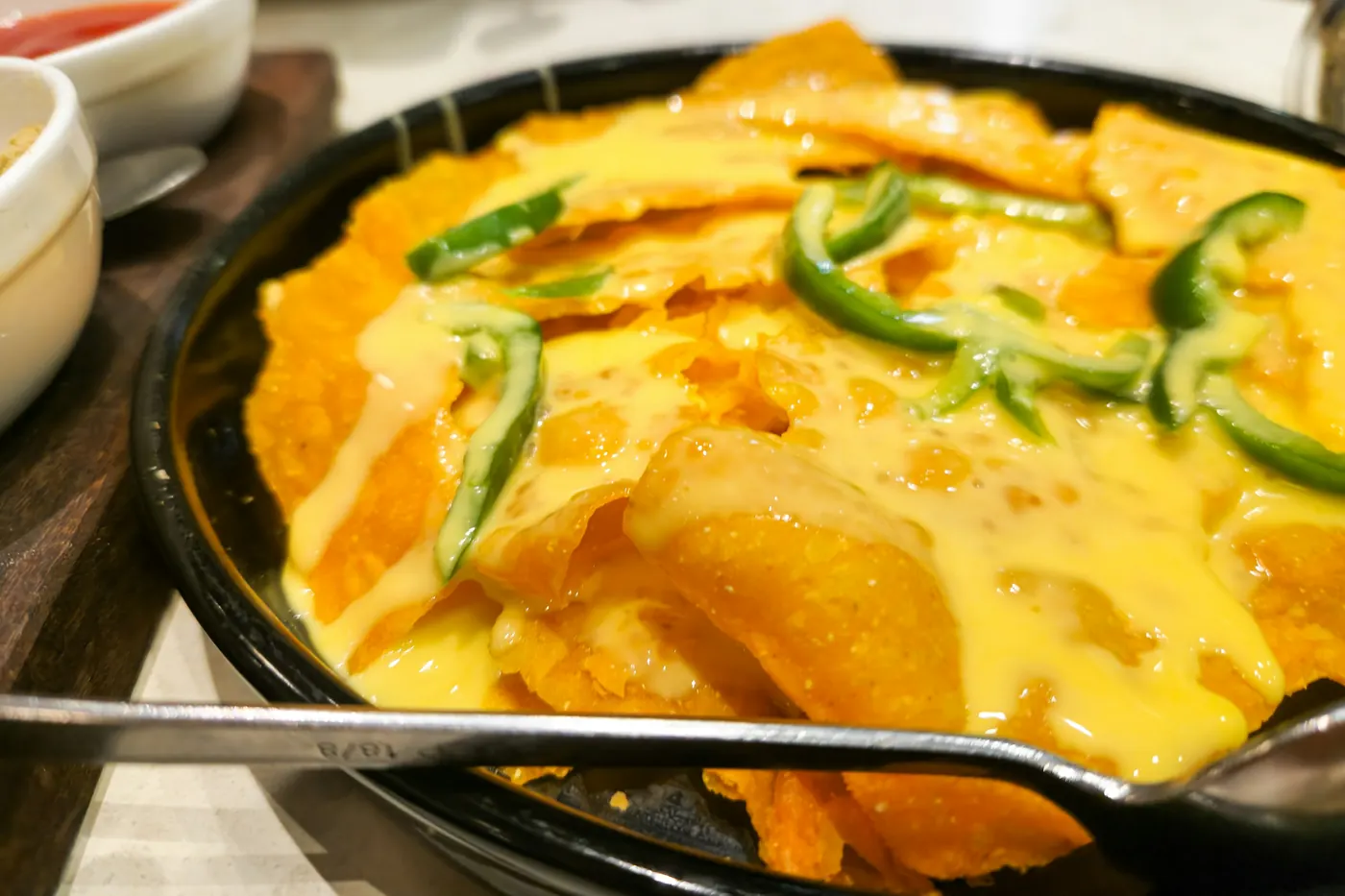
That one fact decides most choices. Anything you want golden, crunchy or bubbling on top needs dry heat: toast, bolillos, quesadillas, nachos, a tray of taquitos, a small gratin. Anything you want hot and moist, fast, is a microwave job: a bowl of pozole, a plate of rice and beans, a cup of coffee gone cold.
Speed: the microwave’s strength
Top Ten Reviews says microwaves are faster than toaster ovens, and its experts sum up the microwave’s role plainly: for quick reheating and defrosting, a microwave is your best bet. A bowl of soup or a plate of leftovers is hot in a few minutes, with no preheat, and frozen food thaws on a low power level without starting to cook on the outside.
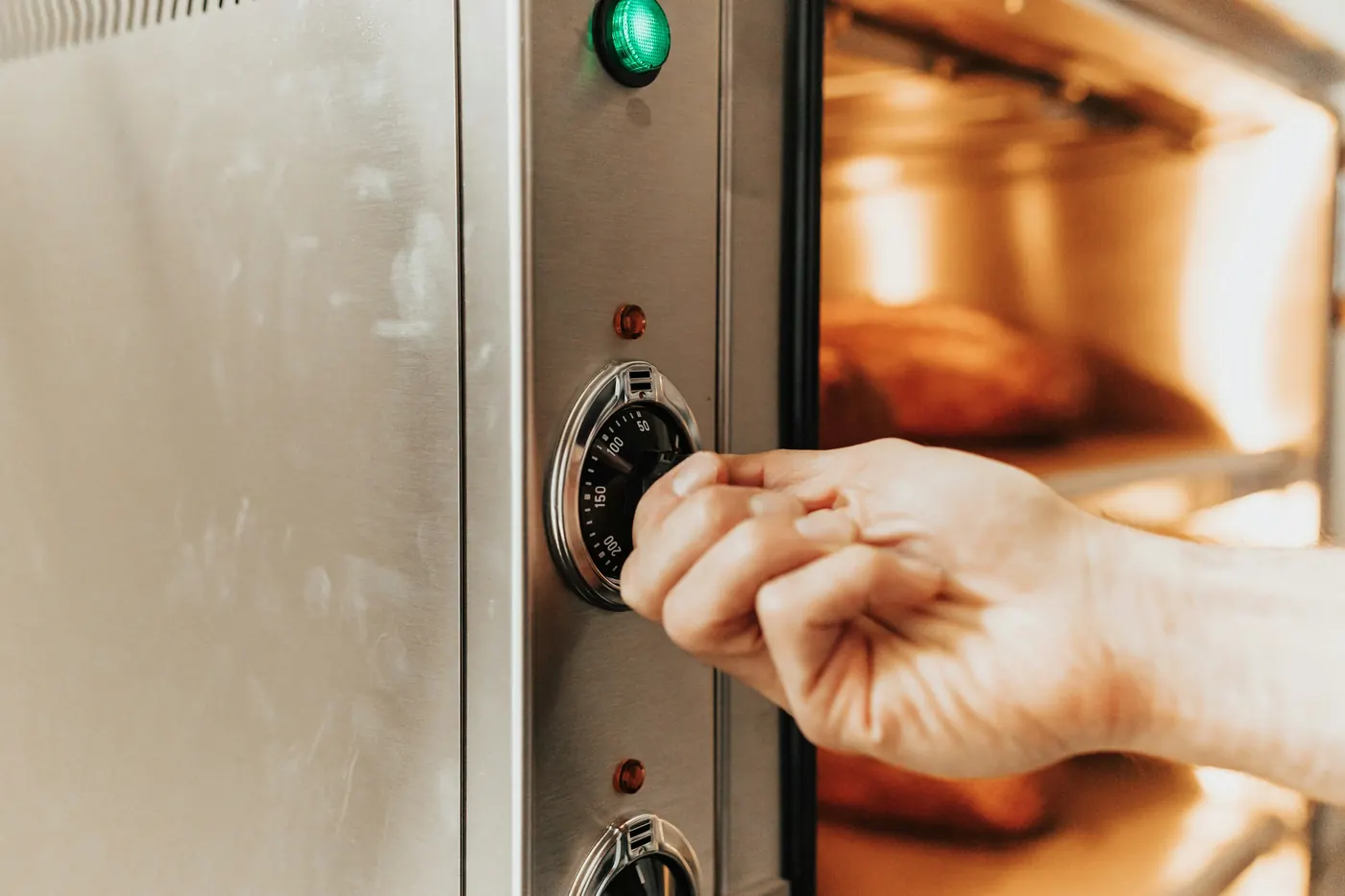
A toaster oven is slower to reheat a dense plate, but the same article notes that toaster ovens heat up faster than full-size ovens. For a quarter sheet of cookies or two baked potatoes, that makes a toaster oven quicker and handier than heating the big oven.
Browning, toasting and baking: the toaster oven’s strength
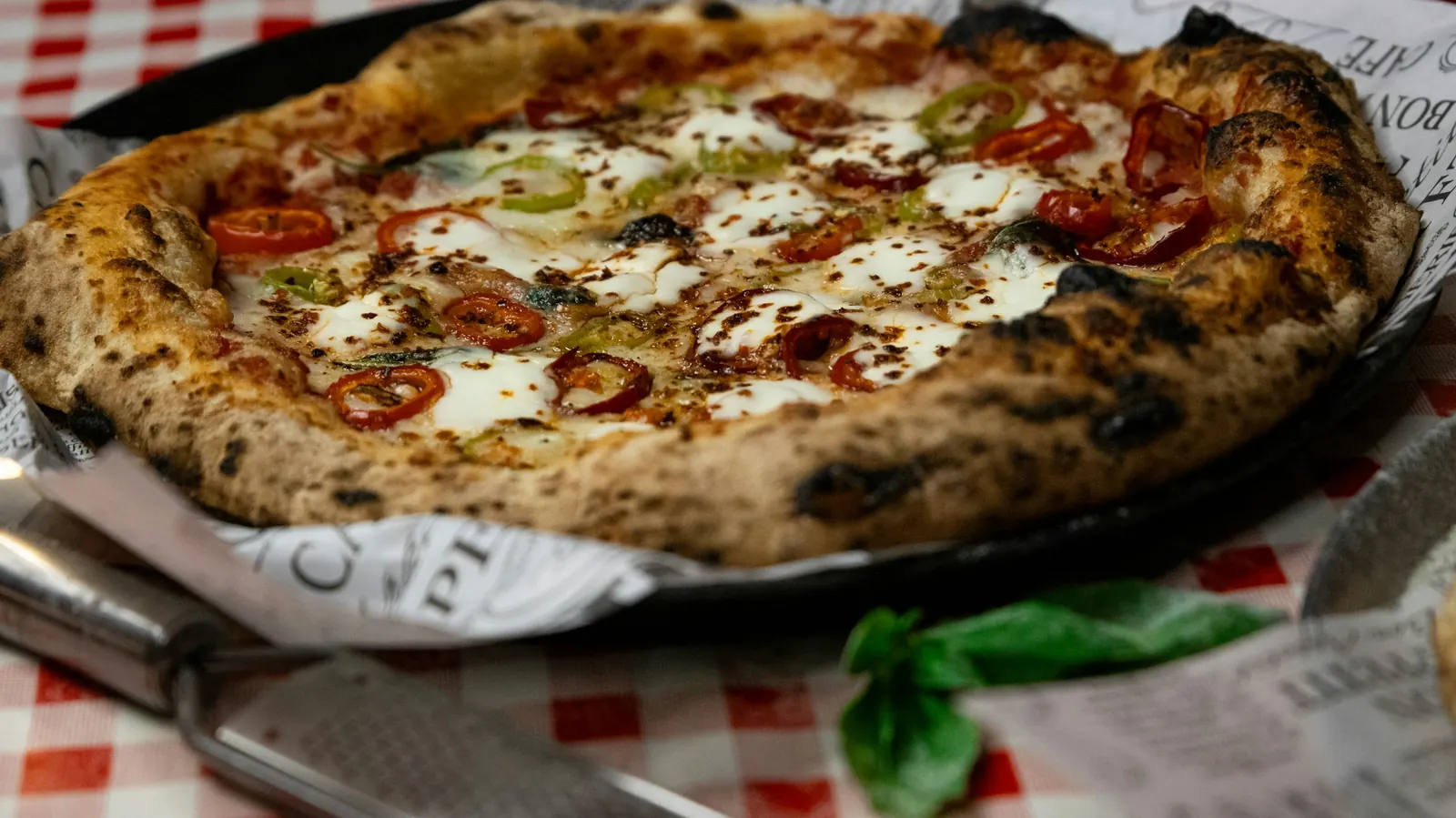
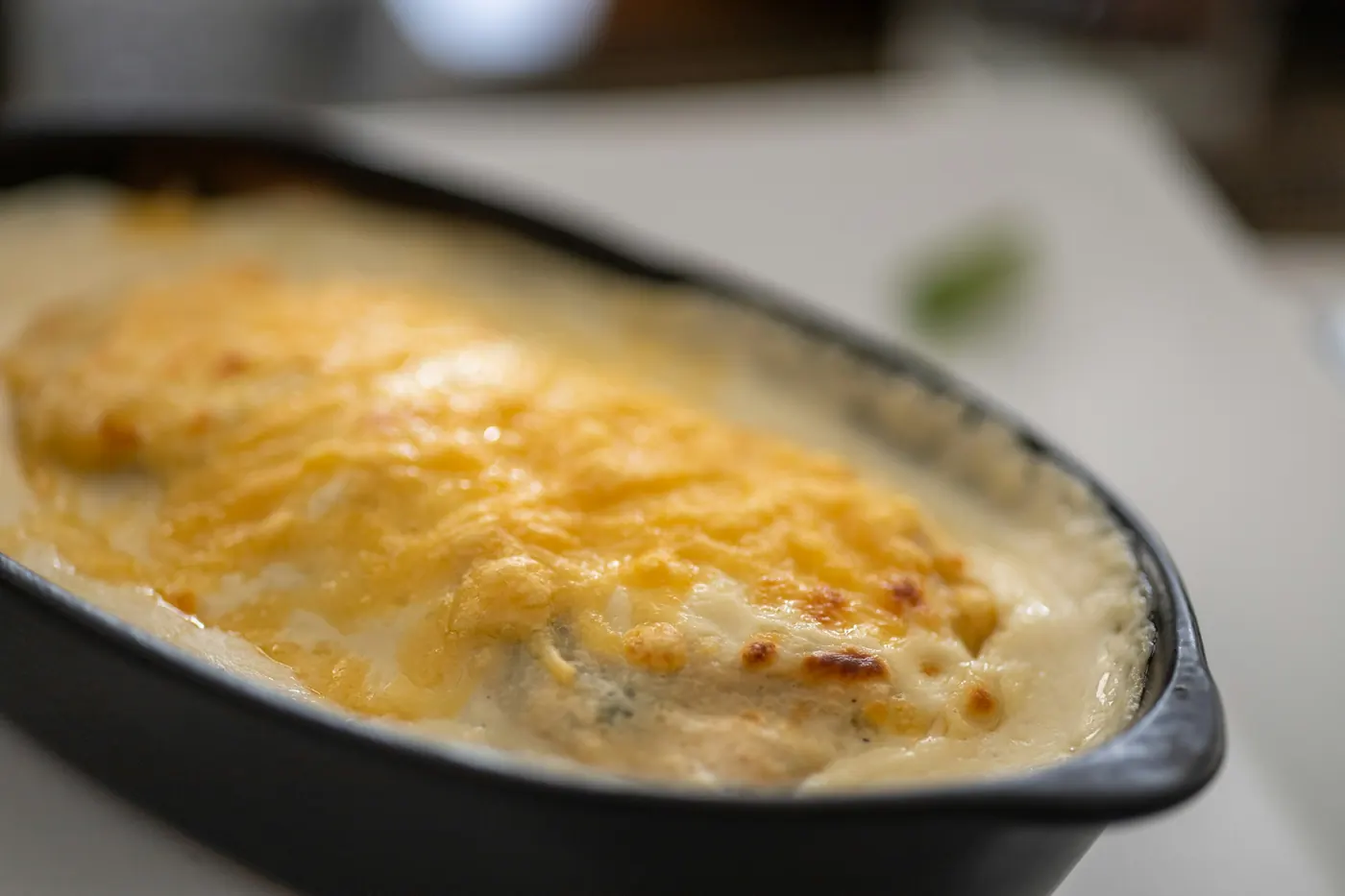
A toaster oven does the jobs that a microwave simply can’t. Sutherland, in the Top Ten Reviews piece, recommends a toaster oven for people who like crispy, toasted foods and do a lot of small-batch baking. That covers more of a Mexican kitchen than you might expect: toasting bolillos for tortas, melting cheese on nachos or molletes, broiling enchiladas until the cheese bubbles, crisping leftover flautas, and baking a small pan of cornbread or a few conchas.
The Panasonic pick below shows the trade-off in size. Its listing says the tray fits a pizza up to 9 inches across or four slices of bread, so it handles snacks and small meals, not a family casserole.
Capacity and the counter
Microwaves are measured in cubic feet and toaster ovens by slices or pizza size, which makes them hard to compare. In practice, a 1.1 cubic foot microwave takes a dinner plate or a covered casserole dish on its turntable, while a compact four-slice toaster oven takes a small pan. Top Ten Reviews notes that toaster ovens have limited capacity and take up counter space. Its experts suggest a combination unit if counter space is short, and our best convection microwave oven guide covers those.
The Panasonic’s listing gives its size as 12 inches deep, 13 wide and 10.75 high. As general kitchen sense, leave space around a toaster oven, since its outside gets hot, and never store things on top of it.
Power and energy
Top Ten Reviews puts typical toaster ovens at about 1,200 to 1,800 watts and microwaves at about 700 to 1,300 watts, and says microwaves are the more energy-efficient of the two. Our picks fit that pattern: the Panasonic toaster oven is rated at 1,300 watts, and the Chefman microwave delivers 1,000 watts of cooking power. Because a microwave also runs for fewer minutes, it usually uses less energy for a single portion; that last part is general kitchen sense.
Reheating safely
Leftovers should come back to 165°F, according to Clemson Cooperative Extension’s fact sheet on microwave food safety (HGIC 3586), which also says to always use a food thermometer to check. The fact sheet warns that a microwave’s uneven heating can create cold spots where harmful bacteria may survive. Its fixes are simple: cover the food to hold moisture and promote even heating, stir or rotate it midway, turn large items over, and allow standing time. Use containers labeled microwave-safe, not margarine tubs, yogurt containers or whipped-topping bowls.
A toaster oven heats from the outside in, so as general kitchen sense, a thick portion can brown on top before the middle is hot. Cover it loosely with foil if the top browns too soon, and check the center with a thermometer.
Cookware and cleanup
As general kitchen sense, a toaster oven takes small metal baking pans, foil and oven-safe glass or ceramic, while a microwave takes only containers labeled microwave-safe; follow your microwave’s manual on metal. The Panasonic pick comes with a baking tray and a removable crumb tray, and the Chefman’s glass turntable is top-rack dishwasher safe, according to its listing. Crumbs in a toaster oven should be emptied often, since they can smoke or burn at high heat.
Choose a microwave if… / Choose a toaster oven if…
Choose a microwave if…
- You mostly reheat leftovers, soups, rice and beans.
- You thaw frozen food or heat drinks.
- You want the fastest result and the lowest power draw.
- You need to fit a dinner plate.
Choose a toaster oven if…
- You want toast, melted cheese, broiled tops or crisp edges.
- You bake small batches and don’t want to heat the big oven.
- You reheat pizza, fried food or bread and want it crisp, not soft.
- You cook for one or two in a small kitchen.
Our pick on each side of the microwave vs toaster oven question
One pick per side. Both were in stock and sold by Amazon when we checked. The Chefman microwave appears on no other page. The Panasonic is the white version of the same FlashXpress model that our best toaster oven guide lists in silver; we chose it again because it is a compact toaster oven from a major maker, a fair match for a mid-size microwave, and few other toaster ovens in stock were free of our other pages. For smaller kitchens, our best small toaster oven guide has more. For more choice, see our best countertop microwave oven guide.
1. Chefman 1.1 Cu. Ft. 1000W Countertop Microwave – Quick Reheating and Thawing

This is a mid-size black countertop microwave, model RJ55-11-V3. The listing gives 1,000 watts, ten power levels and six presets (popcorn, pizza, beverages, vegetables, potatoes and leftovers), plus a +30 seconds button and number keys that start that many minutes at full power. A memory function stores a favorite setting, and there is a child safety lock, a mute button and an eco mode that turns off the display.
It does exactly what the comparison above credits a microwave with: fast reheating of moist food and thawing at low power. The leftovers preset and ten power levels let you reheat gently with standing time, as Clemson advises, and the glass turntable is top-rack dishwasher safe. The listing says it is cETL approved and carries a one-year Chefman assurance.
Why we like it
- 1,000 W with ten power levels
- Leftovers preset and memory function
- Dishwasher-safe glass turntable (top rack)
- cETL approved (listing)
Key specifications
| Model | RJ55-11-V3 |
|---|---|
| Type | Countertop microwave |
| Capacity | 1.1 cubic feet |
| Power | 1,000 W, 120 V |
| Power levels | 10 |
| Presets | Popcorn, pizza, beverage, vegetables, potatoes, leftovers |
| Safety (as stated) | cETL approved; child safety lock |
| Warranty | 1 year (listing) |
Why we recommend it
It suits a household that mostly reheats and thaws and wants a plain, mid-size microwave with a leftovers setting.
Skip it if you want anything browned or crisp; no microwave does that, and the toaster oven below does.
Pros and cons
Pros
- Fast reheating and thawing
- Mute and eco mode
- Stated safety approval
Cons
- No browning or crisping
- No sensor reheat or inverter
- Outside dimensions not stated in the listing
2. Panasonic FlashXpress 4-Slice Toaster Oven – Compact Toasting and Broiling
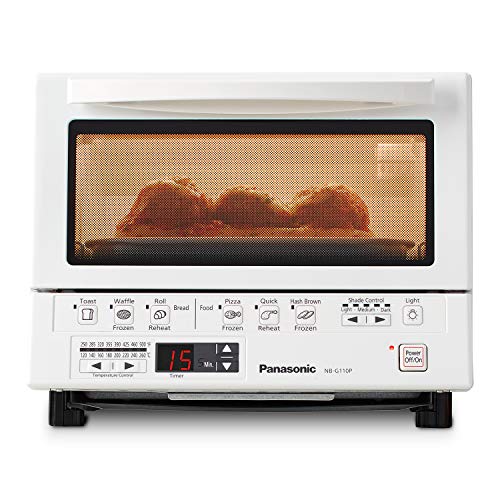
This is Panasonic’s compact FlashXpress, model NB-G110PW, in white. The listing describes double infrared heating, with quartz and ceramic infrared elements at the front and back to toast, bake, brown and reheat evenly. It has touch-button temperature control, six auto cook options and a 1,300-watt rating, and the glass door is linked to the rack so the rack slides toward you as the door opens.
The inner tray is square and fits a pizza up to 9 inches across or four slices of bread, and a baking tray and a removable crumb tray come with it, according to the listing. That size is right for toast, molletes, nachos for two or reheating a few slices of pizza with a crisp crust, which is exactly where it beats a microwave. The listing gives outside dimensions of 12 by 13 by 10.75 inches and a one-year parts and labor warranty.
A note on recalls: in July 2026 Panasonic recalled a different model, the NB-G200 toaster oven (CPSC recall 26-618). The CPSC notice lists only the NB-G200; this NB-G110 model is not named in it.
Why we like it
- Front and back infrared elements
- Fits four slices or a 9-inch pizza
- Rack slides out with the door
- Removable crumb tray
Key specifications
| Model | NB-G110PW |
|---|---|
| Type | Compact toaster oven |
| Capacity | 4 slices or a 9-inch pizza |
| Power | 1,300 W |
| Heating | Quartz and ceramic infrared, front and back |
| Controls | Touch-button temperature; 6 auto cook options |
| Size | 12 x 13 x 10.75 inches (D x W x H) |
| Warranty | 1 year parts and labor (listing) |
Why we recommend it
It suits one or two people who want toast, melted cheese and crisp reheating without heating the full oven.
Skip it if you want to bake for a family or roast a chicken; a larger oven from our toaster oven guide fits more.
Pros and cons
Pros
- Browns and crisps, unlike a microwave
- Small footprint
- Comes with baking and crumb trays
Cons
- Small: 9-inch pizza at most
- Slower than a microwave for wet leftovers
- No air fry setting listed
Microwave and toaster oven questions, answered
Can a toaster oven replace a microwave?
For many jobs, yes, but more slowly. It reheats, bakes and toasts, and it does crisp food better. It can’t match a microwave for speed with soups and liquids or for thawing frozen food quickly.
Can a microwave replace a toaster oven?
Not a plain one. A microwave can’t brown or crisp, so toast, broiled cheese and crisp crusts are out. A combination microwave with convection can do some of both.
Which uses more electricity?
A toaster oven draws more power while it runs: Top Ten Reviews gives about 1,200 to 1,800 watts for toaster ovens against about 700 to 1,300 for microwaves, and calls microwaves the more energy-efficient of the two.
Is it safe to reheat leftovers in a microwave?
Yes, if they reach 165°F. Clemson Cooperative Extension advises covering, stirring or rotating midway, allowing standing time and checking with a food thermometer, because microwaves can leave cold spots.
Which is better for reheating tortillas and tacos?
As general kitchen sense, the microwave softens tortillas fast under a damp towel, and the toaster oven is better for crisp tacos, tostadas or anything with a fried shell.
Our pick for a small kitchen
Start with a microwave if your days are mostly leftovers and frozen food, and add a toaster oven when you find yourself wishing things came out crisp. If you are weighing a toaster oven against a basket fryer instead, our air fryer vs toaster oven comparison covers that choice.
And when you’d rather skip the reheating altogether, see the menu or call to order.