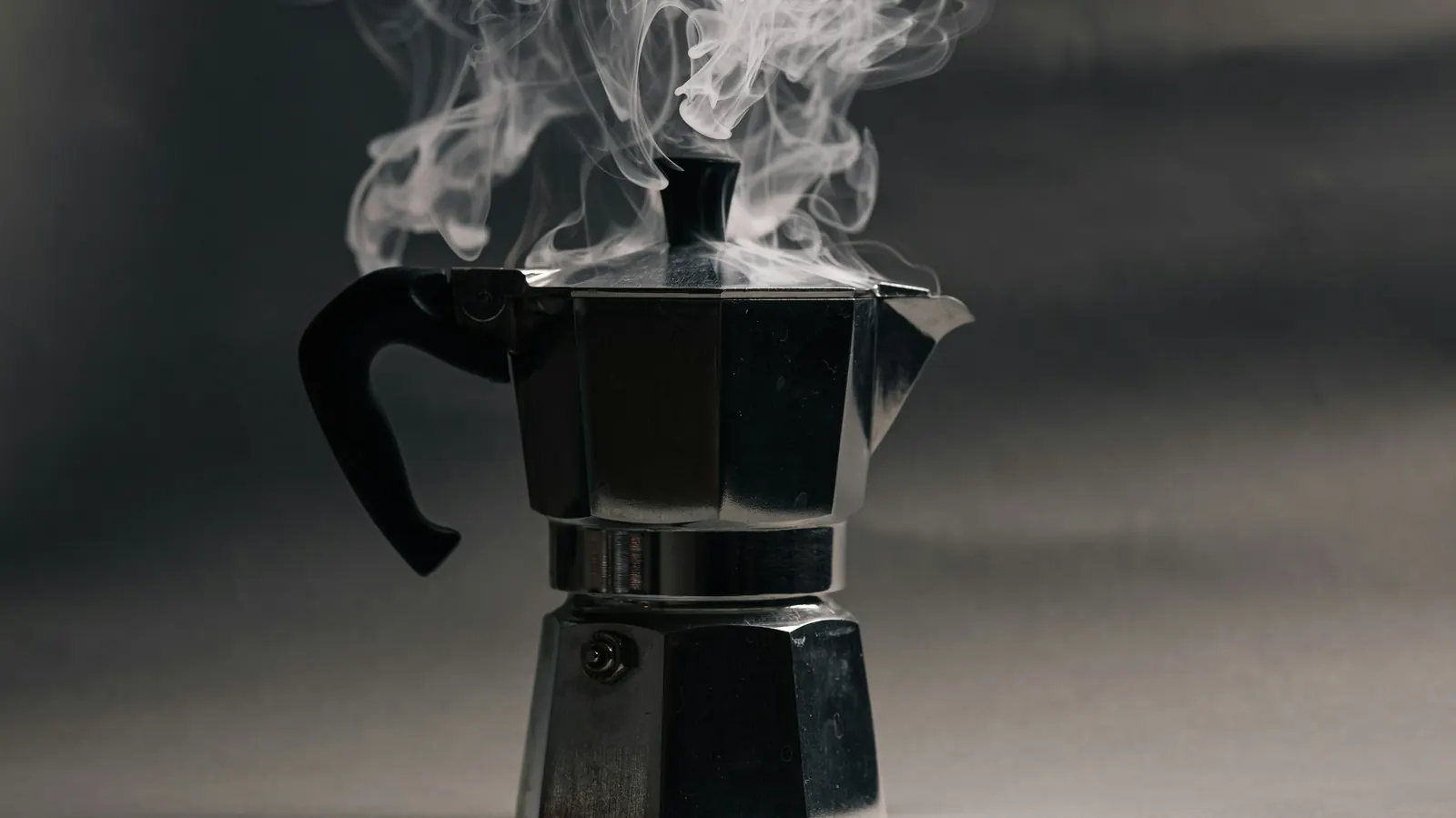
A moka pot and a French press both make coffee without paper filters, without a pump and, in the case of the moka pot, without a plug. That is where the likeness ends. The moka pot pushes hot water up through a bed of fine grounds in a few minutes on the stove and gives you a small amount of very strong coffee. The French press lets coarse grounds sit in hot water for about four minutes, then traps them under a metal screen and gives you full mugs with a heavy body.
In a Mexican kitchen both have a place: a stovetop pot for a sweet, strong cafecito after dinner, and a press for a pot of café de olla style coffee for the table. This guide compares them on strength, body, grind, time, quantity, cleaning and durability, says which one most people should buy, and names one example of each.
Julia’s earns a commission on purchases made through links on this page, at no cost to you. Recommendations are based on what a restaurant kitchen looks for, product specifications and verified buyer reports.
Quick verdict: stovetop pot or press?
Buy a French press if you drink your coffee by the mug, often brew for two or more, and want a full, rounded cup with little fuss. For most households that is the better first buy. Buy a moka pot if you want small, strong, espresso-style coffee for cafecito, lattes or café con leche, and you are happy to stand at the stove for a few minutes. If you drink both kinds, they cost little enough to own both.
The table sums up the differences; the sections after it explain each one.
Moka pot vs French press, side by side
| Moka pot | French press | |
|---|---|---|
| How it brews | Steam pressure pushes water up through the grounds once | Grounds steep in the water, then a metal screen holds them back |
| Pressure | About 1 to 1.5 bar (Kaffeemacher) | None |
| The cup | Small, strong, concentrated | Full-bodied, rounder, served by the mug |
| Grind | Between sand and fine sugar; Bialetti says not too fine | Coarse, like rock salt (National Coffee Association) |
| Brew time | About 5 to 7 minutes on the stove (Pro Coffee Gear) | About 4 minutes of steeping (NCA) |
| Heat source | Stove or burner; check induction compatibility | A kettle; the press itself is never heated |
| Cleaning | Water only, no soap or dishwasher for Bialetti aluminum | Empty, take the filter apart and wash it after each use |
| Main risk | Burned or bitter coffee if left on the heat | Silt in the cup; glass carafes can break |
Strength and body: two kinds of “strong”
People call both of these strong coffee, but they mean different things. A moka pot is strong in concentration. Pro Coffee Gear’s comparison by Kahlel Ho calls moka coffee “strong and concentrated” and notes a higher caffeine concentration per ounce. You get a small amount of dark, intense coffee with a slightly bitter edge, which is exactly what cafecito or a café con leche needs.
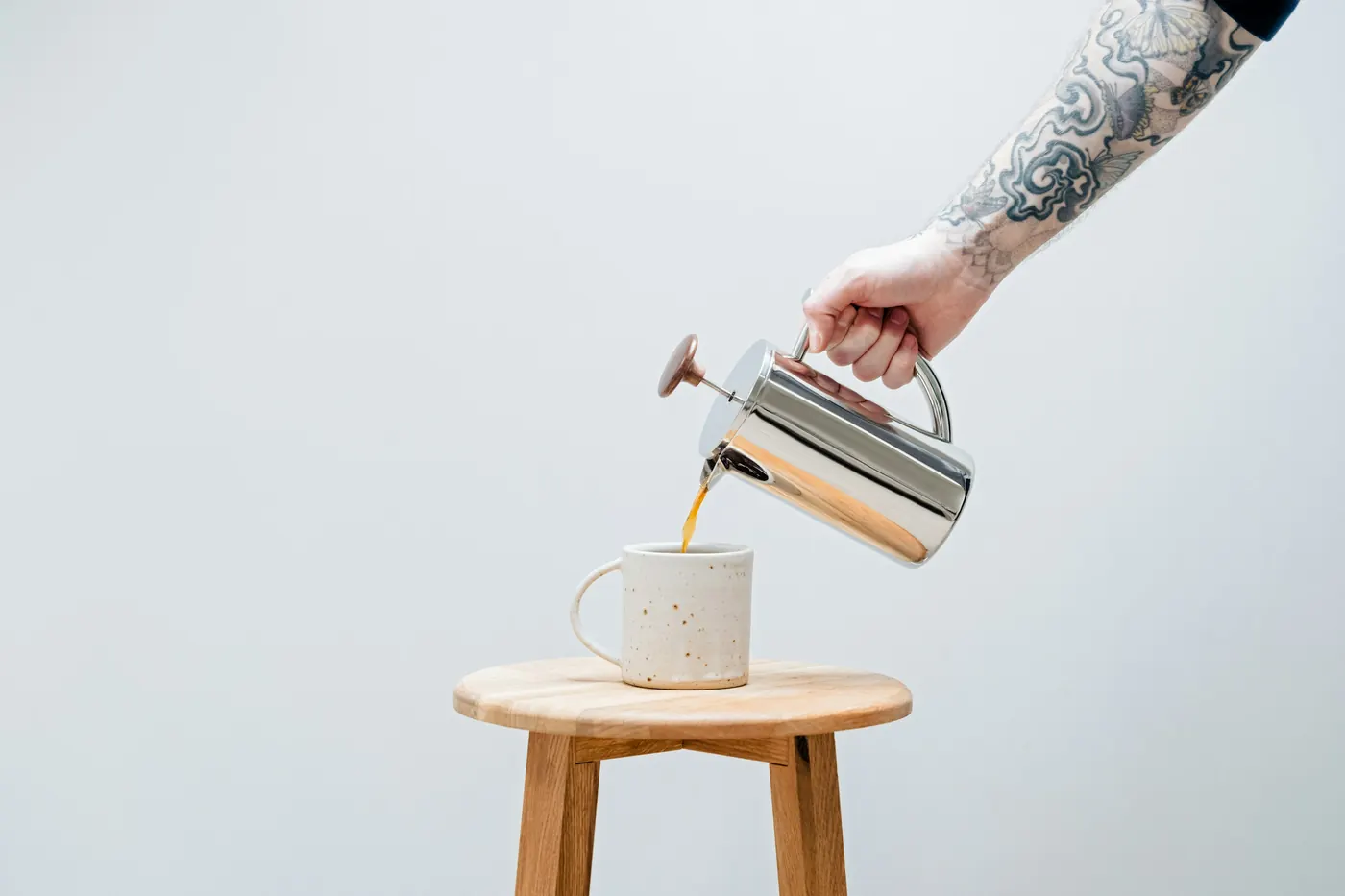
A French press is strong in body. The National Coffee Association describes press coffee as having “bold flavor and a full body,” and Pro Coffee Gear calls it rich and full-bodied, rounder and smoother than moka coffee. Because the metal screen lets the coffee’s oils through, the cup feels heavier in the mouth than paper-filtered coffee. It is less concentrated than a moka pot, but you drink more of it.
So the first question is how you drink coffee. If a full mug, black or with a splash of milk, is your morning, the press fits. If you want a couple of ounces of something punchy, or a base for steamed milk, the moka pot fits.
One point of honesty: a moka pot is not an espresso machine. Kaffeemacher’s Benjamin Hohlmann puts an espresso machine at 9 bar and a moka pot at about 1 to 1.5 bar during brewing, so you do not get true espresso or crema. Our moka pot vs espresso machine guide covers that question in full.
Grind and ratio
The two brewers want very different grinds, which matters if you buy pre-ground coffee or own one grinder.
A French press needs coarse coffee. The NCA’s guide says coarse, “like rock salt,” with a ratio of 1 gram of coffee to 10 to 16 grams of water, and water at about 93°C (around 200°F). Go coarser if the cup is bitter, finer if it is flat. Too fine a grind slips through the screen and leaves silt; our best coffee grinder for French press guide covers grinders that hold a coarse setting well.
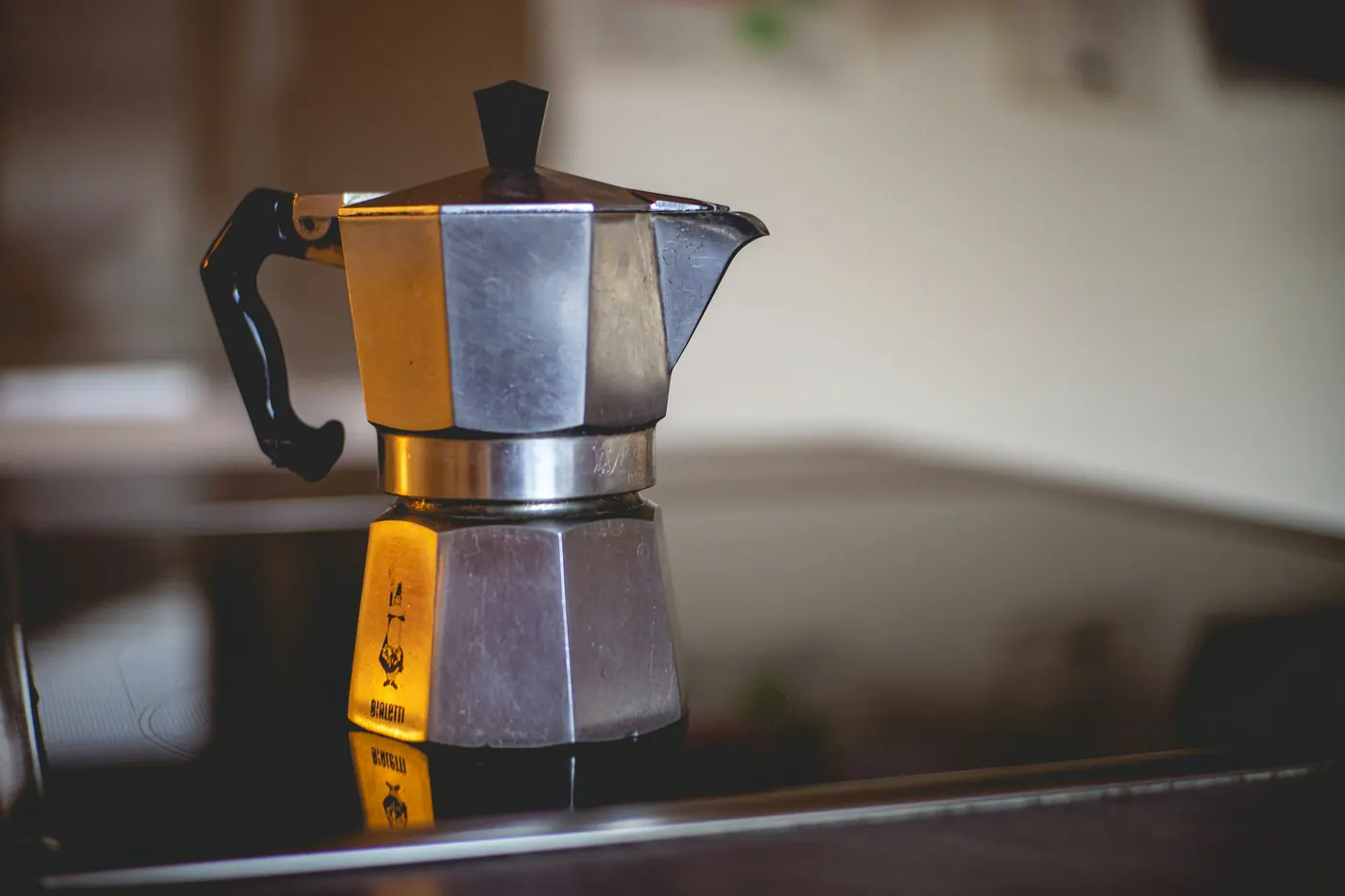
A moka pot needs a much finer grind, though not espresso-fine. Bialetti asks for coffee that is “Moka-ground, and not too fine,” and Kaffeemacher suggests a texture between sand and fine sugar. Pro Coffee Gear says medium-fine. The ratio is set by the pot: you fill the basket level and the boiler to the valve, so a given pot always makes the same amount.
Most supermarket pre-ground coffee sits in between, a little fine for a press and a little coarse for a moka pot. It works in both, just not at its best in either.
Time and attention
The press is the more forgiving of the two. You heat water in a kettle, pour it over the grounds, wait about four minutes and press. The NCA’s steps add a short wait after the first pour, then about three more minutes. There is nothing on the stove to watch, and an extra minute of steeping makes the cup bolder rather than ruining it. The catch: coffee left in the press keeps brewing and turns bitter, the NCA says, so pour it all off or into a carafe.
The moka pot needs you at the stove. Bialetti says to fill the boiler with room-temperature water to the valve, fill the funnel without pressing the coffee, set the heat low and take it off once the coffee has come up into the top. Kaffeemacher prefers hot water from a kettle and says to remove the pot as soon as it starts to bubble and hiss. Both agree that the end matters: leave the pot on the heat too long and the last of the water comes through as steam, which makes the coffee harsh. Pro Coffee Gear puts the whole job at five to seven minutes.
How much coffee each one makes
Quantity is the most practical difference. A moka pot’s cup size is an espresso cup, not a mug, and makers size their pots that way: a “3-cup” pot makes three small espresso-style servings, enough for one large café con leche or two small cups. Pro Coffee Gear puts moka batches at one to six cups, depending on the pot.
A press is measured in ounces of brewed coffee, so it is easier to read. An 18-ounce press makes about two mugs; a 34- to 36-ounce press makes enough for four. If you brew for a table of people, a press scales up far more easily, and for a full pot for guests our best French press guide includes large insulated models.
Cleaning and care
Neither is hard to clean, but they ask for different habits.
A classic aluminum moka pot is a water-only pot. Bialetti says to rinse it with water, with no detergent, and not to put it in the dishwasher. Kaffeemacher gives the same advice and says soap can damage aluminum surfaces. Let all three parts dry before you put it back together, and check the rubber gasket from time to time, since it is the part that wears.
A press needs a full wash. The NCA says to clean the whole press after each use, including taking apart and washing the filter, because old coffee oil left on the screen makes later cups bitter. Steel presses with dishwasher-safe parts make this easier; check the maker’s word for yours.
Durability, glass and metal
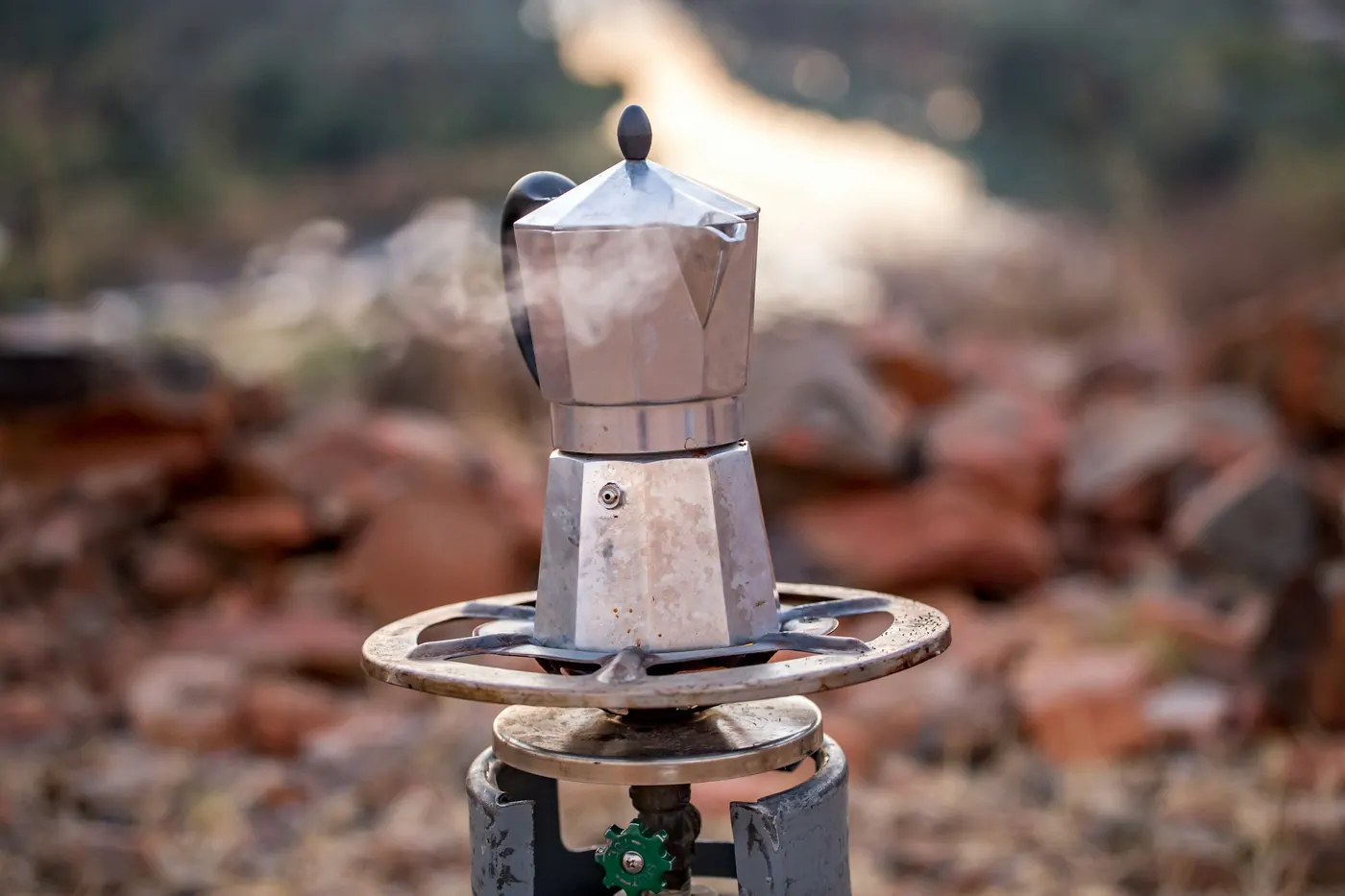
A moka pot is a solid piece of metal with no glass to break, which is why it is a favorite for camping. The parts that wear are the gasket and the safety valve, and the main risk is heat: an empty pot or one left on a high flame can scorch.
Presses come in glass and in steel. A glass carafe lets you watch the brew but can crack, and on October 29, 2026 the CPSC announced recall 27-055 of about 5.9 million 8-cup and 12-cup Bodum presses with replaceable glass carafes, which it says can break during use, including when stirred with a metal spoon. The remedy is a repair: stop stirring with metal utensils and contact Bodum for a plastic spoon and warning label. A double-walled stainless press can’t shatter and keeps the coffee hot longer, which is why our press pick below is steel.
On aluminum versus stainless steel for moka pots, we make no health claim; the practical differences are induction (stainless works on more stoves) and weight. Our best moka pot guide compares both materials.
Your stove matters for one of them
The press doesn’t care what stove you have; it only needs a kettle. A moka pot sits on the burner, so check it fits your cooktop. Bialetti says the classic aluminum Moka Express works on induction only with its induction adapter plate. Gas and electric coil burners suit any moka pot, though a small pot on a large gas ring needs a low flame so the handle doesn’t overheat.
Choose a moka pot if… / Choose a French press if…
Choose a moka pot if…
- You want small, strong coffee for cafecito, café con leche or homemade lattes.
- You brew for one or two people.
- You want an all-metal brewer with no glass, for home or camping.
- You don’t mind watching the stove for a few minutes.
Choose a French press if…
- You drink coffee by the mug and like a full, rounded body.
- You often brew for several people.
- You want the simplest routine: kettle, wait, press.
- You have an induction stove and don’t want to buy an adapter.
Our pick on each side of the moka pot vs French press question
One pick per side, both in stock when we checked. Each is a different listing of a model we cover elsewhere, and we say why: the Bialetti is the 3-cup Moka Express, the same model as the top pick in our best moka pot guide, chosen here because it is the benchmark every moka pot is measured against; and the ESPRO is the 18-ounce polished P7, a smaller size and finish of the press in our best French press guide, chosen because it matches a small moka pot’s two-person output and is the press most focused on cutting silt.
1. Bialetti Moka Express, 3 Cup – The Original Stovetop Pot

The Moka Express is the eight-sided aluminum pot that defined the category. Bialetti dates the design to 1933, when Alfonso Bialetti invented it, and the listing says it is made in Italy. It has a patented safety valve on the boiler, a thermoplastic handle and knob, and an aluminum body.
The 3-cup size is the sensible start for one or two people: three espresso-cup servings, enough for one large café con leche or two small cups. Bialetti’s method is simple. Fill the boiler to the valve, fill the funnel with ground coffee without pressing it, close the pot and set it on the stove, and turn off the heat as soon as it starts to gurgle.
Care is water only. Bialetti says to rinse it after use, with no detergent and no dishwasher, because both can damage it and affect the taste of the coffee. It works on gas and electric stoves, and on induction only with Bialetti’s adapter plate.
Why we like it
- The original design, dating to 1933 (Bialetti)
- Made in Italy (listing)
- Patented safety valve (listing)
- One-year manufacturer warranty (listing)
Key specifications
| Model | 0001162 (part 06799) |
|---|---|
| Material | Aluminum; thermoplastic handle |
| Capacity | 3 espresso cups |
| Brew method | Stovetop pressure |
| Stoves | Gas, electric; induction with Bialetti adapter |
| Dishwasher safe | No |
| Made in | Italy (listing) |
| Warranty | 1 year |
Why we recommend it
It suits one or two people who want strong, small coffee from the stove and a pot with a long track record and spare parts that are easy to find.
Skip it if you cook on induction and don’t want an adapter; our best moka pot guide covers stainless pots that work on induction directly.
Pros and cons
Pros
- The benchmark design
- No glass to break
- Simple, fixed dose every time
Cons
- Not for induction without an adapter
- Hand rinse only, no soap
- Small output
2. ESPRO P7 French Press, 18 oz – Steel Body, Double Filter

The P7 is a double-walled stainless steel press built around ESPRO’s main idea: two filters instead of one. The listing describes a patented dual-layer micro-filter with ultra-fine stainless mesh, which ESPRO says is 12 times finer than a standard screen. It says the filter catches most grounds and fine particles, and that any remaining sediment settles at the bottom so it stays out of your cup when you pour.
The 18-ounce size makes about two cups, according to the listing, which is close to what a 3-cup moka pot serves, so it’s the fair comparison for one or two people. ESPRO’s brew steps are the usual ones: add grounds, pour hot water, steep three to four minutes, press gently and serve. It also works for cold brew.
The double wall keeps coffee hotter for longer while the outside stays cool, the listing says, and the steel body is shatterproof and dishwasher safe. ESPRO includes 10 paper filters for anyone who wants a cleaner, lighter cup, a useful option a moka pot doesn’t offer.
Why we like it
- Double micro-filter for less silt (listing)
- Double-walled stainless steel, no glass
- Dishwasher safe (listing)
- 10 paper filters included
Key specifications
| Model | 1018C2 |
|---|---|
| Material | Double-walled stainless steel |
| Capacity | 18 oz (about 2 cups) |
| Brew method | Immersion, steep 3 to 4 minutes |
| Stoves | None needed; use a kettle |
| Dishwasher safe | Yes (listing) |
| Made in | Not stated |
| Warranty | Not stated on the listing |
Why we recommend it
It suits one or two mug drinkers who want a full-bodied press cup with less grit, in a steel body that won’t break.
Skip it if you brew for four or more; a larger press from our best French press guide will save a second round.
Pros and cons
Pros
- Less silt than a single screen, by design
- Keeps coffee hot
- Paper filter option
Cons
- Small for a crowd
- Two filters to rinse
- Can’t see the coffee as you brew

Moka pot and press questions, answered
Is moka pot coffee stronger than French press?
Per ounce, yes. A moka pot makes a small, concentrated coffee, and Pro Coffee Gear notes a higher caffeine concentration per ounce. A French press makes a larger, less concentrated cup with more body, so a full mug of press coffee is not necessarily weaker overall.
Can I use the same coffee in both?
You can, but neither will be at its best. A press wants coarse coffee, like rock salt, and a moka pot wants a finer grind, between sand and fine sugar. Pre-ground coffee usually sits in between.
Which one is better for café con leche or lattes?
The moka pot. Its strong, concentrated coffee stands up to hot milk the way espresso does. Press coffee gets thin once you add a lot of milk.
Which one is easier to clean?
About the same effort. A classic aluminum moka pot is rinsed with water only and left to dry, while a press needs the filter taken apart and washed each time. A steel press with dishwasher-safe parts is the easiest of all.
Which one is better for camping?
Both work. A moka pot goes straight on a camp stove and has no glass, and a steel press only needs boiling water. If you already carry a kettle, a steel press is lighter to manage.
Which brewer earns the counter space
For most households, the French press comes first. It makes coffee the way most people drink it, by the mug, with almost no technique and no stove to watch. The moka pot is the better first buy if you want small, strong coffee for cafecito or milk drinks, or a rugged all-metal brewer. They are inexpensive and very different, so many kitchens end up with both.
If you have ruled out the press altogether, our French press alternative guide covers the AeroPress, the Clever Dripper, moka pots and percolators. And when you’d rather someone else made the coffee and the food, see the menu or call to order.