
A moka pot and an espresso machine both push hot water through a bed of ground coffee, and both pour something small, dark and strong. That is where the likeness ends. One is a three-part metal pot that sits on a burner and runs on the steam pressure of its own boiling water. The other is a plug-in appliance with a pump, a boiler and a portafilter, built to hit a pressure the pot never comes near.
In a restaurant kitchen you learn quickly that the tool shapes the cup. This guide compares the two on pressure, strength, grind, control, milk, cleanup and cost class, explains the aluminum vs stainless question for moka pots, and names a pick or two on each side.
Julia’s earns a commission on purchases made through links on this page, at no cost to you. Recommendations are based on what a restaurant kitchen looks for, product specifications and verified buyer reports.
Quick verdict: stovetop pot or espresso machine?
Most people who want strong coffee at home should start with a moka pot. It is small, cheap to own, needs no outlet and makes a concentrated cup that works black, as a cafecito or topped up with hot milk. Buy an espresso machine only if you want true espresso, with crema and the option to steam milk for lattes, and you are ready for the extra cost, counter space and a proper grinder. A moka pot does not make espresso; it makes strong stovetop coffee, and that is enough for most kitchens.
The table sums up the differences. The sections after it explain each one and say where each figure comes from.
Moka pot vs espresso machine, side by side
| Moka pot | Espresso machine | |
|---|---|---|
| Brewing pressure | About 1 to 2 bar (Wikipedia) | 9 bar, give or take 1, under the Italian espresso standard (Wikipedia) |
| Strength | About 3 to 4 percent dissolved solids | About 9 to 10 percent |
| Crema | No true crema | Yes; crema is unique to espresso |
| Grind | Moka grind, not too fine, never pressed (Bialetti) | Fine, packed into a portafilter |
| Power | Any suitable burner; no outlet | Plugs in; most have a pump and boiler |
| Milk | Heat or froth it separately | Most have a steam wand |
| Cleanup | Rinse with water; no dishwasher (Bialetti) | Portafilter, drip tray, steam wand, descaling |
| Cost class | Low | Moderate to high, plus a grinder |
Pressure: the reason a moka pot is not espresso
The pressure figures settle the naming argument. According to Wikipedia’s moka pot entry, a moka pot extracts coffee at relatively low pressures of 1 to 2 bar, while the espresso standard calls for 9 bar, and for that reason moka coffee is not considered espresso. Wikipedia’s espresso entry gives the certified Italian standard as entry water pressure of 9 bar, plus or minus 1.
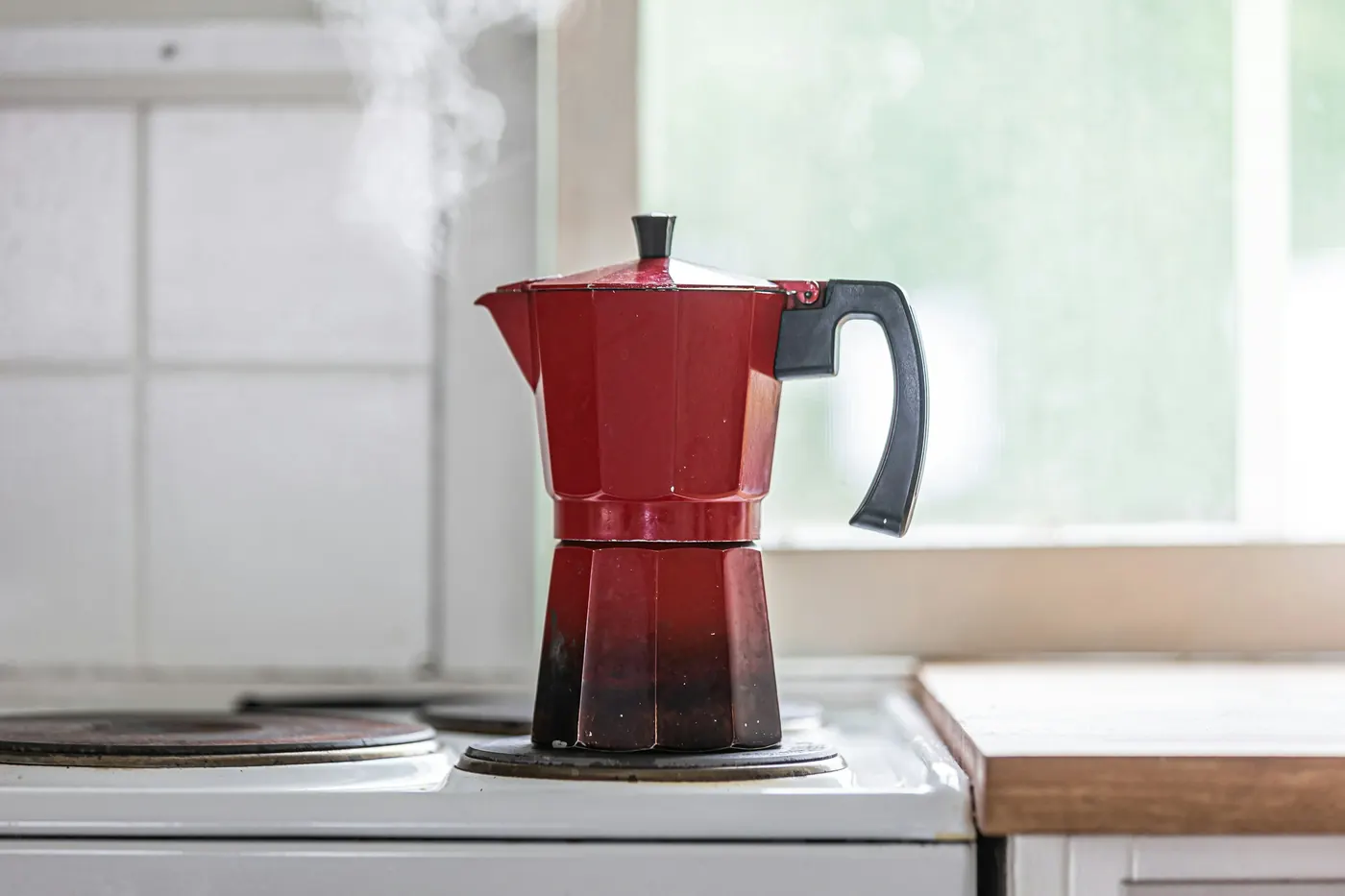
The pot builds its pressure the simple way. Water in the bottom chamber heats, the steam and expanding air above it push down, and once the pressure is high enough the water is forced up the funnel, through the grounds and into the top chamber. Nothing controls that pressure except the heat under the pot and how the coffee is packed. An espresso machine uses a pump to reach its pressure, and better machines hold the water temperature steady while they do it. Wikipedia lists the standard’s exit water temperature as 88°C, plus or minus 2.
A word on pump numbers. Many machine listings advertise 15 or 20 bar. That is the pump’s rating, not a brewing target; the standard itself is 9 bar. Treat a bigger number on the box as marketing rather than a better shot.
What ends up in the cup
Moka coffee is strong, but it sits between drip coffee and espresso. Wikipedia puts moka coffee at about 3 to 4 percent dissolved solids, made at roughly one part coffee to ten parts water by weight. Espresso runs about 9 to 10 percent, and drip coffee about 2 percent. So a moka cup is roughly twice as strong as drip and well under half the strength of a shot.
Texture differs too. Wikipedia describes crema, the dense foam on top of a shot, as unique to espresso. A moka pot may show a little foam as it finishes, but not a lasting crema. Serving size differs as well: the standard espresso volume is about 25 milliliters including crema, while a moka pot fills several small cups at once.
For everyday drinking that difference matters less than the label suggests. Moka coffee is excellent black and sweetened, as a Cuban-style cafecito, or stretched with hot milk. It is a daily habit in many homes for good reason. If you mostly drink coffee with milk, you may never miss the extra strength.
Grind and technique
The two need different grinds, and getting it wrong is the most common reason either one disappoints. Bialetti tells moka users to use a moka grind that is not too fine, to fill the funnel generously without pressing the coffee, and to fill the bottom with water only up to the safety valve. Espresso needs a fine grind, packed firmly into the portafilter, and small changes in grind size change the shot.
That has a cost consequence. A moka pot works fine with good pre-ground coffee labeled for moka or stovetop use. An espresso machine really needs a grinder that can make fine, even adjustments, and that often costs as much as an entry machine. Our best burr espresso grinder guide covers that half of the setup.
Control and consistency
Bialetti’s own advice is to set the heat low and take your time. With a moka pot, the burner is your only control, and the result varies with the stove, the amount of water and how fast you pull it off the heat. Kitchen sense says to take it off as soon as the stream turns pale and starts to sputter, because the last of the water runs hot and tastes bitter.
An espresso machine gives you more control and more ways to go wrong. Better machines add temperature control, pre-infusion and shot timers, which help you repeat a good shot. Entry machines are simpler, but they still ask you to dose, tamp and time each shot. If you want a coffee routine that never needs thinking about, the moka pot is the easier habit; if you enjoy adjusting things, the machine rewards it.
Aluminum or stainless steel moka pot
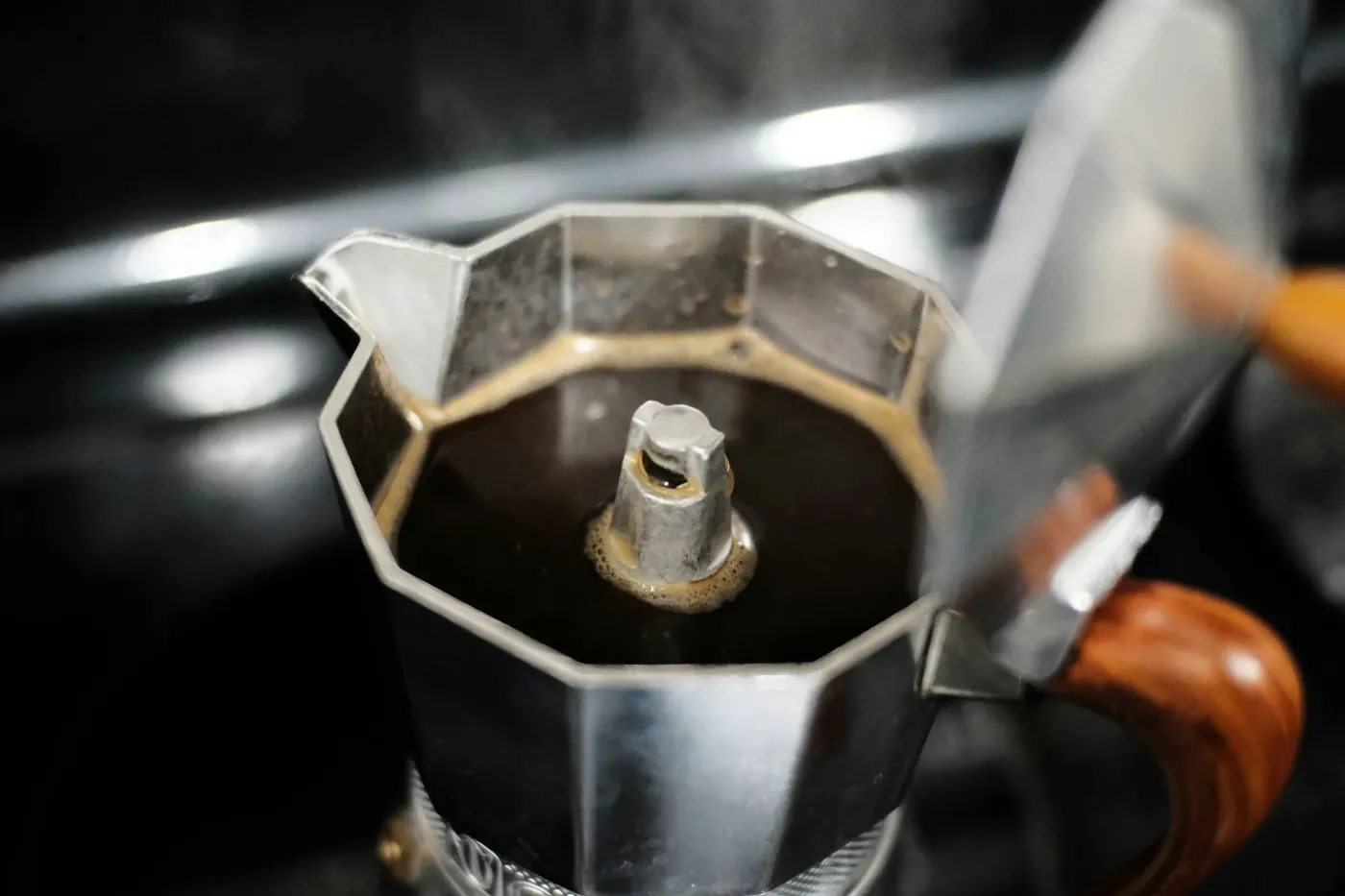
This is the main choice on the moka side. Wikipedia notes that the original design and many current models are aluminum with Bakelite handles, and some are made of stainless steel. The practical difference is the stove. Stainless steel pots can be used on induction; aluminum pots cannot, according to the same entry. Bialetti says its aluminum Moka Express works on gas and electric hobs and on induction only with its induction plate.
Care differs too. Bialetti says the aluminum Moka Express should only be rinsed with water after use, with no detergents and no dishwasher, because washing can damage it and alter the taste of the coffee. Stainless pots are tougher in daily handling; Cuisinox describes its stainless Roma as resistant to rust and corrosion and easy to clean. Aluminum heats quickly and is usually the lower-cost choice. Stainless is heavier and costs more, but it suits induction and rougher handling. We make no health claim either way; the choice here is about stove type and care.
Milk drinks
If lattes and cappuccinos are the goal, the espresso machine has a clear advantage: most have a steam wand. The two machines picked below both have one. With a moka pot you heat and froth milk separately, in a saucepan or a handheld frother. That works, and many households do it every morning, but you will not get the fine microfoam a steam wand makes for latte art.
Space, power and cleanup
A moka pot fits in a drawer, travels to a cabin or campsite on a camp stove, and needs no outlet. It has three parts to rinse, plus a gasket and filter plate to replace now and then. An espresso machine takes counter space, needs an outlet, and asks for more cleaning: the portafilter and basket after each session, the steam wand after every use, the drip tray, and periodic descaling. A machine with a backflush valve, like the Rancilio below, makes the group head easier to clean, according to its listing.
Cost class
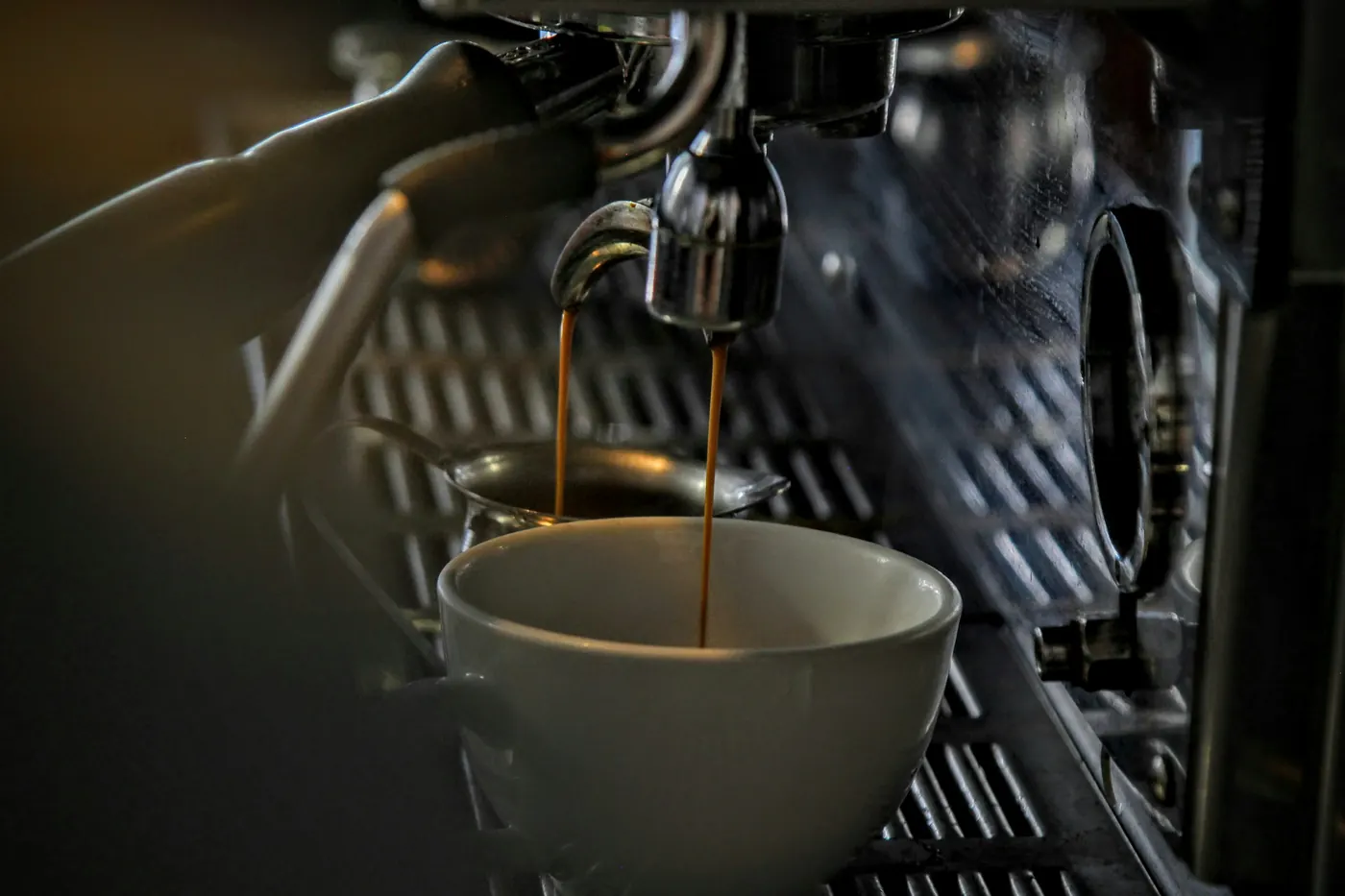
We don’t quote prices because they change, but the classes are clear. A moka pot is one of the lowest-cost ways to make strong coffee at home. An espresso machine costs many times more, and a capable grinder adds a similar amount again. Running costs are close: coffee, water, and the odd gasket or descaler. If budget is tight and you want an espresso machine anyway, our best cheap espresso machine guide covers the entry tier.
Choose a moka pot if… / Choose an espresso machine if…
Choose a moka pot if…
- You want strong coffee, black or with milk, without spending much.
- You are short on counter space or want something that also travels.
- You make coffee for two to four people at once.
- You prefer a simple routine with few parts.
Choose an espresso machine if…
- You want true espresso, with crema, at the 9-bar standard.
- You drink lattes and cappuccinos and want a steam wand.
- You are ready to buy a good grinder as well.
- You enjoy dialing in a shot and have the counter space and outlet.
Our picks on each side of the moka pot vs espresso machine question
Two moka pots, one aluminum and one stainless, and two espresso machines, one serious and one simple. All four were in stock when we checked. Neither listing on the moka side appears on our other pages, but each is a different size of a model in our best moka pot guide: the GROSCHE is the 6-cup version of the 9-cup Milano there, chosen because six cups suits more households, and the Cuisinox is the 4-cup version of the 6-cup Roma, chosen as the smaller stainless option for one or two drinkers. Both espresso machines are models we have not picked elsewhere.
1. GROSCHE Milano Moka Pot, 6 Cup – Aluminum With a Burn Guard

This is the classic aluminum moka pot with a few practical changes. The listing gives the capacity as 6 espresso cups, or 9.3 ounces, and describes the body as food-grade anodized aluminum. GROSCHE says it gave the Milano a larger soft-touch handle with a burn guard for your finger, aimed at the common complaint of hot handles, and an Italian-made safety valve.
The listing names gas, electric and propane camping stoves. It also says the pot is not magnetic and will heat very slowly on a glass-top induction hob; treat it as a gas and electric pot, in line with the general rule that aluminum does not work on induction. The gasket is silicone and the listing says it takes the standard 6-cup gasket size, which makes replacements easier to find.
Follow the usual aluminum moka routine: water up to the valve, a generous unpressed basket of moka-ground coffee, low heat, and a rinse with water afterward. The listing does not give care instructions, so we follow Bialetti’s advice for aluminum pots: no detergent and no dishwasher.
Why we like it
- Handle with a burn guard (listing)
- Italian-made safety valve (listing)
- Silicone gasket in a standard 6-cup size (listing)
- Works on propane camp stoves as well as at home (listing)
Key specifications
| Model | GR 329 |
|---|---|
| Type | Stovetop moka pot |
| Material | Anodized aluminum |
| Capacity | 6 espresso cups, 9.3 oz |
| Heat source | Gas, electric, propane |
| Induction | Not recommended; heats very slowly (listing) |
| Pressure (stated) | Not stated; safety valve |
| Care | Not stated; rinse with water |
Why we recommend it
It suits a gas or electric kitchen that wants a standard-size aluminum moka pot for two to three people, with a cooler grip than the classic octagon.
Skip it if you cook on induction; the Cuisinox below is the stainless choice.
Pros and cons
Pros
- Burn guard on the handle
- Standard gasket size
- Light and quick to heat
Cons
- Not for induction
- Hand rinse only
- Care instructions not in the listing
2. Cuisinox Roma Moka Pot, 4 Cup – Stainless for Any Stove

The Cuisinox Roma is the stainless answer to the aluminum pot. The listing describes it as built from stainless steel that resists rust and corrosion, and says it works on gas, electric and induction. That induction line is the main reason to pay more for stainless, and it matches the general rule in Wikipedia’s moka pot entry.
This is the 4-cup size, model COF-4R, a sensible pot for one or two coffee drinkers. Moka pots work best when filled to the line, so buy the size you will use; a big pot run half full does not brew well. The listing mentions a heat-resistant handle, a precision spout for pouring and a detachable structure that makes it easy to take apart and clean.
The listing does not state a warranty or a capacity in ounces, so we have left those out. If you need more coffee at once, the same Roma comes in larger sizes; our best moka pot guide covers the 6-cup.
Why we like it
- Stainless steel body (listing)
- Gas, electric and induction (listing)
- Heat-resistant handle and precision spout (listing)
- Comes apart for cleaning (listing)
Key specifications
| Model | COF-4R |
|---|---|
| Type | Stovetop moka pot |
| Material | Stainless steel |
| Capacity | 4 cups |
| Heat source | Gas, electric, induction |
| Induction | Yes (listing) |
| Pressure (stated) | Not stated |
| Care | Detachable parts, easy to clean (listing) |
Why we recommend it
It suits an induction kitchen, or anyone who wants a moka pot that shrugs off daily handling, sized for one or two people.
Skip it if you want the lowest-cost way in; an aluminum pot like the GROSCHE costs less and heats faster on gas.
Pros and cons
Pros
- Works on induction
- Rust and corrosion resistant (listing)
- Comes apart for cleaning
Cons
- Small for a household of coffee drinkers
- Warranty not stated in the listing
- Costs more than aluminum
3. Rancilio Silvia Espresso Machine with PID – Commercial Roots, Precise Temperature

If you are moving past the moka pot because you want real espresso, the Rancilio Silvia is a long-running home machine from a maker of commercial espresso equipment. The listing says the Silvia’s lasting reputation rests on a steel case, a solid brass boiler, and portafilter and group designs from Rancilio’s commercial line. Rancilio’s own page lists a brass brewing unit, an insulated boiler and a stainless steel steam wand.
This listing has a PID installed. The listing explains that the PID gives to-the-degree temperature control and quicker recovery when brewing or steaming, and adds programmable pre-infusion and a shot timer. Those three features address exactly what a moka pot cannot control: water temperature, how the coffee is wetted, and how long the shot runs.
The listing also says an integrated 3-way solenoid valve makes the group easy to backflush and leaves drier pucks. Pair it with a capable grinder; the Silvia has none built in.
Why we like it
- PID temperature control (listing)
- Programmable pre-infusion and shot timer (listing)
- Brass boiler and commercial-style group (listing)
- Backflushable 3-way valve (listing)
Key specifications
| Model | Silvia, PID installed |
|---|---|
| Type | Semi-automatic espresso machine |
| Material | Steel case, brass boiler |
| Capacity | Not stated |
| Heat source | Electric, plug-in |
| Induction | Not applicable |
| Pressure (stated) | Not stated |
| Care | Backflush the group; clean the steam wand |
Why we recommend it
It suits someone who has outgrown stovetop coffee, wants to learn espresso properly and will buy a good grinder to go with it.
Skip it if you want automatic milk or a built-in grinder; our best espresso machine guide covers all-in-one machines.
Pros and cons
Pros
- Temperature control and shot timer
- Commercial-style components
- Established maker
Cons
- High cost class, plus a grinder
- Manual steaming takes practice
- Tank size and weight not in the listing
4. BLACK+DECKER 15-Bar Espresso Machine – Grounds or ESE Pods

At the other end of the machine range, this BLACK+DECKER is a simple semi-automatic for people who want shots and steamed milk without a project. The listing describes a 15-bar pump, single or double shots, a removable 1.5-liter water tank, and a steam wand with a cool-touch grip that swings into place without moving the cup.
Its most practical feature is that it takes ground coffee or ESE pods, the flat paper-wrapped coffee discs that sit straight in the portafilter. Pods take grinding out of the picture, which closes much of the gap between a moka pot’s ease and a machine’s output. The listing says it delivers consistent pressure and heat when the machine is allowed to fully preheat, so give it that time before the first shot.
Remember that the 15-bar figure is the pump rating, not a promise of better espresso than a 9-bar standard. This is an entry machine; the information here comes from the listing alone.
Why we like it
- Takes ground coffee or ESE pods (listing)
- Removable 1.5-liter tank (listing)
- Steam wand with a cool-touch grip (listing)
- Single or double shots (listing)
Key specifications
| Model | EM0312-0SD |
|---|---|
| Type | Semi-automatic espresso machine |
| Material | Not stated |
| Capacity | 1.5-liter water tank |
| Heat source | Electric, plug-in |
| Induction | Not applicable |
| Pressure (stated) | 15-bar pump |
| Care | Removable tank; preheat fully before brewing |
Why we recommend it
It suits a moka pot drinker who wants to try machine espresso and steamed milk without buying a grinder, using ESE pods or pre-ground coffee.
Skip it if you want precise control over each shot; the Rancilio above is built for that.
Pros and cons
Pros
- Pods remove the need for a grinder
- Steam wand for milk drinks
- Large removable tank
Cons
- Needs a full preheat for best results
- Body material not stated
- Listing is the only source
Stovetop and machine questions, answered
Is a moka pot as good as an espresso machine?
It is different rather than worse. A moka pot brews at about 1 to 2 bar and makes coffee around twice as strong as drip. An espresso machine brews at about 9 bar and makes a shot more than twice as strong again, with crema. If you want espresso, buy a machine. If you want strong coffee, a moka pot does the job for far less.
Can you make a latte with a moka pot?
Yes, a homestyle one. Brew a moka pot, then heat and froth milk separately in a saucepan or with a frother. You won’t get steam-wand microfoam, but the drink is close enough for most mornings.
Do I need a grinder for an espresso machine?
For good results, usually yes, because espresso is very sensitive to grind size. The exception is a machine that takes ESE pods, like the BLACK+DECKER above, which skips grinding entirely.
Should I tamp coffee in a moka pot?
No. Bialetti says to fill the funnel generously without pressing the coffee. Tamping is for an espresso portafilter, not a moka basket.
Can I use an aluminum moka pot on induction?
Not directly. Aluminum is not magnetic, so it won’t heat properly on induction. Choose a stainless pot, or use an induction adapter plate as Bialetti suggests for its aluminum pot.
Which one belongs on your counter
For most home cooks, the moka pot comes first. It costs little, takes no counter space and makes a strong, satisfying cup with a simple routine. Move to an espresso machine when you know you want true espresso or daily lattes, and budget for a grinder at the same time. Plenty of coffee drinkers end up keeping both: the machine for weekday shots, the moka pot for a crowd or a cabin.
For more choices, see our best moka pot guide and our best espresso machine guide, and our best espresso cups for serving either one. And when you’d rather someone else made the coffee and the food, see the menu or call to order.